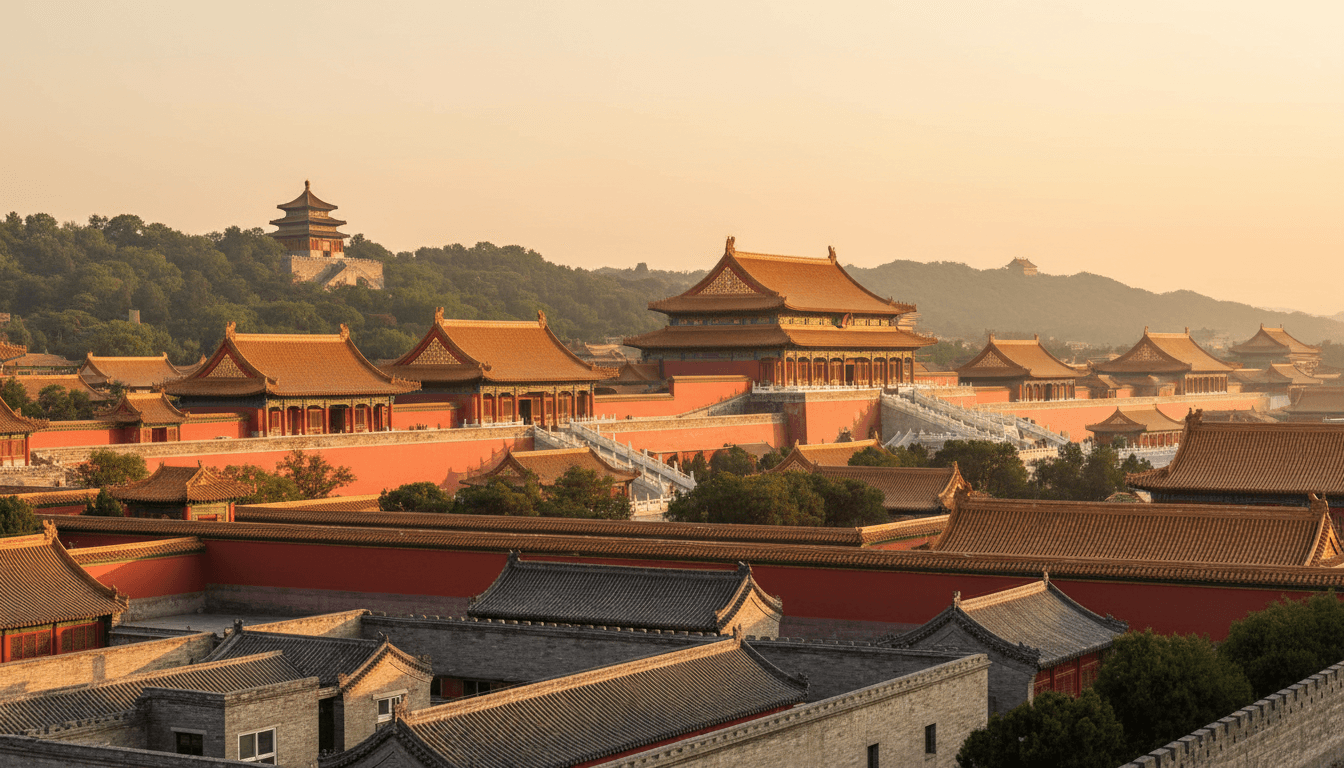
Digital Nomad Home Swap in Beijing: Your Complete Guide to Working Remotely Like a Local
Maya Chen
Travel Writer & Home Exchange Expert
Discover how a digital nomad home swap in Beijing lets you work remotely from hutong courtyards and modern apartments—while paying zero for accommodation.
The notification pinged at 2 AM San Francisco time. I was doom-scrolling through apartment listings in Beijing, frustrated by the $3,000/month price tags for anything decent in Chaoyang, when I saw it: a message from a software engineer named Wei offering her Dongcheng apartment for a three-week swap.
That message changed everything I thought I knew about working remotely in China.
A digital nomad home swap in Beijing isn't just a budget hack—though saving $2,500+ on accommodation certainly doesn't hurt. It's a completely different way of experiencing one of the world's most misunderstood megacities. Instead of watching Beijing through hotel windows, you're buying scallion pancakes from the vendor your host has been visiting for fifteen years. You're working from a desk that actually has good lighting because someone lives there. You're part of a neighborhood, not just passing through it.
I've done remote work stints in 23 cities across four continents. Beijing through home exchange was, hands down, the most immersive digital nomad experience I've ever had.
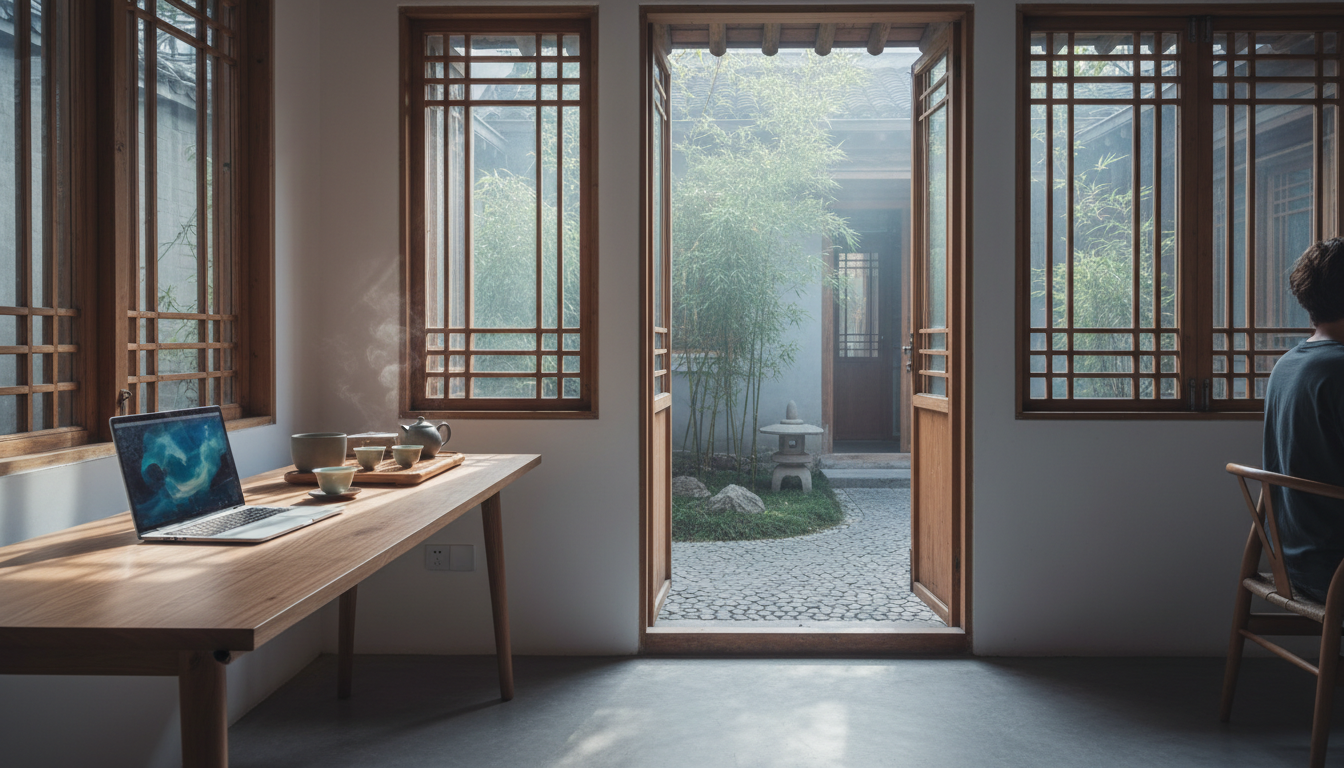 Morning light streaming through traditional wooden lattice windows in a renovated hutong home, lapto
Why Beijing Is Secretly Perfect for Digital Nomads
I'll be honest—Beijing isn't on most remote workers' radar. Everyone's chasing Bali, Lisbon, Mexico City. But that's exactly why it's worth considering.
The infrastructure is genuinely world-class. We're talking about a city with 5G coverage so reliable that I video-called my editor from inside a subway car hurtling through a tunnel. The café culture has exploded over the past decade, with specialty coffee shops in every neighborhood that would make Portland jealous. And the cost of living? Once you've solved the accommodation puzzle through home swapping, Beijing becomes shockingly affordable for a capital city.
A typical day for me looked something like this: ¥18 ($2.50) for a massive bowl of hand-pulled noodles at lunch. ¥25 ($3.50) for an excellent flat white at a hutong café. ¥40 ($5.50) for a proper sit-down dinner with beer. My daily spending averaged $35-40, including transportation, food, and the occasional museum visit.
The time zone works surprisingly well, too. Working with European clients? You're looking at afternoon calls (Beijing is GMT+8). American West Coast? Early morning meetings—which honestly forced me into a healthier sleep schedule. East Coast clients mean 9 AM their time is 10 PM yours. Not ideal, but manageable for occasional syncs.
How Digital Nomad Home Swaps Work in Beijing
So here's where things get interesting. The home exchange model flips the traditional expat experience on its head.
On SwappaHome, the system is refreshingly simple: you earn 1 credit for every night you host someone at your place, and you spend 1 credit for every night you stay somewhere else. New members start with 10 free credits—that's 10 nights of free accommodation anywhere in the world, including Beijing. No money changes hands between members. No complicated pricing tiers based on location or apartment size.
What this means practically: if you've hosted a few guests at your San Francisco apartment (or wherever you call home), you've already banked credits to fund weeks of Beijing accommodation. The French couple who stayed at my place for a week last summer? They essentially paid for my entire Dongcheng experience.
The Beijing home swap community is smaller than, say, Barcelona's, but it's growing fast—and the quality of listings tends to be excellent. Many hosts are other digital nomads, academics, or international professionals who actually understand what remote workers need: reliable WiFi, a proper desk, good natural light, and a quiet space for calls.
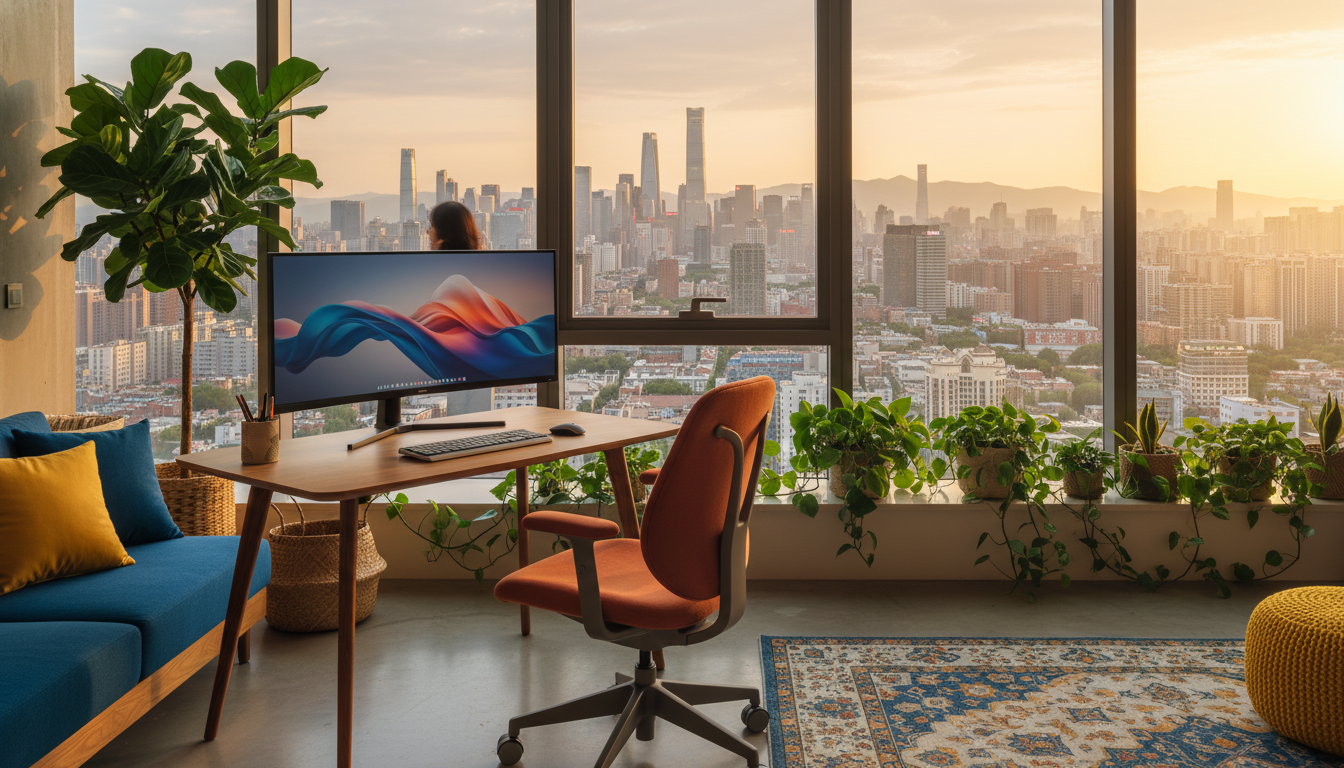 Modern apartment interior in Beijings Sanlitun area with floor-to-ceiling windows overlooking the ci
Best Beijing Neighborhoods for Remote Work Home Swaps
Location matters more in Beijing than almost any city I've worked from. This place is massive—we're talking 6,300 square miles, roughly the size of Connecticut. Choose wrong and you'll spend three hours daily on the subway.
Dongcheng: The Sweet Spot for First-Timers
My top recommendation, no question. Dongcheng sits in Beijing's historic core, a mix of traditional hutong alleyways and modern conveniences. This is where I did my three-week swap, and I'd go back in a heartbeat.
The neighborhood around Nanluoguxiang and Gulou (Drum Tower) has the highest concentration of digital nomad-friendly cafés I found anywhere in the city. Metal Hands Coffee, tucked into a renovated hutong courtyard, became my de facto office—excellent WiFi, power outlets at every table, and a staff that didn't mind me camping out for four-hour work sessions.
Home swap options here range from tiny but charming hutong studios (think 300 square feet with a courtyard view) to renovated traditional courtyard homes with multiple bedrooms. Expect listings to go fast—Dongcheng is popular with both tourists and locals. Average hotel cost in this area runs $120-180/night for anything decent. Your home swap cost? One credit.
Chaoyang: Modern and Connected
If you need absolute reliability—fast elevators, 24-hour convenience stores, gyms in the building—Chaoyang is your neighborhood. This is Beijing's CBD and embassy district, full of sleek high-rises and international restaurants.
The Sanlitun area specifically has become a remote worker hub. Coworking spaces like WeWork and local alternatives are everywhere. The café scene is more polished than Dongcheng's, with spots like Voyage Coffee and % Arabica offering that familiar third-wave aesthetic.
Home swaps in Chaoyang tend to be modern apartments in high-rise buildings. You'll get amenities—pools, gyms, concierge services—but less of that "authentic Beijing" atmosphere. For some digital nomads, that's exactly what they want.
Haidian: The Tech Worker's Choice
Beijing's university and tech district, home to Tsinghua, Peking University, and China's answer to Silicon Valley. If you're in tech and want to network with local startups, or if you're doing any kind of research that benefits from university access, Haidian makes sense.
The vibe is younger, more casual, and significantly cheaper than Chaoyang. Zhongguancun, the tech hub, has solid coworking options and more affordable cafés. The downside? It's far from the historic center, and the architecture is mostly functional rather than beautiful.
Xicheng: Under-the-Radar Gem
West of the Forbidden City, Xicheng offers a quieter alternative to Dongcheng with similar hutong charm. The area around Houhai Lake is particularly lovely—think willow trees, traditional teahouses, and far fewer tourists than the eastern hutongs.
I spent a few days working from a friend's place near Beihai Park, and the morning commute (a 15-minute walk through imperial gardens) was genuinely restorative. Fewer café options than Dongcheng, but the ones that exist are less crowded.
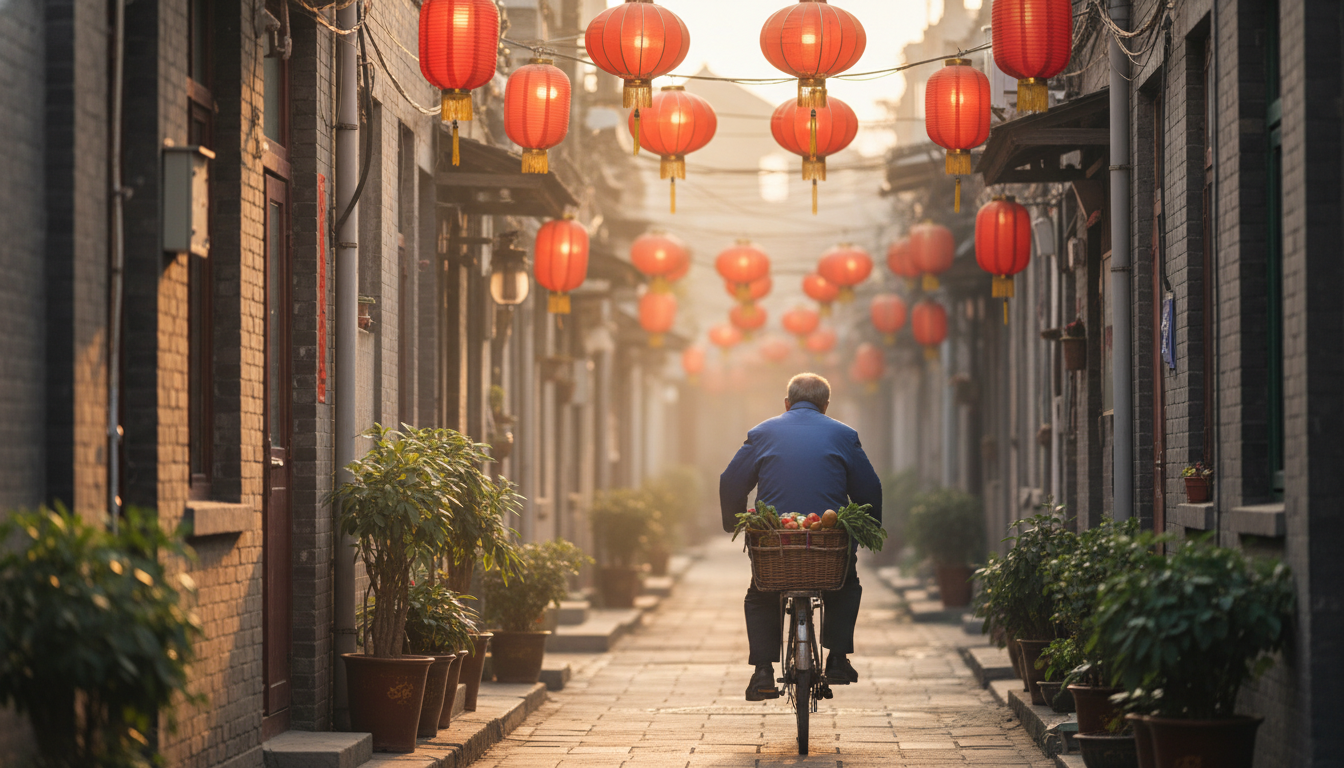 Narrow hutong alleyway in Xicheng at golden hour, red lanterns hanging between gray brick walls, eld
Setting Up Your Remote Work Infrastructure in Beijing
Okay, let's talk about the elephant in the room: the Great Firewall.
Yes, Google, Gmail, WhatsApp, Instagram, Facebook, and many other Western services are blocked in mainland China. Yes, you need a VPN. No, this isn't as scary as it sounds—but you absolutely need to prepare before you arrive.
VPN Essentials (Non-Negotiable)
Download and configure your VPN before landing in Beijing. The App Store and Google Play have limited VPN availability once you're in China. I use ExpressVPN and Astrill—both work reliably, though speeds vary. Budget $10-15/month for a quality service.
Real talk: have two VPN services ready. During my stay, ExpressVPN had a rough few days where connections kept dropping. Having Astrill as backup saved multiple deadlines.
WiFi and Connectivity
The good news? Chinese internet, once you're past the firewall, is blazing fast. Most home swap apartments in Beijing will have 100-500 Mbps connections. I ran speed tests obsessively (occupational hazard) and consistently hit 200+ Mbps at Wei's Dongcheng apartment.
For backup connectivity, get a local SIM card. China Mobile and China Unicom both offer tourist-friendly data plans—around ¥200 ($28) for 20GB valid for 30 days. You'll need your passport to purchase. The process takes about 20 minutes at any official carrier store.
Best Cafés for Remote Work in Beijing
I tested dozens. Here are my actual favorites:
Metal Hands Coffee (Dongcheng) — Hutong courtyard setting, excellent espresso, reliable WiFi, ¥35-45 for drinks. Gets crowded after 2 PM on weekends.
School Bar (Wudaoying Hutong) — Weird name, fantastic workspace. Huge tables, good food, and a crowd that's 50% laptop workers. Open late.
Soloist Coffee (multiple locations) — My go-to for important calls. Quiet, professional atmosphere, soundproofed corners. The Sanlitun location has private phone booths.
Berry Beans (Gulou) — Budget-friendly option at ¥22-30 for drinks. Less polished, more authentic local crowd. Cash-only.
Café Zarah (Gulou) — German-owned, excellent breakfast, and they genuinely don't care if you work there all day. The lemon cake is unreasonably good.
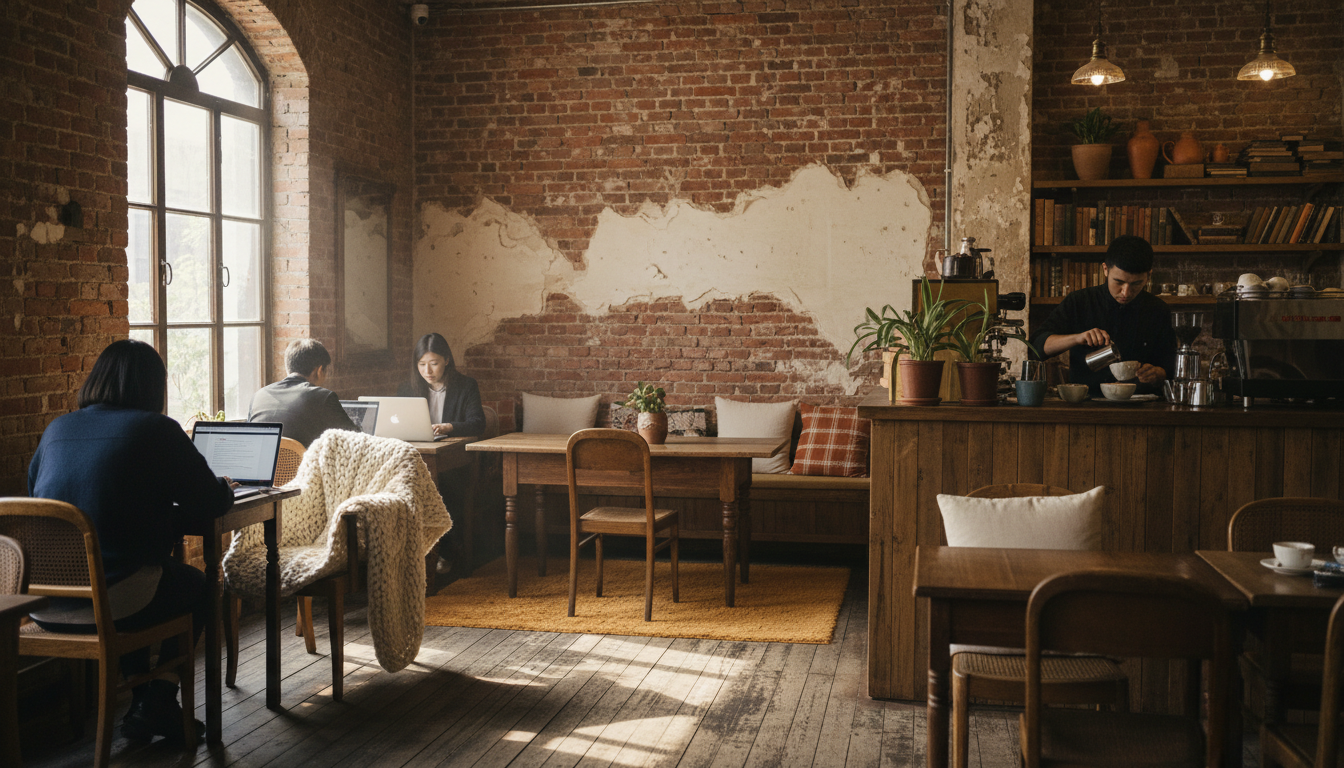 Interior of a Beijing hutong caf with exposed brick walls, vintage furniture, laptop users at wooden
What to Look for in a Beijing Home Swap Listing
Not all home swaps are created equal, especially for remote work. After a few experiences ranging from perfect to problematic, here's my checklist:
Internet specs in the listing. Any serious host will mention their WiFi speed. If they don't, ask directly before confirming. "Fast internet" is meaningless—you want actual Mbps numbers.
Desk situation. Photos should show a dedicated workspace, not just a kitchen table. Ask about chair quality too—I once spent two weeks with lower back pain because the only "desk chair" was a decorative wooden stool.
Natural light. Beijing apartments can be dark, especially in older buildings. Look for photos taken during daytime with good window visibility.
Heating and cooling. Beijing has actual seasons—freezing winters (down to -10°C/14°F) and humid summers (35°C/95°F+). Confirm the apartment has adequate climate control for your travel dates.
Neighborhood noise. Hutong living is charming but can be loud—street vendors, neighbors, construction. Ask your host directly about noise levels during work hours.
Building access. Some older Beijing buildings don't have elevators. If you're hauling equipment or have mobility concerns, confirm floor level and elevator availability.
When I messaged Wei before our swap, I asked about all of these things. She sent me a photo of her actual internet speed test (247 Mbps down) and mentioned that her apartment faced an interior courtyard, so street noise wasn't an issue. That level of detail told me she understood what remote workers need.
Navigating Daily Life During Your Beijing Home Swap
The first few days will feel overwhelming. That's normal. Beijing operates differently than Western cities, and there's a learning curve.
Payment Systems
Cash is nearly obsolete in Beijing. Everyone uses WeChat Pay or Alipay, which are linked to Chinese bank accounts—problematic for short-term visitors. But both apps now allow international credit card linking. Set this up before you arrive.
Alternatively, keep ¥500-1000 ($70-140) in cash for small vendors and older establishments that haven't fully digitized. ATMs are everywhere; look for Bank of China or ICBC for the best exchange rates.
Transportation
The Beijing subway system is exceptional—clean, efficient, and incredibly cheap (¥3-7 per ride depending on distance). Download the Beijing Subway app for English navigation. During rush hour (7-9 AM, 5-7 PM), expect sardine-can conditions on popular lines.
Didi (China's Uber) works well and is essential for late nights or reaching areas without subway access. The app has an English interface. Average ride across the city: ¥30-60 ($4-8).
Bike sharing is huge. Mobike and Hello Bike have stations everywhere. Download the apps, link payment, and you've got transportation for ¥1-2 per ride.
Food and Groceries
Your home swap host will likely leave you recommendations, which are gold. But for general guidance:
Grocery apps: Freshippo (Hema) delivers groceries within 30 minutes. The app is in Chinese, but the visual interface is intuitive enough. JD.com and Meituan also offer delivery.
Cooking at home: Most Beijing apartments have basic kitchens. Wet markets (菜市场) are the best places for fresh produce—there's usually one within walking distance of any residential area. Prices are negotiable; expect to pay ¥20-40 for a day's worth of vegetables and protein.
Eating out: Street food and small restaurants offer the best value. Point-and-order works fine when language is a barrier. Lunch at a local spot runs ¥15-30. Dinner with beer, ¥40-60. Western restaurants in Sanlitun will set you back ¥80-150.
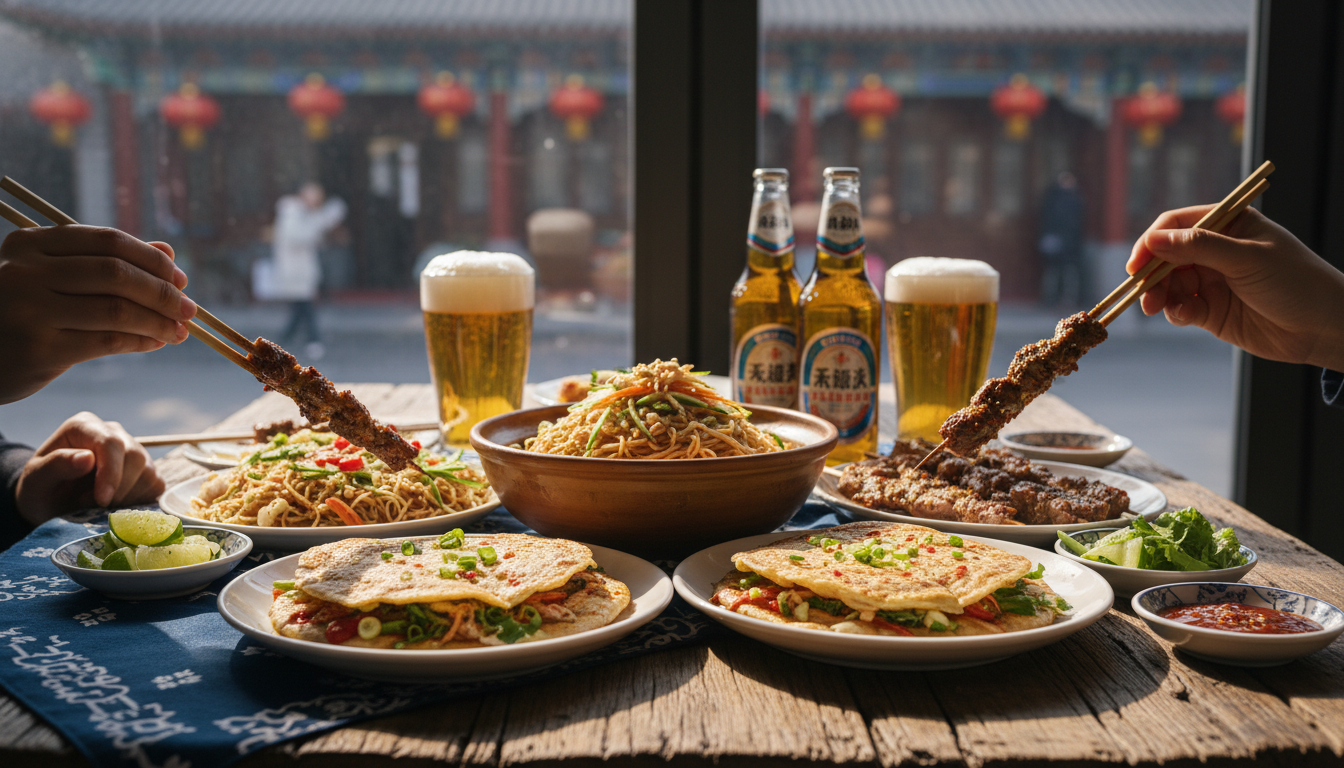 Colorful spread of Beijing street food on a wooden tablejianbing savory crepe, lamb skewers, cold no
Building a Routine That Actually Works
Here's what my typical Beijing workday looked like after I found my rhythm:
7:00 AM — Wake up naturally (no alarm needed once jet lag passed). The courtyard outside Wei's apartment had this specific quality of morning light that made getting up easy.
7:30 AM — Walk to the corner shop for fresh soy milk and a jianbing (savory crepe) from the street vendor. Total cost: ¥12 ($1.70). Best breakfast I've ever had for under two dollars.
8:00 AM - 12:00 PM — Deep work block at the apartment. No calls scheduled, no distractions. The apartment was dead quiet during these hours—most neighbors had left for work.
12:00 PM — Lunch break. Usually walked 10-15 minutes to a different restaurant each day. This became my exploration time.
1:00 PM - 3:00 PM — Work from a café. I rotated between three or four spots to avoid monotony. This was my "meetings and email" block.
3:00 PM - 5:00 PM — Second deep work session, back at the apartment.
5:00 PM onwards — Done. Sometimes I'd work later if deadlines demanded it, but Beijing has too much to see for that to become a habit.
The key insight: having a real home—not a hotel room, not an Airbnb that feels temporary—made it easier to establish routines. Wei's apartment had her coffee setup, her reading chair, her kitchen organization. I slotted into an existing life rather than creating one from scratch.
Cultural Considerations for Home Swappers in Beijing
Home swapping comes with implicit cultural exchange, and Beijing hosts tend to take this seriously.
Wei left me a detailed guide to her neighborhood—not just practical information, but stories. The dumpling shop two doors down was run by a family from Shandong province; they'd been there for thirty years. The old man who did tai chi in the courtyard every morning at 6 AM had been a professor of classical literature. The best time to visit the Forbidden City was Tuesday at 8 AM, when it first opened and the crowds hadn't arrived.
This kind of local knowledge is the whole point of home swapping. It's also something you can reciprocate. When Wei stayed at my San Francisco apartment, I left her a similar guide—the coffee shop where the barista remembers your order, the hiking trail that tourists don't know about, the dim sum place where you need to arrive before 10 AM on weekends.
Respect the Space
Chinese homes often have specific rules that might seem unusual to Western visitors. Remove shoes at the door—always. Don't put hot items directly on wooden furniture. Be mindful of water usage (some older buildings have temperamental plumbing). Ask your host about any specific preferences.
Gifts and Reciprocity
It's customary to leave a small gift for your host. Nothing extravagant—something representative of your home city or country. I left Wei a bag of beans from my favorite San Francisco roaster and a handwritten note. She later told me the coffee was better than anything she'd found in Beijing.
Communication Style
Chinese communication tends to be more indirect than American or European styles. If your host seems to hedge or avoid saying "no" directly, pay attention to context. "That might be difficult" often means "no." "Let me think about it" can mean the same thing. Be patient and don't push.
Long-Term Digital Nomad Home Swapping in Beijing
If you're considering an extended stay—say, two to three months—home swapping becomes even more valuable.
Visa logistics: Most Western passports get 15-30 day visa-free access or can obtain tourist visas valid for 30-90 days. For longer stays, you'll need to look into business visas or make visa runs to Hong Kong (which is actually a lovely excuse for a weekend trip).
The home swap model works beautifully for longer stays because you're building real credits in the system. Host guests at your home for a month, and you've got a month of Beijing accommodation banked. The math is straightforward, and the longer you stay, the more you save compared to traditional rentals.
I've met digital nomads on SwappaHome who've essentially lived rent-free for years by continuously swapping. One guy—a developer from Berlin—had done 18 months of continuous travel without paying for a single night of accommodation. Beijing was his fourth stop in Asia.
Potential Challenges and How to Handle Them
I won't pretend everything about digital nomad life in Beijing is perfect. Here's what might trip you up:
Language barrier. English proficiency is lower in Beijing than in, say, Shanghai or Shenzhen. Download Pleco (dictionary app) and learn basic survival phrases. Google Translate's camera function works for menus and signs—just remember you need VPN to access it.
Air quality. Beijing's pollution has improved dramatically over the past decade, but bad days still happen. Download an AQI (Air Quality Index) app and plan outdoor activities for low-pollution days. Consider packing a quality N95 mask.
Isolation. Working remotely in a city where you don't speak the language can feel lonely. Combat this by joining expat meetups (The Beijinger website lists events), coworking spaces with community programming, or language exchange groups.
Tech frustrations. The VPN will fail at inconvenient moments. Chinese apps will confuse you. Websites you need will be blocked. Build buffer time into deadlines and have backup plans for critical tasks.
Home swap-specific issues. What if something breaks? What if there's a misunderstanding with your host? SwappaHome connects you with hosts through secure messaging, and the review system creates accountability—but ultimately, you're responsible for communicating directly with your host to resolve issues. I'd recommend having travel insurance that covers accommodation problems, just in case.
Is a Digital Nomad Home Swap in Beijing Right for You?
Honestly? It's not for everyone.
If you need absolute predictability, seamless English communication, and Western-style conveniences, Beijing will challenge you. If you're not willing to invest time in preparation—VPN setup, basic language learning, cultural research—you'll struggle.
But if you're the kind of traveler who gets excited by the unfamiliar? Who wants to understand a place rather than just visit it? Who finds joy in figuring things out? Beijing through home exchange is extraordinary.
I think about that three-week swap constantly. The morning light in Wei's courtyard. The noodle shop owner who started recognizing me by day four. The afternoon I got lost in a hutong maze and found a tiny temple I never would have discovered otherwise. The satisfaction of building a routine in a city that initially felt impenetrable.
That's what home swapping offers that hotels and Airbnbs can't: the chance to actually live somewhere, even if just for a few weeks.
If you're considering it, my advice is simple. Start browsing Beijing listings on SwappaHome. Message a few hosts with specific questions. See what's available during your travel dates. The worst that happens is you learn it's not the right fit. The best? You find yourself drinking morning tea in a hutong courtyard, laptop open, watching the neighborhood wake up around you.
That's worth a few hours of research.
Frequently Asked Questions
Is a digital nomad home swap in Beijing safe?
Beijing is one of the safest major cities in the world for travelers, with very low violent crime rates. Home swapping adds an extra layer of security through SwappaHome's verification system and community reviews—you're staying in vetted members' homes, not anonymous rentals. That said, arrange your own travel insurance for peace of mind regarding property or health issues.
How much can I save with a home swap in Beijing compared to hotels?
Significant savings. Decent hotels in central Beijing run $100-200/night, while serviced apartments cost $2,500-4,000/month. With home swapping at 1 credit per night (and 10 free credits for new SwappaHome members), a three-week stay that would cost $2,100-4,200 in hotels costs you nothing but the credits you've earned hosting others.
Do I need to speak Chinese for a home swap in Beijing?
No, but basic phrases help enormously. Most home swap hosts in Beijing speak conversational English and provide detailed instructions. Translation apps bridge gaps for daily interactions. I managed three weeks with about 20 Chinese phrases and heavy reliance on Pleco dictionary app.
What's the best time of year for a digital nomad home swap in Beijing?
September through November offers ideal conditions—clear skies, comfortable temperatures (15-25°C/60-77°F), and fewer tourists than summer. Spring (April-May) is also pleasant but can be dusty. Avoid January-February (freezing, pollution peaks) and July-August (hot, humid, crowded) unless you have specific reasons.
How reliable is internet for remote work in Beijing?
Domestic internet speeds are excellent—most apartments have 100-500 Mbps connections. The challenge is the Great Firewall blocking Western services. With a reliable VPN (set up before arrival), you can access Google, Slack, Zoom, and other work tools, though speeds may be slightly reduced. Always have a backup VPN service ready.
40+
Swaps
25
Countries
7
Years
About Maya Chen
Travel Writer & Home Exchange Expert
Maya is a travel writer with over 7 years of experience in the home swapping world. Originally from Vancouver and now based in San Francisco, she has completed more than 40 home exchanges across 25 countries. Her passion for "slow" and authentic travel led her to discover that true luxury lies in living like a local, not a tourist.
Ready to try home swapping?
Join SwappaHome and start traveling by exchanging homes. Get 10 free credits when you sign up!
Related articles

Lyon Home Exchange: Your Complete Guide to France's Hidden Gem for Home Swapping
Discover why Lyon home exchange is booming among savvy travelers. From Croix-Rousse to Presqu'île, find the best neighborhoods and insider tips for your swap.

Zurich Bucket List: 47 Unforgettable Experiences to Enjoy During Your Home Swap
Discover the ultimate Zurich bucket list for home swappers—from secret swimming spots to fondue rituals locals actually do. Save thousands while living like a true Zürcher.
Dublin Home Exchange Utilities Guide: WiFi, Heating & Everything Your Guests Need
Master Dublin home exchange utilities—from dodgy WiFi fixes to heating quirks. Practical tips from 7 years of swapping homes across Ireland.