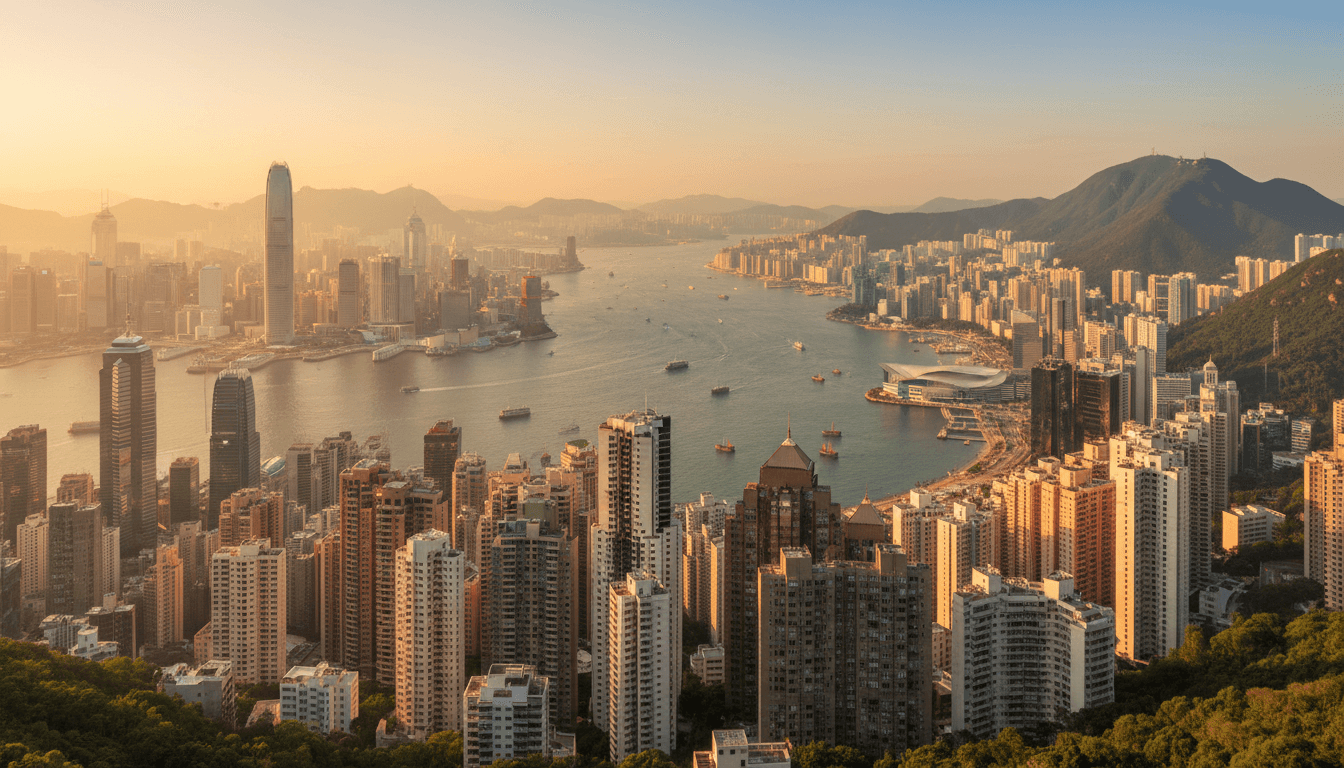
Digital Nomad Home Swap in Hong Kong: Your Complete Guide to Working Remotely Like a Local
Maya Chen
Travel Writer & Home Exchange Expert
Discover how a digital nomad home swap in Hong Kong lets you live like a local, save thousands, and work remotely from one of Asia's most electrifying cities.
The first time I stepped into a home swap apartment in Hong Kong's Sheung Wan district, I nearly cried. Not from sadness—from sheer relief. After three weeks of bouncing between overpriced serviced apartments and Airbnbs with WiFi that cut out during every video call, I'd finally found it: a real home with a dedicated workspace, a view of the harbor, and internet fast enough to upload raw video files without wanting to throw my laptop off the balcony.
That was four years ago. Since then, I've done three more digital nomad home swaps in Hong Kong, each one teaching me something new about how to actually live and work in this vertical city. And here's what I've learned: Hong Kong might be one of the most expensive cities on Earth for hotels and short-term rentals, but through home exchange? It becomes surprisingly accessible—and infinitely more interesting.
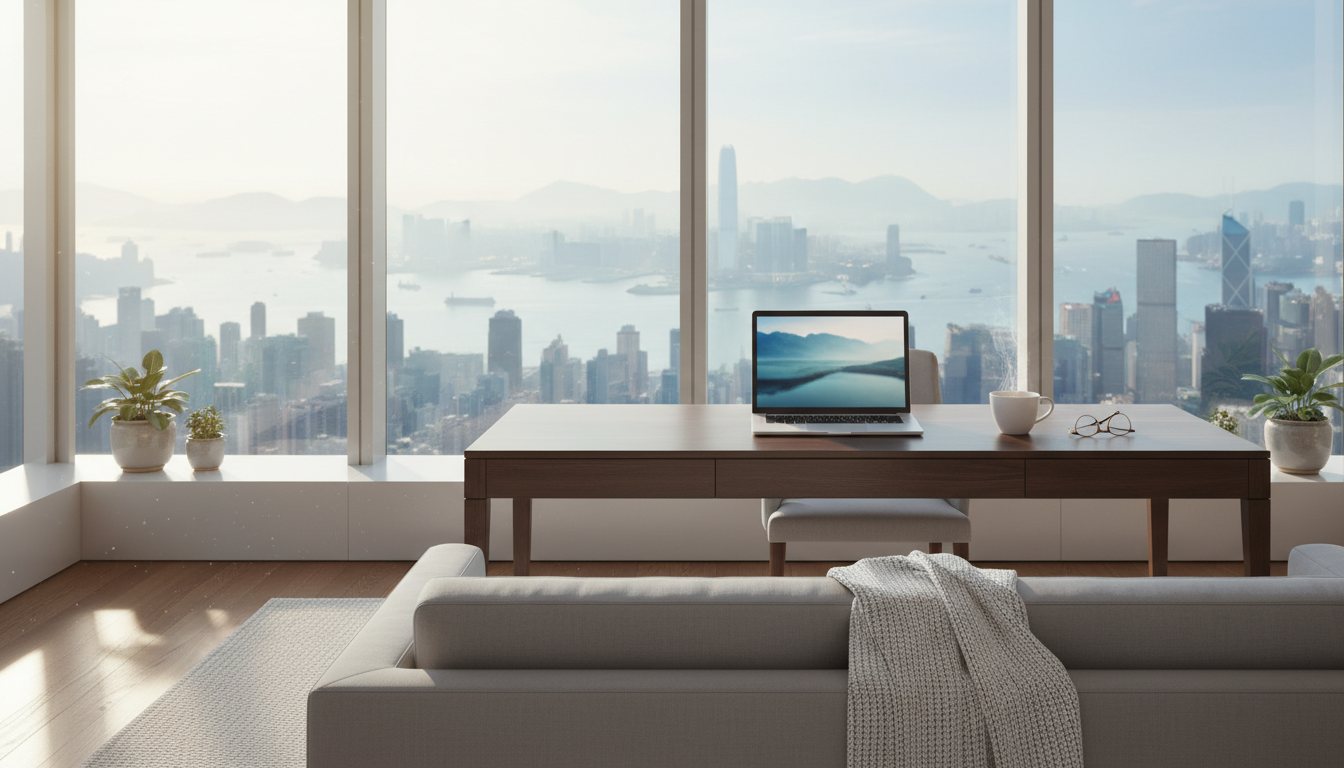 Morning light streaming through floor-to-ceiling windows of a Mid-Levels apartment, laptop open on a
Why Hong Kong Is Perfect for Digital Nomad Home Swapping
Let me be honest with you: Hong Kong isn't the obvious choice for remote workers. It's dense, humid, loud. The apartments are famously tiny. And the cost of living? A basic hotel room in a decent area will run you $180-250 USD per night. A month of that and you've spent your entire quarterly income.
But here's what the travel guides don't tell you—Hong Kong is secretly one of the best cities in Asia for getting serious work done.
The internet infrastructure is phenomenal. I'm talking average speeds of 250+ Mbps in residential areas. The time zone (GMT+8) overlaps with both Australian morning meetings and late-night US calls. English is everywhere. The MTR is so efficient you can cross the entire city in 40 minutes. And the café culture? Thriving, with specialty coffee shops that understand the unspoken contract between remote worker and establishment.
The problem has always been accommodation costs. A digital nomad home swap in Hong Kong solves that entirely.
Through SwappaHome's credit system, you're spending 1 credit per night regardless of whether you're staying in a compact Mong Kok studio or a spacious apartment in the Peak. Those 10 free credits you get when you join? That's 10 nights in one of the world's most expensive cities. Host a few guests back home first, and you've got yourself a month.
Best Hong Kong Neighborhoods for Remote Work Home Exchanges
Not all Hong Kong neighborhoods are created equal when you're planning a digital nomad home swap. I've worked from five different areas, and the differences in quality of life are stark.
Sheung Wan: The Sweet Spot for First-Timers
This is where I always recommend starting. Sheung Wan sits on Hong Kong Island's western edge, sandwiched between the chaos of Central and the incense-filled temples of the Western District. It's got character without being overwhelming.
The streets here are lined with dried seafood shops, antique dealers, and some of the city's best independent coffee roasters. Cupping Room on Upper Station Street became my de facto office during one swap—their single-origin pour-overs are excellent, and they genuinely don't mind if you camp out for three hours.
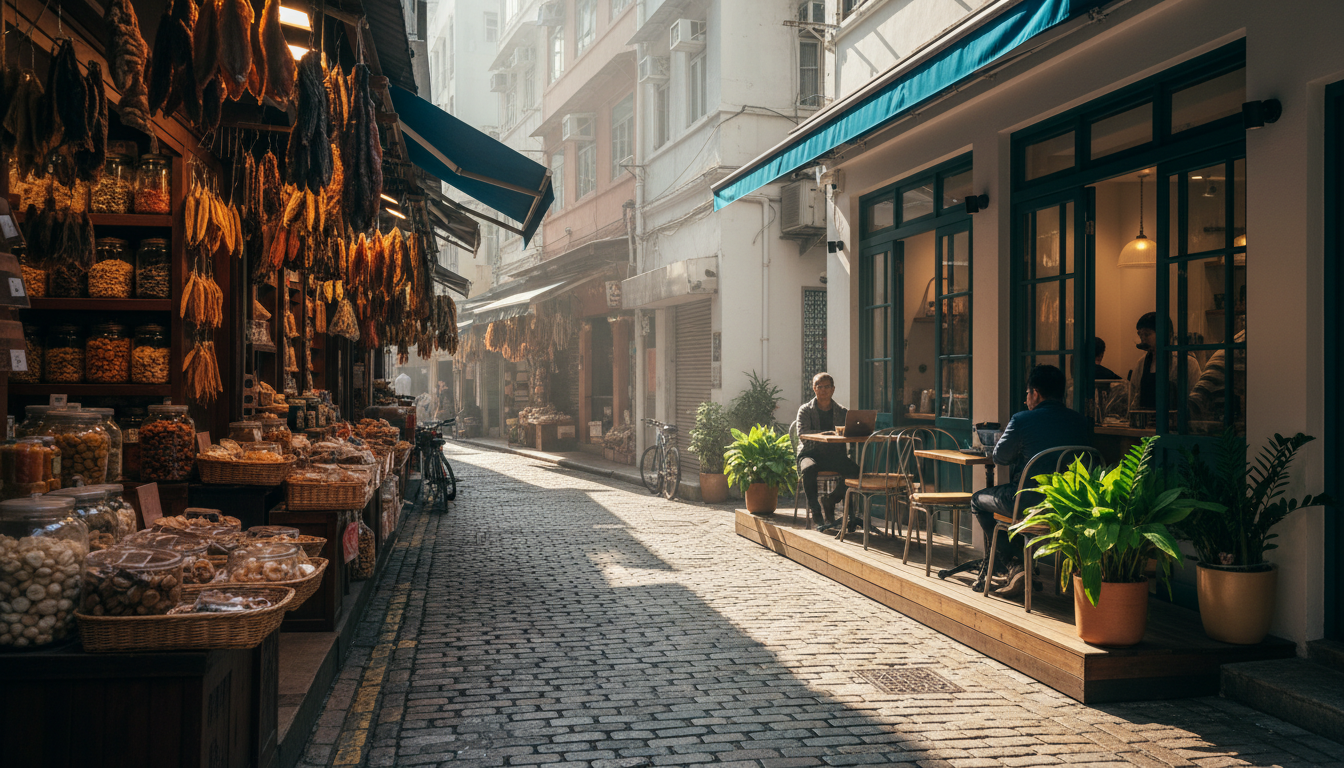 Narrow street in Sheung Wan with traditional dried seafood shops on one side and a modern specialty
Apartments in Sheung Wan tend to be older but more spacious than newer developments. Many have been renovated with modern kitchens and proper workspaces. Expect around 400-600 square feet for a one-bedroom, which by Hong Kong standards is generous. WiFi speeds run consistently 200+ Mbps in the buildings I've stayed in. You're a 10-minute walk to Central MTR, 5 minutes to the PMQ creative hub, 3 minutes to Man Mo Temple, and surrounded by endless dim sum options.
Sai Ying Pun: The Underrated Gem
One stop west of Sheung Wan on the MTR, Sai Ying Pun has transformed over the past decade from a purely local neighborhood into something special. It's still got wet markets and old-school cha chaan tengs, but now there's also natural wine bars, third-wave coffee, and some genuinely excellent restaurants.
I did a three-week home swap here in 2022, in a fifth-floor walkup with no elevator but a rooftop terrace that made every stair worth it. Worked from that terrace most mornings, watching the city wake up below.
The neighborhood is quieter than Sheung Wan, which matters when you're taking calls. Fewer tourists, more families. The local market on Centre Street is where I'd grab breakfast—a bowl of congee for about $3 USD that would fuel me until lunch.
Kennedy Town: For Those Who Need Space to Think
At the western terminus of the Island Line, Kennedy Town feels almost like a different city. The pace is slower. The waterfront promenade is perfect for walking meetings or clearing your head between deep work sessions.
Apartments here tend to be newer and slightly larger, though you're trading proximity to Central for that space. The commute to the business district is about 20 minutes by MTR, which honestly isn't bad—I'd use that time to read or plan my day.
One catch: this area has fewer coworking backup options if your home swap's internet has issues. Know that going in.
Mong Kok (Kowloon Side): The Budget-Conscious Choice
Real talk: Mong Kok is chaotic. It's one of the most densely populated places on Earth. The streets are a sensory overload of neon signs, market stalls, and crowds that never seem to thin.
But.
If you can handle the energy, Mong Kok offers something the Hong Kong Island neighborhoods don't: affordability that extends beyond just your accommodation. Street food dinners for $5 USD. Bubble tea for $2. Massage places that charge $30 for an hour. Your SwappaHome credits get you the apartment; Mong Kok keeps everything else cheap.
I spent two weeks here during a particularly deadline-heavy period, and honestly? The chaos worked for me. Something about the constant movement outside my window kept me focused. Plus, the 24-hour restaurants meant I could grab dan dan noodles at 2 AM when I was finishing a project.
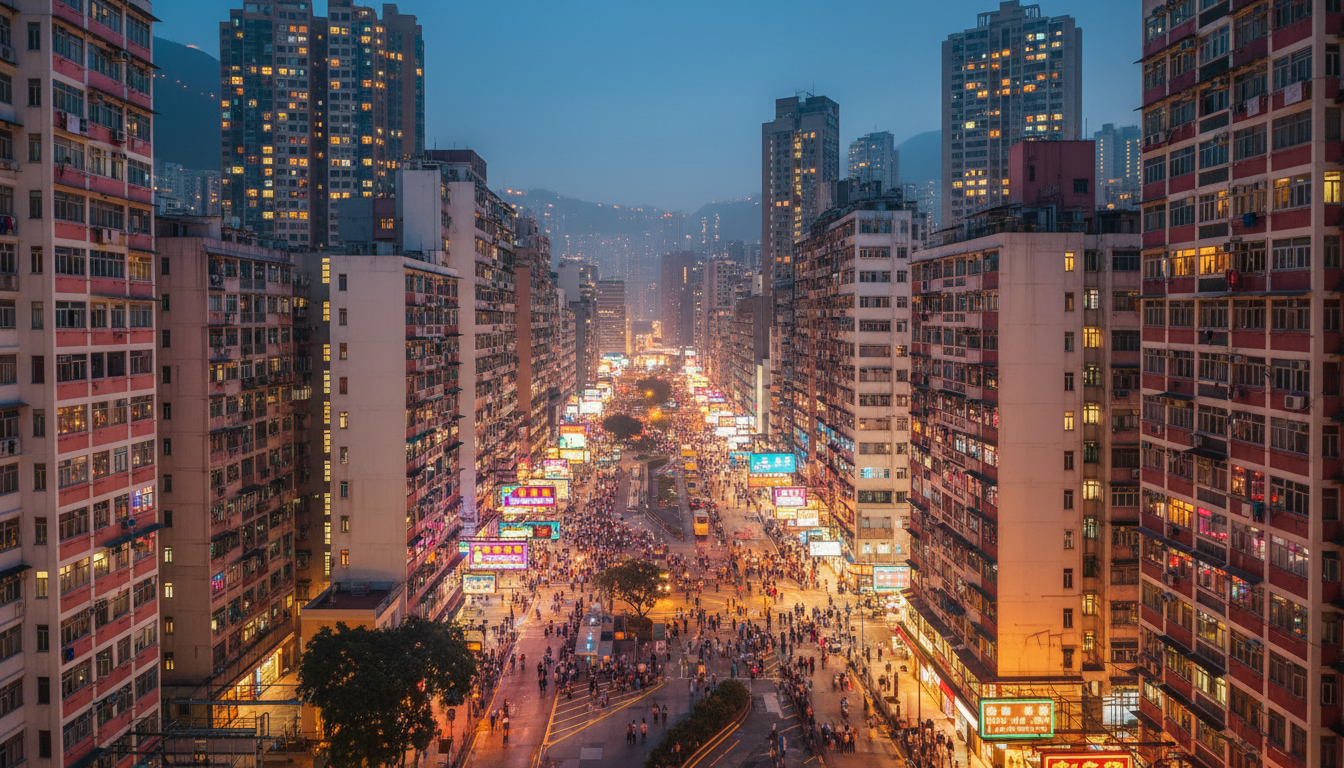 Aerial view of Mong Kok at dusk, neon signs in Chinese and English illuminating the crowded streets
The Mid-Levels: When You Want to Treat Yourself
The Mid-Levels stretch up the hillside above Central, connected by the world's longest outdoor covered escalator system. Apartments here have views. Like, actual views—harbor panoramas, city skylines, glimpses of green mountains.
This is where Hong Kong's expat professionals live, and the homes available for swap reflect that. Expect modern buildings, gyms, sometimes pools. Proper home offices aren't uncommon.
The trade-off is isolation. You're above the city, not in it. Getting down to street level requires either the escalator (which only goes down until 10 AM, then reverses) or steep walks. I found this annoying when I wanted to grab lunch, but perfect when I needed uninterrupted focus time.
Setting Up Your Hong Kong Home Swap for Remote Work Success
After four home exchanges in this city, I've developed a pre-arrival checklist that's saved me from several potential disasters.
The Non-Negotiable Conversation
Before confirming any digital nomad home swap in Hong Kong, I message the host with these specific questions: What's your typical internet speed? Do you have a backup option if it goes down? Is there a dedicated workspace, or will I be working from the dining table? How's the natural light situation during the day? Any regular noise issues I should know about—construction, neighbors, street noise? Is there air conditioning in the work area? (This matters. Hong Kong summers are brutal.)
Most SwappaHome hosts are incredibly helpful with these details. They get it—they're often remote workers themselves, which is why they have the flexibility to travel and swap homes.
The 48-Hour Buffer
I always arrive two days before any important meetings or deadlines. This gives me time to test the WiFi under real conditions, find backup cafés within walking distance, and adjust to the time zone if I'm coming from somewhere drastically different.
During those first 48 hours, I'll do a video call with a friend just to test the connection quality. I'll work from two or three nearby cafés to identify my backup spots. I'll figure out where the nearest coworking space is, just in case.
Backup Plans That Have Saved Me
The Hive has multiple locations with day passes around $40 USD, solid WiFi, and a professional environment. Starbucks Reserve in Central isn't my favorite aesthetically, but the WiFi is reliable and there's always seating. Hong Kong Central Library in Causeway Bay is free, quiet, has decent WiFi, and stays open until 8 PM most days. And honestly? Your phone's hotspot. Hong Kong SIM cards with unlimited data cost about $15-20 USD for a month. Get one at the airport. It's saved me twice.
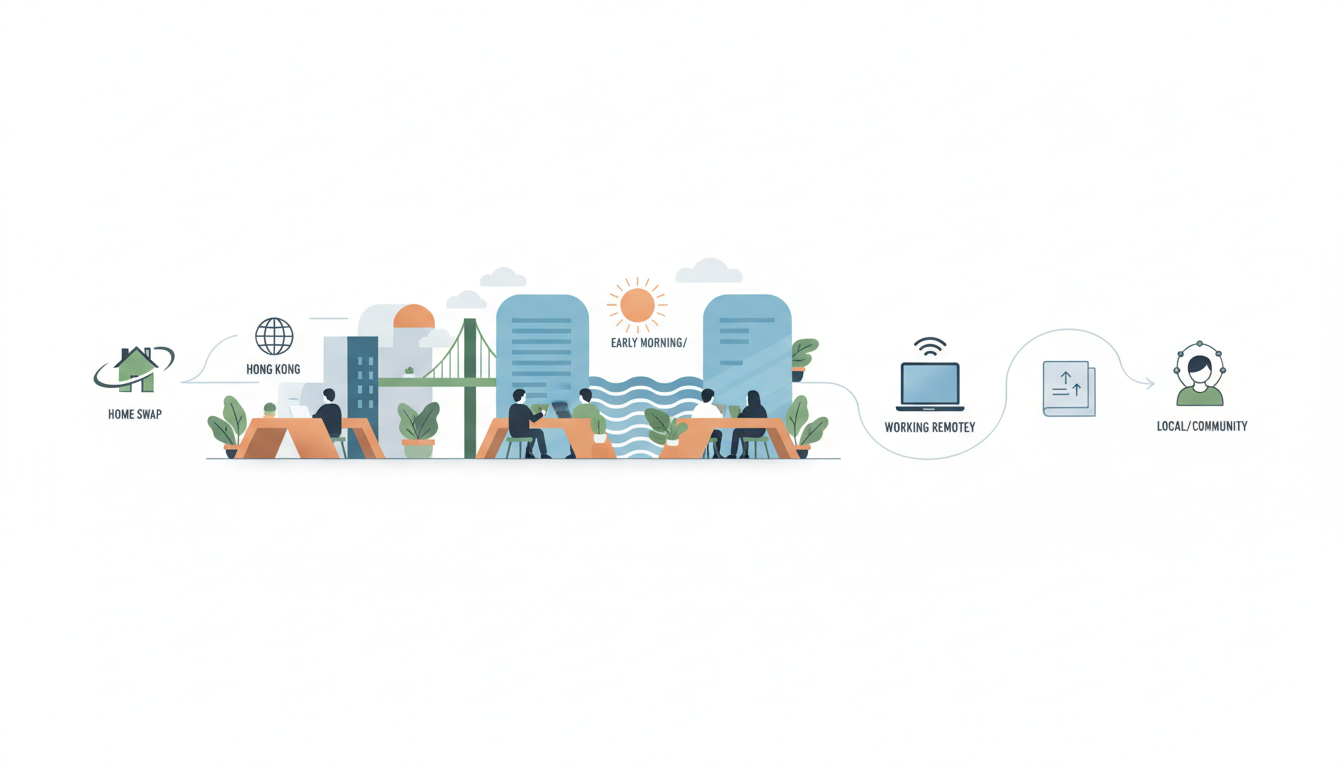 Minimalist coworking space in Hong Kong with floor-to-ceiling windows overlooking the harbor, severa
A Day in the Life: Working Remotely from a Hong Kong Home Swap
Let me walk you through what a typical Tuesday looked like during my last swap in Sheung Wan.
6:30 AM: Wake up without an alarm. Hong Kong's morning light is aggressive in the best way—by 6 AM, the sun is streaming through even the thickest curtains. Make coffee in the apartment's kitchen (the host had left me a bag of beans from a local roaster, which was a lovely touch).
7:00 AM: Morning pages and planning at the tiny desk by the window. The street below is already alive—delivery trucks, elderly folks doing tai chi in the small park across the road, the rhythmic clang of metal shutters opening on the shops.
8:00 AM: Walk to Halfway Coffee on Caine Road for a flat white and a change of scenery. Work on writing projects here—something about the ambient noise helps with creative work.
10:30 AM: Back to the apartment for video calls. The WiFi is rock solid, and the background of a real home (bookshelf, plants, actual art) looks infinitely better than a hotel room.
1:00 PM: Lunch at a local cha chaan teng. Order the set lunch—usually a main, a drink, and soup for about $8 USD. Today it's baked pork chop rice with iced lemon tea. Eat quickly; these places aren't meant for lingering.
2:00 PM: Deep work session. This is when I tackle the hardest tasks. The apartment is quiet—most neighbors are at work—and I can focus without interruption.
5:30 PM: Golden hour. I grab my laptop and head to the IFC Mall rooftop garden, which is free and has WiFi. Respond to emails while watching the light change over the harbor.
7:00 PM: Evening walk through the neighborhood. Stop at the wet market for vegetables, grab some char siu from a street stall ($6 USD for enough to feed two), and head back to cook dinner in the apartment.
9:00 PM: If I have US calls, this is when they happen. Otherwise, I'm reading on the small balcony, listening to the city hum below.
This rhythm—this integration of work and life and place—is exactly what a digital nomad home swap in Hong Kong makes possible. You're not a tourist. You're not stuck in a hotel. You're just... living.
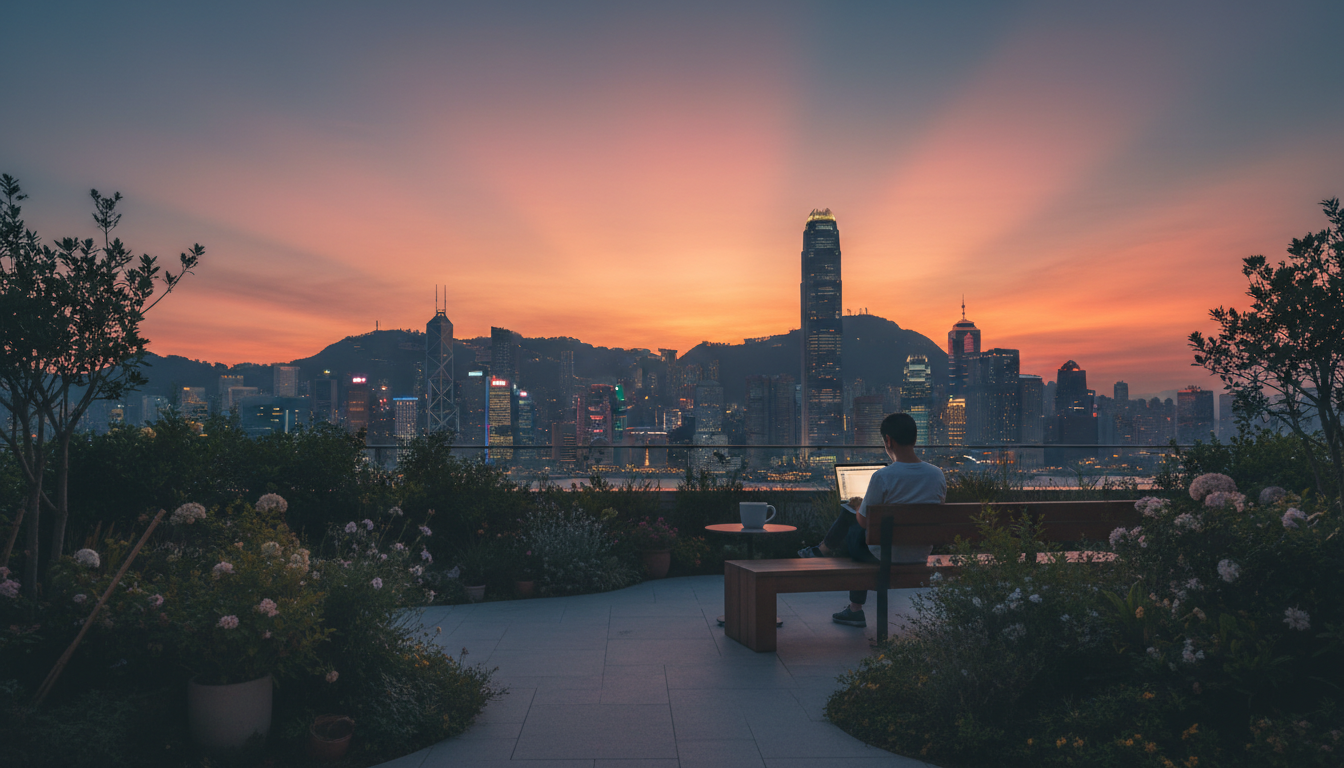 Golden hour view from a rooftop garden, Hong Kongs skyline silhouetted against an orange and pink sk
The Real Costs: Home Swap vs. Traditional Accommodation
Let me break down what a month in Hong Kong actually costs, comparing a home swap approach to traditional options.
Traditional Route (Hotel/Airbnb): A mid-range hotel in Sheung Wan runs $200/night, which comes to $6,000 for a month. Or an Airbnb (a decent one-bedroom) at $150/night puts you at $4,500. Add a coworking membership since hotel WiFi is unreliable—that's $400. Eating out every meal because you don't have a kitchen? About $40/day, or $1,200 for the month. Total: $6,100 - $7,600 USD.
Home Swap Route: Your SwappaHome credits (30 of them, earned by hosting or starting with your 10 free) cover accommodation. Groceries and cooking most meals runs about $300. Coffee shop work sessions, maybe $150. Occasional dining out, $200. Transportation, $100. Total: $750 USD (plus the value of hosting guests at your home).
The difference is staggering. And I haven't even factored in the intangible value—having a kitchen, a real workspace, a neighborhood you get to know, recommendations from your host about the best local spots.
What Hong Kong Hosts Typically Offer (and Expect)
The home exchange community in Hong Kong skews toward professionals in their 30s-50s who travel frequently for work or have flexible schedules. Many are themselves remote workers or entrepreneurs, which means they understand what you need.
I've consistently encountered fast, reliable WiFi (standard in Hong Kong), a dedicated desk or workspace, air conditioning (essential May-October), a washing machine either in-unit or in the building, basic kitchen supplies and often a coffee setup, and detailed neighborhood guides with restaurant recommendations.
What do hosts expect in return? Respectful treatment of their space. Clear communication before and during the swap. Leaving the apartment as clean as you found it. Following any specific instructions—recycling protocols, plant watering, that sort of thing.
One thing I've noticed: Hong Kong hosts are often meticulous about cleanliness and organization. The apartments are small, so everything has its place. Respect that system. Don't rearrange furniture or leave things scattered. It's their home—you're a guest, even if you're staying a month.
Navigating the Challenges
I'm not going to pretend a digital nomad home swap in Hong Kong is without friction. Here's what to prepare for.
The Space Issue. Hong Kong apartments are small. Even "spacious" ones feel compact by Western standards. If you're used to spreading out, this requires adjustment. I've learned to be ruthless about what I bring—one carry-on, max. There's simply nowhere to put extra stuff.
The Humidity. May through September, the humidity hovers around 80-90%. Your electronics will be fine (air conditioning keeps interiors dry), but expect your clothes to take forever to dry and your hair to have a life of its own. Bring quick-dry fabrics.
The Noise. Hong Kong never really sleeps. Even in quieter neighborhoods, you'll hear traffic, construction, the occasional late-night mahjong game from a neighboring apartment. Bring earplugs or a white noise app. I use both.
The Language Barrier (Sometimes). English is widely spoken in business contexts and tourist areas, but in local neighborhoods and markets, Cantonese dominates. Learn a few phrases—"m̀h'gōi" (please/thank you/excuse me) goes a long way. Google Translate's camera function is helpful for menus.
Making the Most of Your Hong Kong Home Exchange
Beyond the work stuff, here's how to actually experience the city like someone who lives there.
Morning Dim Sum, Done Right. Forget the tourist spots. Find a neighborhood dim sum place where you fill out paper order forms and the carts roll by your table. Lin Heung Tea House in Sheung Wan is old-school and chaotic and perfect. Go early (before 9 AM) to avoid the crowds.
The Hiking Nobody Tells You About. Hong Kong is 75% green space. Dragon's Back trail on Hong Kong Island is accessible by public transit and offers ridiculous views. Lion Rock in Kowloon is harder but worth it. These make excellent weekend breaks from screen time.
The Neighborhood Immersion. Pick one local spot and become a regular. For me, it was a tiny congee shop where the owner eventually started making my order when she saw me walk in. That kind of connection doesn't happen in hotels.
The Day Trip to Outlying Islands. Lamma Island is 30 minutes by ferry and feels like a different country. No cars, seafood restaurants on the beach, hiking trails through jungle. Perfect for a weekend reset.
When to Plan Your Digital Nomad Home Swap in Hong Kong
Timing matters more than you might think.
October through December is ideal—dry, comfortable temperatures around 65-75°F, clear skies. February through April is also good, warming up with occasional rain but manageable. May through September is challenging—hot, humid, typhoon season—though typhoons mean legitimate work-from-home days. Avoid the Chinese New Year period (late January/early February) if possible; many businesses close, the city empties out, and it's harder to get the local experience.
Book your home swap 2-3 months in advance for the best selection, especially during peak season.
Getting Started with Your Hong Kong Home Exchange
If you're ready to try this, here's my honest advice.
Start by listing your own home on SwappaHome. Be detailed about your workspace setup, your WiFi speed, your neighborhood. The more specific you are, the more likely you'll attract hosts who value the same things.
Build up some credits by hosting travelers. Those 10 free credits are a great start, but having 20-30 gives you flexibility for a longer Hong Kong stay.
When searching for Hong Kong homes, filter for properties that mention remote work, home office, or fast WiFi. Read reviews carefully—other digital nomads will mention connection issues if they exist.
Message potential hosts before requesting a swap. Explain your work situation, your schedule, what you need. This conversation often reveals whether a place will actually work for you.
And finally: approach it with flexibility. The best home swaps I've had weren't the ones that were perfect on paper—they were the ones where the host and I genuinely connected, where they left me a list of their favorite spots, where I felt like I was borrowing a friend's apartment rather than staying in a stranger's space.
That's the magic of home exchange. It's not just about saving money (though you will). It's about experiencing a city from the inside, as a temporary local rather than a permanent tourist.
Hong Kong, with all its intensity and contradictions, is a city that rewards that kind of immersion. The neon and the temples. The skyscrapers and the hiking trails. The $3 congee and the $30 cocktails. It's a place that makes more sense when you live in it, even for a few weeks.
A digital nomad home swap in Hong Kong won't give you the sanitized, hotel-brochure version of the city. It'll give you the real one. And honestly? That's so much better.
Frequently Asked Questions
Is a digital nomad home swap in Hong Kong safe?
Yes, Hong Kong consistently ranks among the safest cities in the world. The home exchange community on SwappaHome includes verified members with reviews from previous swaps. I recommend communicating thoroughly with hosts beforehand and considering your own travel insurance for additional peace of mind. The city itself has very low crime rates, and I've never felt unsafe during any of my stays.
How much can I save with a home swap versus hotels in Hong Kong?
A typical month in Hong Kong costs $4,500-7,000 USD for traditional accommodation (hotels or Airbnb) plus dining out. With a home swap using SwappaHome credits, your accommodation is essentially free, and having a kitchen reduces food costs dramatically. Most digital nomads save $4,000-6,000 USD per month compared to traditional options.
What internet speed can I expect in Hong Kong home swaps?
Hong Kong has some of the fastest residential internet in the world. Most apartments offer 100-500 Mbps connections, with many newer buildings providing gigabit speeds. I've never experienced speeds below 100 Mbps in any of my four Hong Kong home swaps. Always confirm the specific speed with your host before booking.
Do I need to speak Cantonese for a home swap in Hong Kong?
No, English is widely spoken in Hong Kong, especially in business districts and among the international community. Signage is bilingual, and most SwappaHome hosts communicate in English. However, learning basic Cantonese phrases like "m̀h'gōi" (thank you) helps in local markets and restaurants, and locals genuinely appreciate the effort.
How far in advance should I book a Hong Kong home swap?
I recommend booking 2-3 months ahead for the best selection, especially during peak season (October-December). Popular neighborhoods like Sheung Wan and Sai Ying Pun have limited inventory, so earlier is better. For off-peak months (May-September), 4-6 weeks advance booking is usually sufficient.
40+
Swaps
25
Countries
7
Years
About Maya Chen
Travel Writer & Home Exchange Expert
Maya is a travel writer with over 7 years of experience in the home swapping world. Originally from Vancouver and now based in San Francisco, she has completed more than 40 home exchanges across 25 countries. Her passion for "slow" and authentic travel led her to discover that true luxury lies in living like a local, not a tourist.
Ready to try home swapping?
Join SwappaHome and start traveling by exchanging homes. Get 10 free credits when you sign up!
Related articles
Lyon Home Exchange: Your Complete Guide to France's Hidden Gem for Home Swapping
Discover why Lyon home exchange is booming among savvy travelers. From Croix-Rousse to Presqu'île, find the best neighborhoods and insider tips for your swap.
Zurich Bucket List: 47 Unforgettable Experiences to Enjoy During Your Home Swap
Discover the ultimate Zurich bucket list for home swappers—from secret swimming spots to fondue rituals locals actually do. Save thousands while living like a true Zürcher.
Dublin Home Exchange Utilities Guide: WiFi, Heating & Everything Your Guests Need
Master Dublin home exchange utilities—from dodgy WiFi fixes to heating quirks. Practical tips from 7 years of swapping homes across Ireland.