
European Vacation film: Plot, cast, filming locations, and legacy of the 1985 comedy

SwappaHome Editorial Team
Home Exchange & Slow Travel Editorial
Key Takeaways National Lampoon’s European Vacation turns a dream family trip into a chain of escalating disasters. Its appeal rests on the Griswolds’ familiar…
Key Takeaways
National Lampoon’s European Vacation turns a dream family trip into a chain of escalating disasters. Its appeal rests on the Griswolds’ familiar optimism, a brisk tour of European settings, and comedy that remains both memorable and debatable.
- The film follows the Griswolds after they win a European trip on a game show.
- Chevy Chase and Beverly D’Angelo anchor the returning family comedy.
- London, Paris, Germany, and Italy provide the story’s changing backdrops.
- The film earned money despite receiving mixed critical reviews.
- Its broad humor has become easier to appreciate as a time capsule than as a travel guide.
What National Lampoon’s European Vacation is about
Released in 1985, this European vacation film sends the Griswold family out of suburban America and into a succession of unfamiliar places. The basic premise is simple: a prize trip promises culture, excitement, and family bonding. Clark Griswold, naturally, treats the journey as a personal mission to create the perfect holiday. The result is a comedy built from the distance between that intention and what actually happens.
The Griswold family’s journey across Europe
Clark, Ellen, Audrey, and Rusty win an all-expenses-paid trip after appearing on a game show. Their itinerary carries them through London, France, Germany, and Italy, though the travel itself feels less like a carefully planned tour than a series of comic collisions. The family moves from one famous setting to another while trying, with varying degrees of success, to remain together.
The trip works as a loose string of episodes. A rental car, a hotel, a historic monument, and a camera can each become the center of a fresh crisis. That structure gives the movie a postcard quality, but the postcards are repeatedly bent, dropped, or driven into.
The central conflicts and comedic set pieces
The main conflict is not simply that Europe is unfamiliar. It is that Clark refuses to admit when his plans have gone wrong. He keeps trying to restore the mood with confidence and forced cheer, often making the situation worse. Ellen generally wants the family to enjoy itself, while the children have their own reasons for resisting the trip.
Some of the best-known sequences turn ordinary tourist problems into physical comedy: driving on the wrong side of the road, getting trapped in traffic, and mishandling visits to famous landmarks. The jokes are broad, but the family tension underneath them gives the set pieces a little shape.
How the film connects to the Vacation franchise
The movie is the second major entry in the Vacation series and keeps the central idea intact: Clark’s enthusiasm is sincere, but his judgment is unreliable. Like the earlier story, it places an ordinary family inside an oversized holiday adventure and lets small frustrations swell into public disasters.
A useful companion is this Griswold family adventure, which places the film’s plot, cast, and production details in the context of the wider series. The sequel expands the map without changing the comic engine. Clark still wants a perfect family memory; the family still has to survive his methods.
Cast and characters
The cast gives the film its warmth, even when the material becomes cartoonish. Chevy Chase plays Clark as a man whose confidence is never entirely supported by reality, while Beverly D’Angelo supplies Ellen with patience, humor, and emotional steadiness. The children bring separate teenage anxieties to the trip rather than functioning as one undifferentiated pair.
The supporting performances add to the film’s travelogue atmosphere. Local figures, hotel staff, strangers, and comic eccentrics appear briefly, making each stop feel like a new sketch. The performances are often deliberately larger than life, matching the movie’s increasingly absurd rhythm.
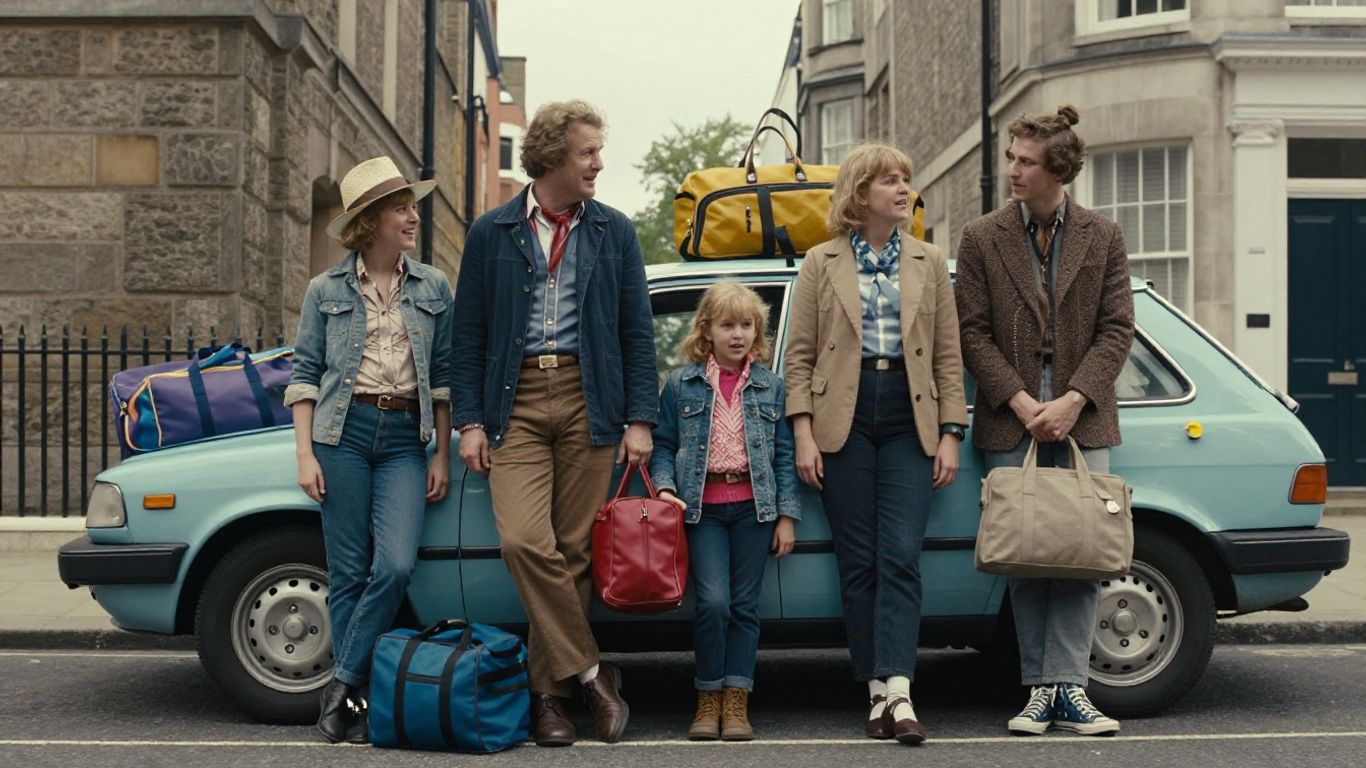 Chevy Chase and family touring Europe
Chevy Chase as Clark Griswold
Chevy Chase makes Clark persuasive because he does not play him as a pure fool. Clark genuinely wants everyone to have a wonderful time, and that desire keeps him moving after any sensible person would stop. His optimism is touching for a moment, then alarming, then funny again.
Chase’s physical performance is especially important. Clark’s face often announces panic before his words do, and his body seems to lean into every bad decision. The character’s stubbornness becomes the film’s most reliable source of momentum.
Beverly D’Angelo as Ellen Griswold
Beverly D’Angelo gives Ellen a grounded presence that keeps the family from becoming entirely chaotic. Ellen is more open to the trip than the children, but she is not blind to Clark’s mistakes. Her reactions often provide the audience’s quiet confirmation that a situation has become ridiculous.
Ellen also protects the family’s emotional center. Even when she is embarrassed or frustrated, she remains connected to Clark and the children. That loyalty makes the marriage feel more durable than the holiday itself.
The Griswold children and their changing roles
Dana Hill plays Audrey as a teenager pulled between family obligation and the life she has left at home. Her reluctance gives the journey a recognizable adolescent edge: Europe may be beautiful, but it cannot compete with the person she misses. Jason Lively’s Rusty approaches the trip from a different angle, looking toward the possibilities of travel and romance.
Their contrasting reactions help the family scenes breathe. Audrey wants emotional distance, while Rusty is eager to discover what the trip might offer. Both are still forced into Clark’s itinerary, which is part of the joke.
Supporting characters and memorable performances
The supporting cast includes comic figures played by Eric Idle, Victor Lanoux, and others who give the Griswolds temporary obstacles or unexpected assistance. Eric Idle’s presence is particularly suited to the film’s dry, strange side, arriving with a calm energy that contrasts with Clark’s frantic certainty.
These characters are not developed as fully as the Griswolds, but they help each location acquire its own comic texture. A brief encounter can become a complete joke, a misunderstanding, or another reminder that Clark is not in control.
Plot breakdown and major themes
The plot follows a familiar escalation pattern. A lucky break creates high expectations, the first problems are manageable, and then every attempt to repair the vacation creates a larger problem. Beneath the slapstick, the film is interested in the fantasy of effortless travel and the pressure to turn a costly trip into a perfect family experience.
Its comedy is episodic rather than tightly plotted. That can make the movie feel uneven, but it also lets individual scenes survive as memories independent of the full story. The family’s movement through Europe becomes a series of tests for Clark’s self-image.
Winning the European vacation contest
The story begins when the Griswolds win a trip on a televised contest. The prize seems to solve several problems at once: it gives the family a rare adventure, removes the burden of planning, and offers Clark a chance to be the hero who makes everything happen.
That setup is important because Clark does not approach the trip cautiously. He treats the win as proof that the family is meant to have an extraordinary holiday. The gap between the prize’s promise and the family’s actual experience drives nearly every later joke.
Culture shock and escalating family mishaps
Once the family arrives, ordinary differences in roads, customs, language, and social expectations become sources of confusion. Clark reads each problem as a temporary interruption rather than a warning. His determination to keep moving gives the film its escalating shape.
The family’s major mishaps can be grouped into a few recurring patterns:
- Clark misunderstands unfamiliar roads and traffic.
- Famous landmarks become settings for physical disaster.
- The children’s private concerns clash with the family itinerary.
- Attempts to document the trip create new complications.
That repetition is deliberate. Each mishap makes the next one feel more likely, while the family’s exhaustion makes Clark’s upbeat speeches increasingly funny.
Satire of American tourism and travel expectations
The film gently, and sometimes not so gently, mocks the idea that travel automatically makes people worldly. The Griswolds arrive with expectations shaped by postcards, television, and tourist fantasies. They want the highlights without always understanding the places around them.
The satire also points back at American consumer culture. The family has won an experience as if it were a prize, but the trip still has to be performed, photographed, and remembered as a success. The perfect holiday is a performance, and Clark is its most committed actor.
How the ending resolves the family’s adventure
By the final stretch, the trip has not become the polished family memory Clark imagined. The disasters have exposed his limitations, but they have also produced a shared story that the family can carry home. The emotional resolution is modest: survival, reunion, and the possibility that the Griswolds remain a family partly because they endure the same absurd experiences.
The ending does not erase the damage or turn the journey into a conventional success. Instead, it closes the loop on Clark’s optimism. He may not have created the perfect vacation, but he has created an unforgettable one.
Filming locations and European settings
The film’s changing settings give it much of its visual energy. London supplies the first major culture shock, Paris offers another collection of tourist expectations, and later stops broaden the family’s route across the continent. The locations are not treated as quiet travel portraits; they are stages for movement, confusion, and comic interruption.
For modern viewers, the settings can be as interesting as the jokes. The film captures a recognizable 1980s idea of European travel, filtered through studio comedy and a deliberately exaggerated American point of view.
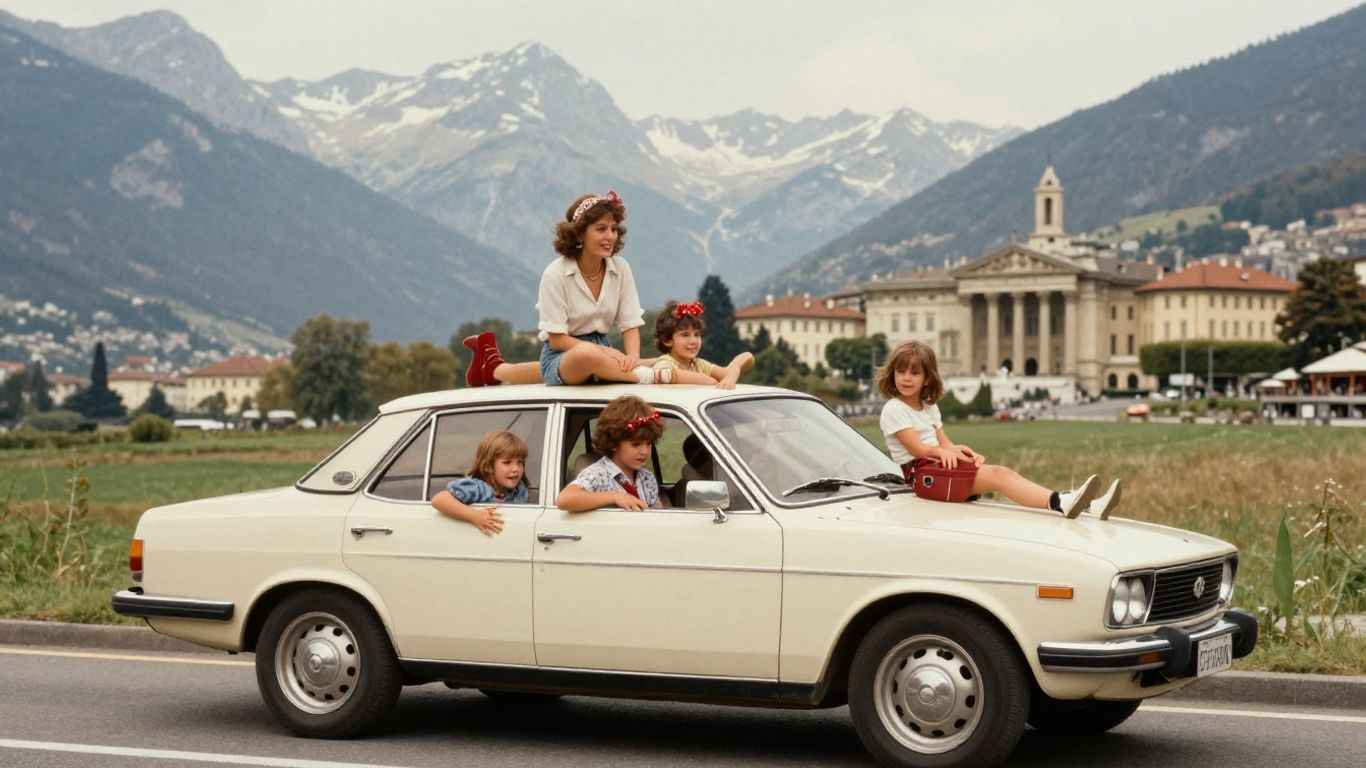 European landmarks in a chaotic family road trip
London landmarks featured in the film
London is the family’s first sustained encounter with Europe, and the city immediately challenges Clark’s confidence behind the wheel. Roads, roundabouts, and traffic patterns become comic adversaries. The sequence turns sightseeing into a test of reflexes and patience.
The London material also establishes the film’s visual formula. The Griswolds are surrounded by historic landmarks, yet their attention keeps returning to parking, driving, lodging, and family arguments. Grand scenery becomes background to very ordinary panic.
Scenes set in Paris and France
Paris continues the tension between romantic destination and inconvenient reality. The family attempts to behave like tourists, but even simple acts such as taking photographs can become complicated. The city’s beauty remains visible, though the movie is more interested in the Griswolds’ inability to experience it smoothly.
France also widens the film’s comic misunderstandings. Clark expects the trip to communicate itself to him, while the surrounding culture refuses to operate according to his assumptions. That friction is central to the film’s travel humor.
The family’s time in Germany and Italy
Germany and Italy extend the route and keep the story moving through new social and visual environments. The family is never allowed to settle for long, because settlement would interrupt the chain of mishaps. Each stop instead feels like another opportunity for Clark to misread the situation.
A real family planning a slower trip might prefer a home base to this frantic pace. For example, family home swaps in Italy offer a more domestic way to think about travel, with space for ordinary routines rather than a constant race between attractions. That contrast helps explain the film’s comic premise: the Griswolds are always moving, but they rarely feel rested.
Real locations versus fictional travel sequences
The film mixes recognizable European scenery with constructed comic situations. Viewers should not treat every transition as a literal record of the family’s route; the story compresses geography whenever a joke needs to arrive quickly. Travel time disappears, and landmarks are arranged for narrative convenience.
That looseness is part of the charm. The movie is not a documentary about touring Europe. It is a comic map in which one famous place leads to another whenever Clark needs a new chance to lose control.
Reception and critical perspective
Reception to the film has generally been mixed, with many viewers enjoying its cast and isolated comic sequences more than its overall structure. Critics have often found the sequel less consistent than the earlier Vacation film. The broadness that makes some scenes instantly recognizable can also make the story feel assembled from sketches.
The movie’s reputation is therefore slightly divided. It has the visibility of a successful franchise entry and the unevenness of a comedy that sometimes reaches for an easy stereotype before finding a sharper joke.
Reviews from critics and audiences
Contemporary and later responses have tended to agree that the film has appealing performers and attractive destinations, while disagreeing about how funny the journey remains. Some audiences return for the familiar family chemistry and memorable set pieces. Others find the pace and disconnected episodes less satisfying.
This European Vacation film review captures the central tension: the movie offers a chaotic tour through several countries, but its jokes do not always match the promise of its locations. That mixed response has allowed the film to remain discussable rather than becoming a universally accepted classic.
Box-office performance and franchise expectations
The film performed as a commercial success, earning about $49.3 million against a reported $17 million budget. Those numbers placed it comfortably within the expectations for a popular studio comedy, even though the critical response was not uniformly enthusiastic.
Its franchise position mattered. Audiences already knew the Griswold formula, and the European setting promised a larger, more colorful version of the first adventure. The film delivered that scale, though not everyone thought the expansion produced better comedy.
The film’s use of slapstick and cultural stereotypes
Slapstick gives the movie immediate momentum: cars, bodies, monuments, and misunderstandings become parts of the same comic machinery. Cultural stereotypes are also used heavily, often as quick shorthand for the family’s outsider status. That approach was common in broad studio comedy of the period, but it can feel blunt now.
The film is most effective when the joke targets Clark’s certainty rather than an entire culture. When the comedy turns toward the family’s own ignorance, it has more staying power. When it treats local people as scenery for an American joke, the material is harder to defend.
Why opinions about the comedy have changed over time
Comedy changes as audiences become more alert to whose perspective controls a joke. Some viewers now watch the film as a period piece, appreciating its energy while recognizing the limitations of its stereotypes. Others simply find that the slapstick remains funny when the surrounding assumptions are kept in view.
That double response is reasonable. A film can be nostalgic, commercially successful, and uneven all at once. Its best scenes still show sharp comic timing, even when the larger treatment of travel feels dated.
Legacy of the European Vacation film
The film remains a recognizable chapter in the National Lampoon series because it takes the Griswolds beyond the familiar American road-trip frame. Its European setting gives the family a larger playground, but its lasting identity still comes from domestic tension. Clark’s intentions, Ellen’s patience, and the children’s resistance are more important than the itinerary.
It also survives through individual images and sequences. People may remember the roundabout, the landmarks, the frantic driving, or a line of dialogue without recalling every transition between them. That is a common fate for episodic comedies, and it is not necessarily a weakness.
Its place within the National Lampoon series
As the second film in the Vacation cycle, European Vacation confirms that the Griswolds can carry the same comic pattern into a new setting. The family is recognizable, but the travel scale is larger and the cultural friction more pronounced. The result sits between a sequel and a travel spoof.
Its place in the series is also shaped by comparison. It is less grounded than the original and less dependent on a single destination than later entries. That middle position gives it a distinct, if uneven, identity.
Memorable scenes and enduring quotes
The film is remembered less for a single elegant plot turn than for a collection of comic images. Clark’s disastrous driving, the family’s encounters with famous landmarks, and his increasingly desperate attempts to maintain enthusiasm have all outlasted much of the connective tissue.
The dialogue works best when it exposes Clark’s refusal to accept reality. His cheerful declarations become funnier because viewers can see the collapse happening around him. Even when the exact wording fades, the rhythm of denial remains familiar.
Influence on travel comedies and family road films
The movie belongs to a long tradition of family travel stories in which the itinerary creates pressure rather than relaxation. Its formula—beautiful destination, mismatched expectations, escalating embarrassment—continues to appear in comedies about holidays, package tours, and cross-cultural mistakes.
Its influence is difficult to measure directly, but its basic comic idea is durable. Travel exposes a family’s habits, and unfamiliar surroundings make those habits impossible to hide. That remains useful material for filmmakers.
Where to watch and how to revisit the film today
Availability changes by country and service, so viewers should check current rental and streaming listings before planning a rewatch. National Lampoon’s European Vacation on Apple TV is one current reference point for checking the film’s listing and basic release information.
A good revisit does not require treating every joke as timeless. Watch it as a 1985 studio comedy, notice which scenes still have precise comic timing, and consider how its tourist stereotypes shape the experience. For families planning a real European trip, a slower, local approach—such as family travel planning advice—is likely to be more useful than copying the Griswolds.
Conclusion
National Lampoon’s European Vacation remains an uneven but vivid comedy about the fantasy of family travel and the chaos that follows when one person insists on controlling every moment. Its cast, settings, and set pieces keep it watchable, while its stereotypes and loose structure invite a more critical view than simple nostalgia. The Griswolds do not find the perfect holiday, but they find the kind of disaster a movie can remember forever.
Frequently Asked Questions
What is National Lampoon’s European Vacation about?
It follows the Griswold family after they win a trip to Europe on a game show and encounter a series of comic disasters across several countries.
Who stars in the film?
Chevy Chase plays Clark Griswold, Beverly D’Angelo plays Ellen Griswold, Dana Hill plays Audrey, and Jason Lively plays Rusty.
When was the film released?
The film was released in 1985 and became the second major entry in the Vacation series.
Which countries do the Griswolds visit?
The story takes the family through England, France, Germany, and Italy, with London and Paris serving as especially prominent settings.
Was the film a critical success?
It received mixed reviews. Critics often praised the cast and individual comic moments while finding the structure and humor less consistent than the earlier film.
Was the movie financially successful?
Yes. It earned roughly $49.3 million worldwide against a reported production budget of $17 million.
Why is the film still remembered?
Its memorable travel disasters, recognizable family dynamic, and broad visual comedy have kept it present in conversations about 1980s vacation comedies.

Published by
SwappaHome
SwappaHome Editorial Team
Home Exchange & Slow Travel Editorial
The SwappaHome Editorial Team brings together travel research, home-exchange community insights, and platform data to produce practical guides for first-time and experienced home swappers. Every article cites real platforms, current market rates, and verifiable city-level facts so readers can make informed decisions without guessing.
Ready to try home swapping?
Join SwappaHome and start traveling by exchanging homes. Get 7 free credits when you sign up!