
Exploring the World: Your Guide to Countries with Digital Nomad Visas in 2026

SwappaHome Editorial Team
Home Exchange & Slow Travel Editorial
As you plan your remote work adventures for 2026, keep these important points in mind. These are the core ideas to remember when looking into countries with…
As you plan your remote work adventures for 2026, keep these important points in mind. These are the core ideas to remember when looking into countries with digital nomad visas.
Key Takeaways
- Many countries now offer digital nomad visas, making it easier to work remotely abroad.
- Europe, the Americas, and Asia are popular regions with many options for remote workers.
- Always check the specific income, health insurance, and internet requirements for each visa.
- Building a community and balancing work with travel are key to a great experience.
- Home swapping can be a great way to save money on accommodation while traveling.
Navigating Europe's Digital Nomad Visa Landscape
Europe has really opened its arms to digital nomads, and 2026 is looking like a great year to explore the continent while working remotely. Several countries have introduced specific visas, making it easier than ever to set up your temporary home base. It's not just about the visa, though; it's about the lifestyle. Think ancient cities, stunning coastlines, and a food scene that's second to none. Plus, being within the EU means you're often just a short train ride away from another adventure.
Italy's New Digital Nomad Permit: A Gateway to La Dolce Vita
Italy finally joined the digital nomad party with its own permit, and honestly, it feels like a dream. This visa is your ticket to experiencing la dolce vita firsthand. Imagine working from a sun-drenched piazza or a cozy apartment in Rome, with reliable internet becoming more common in major cities. The cost of living can be surprisingly manageable, especially when you compare it to other Western European countries, and you're still within the EU time zone, which is handy for client calls. It’s a fantastic way to immerse yourself in Italian culture, from the morning espresso rituals to the evening aperitivo. You'll want to confirm the specifics of internet speeds for any place you consider, as older buildings might still be on slower connections, but fiber is rolling out fast. Having a local SIM with a hotspot is always a good backup plan, too. Home swaps in Italy can offer a unique way to live like a local.
Spain's Appeal: From Barcelona to Seville for Remote Professionals
Spain has long been a favorite for remote workers, and it continues to be a top contender. While they don't have a single, overarching digital nomad visa like some other countries, their non-lucrative visa can be a viable option for those with sufficient passive income. Cities like Barcelona and Madrid offer vibrant co-working scenes and excellent infrastructure, while southern gems like Seville provide a more relaxed pace with plenty of sunshine. The food, the culture, the sheer variety of landscapes – it’s all incredibly appealing. You can find yourself exploring the bustling streets of a major city one week and relaxing on a Mediterranean beach the next. The key is understanding the specific requirements for the visa that best suits your situation.
Portugal's Allure: Madeira and Beyond for Long-Term Stays
Portugal has been a digital nomad hotspot for a while, and it's only getting better. They offer a D7 visa, often referred to as the passive income or digital nomad visa, which is great for those looking for a longer stay. Lisbon and Porto are obvious choices with their established nomad communities, but don't overlook the islands. Madeira, in particular, has actively courted remote workers, offering a stunning natural environment and a lower cost of living. The weather is generally fantastic year-round, and the Portuguese are known for their welcoming nature. Plus, the country boasts a growing number of co-working spaces and a generally good internet infrastructure, especially in urban areas. It’s a place where you can truly balance work and life, whether you're hiking volcanic trails or exploring historic city centers.
The Americas: Opportunities for Remote Work and Exploration
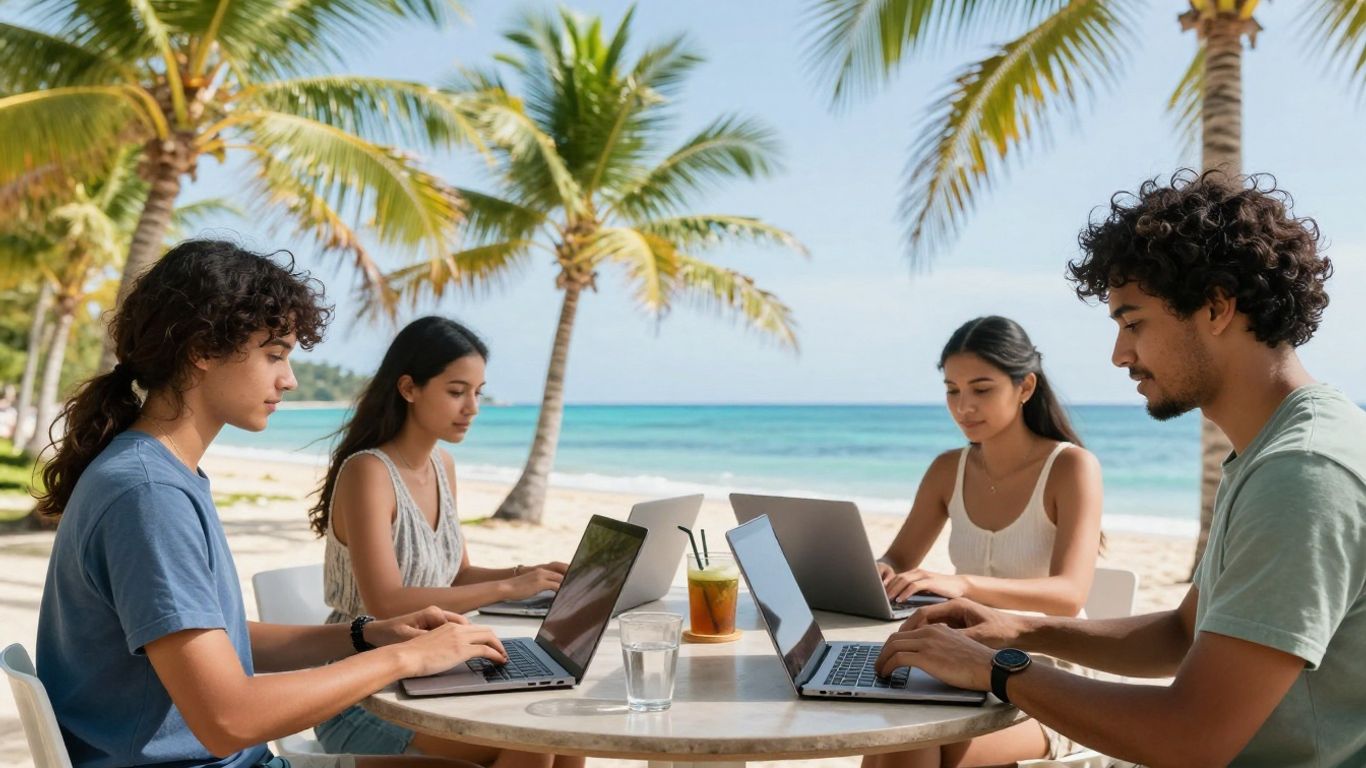 Digital nomads working on laptops on a tropical beach.
The Americas offer a vibrant mix of cultures, landscapes, and opportunities for those looking to work remotely. From the lush rainforests of Costa Rica to the bustling metropolises of Colombia and the diverse terrains of Mexico, this region is increasingly welcoming digital nomads.
Costa Rica's Digital Nomad Visa: Embracing Pura Vida
Costa Rica has officially entered the digital nomad game with its "Rentista" visa, and it's a pretty sweet deal for those seeking a life of "Pura Vida." This visa is designed for people who have a stable, passive income from outside the country. Think of it as an invitation to trade your office view for a hammock overlooking the Pacific.
- Income Requirement: You'll need to show proof of a steady income of at least $3,000 USD per month if you're applying solo, or $4,000 USD if you're bringing family along. This income needs to be guaranteed for at least a year.
- Benefits: Beyond the stunning beaches and incredible biodiversity, visa holders often get tax exemptions on certain income earned abroad. Plus, you get to experience a country that truly values sustainability and a relaxed lifestyle.
- Getting Started: The application process involves gathering documents like proof of income, health insurance, and a criminal background check. It’s definitely worth looking into if you dream of working with the sound of howler monkeys in the background.
Costa Rica's approach is less about a quick tourist visa extension and more about integrating remote workers into its unique cultural fabric, emphasizing a balanced life.
Colombia's Vibrant Cities: Bogotá and Medellín for Remote Workers
Colombia has become a hotspot for digital nomads, thanks to its affordable cost of living, friendly locals, and a growing tech scene. While it doesn't have a specific digital nomad visa yet (though one is reportedly in the works for 2026), many remote workers successfully use tourist visas for extended stays, or explore other visa options.
- Bogotá: The capital city offers a high-altitude urban experience with a burgeoning co-working scene and a rich cultural tapestry. You'll find everything from traditional markets to modern cafes perfect for getting work done.
- Medellín: Once known for its challenging past, Medellín has transformed into a dynamic city often called the "City of Eternal Spring." Its pleasant climate, innovative spirit, and lower cost of living make it a favorite among remote professionals.
- Connectivity: Major cities boast reliable internet, and the cost of living is significantly lower than in many North American or European countries. This allows your income to stretch much further, enabling a more comfortable lifestyle or more travel within the country.
Mexico's Appeal: Diverse Landscapes and Digital Nomad Hubs
Mexico has long been a popular destination for remote workers, and for good reason. Its proximity to the US, diverse geography, rich history, and delicious food scene are huge draws. While a specific digital nomad visa is still being discussed, many find ways to stay long-term using existing visa structures.
- Popular Hubs: Places like Mexico City, Oaxaca, and Playa del Carmen have developed strong digital nomad communities. Each offers a unique vibe, from the bustling cultural center of CDMX to the bohemian charm of Oaxaca and the Caribbean allure of Playa del Carmen.
- Cost of Living: Depending on the city, Mexico can be incredibly affordable. You can find comfortable housing, great food, and reliable internet without breaking the bank. This makes it an attractive option for those looking to maximize their savings while working abroad.
- Home Exchange: For longer stays, exploring options like home exchange can be a game-changer for accommodation costs. Imagine swapping your place for a charming apartment in a historic Mexican neighborhood, complete with reliable Wi-Fi and a local feel. This approach can significantly cut down on expenses, allowing you to live like a local for less.
| City | Estimated Monthly Cost (USD) | Internet Reliability | Digital Nomad Community |
|---|---|---|---|
| Mexico City | $1,200 - $2,000 | High | Very Strong |
| Oaxaca | $800 - $1,500 | Moderate to High | Growing |
| Playa del Carmen | $1,500 - $2,500 | High | Strong |
Asia's Growing Digital Nomad Scene
Asia is really stepping up its game for remote workers. It's not just about the beaches anymore, though those are definitely a perk. Countries here are actively rolling out visas and creating communities that make it easier than ever to set up your laptop and get to work.
Thailand's Welcoming Shores: Chiang Mai and Beyond
Thailand has long been a favorite for backpackers, but it's also become a major hub for digital nomads. Chiang Mai, in particular, is famous for its affordable cost of living, great food, and a buzzing community of remote workers. You'll find plenty of cafes with reliable Wi-Fi and co-working spaces popping up everywhere. The Thai government has been working on making things smoother for long-term visitors, and while a specific digital nomad visa is still evolving, options exist for those looking to stay longer.
- Affordable living: Your money goes a long way here, especially outside of Bangkok.
- Food scene: From street food to fancy restaurants, the culinary options are endless and delicious.
- Community: It's easy to connect with other nomads, making it less lonely than working solo.
Indonesia's Island Paradise: Bali's Digital Nomad Community
Bali has practically become synonymous with the digital nomad lifestyle. Places like Canggu and Ubud are packed with remote workers drawn to the island's spiritual vibe, stunning scenery, and established nomad infrastructure. Think yoga retreats, smoothie bowls, and, of course, plenty of places to get your work done. Indonesia has been exploring ways to attract more remote professionals, and the existing community makes it a very attractive option.
Bali offers a unique blend of work and wellness, where productivity meets a relaxed island pace. It's a place where you can find your flow, both in your work and in your life.
Malaysia's Modern Hubs: Kuala Lumpur for Remote Professionals
Kuala Lumpur (KL) is a fantastic option if you're looking for a more modern, urban experience in Asia. It's a city with a futuristic skyline, excellent public transport, and a surprisingly low cost of living for a major capital. The country has introduced a specific digital nomad visa, the DE Rantau Nomad Pass, making it easier for remote workers to stay legally for an extended period. KL offers a great mix of work and city life, with easy access to incredible food and shopping.
Here's a quick look at what makes Malaysia stand out:
- DE Rantau Nomad Pass: A dedicated visa for digital nomads, simplifying the application process.
- Connectivity: High-speed internet is widely available in urban centers.
- Cultural Diversity: Experience a rich blend of Malay, Chinese, and Indian cultures.
Exploring Asia as a digital nomad is becoming increasingly accessible and rewarding. Whether you prefer the laid-back vibe of Bali, the bustling streets of KL, or the friendly atmosphere of Chiang Mai, there's a spot for you. You can even explore options like home exchange to make your extended stays more affordable and immersive.
Exploring Other Continents with Digital Nomad Visas
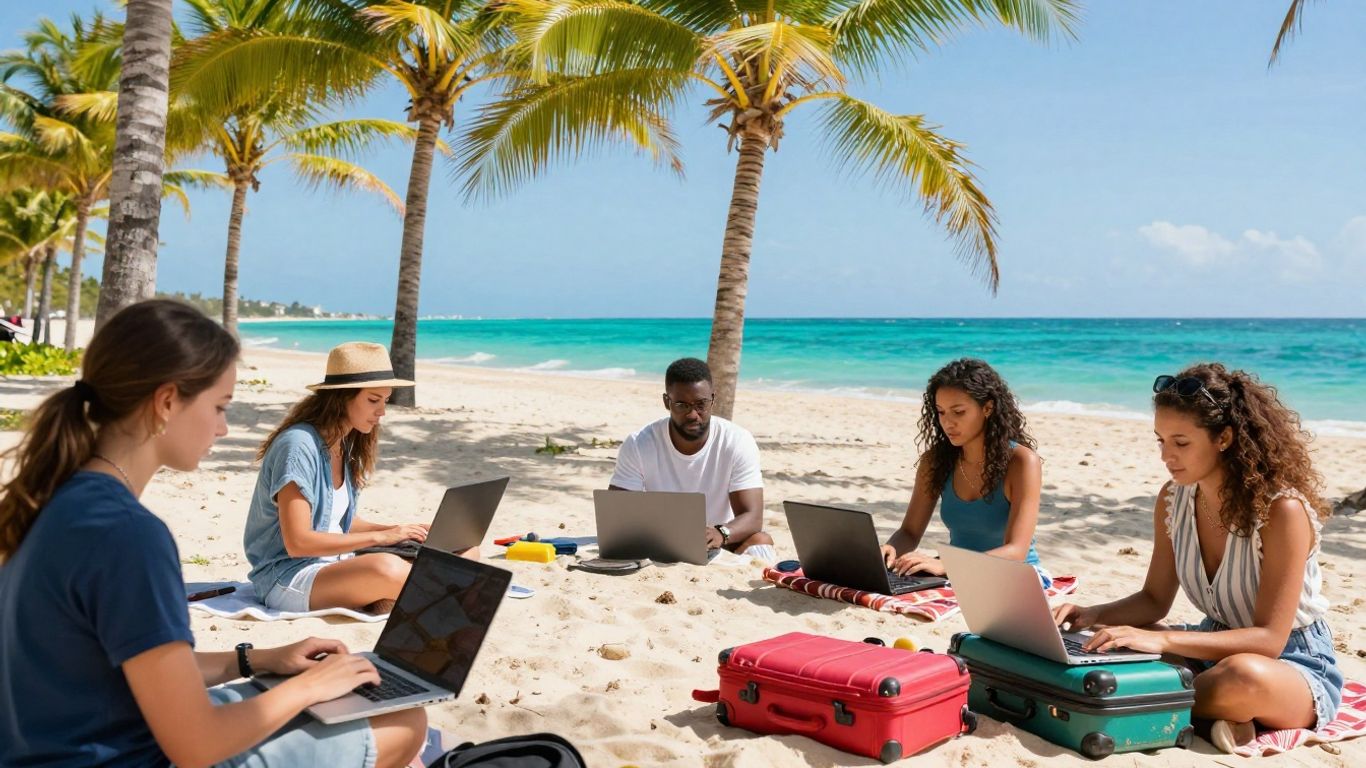 Digital nomads working on laptops at a tropical beach destination.
While Europe and the Americas often grab the spotlight for digital nomad visas, don't sleep on the incredible opportunities popping up across Africa, Oceania, and Asia. These regions offer unique cultural experiences and burgeoning remote work scenes that are definitely worth considering for your next adventure.
South Africa's Diverse Offerings: Cape Town and Beyond
South Africa is really starting to open its doors to remote workers. Cape Town, with its stunning natural beauty and vibrant city life, is a major draw. Think Table Mountain views, world-class wineries nearby, and a growing tech and startup scene. But don't stop there; explore other cities like Johannesburg or Durban, each offering a different flavor of South African life. The visa situation is still evolving, but the potential for a rich, affordable experience is huge.
- Visa Requirements: Keep an eye on official government sites for the latest on specific remote work or long-stay visas. Requirements often include proof of income and health insurance.
- Cost of Living: Generally lower than in Western Europe or North America, especially outside of prime Cape Town areas.
- Connectivity: Major cities have decent internet, but it's always wise to confirm speeds if you're heading to more remote spots.
South Africa offers a compelling mix of adventure, culture, and affordability for digital nomads willing to explore beyond the usual hotspots.
Australia's Remote Work Opportunities: A New Frontier
Australia has officially entered the digital nomad game with its new Temporary Activity Visa (subclass 408), which includes a stream for remote work. This is fantastic news for those dreaming of working from the land Down Under. Imagine swapping your home office for a beachside cafe in Sydney or a co-working space with kangaroos hopping by in the Outback. It's a big country with diverse landscapes and cities, so you've got plenty of options.
- Visa Stream: The Temporary Activity Visa (subclass 408) is your go-to. It requires you to have a job outside Australia and be able to support yourself financially.
- Key Cities: Sydney and Melbourne are obvious choices with established infrastructure, but consider Brisbane or Perth for a slightly different pace.
- Internet: Generally excellent in urban centers, especially with the rollout of the National Broadband Network.
New Zealand's Stunning Scenery for Digital Nomads
New Zealand has also rolled out a specific Digital Nomad Visa, making it easier than ever for remote workers to experience its breathtaking landscapes. This visa allows you to stay for up to 12 months, with the option to extend. Whether you're drawn to the adventure sports of Queenstown, the cultural hub of Wellington, or the serene beauty of the Coromandel Peninsula, New Zealand offers an unparalleled backdrop for your work and travels. It's a place where you can truly blend work with an active outdoor lifestyle. Check out visa details for the most up-to-date information.
- Visa Duration: Up to 12 months, with potential for extension.
- Income Threshold: You'll need to show you earn at least NZD $58,500 per year.
- Activities: You can work remotely for companies outside New Zealand or be self-employed.
Home swapping can be a fantastic way to reduce accommodation costs while exploring these diverse continents, allowing you to live like a local and save money for experiences discover how home swapping works.
Key Considerations for Digital Nomad Visa Applications
So, you've picked your dream destination and you're ready to pack your bags. Awesome! But before you start practicing your "hello" in a new language, there are a few important things to sort out regarding your visa. It's not always straightforward, and a little preparation goes a long way.
Understanding Income and Financial Requirements
Most countries want to see that you can support yourself while you're there. This usually means proving a certain level of income. It's not just about having some money; it's about having a consistent amount coming in each month. The exact figures vary a lot, so you'll need to check the specifics for each country.
- Minimum Monthly Income: This is the most common requirement. For example, some countries might ask for proof of at least $2,500 USD per month. Others might go higher, especially if the cost of living in that country is higher.
- Savings: Some visas might also ask for a certain amount in savings, in addition to your monthly income. This shows you have a safety net.
- Source of Income: You'll typically need to show that your income comes from remote work for clients or employers outside the country you're applying to. Being employed by a local company in the destination country is usually not allowed on these visas.
It's a good idea to have bank statements and employment contracts ready to go. You might even need official tax documents.
Remember, these visas are for people who work remotely for businesses outside the country they are visiting. This is a key distinction that many applicants overlook.
Navigating Health Insurance and Local Regulations
Health insurance is a big one. Most countries require you to have a valid health insurance policy that covers you for your entire stay. This isn't just a suggestion; it's a mandatory part of the application. You'll likely need to provide proof of coverage.
- Coverage Requirements: Check if the policy needs to cover specific things like hospitalization or repatriation.
- Provider: Some countries might prefer or require insurance from a provider licensed in their country or an EU-approved provider.
- Local Laws: Beyond insurance, get familiar with local laws. This could include things like registering with local authorities, understanding tax implications (even if you're not working locally, there can be rules), and any specific rules for long-term stays.
The Importance of a Reliable Internet Connection
This might seem obvious, but it's worth stating. Your ability to work depends on a stable internet connection. While you're applying for a visa, you might not need to prove your internet speed at home, but once you arrive, it's your lifeline.
- Research Speeds: Before you commit to a place, look into the average internet speeds in different cities or regions. Some areas might have better infrastructure than others.
- Backup Options: Consider having backup options, like a reliable mobile hotspot or knowing where the nearest co-working spaces are. You don't want to miss an important video call because your Wi-Fi decided to take a break.
Finding a place to stay with good Wi-Fi is part of the planning. Platforms that focus on home exchange can be great for this, as hosts often list internet speeds and workspace details, helping you find a place that actually works for remote professionals.
Maximizing Your Digital Nomad Experience Abroad
So, you've got the visa, you've booked your flight, and you're ready to embrace the digital nomad life. That's awesome! But settling into a new place and making the most of it takes a bit more than just showing up. It's about building a routine that works for you, finding your people, and really getting a feel for the local scene. Think of it as setting up your temporary home base, not just a vacation spot.
Building Community in New Destinations
It can feel a little lonely at first, right? You're in a new city, and you don't know anyone. But here's the thing: most people are pretty friendly, and there are tons of ways to connect. Don't just stay in your apartment or hotel room. Get out there!
- Join local co-working spaces: These aren't just places to get work done; they're hubs for meeting other remote workers, both locals and fellow travelers. Many host events and workshops, too.
- Attend meetups and events: Check out platforms like Meetup.com or local Facebook groups for digital nomad gatherings, language exchanges, or even just casual coffee meetups.
- Embrace home swapping: Staying in a home through a service like home exchange can put you in a residential neighborhood, making it easier to meet neighbors and get a feel for daily life.
- Volunteer or take a class: Find a local cause you care about or learn a new skill, like cooking or a language. It's a fantastic way to meet people with shared interests.
Balancing Work and Travel Effectively
This is the big one, isn't it? The whole point of being a digital nomad is to see the world while still earning a living. But if you're not careful, you can end up working all the time and not seeing anything, or traveling so much that your work suffers. It's a delicate dance.
Here’s a simple way to think about it:
- Set clear work hours: Decide when you're going to work each day and stick to it as much as possible. Treat it like you would a job back home.
- Schedule your adventures: Don't just hope you'll have time to explore. Block out time in your calendar for sightseeing, trying new restaurants, or just wandering around.
- Prioritize your well-being: Make sure you're getting enough sleep, eating well, and exercising. Burnout is real, and it's no fun.
Remember that your productivity doesn't have to suffer just because you're in a new location. By setting realistic expectations and creating a structured yet flexible schedule, you can truly enjoy both your work and your travels.
Leveraging Local Resources and Co-working Spaces
To really get the most out of your time abroad, you need to tap into what the local scene has to offer. This means going beyond the typical tourist spots and finding places that help you work and connect.
- Co-working spaces: As mentioned, these are goldmines. They often have great internet, ergonomic setups, and a built-in community. Some even offer day passes if you're just visiting for a short while.
- Local cafes: Many cafes have decent Wi-Fi and are perfect for a few hours of work, especially if you need a change of scenery from your accommodation. Just be polite and buy a coffee or snack regularly.
- Libraries: Don't underestimate public libraries! They often have quiet spaces, free Wi-Fi, and are a great way to feel like a local.
- Home exchange networks: Platforms that connect travelers with local hosts can provide insights into the best places to work remotely, often with reliable Wi-Fi and dedicated workspaces. This is a great way to start your journey as a digital nomad.
Finding these resources can make a huge difference in your day-to-day experience, helping you stay productive and feel more at home, wherever you are.
Conclusion
The world is opening up for digital nomads, and 2026 looks like a fantastic year to explore. With more countries offering specific visas, the dream of working from anywhere is more achievable than ever. Remember to research each country's requirements, pack smart, and embrace the adventure. Happy travels!
Frequently Asked Questions
What exactly is a digital nomad visa?
Think of it like a special permission slip for people who work online and want to live in another country for a while. It lets you stay legally and work from your laptop, usually for a set amount of time, like a year. It's different from a regular tourist visa because it's made for people who are working remotely.
How much money do I need to show for a digital nomad visa?
Each country has its own rules, but generally, you need to prove you earn enough money each month to support yourself without needing a job in their country. This might be around $2,000 to $3,000 USD per month, but it really changes from place to place. Some places ask for more, some ask for a bit less.
Do I need health insurance to get a digital nomad visa?
Yes, almost always. Countries want to make sure you can pay for any doctor visits or emergencies if you get sick or hurt while you're there. You'll likely need to show proof that you have a health insurance plan that covers you in that country.
Is it hard to find good internet in countries with digital nomad visas?
Most countries that offer these visas know that good internet is super important for remote workers. Big cities usually have great Wi-Fi, and many cafes and co-working spots are set up for people working online. It's always a good idea to double-check the internet speed in the specific area you plan to stay, though.
Can I bring my family with me on a digital nomad visa?
This really depends on the country. Some digital nomad visas are just for the individual worker. Others might allow you to bring your spouse or children. You'll need to look at the specific rules for each country's visa program to see if family members are included or if they need a different type of visa.
What's the difference between a digital nomad visa and a freelance visa?
A digital nomad visa is usually for people who are employed by a company outside the country they are visiting, or who are self-employed but their clients are also outside that country. A freelance visa might be for people who want to work for local clients or companies within the country they are visiting. They have different rules and purposes.

Published by
SwappaHome
SwappaHome Editorial Team
Home Exchange & Slow Travel Editorial
The SwappaHome Editorial Team brings together travel research, home-exchange community insights, and platform data to produce practical guides for first-time and experienced home swappers. Every article cites real platforms, current market rates, and verifiable city-level facts so readers can make informed decisions without guessing.
Ready to try home swapping?
Join SwappaHome and start traveling by exchanging homes. Get 7 free credits when you sign up!