
France digital nomad visa: A complete guide to remote work and living

SwappaHome Editorial Team
Home Exchange & Slow Travel Editorial
Key Takeaways Navigating the French visa system allows remote workers to experience the country’s high quality of life while maintaining professional…
Key Takeaways
Navigating the French visa system allows remote workers to experience the country’s high quality of life while maintaining professional commitments abroad. By choosing the right legal pathway, you can balance the administrative realities of French residency with the freedom of a digital-first lifestyle.
- France relies on long-stay visitor or talent passport visas rather than a specific digital nomad permit.
- Demonstrating consistent financial resources is the most critical component of the application process.
- Securing appropriate health coverage is mandatory before entering French borders.
- Home exchange networks help manage the high costs of urban living in prime locations.
- Compliance with French tax residency laws depends on the duration of your stay and income sources.
Understanding the France digital nomad visa landscape
France remains one of Europe’s most appealing destinations for those seeking to blend remote work with a rich cultural experience. While no dedicated digital nomad visa exists, the French administrative structure provides established methods for remote professionals to enter the country legally. The key lies in understanding how local immigration bureaus distinguish between those seeking to integrate into the local workforce and those merely using French soil as a base for international operations.
The reality of the "talent passport" visa
The talent passport visa is primarily designed for high-skilled professionals, entrepreneurs, and researchers who contribute significantly to the French economy. It provides a more streamlined path to residency for those who qualify through specific professional achievement or project funding. This route requires a clear connection to French economic development rather than just a remote job for a foreign entity.
Distinguishing between long-stay visitor visas and work permits
Many remote workers find success by utilizing the long-stay visitor visa. This status allows you to reside in France as long as you do not enter the local labor market. You are, in essence, permitted to live as a tourist for an extended duration, provided your income originates from outside the country and you can prove complete self-sufficiency.
Eligibility requirements for remote workers
Eligibility hinges on proving that your professional activities occur entirely outside the French jurisdiction. Applicants often need documentation from their employers stating that the role is fully remote and does not involve servicing French clients. The authorities look for stability, usually requiring proof of a consistent income stream that meets the legal minimums defined for French residents.
Understanding your legal status as a non-EU citizen
Navigating immigration as a non-EU citizen involves tight adherence to specific documentation schedules. You transition from a third-country traveler to a long-term resident through the titre de séjour process once you arrive. This legal status dictates your rights regarding travel within the Schengen area and sets the expectations for your potential tax obligations locally.
Essential documentation for your application
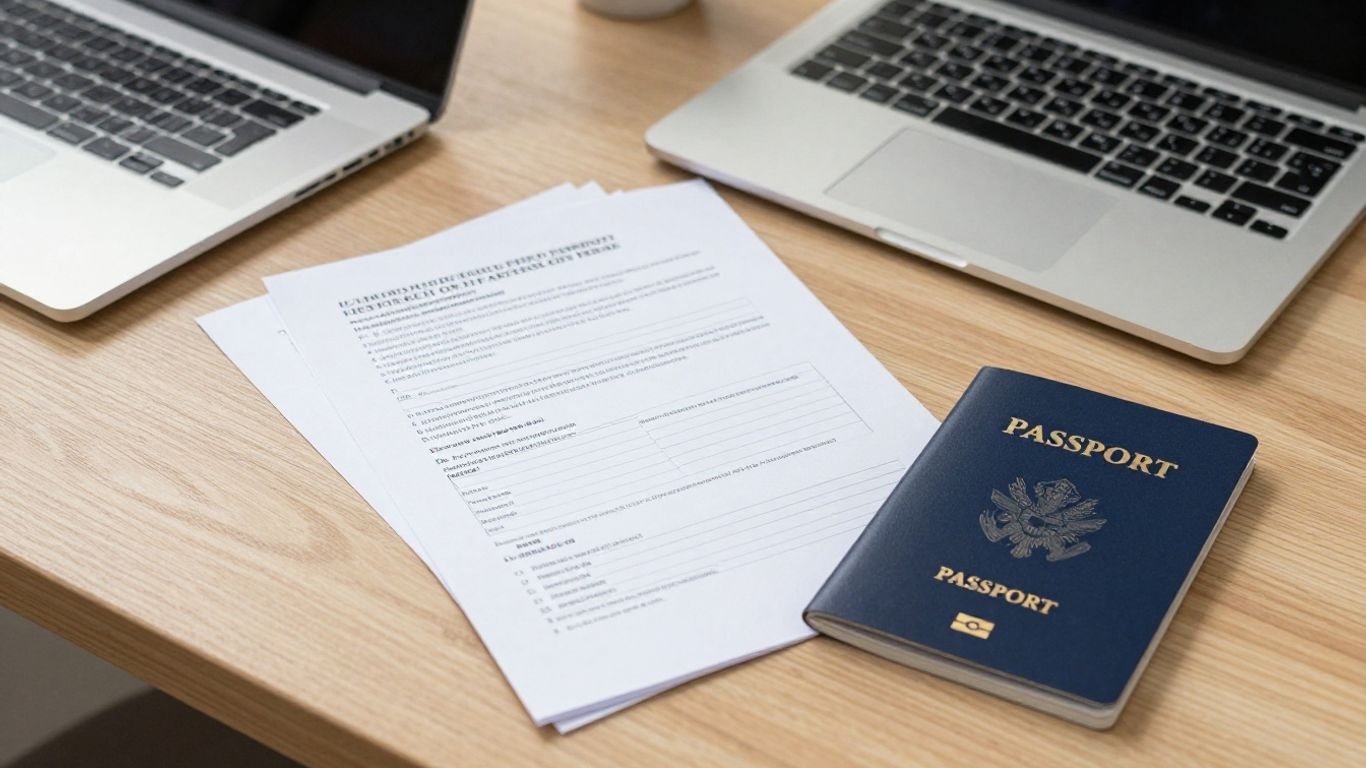 Documentation for visa application
Proving professional status and valid remote employment
Providing solid evidence of your continued employment with an international firm is essential during your screening at the consulate. This documentation should explicitly confirm your ability to perform all tasks from a remote location. You must avoid any confusion about your involvement with local corporate entities to ensure your permit request is not flagged as a standard work visa application.
Demonstrating financial sufficiency through bank statements
Consular officers look for consistent financial reliability to ensure you do not become a burden on the state. You will need to show several months of statements that reveal your earnings meet or exceed the French threshold for independent living. Having diverse income streams or large savings cushions is helpful, but the consistency of your professional paychecks acts as the primary indicator of your financial health.
Securing valid health insurance coverage for France
Health security is a non-negotiable requirement for any long-stay visa applicant. You must possess comprehensive coverage that handles emergencies and routine care for the entire duration of your planned stay. Relying solely on standard traveler insurance is often insufficient, so you may need a specialized policy that explicitly covers foreign residents for periods exceeding ninety days.
Organizing proof of long-term accommodation in France
Securing a place to live is the final hurdle before your visa can be approved. Official authorities require a confirmed residential address, such as a rental agreement or a signed pledge from a local host. A well-organized file will make your interview process much smoother as officials review your logistical readiness to settle in their country.
Navigating the official application process
Preparing your application file for the French consulate
Your application file must be meticulously organized, as even minor missing details can delay the process by weeks. Translating documents into French is frequently required even if the documents originated in English. A clear cover letter explaining your specific plan to reside in France without working for local firms serves as an excellent introduction for the reviewing agent.
Scheduling and attending your mandatory visa interview
Interview slots for French consulates are often booked far in advance, requiring you to remain proactive in your search for availability. When attending, honesty about your travel intentions and technical reliance on your employer is paramount. You are not just presenting paper; you are presenting yourself as someone who will be a responsible and transient resident.
Managing processing times and travel planning
Processing times can vary significantly based on the time of year and the regional consulate handling your request. It is wise to have your application submitted at least three months before your target departure date. Avoid finalizing any non-refundable travel arrangements until you have the physical visa sticker inserted into your passport to save yourself from potential scheduling conflicts.
Receiving your visa and planning your initial entry to France
Once the visa is issued, check all details, including the dates and locations, to ensure there are no clerical errors. Your first entry in France triggers the activation of your legal residence status. Be prepared to present your full application file, including all originals, at border control upon arrival, as officers may occasionally ask to review your documents.
Tax and social security considerations for nomads
 French city street view
Understanding your French tax residency status
Living in France for more than six months typically makes you a tax resident, subjecting your worldwide income to local laws. This transition requires you to declare your foreign earnings consistently with international standards. Consulting an expert familiar with the French internal revenue system will prevent unexpected liabilities as you settle into your new rhythm.
Managing double taxation agreements with your home country
France has signed numerous tax treaties that help prevent you from paying the same taxes twice on your personal income. Understanding the specific treaty arrangement between your home country and France is critical for optimizing your financial planning. Many digital nomads rely on these agreements to ensure that the taxes paid on remote salaries are appropriately credited.
Navigating potential French social security contributions
If you remain a resident for an extended period, the social security authorities might inquire about your status. While remote workers usually stay under the coverage of their home country’s social security, the threshold for forced enrollment can be low depending on your length of time in the country. Always keep records of your contributions abroad to clarify your position if audits occur.
Reporting foreign income to local French authorities
Managing your finances requires a proactive approach to transparency, especially for high-volume freelancers or entrepreneurs. You should maintain digital logs of all professional income and business-related expenses. The requirement to document and report income is designed to ensure compliance with the broader European standards for digital activity monitoring.
Finding the perfect workspace and home in France
Evaluating cities versus rural living for reliable connectivity
Choosing where to live involves a technical trade-off between modern infrastructure and classic charm. Large urban areas like Paris or Lyon offer high-speed fiber internet, which is essential for heavy data traffic, but they come with higher living expenses. Rural areas provide a quieter pace of life but require careful verification of local build connection standards as rural signal strength is inherently variable.
Leveraging home exchange for affordable long-term stays
Home exchange networks can be a brilliant strategy to optimize your budget. By swapping spaces, you avoid expensive rent and find yourself in authentic, fully furnished residential neighborhoods. For those looking at regions like Lyon for a home exchange, there are incredible opportunities to blend local life with efficient, remote-work-ready spaces.
Below is a comparison of typical living arrangements for those arriving on a visitor visa:
| Setting Type | Internet Stability | Cost Level | Social Environment |
|---|---|---|---|
| City Apartment | High (Fiber) | High | Vibrant and Local |
| Rural Cottage | Variable/Low | Moderate | Quiet and Scenic |
| Home Swap | Reliable/Tested | Low | Community-Focused |
Accessing coworking hubs in major French regions
Coworking spaces provide more than just internet; they offer a professional ecosystem that facilitates networking. These hubs often feature ergonomic furniture and meeting rooms that support a focused workday. Many digital nomads frequent these locations to ensure they have the latest hardware and reliable technical support during peak business hours. Consider these three factors when choosing a spot:
- Proximity to your primary apartment or residence.
- Availability of private booths for sensitive client calls.
- The density of international professionals in the shared areas.
Ensuring your workspace choices provide highly reliable connectivity for remote work will minimize frustration and enhance your ability to engage with global teams. The stability of your network becomes the foundation for your daily routine, allowing you to focus on results instead of troubleshooting tech problems.
Assessing internet speed and reliability in residential builds
When inspecting potential homes, always ask your hosts to perform a live speed test. Older French buildings, while beautiful, frequently have older electrical wiring and outdated distribution lines that interfere with high-speed transmission. Never assume the advertised speed matches the real-world performance, especially if you rely on constant video conferencing.
Cultural and professional integration tips
Managing the unique pace of French bureaucracy
French administration moves at a deliberate, measured pace that emphasizes accuracy over speed. Success comes to those who arrive prepared with copies of all documents and an understanding that face-to-face interactions are often preferred over digital ones. Patience is a skill you must practice early, particularly during the first few weeks when your initial permits are being processed.
Balancing professional work hours with the French lifestyle
Integrating into France includes honoring the local rhythm, where lunchtime and evenings are sacred times for disconnecting. Balancing your global business hours with the local expectation of relaxation can be challenging. Some nomads find success working early in the morning, leaving afternoons open for markets and city exploration.
Building a professional network in your local community
Developing a local circle goes beyond just attending coworking meetups. Join local sports groups or interest-based clubs that meet regularly in your quartier. These low-pressure environments are better for forming genuine friendships than professional networking events, which can feel quite transactional in a French context.
Learning essential French language phrases for daily tasks
Even knowing basic French will profoundly change how you are treated in local shops and business offices. Simple phrases of greeting and appreciation are seen as marks of respect. Developing enough language capability to handle basic banking or medical questions serves as a vital bridge toward long-term happiness in your new home.
Conclusion
Embracing life as a digital nomad in France requires patience and careful administrative foresight, but the rewards of living amidst such history and culture are immense. By securing the proper documentation, understanding your tax responsibilities, and utilizing resources like home exchange to manage costs, you can successfully maintain a global career while soaking in the beauty of the French lifestyle.
Frequently Asked Questions
Can I work legally for a French company on this visa?
No, the long-stay visitor visa is typically restrictive and does not allow you to engage in local French employment. You are expected to be fully employed or contracted by entities located outside of France.
How long can I stay in France on a visitor visa?
You are generally granted up to one year of stay under the long-stay visitor status, with the option to apply for renewals if your financial and personal requirements remain met.
Do I need to be fluent in French to apply for a visa?
Fluency is not an official requirement for application, but having a basic understanding of the language will assist significantly with your interactions at the consulate and your daily life throughout France.
Are there specific income thresholds I must meet?
Yes, you must demonstrate a consistent monthly income that typically aligns with or exceeds the French minimum wage to satisfy the requirement of financial self-sufficiency.
How does the tax treaty work for remote workers?
Tax treaties act as agreements between your home country and France to prevent double taxation on the same income; however, you should consult an advisor to ensure you understand specific reporting duties based on your nationality.
Can family members join me on these visas?
Yes, though the process becomes more complex as you must demonstrate enough financial headroom to support all dependents who are moving with you to France.
What happens if I lose my job while living there?
Losing your source of income may impact your legal status, as your residency is tied to your ability to maintain the financial sufficiency requirements declared during your initial application.

Published by
SwappaHome
SwappaHome Editorial Team
Home Exchange & Slow Travel Editorial
The SwappaHome Editorial Team brings together travel research, home-exchange community insights, and platform data to produce practical guides for first-time and experienced home swappers. Every article cites real platforms, current market rates, and verifiable city-level facts so readers can make informed decisions without guessing.
Ready to try home swapping?
Join SwappaHome and start traveling by exchanging homes. Get 7 free credits when you sign up!