
The Pros and Cons of Home Swapping You Should Know

SwappaHome Editorial Team
Home Exchange & Slow Travel Editorial
Somewhere along the way, home swapping went from a quirky thing European teachers did in the '50s to one of the genuinely smart moves for anyone who wants to travel more without hemorrhaging money on...
Somewhere along the way, home swapping went from a quirky thing European teachers did in the '50s to one of the genuinely smart moves for anyone who wants to travel more without hemorrhaging money on hotels. But before you throw your house up on some listing site and start dreaming about a summer in Provence, you should actually understand what you're getting into. Home swapping (or home exchange, same thing) is basically two households trading living spaces for a stretch of time, usually with no money changing hands beyond a service fee. Sounds perfect. And it can be. It also comes with trust issues, logistical headaches, and a few lifestyle trade-offs that nobody really warns you about until you're knee-deep in it.
So let's go through the whole thing honestly. What it actually involves, why people fall in love with it, the parts that trip up first-timers, and how to figure out if it fits the kind of traveler you are.
Table of Contents
- What Is Home Swapping, Exactly?
- The Pros of Home Swapping
- The Cons and Home Exchange Challenges You Should Know
- Home Swap Pros and Cons: A Side-by-Side Comparison
- Is Home Swapping Right for You?
- How to Minimize the Risks of Home Exchange
- How Much Does Home Swapping Actually Cost Compared to Hotels?
- Frequently Asked Questions
What Is Home Swapping, Exactly?
Home swapping is an arrangement where two homeowners or renters agree to stay in each other's homes for a set period, usually without paying anything for the accommodation itself. Instead of forking over a nightly rate like you would on a booking site, your home is the payment. You give someone access to your place, they give you access to theirs, and the value roughly evens out.
Most of this happens through dedicated platforms. You build a profile, list your place with a bunch of photos and details, then browse other listings hoping to find someone whose plans line up with yours. Some swaps are simultaneous, meaning you're in their house while they're in yours at the exact same time. Others aren't. You might crash at someone's coastal cottage in July, and they come stay in your city apartment in October. And then there's the points-based version, where you earn credits by hosting people and spend those credits to stay elsewhere, no direct one-to-one match needed. That last one is honestly the most flexible, in my opinion, because you're not stuck waiting for a perfect double-coincidence of dates and destinations.
None of this is new, by the way. Home exchange clubs have been around since at least the 1950s, when European teachers wanted cheap summer travel and figured out they could just trade houses. The internet and a handful of apps blew the whole thing wide open. Now you can find, vet, and video-call a potential swap partner on the other side of the planet in an afternoon.
The Pros of Home Swapping
The biggest win, by a mile, is cost. Accommodation is usually the fattest line item in any travel budget, and home swapping basically zeroes it out apart from membership or service fees. According to a 2023 consumer travel survey by the U.S. Travel Association, lodging eats up roughly a third of total trip spending for the average American traveler. Knock that out and suddenly a trip you'd written off as "someday" becomes something you could actually do this year.
Room to Actually Breathe
You get a whole house instead of a box with a bed in it. Full kitchen, laundry, multiple bedrooms, a living room where people can spread out. If you're traveling with kids, this is the difference between a good trip and a stress spiral. Same if you're a group, or if you just don't want to eat every single meal out (which, over a multi-week trip, adds up fast). Retirees and long-stay travelers tend to love this part most. There's something nice about being able to do your laundry midway through a trip and cook a normal dinner and just... live somewhere, instead of feeling like a tourist passing through.
Living Like an Actual Local
 Person shopping at a local neighborhood market, experiencing authentic local living during a home exchange
Staying in someone's real home drops you into a real neighborhood, not the tourist strip where every restaurant has laminated menus in four languages. You shop at the corner grocery. You find the coffee place the locals go to. And you usually inherit your host's little list of recommendations, the hiking trail or the hole-in-the-wall restaurant that no guidebook bothers to mention. A lot of swappers will tell you this is the real reason they keep doing it, more than the money.
The Trust Thing (Which Sounds Scary But Works)
Here's what surprised me about home exchange: because both people have skin in the game, their own home, the whole community skews toward respectful, communicative travelers. It kind of self-selects. Jerks don't tend to last. Plenty of swappers end up genuinely friends with their exchange partners and swap with the same household year after year. If you're new and the trust part makes you nervous (totally fair), it's worth reading Is Home Swapping Safe? Everything You Need to Know before you commit to anything.
It's Great for Remote Workers
If you work remotely, a home swap often comes with an actual desk, decent Wi-Fi, and a quiet residential setting that beats the pants off a cramped hotel room or a hostel where someone's always slamming a door. And since longer stays are common with exchanges, it suits digital nomads who want to plant themselves somewhere for a month or more without signing a lease.
Oh, and pets. Lots of swaps come with an understanding, sometimes casual, sometimes spelled out, that you'll feed each other's cat, water the plants, grab the mail. Which means you save on a pet sitter and your animals get to stay home instead of in a kennel. That's a bigger deal than it sounds if you've ever paid for boarding.
The Cons and Home Exchange Challenges You Should Know
The real downsides come down to three things: you lose control over your own place while you're gone, finding a good match takes actual effort, and some people just can't shake the discomfort of strangers living in their space. For most swappers these aren't dealbreakers. But they're real, and pretending otherwise doesn't help anyone.
Trust and Security
Handing your house keys to someone you mostly know from a screen takes a leap of faith. Even with verified profiles and reviews and a video call beforehand, there's still risk in letting strangers use your stuff and wander through your home, including the sensitive corners like a home office or a filing cabinet. Some homeowners handle this with smart locks, or cameras in common areas (disclosed properly, please), or even by arranging for a local service like Stormhammer Security to swing by and check on the place now and then. That's more of a thing for bigger homes or spots where the owner wants a little more monitoring than a neighbor can realistically offer.
Who Pays If Something Breaks?
Accidents happen. A dish shatters, a carpet gets stained, someone runs an appliance the wrong way. And unlike a hotel, there's no corporate insurance policy quietly covering it in the background. Most experienced swappers will tell you to sort out expectations in writing ahead of time, check whether your homeowner's or renter's policy even covers exchange guests, and maybe look into supplemental short-term liability coverage. This is one of the most common worries first-timers bring up, and I get why. The dollar amount is usually small, but "usually small" and "open-ended" are two different feelings when it's your house.
Finding a Match Is Slow
Booking a hotel takes about ninety seconds. Finding a swap partner whose location, dates, home size, and amenities all line up with yours, and who also wants to stay in your place, is a whole other animal. Popular destinations and peak season get way more demand than supply, so you might have to start hunting months out, stay loose on your dates, or accept that your dream location just isn't happening this round.
Sometimes the "Home" Doesn't Match the Listing
The whole pitch is a comfortable, home-like stay. Reality doesn't always cooperate. Photos get outdated. That amazing amenity turns out to be broken. The neighborhood's louder or more out-of-the-way than you pictured. Good communication before the swap (detailed photos, honest disclosures, a video walk-through if you can swing it) closes most of that gap. But it's still one of the more common reasons people come home a little let down.
The Prep Is a Chore
Getting your own place ready for guests is genuine work, and first-timers almost always underestimate it. Deep cleaning, decluttering, writing out instructions for the finicky appliances, finally fixing that thing you've been ignoring for eight months. It's a slog. The good news is a checklist makes it way less overwhelming, and something like How to Prepare Your Home for a Swap: A Complete Checklist turns a vague stress-cloud into an actual to-do list you can knock out.
And once you've confirmed a swap, you're locked in. Both sides are. So the spontaneity you get with other options basically evaporates, and canceling is a lot messier than bailing on a hotel reservation, because now you're wrecking someone else's travel plans too, not just your own.
Home Swap Pros and Cons: A Side-by-Side Comparison
Sometimes it just helps to see it all laid out next to the alternatives.
| Factor | Home Swapping | Hotels | Vacation Rentals (Airbnb-style) |
|---|---|---|---|
| Typical accommodation cost | Free to low (service/membership fees only) | High, especially in peak season | Moderate to high, plus cleaning/service fees |
| Space and amenities | Full home, kitchen, laundry | Single room, limited kitchen access | Full home, but no personal host relationship |
| Local, authentic experience | Strong — real neighborhood living | Weak — tourist-oriented areas | Moderate |
| Security/trust factor | Requires mutual trust between strangers | Low personal risk, professional staff | Low personal risk, but less accountability than a swap |
| Booking flexibility | Low — dates often fixed once matched | High — easy to change or cancel | Moderate, depends on host policy |
| Preparation effort required | High — must ready your own home too | None | None (aside from check-in logistics) |
| Best suited for | Longer stays, families, retirees, remote workers | Short stays, business travel | Solo trips, couples, flexible dates |
Is Home Swapping Right for You?
Home swapping works best for travelers who care more about longer stays, home comforts, and really soaking up a place than they do about speed and convenience, and who don't mind doing some planning and taking on a bit of trust-based risk. It's a bad fit if you need last-minute flexibility, hate the idea of anyone in your personal space (even when you're not there), or just don't want the hassle of prepping your home.
Families tend to love it, and it makes sense. A house with a yard and multiple bedrooms and a kitchen is wildly cheaper and more livable than cramming everyone into a couple of hotel rooms. Retirees gravitate toward it for long stints abroad, because the model rewards longer trips. When you're spending weeks somewhere instead of three nights, all that time you sank into finding a match actually pays off. And remote workers and digital nomads get the stability and the workspace that a real home gives you, which short-term rentals just can't fake. A residential setting helps you settle into a new city faster too.
But if you're the kind of person who books a trip a week before takeoff? Home swapping will drive you up the wall. Good matches need lead time, full stop. If you plan months ahead and you'd rather experience a place like someone who lives there, though, the trade-offs mostly feel worth it.
How to Minimize the Risks of Home Exchange
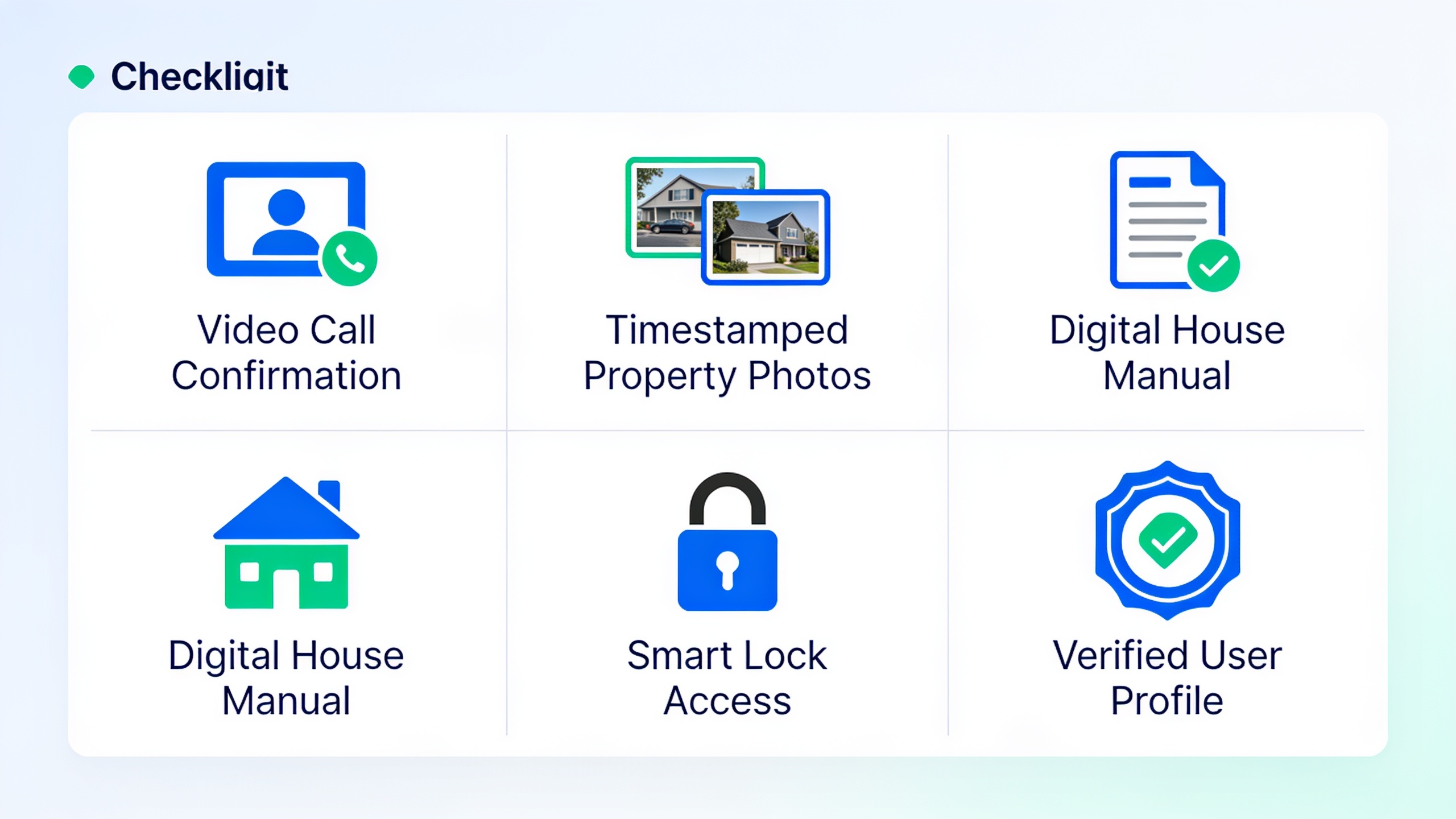 Infographic showing home exchange security steps including profile verification, video calls, documentation, and smart home features
You can cut down on most home exchange headaches by vetting your partner properly, documenting your home's condition before and after, and putting clear expectations in writing about house rules, utilities, and emergency contacts. That handful of steps quietly solves the majority of complaints first-timers run into.
Start with their profile. Look at their history, their verified reviews, any social proof they can point to, references from past exchanges, a real online presence, whatever. Then do a video call before you confirm anything. It builds actual trust and, just as importantly, it catches red flags early. Take timestamped photos of your place too, including the existing scuffs and wear, so there's zero ambiguity if a dispute ever comes up.
Write a simple house manual while you're at it. Wi-Fi password, appliance quirks, which day the trash goes out, emergency contacts, house rules (no smoking, quiet hours, how to handle the cat). One document. It's astonishing how much miscommunication a single sheet of paper prevents. On the security side, some homeowners layer in practical stuff on top of the digital verification: a smart doorbell camera, temporary door codes that die the day the swap ends, or a local check-in service like Stormhammer Security for higher-value homes or places the owner just wants watched more closely while they're gone.
Double-check your insurance before you finalize anything, because coverage for guest incidents is all over the map depending on your policy. One quick call to your agent asking specifically about "temporary occupant" or "home exchange guest" coverage can save you a world of stress down the line. And look, if you end up somewhere like Cairns, Australia, lean into the local stuff while you're there. Booking a treatment at a spot like Idun Aesthetics is exactly the kind of small, human-scale thing home swapping makes easier to stumble onto than any resort package ever would.
How Much Does Home Swapping Actually Cost Compared to Hotels?
Home swapping costs a sliver of what hotels or vacation rentals run, because you're trading the accommodation rather than buying it. Most platforms just charge an annual membership or a per-swap service fee, usually anywhere from under $100 to a few hundred dollars a year, instead of a nightly rate. Now stack that against average U.S. hotel rates, which the American Hotel & Lodging Association has reported climbing well above $150 per night in a lot of major markets recently, and the math on a two-week trip gets silly. You're easily talking thousands in savings.
That said, "free" accommodation isn't the same as a free trip, and I'd be lying if I said otherwise. You'll usually still cover a courtesy contribution toward utilities (some hosts ask guests to leave a little extra for the bump in electricity or water), cleaning supplies, maybe a small thank-you gift. None of it comes close to nightly rental rates, but it exists. Add in travel insurance, transportation, and that platform membership fee, and you've got the honest cost picture. Even so, home swapping stays one of the most budget-friendly options out there for anyone willing to put in the matching and prep work.
One more thing for the hosts. Presentation genuinely matters. The way businesses lean on strong digital branding to stand out, a home listing with sharp photos and a clear, honest description just performs better in a crowded exchange marketplace. It's part of why some homeowners put the same kind of polish into their listing that a company like Digital Fusion Hub might bring to a business website. And on the platform side, tools like RobinRank show how AI-driven content and SEO automation are reshaping the way travel and hospitality sites attract and match people, a shift that's slowly working its way into how home exchange communities grow and connect folks across borders.
Frequently Asked Questions
Is home swapping actually safe if I've got kids? It can be, as long as both sides communicate clearly, check each other's profiles and reviews, and agree on house rules ahead of time. Honestly, a lot of families choose home swapping because the extra space, the kitchen, and the residential setting are so much easier with kids than a single hotel room. For a deeper dive into safety specific to this style of travel, check out Is Home Swapping Safe? Everything You Need to Know.
What happens if something in my home gets broken during a swap? Most swap agreements just assume minor wear and tear is normal. Bigger damage usually gets handled through direct conversation, the before-and-after photos you took, and in some cases your homeowner's insurance if it covers guest incidents. Sort out these expectations in writing before you confirm anything. It saves a lot of awkwardness.
Do we have to swap at the same time? Nope. Simultaneous swaps are common, but plenty of platforms support non-simultaneous ones, where you stay in their place during one stretch and they stay in yours during another. And points-based systems skip the direct match entirely, so hosting and staying aren't even tied to the same partner.
How far ahead should I start looking? Most experienced swappers say three to six months before your travel dates, especially for popular spots or peak season. Finding a well-matched partner takes a lot longer than clicking "book" on a hotel, so give yourself runway.
What do I actually need to do to prep before hosting? Deep clean, declutter the personal and sensitive stuff, leave clear instructions for the appliances and Wi-Fi, and sort out mail, plants, or pets if nobody else is checking in. A step-by-step guide like How to Prepare Your Home for a Swap: A Complete Checklist takes most of the guesswork out of it.
Home swapping isn't for everyone, and I wouldn't pretend it is. But for the right person, someone who values space, authenticity, and saving money more than spontaneity and hands-off ease, it can genuinely change how often and how far you get to travel. Weigh the real perks against the real headaches before you jump in, and there's a good chance your first swap turns into the first of many.

Published by
SwappaHome
SwappaHome Editorial Team
Home Exchange & Slow Travel Editorial
The SwappaHome Editorial Team brings together travel research, home-exchange community insights, and platform data to produce practical guides for first-time and experienced home swappers. Every article cites real platforms, current market rates, and verifiable city-level facts so readers can make informed decisions without guessing.
Ready to try home swapping?
Join SwappaHome and start traveling by exchanging homes. Get 7 free credits when you sign up!