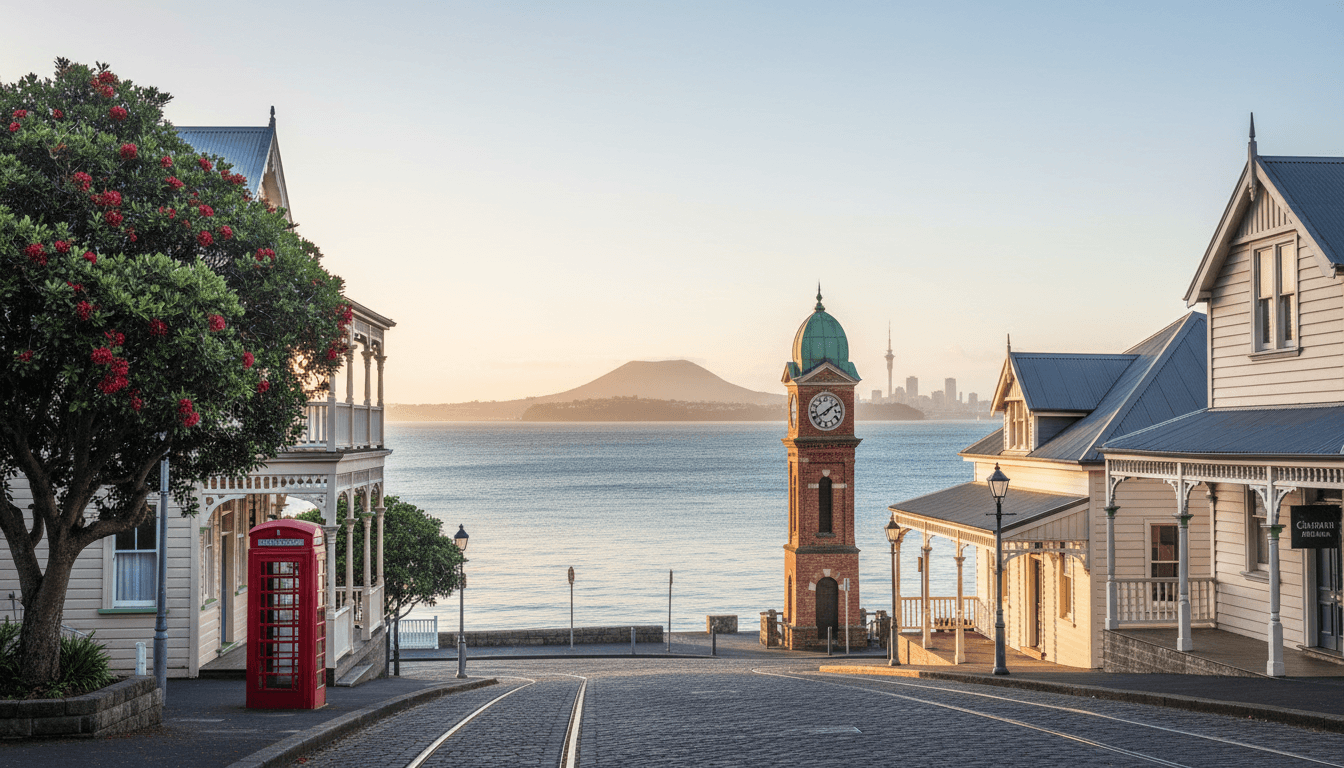
Home Exchange in Auckland: 7 Underrated Neighborhoods Locals Actually Love
Maya Chen
Travel Writer & Home Exchange Expert
Skip the tourist traps. These hidden Auckland neighborhoods offer authentic home exchange experiences with better value, real community vibes, and secrets only locals know.
I almost made a terrible mistake with my first Auckland home exchange.
Like most first-timers, I was laser-focused on the CBD and Ponsonby—the neighborhoods that dominate every travel guide. Then my potential swap partner, a Kiwi named Sarah, sent me a message that changed everything: "Those areas are lovely, but you'd be paying tourist prices and missing the real Auckland. Have you considered Devonport?"
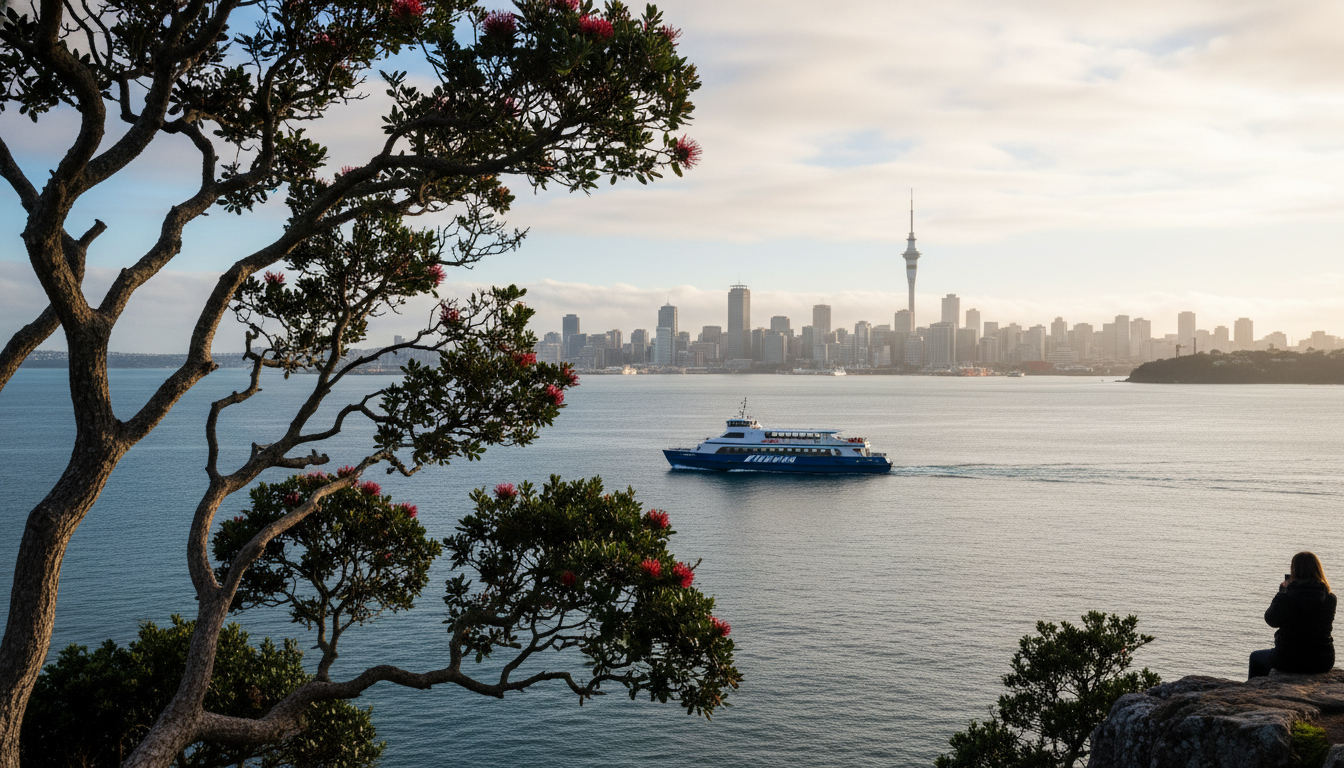 Early morning view from Devonports North Head looking across the harbour toward Aucklands skyline, w
Three weeks later, I woke up in her 1920s villa, walked five minutes to a bakery where the owner knew everyone's name, and caught a 12-minute ferry to the city. I spent half what I'd budgeted. And I actually lived in Auckland rather than just visiting it.
That trip taught me something crucial about home exchange in Auckland: the underrated areas aren't underrated because they're worse—they're underrated because tourists don't know about them yet. And honestly? That's exactly why they're better for home swapping.
So forget the obvious choices. Here are seven Auckland neighborhoods that locals actually love, where home exchange opportunities are more plentiful, hosts are more engaged, and your money (or credits) stretches further.
Why Underrated Auckland Neighborhoods Are Perfect for Home Exchange
Before I dive into specific areas, let me explain why I always push people to look beyond the obvious for Auckland home exchanges.
The practical stuff first: popular neighborhoods like Ponsonby and Parnell have fewer home exchange listings because property values are astronomical—we're talking NZD $2-3 million ($1.2-1.8 million USD) for a basic house. People who own homes there often prefer traditional rentals or Airbnb income over the credit-based exchange system.
But here's what really matters. The neighborhoods where Aucklanders actually live their daily lives are rarely the ones in guidebooks. When you do a home exchange in an area like Grey Lynn or Birkenhead, you're stepping into someone's real routine—their corner café, their Sunday market, their favorite running trail. That's the whole point of home swapping, isn't it?
I've done home exchanges in 25 countries over seven years, and the pattern holds everywhere: slightly off-the-radar neighborhoods deliver richer experiences. Auckland is no exception.
1. Devonport: Auckland's Best-Kept Secret for Home Exchange
Let me start with the neighborhood that converted me—because Devonport genuinely changed how I approach home exchange in Auckland.
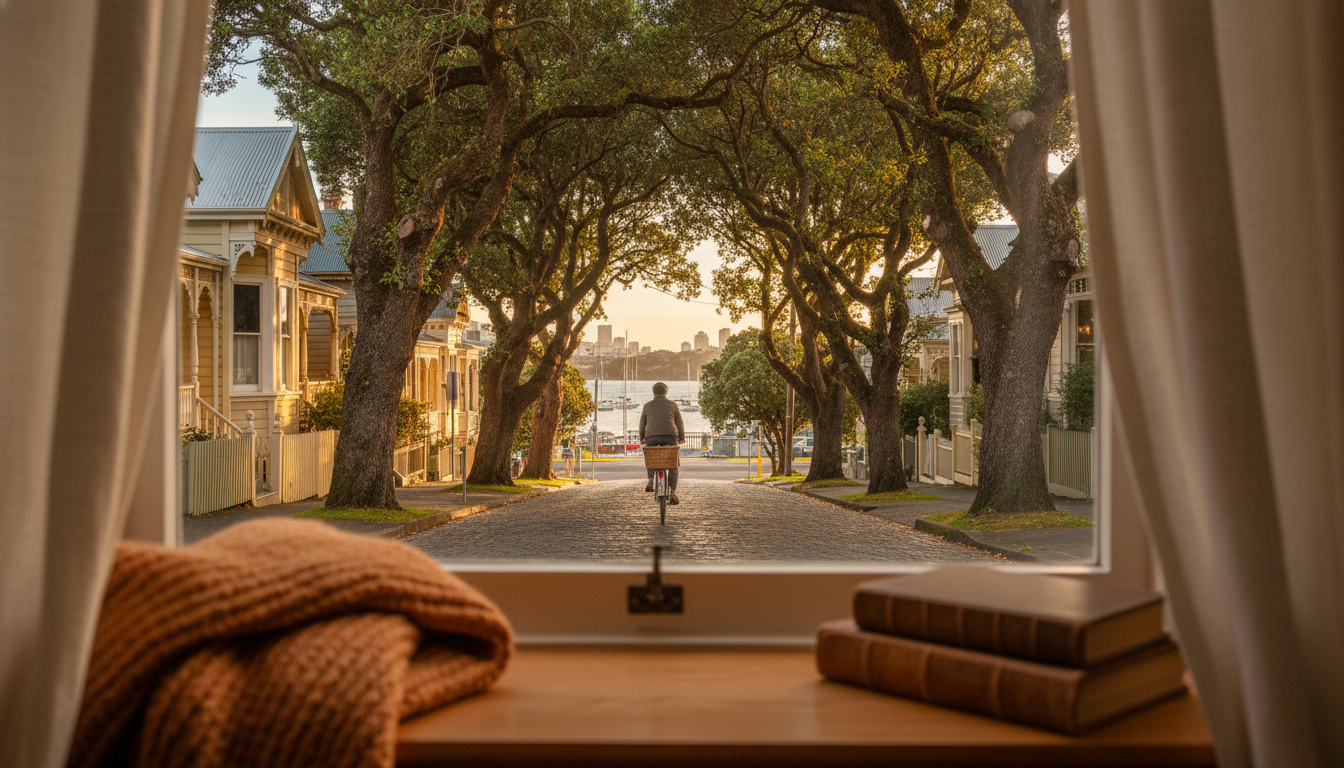 Victorian-era wooden villas lining a tree-canopied street in Devonport, with a glimpse of the harbou
Devonport sits on the North Shore, directly across the harbour from downtown Auckland. The ferry takes 12 minutes and costs about NZD $7.50 ($4.50 USD) each way—or you can grab a day pass for NZD $20 ($12 USD). That ferry ride, by the way, is genuinely one of the best things about staying here. Watching Auckland's skyline approach while sipping a flat white? Never gets old.
The neighborhood itself feels like a small coastal town that accidentally ended up attached to a major city. The main street, Victoria Road, has independent bookshops, cafés that haven't been discovered by Instagram influencers, and a cinema from 1912 that's still operating. Mount Victoria offers panoramic views of the city and harbour—and the walk up takes maybe 15 minutes.
Why home exchange works here: Devonport has a lot of character homes—wooden villas from the late 1800s and early 1900s with gardens, verandas, and actual personality. Many owners travel frequently (it attracts a creative, professional crowd) and genuinely enjoy hosting. The home exchange listings here tend to be well-maintained because the community takes pride in the neighborhood.
What you'll pay in credits: Expect to spend 1 credit per night like anywhere on SwappaHome, but the homes you'll find here often punch above their weight—more space, more character, and better locations than similarly-credited listings in central Auckland.
Local tip: Skip the tourist-oriented restaurants on the waterfront. Walk two blocks inland to Manuka, a tiny café that does the best eggs benedict I've had in New Zealand. The locals who told me about it made me promise not to write about it online. Sorry, locals.
2. Grey Lynn: Where Auckland's Creative Class Actually Lives
If Devonport is Auckland's charming coastal village, Grey Lynn is its bohemian heart—though "bohemian" might be stretching it these days. The artists and musicians who made it cool in the '90s have largely been priced out, but the neighborhood retained its independent spirit.
Grey Lynn sits just west of Ponsonby, close enough to walk but with noticeably more breathing room. The houses here are a mix of renovated villas and unrenovated villas (the latter are the ones you want for home exchange—they have character and owners who prioritize experiences over marble countertops).
The food scene is excellent without being pretentious. Gemmayze Street does Lebanese food that rivals anything I've had in Beirut. Coco's Cantina has been serving Italian comfort food for over a decade. And the Grey Lynn Farmers Market on Saturdays is where you'll find actual Aucklanders doing their weekly shopping, not tourists taking photos of artisanal honey.
Why home exchange works here: Grey Lynn attracts exactly the kind of people who love home swapping—travelers, remote workers, people who value experiences over accumulating stuff. The listing quality tends to be high because hosts here understand what makes a good stay. They'll leave you notes about which cafés have the best Wi-Fi, where to find street parking, and which neighbor's cat might visit.
Getting around: You're a 20-minute walk from Ponsonby Road, 10 minutes by bus from the CBD, and right next to Western Springs park if you want green space. Auckland's zoo is a 15-minute walk away.
Budget reality check: A comparable Airbnb in Grey Lynn runs NZD $180-250 ($110-150 USD) per night. Home exchange? One credit. Over a two-week stay, that's potentially $1,500-2,000 USD saved.
3. Birkenhead: The North Shore Neighborhood No One Talks About
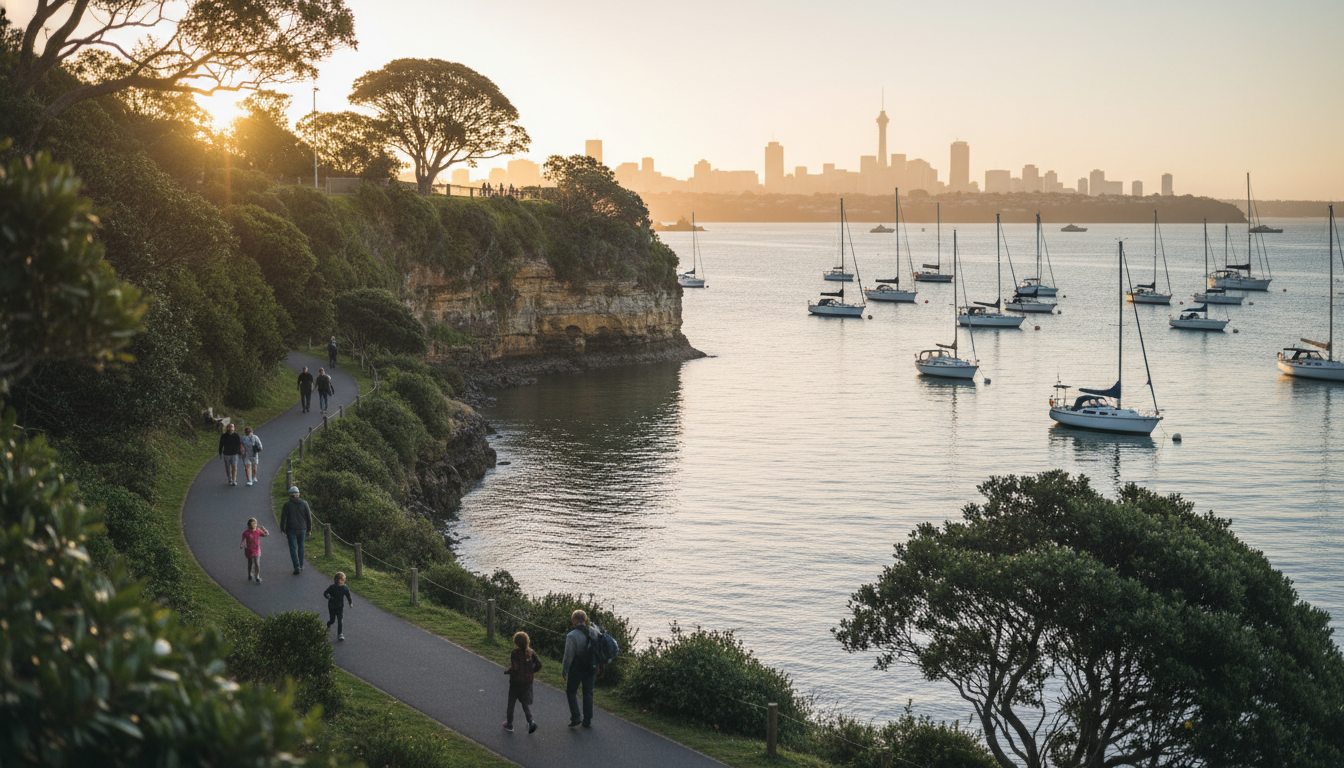 Birkenhead Point waterfront at golden hour, with small boats moored in the harbour and families walk
I'll be honest: I'd never heard of Birkenhead until a SwappaHome member from Melbourne mentioned it. She'd done a home exchange there twice and called it "Devonport without the tourists and with better coffee."
She wasn't wrong.
Birkenhead sits on the North Shore, a bit further west than Devonport. It's connected to the city by ferry (the Birkenhead Wharf service takes about 10 minutes) and has that same small-town-in-a-big-city feel—but with even less tourist traffic.
The main drag, Highbury, has a cluster of genuinely good cafés and restaurants. Grains & Grits does excellent brunch. The Birkenhead Brewing Company is a local favorite. And the Birkenhead Library is one of those beautifully designed modern spaces that makes you want to sit and read for hours.
What surprised me most: The coastal walks. The path from Birkenhead Point to Chelsea Bay takes you through native bush, past hidden beaches, and offers views that would cost you NZD $500 ($300 USD) per night at a waterfront hotel.
Why home exchange works here: Birkenhead has a strong community of families and professionals who travel for work. The homes tend to be larger than inner-city apartments—three bedrooms, gardens, sometimes even pools. If you're doing a home exchange with kids, this is one of the best Auckland neighborhoods to consider.
Practical consideration: You'll want access to a car here, or at least be comfortable with buses. The ferry is great for getting to the CBD, but exploring the wider North Shore without a vehicle can be limiting.
4. Kingsland: Auckland's Best Neighborhood for Food-Obsessed Home Exchangers
Kingsland doesn't get the attention it deserves, possibly because it's sandwiched between the more famous Mount Eden and the slightly edgier Morningside. But if you care about food—really care—this is where you want to base your Auckland home exchange.
The neighborhood runs along New North Road, and within a 10-minute walk you can find Fang (modern Thai that would hold its own in Bangkok), Cali Sandwiches (Vietnamese bánh mì that's become a cult favorite), Atomic Coffee Roasters (one of Auckland's original specialty roasters), and a dozen other spots I'm forgetting because I can only eat so much in one trip.
 Interior of a cozy Kingsland caf with exposed brick, mismatched furniture, and morning light streami
The neighborhood vibe is refreshingly unpretentious. It's where young professionals live before they can afford Ponsonby, where artists have studios in converted warehouses, and where you can still find a decent flat white for under NZD $6 ($3.60 USD).
Why home exchange works here: Kingsland has a lot of apartment-dwellers and villa-sharers who travel frequently. The listings skew younger and more urban than suburban neighborhoods, which means you're more likely to find hosts who are active on the platform and responsive to messages.
Getting around: The train station connects you to Britomart (downtown) in about 8 minutes. Eden Park stadium is walking distance if there's a rugby match. Mount Eden itself—the volcanic cone with incredible views—is a 20-minute walk.
Real talk: Kingsland can get noisy on rugby weekends. If you're planning a home exchange during All Blacks season, ask your host about match schedules.
5. Mount Albert: Auckland's Most Underrated Home Exchange Opportunity
I'm going to make a bold claim: Mount Albert offers the best value for home exchange in Auckland right now.
Here's why. The neighborhood is going through that transition phase where longtime residents still dominate, but younger families are moving in. The housing stock is excellent—1930s and '40s bungalows with good bones, mature gardens, and actual space. And because it's not "trendy" yet, home exchange hosts here are often more enthusiastic and engaged.
Mount Albert Road has a surprisingly diverse food scene. You'll find Malaysian, Indian, Chinese, and Korean restaurants that cater to locals rather than tourists—which means better quality and lower prices. My favorite discovery was a tiny Malaysian place called Selera that does a laksa for NZD $16 ($9.50 USD) that I still think about.
The location is more central than you'd think. You're about 15 minutes by car from the CBD, 10 minutes from Ponsonby, and well-connected by bus. The Mount Albert train station puts you downtown in 12 minutes.
Why home exchange works here: Mount Albert has a lot of families with kids who travel during school holidays. If you're flexible with timing, you can find excellent home exchange opportunities in December-January (New Zealand summer) and mid-year (June-July). The homes tend to be family-sized—three or four bedrooms—which is perfect if you're traveling with a group.
What to expect: Less polish, more authenticity. This isn't the Auckland of design magazines. It's the Auckland where people actually raise kids, walk their dogs, and know their neighbors' names.
6. Onehunga: Auckland's Emerging Home Exchange Hotspot
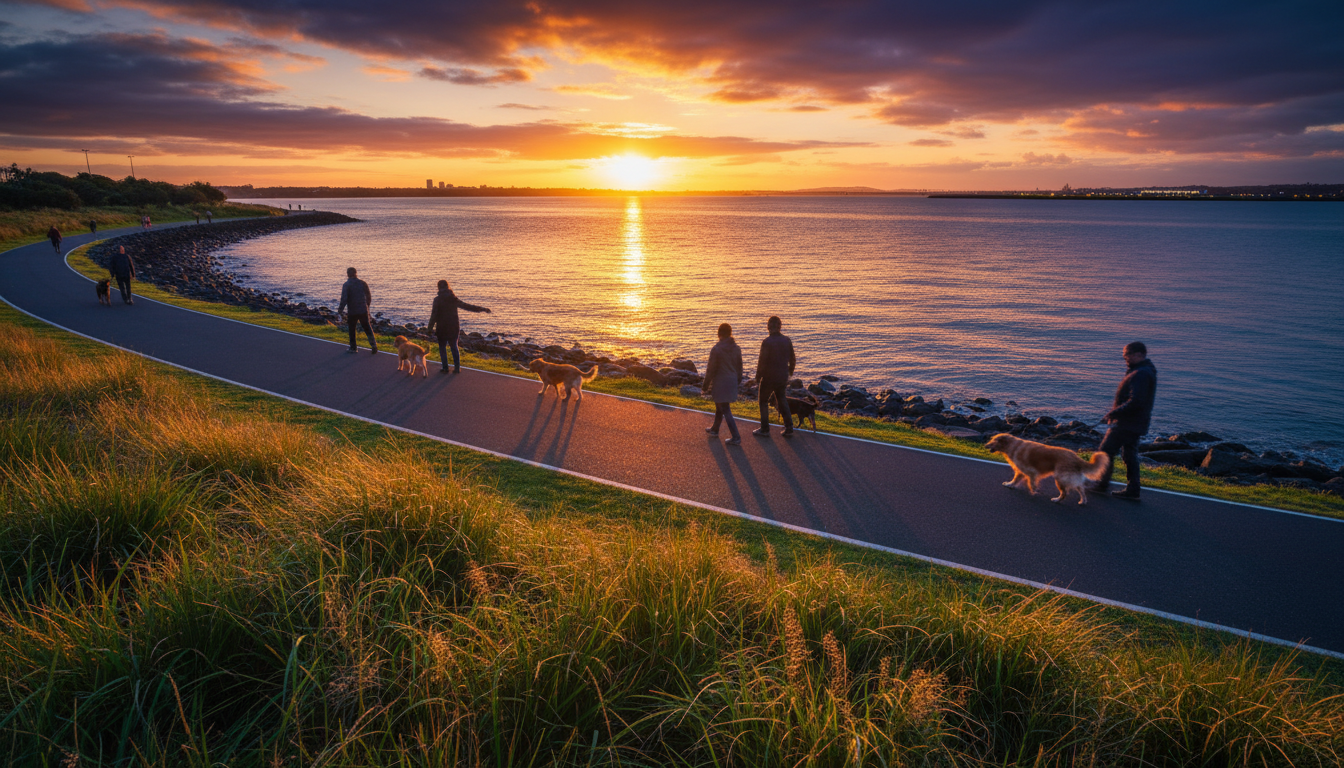 Onehunga Bay Reserve at sunset, with the Manukau Harbour in the background and locals walking dogs a
Onehunga might be the most surprising entry on this list. Five years ago, I wouldn't have recommended it. But Auckland's property market has pushed creative, community-minded people into neighborhoods that were previously overlooked—and Onehunga has benefited enormously.
The neighborhood sits on the Manukau Harbour, on Auckland's southwestern edge. It has a proper high street (Onehunga Mall Road) with independent shops, good cafés, and a growing food scene. The waterfront area, Onehunga Bay Reserve, offers walking paths, playgrounds, and views across to the Waitākere Ranges.
What's changing: Young families and professionals are renovating the old workers' cottages and villas. New restaurants are opening. The community is becoming more engaged. And crucially for home exchangers, more listings are appearing on platforms like SwappaHome.
Why home exchange works here: You're getting in early. Onehunga hasn't been "discovered" by the travel crowd yet, which means hosts are genuinely excited to share their neighborhood. The homes offer more space for your credits than inner-city alternatives, and the community feel is strong.
Getting around: The train connects you to Britomart in about 20 minutes. Auckland Airport is a 15-minute drive—useful if you're arriving late or leaving early. The motorway access is good for day trips to the Coromandel or Rotorua.
Honest assessment: Onehunga isn't as immediately charming as Devonport or as foodie-focused as Kingsland. But it's real, it's improving rapidly, and it offers genuine value for home exchangers willing to look beyond the obvious.
7. Titirangi: For Home Exchangers Who Want Nature and Art
I saved Titirangi for last because it's the most different from the other neighborhoods—and because it requires a specific kind of traveler to appreciate it.
Titirangi sits in the Waitākere Ranges, about 25 minutes west of central Auckland. It's where Auckland goes to escape Auckland. The neighborhood is built into native bush, with houses perched on hillsides, surrounded by nikau palms and tree ferns. The air smells different here—cleaner, greener, with that particular New Zealand bush fragrance.
The village center has art galleries, a beloved local cinema (the Lopdell House), and cafés that attract a creative, slightly alternative crowd. The Arataki Visitor Centre is nearby, offering access to dozens of walking tracks through the Waitākeres.
Why home exchange works here: Titirangi attracts artists, writers, and people who've deliberately chosen a slower pace of life. They travel for inspiration, they understand the home exchange ethos, and they tend to be exceptional hosts. The homes here are often architecturally interesting—designed to work with the landscape rather than against it.
The trade-off: You need a car. Public transport to Titirangi exists but it's infrequent and slow. If you're planning to explore central Auckland daily, this isn't the right base. But if you want to write, hike, and decompress—with occasional trips into the city—Titirangi is unbeatable.
What to do: Walk the Hillary Trail. Visit Piha Beach (30 minutes away, one of New Zealand's most dramatic black sand beaches). Eat at The Refreshment Room, a café that's been serving the community since 1929. Just... breathe.
How to Find Home Exchange Listings in These Auckland Neighborhoods
Alright, practical stuff. Here's how I actually find home exchange opportunities in underrated Auckland neighborhoods.
Start with SwappaHome's search filters. You can search by city, but the real trick is using the map view to zoom into specific neighborhoods. Auckland's geography is confusing if you don't know it—the city sprawls across two harbours and dozens of suburbs—so visual searching helps.
Look for hosts who mention neighborhood pride. The best listings I've found always include something like "We love our neighborhood because..." or "Our favorite local spot is..." These hosts understand what makes their area special and will go out of their way to help you experience it.
Message before booking. This is crucial for Auckland specifically. Ask potential hosts about public transport access, parking situations, and what the neighborhood is actually like day-to-day. Aucklanders are generally honest about their areas' pros and cons.
Consider timing. New Zealand's summer (December-February) is peak travel season for Kiwis heading overseas—which means more home exchange opportunities. The shoulder seasons (March-April, October-November) offer good weather and fewer crowds.
Build your profile thoroughly. Auckland hosts, especially in these community-oriented neighborhoods, want to know who's staying in their home. Include photos, write about your interests, and explain why you're visiting. The more real you seem, the better your chances of securing great listings.
The Real Cost Comparison: Home Exchange vs. Hotels in Auckland
Let me put some real numbers to this, because the savings from home exchange in Auckland are genuinely significant.
A hotel in central Auckland runs NZD $200-350 ($120-210 USD) per night for something decent. Over two weeks, that's $1,680-2,940 USD. An Airbnb in a good neighborhood costs NZD $180-280 ($110-170 USD) per night for a one-bedroom apartment—two weeks sets you back $1,540-2,380 USD. Home exchange? 14 credits on SwappaHome. Accommodation cost: $0.
Even if you factor in the credits you're "spending," remember that you earned those by hosting others in your own home—which you'd probably be leaving empty anyway. The math just works.
And here's what the numbers don't capture: the experience difference. A hotel room in Auckland's CBD gives you a bed and a bathroom. A home exchange in Grey Lynn gives you a kitchen to cook in, a garden to sit in, a neighborhood to explore, and a host who'll tell you where to find the best dumplings.
Frequently Asked Questions
Is home exchange in Auckland safe for first-time swappers?
Absolutely. Auckland consistently ranks among the world's safest cities, and the home exchange community here is well-established and trustworthy. SwappaHome's verification and review systems help you connect with reliable hosts. I'd recommend starting with a shorter exchange—maybe a week—in a neighborhood like Devonport or Grey Lynn where the community is tight-knit and hosts are experienced. Consider getting your own travel insurance for extra peace of mind, as you would for any international trip.
How far in advance should I book an Auckland home exchange?
For peak season (December-February), start looking 3-4 months ahead. Popular neighborhoods like Devonport and Grey Lynn get snapped up quickly during New Zealand summer. For shoulder seasons, 6-8 weeks is usually sufficient. I've occasionally found last-minute opportunities in less touristy areas like Mount Albert or Onehunga, but I wouldn't count on it for trip planning.
What's the best Auckland neighborhood for home exchange with kids?
Birkenhead and Mount Albert are my top recommendations for families. Both have larger homes with gardens, good parks nearby, and family-friendly communities. Birkenhead's coastal walks are perfect for burning off kid energy, while Mount Albert's central location makes day trips easier. Avoid Kingsland if you're traveling during rugby season—the match-day crowds aren't ideal for little ones.
Can I do a home exchange in Auckland without a car?
Yes, but your neighborhood choice matters significantly. Devonport, Kingsland, and Grey Lynn are all well-connected by ferry, train, or bus to central Auckland. You can explore these areas entirely on foot and public transport. If you're considering Titirangi, Birkenhead, or Onehunga, though, you'll want vehicle access for day-to-day convenience and exploring the wider region.
How much can I realistically save with home exchange in Auckland?
For a two-week stay, you're looking at savings of $1,500-3,000 USD compared to hotels or Airbnbs in comparable neighborhoods. Auckland accommodation is expensive—it's consistently ranked among the pricier cities in the Pacific—so the home exchange value proposition is particularly strong here. Plus, having a full kitchen means you'll spend less on dining out.
I've been back to Auckland three times since that first home exchange in Devonport. Each time, I've stayed in a different neighborhood—Grey Lynn, Kingsland, and most recently a converted garage studio in Mount Albert that had more character than any hotel I've ever booked.
The thing about Auckland is that it rewards curiosity. The obvious neighborhoods are fine, but the city's soul lives in these quieter corners—in the Saturday markets and neighborhood cafés and walking paths that tourists never find.
Home exchange is the key that unlocks all of it. You're not just visiting Auckland; you're borrowing someone's life there for a while. And in neighborhoods like these, that life is pretty wonderful.
If you're planning your first Auckland home exchange, start browsing listings on SwappaHome. Filter by the neighborhoods I've mentioned, read the host descriptions carefully, and don't be afraid to message people with questions. The Auckland home exchange community is welcoming, and they genuinely want to help you fall in love with their city.
Just promise me you won't tell everyone about Manuka café in Devonport. Some secrets are worth keeping.
40+
Swaps
25
Countries
7
Years
About Maya Chen
Travel Writer & Home Exchange Expert
Maya is a travel writer with over 7 years of experience in the home swapping world. Originally from Vancouver and now based in San Francisco, she has completed more than 40 home exchanges across 25 countries. Her passion for "slow" and authentic travel led her to discover that true luxury lies in living like a local, not a tourist.
Ready to try home swapping?
Join SwappaHome and start traveling by exchanging homes. Get 10 free credits when you sign up!
Related articles
Lyon Home Exchange: Your Complete Guide to France's Hidden Gem for Home Swapping
Discover why Lyon home exchange is booming among savvy travelers. From Croix-Rousse to Presqu'île, find the best neighborhoods and insider tips for your swap.

Zurich Bucket List: 47 Unforgettable Experiences to Enjoy During Your Home Swap
Discover the ultimate Zurich bucket list for home swappers—from secret swimming spots to fondue rituals locals actually do. Save thousands while living like a true Zürcher.
Dublin Home Exchange Utilities Guide: WiFi, Heating & Everything Your Guests Need
Master Dublin home exchange utilities—from dodgy WiFi fixes to heating quirks. Practical tips from 7 years of swapping homes across Ireland.