
Home Exchange in Oxford: Your Complete Guide to Free Accommodation in England's Academic Heart

SwappaHome Editorial Team
Home Exchange & Slow Travel Editorial
Discover how home exchange in Oxford lets you stay for free in this historic university city. Real tips from 40+ swaps on finding the perfect Oxford home swap.
The first time I walked through the Bodleian Library's courtyard, I wasn't staying in some overpriced hotel on the High Street. I was living in a Victorian terraced house in Jericho, making morning coffee in someone else's kitchen, and pretending—just for a week—that I was an Oxford local.
That trip changed everything about how I think about visiting England's most storied university city. Instead of dropping £200+ per night on accommodation, I spent exactly zero on lodging. And honestly? The experience was infinitely richer than any hotel could have offered.
 golden morning light streaming through the windows of a Victorian terraced house in Oxfords Jericho
Why Home Exchange in Oxford Makes Perfect Sense
Oxford has a peculiar problem for visitors. The city is compact, gorgeous, and absolutely heaving with tourists during peak season. Hotels know this—a mid-range room in central Oxford will run you $180-$280 per night (£140-£220). The nicer spots near the colleges? Easily $350+ (£275+).
But here's what most visitors don't realize.
Oxford is also a city of sabbaticals, research leaves, and visiting scholars. Academics regularly need to travel for conferences, research stints, or teaching exchanges. Their homes sit empty. Their mortgages don't pause. And this is where home swapping becomes genuinely brilliant.
When you do a home exchange here, you're often staying in the kind of characterful property that doesn't exist in the hotel market. I'm talking about a converted coach house in Summertown. A narrow Georgian townhouse on a cobbled lane near Christ Church. A modern apartment overlooking Port Meadow where horses graze at dawn.
These aren't Airbnbs with laminated instruction manuals and lockboxes. They're real homes, filled with books and art and the accumulated personality of people who've chosen to live in one of England's most intellectually vibrant cities.
How Oxford Home Swapping Actually Works
I'll be real with you—the mechanics confused me at first too.
With platforms like SwappaHome, you don't need to find someone who wants your exact home at your exact dates. The credit system eliminates that logistical nightmare. You earn credits by hosting travelers in your home (1 credit per night, always), then spend those credits to stay anywhere in the network.
So you might host a family from Melbourne for a week in your San Francisco apartment, then use those 7 credits to stay in Oxford the following month. The Melbourne family never needs to visit Oxford. The Oxford homeowner never needs to visit San Francisco. Everyone gets what they need.
New members start with 7 free credits—enough for a solid a full week in Oxford to test the whole concept.
The trust piece comes from the community itself. Members review each other after every stay, building reputation over time. There's identity verification available, and the messaging system lets you get a real sense of someone before committing. After 40+ exchanges, I've learned that home swappers tend to be a particular breed: curious, respectful, and genuinely invested in making the experience work for everyone.
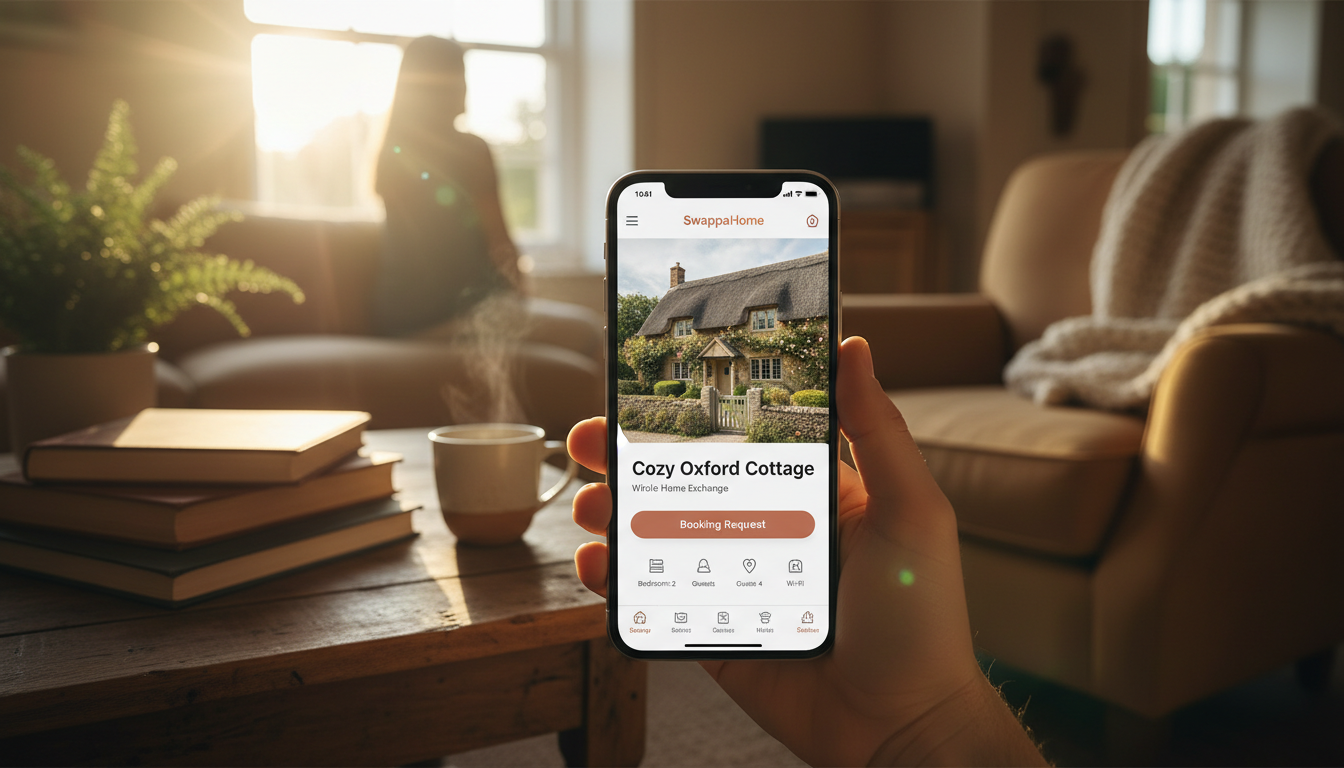 the SwappaHome app interface on a phone screen, showing a listing for a cozy Oxford cottage with the
Best Oxford Neighborhoods for Home Exchange
Not all Oxford locations are created equal for home swapping. Here's where I'd focus your search.
Jericho: The Intellectual Village
This is where I stayed on my first Oxford home swap, and I'm permanently biased.
Jericho feels like a village that happens to exist inside a city. Independent bookshops (Blackwell's outpost is here), excellent pubs (The Rickety Press does a mean Sunday roast for about $18/£14), and coffee shops where people actually read books instead of staring at laptops.
Homes here tend to be Victorian terraces with small gardens. Expect character over space—narrow staircases, rooms that flow into each other, maybe a clawfoot tub. You're a 15-minute walk to the city center and right next to the Oxford Canal towpath for morning runs. Home exchange availability is moderate to good, since lots of academics live here, and academics travel.
Summertown: Suburban Charm, Excellent Connections
About 2 miles north of the city center, Summertown is where Oxford families with actual children tend to live. The homes are larger—Edwardian semis with proper gardens, sometimes even driveways. You'll find a high street with independent shops, great bakeries, and a farmers' market on Sundays.
The trade-off is distance. You'll want to use the frequent buses (the S1 runs every 10 minutes) or cycle—Oxford is flat and bike-friendly. But families travel during school holidays, and you get more space for the same credit cost. Good availability overall.
Headington: The Local's Secret
East of the city center, Headington rarely appears in tourist guides. That's exactly why I like it.
The neighborhood has its own personality—quirky shops, the famous Headington Shark (a sculpture of a shark crashing into a roof, genuinely worth seeing), and easy access to the stunning grounds of Oxford Brookes University. Homes range from 1930s semis to modern builds. You're about 20 minutes by bus to the center, but you'll pay significantly less attention to crowds. Excellent availability since this is a residential neighborhood with steady inventory.
Central Oxford: Rare But Worth Pursuing
Actually living within the medieval city center is rare—most of that land belongs to the colleges. But occasionally, a flat above a shop on the High Street or a tiny house on a lane near the Covered Market becomes available.
If you spot one, move fast. These properties book quickly and offer an unbeatable experience. Imagine stepping out your door directly onto streets where scholars have walked for 800 years.
 aerial view of Oxfords dreaming spires at golden hour, with the Radcliffe Camera and Bodleian Librar
What Free Oxford Accommodation Actually Saves You
Let's talk real numbers, because this is where home swapping gets genuinely exciting.
For a one-week stay in Oxford during shoulder season (late September, early May), the hotel route—mid-range hotel plus eating out for all meals—runs roughly $1,960-$2,800 (£1,540-£2,200). The home exchange route? Accommodation costs $0 (using credits you've already earned), and groceries plus occasional dining out runs maybe $210-$350 (£165-£275).
That's not a typo. You're looking at savings of $1,750-$2,450 per week. Extend that to a month—which home exchange makes genuinely feasible—and you're keeping $7,000+ in your pocket.
But here's what the math doesn't capture: the qualitative difference.
When you're not hemorrhaging money on accommodation, you travel differently. You linger over a second coffee at The Missing Bean (excellent flat whites, $4/£3.20). You browse the antique prints at Sanders of Oxford without guilt. You take the train to London for a day ($35/£28 return) because why not?
The financial pressure evaporates, and Oxford becomes a place you inhabit rather than a place you visit.
Finding Your Perfect Oxford Home Swap
After seven years of home swapping, I've developed a system. Here's what actually works for Oxford specifically.
Oxford home exchange listings tend to appear 2-4 months before availability. Academics plan around term dates, so you'll see spikes in availability during late December through early January (Christmas vacation), late March through mid-April (Easter vacation), and mid-June through September (long vacation). Don't search 8 months out—you'll find almost nothing and get discouraged. But don't wait until 3 weeks before either.
When you reach out, craft a message that actually gets responses. I've seen too many people send generic "I'd like to stay at your place" messages and wonder why they hear crickets. Mention something specific about their listing. Ask a genuine question about the neighborhood. Share why you're visiting Oxford—especially if it's for something interesting like research, a reunion, or a literary pilgrimage. Oxford homeowners tend to be curious people; give them something to be curious about.
My response rate jumped dramatically when I started treating initial messages like the start of a conversation rather than a booking request.
And be flexible on exact dates if you can. If you absolutely must be in Oxford for a specific weekend, home exchange becomes harder. But if you can say "sometime in October" or "any week in early spring," your options multiply. I've had some of my best swaps by messaging homeowners and asking when works for them, then building my trip around their availability.
One more thing—check nearby villages. Within 10-15 minutes of Oxford, you'll find places like Wolvercote, Iffley, and Marston. These often have larger homes, gardens, and a more rural feel while remaining genuinely convenient to the city. Some of my favorite Oxford-area stays have technically been outside Oxford proper.
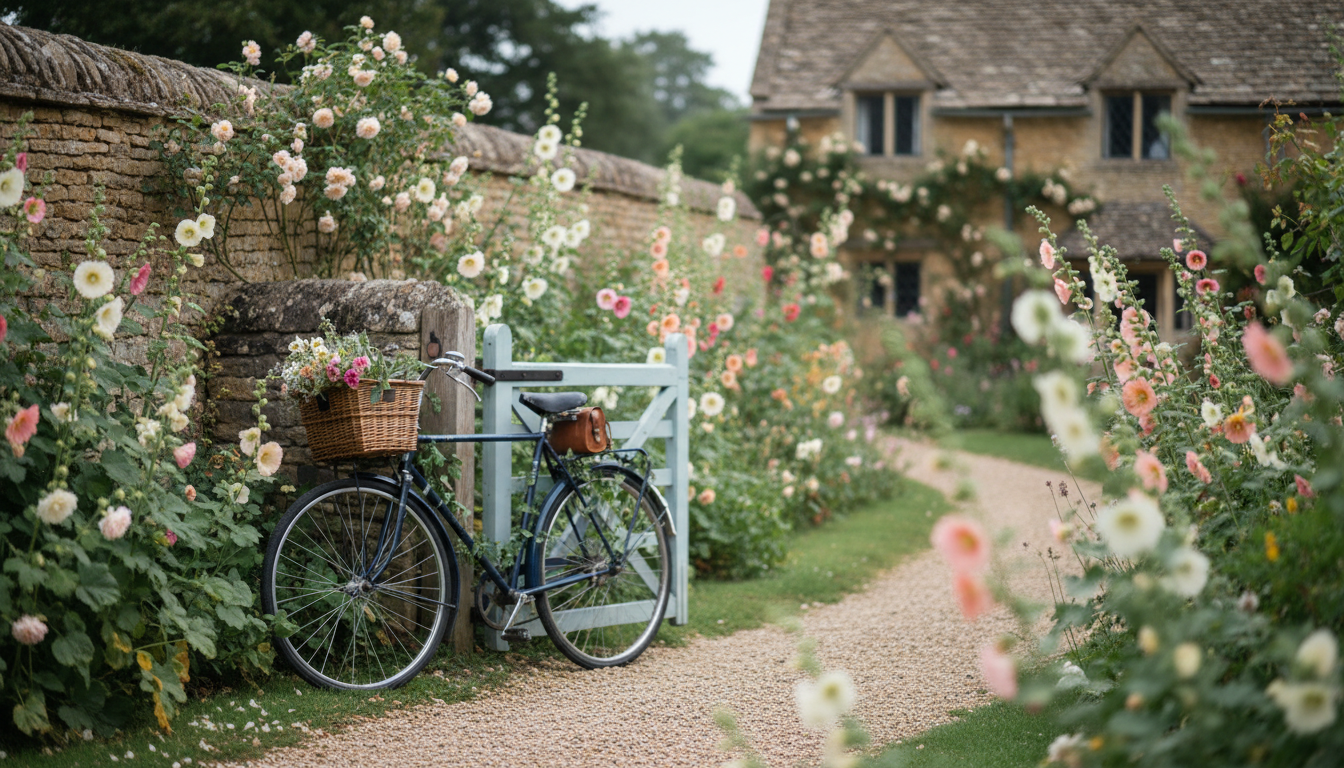 a charming English cottage garden in late summer, hollyhocks and roses against honey-colored Cotswol
What to Expect From Your Oxford Host's Home
Oxford homes have personality. Sometimes a lot of it.
You might find yourself surrounded by floor-to-ceiling bookshelves (extremely common—this is Oxford, after all). The kitchen might have a temperamental Aga stove that requires a learning curve. The shower might be one of those electric units that takes 30 seconds to warm up.
Embrace it. This is the texture of real life in England.
A few things I've learned to ask about before confirming: Heating is a big one. English homes can be cold, especially in winter. I once stayed in a beautiful Headington house where the heating timer was set to 1970s-era efficiency—meaning the house was freezing from 10pm to 7am. A quick message to my host solved it.
If you're renting a car, ask specifically about parking. Many Oxford homes have no dedicated parking, and street parking can be permit-restricted. If there's a garden, clarify whether you can use it and whether any maintenance is expected. Most hosts don't expect you to mow the lawn, but watering plants during a summer swap is often appreciated.
And ask about bikes. Many Oxford homes come with bicycles available for guest use. This is gold—cycling is genuinely the best way to get around the city.
Making the Most of Free Accommodation in Oxford
Here's where having a home base transforms your Oxford experience.
Instead of hotel breakfast buffets, you'll have a kitchen. The Covered Market opens at 8am, and the stalls there sell everything you need for a proper English breakfast—bacon from the butcher, eggs from the farm stall, bread from the bakery. Total cost for a week's worth of breakfasts: maybe $25 (£20). Or do what I do: grab pastries from Gail's Bakery (the almond croissant, $4.50/£3.50) and eat them in the University Parks, watching the mist lift off the grass.
When you're not paying per night, you stop rushing. I spent an entire afternoon in the Pitt Rivers Museum once, just because I could. I wandered the Botanic Garden three separate times. I sat in the Eagle and Child pub (where Tolkien and C.S. Lewis used to drink) and actually read a book instead of taking a photo and leaving. This is what home exchange enables: the luxury of time.
And evening cooking—this might be my favorite part. Oxford has excellent restaurants, but eating out every night gets expensive and exhausting. With a home exchange, you can cook. The Covered Market's fishmonger sells beautiful fresh fish. The cheese shop (Oxford Cheese Company) will give you recommendations. The wine shop on Little Clarendon Street knows their stuff.
Some of my best Oxford memories are simple dinners in borrowed kitchens, windows open to the evening air, a decent bottle of wine, and nowhere to be.
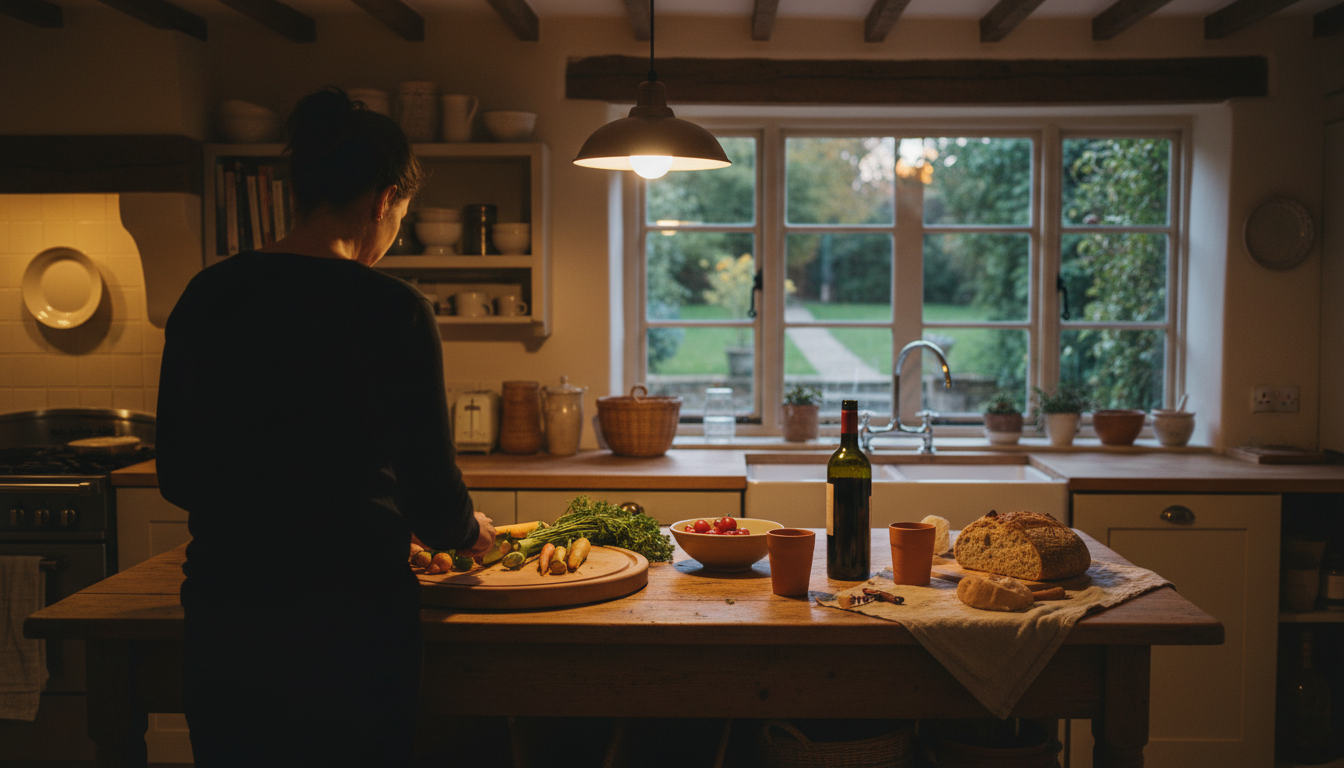 evening scene in an Oxford kitchen, someone preparing a simple meal with local ingredients, warm lig
Practical Tips for Oxford Home Exchange Success
After multiple Oxford stays, here's what I wish I'd known from the start.
Skip the rental car for Oxford itself—parking is expensive and limited, and the city is genuinely walkable. But if you're planning Cotswolds day trips (and you should), consider renting for a day or two. The train from London Paddington takes about an hour and costs $20-$45 (£16-£35) depending on when you book. Oxford's bus station connects to airports and other cities affordably.
Oxford weather is... English. Pack layers. Always have a light rain jacket. The city is beautiful in the rain, but only if you're dressed for it.
Most Oxford colleges charge admission for tourists ($8-$15/£6-£12 each), but some are free or have free hours. Check individual college websites. Magdalen, New College, and Christ Church are the most visited; Exeter, Lincoln, and Jesus are equally beautiful and far less crowded.
Oxford has exceptional pubs, but they're not all created equal. The Turf Tavern is famous and worth one visit for the atmosphere. The White Horse is tiny and perfect for a quiet pint. The Perch, a 15-minute walk along the Thames, has a garden that feels like a dream on summer evenings. Budget about $7-$9 (£5.50-£7) per pint. Yes, London prices have reached Oxford.
For groceries, the Covered Market is charming but not cheap. For everyday shopping, there's a Sainsbury's on Magdalen Street and a Tesco Metro near the train station. Lidl in Cowley offers the best prices if you have transport.
When Things Don't Go Perfectly
I'd be lying if I said every home exchange is flawless. They're not. Real homes have real quirks.
Once, the WiFi router in my Oxford swap died on day two. The homeowner talked me through resetting it via text. Problem solved in ten minutes. Another time, I couldn't figure out the washing machine (British machines are different from American ones). A quick message, a photo of the dial, and I had clean clothes.
The key is communication. Most issues are minor and easily solved when you and your host are both invested in the experience working out.
A note on expectations: SwappaHome connects members, but it's not a hotel chain with a concierge desk. If something goes wrong, you work it out with your host directly. For anything you're genuinely worried about—valuables, damage, liability—consider getting your own travel insurance. I always do. It's not expensive, and it provides peace of mind that makes me a more relaxed guest.
The Oxford Home Exchange Mindset
Here's what I've come to understand after years of swapping: home exchange works best when you approach it as a relationship, not a transaction.
You're staying in someone's actual home. They're trusting you with their space, their books, their grandmother's teacups. In return, you treat their home better than you'd treat a hotel room. You leave it clean. You follow their house rules. You maybe pick up a small gift—a nice candle, a book you think they'd enjoy—as a thank you.
This isn't obligation; it's the culture that makes home exchange work. And honestly? It makes the experience richer. You're not just a tourist passing through. You're part of a community of travelers who've figured out a better way to see the world.
Getting Started With Your Oxford Home Swap
If you've read this far, you're probably genuinely curious. Good.
Here's what I'd do: sign up for SwappaHome (you'll get 7 credits to start, enough for a solid Oxford stay), create a listing for your own home, and start browsing Oxford properties. Even if you're not ready to book, you'll get a sense of what's available and when.
Message a few homeowners whose places appeal to you. Ask questions. Get a feel for the community.
Then, when you're ready, take the leap. Book your first Oxford home exchange. Walk through those college gates. Sit in a pub that's been serving pints since before your country existed. Make dinner in a kitchen that isn't yours but somehow, for a week, feels like home.
Oxford has been welcoming curious travelers for 800 years. With home exchange, you get to experience it the way the city deserves—slowly, deeply, and without the financial anxiety that makes so much modern travel feel hollow.
I'll see you at the Covered Market. I'll be the one buying too much cheese.
Frequently Asked Questions
Is home exchange in Oxford safe for first-time swappers?
Yes, Oxford home exchange is generally very safe. The community relies on mutual trust, verified identities, and a review system that builds accountability. Most Oxford hosts are academics or professionals who take pride in their homes. Start with well-reviewed members, communicate clearly before booking, and consider travel insurance for extra peace of mind.
How much money can I save with home exchange in Oxford compared to hotels?
For a one-week stay, home exchange in Oxford typically saves $1,750-$2,450 compared to mid-range hotels. Oxford hotels average $180-$280 per night, while home exchange costs zero for accommodation (using credits). Add kitchen access for cooking, and your total trip costs can drop by 70-80% compared to traditional travel.
What's the best time of year to find Oxford home exchange listings?
The best availability for Oxford home swaps aligns with university vacations: late December-early January, late March-mid April, and mid-June through September. Academics travel during these periods, creating more listings. Search 2-4 months ahead for optimal selection—too early shows limited options, too late means popular homes are taken.
Do I need a car for an Oxford home exchange stay?
No, a car is unnecessary for Oxford itself. The city is compact and walkable, with excellent bus service and a strong cycling culture. Many home exchange properties include bicycles for guest use. Only rent a car if you're planning Cotswolds day trips. Parking in central Oxford is expensive and limited, making cars more hassle than help.
Can I do a home exchange in Oxford if I live in an apartment, not a house?
Absolutely. Home exchange works for any type of home—apartments, condos, townhouses, or houses. Oxford hosts aren't expecting a mansion in return; they're looking for a genuine home in an interesting location. A well-maintained apartment in a desirable city is highly appealing to travelers, regardless of size.

Published by
SwappaHome
SwappaHome Editorial Team
Home Exchange & Slow Travel Editorial
The SwappaHome Editorial Team brings together travel research, home-exchange community insights, and platform data to produce practical guides for first-time and experienced home swappers. Every article cites real platforms, current market rates, and verifiable city-level facts so readers can make informed decisions without guessing.
Ready to try home swapping?
Join SwappaHome and start traveling by exchanging homes. Get 7 free credits when you sign up!
Related articles
How to Extend or Modify a Home Swap Mid-Stay: The Complete Flexibility Guide
Need to extend your home swap or change dates mid-trip? Here's exactly how to negotiate changes, handle credits, and keep both parties happy.

How to Visit Bali for Free with Home Exchange: The Complete 2026 Guide
Skip the $150/night villas. Home exchange in Bali lets you stay in Ubud rice field houses and Seminyak beach pads for zero accommodation cost. Here's exactly how.
How to Vet Home Swap Guests: 12 Red Flags Every Host Should Know
Learn how to vet home swap guests before handing over your keys. Spot the 12 red flags experienced hosts watch for—and protect your home with confidence.