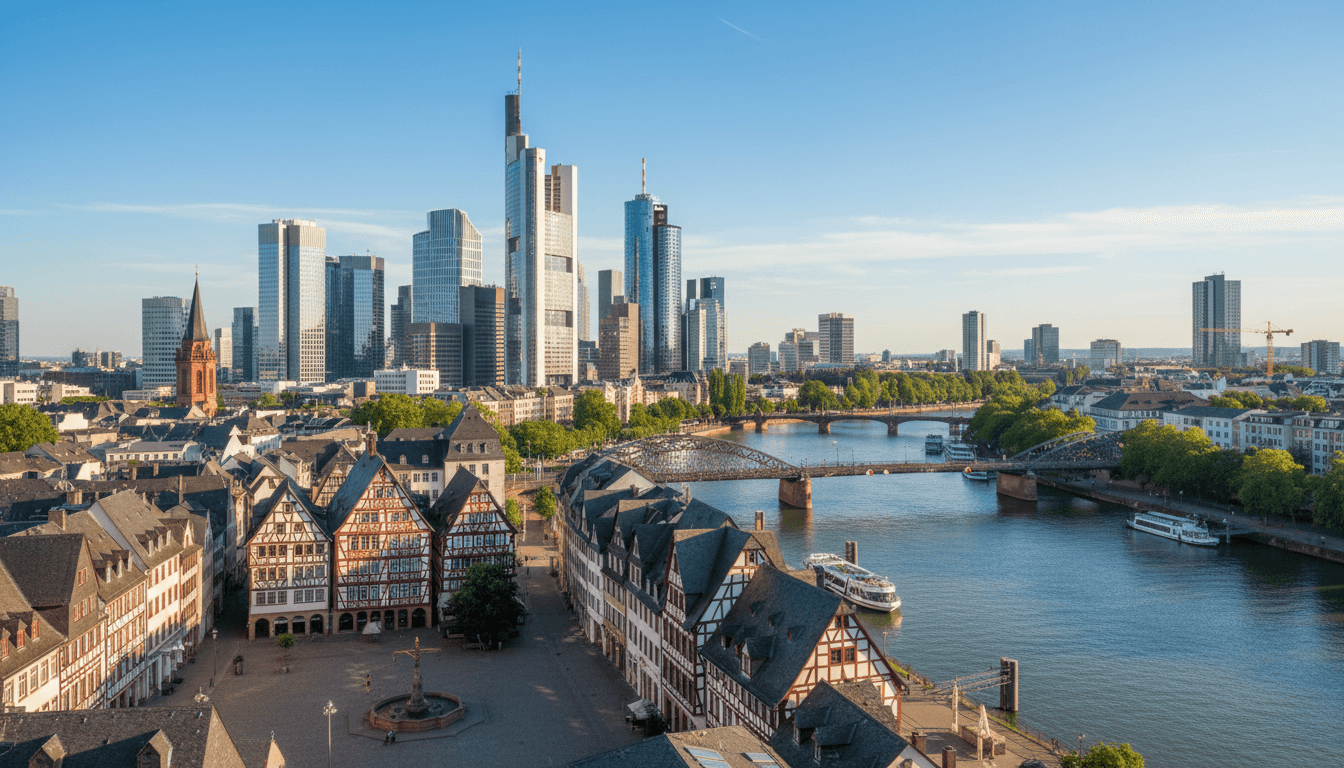
Home Swap in Frankfurt: What to Expect as Host or Guest in Germany's Financial Hub

SwappaHome Editorial Team
Home Exchange & Slow Travel Editorial
Discover what home swap demand in Frankfurt really looks like—from hosting business travelers to finding your perfect German exchange. Insider tips from 7 years of swapping.
The first time I landed in Frankfurt, I almost wrote it off. Another airport, another business district, another city of glass towers and suits rushing past. But my home swap host had left a note on the kitchen counter: "Walk to Sachsenhausen tonight. Find the Apfelwein tavern with the green shutters. Order the Handkäs mit Musik. Trust me."
Three hours later, I was sitting in a 200-year-old tavern, eating pungent cheese with raw onions, drinking cloudy apple wine from a ceramic jug, and laughing with a table of locals who'd adopted me for the evening. That's when it hit me—home swap in Frankfurt isn't about the skyline. It's about the secret city that exists underneath it.
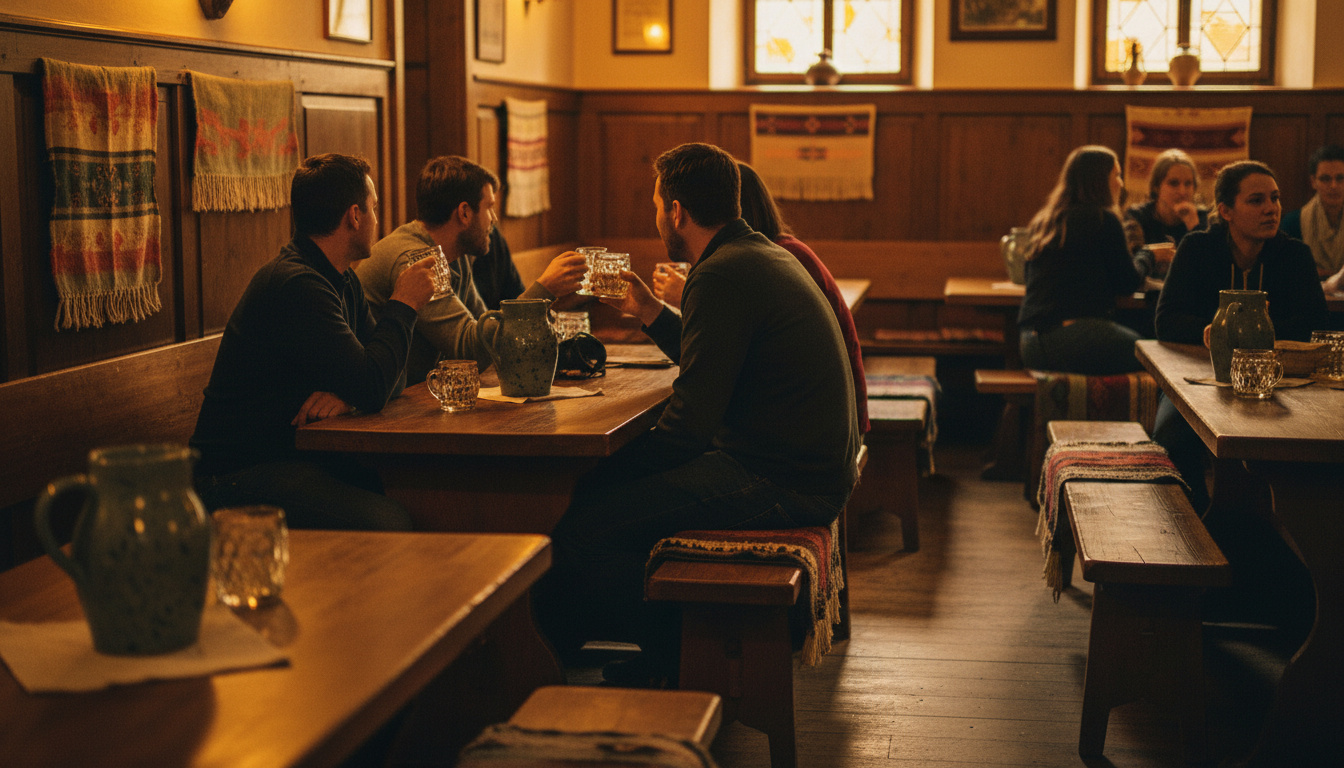 Traditional Apfelwein tavern in Sachsenhausen with wooden benches, ceramic Bembel jugs on tables, wa
Frankfurt has become one of my most-requested destinations for home exchange advice. And honestly? I get it. This city sits at a fascinating crossroads—literally, as Europe's busiest transit hub, and figuratively, as a place where demand for home swaps operates on completely different rules than Paris or Barcelona. So if you're thinking about listing your Frankfurt apartment or searching for a swap there, here's everything I've learned from my own exchanges and from talking to dozens of Frankfurt-based SwappaHome members.
Why Home Swap Demand in Frankfurt Follows Its Own Rhythm
Forget everything you know about seasonal travel patterns. Frankfurt doesn't play by those rules.
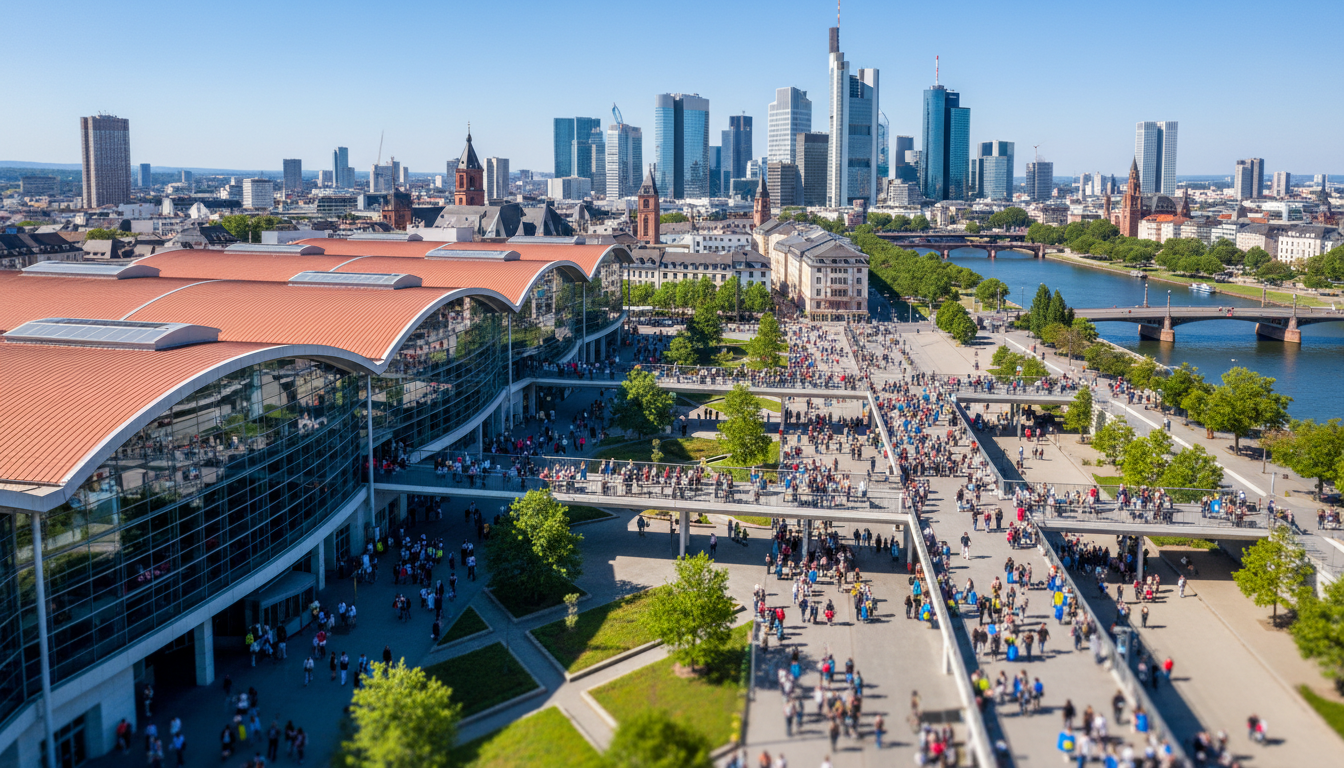
Most European cities see demand spike in summer, dip in winter, and follow predictable holiday patterns. Frankfurt? The demand for home exchanges here is driven primarily by the trade fair calendar—and that calendar is relentless. The Messe Frankfurt hosts roughly 50 major international fairs each year, from the massive Frankfurt Book Fair in October (we're talking 300,000+ visitors) to IAA Mobility, Ambiente, and dozens of industry-specific events that draw professionals from every corner of the globe.
What this means for you: if you're hosting in Frankfurt, you'll see booking requests surge during fair weeks—sometimes months in advance. If you're looking to stay? You need to plan around these events or embrace them.
I learned this the hard way. My first attempt to arrange a home swap in Frankfurt coincided with the Book Fair. Every listing I contacted was either already booked or the hosts were traveling themselves to take advantage of the credit-earning opportunity. Smart hosts, honestly.
The flip side? During non-fair weeks, Frankfurt becomes surprisingly accessible. I've found gorgeous apartments in the Nordend neighborhood during random November weeks when business travel slows and locals are eager to use their credits elsewhere.
Understanding Frankfurt's Unique Home Swap Demographics
Here's something that surprised me: Frankfurt's home swap community skews differently than most cities I've exchanged in.
The typical Frankfurt host on SwappaHome tends to be a professional—often in finance, consulting, or pharma—with a modern apartment. Someone who travels frequently for work and wants to maximize their empty home. Often single or a couple without kids (the city has one of Germany's lowest birth rates). And extremely organized about their listing, with detailed house manuals that put my own to shame.
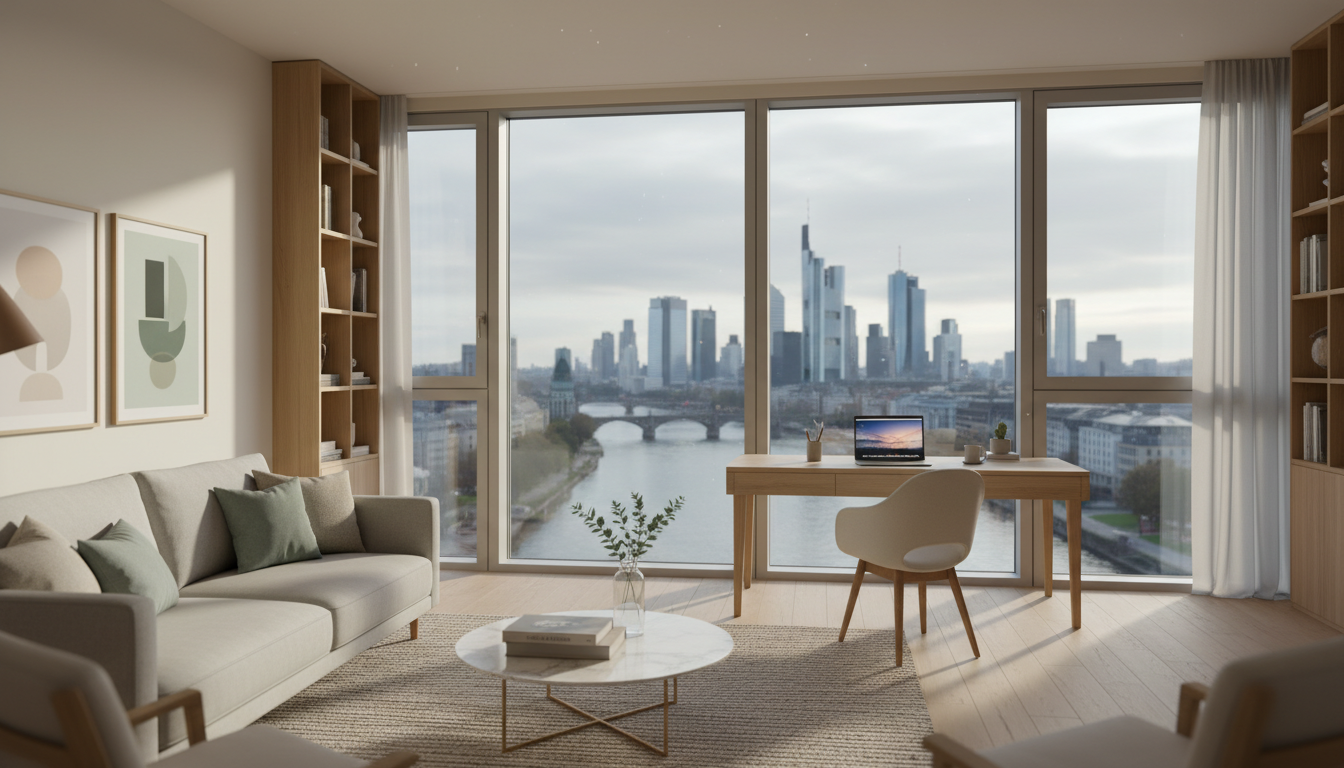 Modern Frankfurt apartment interior with floor-to-ceiling windows overlooking the Main River, minima
This demographic reality shapes what you'll find when searching for a home swap in Frankfurt. Expect sleek, well-maintained apartments rather than charming family homes. Expect excellent public transit access—Frankfurt residents rarely need cars. And expect hosts who communicate efficiently, sometimes almost clinically, but who genuinely care about providing a good experience.
As a guest, this works in your favor. Frankfurt homes tend to be spotless, well-equipped, and come with incredibly detailed instructions. One host left me a laminated guide to the recycling system (Germany takes trash sorting seriously), complete with diagrams. Another had pre-programmed the coffee machine with three different strength settings and left sticky notes explaining each one. I appreciated that more than I can say.
Best Neighborhoods for Home Exchange in Frankfurt
Frankfurt is compact—you can walk across the central city in under an hour—but neighborhoods have distinct personalities that dramatically affect your swap experience.
Sachsenhausen: The Soul of Frankfurt
This is where I always recommend first-time Frankfurt visitors look for a home swap. Sachsenhausen, especially Alt-Sachsenhausen (the old part), is where Frankfurt feels least like a financial center and most like a living, breathing German city.
The neighborhood sprawls south of the Main River, connected to the center by several bridges including the famous Eiserner Steg (Iron Bridge). Cobblestone streets. Half-timbered buildings that survived the war. And the famous Apfelwein taverns I mentioned earlier. The Saturday Flohmarkt along the riverbank is one of Germany's best—I always end up buying something I don't need but can't resist.
Home swap listings here tend to be in renovated older buildings—think high ceilings, wooden floors, and character. Apartments range from cozy one-bedrooms to spacious flats in converted townhouses. You'll use 1 credit per night like anywhere else on SwappaHome, but know that Sachsenhausen hosts often have waitlists during peak seasons.
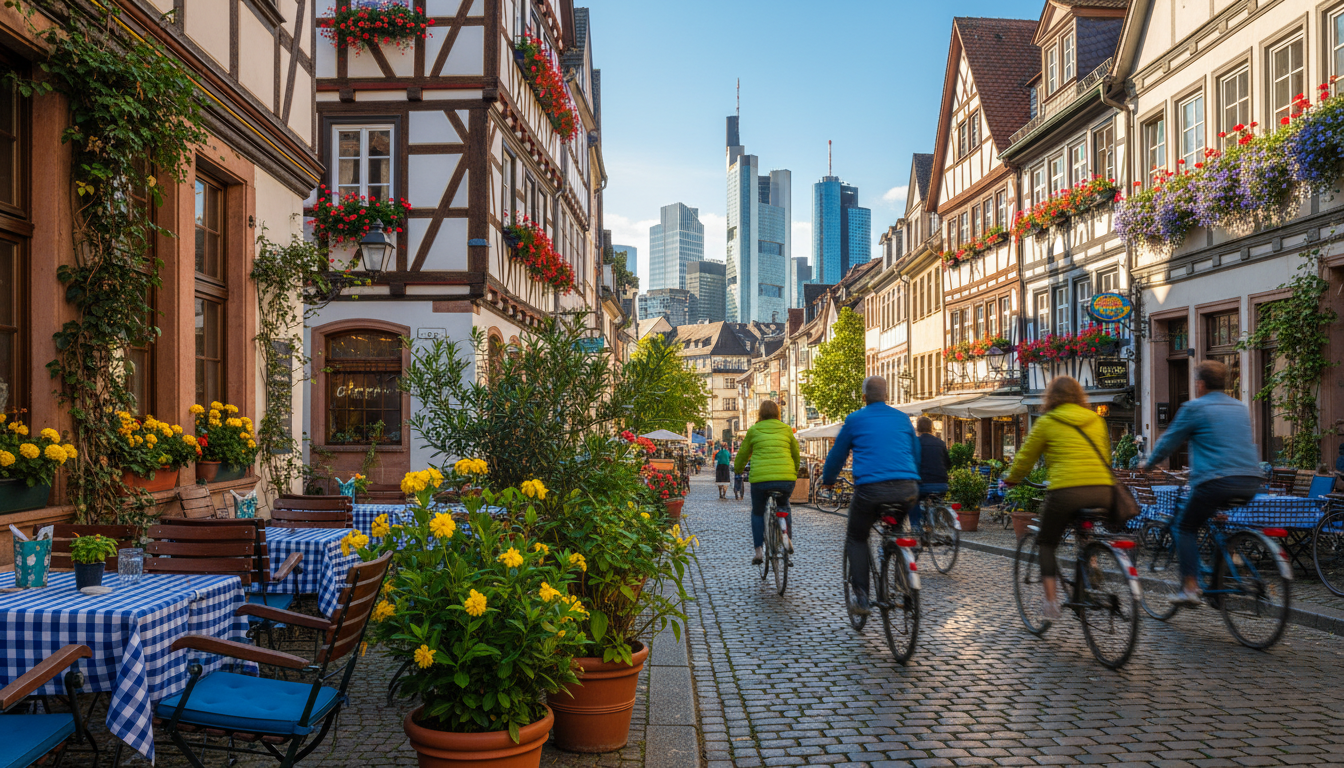 Cobblestone street in Alt-Sachsenhausen with half-timbered buildings, outdoor caf seating, locals on
Nordend: Where Frankfurt's Creatives Live
If Sachsenhausen is the soul, Nordend is the heart—specifically, the artsy, slightly bohemian heart that most tourists never discover.
This residential neighborhood north of the center has tree-lined streets, independent bookshops, specialty coffee roasters, and some of Frankfurt's best international restaurants. The Berger Straße, which runs through the neighborhood, feels like a village high street transported into a major city. I could spend hours just wandering.
Home swaps in Nordend often mean Altbau apartments—pre-war buildings with those gorgeous high ceilings, ornate moldings, and creaky parquet floors that I personally love. The vibe here is less corporate than other Frankfurt neighborhoods, attracting creative professionals, academics, and young families.
Quick tip: Nordend is divided into Nordend-Ost and Nordend-West. Nordend-West tends to be slightly more upscale; Nordend-Ost has more edge and better nightlife.
Westend: Elegant and Central
If you want the Frankfurt experience with maximum convenience, Westend delivers. This is old-money Frankfurt—stately 19th-century villas, embassy buildings, and some of the city's most expensive real estate.
Home swap listings here often feature larger apartments, sometimes in converted mansions. You're walking distance to the Palmengarten (Frankfurt's botanical garden), the university, and the central business district. The trade-off? Less neighborhood charm, more urban efficiency.
I stayed in a Westend apartment once that had been in the host's family since the 1920s. Crown moldings, a claw-foot bathtub, and a kitchen that somehow combined 1950s appliances with a brand-new espresso machine. These are the quirky gems you find through home exchange that no hotel could ever replicate.
Bornheim: The Underrated Choice
Bornheim doesn't make most tourist guides, which is exactly why I'm mentioning it. This neighborhood east of the center has emerged as Frankfurt's most livable area—great restaurants, excellent public transit, and a genuine community feel.
The Berger Straße continues through Bornheim (yes, the same street from Nordend), lined with bakeries, butchers, and the kind of family-run shops that have been there for generations. The Wednesday market is outstanding.
Home swap availability in Bornheim tends to be better than trendier neighborhoods, and you'll often find hosts who are genuinely excited to share their local knowledge. My Bornheim host once hand-drew me a map to her favorite hidden courtyard café—the kind of place with no sign, just a wooden door and a handwritten menu. I never would have found it otherwise.
What Frankfurt Hosts Should Know About Incoming Demand
If you're listing your Frankfurt home on SwappaHome, here's the reality of what to expect.
Peak Demand Periods
The trade fair schedule dominates everything. Your highest-demand weeks will be during the Frankfurt Book Fair in October (expect requests from publishers, authors, agents, and literary tourists from around the world), Ambiente in February (the home and living fair that draws interior designers and buyers), Light + Building in March (biennial lighting and building technology fair), Automechanika in September (biennial automotive industry event), and IAA Mobility in September during alternating years.
During these weeks, you could theoretically host guests every single night and accumulate credits rapidly. Some Frankfurt hosts I know specifically save their hosting for fair weeks, then use their credits for extended summer travels. Not a bad strategy.
 Aerial view of Messe Frankfurt exhibition grounds with modern architecture, crowds of visitors, and
Year-Round Steady Demand
Beyond trade fairs, Frankfurt sees consistent demand from business travelers who prefer home exchanges to sterile hotels, transit travelers using Frankfurt as a European hub (the airport connects everywhere), families visiting relatives in the Rhine-Main region, culture tourists hitting the Museumsufer (Museum Embankment), and Christmas market visitors from late November through December.
The Christmas market season, by the way, is underrated for home swaps. Frankfurt's Weihnachtsmarkt is one of Germany's oldest and most atmospheric, and the city transforms into something genuinely magical. Mulled wine, gingerbread, twinkling lights everywhere—it's worth experiencing.
Setting Expectations for Your Listing
Be specific in your SwappaHome listing about what makes your home valuable during different seasons. If you're near the Messe, mention it—that's a major selling point for trade fair visitors who don't want to commute. If you have a balcony or terrace, highlight it for summer guests. If your building has a quiet courtyard, that's gold for visitors escaping the fair chaos.
One thing I've noticed about successful Frankfurt listings: they emphasize practicality. High-speed WiFi, a proper workspace, a washing machine, proximity to public transit. Frankfurt guests tend to be practical people. Appeal to that.
What Guests Should Know Before Booking a Frankfurt Home Swap
Planning to use your SwappaHome credits in Frankfurt? Here's how to maximize your experience.
Timing Your Search
Start looking 3-4 months ahead if you're targeting trade fair periods. For regular visits, 6-8 weeks is usually sufficient, but the best listings do get snapped up.
If your dates are flexible, consider the shoulder seasons: early March, late April, or mid-November. You'll find more availability, hosts who have more time to engage with you, and a city that isn't overrun with conference badges.
What to Expect from Frankfurt Hosts
Frankfurt hosts tend to be efficient communicators. Don't be put off if responses are brief—it's cultural, not cold. Germans generally value directness, and a short, clear message is considered more respectful than lengthy pleasantries.
That said, I've found Frankfurt hosts to be incredibly generous once you're in their homes. Detailed neighborhood guides, restaurant recommendations, sometimes even stocked fridges. One host left me a transit card loaded with a week's worth of trips. I didn't expect that at all.
 Frankfurt U-Bahn station with clean modern design, digital departure boards, and commuters in busine
Budget Considerations
Frankfurt is expensive—one of Germany's priciest cities. A mid-range hotel room during trade fair weeks can easily exceed €250-300/night (around $270-325 USD). Even budget options hover around €120-150 ($130-160 USD).
With SwappaHome, you're using 1 credit per night regardless of the city or the apartment's market value. This is where Frankfurt home swaps become genuinely transformative for your travel budget. A week's stay during the Book Fair that might cost €1,500-2,000 ($1,600-2,150 USD) in hotels? Seven credits.
The savings let you splurge on experiences: a proper German breakfast at a traditional café (around €15-20/$16-22), a river cruise on the Main (€12-18/$13-19), or a day trip to the Rhine Valley wine region (train tickets around €25-40/$27-43 round trip).
Getting Around Your Frankfurt Home Swap
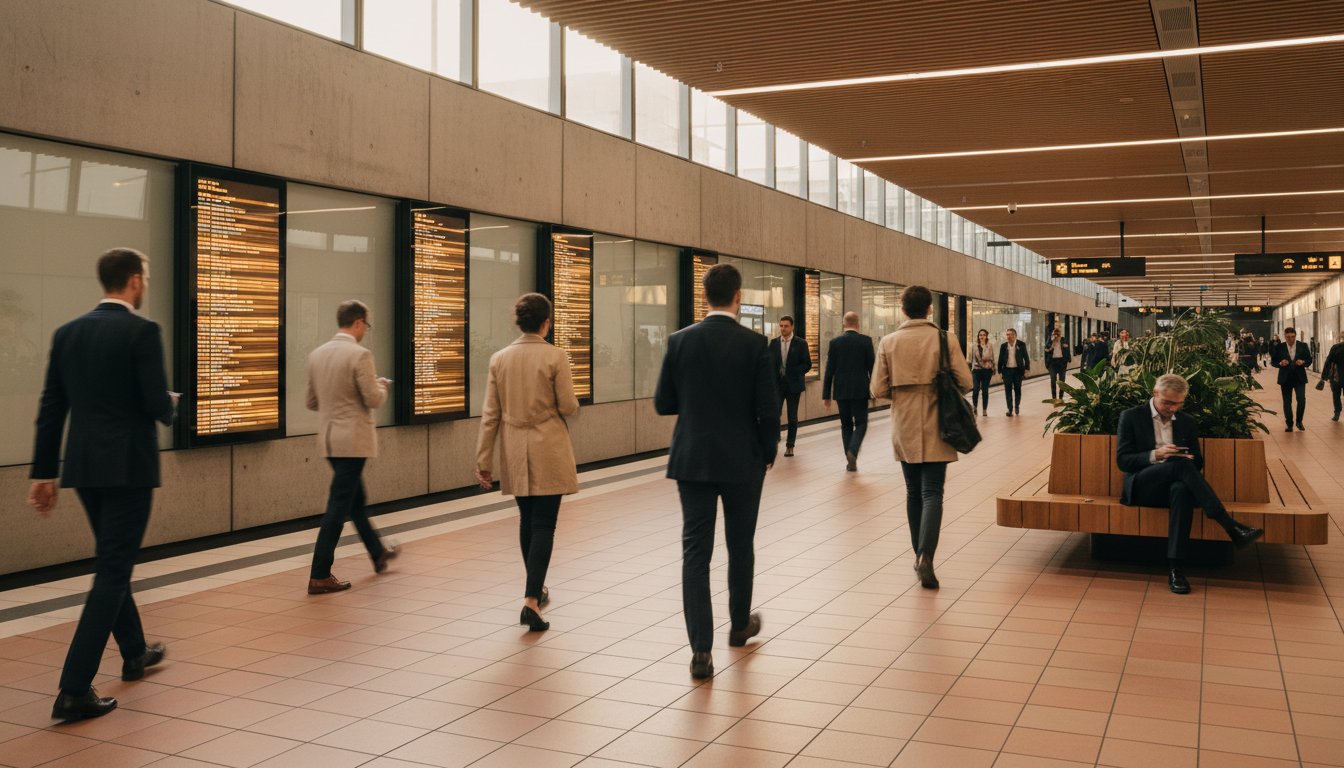
Frankfurt's public transit is exceptional. The RMV system combines U-Bahn (subway), S-Bahn (suburban rail), trams, and buses into one integrated network. A weekly pass costs around €27 ($29 USD) and covers unlimited travel.
Most home swap listings will be within a 10-15 minute transit ride of the center. Don't overlook listings slightly further out—the transit is so good that a Bornheim apartment with a 12-minute U-Bahn ride is often more pleasant than a cramped city center option.
Making the Most of Your Frankfurt Home Exchange
Whether you're hosting or staying, here are the insider moves that elevate a Frankfurt home swap from good to unforgettable.
For Hosts: The Welcome Touches That Matter
Frankfurt guests appreciate a transit guide with your nearest stops and which lines go where, coffee and breakfast basics (Germans take breakfast seriously), recommendations for restaurants that aren't in tourist guides, clear recycling instructions (seriously, this stresses visitors out), and a heads-up about any neighborhood quirks like construction or noisy bars.
I always leave my guests a small welcome package: local coffee beans, some German chocolate, and a handwritten note with my three favorite spots. It costs maybe €15 but creates genuine goodwill.
For Guests: How to Be a Great Frankfurt Visitor
Respect the house rules meticulously. Germans value order, and your host's detailed instructions aren't suggestions—they're expectations. Separate your recycling properly. Keep noise levels reasonable (quiet hours after 10 PM are taken seriously). Leave the apartment as clean as you found it.
Communicate clearly and promptly. If something goes wrong, message your host immediately. If you're running late for check-in, let them know. If you break something, own up to it.
And please, take your shoes off at the door. This is standard in German homes, and ignoring it will likely affect your review.
The Hidden Frankfurt Your Home Swap Unlocks
Here's what I love most about home swapping in Frankfurt: it forces you past the surface.
The business traveler Frankfurt—airport, Messe, hotel bar, repeat—is fine. But the Frankfurt you find through a local's apartment is completely different. It's Sunday morning at the Kleinmarkthalle, buying fresh pretzels and watching generations of families do their weekly shopping. It's discovering that your host's neighborhood has a tiny wine bar that's been family-run since 1952. It's walking along the Main at sunset, watching the skyline light up, from a bench that locals have been sitting on for decades.
One swap, I stayed in a Sachsenhausen apartment above an Apfelwein tavern. The host warned me it got noisy on weekends. What she didn't mention was that the tavern owner would wave me down for a free glass whenever I walked past. By the end of the week, I had a standing invitation to his daughter's wedding. I couldn't make it, but still—that's the kind of thing that doesn't happen in hotels. It happens when you're embedded in a neighborhood, shopping at the local Edeka, nodding at the same dog-walkers every morning, becoming—even briefly—part of the fabric of a place.
Practical Logistics for Frankfurt Home Swaps
Let's get into the nuts and bolts.
Airport Connections
Frankfurt Airport (FRA) is Europe's fourth-busiest and a major hub for transatlantic flights. Getting to your home swap is straightforward. The S-Bahn (lines S8 and S9) connects the airport to the city center in about 15 minutes for €5.35 ($5.75 USD). Regional trains offer direct connections to Hauptbahnhof (main station) in 10 minutes. Taxis run around €35-45 ($38-48 USD) to central neighborhoods.
If your home swap is in the suburbs, the S-Bahn network extends throughout the Rhine-Main region. You can reach your accommodation without ever needing a taxi.
Day Trips from Your Frankfurt Base
One underrated advantage of a Frankfurt home swap: the day trip possibilities.
Heidelberg is 50 minutes by train, €25-30 ($27-32 USD) round trip—castle, old town, university atmosphere. The Rhine Valley is 1-2 hours depending on destination, with wine villages, castles, and river cruises. Mainz takes 40 minutes, €15-20 ($16-22 USD) round trip, offering Roman history, the Gutenberg Museum, and excellent wine. Wiesbaden is just 30 minutes, €10-12 ($11-13 USD) round trip—an elegant spa town with thermal baths.
Having a home base makes these trips so much more relaxed than hotel hopping. Leave your bags, take a day pack, explore, return to your neighborhood for dinner.
Language Considerations
Frankfurt is genuinely international—English is widely spoken, especially in business contexts. But learning a few German phrases goes a long way. "Guten Tag" (good day) and "Tschüss" (bye) for basic politeness. "Ein Apfelwein, bitte" (an apple wine, please) for tavern credibility. "Sprechen Sie Englisch?" (do you speak English?) when needed.
Your host will almost certainly speak excellent English, but making an effort matters.
Building Your Frankfurt Home Swap Strategy
If you're serious about either hosting or visiting Frankfurt through home exchange, here's my recommended approach.
For New Hosts
Start by creating a detailed, honest listing on SwappaHome. Include clear photos of every room (natural light, no filters), a specific neighborhood description, transit connections and walking times, any limitations (no pets, quiet hours, etc.), and what makes your home special.
Begin by hosting during non-peak times to build reviews. Once you have positive feedback, your listing becomes much more attractive for high-demand periods.
For First-Time Frankfurt Guests
Use SwappaHome's search filters to narrow down neighborhoods. Read host reviews carefully—they tell you more than listings ever could. Send personalized booking requests that explain why you're visiting and what you're hoping to experience.
And be flexible. If your dream listing isn't available, consider nearby neighborhoods. The U-Bahn makes the whole city accessible.
The Frankfurt Home Swap Community
Something I've noticed about Frankfurt's SwappaHome community: it's tight-knit in unexpected ways.
Because the city has a strong professional population with frequent travel, many hosts have been doing this for years. They know each other, recommend each other's listings, and have created an informal network of trusted exchangers.
This works in your favor. A good experience with one Frankfurt host often leads to recommendations for others. The community polices itself through reviews—bad actors get filtered out quickly.
I've stayed with three different Frankfurt hosts over the years, and each one mentioned the others. "Oh, you should try Katrin's place in Nordend next time." "My friend Marcus has a great apartment near the Palmengarten." It's like being let into a secret club.
Frequently Asked Questions
Is home swap in Frankfurt safe for first-time exchangers?
Absolutely. Frankfurt's home swap community is well-established and self-regulating through SwappaHome's review system. Hosts and guests build reputations over time, creating accountability. The city itself is very safe, with low crime rates in residential neighborhoods. I recommend reading recent reviews carefully and communicating clearly with your host before booking.
How far in advance should I book a Frankfurt home swap during trade fairs?
For major events like the Frankfurt Book Fair or Ambiente, start searching 3-4 months ahead. Popular listings get booked quickly, especially those near the Messe or with excellent transit connections. For non-fair periods, 6-8 weeks is usually sufficient to find good options in desirable neighborhoods like Sachsenhausen or Nordend.
What's the average cost savings of home swap vs hotels in Frankfurt?
During trade fair weeks, mid-range Frankfurt hotels typically cost €200-300 ($215-325 USD) per night, while budget options run €100-150 ($108-162 USD). With SwappaHome's credit system (1 credit per night regardless of location), a week-long stay that might cost €1,400-2,100 in hotels requires just 7 credits. That's potential savings of over €1,000 ($1,080 USD) per week.
Do Frankfurt home swap hosts expect simultaneous exchanges?
No—SwappaHome uses a credit system, not direct swaps. You can host someone from Tokyo, earn credits, then use those credits to stay in Frankfurt with a completely different host. This flexibility is what makes the platform work. Frankfurt hosts are generally experienced with this system and don't expect reciprocal stays.
What neighborhoods should I avoid for home swaps in Frankfurt?
Frankfurt doesn't have truly dangerous neighborhoods, but some areas offer less pleasant experiences. The area immediately around Hauptbahnhof (main station) can feel sketchy at night. Gallus and Gutleutviertel are undergoing gentrification but remain gritty. For first-time visitors, I recommend sticking to Sachsenhausen, Nordend, Bornheim, or Westend for the most comfortable home swap experience.
Frankfurt surprised me—and I think it'll surprise you too. Behind the banking towers and business suits, there's a city with deep roots, genuine warmth, and neighborhoods that reward slow exploration.
The next time you're planning a European trip, consider giving Frankfurt more than a layover. Find a home swap in Sachsenhausen, walk the cobblestones at dusk, and let a local's apartment show you the city that guidebooks miss. Your credits are waiting to be spent on something more interesting than another hotel room.
And if you end up in that tavern with the green shutters? Order the Handkäs mit Musik. Trust me.

Published by
SwappaHome
SwappaHome Editorial Team
Home Exchange & Slow Travel Editorial
The SwappaHome Editorial Team brings together travel research, home-exchange community insights, and platform data to produce practical guides for first-time and experienced home swappers. Every article cites real platforms, current market rates, and verifiable city-level facts so readers can make informed decisions without guessing.
Ready to try home swapping?
Join SwappaHome and start traveling by exchanging homes. Get 7 free credits when you sign up!
Related articles
Bachelor and Bachelorette Parties in Singapore: The Complete Home Swap Group Guide for 2026
Planning a bachelor or bachelorette party in Singapore? Discover how home swapping lets groups of 6-12 stay together in luxury condos, saving thousands while partying in Marina Bay.
Cycling in Lisbon: 7 Home Swap Bike Tour Itineraries for Every Rider
Discover the best cycling routes in Lisbon with these home swap bike tour itineraries—from waterfront paths to hilltop adventures, all starting from your borrowed home.

Graduation Trip to Barcelona: How Home Swapping Gives New Graduates the Ultimate Celebration
Planning a graduation trip to Barcelona? Discover how home swapping lets new graduates explore Spain's most vibrant city without the hostel crowds or hotel costs.