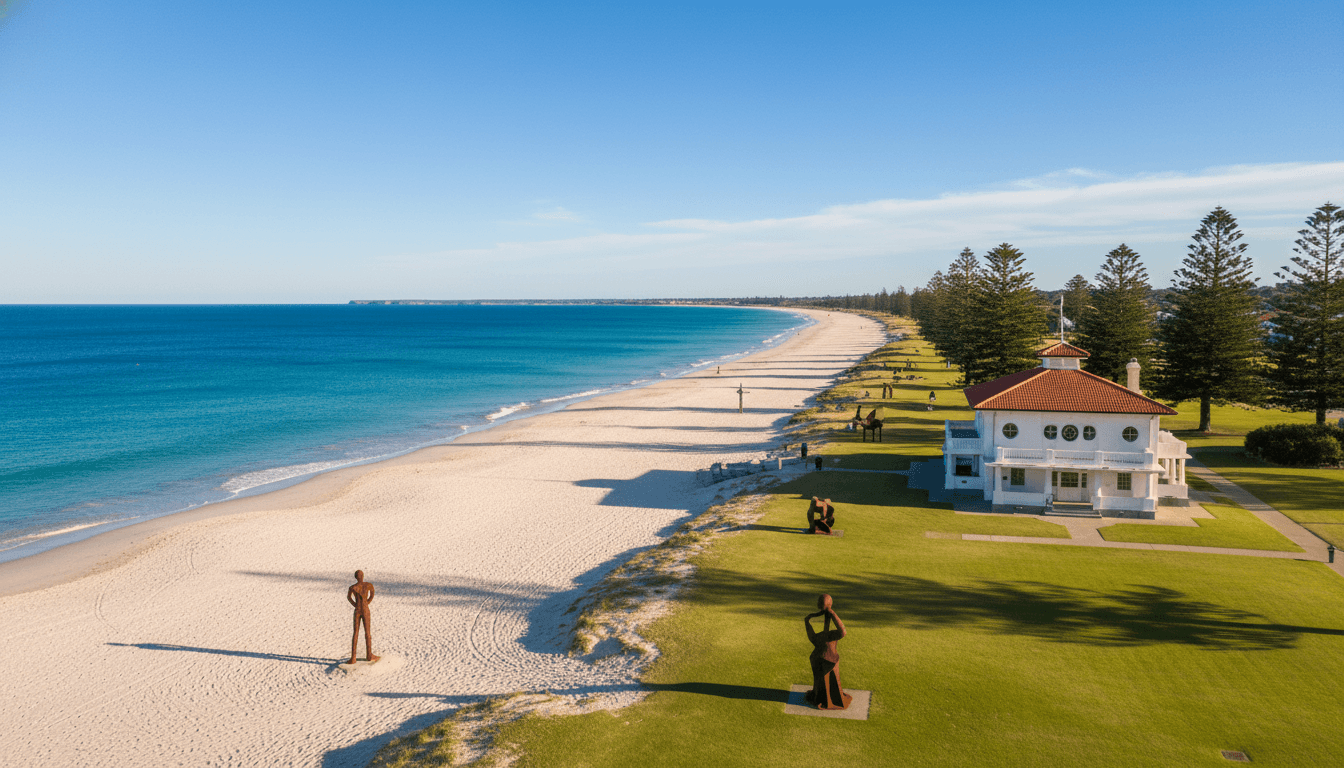
Perth Transport Guide: Getting Around During Your Home Swap in Western Australia

SwappaHome Editorial Team
Home Exchange & Slow Travel Editorial
Master Perth's transport system during your home swap—from free CAT buses to ferry rides across the Swan River. Local tips, costs, and insider routes.
I stepped off the plane in Perth at 6 AM, bleary-eyed after the long haul from San Francisco, and immediately made my first mistake: I assumed I'd figure out the transport situation later.
Three hours later, I was standing at Elizabeth Quay in the blazing Western Australian sun, watching ferries glide across the Swan River, completely unsure which bus would get me to my home swap in Fremantle. My host had left detailed instructions, but jet lag had turned my brain to mush.
Here's what I wish someone had told me before landing: Perth's transport system is genuinely excellent—but it's also sprawling, covering one of the most geographically spread-out cities on Earth. Once you understand the basics, though, you'll be zipping between beaches, wine regions, and urban neighborhoods like you've lived here for years.
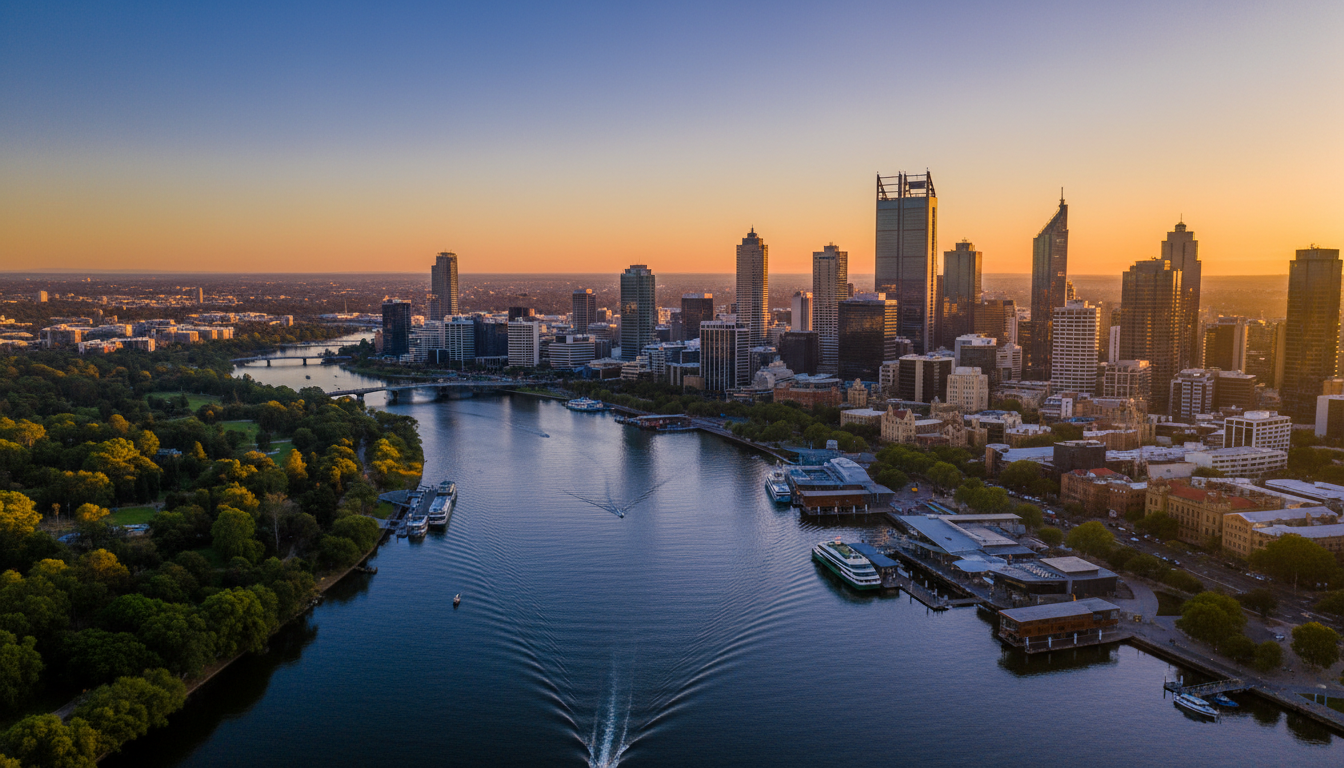 aerial view of Perth CBD with the Swan River curving through, Elizabeth Quay visible with ferries do
Understanding Perth's Transport Network: The Basics for Home Swappers
Perth's public transport is run by Transperth, and honestly? It's one of the better systems I've encountered in my seven years of home swapping. Everything—buses, trains, and ferries—operates on a single integrated ticketing system. One card gets you everywhere.
The city is divided into nine fare zones radiating outward from the CBD. Most visitors stick to zones 1-4, which covers everything from the city center to Fremantle, Scarborough Beach, and even the Swan Valley wine region. A two-zone journey runs around $3.40 AUD ($2.20 USD), while a daily cap means you'll never pay more than $10.90 AUD ($7.10 USD) no matter how much you travel.
The SmartRider card is your best friend here. Grab one at train stations or newsagents for a $10 AUD deposit, load it with cash, and every tap-on and tap-off automatically calculates the cheapest fare. I've lost count of how many cities I've visited where the transport card situation is a confusing mess—Perth isn't one of them.
One thing that genuinely surprised me: the free transit zone. The entire Perth CBD, plus Northbridge and parts of East Perth, is completely free to travel within by train or bus. Just hop on, hop off, no card required. During my three-week home swap in Mount Lawley, I'd take the train into the city, wander around for hours, and never spend a cent on transport until I headed back.
Free CAT Buses: Perth's Best-Kept Transport Secret
Okay, they're not exactly a secret—but I'm constantly amazed by how many visitors don't know about them.
CAT stands for Central Area Transit, and these free buses loop continuously through the city center, hitting all the major spots tourists actually want to visit. The Red CAT runs east-west through the CBD, connecting the WACA cricket ground to Kings Park and passing the Art Gallery of Western Australia, the Perth Mint, and the shopping strips on Hay and Murray Streets. The Blue CAT covers north-south, linking Northbridge's restaurants and bars with the waterfront at Elizabeth Quay. Yellow CAT loops through East Perth—perfect if your home swap is near Claisebrook Cove or you want to explore the emerging food scene there. And the Green CAT, the newest addition, services West Perth and the QV1 precinct.
They run every 7-10 minutes during the day. You literally just step on. No card, no fare, no stress.
I spent an entire afternoon riding the Red CAT end-to-end, getting off whenever something caught my eye, then hopping back on the next one. It's the kind of aimless exploration that makes home swapping so much better than hotel stays.
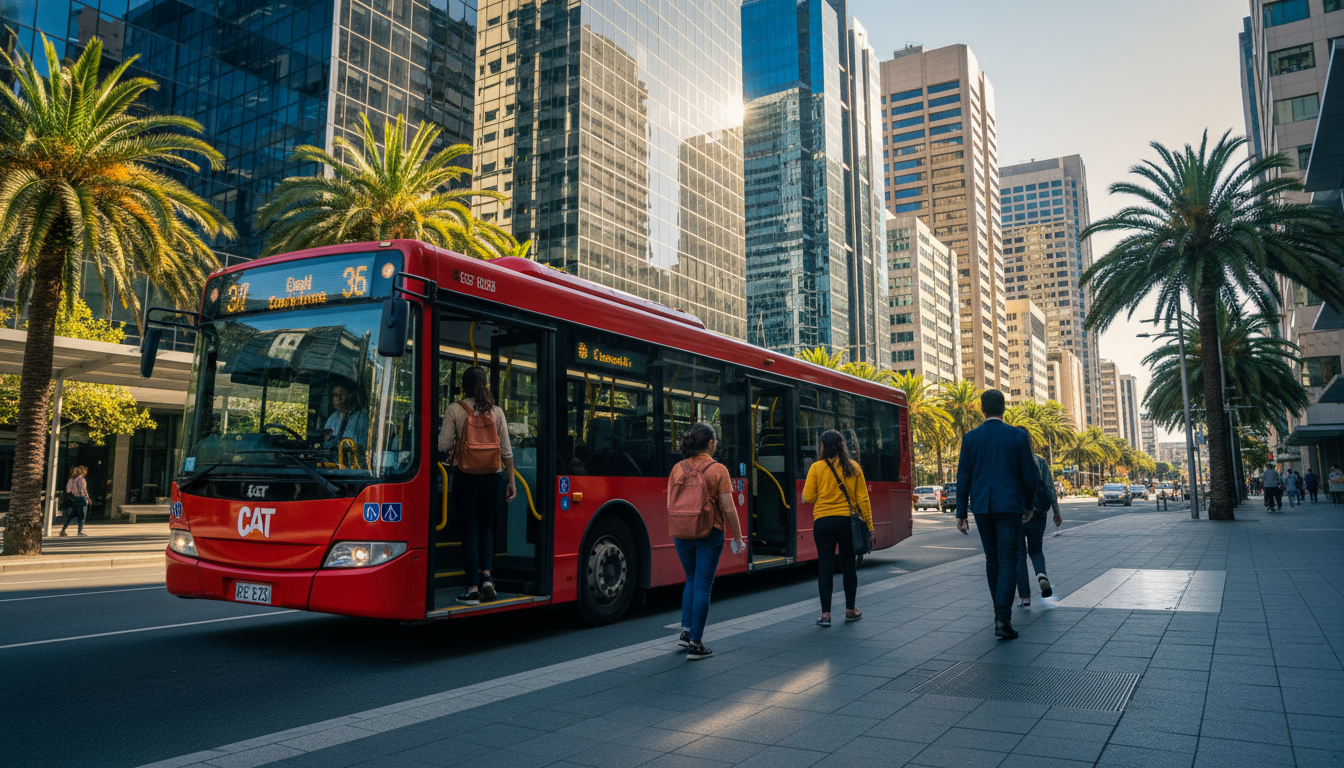 bright red CAT bus stopped on St Georges Terrace in Perth CBD, modern glass buildings reflecting beh
Perth Trains: Your Gateway to Beaches and Beyond
The train network is where Perth really shines for home swappers. Five lines radiate from the underground Perth Station, and they'll take you to most of the places you actually want to go.
The Fremantle Line is probably the most useful for visitors. It runs from Perth to Fremantle in about 25 minutes, passing through Subiaco (great cafes, weekend markets), Cottesloe (Perth's most famous beach), and North Fremantle. If your home swap is anywhere along this corridor, you've hit the jackpot.
The Joondalup Line heads north toward the coast, with stops at Glendalough (for Scarborough Beach buses), Warwick, and eventually Joondalup itself—your route to the northern beaches and Hillarys Boat Harbour. The Mandurah Line is an engineering marvel, running 72 kilometers south along the freeway median, reaching Rockingham and Mandurah in under an hour. Want to see the famous thrombolites at Lake Clifton or explore the Mandurah canals? This is your train.
The Midland Line heads east through the Swan Valley wine region. Get off at Guildford for historic architecture and antique shops, or continue to Midland for the massive weekend markets. The Armadale/Thornlie Line serves the southeastern suburbs—unless your home swap is out that way, you probably won't use it much.
Trains run every 10-15 minutes during peak times, every 15-20 minutes off-peak, and roughly every 30 minutes on Sundays. They're clean, air-conditioned, and almost always on time. The only catch: services wind down after midnight, so plan accordingly if you're out late in Northbridge.
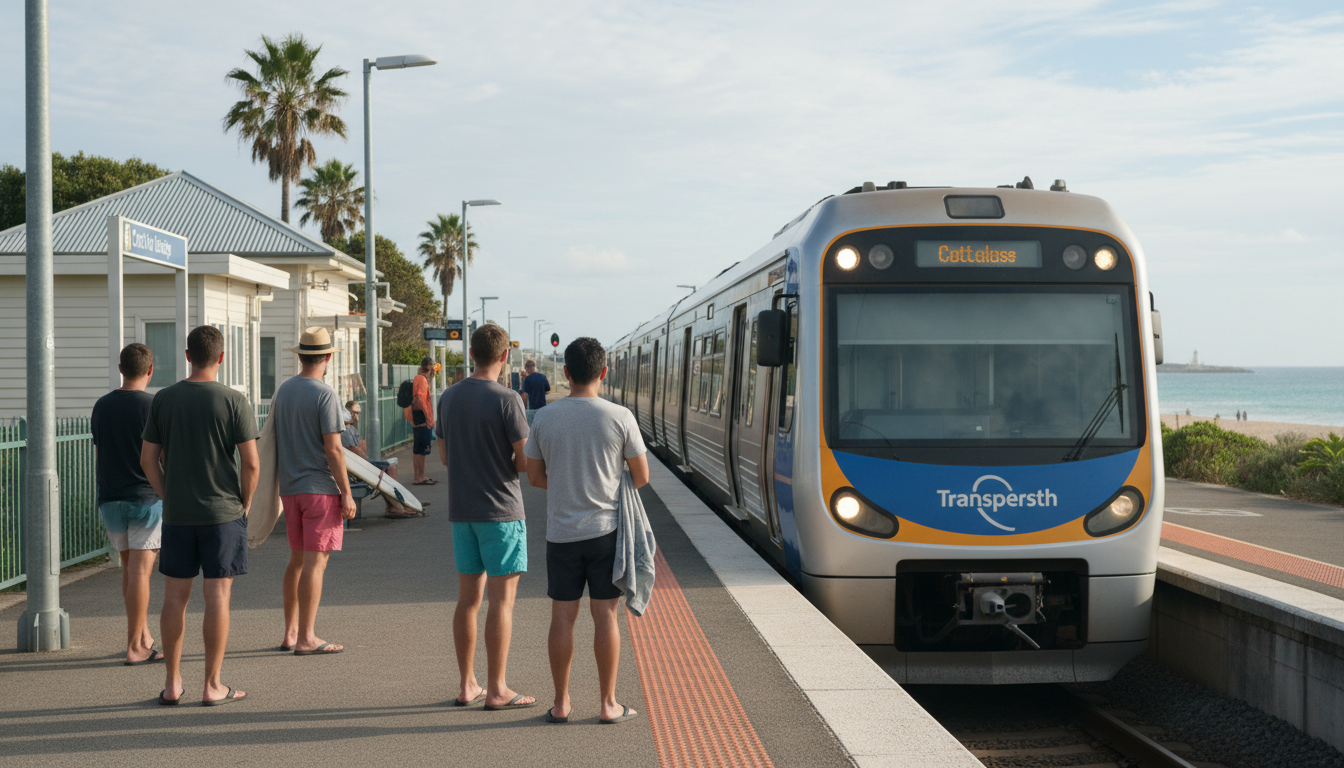 modern Transperth train pulling into Cottesloe station, glimpse of Indian Ocean visible between buil
Ferries on the Swan River: The Scenic Route
Real talk: you don't need to take the ferry. The train to Fremantle is faster and cheaper.
But you should absolutely take it at least once.
The Elizabeth Quay to South Perth ferry is a quick 7-minute crossing that gives you postcard-perfect views of the Perth skyline. It costs the same as any other zone 1 journey ($2.90 AUD / $1.90 USD), and you can use your SmartRider. South Perth itself has the famous Perth Zoo, plus a lovely foreshore walk.
The ferry to Fremantle is the real treat, though. It departs from Barrack Street Jetty and takes about an hour to cruise down the Swan River—past Matilda Bay, under the Narrows Bridge, by the old brewery, eventually docking at Fremantle's B Shed. One-way tickets run around $6.30 AUD ($4.10 USD) for zones 1-2.
I took this ferry on a Sunday morning during my Perth home swap. Pelicans following the boat. Dolphins occasionally visible. The city slowly giving way to riverside mansions and eventually the port. Pack a coffee and sit on the top deck. Trust me.
There's also a ferry to Rottnest Island, but that's run by a separate company (Rottnest Express or SeaLink) and costs significantly more—around $60-90 AUD ($40-60 USD) return. Worth it if you want to meet the quokkas, but budget for it separately.
Getting Around Perth by Bus: Suburb-Hopping Made Easy
Buses fill in the gaps where trains don't go. The network is extensive—sometimes overwhelmingly so—but a few routes are particularly useful for home swappers.
Route 950 is the express bus to Scarborough Beach from the city, taking about 30 minutes and dropping you right at the esplanade. If your home swap is anywhere near Scarborough, this is your lifeline. Route 98/99 circles around the inner suburbs, connecting Subiaco, Leederville, Mount Lawley, and Highgate—perfect for exploring Perth's best cafe strips without dealing with parking. Route 960 runs to Whitfords and Hillarys Boat Harbour, where you can catch boats to Rottnest or just enjoy fish and chips by the water. And Route 380 connects Fremantle to the southern beaches—South Beach, Port Beach, and Leighton Beach, all less crowded than Cottesloe and equally beautiful.
The Transperth app is genuinely excellent for bus planning. Real-time arrivals, route suggestions, even predictions for how full the next bus will be. I used it constantly during my Perth home swap, and it never steered me wrong.
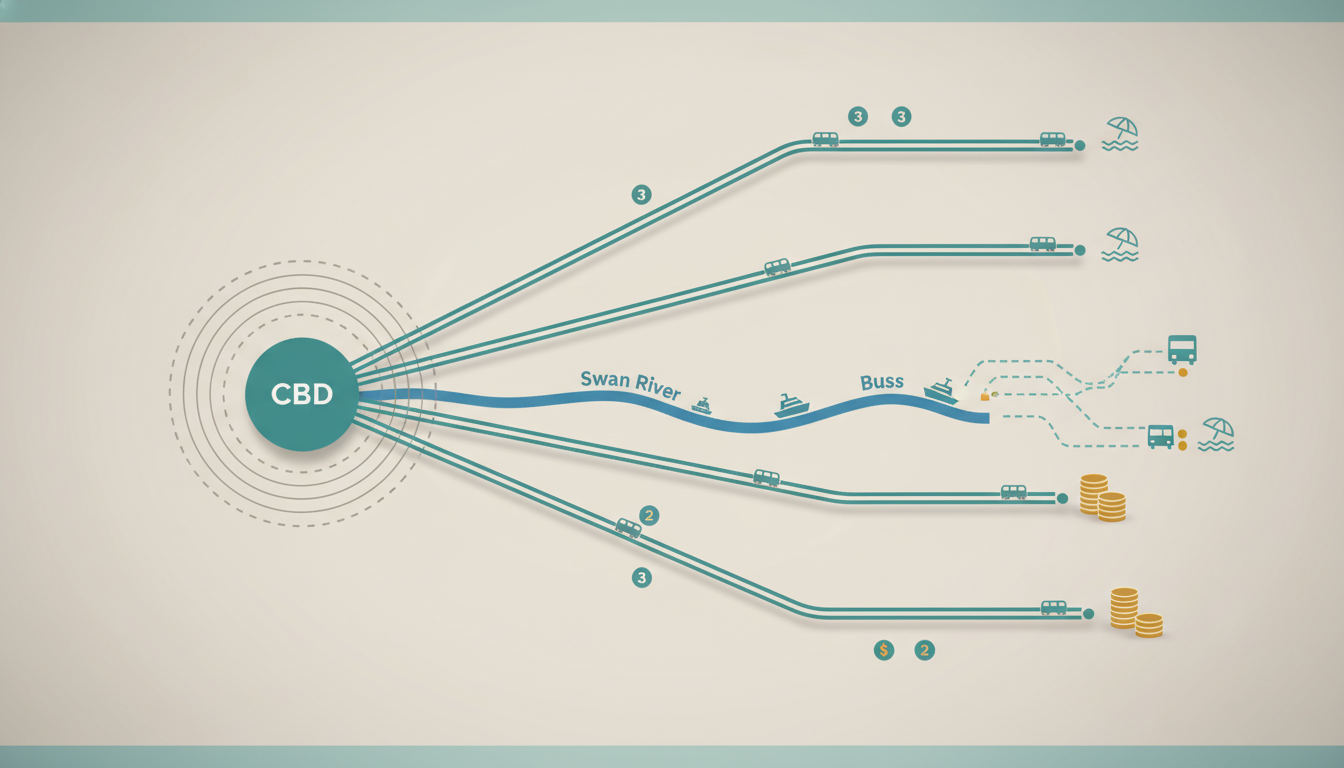 infographic showing Perths main transport routes - train lines radiating from CBD, ferry routes on S
Renting a Car During Your Perth Home Swap: When It Makes Sense
Perth is a driving city. There's no getting around that fact—pun intended. While public transport handles the urban core and beaches beautifully, some of Western Australia's best experiences require wheels.
You'll want a car for the Swan Valley wine region (technically accessible by train to Guildford, but wineries are spread out), day trips to the Pinnacles Desert (about 2 hours north), Margaret River (3 hours south, absolutely worth the drive), and exploring the Perth Hills—Kalamunda, Mundaring Weir, John Forrest National Park. Rottnest Island? Just kidding. No cars allowed there.
Car rental in Perth is reasonable by Australian standards—budget around $40-60 AUD ($26-40 USD) per day for a basic sedan from Budget, Europcar, or Hertz. The airport has all the major rental desks, but you'll often find better deals in the city.
Parking in the CBD is expensive. Expect $20-40 AUD ($13-26 USD) per day in commercial lots. Fremantle is slightly cheaper. Most suburban areas have free street parking, which is a blessing if your home swap is in Mount Lawley, Subiaco, or Leederville.
One tip I learned the hard way: petrol stations in Perth close earlier than you'd expect. If you're driving back from a day trip, fill up before 9 PM or you might find yourself hunting for a 24-hour station.
Cycling in Perth: The Underrated Option
I didn't expect Perth to be a cycling city. But it absolutely is.
The city has an extensive network of shared paths, including the stunning Swan River Trail that runs from the CBD to Fremantle—about 20 kilometers of mostly flat, scenic riding. There's also the coastal path from Cottesloe to Scarborough, gorgeous at sunset.
If your home swap host has bikes, use them. If not, Perth has a bike-share system called BikeShare Perth, though it's more limited than similar systems in European cities. You can also rent from shops in Fremantle, Cottesloe, and the CBD for around $30-50 AUD ($20-33 USD) per day.
The weather is usually perfect for cycling—Perth gets more sunny days than almost any other Australian city. Just bring sunscreen and water. Lots of water.
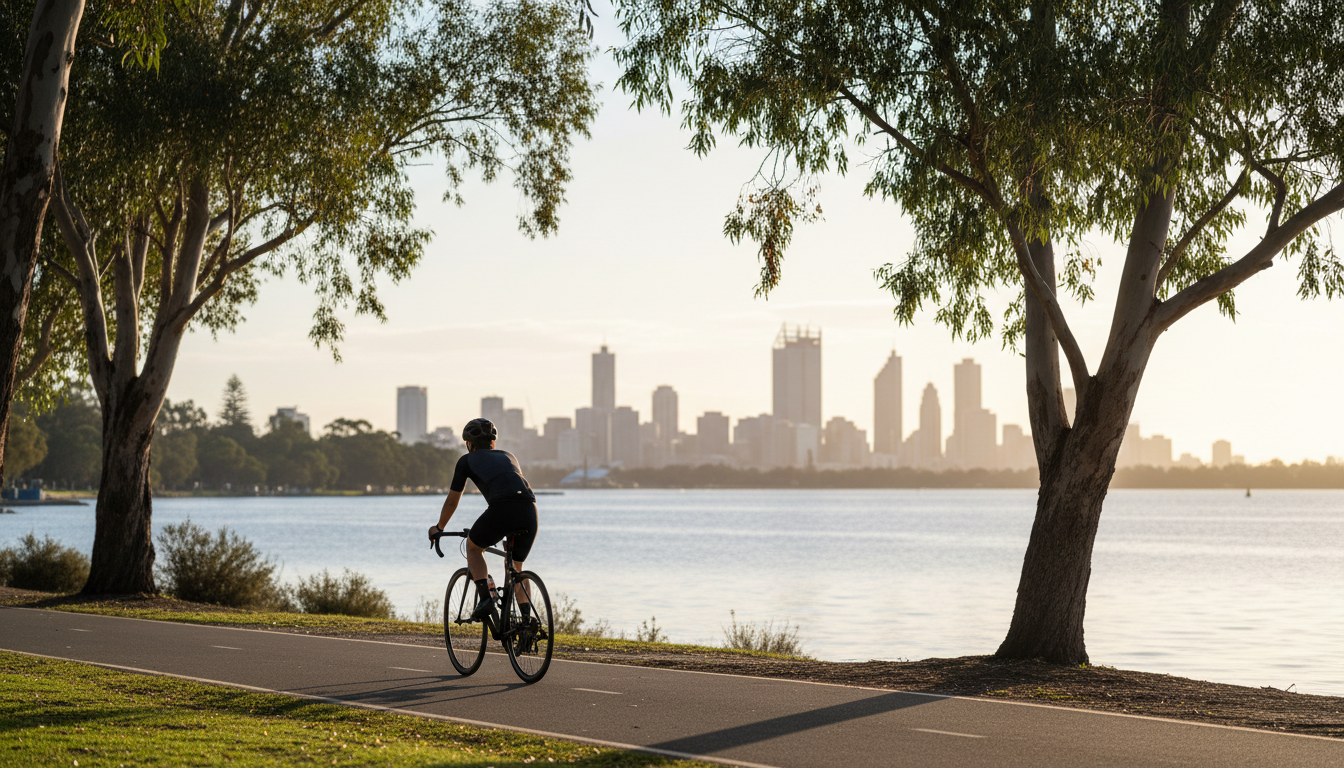 cyclist on the Swan River Trail near Matilda Bay, Perth skyline visible across the water, late after
Transport Tips Specific to Home Swappers in Perth
After my own Perth home swap—and connecting with dozens of SwappaHome members who've done the same—here are the insider tips that'll save you time and money:
Ask your host about their transport setup. Many Perth homes come with bikes, and some hosts leave their cars for guests to use. My host in Mount Lawley had two beach cruisers in the garage that made weekend trips to Scarborough effortless. This is the beauty of home swapping—you're not just getting accommodation, you're stepping into someone's actual life.
Download the Transperth app before you land. Having offline access to routes and schedules is invaluable when you're jet-lagged and confused at Perth Station.
The free transit zone includes Northbridge. Take the train to Perth Underground, walk up to Northbridge for dinner, catch a free bus back to the station. I did this probably ten times during my stay.
Sunday transport is limited. Services run less frequently, and some bus routes don't operate at all. Plan your Sunday adventures around the train network, which stays relatively consistent.
Uber and rideshare work well in Perth. A trip from the CBD to Fremantle costs around $25-35 AUD ($16-23 USD), reasonable if you're traveling with others or it's late at night. The airport to CBD runs about $35-50 AUD ($23-33 USD).
The airport has its own train line now. The Forrestfield-Airport Link opened in 2022, and it's a game-changer. Get from the airport to the CBD in about 20 minutes for regular SmartRider fares. No more expensive taxi rides or confusing bus transfers.
Neighborhood-Specific Transport Guide for Perth Home Swaps
Where you're staying changes everything about how you'll get around. Here's what to expect from Perth's most popular home swap neighborhoods:
Fremantle is arguably the best base for car-free exploration. The train station is central, buses fan out to nearby beaches, and the town itself is completely walkable. You can easily spend days exploring the markets, maritime museum, and cappuccino strip without needing any transport at all.
Mount Lawley and Highgate are well-connected by bus (routes 950, 21, 22) and an easy cycle to the city. The train station at Mount Lawley is on the Midland Line, giving you direct access to the Swan Valley. Beaufort Street's cafe scene is walkable from most home swaps in the area.
Cottesloe and Claremont sit right on the Fremantle Line, making beach-to-city commutes a breeze. Cottesloe station is a 5-minute walk from the beach. Claremont has excellent shopping and dining within walking distance of the station.
Scarborough has no train, but the 950 bus is fast and frequent. Once you're there, everything is walkable along the beachfront. If your home swap is here, you'll probably want a car for day trips, but daily life is manageable without one.
Subiaco is one of the best-connected suburbs. Subiaco station is on the Fremantle Line, buses run frequently, and the neighborhood is flat and bike-friendly. You're also close enough to the city to walk on nice days—about 3 kilometers.
Day Trip Transport from Perth: Worth the Journey
Some of Western Australia's best experiences are just outside the city.
Rottnest Island: Ferry from Fremantle (30 minutes) or Perth (90 minutes). Book in advance during summer. Once there, you'll rent a bike—cars aren't allowed.
Swan Valley: Train to Guildford, then cycle or join a tour. Alternatively, drive and designate someone to stay sober.
Penguin Island: Train to Rockingham on the Mandurah Line, then bus 551 to the ferry terminal. The ferry itself is just 5 minutes.
Pinnacles Desert: No public transport. You'll need a car or organized tour.
Margaret River: No direct public transport. Drive (3 hours) or join a tour from Perth.
My Honest Assessment of Perth Transport for Home Swappers
After three weeks of getting around Perth during my home swap, here's my take: the city punches above its weight for public transport, but it's not quite European-level.
The trains are excellent—clean, reliable, covering most places you'd want to go. The free CAT buses are genuinely brilliant. The ferry is a joy. Buses are comprehensive but can be confusing without the app.
Where Perth falls short is late-night service and truly car-free day trips. If you want to explore beyond the urban core, you'll either need to rent a car or join organized tours. That's just the reality of a city this spread out.
But for a home swap? Absolutely manageable. I spent 80% of my time using public transport and my host's bikes, rented a car for two day trips, and never felt stuck. The money I saved on accommodation through SwappaHome more than covered the occasional Uber or car rental.
Frequently Asked Questions
Is public transport in Perth good for tourists?
Yes, Perth's public transport is excellent for visitors. The integrated Transperth system covers trains, buses, and ferries on one SmartRider card. Free CAT buses loop through the CBD, and the free transit zone means you won't pay for city-center travel. Most tourist attractions are accessible without a car.
How much does Perth public transport cost per day?
A daily cap of $10.90 AUD ($7.10 USD) means unlimited travel across all zones. Most visitors stay within zones 1-4, where single trips cost $2.90-4.90 AUD ($1.90-3.20 USD). The SmartRider card requires a $10 AUD deposit, refundable when you leave.
Do I need a car for a home swap in Perth?
Not necessarily. If your home swap is in well-connected suburbs like Fremantle, Mount Lawley, or Subiaco, public transport handles daily needs easily. You'll only need a car for day trips to wine regions, the Pinnacles, or Margaret River. Consider renting for specific days rather than the whole stay.
How do I get from Perth Airport to the city center?
The Airport Line train connects both terminals to Perth CBD in about 20 minutes, using standard SmartRider fares (around $5 AUD / $3.25 USD). Uber costs $35-50 AUD ($23-33 USD). The train is the best option for most home swappers arriving during operating hours.
What's the best transport app for Perth?
The official Transperth app is genuinely excellent—real-time arrivals, route planning, offline schedules. Google Maps also integrates Perth public transport data well. Download both before you arrive.
Perth might be one of the most isolated cities on Earth, but once you're there, getting around is surprisingly straightforward. The transport system rewards curiosity—hop on a train to a station you've never heard of, take the ferry just because the river looks beautiful, cycle along the coast as the sun sets over the Indian Ocean.
That's the thing about home swapping in Perth: you're not rushing between tourist checkpoints. You have time. You have a base. You have someone's bikes in the garage and their local recommendations scrawled on a notepad.
When I finally figured out the bus to my Fremantle home swap that first jet-lagged morning, I remember thinking: this is going to be a good few weeks.
It was.

Published by
SwappaHome
SwappaHome Editorial Team
Home Exchange & Slow Travel Editorial
The SwappaHome Editorial Team brings together travel research, home-exchange community insights, and platform data to produce practical guides for first-time and experienced home swappers. Every article cites real platforms, current market rates, and verifiable city-level facts so readers can make informed decisions without guessing.
Ready to try home swapping?
Join SwappaHome and start traveling by exchanging homes. Get 7 free credits when you sign up!
Related articles
Bachelor and Bachelorette Parties in Singapore: The Complete Home Swap Group Guide for 2026
Planning a bachelor or bachelorette party in Singapore? Discover how home swapping lets groups of 6-12 stay together in luxury condos, saving thousands while partying in Marina Bay.
Cycling in Lisbon: 7 Home Swap Bike Tour Itineraries for Every Rider
Discover the best cycling routes in Lisbon with these home swap bike tour itineraries—from waterfront paths to hilltop adventures, all starting from your borrowed home.
Graduation Trip to Barcelona: How Home Swapping Gives New Graduates the Ultimate Celebration
Planning a graduation trip to Barcelona? Discover how home swapping lets new graduates explore Spain's most vibrant city without the hostel crowds or hotel costs.