
What to Do in Rio de Janeiro: The Complete Home Exchange Activity Guide for 2024
Maya Chen
Travel Writer & Home Exchange Expert
Discover what to do in Rio de Janeiro while staying like a local through home exchange. From Ipanema sunsets to hidden favela tours, your insider guide awaits.
The first morning I woke up in my home exchange apartment in Copacabana, I made a mistake that changed how I travel forever. I'd planned to hit all the tourist spots—Christ the Redeemer, Sugarloaf, the usual suspects. Instead, my host had left a handwritten note: "Forget the guidebook. Walk to the corner bakery, order a pão de queijo and a cafezinho, and just watch."
So I did. And sitting there at 7 AM, watching Rio wake up—the joggers heading to the beach, the elderly men playing dominoes, the fruit vendors setting up their carts—I realized I'd been thinking about what to do in Rio de Janeiro all wrong. The city isn't a checklist. It's a rhythm you have to feel.
That's the magic of experiencing Rio through home exchange. You're not a tourist staying in a sanitized hotel zone. You're borrowing someone's life for a week, their neighborhood, their morning routine, their secret spots. And trust me, that changes everything.
 Early morning view from a Copacabana apartment balcony, showing the curved beach with joggers, the m
Why Home Exchange Changes What to Do in Rio de Janeiro
Here's something most travel guides won't tell you: Rio is actually several different cities stacked on top of each other. The Rio that tourists see—the postcard beaches and famous landmarks—is just one layer. There's also the Rio of neighborhood botequins (corner bars) where everyone knows each other's names. The Rio of Sunday street markets that don't appear on Google Maps. The Rio of hidden staircases leading to viewpoints that rival any paid attraction.
When you do a home exchange in Rio de Janeiro, you get access to all of it. Your host becomes your unofficial guide—through their notes, their recommendations, sometimes their friends who "happen to stop by" and end up inviting you to a churrasco.
I've stayed in three different Rio neighborhoods through SwappaHome over the years: Copacabana, Botafogo, and Santa Teresa. Each felt like visiting a completely different city. And honestly? The things I did varied wildly based on where I was staying.
So here's my breakdown of what to do in Rio de Janeiro by neighborhood—because that's how locals actually think about this city.
Ipanema and Leblon: What to Do in Rio's Most Glamorous Neighborhoods
If your home exchange lands you in Ipanema or Leblon, congratulations—you've scored the Beverly Hills of Rio. But don't let the designer boutiques fool you. This area has soul if you know where to look.
Morning Rituals Worth Stealing
Wake up early. I mean it—set an alarm for 6 AM even if you're on vacation. The beach transforms at dawn into something almost spiritual. You'll see the posto 9 and posto 10 areas (the numbered lifeguard stations that serve as neighborhood markers) filling up with locals doing everything from yoga to volleyball to just standing in the waves, eyes closed, facing the sunrise.
Grab an açaí bowl from one of the beach kiosks—expect to pay around R$25-35 ($5-7 USD) for a proper one with banana, granola, and honey. The chains are fine, but the independent vendors usually blend theirs thicker.
 A colorful aa bowl on a small beach table with Dois Irmos mountain visible in the background, mornin
The Sunday Hippie Fair (Feira Hippie de Ipanema)
Every Sunday, the Praça General Osório transforms into one of Rio's best markets. It's been running since 1968, and while yes, there's tourist stuff, there's also genuine local art, handmade jewelry, and some of the best street food in the city.
My strategy: arrive around 9 AM before it gets crowded, do a full loop without buying anything, then circle back to what you actually want. The tapioca stands (look for the ones with lines) serve these incredible crepe-like things filled with everything from coconut to cheese to chocolate. R$15-20 ($3-4 USD) each.
Sunset at Arpoador
This is non-negotiable. The rocky point between Ipanema and Copacabana has become famous for its sunset applause—yes, people literally clap when the sun dips below the horizon. It sounds cheesy until you're there, surrounded by hundreds of strangers all sharing this moment, and suddenly you're clapping too.
Get there by 5 PM to claim a good spot on the rocks. Bring a beer from a nearby kiosk (around R$10/$2 USD) and just... be present.
Copacabana: Classic Rio Activities for Home Exchange Travelers
Copacabana gets a bad rap these days—some say it's past its prime, too touristy, too crowded. But I think that misses the point entirely. Copa is Rio's living room, the place where the city's diversity is most visible. On any given stretch of beach, you'll see millionaires, favela residents, tourists, and locals all sharing the same sand.
The Copacabana Fort (Forte de Copacabana)
This military fort at the southern tip of the beach is genuinely underrated. For R$8 ($1.60 USD), you get access to a small but fascinating military museum, incredible views of the entire beach arc, and—here's the real reason to go—the Confeitaria Colombo café inside.
Yes, there's a fancier Colombo location downtown, but this one has outdoor seating overlooking the ocean. Order a coffee and a pastel de nata (Portuguese custard tart) and pretend you're in a film noir. Total damage: about R$35 ($7 USD).
Nightlife That Doesn't Require a Guidebook
If your home exchange host is anything like mine was, they'll have opinions about Copa nightlife. The area around Rua Prado Júnior and the streets behind the Copacabana Palace hotel come alive after 10 PM with a mix of traditional botequins and newer cocktail bars.
Bip Bip is legendary—a tiny bar covered floor-to-ceiling in Flamengo football memorabilia where live samba and bossa nova happen spontaneously. There's no cover, no stage, no microphones. Musicians just show up and play. Buy a beer, stand on the sidewalk (there's no room inside), and experience music the way it's meant to be heard.
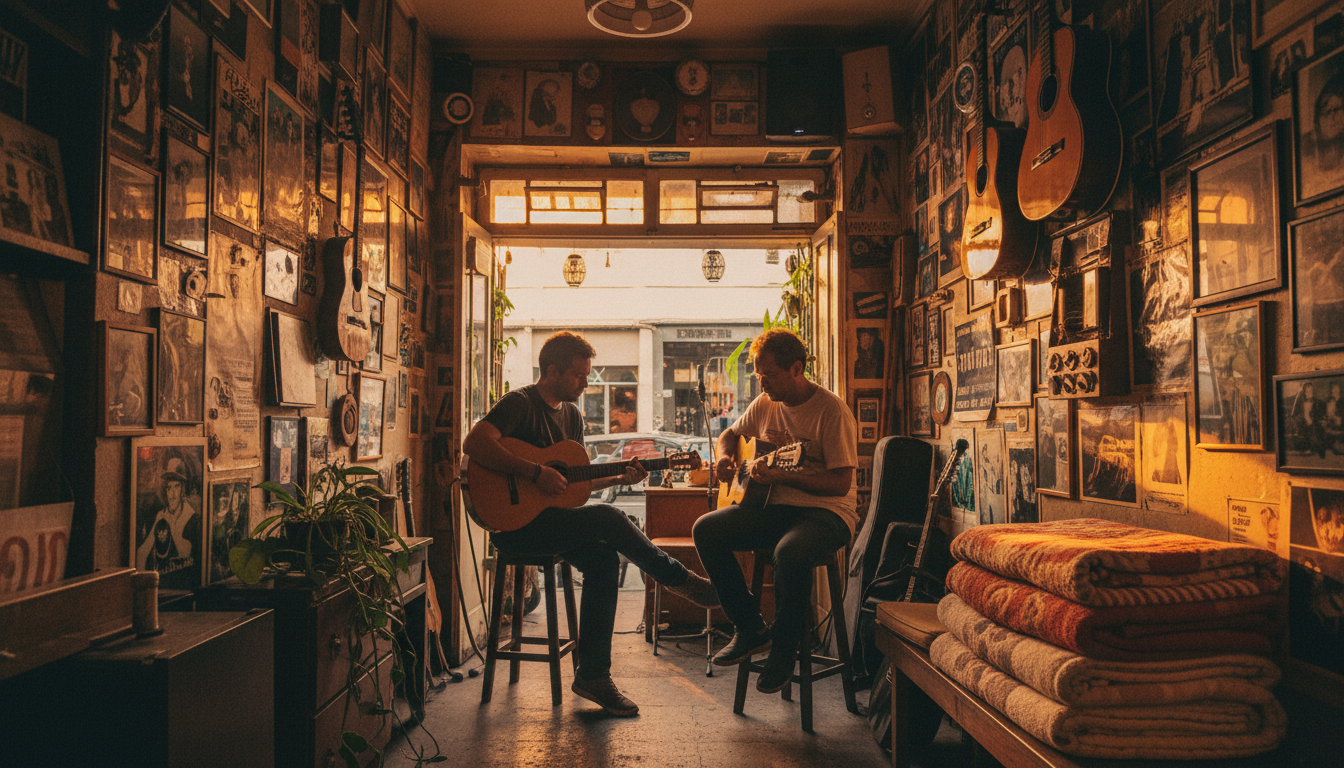 The cramped, colorful interior of Bip Bip bar in Copacabana, walls covered in photos and memorabilia
Santa Teresa: Bohemian Rio and What to Do There
Santa Teresa is where I'd live if I ever moved to Rio. This hilltop neighborhood feels like it exists outside of time—cobblestone streets, crumbling colonial mansions converted into art studios, and a creative energy that reminds me of San Francisco's Mission District circa 2005.
The Escadaria Selarón
You've seen photos of these famous mosaic stairs even if you don't know the name. Chilean artist Jorge Selarón spent 20 years covering 250 steps in tiles from around the world. It's become Instagram-famous, which means it's crowded during peak hours.
My advice: go at 7 AM or after 6 PM. The morning light is actually better for photos anyway. It's free, it's stunning, and it's right at the border between Lapa and Santa Teresa, so you can combine it with exploring both neighborhoods.
Parque das Ruínas
This is my favorite free thing to do in Rio de Janeiro, full stop. The "Park of Ruins" is built around the shell of a mansion that once hosted Rio's most glamorous parties in the 1920s. Now it's a cultural center with rotating art exhibits, a café with panoramic city views, and this incredible sense of faded grandeur.
Go around 4 PM, grab a beer at the café (R$12/$2.50 USD), and watch the light change over the city. On weekends, there's often live music. Entry is free.
Getting There Without the Bondinho
The famous yellow tram (bondinho) that used to connect Santa Teresa to downtown is... complicated. It runs sporadically after being rebuilt following a 2011 accident. Check current schedules, but honestly? The Uber up the hill costs about R$15-20 ($3-4 USD) from Centro and is much more reliable.
Botafogo and Urca: Local Favorites for Home Exchange Stays
Botafogo is having a moment. This bay-facing neighborhood has transformed in recent years into Rio's foodie and nightlife hub, with craft breweries, innovative restaurants, and a young, creative vibe.
The Botafogo Praia Shopping Food Court (But Not Like You Think)
Okay, hear me out. I know "food court" sounds deeply untraveler-like. But the top floor of this mall has an outdoor terrace with direct views of Sugarloaf Mountain and the bay. Grab a cheap beer from one of the stands, find a spot at sunset, and you've got a view that restaurants charge $50 for.
The real Botafogo food scene, though, is on the streets. Rua Nelson Mandela and the surrounding blocks have everything from high-end sushi to R$20 ($4 USD) per-kilo buffets where you pay by weight.
Urca's Secret Beach
Praia Vermelha, at the base of Sugarloaf, is technically public but feels private. It's small, sheltered, and frequented almost entirely by locals from the Urca neighborhood. The water is calmer than the ocean beaches, and there's a fantastic kiosk called Bar Urca right on the water where you can eat fried fish and drink chopps (draft beer) while watching the boats.
From here, you can also hike up Morro da Urca instead of taking the cable car—it's about 30 minutes, moderately challenging, and completely free. You'll still need to buy the cable car ticket to continue to Sugarloaf's summit (R$130/$26 USD), but you've earned it.
 Praia Vermelha beach at Urca with Sugarloaf Mountain towering above, calm turquoise water, a few loc
Christ the Redeemer: Yes, You Should Still Go
I know, I know—I've been telling you to skip the tourist stuff. But Cristo Redentor is different. It's not just a landmark; it's a pilgrimage site, an engineering marvel, and genuinely one of the most moving places I've ever stood.
How to Do It Right
Skip the van tours. Take the Trem do Corcovado (cog railway) from Cosme Velho station. Yes, it's more expensive—R$95 ($19 USD) for foreigners—but the 20-minute ride through Tijuca Forest is half the experience. Book online in advance; slots fill up, especially for sunset times.
Alternatively, if you're reasonably fit, you can hike up through Parque Lage. It's about 2.5 hours, steep in places, and you'll need to pay the entrance fee at the top anyway. But the sense of accomplishment? Totally real.
The Best Time Nobody Talks About
Everyone says sunrise or sunset. But I've found that early afternoon on a weekday—around 1-2 PM—is actually less crowded because tour groups are at lunch. The light is harsh for photos, sure, but you'll have more space to actually experience the place.
Beyond the Beaches: Unique Activities for Home Exchange Travelers
Tijuca National Park
This is the world's largest urban rainforest, and it's right there in the middle of Rio. Most tourists never venture beyond the Christ the Redeemer area, but the park has waterfalls, hiking trails, and wildlife including monkeys, toucans, and coatis.
The Cascatinha Taunay waterfall is an easy 10-minute walk from the park entrance and feels like you've been transported to the Amazon. Entry is free. Bring bug spray.
A Favela Tour (Done Right)
This is sensitive territory, and I want to be thoughtful here. Favela tourism can be exploitative if done wrong—poverty safari vibes that benefit nobody who actually lives there.
But community-led tours, run by residents, can be genuinely educational and economically beneficial. Rocinha, Brazil's largest favela, has several resident-run tour operations. Expect to pay around R$150-200 ($30-40 USD) for a 3-hour tour that includes visiting local businesses, art projects, and community centers.
Ask your home exchange host for recommendations—they'll likely have opinions on which operators are legitimate.
 A colorful street scene in Rocinha favela, painted houses stacked up the hillside, children playing,
The Maracanã Stadium Experience
Even if you're not a football fan, attending a match at Maracanã is one of the most intense crowd experiences on Earth. Flamengo games are the easiest to get tickets for since they play most frequently. Expect to pay R$60-150 ($12-30 USD) depending on the opponent and seat location.
Buy tickets through the official club websites or at the stadium box office. Avoid scalpers. And go with the flow—the singing, the chanting, the flares (technically illegal but somehow always present). It's overwhelming in the best way.
Practical Tips for What to Do in Rio de Janeiro
Safety, Honestly
I won't sugarcoat it: Rio has real safety concerns. But after multiple trips, here's my practical advice—don't wear flashy jewelry or carry expensive cameras obviously, use Uber or 99 (a local ride app) instead of hailing cabs, stay aware of your surroundings especially at night, ask your home exchange host about their specific neighborhood because they know which streets to avoid after dark, and keep a "decoy wallet" with small bills for worst-case scenarios.
That said, I've never had a problem in Rio, and millions of tourists visit safely every year. Common sense goes a long way.
Money Matters
The Brazilian real fluctuates wildly. As of late 2024, you're looking at roughly R$5 to $1 USD, but check current rates. Credit cards are widely accepted in tourist areas, but carry cash for beach vendors, small restaurants, and markets.
ATMs inside shopping malls are generally safer than street ATMs. Withdraw during business hours when possible.
The Weather Factor
Rio's seasons are opposite to North America and Europe. December through March is summer (hot, humid, afternoon thunderstorms). June through August is winter (mild, dry, surprisingly cool at night—bring a light jacket).
For beaches and outdoor activities, September through November is arguably the sweet spot: warm but not oppressive, fewer crowds, lower prices.
Making the Most of Your Home Exchange in Rio
Here's what I've learned from three separate home exchanges in Rio: the magic is in the mundane.
Yes, go to Christ the Redeemer. Yes, watch the sunset at Arpoador. But also: buy fruit from the same vendor three days in a row until they start recognizing you. Learn to say "bom dia" and "obrigado/obrigada" properly. Accept the invitation when your host's neighbor asks if you want to try their homemade brigadeiros.
SwappaHome's credit system makes this kind of slow travel possible. Instead of calculating hotel costs per night and rushing to "maximize" your expensive stay, you're just... living somewhere for a while. One credit per night, same as anywhere else in the world. That financial simplicity translates into mental space for actually experiencing a place.
My last Rio exchange, I spent an entire afternoon learning to make feijoada (Brazilian black bean stew) with my host's mother, who "happened to stop by" with a bag of ingredients. That afternoon taught me more about Rio than any walking tour could have.
Your Rio Awaits
I've written a lot of words here about what to do in Rio de Janeiro, but honestly? The best thing to do is show up with fewer plans than you think you need.
Rio has a way of filling your days without you trying. A conversation at a juice bar leads to a party invitation. A wrong turn reveals a street art gallery. A rainstorm traps you in a bookshop café for three hours, and you realize that was the best afternoon of your trip.
That's the gift of home exchange travel. You're not a tourist trying to see Rio. You're someone who lives in Rio, temporarily. And that changes everything.
Start browsing home exchange listings on SwappaHome for Rio de Janeiro. Look for hosts in neighborhoods that match your vibe—beachfront Copacabana, bohemian Santa Teresa, foodie Botafogo. Read their descriptions carefully; the best hosts write like they're inviting a friend.
Because that's exactly what they're doing.
Frequently Asked Questions
What are the best things to do in Rio de Janeiro for first-time visitors?
First-time visitors to Rio de Janeiro should prioritize Christ the Redeemer, Sugarloaf Mountain, and Ipanema Beach for iconic experiences. But don't skip neighborhood exploration—Santa Teresa's bohemian streets, a sunset at Arpoador, and a live samba night at Lapa are equally essential for understanding the city's soul.
Is Rio de Janeiro safe for tourists in 2024?
Rio de Janeiro is generally safe for tourists who take standard precautions. Avoid displaying expensive jewelry, use ride apps instead of street taxis, stay aware in crowded areas, and ask locals about neighborhood-specific advice. Millions visit safely each year; common sense and local knowledge go a long way.
How much money do I need per day in Rio de Janeiro?
Budget travelers doing a home exchange in Rio can comfortably spend $40-60 USD per day on food, transportation, and activities. Mid-range travelers should budget $80-120 USD daily. This excludes accommodation—which home exchange eliminates—and major splurges like helicopter tours or fine dining.
What is the best month to visit Rio de Janeiro?
September through November offers the best balance of warm weather, smaller crowds, and lower prices for visiting Rio de Janeiro. December through February is peak summer with festivals but also heat, humidity, and higher costs. June through August is cooler and drier, ideal for hiking and outdoor exploration.
How does home exchange work for staying in Rio de Janeiro?
Home exchange platforms like SwappaHome let you stay in Rio apartments by exchanging hospitality credits. Host travelers at your home to earn credits, then spend them on stays in Rio—one credit per night regardless of location. You'll live in real neighborhoods, get local tips from hosts, and save thousands compared to hotels.
40+
Swaps
25
Countries
7
Years
About Maya Chen
Travel Writer & Home Exchange Expert
Maya is a travel writer with over 7 years of experience in the home swapping world. Originally from Vancouver and now based in San Francisco, she has completed more than 40 home exchanges across 25 countries. Her passion for "slow" and authentic travel led her to discover that true luxury lies in living like a local, not a tourist.
Ready to try home swapping?
Join SwappaHome and start traveling by exchanging homes. Get 10 free credits when you sign up!
Related articles

Lyon Home Exchange: Your Complete Guide to France's Hidden Gem for Home Swapping
Discover why Lyon home exchange is booming among savvy travelers. From Croix-Rousse to Presqu'île, find the best neighborhoods and insider tips for your swap.

Zurich Bucket List: 47 Unforgettable Experiences to Enjoy During Your Home Swap
Discover the ultimate Zurich bucket list for home swappers—from secret swimming spots to fondue rituals locals actually do. Save thousands while living like a true Zürcher.
Dublin Home Exchange Utilities Guide: WiFi, Heating & Everything Your Guests Need
Master Dublin home exchange utilities—from dodgy WiFi fixes to heating quirks. Practical tips from 7 years of swapping homes across Ireland.