
Home Swap vs Hotel in Berlin: The Real Cost Comparison That Changed How I Travel
Maya Chen
Travel Writer & Home Exchange Expert
I tracked every euro during my Berlin trips—one in hotels, one through home swap. The €2,847 difference shocked me. Here's the complete breakdown.
I still have the receipt from my first Berlin hotel breakfast. €24 for eggs, toast, and coffee that tasted like it had given up on life. I remember sitting there in the Mitte district, doing math on a napkin, realizing I'd already spent €180 in two days on food alone—and I hadn't even visited a single museum yet.
That was three years ago. Last month, I returned to Berlin for two weeks through a home swap vs hotel comparison I'd been wanting to do properly. Same neighborhoods, same activities, same appetite for currywurst at 2 AM. The only difference? One trip I stayed in hotels. The other, I swapped my San Francisco apartment for a gorgeous flat in Prenzlauer Berg.
The cost difference over 14 nights? €2,847.
That's not a typo.
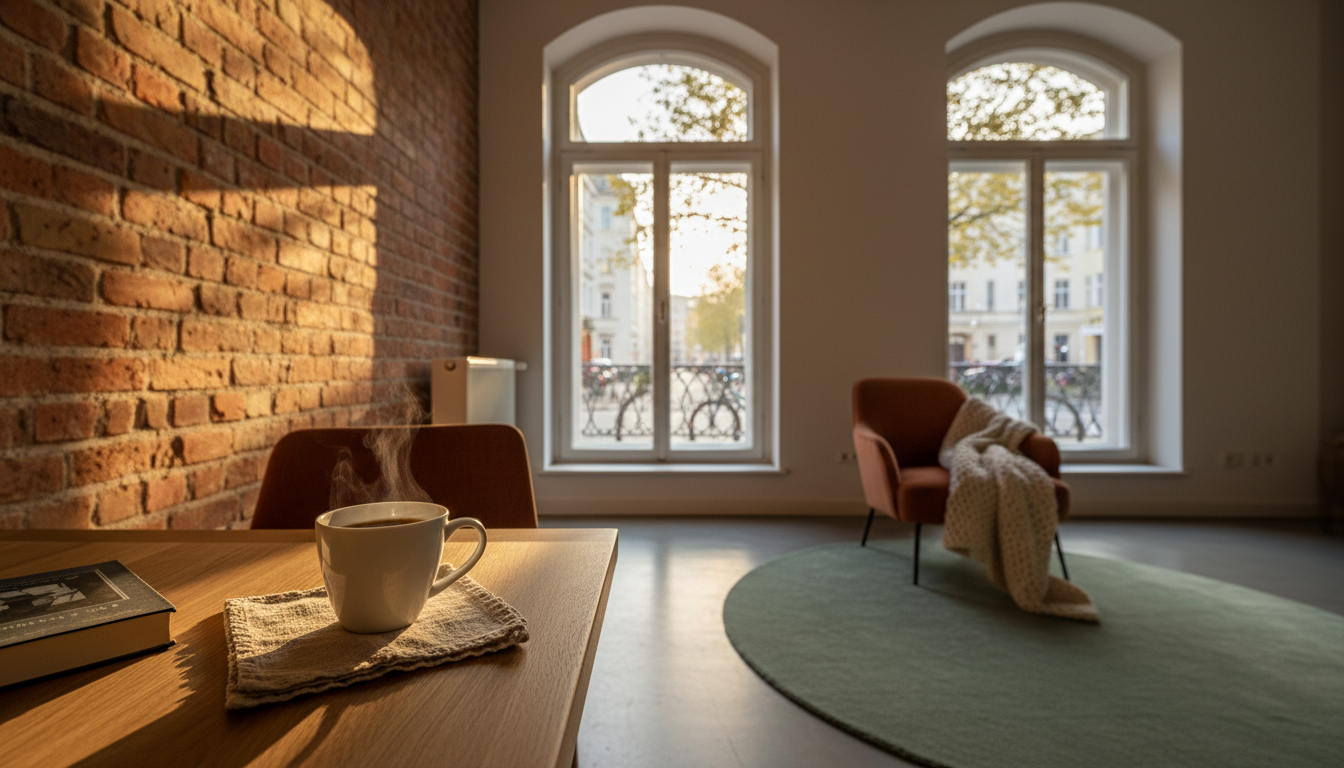 Morning light streaming through tall windows in a Berlin apartment, exposed brick walls, vintage fur
Why This Debate Matters More Than You'd Think
Berlin has this reputation as a "cheap" European capital. And sure, compared to Paris or London, your euro stretches further. But here's what the travel blogs don't tell you—Berlin's accommodation costs have jumped 34% since 2019. That "budget-friendly" hotel room in Kreuzberg? Now €140/night minimum. The hostel dorm bed? €45 if you're lucky.
I've been tracking Berlin hotel prices obsessively because I visit at least once a year. My college roommate lives in Friedrichshain, and honestly, the city just gets me. The techno, the history, the fact that you can eat a döner at 4 AM without judgment. But watching those hotel prices climb while my travel budget stayed flat? Something had to give.
That's when I started seriously considering home exchange as more than just a quirky travel hack.
The Complete Cost Breakdown (Real Numbers, Real Receipts)
Let me show you exactly what I spent. No estimates, no "approximately." Real numbers from real trips.
Hotel Stay: 14 Nights (September 2023)
I stayed at three different hotels to get a realistic picture—not the cheapest options, not luxury. Just solid, well-reviewed 3-star places where a normal traveler would actually stay.
Week 1: Hotel near Alexanderplatz Nightly rate came to €145 ($158), totaling €1,015 ($1,106) for seven nights. I caved and bought the breakfast add-on four times—another €96 ($105). City tax added €35 ($38).
Week 2: Boutique hotel in Kreuzberg Slightly pricier at €165 ($180) per night, €1,155 ($1,259) for the week. No breakfast this time. Learned my lesson. City tax: €40 ($44).
Hotel subtotal: €2,341 ($2,552)
But wait. Hotels don't have kitchens. Every single meal came from restaurants or takeout.
Breakfasts when I skipped the hotel buffet ran €126 ($137). Lunches: €238 ($259). Dinners: €392 ($427). Coffee and snacks throughout the day: €89 ($97). Even the occasional grocery run for fruit and water added €34 ($37).
Food subtotal: €879 ($958)
Total hotel trip cost: €3,220 ($3,510)
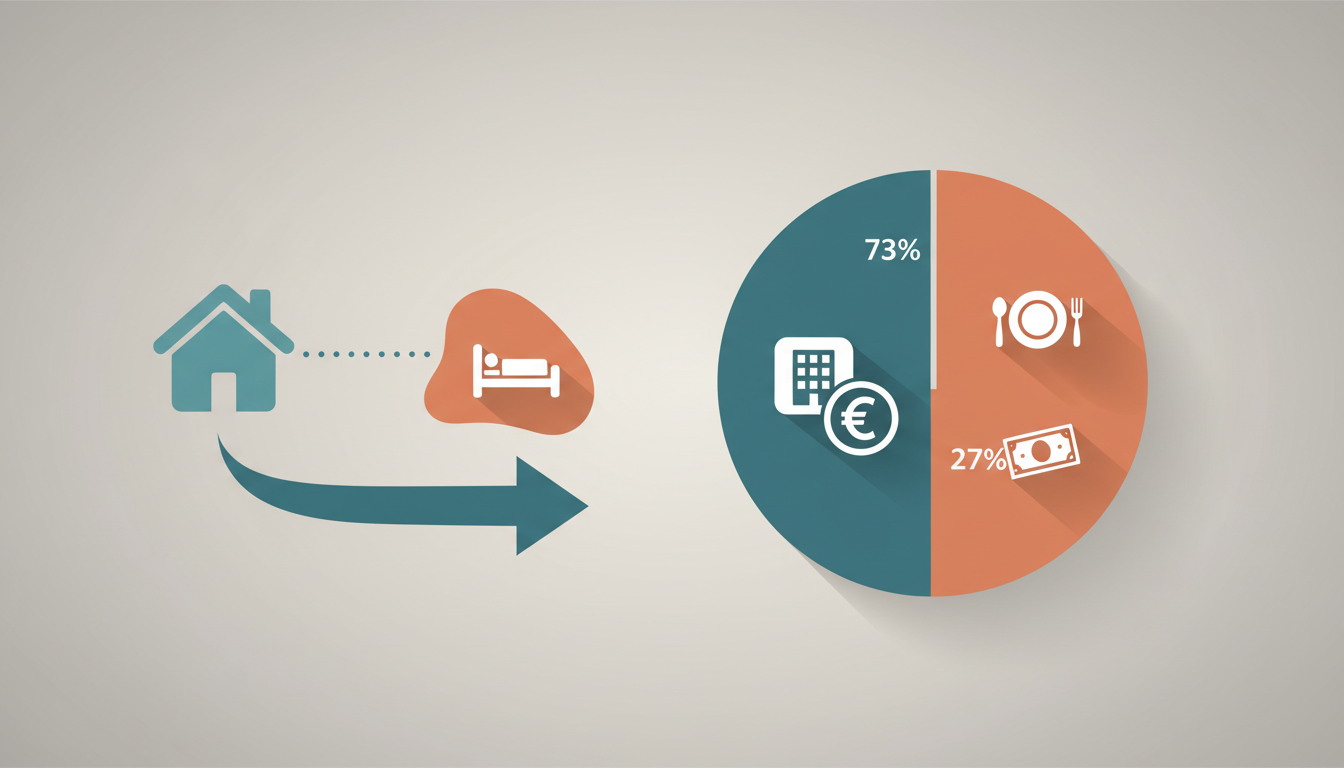 Infographic showing cost breakdown pie chart - hotel accommodation taking up 73, food costs 27, with
Home Swap Stay: 14 Nights (April 2024)
I found my swap through SwappaHome—a platform I've been using for about two years now. The apartment was in Prenzlauer Berg, owned by a couple who were dying to spend two weeks in San Francisco. We used the credit system: they earned credits hosting previous guests, I'd earned mine hosting travelers in my SF place.
No money changed hands for the accommodation.
Accommodation cost: €0
I know. It feels like cheating. But that's literally how home exchange works—you host when you can, travel when you want, and the credits balance out.
Now, I did spend money. Just on very different things.
Groceries—including wine, good cheese, and fancy bread from the bakery around the corner—came to €187 ($204). I treated myself to five nice restaurant dinners: €156 ($170). Lunches out when I was exploring: €67 ($73). Coffee shops, because Berlin's café culture is absolutely non-negotiable: €43 ($47).
Food subtotal: €453 ($494)
I also bought a welcome gift for my hosts (nice bottle of wine, some chocolates): €35 ($38). Cleaning before departure? Did it myself—their place was spotless when I arrived, so I returned the favor. Laundry? Free. There was a washer in the apartment.
Total home swap trip cost: €488 ($532)
Difference: €2,732 ($2,978)
I actually had to double-check my math. Nearly three thousand dollars saved on a two-week trip.
What You Actually Get: Beyond the Numbers
Numbers are one thing. But what about the experience?
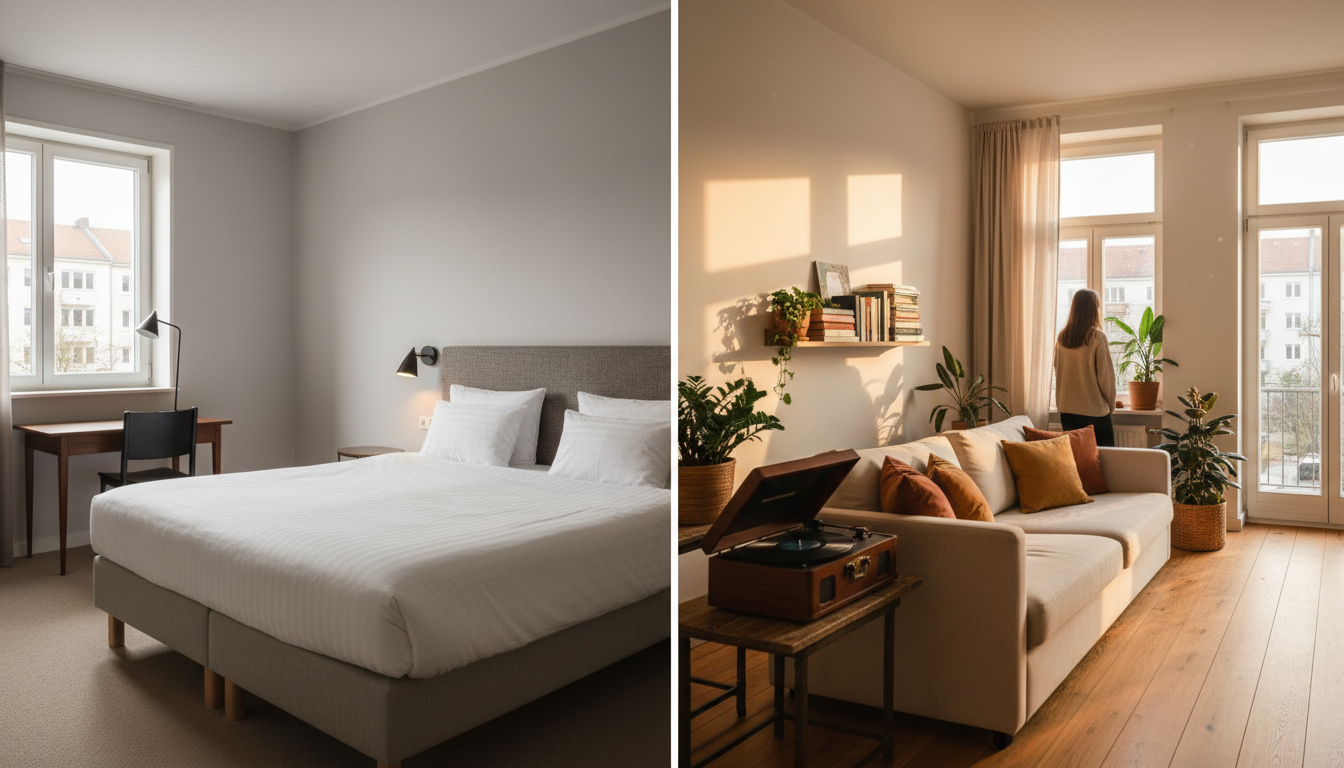 Split view comparison - left side showing typical Berlin hotel room with double bed and small desk,
The Hotel Reality
My Alexanderplatz hotel was... fine. Twenty-two square meters of beige. A bed that was comfortable enough. A bathroom where I could touch both walls simultaneously. The WiFi worked. The staff was professional. There was a sad little desk where I tried to write, staring at a wall.
The Kreuzberg place had more character—exposed brick, a rooftop bar. But my room was still just a room. No kitchen, no living space, no sense of actually living anywhere.
Every morning started with the same calculation: Do I pay €24 for the hotel breakfast buffet, or do I wander around hungry until I find a café? Every evening ended with the same scroll through delivery apps because I couldn't face another restaurant meal.
The Home Swap Reality
The Prenzlauer Berg apartment? Eighty-five square meters. Two bedrooms—I used the second as an office. A kitchen with an actual espresso machine and a spice rack that made me jealous. A living room with a record collection. My hosts left a note saying I should play their vinyl.
I woke up my first morning, made coffee in my pajamas, and sat on the small balcony watching the neighborhood wake up. Parents walking kids to the school down the street. The Turkish grocery store owner arranging produce outside. A guy walking what I can only describe as the most Berlin dog I've ever seen—some kind of pit bull-poodle situation with a bandana.
That's when it hit me. I wasn't visiting Berlin. I was living in Berlin.
I cooked dinner most nights. Not because I had to—because I wanted to. The Turkish market three blocks away had vegetables that actually tasted like vegetables. I'd grab a döner for lunch, then make pasta with fresh tomatoes for dinner. I hosted my friend for a home-cooked meal instead of meeting at yet another restaurant.
The Hidden Costs Nobody Mentions
Let me be honest about some things that home swap advocates often gloss over.
Home Swap Hidden Costs
Your time. Finding the right swap takes effort. I probably spent 6-8 hours over two months messaging potential matches, coordinating dates, and video-calling with my eventual hosts. Hotels? Ten minutes on Booking.com.
Hosting reciprocity. For home exchange to work, you need to host too. I've had guests in my SF apartment maybe 15 nights total over the past year. That means being flexible, keeping my place guest-ready, and occasionally adjusting my own schedule.
The trust factor. You're letting strangers stay in your home. They're doing the same. SwappaHome has a review system that helps build accountability, and I always video chat with potential swappers first. But there's no insurance or guarantee through the platform—I carry my own renter's insurance that covers short-term guests, and I'd recommend anyone doing home exchange to check their own coverage.
Availability isn't guaranteed. That dream apartment in Mitte might not have hosts who want to visit your city. Home swap requires flexibility on timing and sometimes location.
Hotel Hidden Costs
City tax. Berlin charges 5% on top of your room rate. It's not included in the advertised price.
Resort fees by another name. Some Berlin hotels now charge "service fees" or "facility fees." My Kreuzberg hotel added €5/night for WiFi that should have been free.
The minibar trap. I'm disciplined, but that €8 water bottle at 11 PM after a few beers? It happens.
Laundry. €15 for the hotel to wash a shirt. Or €7 per load at a laundromat, if you can find one.
The "going out" premium. When your hotel room is depressing, you spend more time—and money—in cafés, bars, and restaurants just to have somewhere pleasant to be.
 Cozy evening scene in Berlin apartment - person reading on sofa with lamp light, wine glass on coffe
Berlin Neighborhoods: Where Each Option Shines
Not all Berlin neighborhoods work equally well for both options. Here's my take after years of exploring this city.
Best for Home Swap: Prenzlauer Berg
This is where I stayed, and I'd do it again in a heartbeat. The neighborhood is residential enough that you get real apartments with real kitchens, but central enough that you're 15 minutes from Museum Island. Lots of families live here, which means lots of families travel—and want to swap.
Typical apartment: 70-90 sqm, pre-war building with high ceilings, fully equipped kitchen, often a balcony. Many have that quintessential Berlin aesthetic—white walls, wooden floors, mid-century furniture.
Best for Home Swap: Friedrichshain
My friend's neighborhood. Younger, edgier, more nightlife-oriented. The apartments here tend to be slightly smaller but have incredible character—think converted factories, street art visible from your window, a döner shop on every corner. Great for solo travelers or couples who want to be near the action.
Best for Hotels: Mitte
If you only have 3-4 days and want to see the major sights, Mitte makes sense for a hotel. You're walking distance from the Brandenburg Gate, Museum Island, and Unter den Linden. But the residential apartments here are either tiny or astronomically expensive—fewer good swap options.
Avoid for Both: Charlottenburg (Unless...)
West Berlin's fancy neighborhood has beautiful apartments but feels disconnected from the Berlin most travelers want to experience. Exception: if you're visiting for classical music (the opera houses are here) or have business near the Kurfürstendamm.
How to Find a Berlin Home Swap That Actually Works
I've done maybe a dozen swaps at this point. Here's what I've learned the hard way.
Start Early
Berlin is popular. Like, really popular. If you want to swap during summer or around Christmas markets season (November-December), start looking 3-4 months ahead. My April trip? I started searching in January.
Be Specific in Your Request
When I messaged my Prenzlauer Berg hosts through SwappaHome, I didn't just say "I'd love to stay at your place." I told them exactly when I wanted to come and why. What I loved about their neighborhood—I'd done research. What my San Francisco apartment offered them. That I was a fellow home swap enthusiast who would treat their place like my own.
They told me later that my message stood out because it felt personal, not copy-pasted.
Video Chat Before Committing
I know it feels awkward. But a 15-minute video call tells you so much. Are they easy to talk to? Do they seem trustworthy? Can you ask them about the tricky shower handle or where to find the best bread?
I've passed on swaps after video calls where something just felt off. Never regretted it.
Check the Reviews
SwappaHome's review system is your friend. I look for hosts with at least 3-4 positive reviews, and I read them carefully. "Clean and well-located" is fine. "Went above and beyond with local recommendations and the apartment was even better than the photos" is what I want to see.
 Woman sitting at caf terrace in Berlin, laptop open, coffee and pastry on table, with view of typica
Two Weeks, Two Completely Different Trips
Here's something the cost comparison doesn't capture: how differently I experienced Berlin on each trip.
The Hotel Trip
I saw a lot. Checked boxes. Museum Island, the East Side Gallery, the Reichstag dome, Checkpoint Charlie. I ate at restaurants that TripAdvisor recommended. I took photos at spots Instagram told me were important.
I was tired by day four. The constant going-out, the decision fatigue of every meal, the lack of any private space that felt like mine. I started skipping things just to lie in my hotel room and scroll my phone.
By the end of two weeks, I was ready to go home. I'd "done" Berlin, but I hadn't really felt it.
The Home Swap Trip
I saw less. And somehow experienced more.
I spent an entire morning at the Turkish market near my apartment, just wandering. Bought too much cheese. Had a broken-German conversation with a spice vendor who gave me free samples of sumac.
I went to the museums I actually cared about—the DDR Museum, the Jewish Museum—and skipped the ones I'd only visit out of obligation.
I had slow mornings. Fast afternoons. Evenings cooking dinner while listening to my hosts' record collection. Turns out they have excellent taste in 70s German rock.
I met my friend for drinks at a neighborhood bar instead of a tourist-trap beer garden. We stayed until 2 AM because I could walk home in ten minutes.
When I left, I didn't feel like I was escaping. I felt like I was leaving a place I could actually come back to.
When Hotels Actually Make More Sense
I'm not going to pretend home swap is always the answer. Sometimes hotels win.
Short trips (1-3 nights). The effort of arranging a swap isn't worth it for a quick weekend. Book a hotel, keep it simple.
Business travel. If someone else is paying, take the hotel. If you need absolute reliability and zero coordination, take the hotel.
First-time visitors who want structure. Some people genuinely prefer having a front desk, daily housekeeping, and someone to ask for directions. That's valid.
Traveling with very young kids. The predictability of a hotel—cribs available, breakfast buffet, no worrying about breaking someone else's stuff—can reduce stress significantly.
When you can't or won't host. Home exchange requires reciprocity. If you rent, your landlord might not allow it. If your home isn't guest-ready, the system doesn't work.
The Real Bottom Line
That €2,732 I saved? I could frame it as "free money." But that's not quite right.
What I actually got was two extra weeks of travel. Because when you cut your accommodation and food costs by 85%, your travel budget suddenly stretches twice as far. That Berlin savings funded a spontaneous trip to Copenhagen two months later.
Or think of it this way: I could take three two-week home swap trips to Europe for the cost of one two-week hotel trip. Same vacation days from work. Triple the experiences.
The catch—and there's always a catch—is that home swap requires something hotels don't: trust, flexibility, and a willingness to be part of a community rather than just a customer.
You have to be comfortable letting strangers into your home. You have to be okay with plans that aren't 100% locked down until you've found the right match. You have to treat someone else's space with the same care you'd want for yours.
For me, that trade-off is obvious. I've saved probably €15,000 over seven years of home swapping. I've stayed in apartments I could never afford to rent, in neighborhoods tourists rarely see, living like a local instead of visiting like a stranger.
If you're curious about trying it, SwappaHome is where I'd start. The credit system means you don't need to find a perfect mutual swap—host when you can, travel when you want. And those 10 free credits for new members? That's 10 nights of accommodation to test whether this lifestyle works for you.
Berlin's waiting. The only question is whether you want to visit it—or live it, even if just for two weeks.
Frequently Asked Questions
Is home swapping in Berlin safe?
It's as safe as you make it. Use platforms like SwappaHome with review systems, always video chat with potential hosts before committing, and check their history with previous guests. I also recommend having your own renter's or travel insurance that covers short-term home exchanges, since platforms typically don't provide damage coverage.
How much can I save with home swap vs hotel in Berlin?
Based on my tracked expenses, home swapping saved me €2,732 ($2,978) over a 14-night Berlin trip compared to mid-range hotels. That's roughly 85% savings when you factor in reduced food costs from having a kitchen. Your savings will vary based on hotel choices and eating habits, but €150-200 per night is a realistic estimate.
Do I need to speak German for home swapping in Berlin?
No—English is widely spoken in Berlin, and most home swap hosts communicate in English on international platforms. I've done multiple Berlin swaps with hosts who preferred English messaging. That said, learning basic German phrases helps with neighborhood interactions like markets and local shops.
What's the best Berlin neighborhood for home swapping?
Prenzlauer Berg and Friedrichshain offer the best options. Both have large residential populations with spacious apartments, good public transit connections, and hosts who frequently travel. Mitte has fewer residential swaps available, while Kreuzberg is excellent but competitive during peak season.
How far in advance should I arrange a Berlin home swap?
Start searching 3-4 months ahead for peak seasons (summer, Christmas markets in November-December). For off-peak travel like January-March, 6-8 weeks is usually sufficient. Berlin is one of Europe's most popular home swap destinations, so earlier is always better for finding your ideal neighborhood and apartment size.
40+
Swaps
25
Countries
7
Years
About Maya Chen
Travel Writer & Home Exchange Expert
Maya is a travel writer with over 7 years of experience in the home swapping world. Originally from Vancouver and now based in San Francisco, she has completed more than 40 home exchanges across 25 countries. Her passion for "slow" and authentic travel led her to discover that true luxury lies in living like a local, not a tourist.
Ready to try home swapping?
Join SwappaHome and start traveling by exchanging homes. Get 10 free credits when you sign up!
Related articles

Home Swap vs Hotel in Algarve: The Real Cost Comparison That Changed How I Travel
I tracked every euro during my Algarve trips—home swap vs hotel. The savings shocked me. Here's the honest breakdown with real numbers.

Home Swap vs Hotel in Zurich: The Real Cost Comparison That Changed How I Travel
I tracked every franc during my Zurich trip comparing home swap vs hotel costs. The difference? Over $2,400 saved in 10 days. Here's the full breakdown.

Home Swap vs Hotel in Bali: The Real Cost Comparison Nobody Talks About
I spent 3 weeks in Bali both ways. Here's the honest breakdown of home swap vs hotel costs—including the hidden expenses that caught me off guard.