
Home Swap vs Hotel in Bali: The Real Cost Comparison Nobody Talks About
Maya Chen
Travel Writer & Home Exchange Expert
I spent 3 weeks in Bali both ways. Here's the honest breakdown of home swap vs hotel costs—including the hidden expenses that caught me off guard.
I'm sitting on a bamboo daybed in Ubud right now, watching rice paddies turn gold in the late afternoon light. This villa—three bedrooms, a private pool, daily visits from a family of ducks—cost me exactly zero dollars per night. Meanwhile, my friend Sarah is paying $180/night for a hotel room in Seminyak that she describes as "fine, I guess."
This is the home swap vs hotel in Bali reality that transformed how I travel. And honestly? The cost difference is even more dramatic than I expected when I first crunched the numbers.
 Traditional Balinese villa with infinity pool overlooking terraced rice paddies in Ubud, morning mis
Why This Debate Matters More in Bali
Bali isn't like other destinations. Stay in a hotel here, and you're essentially paying premium prices to exist in a tourist bubble—nice pools, buffet breakfasts, zero connection to the island's actual magic. Swap into someone's home? Suddenly you're borrowing their life. Their favorite warung around the corner. Their scooter. Their neighbor who brings over fresh coconuts.
I've done both. Extensively.
My first Bali trip in 2019 was a hotel-hopping adventure through Seminyak, Ubud, and Canggu. Comfortable. Forgettable. Expensive. My last three trips? All home swaps through SwappaHome. Transformative. Memorable. Basically free.
Let me break down exactly what each approach costs—and I mean everything, including the stuff nobody mentions.
The Hotel Reality: What You're Actually Paying
Real numbers time. I'm using a 14-night stay as our benchmark because that's the sweet spot for actually experiencing Bali rather than just seeing it.
Mid-Range Hotels (The "Reasonable" Option)
When people say they're staying somewhere "nice but not crazy expensive" in Bali, they usually mean places like Alaya Resort Ubud, The Haven Suites Canggu, or Amadea Resort Seminyak. Here's what that actually looks like:
Nightly rate: $120-180 USD (3.8-5.7 million IDR) 14 nights: $1,680-2,520 USD
But wait—that's just the room.
Resort fees and taxes: Most Bali hotels add 21% (10% service + 11% government tax). That's an extra $350-530. Breakfast: If it's not included, you're looking at $15-25 per person daily. For two people over 14 days? Another $420-700. Laundry: Hotels charge $3-8 per item. A week's worth of tropical-climate clothes? Easily $50-100 over two weeks. In-room coffee/snacks: Those cute Nespresso pods and minibar items add up. Budget $5-10/day minimum if you're using them. That's $70-140.
Total mid-range hotel cost for 14 nights: $2,570-3,990 USD
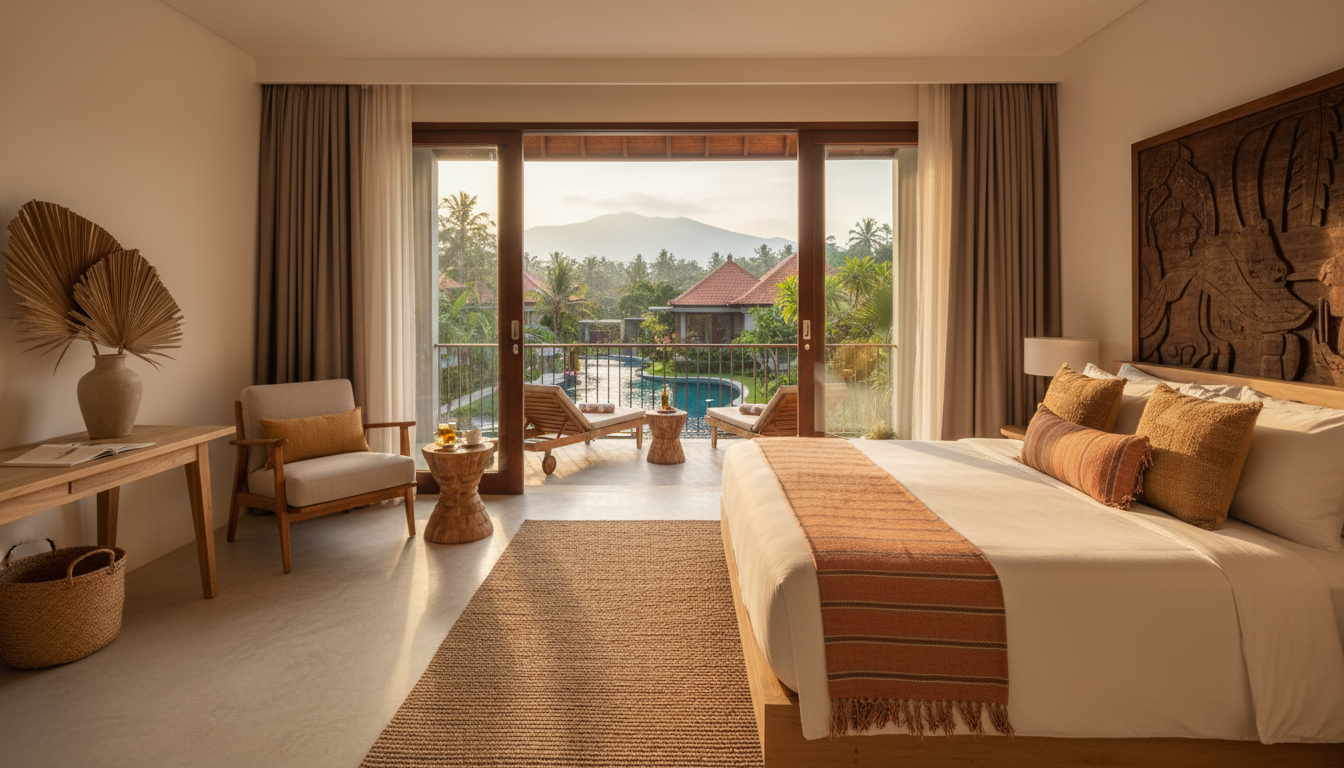 Typical Bali hotel room with modern furnishings, balcony view of pool area, neutral tones with Balin
Budget Hotels (The "I'm Being Smart" Option)
What if you go cheaper? Guesthouses, budget hotels, basic Airbnbs?
Nightly rate: $40-70 USD 14 nights: $560-980 USD
Sounds better, right? Here's what I learned the hard way during my first Bali trip:
No pool access means paying $15-25 at beach clubs just to cool off. Three pool days = $45-75. No breakfast means eating out every morning. Even cheap warungs are $5-8 for a decent breakfast—that's $70-112 for two weeks. Limited AC or hot water in some budget spots. I once stayed in a $45/night place in Canggu where the AC could only get the room down to 28°C (82°F). I ended up booking day passes at nicer hotels just to work in comfort.
Total budget hotel cost for 14 nights: $750-1,300 USD
Still not terrible. But here's where the home swap comparison gets wild.
Home Swap Costs: The Actual Numbers
When you do a home swap through SwappaHome, the accommodation itself costs you credits, not cash. Simple system: you earn 1 credit for every night someone stays at your place, spend 1 credit for every night you stay somewhere else. New members get 10 free credits to start.
So for a 14-night Bali stay:
Accommodation cost: 14 credits (earned by hosting others, or from your starter credits) Cash cost for accommodation: $0 USD
I know. It sounds too simple. But that's literally it.
Now, let's be thorough and include everything else:
Cleaning before/after: Most swap hosts handle their own cleaning or have existing arrangements. If you want to hire someone, Bali cleaning services run $10-20 for a full villa clean. Utilities: Usually included in the swap arrangement. I've never had a host ask me to pay utilities separately in 40+ swaps. Pool/garden maintenance: If the home has a pool, maintenance is typically ongoing and not your responsibility as a guest.
Total home swap cost for 14 nights: $0-40 USD
Yes, really.
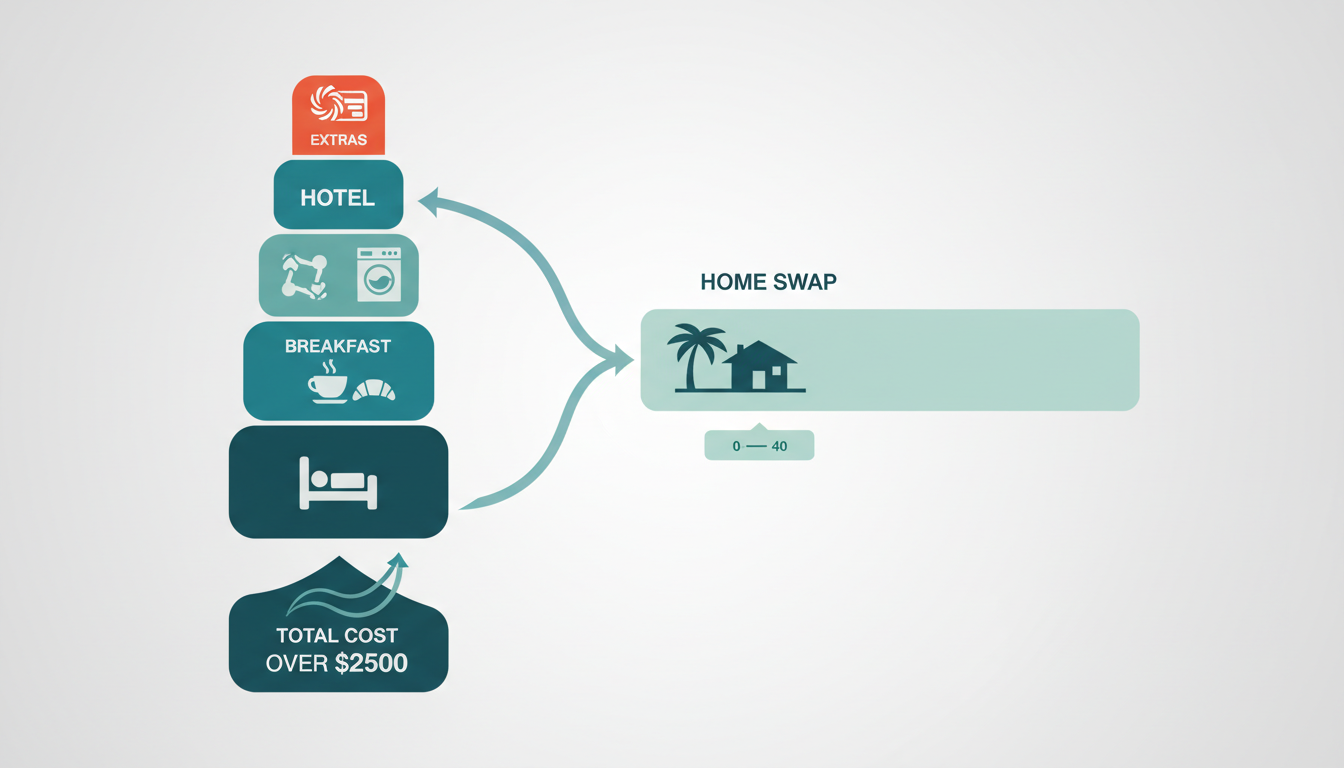 Infographic showing side-by-side cost comparison hotel column showing stacked costs room, taxes, bre
But What About the Hidden Costs?
I'm a skeptic by nature. When something seems too good to be true, I dig. So let me address every "but what about..." question I've gotten:
"Don't You Have to Pay for SwappaHome?"
Yes, there's a membership fee. Annual membership runs around $150-200 depending on the plan. But here's the math: if that membership saves you even ONE week of hotel costs in Bali, you're ahead by $1,000+. I've used my membership for 6 trips this year alone.
"What About Flights?"
True! Flights to Bali from the US West Coast run $800-1,200 roundtrip. From Europe, expect $600-900. This cost is identical whether you're hotel-ing or swapping.
But here's a subtle difference: when your accommodation is free, you might extend your trip. I originally planned 10 days in Bali last year. Ended up staying 24 days because... why not? The only additional cost was food and experiences.
"You Still Have to Eat."
Absolutely. But here's where home swapping changes the game.
Hotel scenario: You eat out for every meal. Even being strategic, you're spending $30-50/day on food in Bali (more in Seminyak, less in Ubud).
Home swap scenario: You have a full kitchen. You shop at local markets. You cook breakfast and maybe lunch, then eat out for dinner. My food costs in Bali drop by 40-50% when I'm in a home swap.
14-day food comparison:
- Hotel stay: $420-700 USD
- Home swap: $200-400 USD
That's another $200-300 in savings.
"What If Something Goes Wrong?"
Real talk: SwappaHome is a platform that connects members. It doesn't provide insurance or damage coverage—that's on you to arrange if you want it. I always recommend getting your own travel insurance that covers accommodation issues. For Bali trips, I use World Nomads, which runs about $50-80 for two weeks.
The review system helps a lot though. I only swap with members who have established track records and positive reviews. In 7 years and 40+ swaps, I've had exactly one minor issue (a broken coffee maker, which I replaced for $30).
The Lifestyle Difference: Why Cost Isn't Everything
Numbers aside, let me tell you about my morning today.
I woke up at 6:30 to the sound of roosters—annoying but somehow charming after a few days. Made coffee in the kitchen using beans from the local market (35,000 IDR, about $2.20). Ate papaya from the tree in the garden. Did yoga on the outdoor platform overlooking the rice paddies. Took a dip in the pool.
By 9 AM, I'd had a better morning than any hotel could offer, and I hadn't spent a single rupiah.
 Morning scene on a Balinese villa terrace, woman in casual clothes with coffee cup, laptop open, ric
Contrast this with my hotel stays: wake up, navigate the breakfast buffet crowd, eat the same eggs and toast as yesterday, retreat to a room that looks like every other room I've ever stayed in.
The home swap life in Bali means space—most homes available for swap are villas, not apartments. You get multiple rooms, outdoor areas, often a pool. Try getting that in a hotel for under $300/night. It means location authenticity—hotels cluster in tourist areas while home swaps scatter you across the island, into neighborhoods where you're the only foreigner at the morning market. And it means local connections—my current swap host left me a list of her favorite spots. Her neighbor Made has already invited me to a temple ceremony next week. This doesn't happen at the Westin.
Best Areas in Bali for Home Swaps
Not all Bali neighborhoods are equal for swapping. Here's what I've learned:
Ubud: The Sweet Spot
Most home swap inventory in Bali is in and around Ubud. Makes sense—this is where the expats and digital nomads build their dream villas, and they're often traveling themselves.
What you'll find: Traditional Balinese compounds, modern eco-villas, rice paddy retreats. Typical home: 2-3 bedrooms, pool, outdoor bathroom, surrounded by nature. Best for: Writers, yogis, anyone who wants peace.
I've done 4 swaps in Ubud. My favorite was a converted rice barn in Penestanan—15 minutes walk to central Ubud, but felt like another world.
Canggu: The Trendy Option
Fewer swap options here, but they exist. Canggu attracts younger digital nomads who travel frequently.
What you'll find: Modern villas, surf-shack-chic homes, some apartments. Typical home: 1-2 bedrooms, shared or private pool, walking distance to cafes. Best for: Surfers, remote workers, people who want nightlife access.
Sanur: The Underrated Gem
Older expat community = more established homeowners = more swap opportunities than you'd expect.
What you'll find: Beachfront homes, traditional Balinese houses, family compounds. Typical home: 2-4 bedrooms, gardens, often near the beach. Best for: Families, older travelers, anyone wanting a mellower vibe.
 Collage-style image showing three Bali neighborhoods Ubud rice terraces, Canggu beach sunset with su
Seminyak: Limited but Luxurious
Fewer swap options because most properties here are commercial rentals. But when you find one...
What you'll find: High-end villas, design-forward homes. Typical home: Luxury finishes, staff sometimes included, close to restaurants. Best for: Those who want upscale without upscale prices.
How to Find Your Perfect Bali Home Swap
Alright, let's get practical. Here's my exact process:
Start early. Bali is popular. I begin searching 3-4 months before my intended dates. For peak season (July-August, December), make it 6 months.
Be flexible on location. Your dream Seminyak villa might not be available, but there could be something incredible in Sidemen that you'd never have discovered otherwise.
Read reviews carefully. On SwappaHome, member reviews tell you everything. Look for comments about cleanliness, communication, and accuracy of the listing.
Message before requesting. I always send a friendly message introducing myself before making a formal booking request. It's just good etiquette, and it helps you gauge the host's communication style.
Ask about the neighborhood. What's walkable? Is there a scooter available? Where do they buy groceries? This stuff matters more than thread count.
The Two-Week Bali Budget: Final Comparison
Let me put this all together with a realistic 14-day budget for two people:
Hotel Route (Mid-Range)
- Accommodation: $2,100
- Taxes and fees: $440
- Breakfasts: $280
- Other meals: $560
- Laundry: $60
- Activities: $400
- Transport: $200
- Miscellaneous: $150
Total: $4,190 USD
Home Swap Route
- Accommodation: $0
- SwappaHome membership (prorated): $15
- Groceries: $150
- Meals out: $280
- Activities: $400
- Transport: $200
- Travel insurance: $70
- Miscellaneous: $100
Total: $1,215 USD
Savings: $2,975 USD
That's nearly three thousand dollars. For a two-week trip. That's another entire vacation. That's a year of student loan payments. That's... a lot.
What I'd Do With the Savings
Since we're talking about Bali, here's what $2,975 could buy you:
- 30 private yoga sessions with a master teacher in Ubud
- A 5-day diving certification course plus 20 additional dives
- Daily spa treatments for your entire trip (yes, really)
- A private driver for all 14 days
- Extend your trip by another 3 weeks
- All of the above (Bali is that affordable)
Or, you know, save it for your next home swap adventure.
The Honest Downsides
I'd be doing you a disservice if I didn't mention the challenges:
You need to host too. The credit system means someone stays at your place. If you're not comfortable with that, home swapping isn't for you.
Less flexibility on dates. Hotels are available whenever. Home swaps depend on the owner's schedule. Sometimes your perfect villa isn't available for your exact dates.
No daily housekeeping. You're living in a home, not a hotel. You make your own bed. You wash your own dishes. For some people, that's a dealbreaker.
Remote locations. Many of the best Bali swap homes are outside tourist centers. You'll probably need a scooter. If you're not comfortable driving one, factor in transport costs.
No concierge. Lost your phone? Need restaurant reservations? You're figuring it out yourself. Though honestly, that's half the adventure.
My Verdict After 7 Years of Both
I still stay in hotels sometimes. When I'm passing through for just 2-3 nights, when I need absolute certainty on dates, when I want to be pampered without thinking.
But for any trip longer than a week? For any destination where I want to actually live rather than visit? Home swapping wins every time. The cost comparison in Bali isn't even close.
The money matters, obviously. But it's more than that. It's waking up in a home instead of a room. It's having a neighbor wave at you. It's feeling, even briefly, like you belong somewhere.
If you're considering your first home swap, Bali is a perfect place to start. The inventory is good, the homes are stunning, and the savings are dramatic enough to make you a convert.
I'll be here for another 10 days, watching those rice paddies change color, spending almost nothing, living someone else's beautiful life.
Your turn.
Frequently Asked Questions
Is home swapping in Bali safe for first-timers?
Yes, especially if you use established platforms like SwappaHome with verified members and review systems. Start by swapping with hosts who have multiple positive reviews. I recommend getting your own travel insurance for extra peace of mind, and always communicate clearly with your host before arrival. In 40+ swaps, I've never had a safety issue.
How much can I really save with home swap vs hotel in Bali?
For a typical two-week stay, expect to save $2,000-3,500 USD compared to mid-range hotels. Budget travelers save less (around $700-1,200), while those who'd normally book luxury resorts can save $5,000+. The key is that accommodation—usually 50-70% of travel costs—becomes essentially free.
Do I need to swap directly with someone from Bali?
No! SwappaHome uses a credit system, not direct swaps. You earn credits by hosting guests from anywhere in the world, then spend those credits to stay in Bali (or anywhere else). You might host someone from Germany, then use those credits for your Bali villa. New members receive 10 free credits to get started.
What types of homes are available for swap in Bali?
Most Bali swap properties are villas with 2-3 bedrooms, private pools, and outdoor living spaces. You'll find traditional Balinese compounds in Ubud, modern surf-style homes in Canggu, and beachfront properties in Sanur. Luxury options exist in Seminyak, though inventory is more limited there.
When should I start looking for a Bali home swap?
Begin searching 3-4 months before your travel dates for shoulder season, and 5-6 months ahead for peak season (July-August, December-January). Bali is popular among home swappers, so the best properties book up quickly. Flexibility on exact dates and neighborhoods increases your options significantly.
40+
Swaps
25
Countries
7
Years
About Maya Chen
Travel Writer & Home Exchange Expert
Maya is a travel writer with over 7 years of experience in the home swapping world. Originally from Vancouver and now based in San Francisco, she has completed more than 40 home exchanges across 25 countries. Her passion for "slow" and authentic travel led her to discover that true luxury lies in living like a local, not a tourist.
Ready to try home swapping?
Join SwappaHome and start traveling by exchanging homes. Get 10 free credits when you sign up!
Related articles

Home Swap vs Hotel in Algarve: The Real Cost Comparison That Changed How I Travel
I tracked every euro during my Algarve trips—home swap vs hotel. The savings shocked me. Here's the honest breakdown with real numbers.

Home Swap vs Hotel in Zurich: The Real Cost Comparison That Changed How I Travel
I tracked every franc during my Zurich trip comparing home swap vs hotel costs. The difference? Over $2,400 saved in 10 days. Here's the full breakdown.

Home Swap vs Hotel in Berlin: The Real Cost Comparison That Changed How I Travel
I tracked every euro during my Berlin trips—one in hotels, one through home swap. The €2,847 difference shocked me. Here's the complete breakdown.