
Home Swap vs Hotel in Zurich: The Real Cost Comparison That Changed How I Travel
Maya Chen
Travel Writer & Home Exchange Expert
I tracked every franc during my Zurich trip comparing home swap vs hotel costs. The difference? Over $2,400 saved in 10 days. Here's the full breakdown.
I still remember standing in the Zurich Hauptbahnhof last October, watching a businessman casually pay 28 Swiss francs for a sandwich and a coffee. That's roughly $32 USD. For a sandwich. Welcome to Switzerland—the country where your wallet goes to die.
But here's the thing: I spent 10 glorious days in Zurich and walked away having spent less than most tourists blow in a long weekend. The secret wasn't some elaborate budget hack or sleeping in hostels (I'm 32, my hostel days are behind me). It was a home swap vs hotel decision that fundamentally changed the math of traveling to one of the world's most expensive cities.
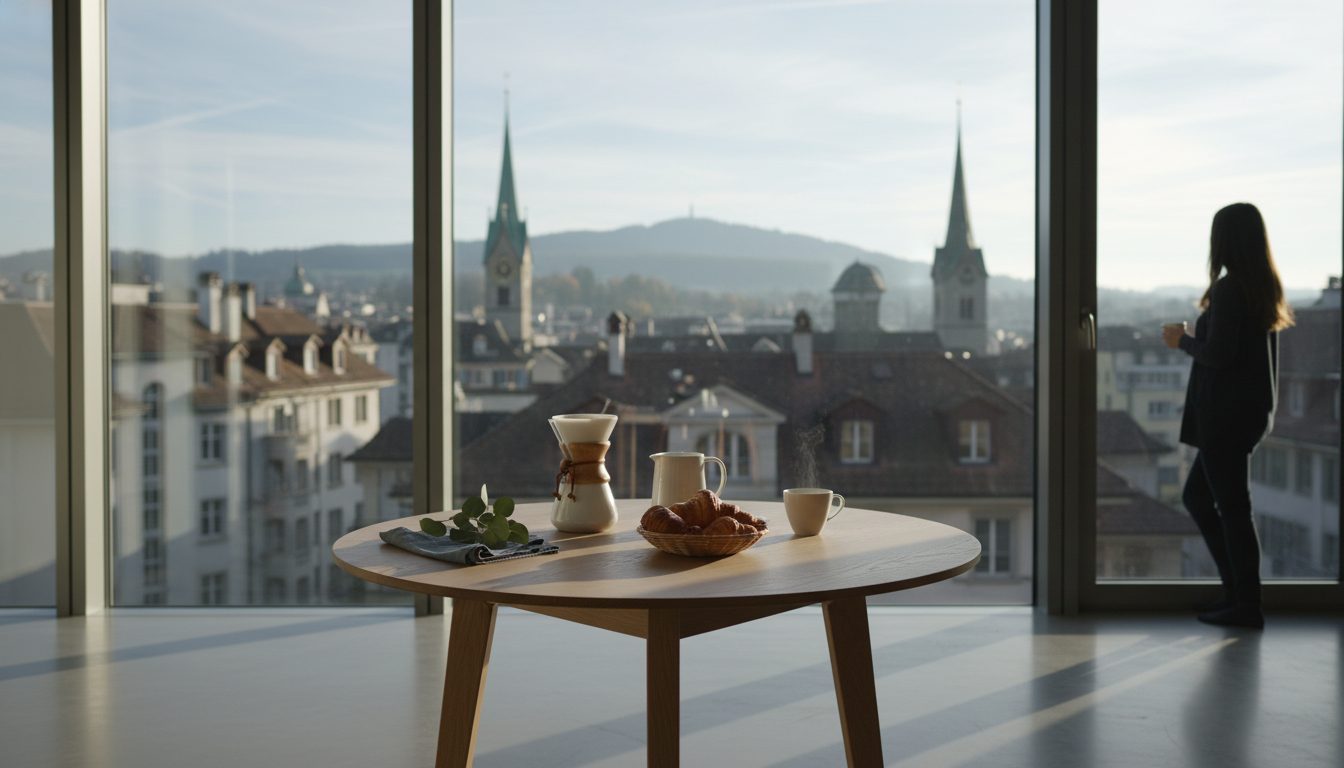 Morning light streaming through floor-to-ceiling windows of a modern Zurich apartment in Kreis 4, wi
I've been doing home exchanges for seven years now, but Zurich was the trip that made me realize I needed to actually crunch the numbers. Not vague estimates—real, tracked-to-the-franc comparisons. Because when people ask me "is home swapping really worth it?" I wanted receipts. Literal receipts.
So I kept every single one. What I found was honestly a bit shocking, even to me.
Why the Home Swap vs Hotel Debate Matters More in Zurich
Zurich isn't just expensive. It's expensive in a way that makes other expensive cities look reasonable.
We're talking about a place where the average hotel room runs $350-450 per night. Where a simple dinner for two at a mid-range restaurant easily hits $150. Where even budget accommodations—and I use that term loosely—start around $180.
I've traveled to 25 countries doing home swaps. Nowhere has the cost differential been as stark as in Switzerland. In Barcelona or Lisbon, sure, you save money with a home exchange. But in Zurich? You're not just saving—you're making an entirely different trip possible.
The median household income in Zurich hovers around $120,000 USD. The city was literally designed for people with Swiss salaries. For the rest of us mere mortals, visiting Zurich as a tourist means either accepting that you'll spend an absurd amount of money, rushing through in 2-3 days to minimize the damage, or finding a completely different way to do it.
I chose the third option.
My 10-Day Zurich Experiment: Tracking Every Cost
Let me set the scene. October in Zurich. I'd connected with Thomas and Mira through SwappaHome—a couple in their 40s with a gorgeous two-bedroom apartment in Kreis 4, the trendy district that locals call "Chreis Cheib." They wanted to spend two weeks in San Francisco exploring wine country. I wanted to experience autumn in Switzerland without declaring bankruptcy.
Their apartment was on Langstrasse, which has this fascinating split personality—gritty and artsy and increasingly gentrified all at once. Think exposed brick, original hardwood floors, a kitchen that actually had spices in it (the universal sign of people who really live somewhere), and a balcony overlooking a quiet courtyard.
I decided to track everything. And I mean everything.
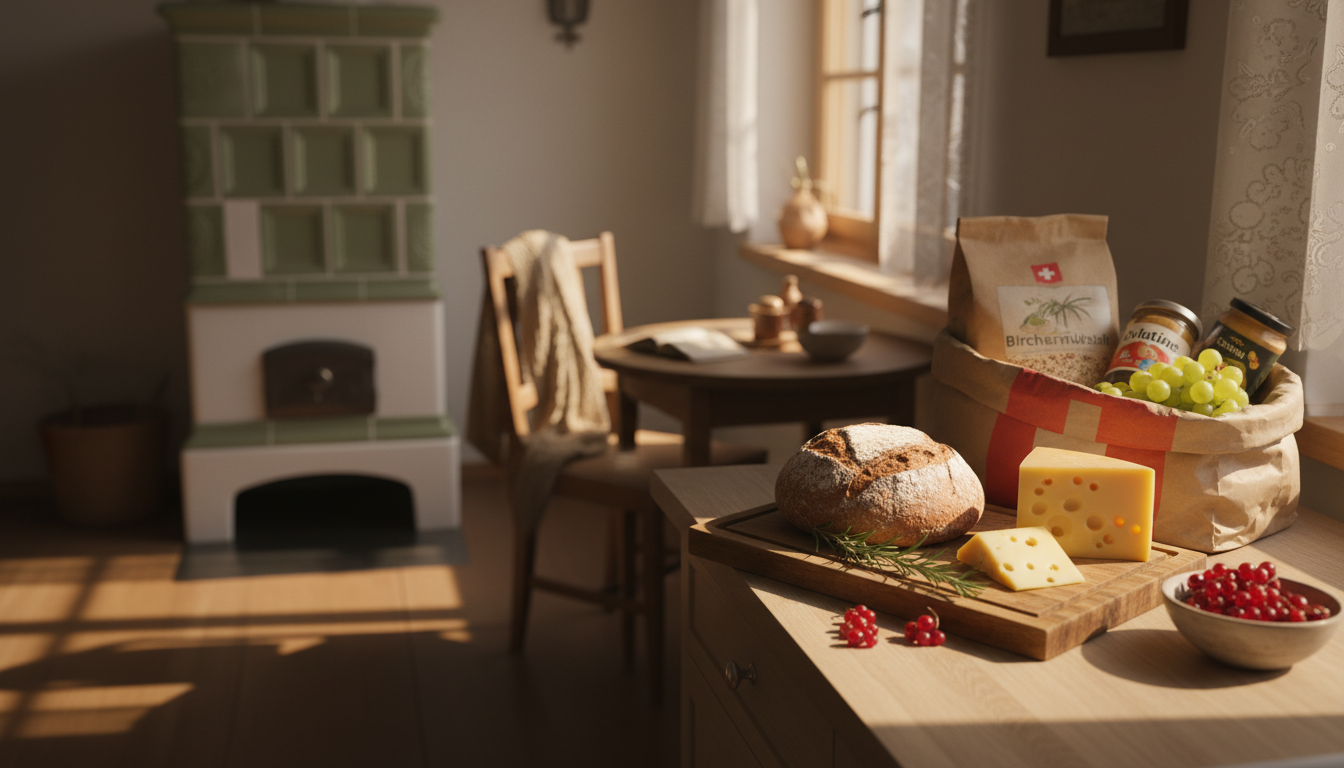 Cozy kitchen corner in a Zurich apartment showing local Swiss groceries, a Migros shopping bag, fres
What I Actually Spent (Home Swap)
Here's my real spending over 10 days:
Accommodation: $0 — I used 10 SwappaHome credits I'd earned hosting guests in San Francisco over the previous months.
Food & Groceries: $380 — I cooked about 70% of my meals. Breakfast every morning on the balcony. Simple lunches. Dinners at home maybe five nights. Groceries from Migros and Coop are expensive by American standards but completely manageable when you're not eating out.
Dining Out: $290 — Five restaurant meals, including one splurge at Hiltl (the world's oldest vegetarian restaurant—don't skip it) and a memorable raclette dinner in the old town.
Transportation: $95 — I bought a 72-hour Zürich Card for CHF 68 ($76) which covered unlimited public transit plus museum entries. The rest was occasional tram rides.
Activities & Museums: $85 — Most were covered by the Zürich Card. This was extras like a boat cruise on Lake Zurich and entry to Thermalbad & Spa.
Coffee & Treats: $110 — Look, I have a problem. Swiss coffee culture is exceptional and I regret nothing.
Miscellaneous: $45 — Random stuff. A book from Orell Füssli. Some chocolate from Sprüngli (okay, a lot of chocolate from Sprüngli).
Total: $1,005 for 10 days
That's roughly $100 per day in one of the world's most expensive cities.
What a Hotel Stay Would Have Cost
Now let's run the same trip with hotel accommodation. I'm not even going luxury here—just a decent 3-star hotel in a reasonable location.
I researched actual October rates for the same dates I traveled. The Hotel Bristol, a perfectly nice but nothing-special option near the train station, was running $320/night. Multiply by 10 and you're at $3,200 just for accommodation.
For food without a kitchen, you're looking at lunch averaging $35/day ($350 total) and dinner around $65/day ($650 total)—assuming breakfast was included. That's $1,000 in food alone.
Same transportation, activities, coffee, and miscellaneous brings the total to around $4,535 for 10 days.
The difference? $3,530 saved.
Even if I factor in the credits I used—let's say I value my time hosting at something—the math is absurd. I hosted three different guests in San Francisco over two months, totaling 10 nights. That's maybe 3 hours of my time total (key handoffs, quick messages). For that, I got 10 nights in Zurich.
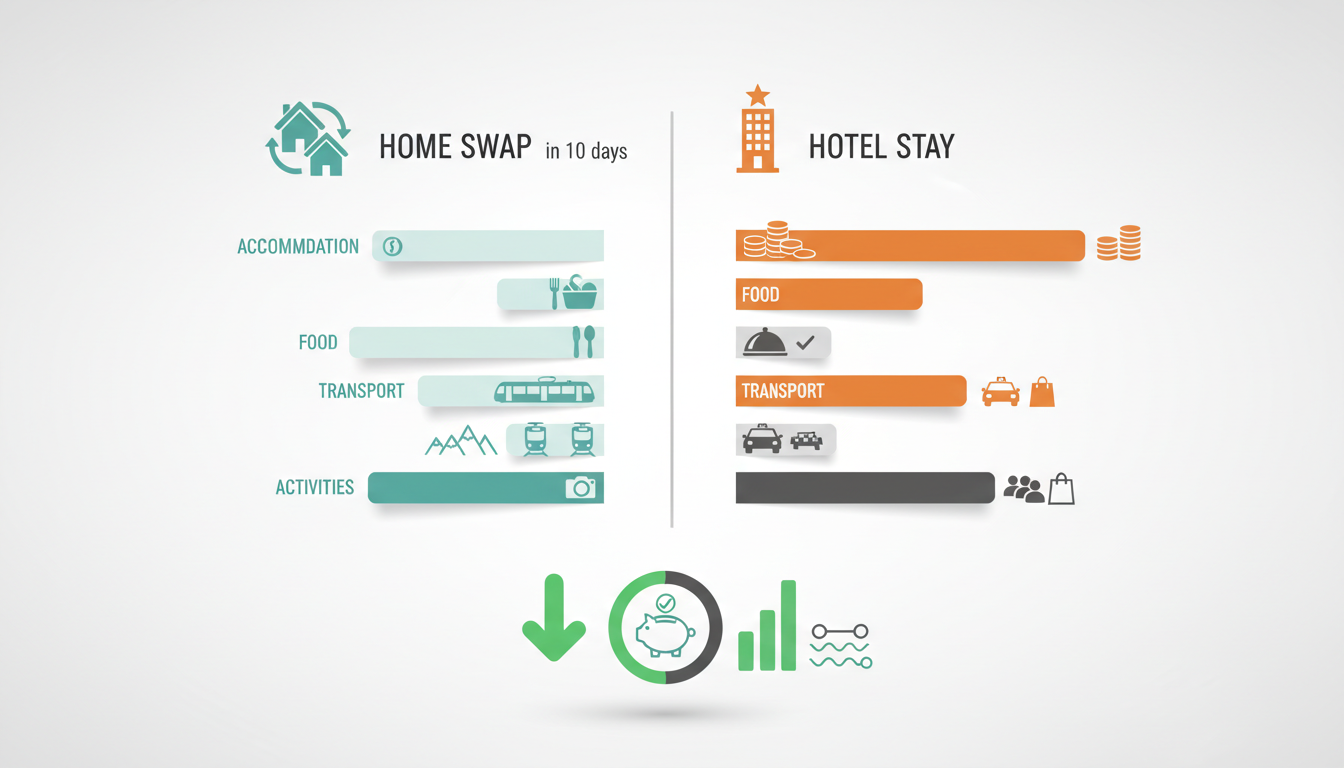 Infographic showing side-by-side cost comparison between home swap and hotel stay in Zurich over 10
The Hidden Costs Nobody Talks About (And Why They Didn't Apply)
Whenever I write about home swapping, someone in the comments brings up hidden costs. Fair enough—let's address them.
"But what about cleaning?" Thomas and Mira's apartment was spotless when I arrived. I left it spotless when I departed. That's the unwritten rule of home exchange, and in seven years, I've never had an issue. You clean because you'd want someone to do the same for your place. Took me about an hour before checkout. Not exactly a hidden cost.
"What about the risk of damage?" This one's worth addressing honestly. SwappaHome connects members but doesn't provide insurance or damage coverage—that's on you to arrange if you want it. I have renters insurance that covers me when I travel, and I always recommend members look into their own coverage options. In 40+ swaps, I've had exactly one minor issue (a broken wine glass, which I replaced). The review system creates accountability—nobody wants to trash their reputation over carelessness.
"Don't you have to host people in your home?" Yes, but here's what people miss: you're not there when they are. I hosted three guests in my San Francisco apartment while I was traveling for work or staying with friends. They got a place to stay, I earned credits, my apartment was occupied (better than sitting empty), and I came home to find it cleaner than I left it. Genuinely a win-win.
"What about location? Hotels are central." This one actually made me laugh for Zurich specifically. Thomas and Mira's apartment in Kreis 4 was more central than most hotels I looked at, and infinitely more interesting. I was walking distance to the main train station, a 10-minute tram to the lake, and surrounded by the best restaurants and bars in the city. Home swaps often put you in neighborhoods tourists never see—which is exactly the point.
What $3,530 in Savings Actually Bought Me
Here's what I did with the money I didn't spend on a hotel:
Extended my trip. Originally, I'd planned five days. At hotel prices, that was already pushing my budget. With the home swap, I stayed 10 days and still spent less than the hotel-only cost.
Said yes to experiences. That spa day at Thermalbad? The sunset cruise on Lake Zurich? The day trip to Lucerne? I did all of them without that constant mental calculation of "can I afford this?"
Ate like a local. Instead of sad hotel breakfasts, I walked to the Helvetiaplatz farmers market on Saturday morning. Bought fresh bread, local cheese, and the most incredible pears I've ever tasted. Made coffee on the balcony while watching the neighborhood wake up.
Actually relaxed. There's something about having a whole apartment that changes the rhythm of travel. I didn't feel pressure to be "out doing things" every second to justify the cost. Some afternoons, I just read on the balcony. Some mornings, I slept in. I traveled like someone who lived there, not like someone racing against a $400/night clock.
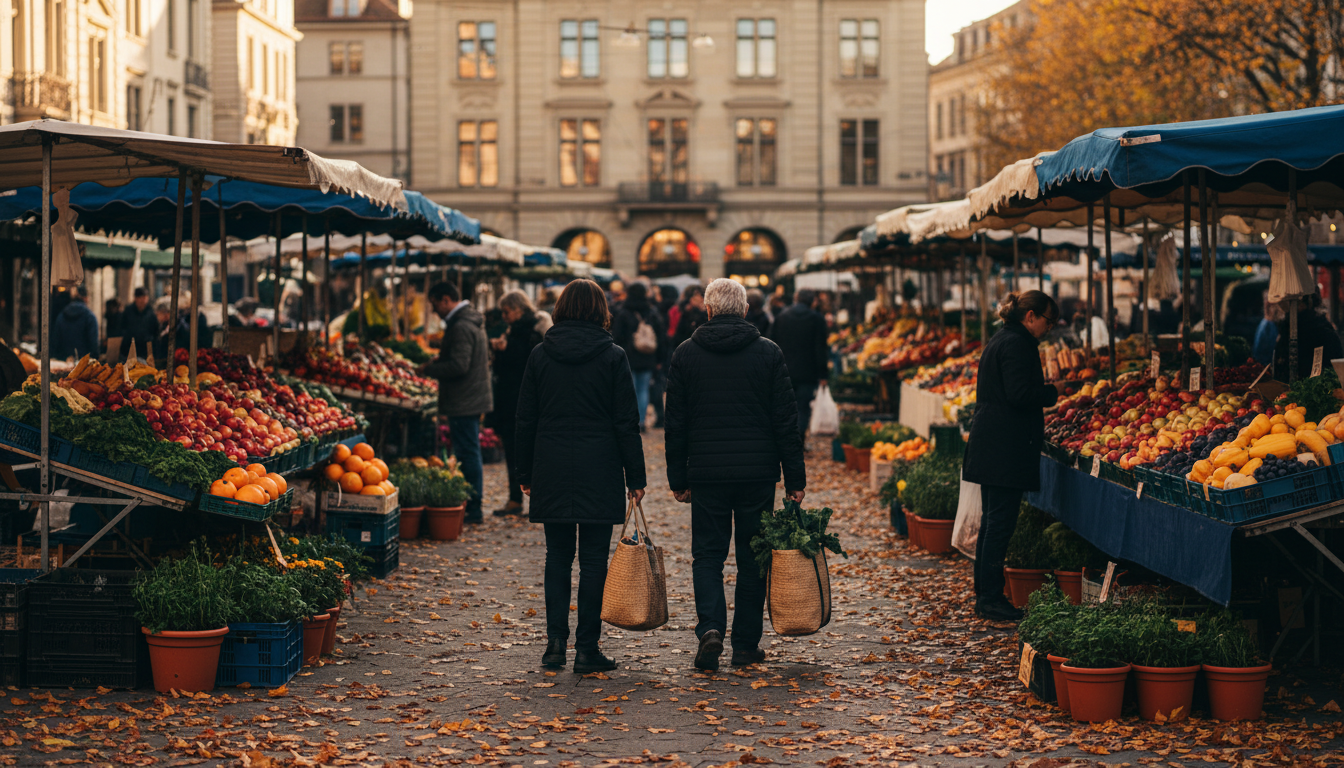 Autumn morning at Helvetiaplatz farmers market in Zurich, showing colorful produce stands, locals sh
The Home Swap Advantage Beyond Money
The cost comparison is dramatic, but honestly? It's not even the best part.
Thomas left me a handwritten note with his favorite spots in the neighborhood. The bakery on Militärstrasse that makes the best Gipfeli (Swiss croissants). The wine bar on Langstrasse where the owner will pour you something special if you ask nicely. The viewpoint in Lindenhof that tourists somehow miss.
This is insider knowledge you can't buy. No hotel concierge, no matter how good, can replicate what a local who actually lives somewhere shares with you.
I also had space. Real space. A living room to spread out in. A kitchen to make late-night tea. A bedroom that wasn't three feet from a TV. After a week of walking 15,000 steps a day exploring the city, coming home to a real home made all the difference.
And there's something else—something harder to quantify. When you stay in someone's home, surrounded by their books and art and the small touches that make a space personal, you experience a place differently. You're not a tourist in a sterile room. You're temporarily part of a neighborhood, a building, a community.
Mira had left a small collection of Swiss German phrases on the fridge. By day three, I was attempting "Grüezi" (hello) and "Merci vilmal" (thank you very much) with the woman at the corner kiosk. She laughed at my accent but seemed genuinely pleased I was trying.
That doesn't show up in a cost comparison, but it's worth everything.
How to Find a Home Swap in Zurich
If I've convinced you to try this, here's what actually works:
Start early. Zurich isn't Paris or London—there are fewer listings, so the good ones get booked. I reached out to Thomas and Mira three months before my trip. For peak summer season, I'd suggest even earlier.
Be flexible on neighborhoods. Kreis 4 was perfect for me, but Kreis 3 (Wiedikon) and Kreis 5 (Industriequartier) are equally interesting and well-connected. Don't fixate on being in the absolute center—Zurich's tram system is exceptional.
Write a real message. I see people send generic "I'd like to stay at your place" requests and wonder why they don't get responses. I told Thomas and Mira about myself, why I was excited about Zurich, and what I loved about their apartment listing. Treat it like you're introducing yourself to a potential friend.
Have a complete profile. On SwappaHome, your profile is your reputation. Good photos of your space, honest descriptions, reviews from previous guests—these all matter. People are trusting you with their home. Give them reasons to feel good about it.
Offer something in return. Even if you're not doing a simultaneous swap (I wasn't—they came to SF a month later), make sure your listing is appealing. Thomas mentioned he'd been wanting to visit California wine country, and my San Francisco apartment made that possible. Mutual benefit is the whole point.
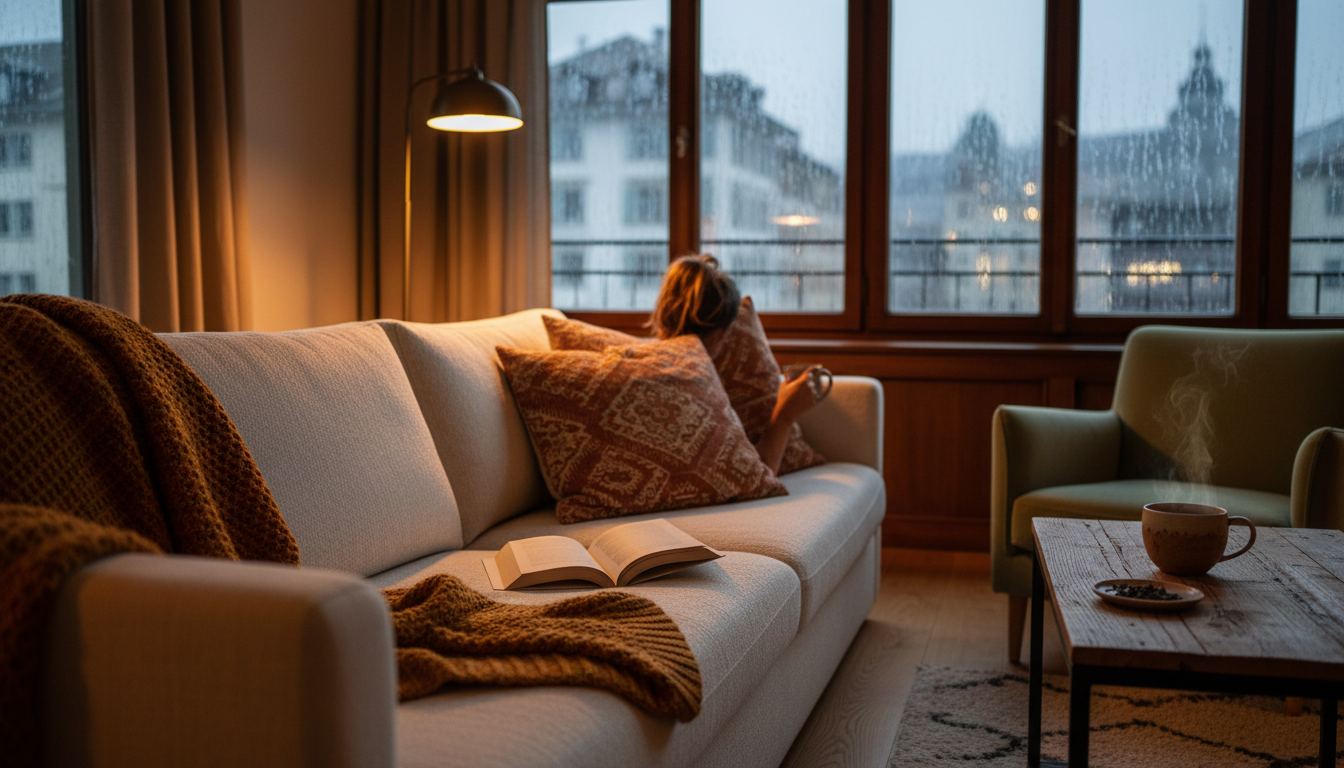 Cozy evening scene in a Zurich apartment living room with warm lamp lighting, a book open on a comfo
The Real Cost of Travel: What We're Actually Paying For
I've been thinking about this a lot lately. When we pay $400 a night for a hotel room, what are we actually buying?
Convenience, sure. Reliability. Someone else handling the logistics. A front desk to complain to if something goes wrong.
But we're also paying for distance. A hotel keeps you separate from the place you're visiting. You're a guest in the most transactional sense—you pay, they provide, and there's no relationship beyond that.
Home swapping inverts this entirely. Yes, it requires a bit more effort. You message with your hosts beforehand. You figure out the coffee maker yourself. You're responsible for leaving the place as you found it.
But in exchange, you get connection. You get trust. You get to experience a place the way people who live there experience it.
And in Zurich specifically—a city that can feel cold and transactional if you're just passing through—that connection transforms everything.
I left Zurich feeling like I'd actually lived there for a week and a half. Not visited. Lived. I had a coffee spot (Café Henrici, if you're wondering). A favorite tram line (the 3, along the lake). A neighborhood I could navigate with my eyes closed.
That's not something a hotel can give you, no matter how many stars it has.
Is Home Swapping Right for Your Zurich Trip?
Look, I'm obviously biased. Seven years of doing this has made me a true believer.
But home swapping isn't for everyone, and I'd rather be honest about that than oversell it.
It's probably right for you if you value authentic experiences over convenience, you're comfortable with some uncertainty and flexibility, you have a home you can offer in exchange, you're planning a longer stay (the savings compound dramatically after 3-4 nights), and you actually want to cook some meals and live like a local.
It's probably not right for you if you want guaranteed consistency and zero surprises, you're traveling for business and need hotel amenities, you're only staying 1-2 nights, you're not comfortable having strangers in your home, or you prefer having staff available 24/7.
No judgment either way. I've stayed in plenty of hotels when the situation called for it.
But for a city like Zurich—where hotel costs are genuinely prohibitive for most travelers—home swapping isn't just a nice alternative. For many of us, it's the difference between going and not going at all.
Making the Math Work: A Quick Reference
For those who like concrete numbers, here's a quick reference for planning your own Zurich home swap:
- SwappaHome credits needed: 1 credit per night (same as anywhere in the world)
- How to earn credits: Host guests at your place—you earn 1 credit per night they stay
- New member bonus: 10 free credits when you join (that's 10 nights anywhere)
- Average Zurich hotel (3-star): $280-380/night
- Average Zurich hotel (4-star): $400-550/night
- Average Zurich Airbnb (1BR): $180-280/night
- Daily food budget (cooking most meals): $40-60
- Daily food budget (eating out): $100-150
- Zürich Card (72 hours): CHF 68 / ~$76 (includes transit + museums)
Do your own math, but for any trip longer than three nights, the home swap advantage in Zurich is massive.
What I'd Do Differently Next Time
I'm already planning my return to Zurich—probably next spring when the flowers are blooming along the lake. A few things I'll change:
Stay longer. Ten days was good. Two weeks would be better. The marginal cost of additional days with a home swap is basically just food, so why not?
Explore more of the region. I did one day trip to Lucerne, but Switzerland's train system makes the entire country accessible. Next time, I want to see Bern, maybe venture into the mountains.
Connect more with my hosts. Thomas and Mira and I have stayed in touch—we've even talked about me hosting them again. But I'd love to meet them in person someday, maybe overlap for a day in one of our cities.
Bring an empty suitcase. For the chocolate. Obviously.
Zurich changed something in me. Not in a dramatic, life-altering way—but in a quiet, persistent one. It showed me that the "expensive" cities aren't actually off-limits. They're just waiting for us to find a different way in.
The home swap vs hotel question isn't really about money, when you get down to it. It's about what kind of traveler you want to be. What kind of experiences you're after. What you're willing to trade convenience for.
For me, trading a hotel room for Thomas and Mira's apartment—for their neighborhood, their recommendations, their trust—wasn't even a question.
It was the obvious choice.
And $3,530 in savings? That was just the bonus.
Ready to try home swapping for your next trip? SwappaHome makes it easy to connect with hosts worldwide. New members start with 10 free credits—enough for a week and a half in Zurich, or anywhere else your wanderlust takes you.
Frequently Asked Questions
Is home swapping in Zurich safe for first-time exchangers?
Home swapping in Zurich is generally very safe, especially through established platforms like SwappaHome where members build reputations through reviews. Swiss culture values trust and respect for property. That said, always verify your host's profile, read their reviews carefully, and consider arranging your own travel insurance for peace of mind. Communication before your trip helps establish mutual expectations.
How much money can I actually save with a home swap vs hotel in Zurich?
Based on my tracked expenses, a 10-day home swap vs hotel comparison in Zurich showed savings of over $3,500. The average 3-star Zurich hotel costs $280-380 per night, while home swaps cost only SwappaHome credits (which you earn by hosting). For a week-long stay, expect to save $2,000-2,800 compared to mid-range hotels, even more compared to 4-star options.
Do I need to do a simultaneous home swap in Zurich?
No, simultaneous swaps aren't required on SwappaHome. The credit system means you can host guests from anywhere, earn credits, then use those credits to stay in Zurich—even if your Zurich hosts never visit your city. This flexibility makes finding Zurich accommodations much easier than traditional direct-swap platforms.
What neighborhoods in Zurich are best for home swapping?
Kreis 4 (Langstrasse area) offers a vibrant, local feel with excellent restaurants and nightlife. Kreis 3 (Wiedikon) is quieter and family-friendly with great lake access. Kreis 5 (Industriequartier) has a trendy, converted-warehouse vibe. All are well-connected by Zurich's efficient tram system—don't feel pressured to stay in the expensive tourist center around Bahnhofstrasse.
What should I include in my home swap request to Zurich hosts?
Write a personalized message introducing yourself, explain why you're visiting Zurich, mention specific things you appreciated about their listing, and share a bit about your own home. Zurich hosts receive fewer requests than those in larger cities, so a thoughtful message stands out. Include your travel dates, who's traveling, and any relevant details about your own property they might enjoy.
40+
Swaps
25
Countries
7
Years
About Maya Chen
Travel Writer & Home Exchange Expert
Maya is a travel writer with over 7 years of experience in the home swapping world. Originally from Vancouver and now based in San Francisco, she has completed more than 40 home exchanges across 25 countries. Her passion for "slow" and authentic travel led her to discover that true luxury lies in living like a local, not a tourist.
Ready to try home swapping?
Join SwappaHome and start traveling by exchanging homes. Get 10 free credits when you sign up!
Related articles

Home Swap vs Hotel in Algarve: The Real Cost Comparison That Changed How I Travel
I tracked every euro during my Algarve trips—home swap vs hotel. The savings shocked me. Here's the honest breakdown with real numbers.

Home Swap vs Hotel in Berlin: The Real Cost Comparison That Changed How I Travel
I tracked every euro during my Berlin trips—one in hotels, one through home swap. The €2,847 difference shocked me. Here's the complete breakdown.

Home Swap vs Hotel in Bali: The Real Cost Comparison Nobody Talks About
I spent 3 weeks in Bali both ways. Here's the honest breakdown of home swap vs hotel costs—including the hidden expenses that caught me off guard.