
Home Swapping in Dubai for Seniors: The Complete Comfort-First Travel Guide

SwappaHome Editorial Team
Home Exchange & Slow Travel Editorial
Discover how home swapping in Dubai for seniors offers comfortable, affordable travel with accessible neighborhoods, familiar amenities, and authentic local experiences.
My mother called me last February with a question I wasn't expecting. "Maya, you know that home swapping thing you do? Could someone my age actually pull that off in Dubai?"
She'd just turned 68, recently retired from teaching high school biology, and had this dream of spending a month somewhere warm during Vancouver's gray winter months. Hotels in Dubai? Astronomical. Those all-inclusive resort packages? Too structured, too impersonal. But home swapping—that was something she'd never considered until she read one of my articles about the credit system.
Six months later, she spent three weeks in a gorgeous apartment in Dubai Marina with a fully equipped kitchen, a comfortable bed she actually slept well in, and a community pool she used every morning. Total accommodation cost: zero dollars.
She came back tanned, rested, and already planning her next swap.
 elegant Dubai Marina apartment interior with floor-to-ceiling windows overlooking the marina, comfor
That experience taught me something I hadn't fully appreciated before. Home swapping isn't just for backpackers or young families. Honestly? I'd argue it might be even better suited for senior travelers—people who value comfort, routine, space, and genuine connection over hostel bunk beds and rushed itineraries.
So here's everything you need to know about making Dubai work as a home swap destination in your 60s, 70s, or beyond.
Why Dubai Works Exceptionally Well for Senior Home Swappers
Here's what surprised my mom most: Dubai is almost aggressively accessible.
The city was largely built in the last 30 years, which means modern infrastructure, wide sidewalks, elevators everywhere, and air-conditioned everything. Compare that to charming-but-challenging European cities with cobblestones and five-floor walkups, and you start to see why Dubai makes sense.
The healthcare system is world-class. English is spoken virtually everywhere. The crime rate is remarkably low. And perhaps most importantly for longer stays—the weather from November through March is genuinely perfect. We're talking 70-80°F (21-27°C), low humidity, and endless sunshine.
But the real magic of home swapping here? You get to live like a Dubai resident, not a tourist. That means a proper kitchen for preparing familiar foods when you need a break from restaurants. A living room where you can read or watch TV in the evening. A washing machine. A neighborhood grocery store where the staff starts to recognize you.
My friend Gerald, who's 71 and has done four Dubai swaps now, puts it perfectly: "I don't want an adventure every single day anymore. I want three or four genuinely exciting experiences per week, and the rest of the time I want to feel at home. Swapping gives me exactly that."
Best Dubai Neighborhoods for Senior Home Swapping
Not all Dubai neighborhoods are created equal when you're prioritizing comfort and accessibility. After helping my mom plan her trip and talking to dozens of senior swappers, here's my honest breakdown.
Dubai Marina: The Gold Standard for First-Timers
If you're doing your first home swap in Dubai as a senior traveler, start here.
Dubai Marina is a purpose-built waterfront community with a stunning 3-kilometer promenade, countless cafés and restaurants at ground level, and some of the most swap-friendly apartments in the city.
What makes it work: Everything is flat and walkable. The Marina Walk promenade is perfect for morning strolls. There's a tram system that connects to the metro without any stairs. Supermarkets like Carrefour and Spinneys are within walking distance of most buildings. Medical clinics are plentiful.
You'll typically find modern high-rise apartments with full kitchens, building amenities like pools and gyms, and 24-hour security. Most buildings have multiple elevators and dedicated parking if you decide to rent a car. Think 1-2 bedroom apartments ranging from 700-1,500 square feet, usually with stunning marina or sea views.
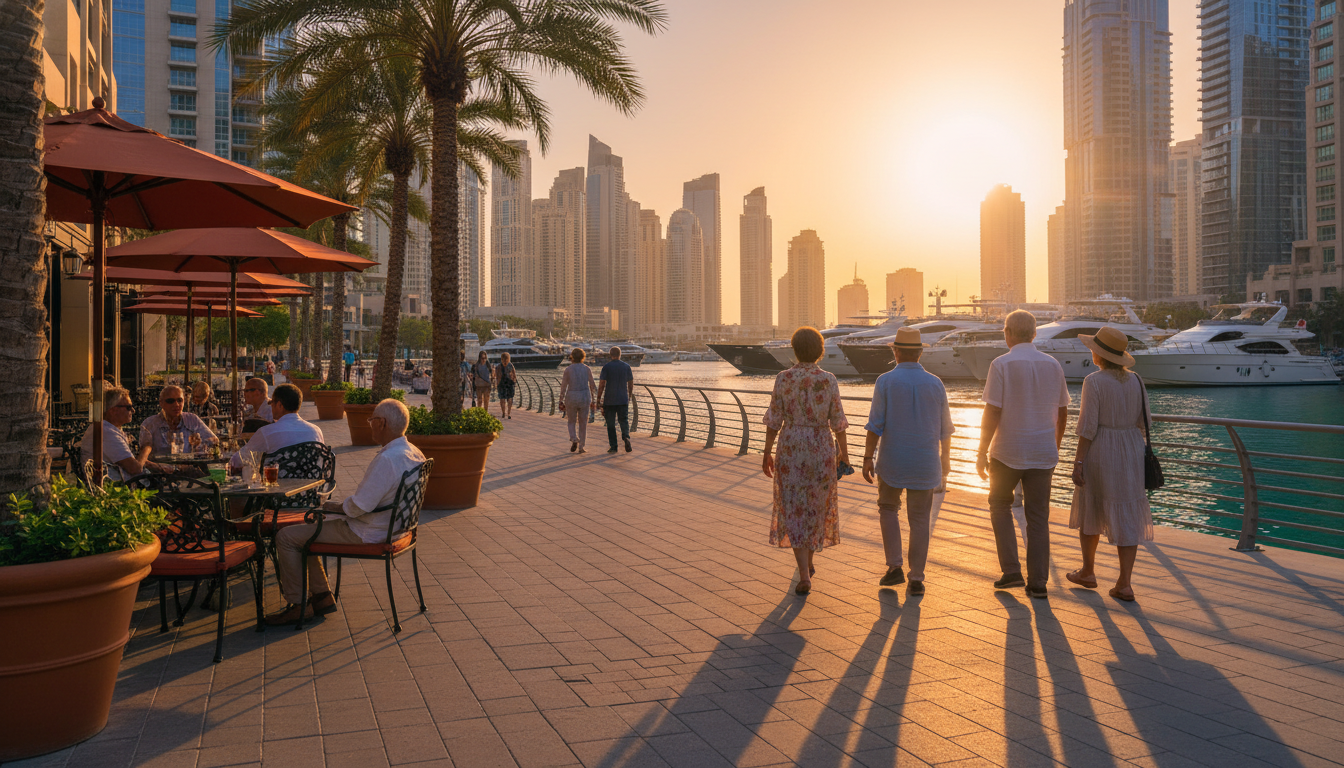 Dubai Marina promenade at golden hour, seniors walking along the waterfront, outdoor caf seating wit
Downtown Dubai: For Culture and Convenience
Living near the Burj Khalifa sounds touristy, but Downtown Dubai is actually a fantastic base for seniors who want cultural attractions within easy reach. The Dubai Opera, Dubai Mall (with its excellent food court and pharmacy), and the beautiful Burj Park are all here.
The catch: It's busier and more expensive-feeling than Marina.
But if you want to feel the pulse of modern Dubai without exhausting yourself, this works beautifully. Pro tip—look for swaps in the Boulevard area specifically. It's more residential than the areas directly around the mall, with lovely walking paths and neighborhood cafés.
Jumeirah Beach Residence (JBR): Beach Life Made Easy
JBR offers beach access without the resort markup. The Walk at JBR is a pedestrianized strip with restaurants, shops, and direct beach access. Many buildings here have private beach clubs for residents.
This is ideal for seniors who want beach time but also want a real apartment with cooking facilities. The beach here has accessible pathways and plenty of shaded seating areas.
Arabian Ranches: Suburban Tranquility
If high-rises aren't your style, Arabian Ranches offers villa-style homes with gardens in a quieter, more suburban setting. You'll need a car here, but if you're comfortable driving (Dubai's roads are excellent and well-signed), this offers a completely different Dubai experience.
My mom's verdict: "Marina was perfect for me because I don't drive anymore. But if your dad were alive and doing the driving, we'd have loved a villa with a garden."
How the SwappaHome Credit System Works for Extended Stays
Let me explain this because it's genuinely clever—and particularly beneficial for seniors who often have more flexibility with timing.
On SwappaHome, every night you host someone earns you one credit. Every night you stay somewhere costs you one credit. That's it—no complicated pricing tiers based on location or property size. A studio in Dubai costs the same credits as a penthouse in Monaco.
New members start with 7 free credits, which gives you a week-plus to try the system before you've hosted anyone.
Here's why this matters for seniors: Many retirees have lovely homes they're not using when they travel. If you have a spare bedroom or a whole house sitting empty while you're in Dubai for a month, you can host guests back home and earn credits simultaneously. Some senior members I know have essentially created a self-sustaining travel fund this way.
The math works like this: Host guests for 30 nights throughout the year (maybe a few different guests across several months). That's 30 credits. Use those 30 credits for a full month in Dubai. Your accommodation cost for a month in one of the world's most expensive cities? Zero.
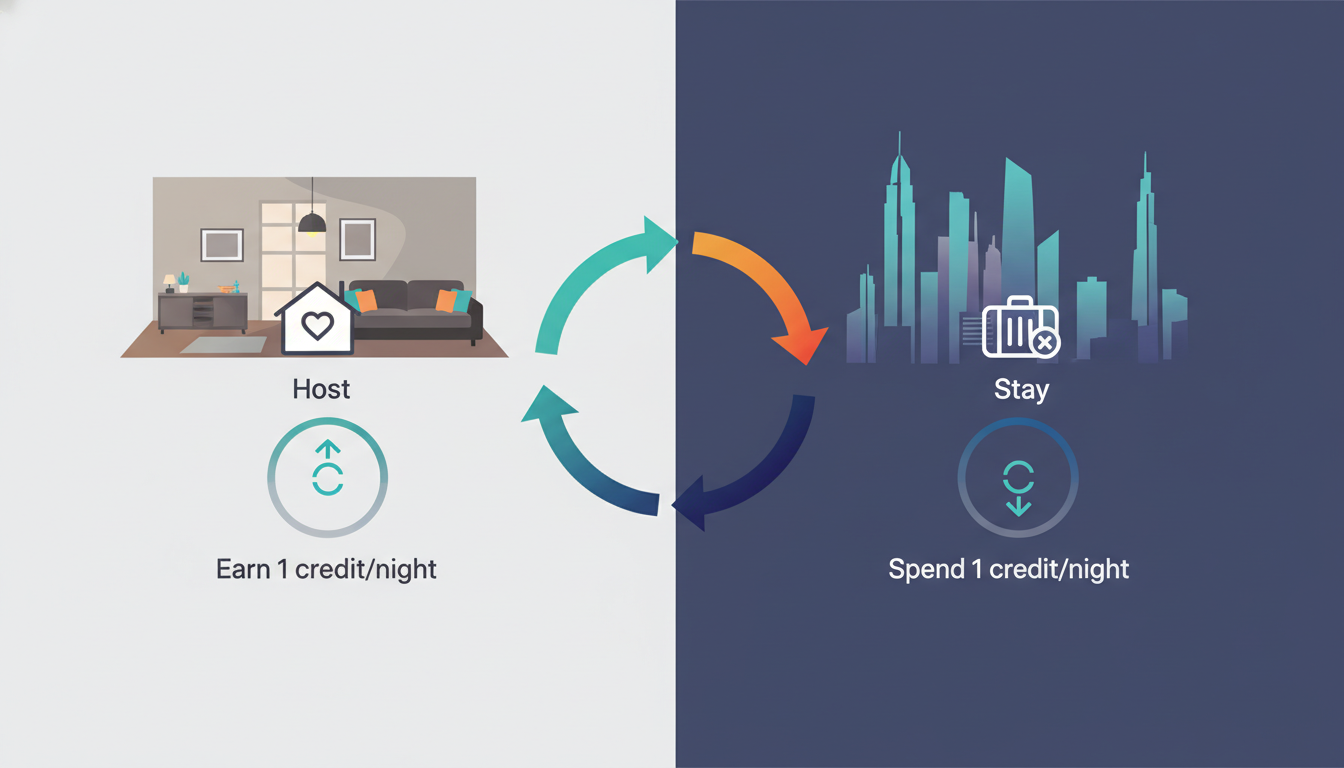 split-screen infographic showing credit exchange concept - left side shows cozy home interior with H
Preparing Your Home for Guests While You're Away
This is where I see seniors actually excel at home swapping.
After decades of hosting family and friends, you know how to make people comfortable. That institutional knowledge translates beautifully.
Before you leave, clear out one closet and two dresser drawers completely—your guests need somewhere to unpack, and living out of a suitcase gets old fast. Create a simple house manual with WiFi passwords, how the thermostat works, which day is garbage day, and your three favorite local restaurants. I keep mine in a binder on the kitchen counter.
Stock the basics: toilet paper, dish soap, coffee, tea, salt and pepper. You don't need to provide groceries, but having the essentials shows thoughtfulness.
Here's something important—arrange for a point of contact. Designate a neighbor, friend, or family member who can help your guests if something goes wrong. A pipe bursts, they can't figure out the garage door, whatever. You'll be in Dubai; you can't exactly pop over.
Remove or secure genuinely valuable items. I'm talking important documents, expensive jewelry, anything irreplaceable. Not because home swappers are untrustworthy—the community is remarkably respectful—but because you'll relax more knowing your grandmother's ring is in a safety deposit box.
One note: SwappaHome connects members and provides a review system that builds accountability, but the platform doesn't offer insurance or damage coverage. If you want protection, arrange your own homeowner's or travel insurance. Many seniors I know already have policies that cover guest stays—worth checking before you assume you need something new.
What to Look for in a Dubai Swap Home
When you're browsing potential swaps, here's my senior-specific checklist:
Elevator access is absolutely non-negotiable unless you're certain it's a ground-floor unit. Dubai has some older low-rise buildings without elevators—skip them. Air conditioning—every legitimate Dubai apartment has it, but confirm it's functioning well. Ask your potential swap partner directly.
Kitchen equipment matters if you plan to cook (and you should—it saves money and energy). Ask about pots, pans, a decent knife, and a coffee maker. My mom was thrilled to find a rice cooker in her Marina apartment.
Bed quality matters more as we age. Don't be shy about asking what kind of mattress they have. A bad bed can ruin a trip.
Building amenities like pools, gyms, and even libraries can be deciding factors. If morning swimming is part of your routine, this could seal the deal. And always check proximity to pharmacy and medical care—look up the nearest options before confirming. In Marina, there's a Boots pharmacy and several clinics within a 10-minute walk of most buildings.
Finally, grocery accessibility: Can you walk to a supermarket, or will you need a car or taxi every time you need milk?
 modern Dubai apartment kitchen with granite countertops, fully stocked with cooking equipment, morni
Navigating Dubai: Transportation Tips for Senior Travelers
Dubai's public transportation is genuinely excellent, but it requires some planning.
The Dubai Metro is clean, air-conditioned, and has dedicated "Gold Class" cars at the front of each train with guaranteed seating for a small premium (about $2-3 more per trip). Stations have elevators, and trains run frequently. The Red Line connects the airport to Marina to Downtown.
The Dubai Tram runs through Marina and JBR, connecting to the metro. It's completely accessible with level boarding.
Taxis are metered, safe, and relatively affordable—a ride from Marina to Downtown runs about 50-70 AED ($14-19 USD). The RTA app lets you book taxis directly, no cash needed, no negotiating. Uber and Careem (the regional equivalent) both operate here and are often cheaper than taxis for longer distances.
Renting a car makes sense if you want to explore outside the city—day trips to Abu Dhabi, the desert, or the East Coast mountains. But for staying within Dubai, you genuinely don't need one.
My mom's approach: She used taxis for anything more than a 15-minute walk and the metro for longer distances. Total transportation cost for three weeks: about $180 USD. Compare that to what taxis alone would cost in Manhattan.
Health and Safety Considerations
Dubai takes healthcare seriously.
The city has numerous internationally accredited hospitals, including American Hospital Dubai and Mediclinic City Hospital, with English-speaking staff and specialists in everything.
Travel insurance is essential—I can't stress this enough. Make sure your policy covers medical evacuation and has adequate coverage limits. Some credit cards offer travel insurance for seniors; check yours before buying additional coverage.
For prescription medications, bring enough for your entire stay plus a buffer. Some medications that are legal in North America or Europe are controlled or banned in the UAE. Check the Ministry of Health website or contact the UAE embassy before traveling with any prescription drugs. When in doubt, carry a letter from your doctor explaining your medical needs.
About the heat: Even in "winter," midday sun can be intense. Stay hydrated, wear sunscreen, and plan outdoor activities for morning or late afternoon. Every mall, restaurant, and public building is aggressively air-conditioned—sometimes too much. Bring a light layer for indoor spaces.
COVID requirements change frequently, so check current entry requirements close to your travel date. As of my last update, vaccination requirements have largely been lifted, but this could change.
Cultural Considerations and Etiquette
Dubai is cosmopolitan and tourist-friendly, but it's still a Muslim country with certain expectations.
The dress code is more relaxed than other Gulf states, but still conservative by Western standards. In malls, restaurants, and public areas, shoulders and knees should generally be covered. Beachwear is fine at beaches and pools only. My mom packed lightweight linen pants and loose blouses and was comfortable everywhere.
If you're traveling during Ramadan (dates vary yearly based on the lunar calendar), eating, drinking, and smoking in public during daylight hours is prohibited. Restaurants in hotels and malls typically operate behind screens, but it's respectful to be discreet. Honestly, experiencing Ramadan can be beautiful—the evening iftar meals are special, and the city has a different energy.
Alcohol is available in licensed restaurants and hotels, but not in public or regular supermarkets. You won't be able to buy wine at Carrefour to bring back to your swap apartment. Some swap hosts leave a bottle for guests; others don't. Ask if this matters to you.
Public displays of affection beyond hand-holding are frowned upon. Swearing and rude gestures can technically result in fines. Photography of people without permission, especially women, is not acceptable.
None of this should deter you—millions of Western tourists visit Dubai without incident every year. Just be aware and respectful.
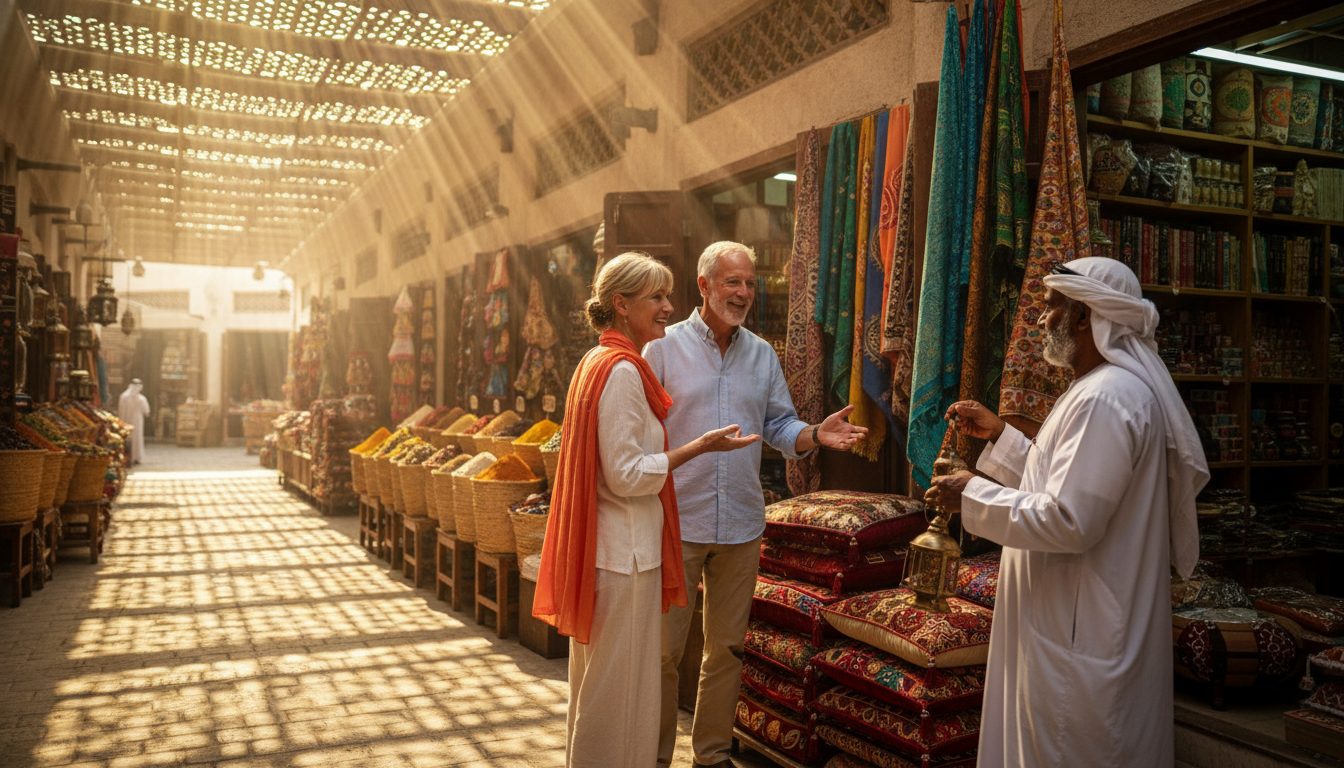 traditional Dubai souk with golden light filtering through wooden lattice roof, senior Western touri
Building Your Dubai Itinerary: A Realistic Pace
Here's what I tell every senior planning a Dubai home swap: You're not on a five-day vacation trying to see everything. You're living there temporarily. Adjust your pace accordingly.
Week one: Settle in. Find your grocery store, your morning coffee spot, your evening walk route. Do one "big" activity—maybe the Burj Khalifa observation deck or a desert safari.
Week two: Explore more intentionally. Visit the historic Al Fahidi district and the Dubai Museum. Take an abra (water taxi) across the Creek for $0.50. Wander the Gold Souk and Spice Souk. Have lunch at Arabian Tea House (about $15-20 for a beautiful traditional meal).
Week three: Day trips if you're feeling energetic. Abu Dhabi and the Louvre Abu Dhabi are 90 minutes away. The Hatta mountain region offers cooler temperatures and hiking. Or simply enjoy the rhythm you've established—morning swim, afternoon reading, evening promenade walk.
The beauty of home swapping is that you don't feel pressure to maximize every moment. You've already "won" financially by not paying for accommodation. You can afford to have slow days.
Connecting with Your Swap Partner
The relationship with your swap partner can make or break the experience. Here's how to set yourself up for success.
Before confirming, have at least one video call. This accomplishes two things—you can ask detailed questions about the home, and you get a sense of who you're trusting with your space. Most serious home swappers are happy to do this.
Questions worth asking: How old is the building, and when was the apartment last renovated? What's the neighborhood like at night—is it quiet enough for sleeping? Are there any quirks with the apartment I should know about? (Every home has them.) What's the best way to reach you if I have questions during my stay? Can you recommend a local doctor or clinic in case I need one?
During your stay, send a message when you arrive confirming everything is great. If small issues arise, communicate promptly but kindly. Leave the apartment as you found it—or better.
After your stay, write an honest, detailed review. The review system is what makes home swapping work. Future travelers benefit from your feedback, and your swap partner benefits from their reputation.
Real Costs: What to Budget Beyond Accommodation
Your accommodation is covered through credits, but here's what else to expect for a three-week stay.
Flights vary wildly by origin. From the US East Coast, expect $800-1,200 roundtrip in economy during winter high season. Booking 3-4 months ahead usually yields best prices. Emirates offers excellent service for long-haul flights—worth the slight premium for seniors who need comfort.
Food: If you cook most meals and eat out occasionally, budget $30-40 per day. Dubai restaurants range from $10 food court meals to $200 fine dining. Grocery costs are comparable to major US cities—maybe slightly higher for imported Western goods.
Transportation: $150-250 for three weeks using a mix of metro, tram, and taxis.
Activities: Many of Dubai's best experiences are free—beach walking, souk exploring, people-watching at the Marina. Budget activities like the Dubai Frame run $15-20. Premium experiences like desert safaris or Burj Khalifa tickets are $50-150.
Total realistic budget for three weeks (excluding flights): $1,500-2,500 depending on your style.
Compare that to hotel costs: A decent hotel in Dubai Marina runs $150-250 per night minimum during high season. Three weeks = $3,150-5,250 just for accommodation. Home swapping saves you thousands.
When Things Don't Go Perfectly
I'd be doing you a disservice if I pretended every swap is flawless. Things happen.
My mom's experience was 95% wonderful, but the dishwasher broke during week two. She messaged her swap partner, who arranged for a repair person to come the next day. Minor inconvenience, quickly resolved through good communication.
Other potential issues: The apartment doesn't match the listing—this is why video calls matter. If you arrive and something is genuinely misrepresented, document it with photos and contact your swap partner immediately. If it's unlivable, you may need to find alternative accommodation—another reason travel insurance matters.
If you have a medical emergency, know where the nearest hospital is before you need it. Keep your insurance information accessible. The US Embassy in Dubai can assist American citizens in emergencies.
If your swap partner becomes unresponsive (rare, but it happens), having a local contact number—their neighbor, building management—is valuable.
If something breaks or gets damaged, communicate honestly. Most issues are accidents and can be resolved between reasonable adults. Remember, they're staying in your home too—mutual respect is built into the system.
SwappaHome's review system creates accountability, but the platform itself doesn't mediate disputes or provide insurance. You're entering an arrangement between two adults. Choose your swap partners carefully, communicate clearly, and most issues never materialize.
Making the Decision: Is Dubai Home Swapping Right for You?
After watching my mom's experience and talking to dozens of senior home swappers, here's my honest assessment.
Dubai home swapping is ideal if you want extended stays (2+ weeks) in a comfortable, modern environment. If you value having a real kitchen and living space over hotel amenities. If you're comfortable with technology for communication and booking. If you have a home you're willing to open to guests. If you want to experience Dubai like a resident, not a tourist. If you're flexible with timing—shoulder seasons offer better swap availability.
It might not be right if you need daily housekeeping and room service. If you're uncomfortable with the idea of strangers in your home. If you want a completely structured, worry-free experience. If you have mobility issues that require specific accessibility features (always verify before booking). If you prefer shorter trips with packed itineraries.
My mom's final verdict, six months after her trip: "I'm already planning my next one. Maybe Lisbon this time—I hear you loved it there."
She's not wrong. And watching her discover this way of traveling in her late 60s reminded me why I fell in love with home swapping in the first place. It's not just about saving money, though that matters. It's about traveling like a human being, with a kitchen and a couch and a neighborhood that starts to feel like yours.
Dubai might seem like an unlikely destination for this kind of slow, comfortable travel. But that's exactly what makes it work. Behind the glittering towers and luxury brand storefronts, there are real neighborhoods where real people live. Home swapping lets you find them.
If you're curious about trying it, SwappaHome's credit system makes it low-risk to start. Those 7 free credits are enough for a solid test run. List your home, browse Dubai options, and see what resonates.
Your warm winter might be closer than you think.
Frequently Asked Questions
Is home swapping in Dubai safe for seniors traveling alone?
Dubai consistently ranks among the world's safest cities, with extremely low crime rates and excellent emergency services. For solo senior travelers, home swapping in Dubai offers the added security of staying in residential buildings with 24-hour security, established neighborhoods, and the accountability of SwappaHome's review system. Always inform family of your plans and keep emergency contacts accessible.
How much money can seniors save with home swapping versus hotels in Dubai?
For a three-week stay during peak winter season, Dubai hotels average $150-250 per night, totaling $3,150-5,250 for accommodation alone. Home swapping eliminates this cost entirely through SwappaHome's credit system. Most seniors report saving $3,000-5,000 on a month-long Dubai trip, making extended stays financially accessible for retirees on fixed incomes.
What medical facilities are available near Dubai's best home swap neighborhoods?
Dubai Marina, Downtown Dubai, and JBR all have medical clinics within walking distance, plus pharmacies like Boots and Life Pharmacy open until 10 PM or later. Major hospitals including American Hospital Dubai and Mediclinic are 15-20 minutes by taxi. English-speaking staff and international standard care are available throughout the city.
Do I need a car for home swapping in Dubai as a senior?
No—Dubai's public transportation is excellent and fully accessible. The Dubai Metro has elevators at all stations and premium "Gold Class" seating. The Dubai Tram serves Marina and beach areas with level boarding. Taxis are affordable, metered, and easily booked via the RTA app. Most senior home swappers manage comfortably without renting a car.
What's the best time of year for seniors to home swap in Dubai?
November through March offers ideal weather for senior travelers: temperatures of 70-80°F (21-27°C), low humidity, and minimal rain. This is also peak season for home swap availability as Dubai residents travel abroad. Avoid June through September when temperatures exceed 105°F (40°C) and outdoor activities become challenging for most visitors.

Published by
SwappaHome
SwappaHome Editorial Team
Home Exchange & Slow Travel Editorial
The SwappaHome Editorial Team brings together travel research, home-exchange community insights, and platform data to produce practical guides for first-time and experienced home swappers. Every article cites real platforms, current market rates, and verifiable city-level facts so readers can make informed decisions without guessing.
Ready to try home swapping?
Join SwappaHome and start traveling by exchanging homes. Get 7 free credits when you sign up!
Related articles

Bachelor and Bachelorette Parties in Singapore: The Complete Home Swap Group Guide for 2026
Planning a bachelor or bachelorette party in Singapore? Discover how home swapping lets groups of 6-12 stay together in luxury condos, saving thousands while partying in Marina Bay.

Cycling in Lisbon: 7 Home Swap Bike Tour Itineraries for Every Rider
Discover the best cycling routes in Lisbon with these home swap bike tour itineraries—from waterfront paths to hilltop adventures, all starting from your borrowed home.

Graduation Trip to Barcelona: How Home Swapping Gives New Graduates the Ultimate Celebration
Planning a graduation trip to Barcelona? Discover how home swapping lets new graduates explore Spain's most vibrant city without the hostel crowds or hotel costs.