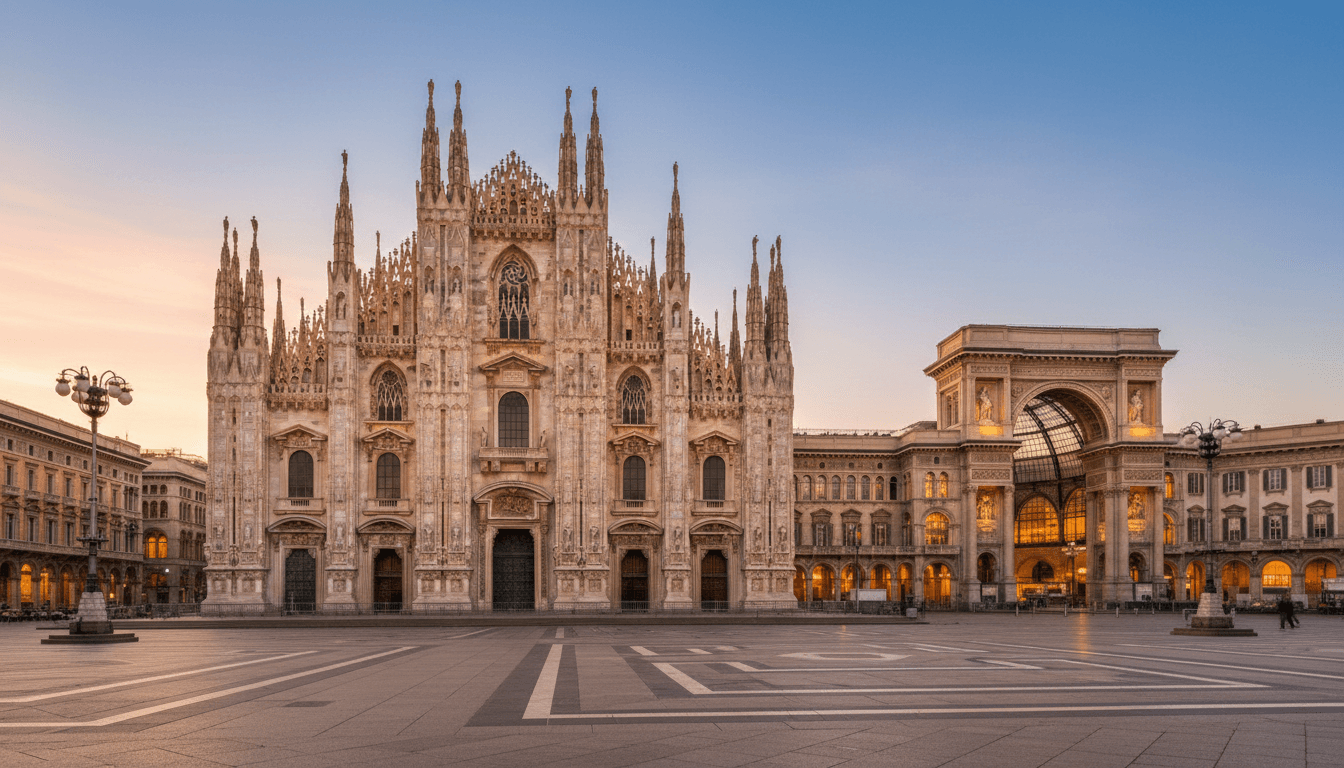
Home Swapping in Milan for Seniors: Your Complete Guide to Comfortable, Affordable Italian Travel
Maya Chen
Travel Writer & Home Exchange Expert
Discover how home swapping in Milan for seniors offers comfort, savings, and authentic Italian living. Real tips from 7 years of exchanges.
My mother called me last March with that particular tone she gets when she's about to do something she considers slightly rebellious. "Maya," she said, "I'm thinking about trying one of your home swap things. In Milan. For three weeks."
She's 68. She has a bad knee. She was nervous about everything from language barriers to finding an apartment with an elevator. Six months later, she came home with 400 photos, a new appreciation for aperitivo culture, and plans to do it again next spring.
Here's the thing about home swapping in Milan for seniors—it's not just possible, it's actually ideal. The city moves at a pace that rewards slow exploration. The neighborhoods are walkable. The coffee culture means you're never far from a place to rest your feet. And when you're staying in a real Milanese home instead of a hotel, you get the comfort of a full kitchen, a proper living room, and the kind of space that makes a three-week trip feel sustainable rather than exhausting.
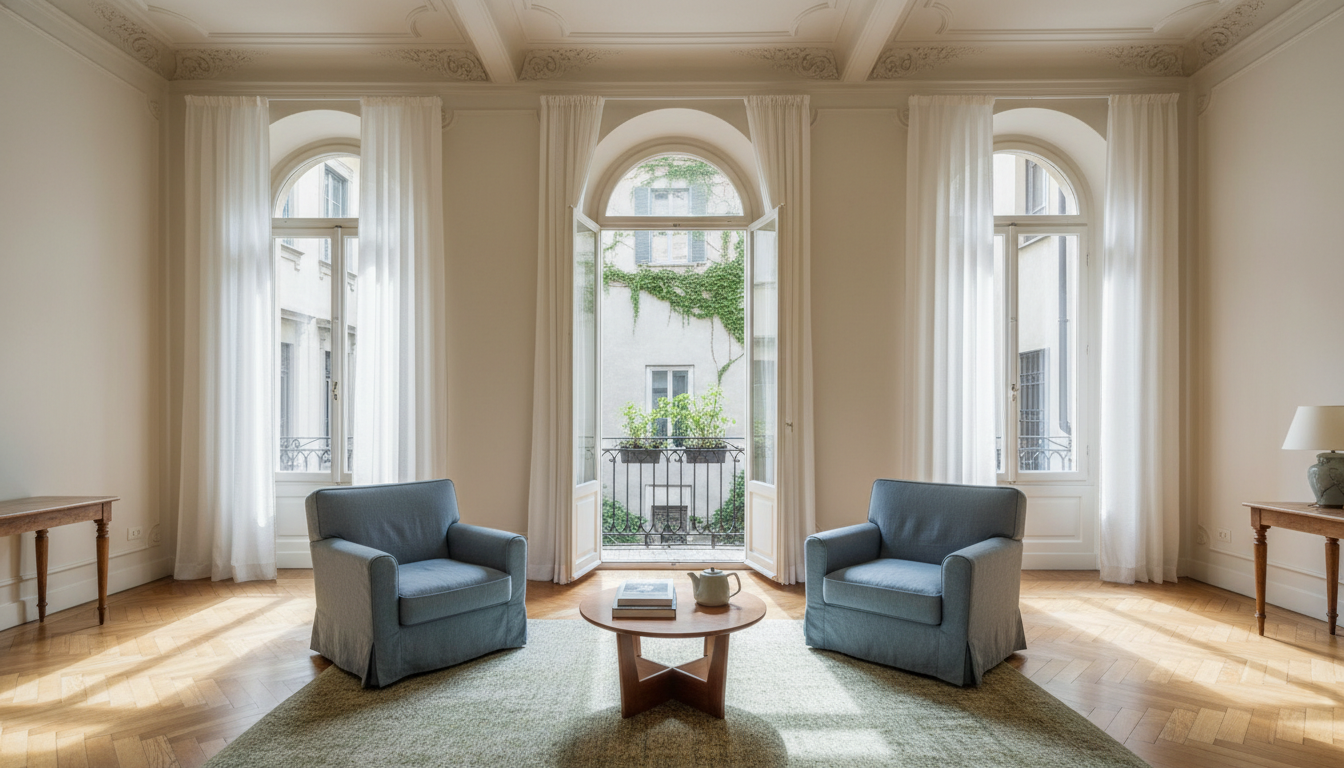 Elegant Milanese apartment interior with high ceilings, comfortable armchairs, morning light streami
I've been helping friends and family members over 60 navigate their first home exchanges for years now. And honestly? Seniors often make the best home swappers. You have the flexibility to travel during shoulder seasons. You appreciate a well-stocked kitchen. You understand the value of treating someone's home with respect. And you're usually better at communication than the rest of us—something that matters more than you'd think in this world.
Why Milan Works Beautifully for Senior Home Swappers
Milan has a reputation as Italy's business capital—all fashion weeks and finance—but that's only part of the story. The Milan that matters for comfortable senior travel is the one with tree-lined streets, neighborhood markets that have operated for a century, and a café culture that practically demands you sit down, slow down, and watch the world go by.
The public transportation system is exceptional. The metro has elevators at most major stations (I'll give you the full accessibility breakdown later). Trams rattle through the historic center, and they're actually a lovely way to see the city without exhausting yourself.
But here's what really makes this work: you're not a tourist staying in the tourist zone. You're living in a neighborhood. Your morning routine becomes walking to the same bakery, nodding at the same neighbors, learning which café makes the best cappuccino within a three-block radius.
My mom stayed in Città Studi, the university district. Not glamorous, not on any tourist map. But her host's apartment had a lift, a pharmacy on the corner, a produce market every Wednesday, and a metro station four minutes away. She said it felt like having her own place in Milan—because, temporarily, it was.
Understanding the Home Exchange Credit System for Stress-Free Planning
Before we get into Milan specifics, let me clear up how home swapping actually works. It can sound complicated until it clicks.
On SwappaHome, every night you host someone earns you one credit. Every night you stay somewhere costs you one credit. That's it. No haggling, no complex calculations, no worrying about whether your apartment is "worth" as much as someone else's.
New members start with 10 free credits, which means you could book 10 nights in Milan without hosting anyone first. For seniors testing the waters, this is huge—you can try a home swap experience before committing to hosting.
The system means you don't need to find a direct swap either. You could host a family from Brazil, then use those credits to stay in Milan. The Brazilian family might use their credits in Tokyo. It's a whole ecosystem of travelers helping each other.
For my mom's trip, she hosted two different guests in her Vancouver condo over the summer (she was visiting my brother anyway), banked 14 credits, and used them for her Milan adventure. She still had credits left over for a weekend in Lake Como.
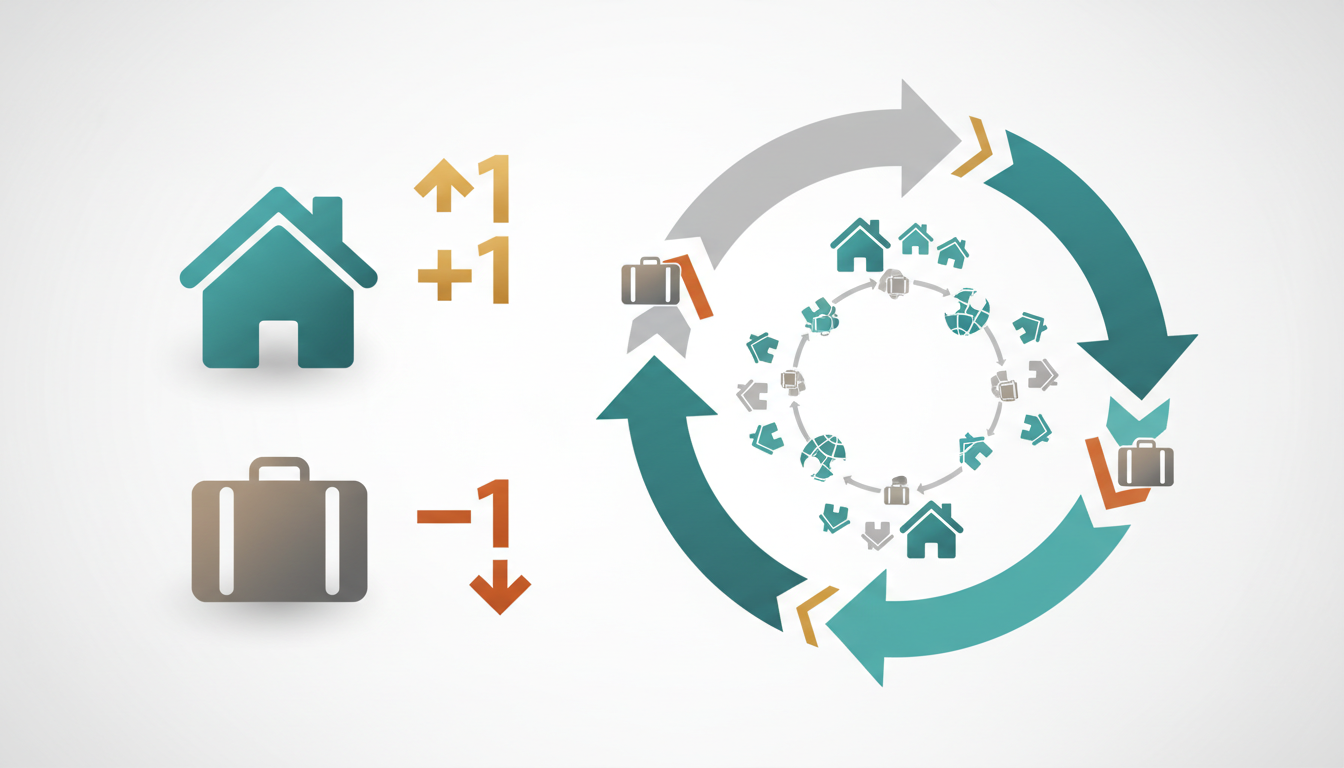 Infographic showing the SwappaHome credit system icons of a house with 1 credit, a suitcase with -1
The Best Milan Neighborhoods for Senior Home Swappers
Not all of Milan is created equal when you're prioritizing comfort, walkability, and elevator access. Here's my honest breakdown of where to look—and where to avoid.
Brera: Charming but Comes with Caveats
Brera is the neighborhood everyone pictures when they imagine Milan. Cobblestone streets, art galleries, upscale boutiques, and some of the city's best restaurants. It's genuinely lovely.
The catch? Many buildings are historic, which means narrow staircases and no elevators. If mobility is any concern, you need to specifically filter for apartments with lifts—and be prepared for a smaller selection. That said, if you find the right place, Brera is incredibly walkable and flat. The Pinacoteca di Brera art museum is right there, and you're close to the Duomo without being in the chaos.
Expect home swap listings in Brera to be smaller apartments, often one-bedrooms. Prices if you were renting would run $150-200 USD per night—which makes the one-credit-per-night swap rate feel pretty good.
Navigli: Vibrant but Variable
The canal district has genuine charm—think Amsterdam vibes with Italian flair. The Sunday antique market along the Naviglio Grande is worth planning around. Restaurants line the water, and the aperitivo scene here is legendary.
For seniors, Navigli is a mixed bag. Some streets are uneven. It gets crowded and loud on weekend evenings. But the neighborhood has more modern apartment buildings than Brera, which means better odds of finding elevator access. The area is well-connected by tram (lines 2 and 14 both run through), and there's a pleasant walking path along the canal.
I'd recommend Navigli for active seniors who enjoy nightlife and don't mind a bit of bustle. If you prefer quiet evenings, look elsewhere.
Città Studi: The Underrated Gem
This is where my mom stayed, and I've since recommended it to half a dozen other senior travelers. Città Studi is Milan's university district, which means it's full of affordable restaurants, practical shops, and locals going about their daily lives.
The buildings here are largely mid-century, which translates to elevators being standard rather than exceptional. The neighborhood is flat, leafy, and calm. You're about 20 minutes from the Duomo by metro (Piola or Lambrate stations), but honestly, you might find yourself not wanting to leave.
There's a fantastic covered market—the Mercato Comunale di Piazza Wagner's smaller cousin—where you can buy fresh pasta, aged cheese, and produce that puts your local grocery store to shame. Prices are real-world Milanese, not tourist-inflated.
Porta Venezia: The Sweet Spot
If I had to pick one neighborhood for a senior's first Milan home swap, it would be Porta Venezia.
You're close to the historic center without being in it. The Giardini Pubblici (public gardens) are right there—perfect for morning walks or afternoon reading on a bench. The neighborhood has a diverse, welcoming feel with excellent Middle Eastern restaurants alongside traditional Italian spots. The metro station (Porta Venezia, M1 red line) has elevator access.
The architecture is a mix of Liberty-style (Italian Art Nouveau) buildings and more modern construction, so you have options for elevator-equipped apartments. Corso Buenos Aires, one of Europe's longest shopping streets, is walkable from here—though I'd argue the neighborhood's smaller shops are more interesting.
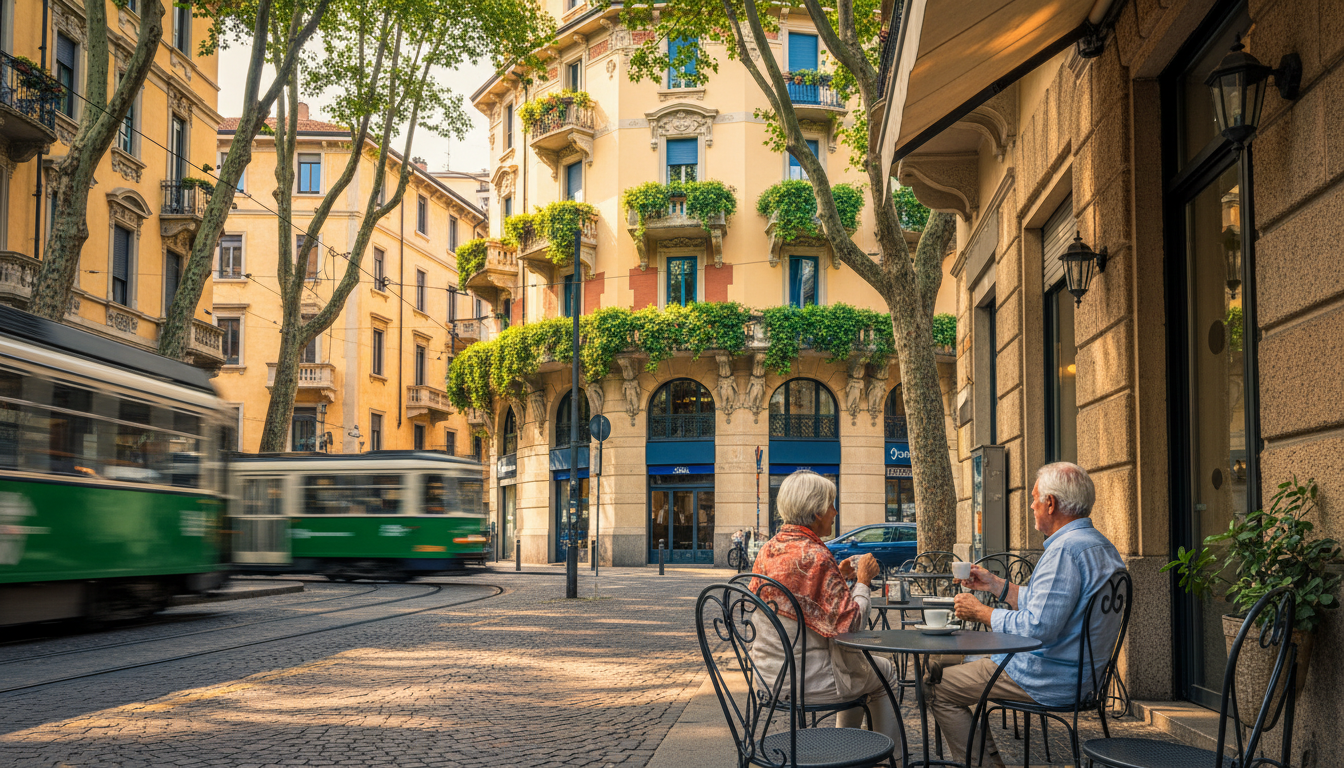 Tree-lined street in Porta Venezia with outdoor caf seating, elderly Italian couple enjoying espress
Where to Avoid (or Approach Carefully)
The area immediately around Stazione Centrale can feel hectic and isn't particularly charming. Some parts of the Ticinese district have accessibility challenges with older buildings and uneven streets. And while Isola is trendy and up-and-coming, it requires more walking and has fewer senior-friendly amenities.
Practical Accessibility: What You Need to Know About Getting Around
Milan's public transportation is better for seniors than you might expect, but it requires some knowledge to navigate comfortably.
Metro Accessibility
The Milan metro has four lines (M1 red, M2 green, M3 yellow, M5 lilac). Line M5 is the newest and fully accessible—every station has elevators and level boarding. Lines M1 and M3 have elevators at most stations, but not all. Line M2 is the oldest and most variable.
Before your trip, check ATM Milano's website (ATM is the transit authority, not a cash machine) for current elevator status. They update when elevators are out of service, which happens more often than you'd hope.
Key accessible stations for tourists: Duomo (M1/M3), Cadorna (M1/M2), Centrale (M2/M3), and the entire M5 line.
A single ride costs €2.20 ($2.40 USD). A 24-hour pass is €7.60 ($8.30 USD), and a 3-day pass is €13 ($14.20 USD). Seniors over 65 get discounted monthly passes if you're staying long enough to make it worthwhile.
Trams: The Scenic Option
Milan's historic trams are genuinely delightful, but accessibility varies. The orange vintage trams (the ones that look like they're from the 1920s, because they are) have steps. Newer trams are low-floor and wheelchair accessible.
Line 1 circles the historic center and is mostly modern trams. It's a lovely way to see the city without walking miles.
Taxis and Ride-Sharing
Taxis are readily available and reasonably priced by European standards. A ride from Stazione Centrale to the Duomo runs about €12-15 ($13-16 USD). The official taxi apps are itTaxi and Free Now—both work well and let you book accessible vehicles if needed.
Uber operates in Milan but with limitations. Uber Black is available; UberX is not. For most trips, regular taxis are just as convenient.
Setting Up Your Milan Home Swap: A Step-by-Step Approach
Now that you know where to look, here's how to actually make it happen.
Creating a Profile That Attracts Good Matches
Your SwappaHome profile is your introduction to potential hosts. For seniors, I recommend being upfront about what you need. Mention if elevator access is essential. Note if you have any mobility considerations. Describe your home honestly, including accessibility features.
Include photos that show your home is well-maintained and comfortable. Hosts want to know their home will be respected, and a profile that shows you take care of your own space goes a long way.
Mention your interests too. If you love opera, say so—maybe your Milan host has La Scala tips. If you're a morning person who'll be out exploring by 8am, that's useful information.
Messaging Potential Hosts
When you find a listing that looks promising, send a thoughtful message. Don't just say "I'd like to stay at your place." Instead, introduce yourself briefly. Explain why Milan appeals to you. Ask specific questions—Is there an elevator? How far is the nearest grocery store? Is the neighborhood quiet at night? Mention your travel dates and flexibility, and offer to video chat before confirming.
Video calls are particularly valuable for seniors. You can see the actual apartment, ask about the neighborhood, and get a feel for whether you'll be comfortable. I've never had a host refuse a video call—most appreciate the thoroughness.
What to Confirm Before Booking
Make sure you've nailed down: elevator access (and whether it fits luggage), distance to nearest metro/tram stop, grocery store proximity, pharmacy location, whether the bed is comfortable (seriously, ask), Wi-Fi reliability, emergency contact information, and check-in/check-out logistics—will they be there, or is there a key lockbox?
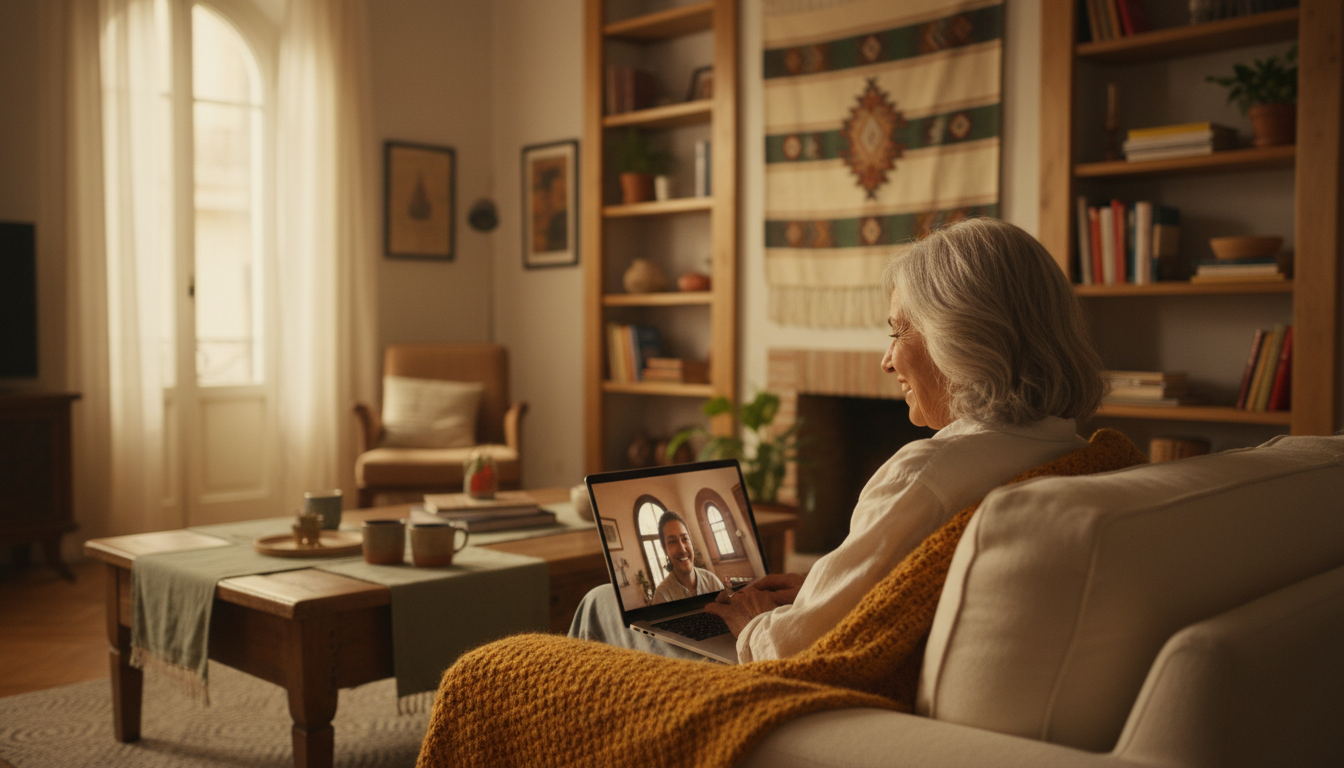 Senior woman video chatting on laptop with Italian host, both smiling, apartment details visible in
Living Like a Local: Daily Life During Your Milan Home Swap
The magic of home swapping isn't just the savings—it's the experience of actually living somewhere rather than visiting it.
Morning Rituals
Milanese mornings start at the bar. Not a drinking establishment—"bar" in Italy means café. You'll stand at the counter (sitting costs extra), order a cappuccino and cornetto (Italian croissant), and be out the door in ten minutes for about €3 ($3.30 USD). This is the local way.
But here's the beauty of having your own kitchen: some mornings, you might want to make coffee at home, sit on the balcony if you have one, and ease into the day slowly. That option doesn't exist in hotels.
My mom developed a routine. Market days (Tuesday and Saturday in her neighborhood), she'd buy fresh fruit and pastries and have breakfast at home. Other days, she'd walk to Bar Basso—not the famous one, a different neighborhood spot—and practice her three words of Italian with the barista.
Grocery Shopping and Cooking
Italian grocery stores are a joy. Esselunga is the main supermarket chain—well-organized, good quality, reasonable prices. For something more special, seek out a neighborhood alimentari (small grocery) or the markets I mentioned earlier.
A few things that surprised my mom: You bag your own groceries and bring your own bags (or buy them for €0.10-0.30). Produce needs to be weighed and stickered before checkout—there's usually a scale in the produce section. Stores close for lunch in smaller neighborhoods (roughly 1-4pm). Sunday hours are limited.
Cooking in your swap home means you can eat incredibly well for very little. A dinner of fresh pasta, good olive oil, local cheese, and a glass of wine costs maybe €8-10 ($9-11 USD) in groceries. The same meal at a restaurant would be €25-35 ($27-38 USD) minimum.
Pacing Yourself
This is where home swapping really shines for seniors. You're not trying to justify an expensive hotel room by cramming in activities. You have a home base. You can do one major thing per day—visit the Duomo, explore the Pinacoteca di Brera, wander through the Castello Sforzesco—and spend the rest of the time living.
Read in a park. Take an afternoon nap. Cook dinner while listening to Italian radio. Watch the evening passeggiata (that lovely Italian tradition of the evening stroll) from a café. This is travel that doesn't exhaust you.
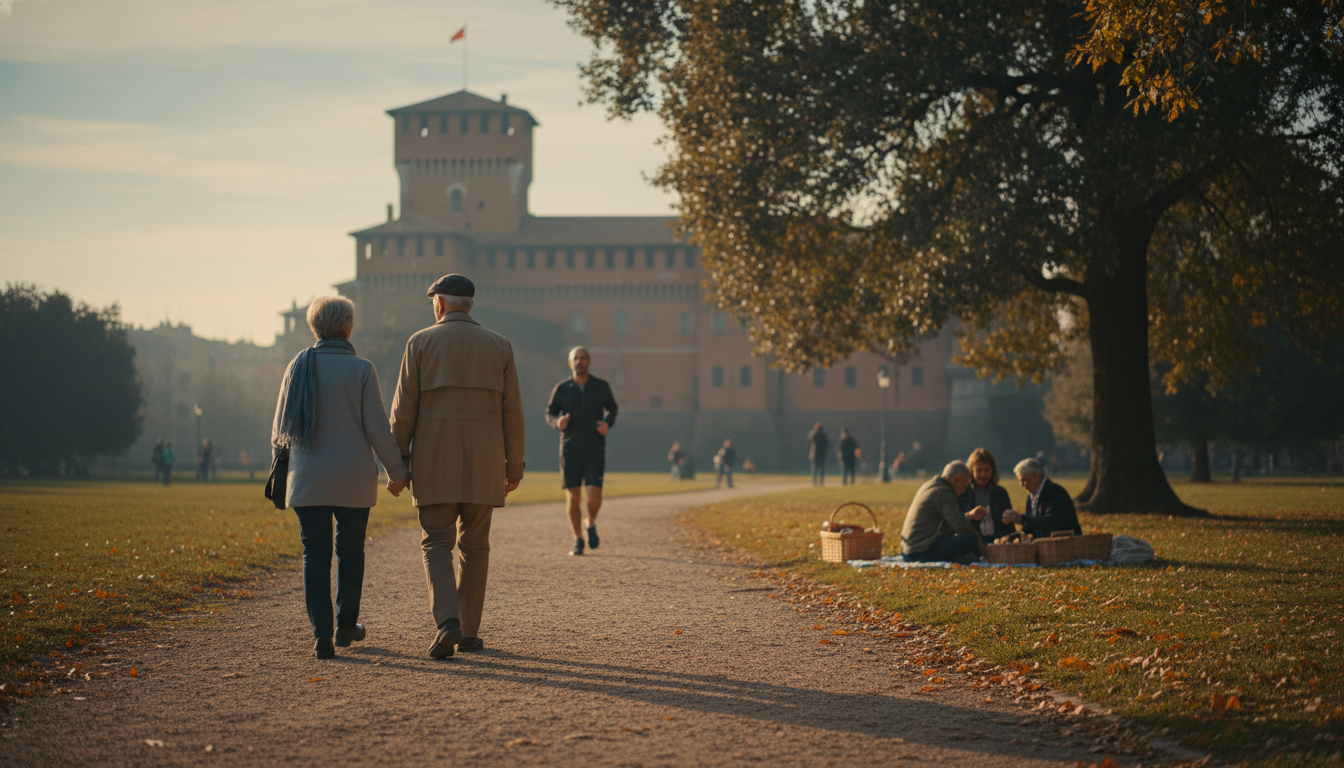 Golden hour scene of elderly couple walking hand in hand through Parco Sempione, Castello Sforzesco
Health and Safety Considerations for Senior Travelers
I want to be straightforward about this section because it matters.
Medical Preparedness
Italy has excellent healthcare, but you need to be prepared. Bring enough of any prescription medications for your entire trip plus a buffer. Carry a written list of your medications (generic names, not brand names) in case you need to get something replaced.
Pharmacies (farmacie) are everywhere and pharmacists are highly trained—they can help with minor issues and point you toward a doctor if needed. Look for the green cross sign.
For anything serious, the emergency number is 112. Hospitals will treat you regardless of insurance status, but you'll want travel insurance that covers medical expenses. This is non-negotiable for international travel, especially for seniors.
Home Swap Safety and Insurance
Here's something important: SwappaHome connects you with hosts, but the platform doesn't provide insurance coverage for damages or theft. You're entering into a trust-based arrangement with another member.
This actually works well most of the time—the review system means people are accountable, and there's a mutual respect built into the exchange. Both parties have something at stake.
But I strongly recommend getting your own travel insurance that includes trip cancellation and personal liability. Consider home insurance that covers guests (check your existing policy). Document the condition of your home before guests arrive, and do the same when you arrive at your swap home. Communicate clearly about expectations.
The SwappaHome community is genuinely wonderful. In seven years and 40+ swaps, I've had exactly one minor issue (a broken wine glass, which I replaced and apologized for). But protecting yourself with proper insurance is just smart travel practice.
Staying Connected
Make sure someone at home knows your itinerary. Share your host's contact information with a family member. Consider getting an Italian SIM card or an international phone plan—being able to make calls and access maps without hunting for Wi-Fi is worth the €20-30 ($22-33 USD) for a month of data.
WhatsApp is universal in Italy. Your host will probably communicate with you through it, and it's the easiest way to stay in touch with family back home.
Making the Most of Milan: Gentle Itinerary Suggestions
I'm not going to give you a packed day-by-day schedule. That's not the home swap way. But here are experiences worth prioritizing, organized by energy level required.
Low-Energy Days
The Duomo and its Rooftop: Yes, it's touristy. It's also genuinely spectacular. There's an elevator to the rooftop terraces (€16/$17.50 USD with elevator, versus €10 for stairs). Go early morning or late afternoon to avoid crowds. The view across Milan to the Alps on a clear day is worth every euro.
Pinacoteca di Brera: One of Italy's finest art collections in a manageable space. Not overwhelming like the Uffizi. There are benches throughout for resting. Closed Mondays. €15 ($16.40 USD), free first Sunday of the month.
Aperitivo Hour: Milan invented aperitivo culture. Between 6-9pm, order a drink (Aperol spritz, Negroni, or even just wine) and get access to a buffet of snacks that can genuinely constitute dinner. Expect to pay €10-15 ($11-16 USD) for the drink. The food is included. My favorite spots are in the Navigli and Brera neighborhoods.
Medium-Energy Days
The Last Supper (Cenacolo Vinciano): You must book tickets months in advance—this isn't optional. Visits are limited to 15 minutes in small groups. It's €15 ($16.40 USD) plus a €2 booking fee. Despite the brief visit, seeing da Vinci's masterpiece in person is genuinely moving. The church of Santa Maria delle Grazie is beautiful too.
Navigli Canal Walk and Market: On Sundays, the antique market stretches along the Naviglio Grande. Even on other days, the canal-side walk is pleasant. Stop for lunch at one of the trattorias—Premiata Pizzeria has been serving excellent pizza since 1979.
Castello Sforzesco and Parco Sempione: The castle houses several museums (including unfinished Michelangelo sculpture), and the park behind it is perfect for slow wandering. Flat, shaded, with benches everywhere.
Higher-Energy Days (or Half-Days)
Day Trip to Lake Como: Trains run regularly from Stazione Centrale to Varenna (1 hour, €7-13/$7.60-14.20 USD each way). The lake town is small and walkable, with stunning views. Ferries connect the lakeside villages if you want to explore further. This makes a lovely day trip, though some travelers prefer to use credits for a night or two in Como itself.
Exploring Monza: Just 15 minutes by train, Monza has a gorgeous cathedral, a sprawling park, and far fewer tourists. The Villa Reale is worth visiting if you enjoy historic houses.
Budgeting Your Milan Home Swap Trip
Let me break down what my mom actually spent during her three-week Milan adventure, because real numbers are more useful than vague estimates.
Flights (Vancouver to Milan): €680 roundtrip ($740 USD)—she booked 4 months ahead
Accommodation: 21 nights × 1 credit = 21 credits (she had banked credits from hosting, so $0 out of pocket)
Equivalent hotel cost for comparison: A modest 3-star hotel in a decent neighborhood runs €120-150/night ($130-165 USD). For 21 nights, that's €2,520-3,150 ($2,750-3,450 USD). This is the real savings of home swapping.
Food: Roughly €25/day ($27 USD) mixing home cooking with occasional restaurant meals. Three weeks = €525 ($575 USD)
Transportation: 3-day metro pass × 3 = €39 ($43 USD), plus occasional taxis €60 ($65 USD). Total: €99 ($108 USD)
Activities/Museums: €85 ($93 USD) including Duomo, Last Supper, Brera, and a cooking class
Miscellaneous: €150 ($164 USD)—gifts, coffee, the occasional gelato
Total trip cost: Approximately €1,539 ($1,680 USD) for three weeks
What the same trip would cost with hotels: Approximately €4,000-4,700 ($4,370-5,135 USD)
The home swap saved her roughly €2,500-3,000 ($2,730-3,280 USD). That's not a typo. That's the math.
What to Do If Something Goes Wrong
I believe in being prepared for imperfect scenarios, so let's talk about what could happen and how to handle it.
The apartment isn't as described: Document everything with photos immediately. Contact your host through SwappaHome messaging. Most issues can be resolved with communication—maybe they forgot to mention the construction next door, or the elevator is temporarily out. If the situation is truly unacceptable, you may need to find alternative accommodation and leave an honest review.
You have a medical emergency: Call 112. Go to the nearest Pronto Soccorso (emergency room). Contact your travel insurance company. Have your host's contact information available in case someone needs to access the apartment.
You break something in the home: Be honest. Message your host immediately. Offer to replace or repair the item. This happens occasionally in home swaps, and handling it with integrity preserves the trust that makes the whole system work.
Your flight is cancelled or delayed: This is why travel insurance matters. Keep your host informed about any delays. Most hosts are understanding—they're travelers too.
A Note on Traveling Solo vs. With a Partner
My mom did her Milan trip solo, which surprised our whole family. She said the home swap setup made it feel safe—she had a real neighborhood, a routine, people who recognized her at the market.
For solo senior travelers, I'd add these suggestions: Choose a ground-floor or elevator-accessible apartment (no one to help with luggage). Pick a neighborhood with evening activity so you're not walking through deserted streets. Join a walking tour early in your trip to orient yourself and meet other travelers. Consider a cooking class or wine tasting—structured activities where you'll interact with others.
For couples, home swapping is even easier. You have built-in company, can share navigation duties, and often get more space than a hotel room would provide.
Starting Your Milan Home Swap Journey
If you've read this far, you're probably seriously considering it. Good.
Here's what I'd do if I were you:
This week: Create your SwappaHome profile. Upload photos of your home. Write a description that's honest and warm. You don't need to have everything perfect—just get started.
This month: Browse Milan listings to get a sense of what's available. Save favorites. Notice what details hosts include that you find helpful, and add similar details to your own listing.
Next month: Start reaching out to potential hosts. Be specific about your dates and needs. Don't be discouraged if your first few messages don't lead to matches—this is normal.
Before you go: Video chat with your host. Confirm all the practical details. Arrange your travel insurance. Download offline maps of Milan. Learn five Italian phrases (buongiorno, grazie, scusi, il conto per favore, and dov'è il bagno will get you surprisingly far).
My mom is already planning her next swap. She's thinking Lisbon, maybe in the spring. She told me last week that the Milan trip changed how she thinks about travel—that she finally understood why I've been doing this for years.
Milan is waiting. A real apartment in a real neighborhood, with a kitchen that smells like someone's life, and a neighborhood that will start to feel like yours. That's not a hotel experience. That's something better.
Frequently Asked Questions
Is home swapping in Milan safe for seniors traveling alone?
Home swapping in Milan for seniors is generally very safe. The SwappaHome community operates on mutual trust and accountability through reviews. Milan itself is a safe city with excellent public transportation. Choose neighborhoods like Porta Venezia or Città Studi, verify your host through video chat, and get travel insurance for added peace of mind.
How much money can seniors save with home swapping versus hotels in Milan?
Seniors can save €2,500-3,000 ($2,730-3,280 USD) on a three-week Milan trip through home swapping. Hotels in decent neighborhoods cost €120-150 per night ($130-165 USD), while SwappaHome operates on a simple one-credit-per-night system regardless of location. New members receive 10 free credits to start.
Do Milan apartments have elevators for seniors with mobility concerns?
Elevator availability varies by Milan neighborhood. Newer areas like Città Studi and parts of Porta Venezia commonly have elevators. Historic neighborhoods like Brera have beautiful buildings but often lack lifts. Always confirm elevator access directly with your host before booking, and consider a video tour of the apartment.
What's the best time of year for seniors to home swap in Milan?
Spring (April-May) and fall (September-October) offer ideal conditions for senior home swappers in Milan. Weather is mild, crowds are smaller than summer, and you'll find more home swap availability. Avoid August when many Milanese leave the city and some neighborhood shops close for vacation.
How far in advance should seniors book a Milan home swap?
Book your Milan home swap 3-4 months in advance for the best selection, especially if you need specific accessibility features like elevators. This timeline allows for thorough communication with hosts, video tours, and proper travel planning. Last-minute swaps are possible but limit your neighborhood and accessibility options.
40+
Swaps
25
Countries
7
Years
About Maya Chen
Travel Writer & Home Exchange Expert
Maya is a travel writer with over 7 years of experience in the home swapping world. Originally from Vancouver and now based in San Francisco, she has completed more than 40 home exchanges across 25 countries. Her passion for "slow" and authentic travel led her to discover that true luxury lies in living like a local, not a tourist.
Ready to try home swapping?
Join SwappaHome and start traveling by exchanging homes. Get 10 free credits when you sign up!
Related articles
Lyon Home Exchange: Your Complete Guide to France's Hidden Gem for Home Swapping
Discover why Lyon home exchange is booming among savvy travelers. From Croix-Rousse to Presqu'île, find the best neighborhoods and insider tips for your swap.

Zurich Bucket List: 47 Unforgettable Experiences to Enjoy During Your Home Swap
Discover the ultimate Zurich bucket list for home swappers—from secret swimming spots to fondue rituals locals actually do. Save thousands while living like a true Zürcher.
Dublin Home Exchange Utilities Guide: WiFi, Heating & Everything Your Guests Need
Master Dublin home exchange utilities—from dodgy WiFi fixes to heating quirks. Practical tips from 7 years of swapping homes across Ireland.