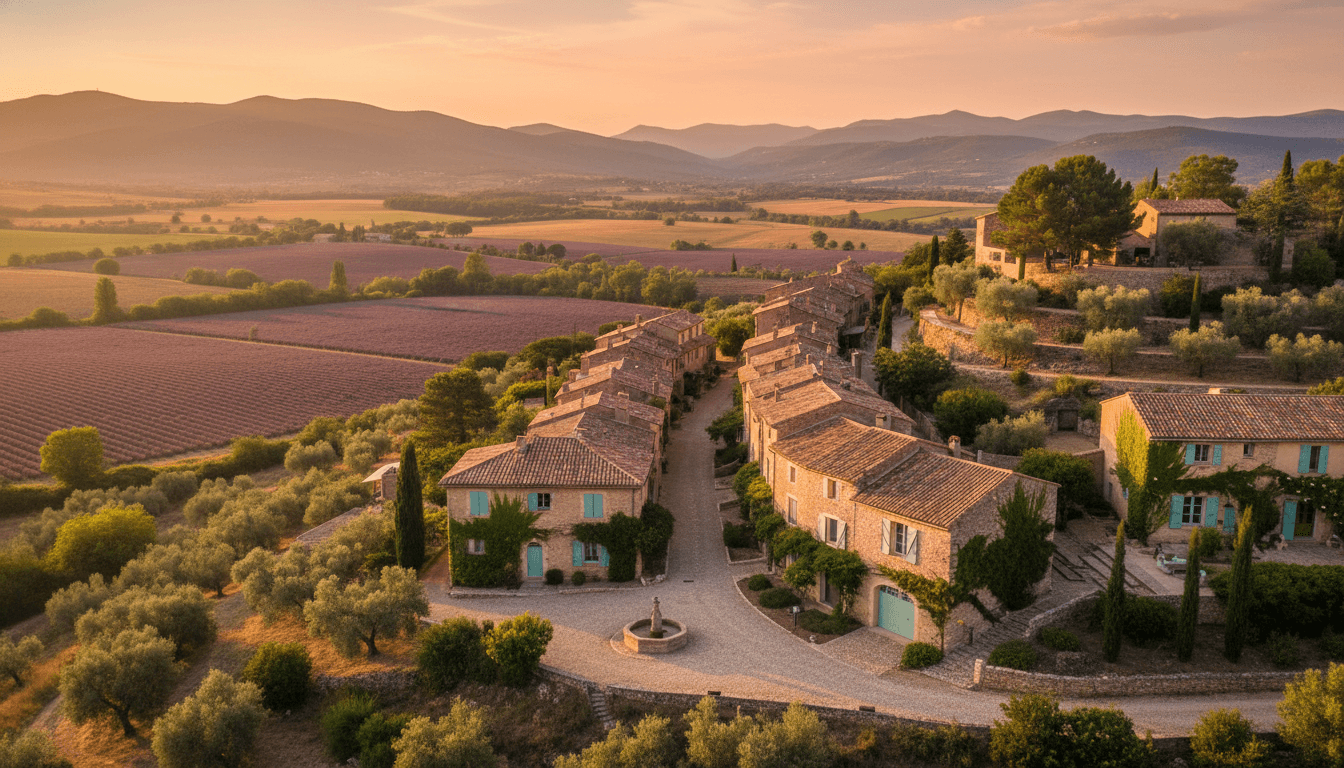
Home Swapping in Provence for Seniors: Your Complete Guide to Comfortable, Affordable Travel
Maya Chen
Travel Writer & Home Exchange Expert
Discover why home swapping in Provence is perfect for seniors seeking comfort, affordability, and authentic French experiences. Real tips from 40+ exchanges.
My mother called me last March, frustrated. "Maya, I want to spend a month in Provence, but the hotels are either soulless chains or charming places with five flights of stairs and no elevator." She's 68, has a dodgy knee, and refuses to compromise on either comfort or authenticity. Sound familiar?
Home swapping in Provence for seniors isn't just possible—it's actually the ideal way to experience this sun-drenched corner of France. I've helped my parents arrange three Provençal home exchanges now, and I've done two myself (one in a converted farmhouse outside Gordes, another in a ground-floor apartment in Aix-en-Provence). What I've learned is that seniors often make the best home swappers: you have flexibility with timing, you appreciate a well-maintained home, and you're not looking to party until 3 AM in someone else's living room.
So here's everything I know—from finding single-level homes to navigating French pharmacies to the neighborhoods that combine accessibility with that lavender-scented Provençal magic.
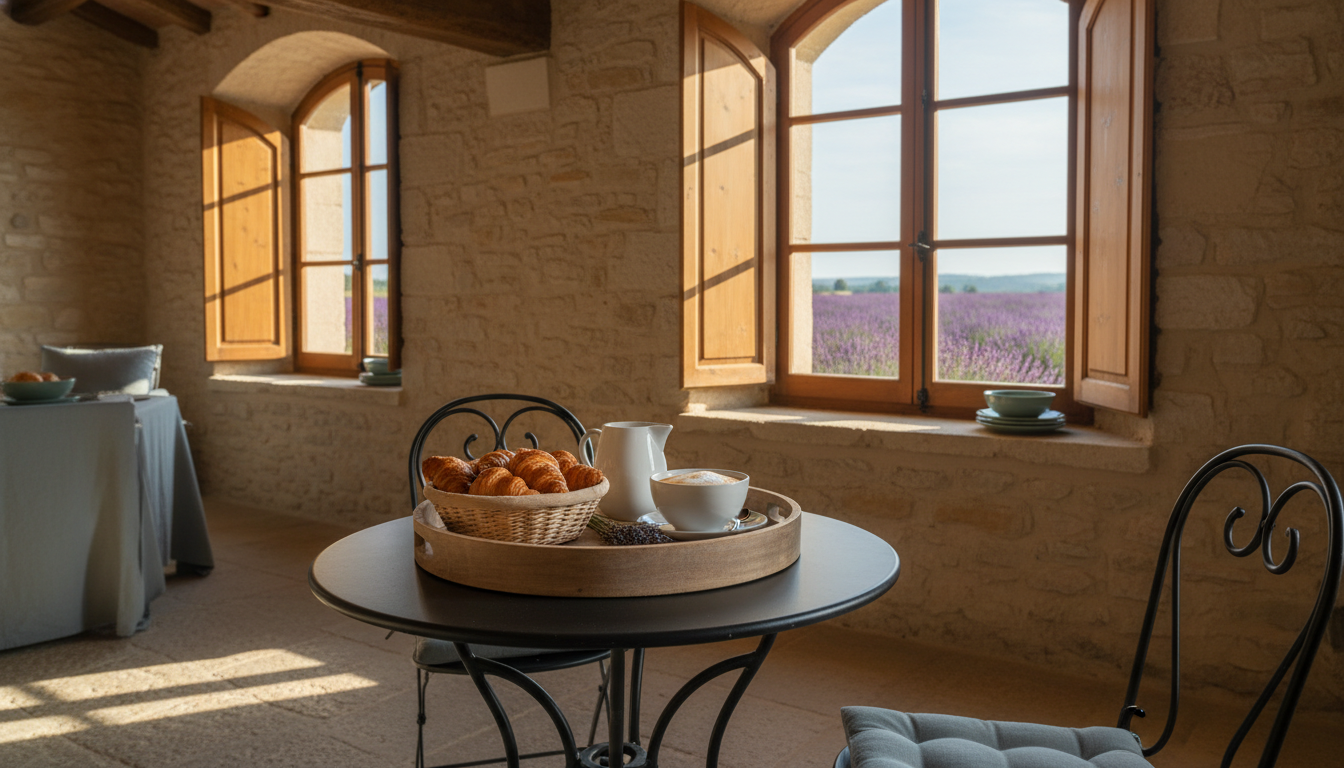 Golden morning light streaming through shuttered windows of a traditional Provenal stone house, with
Why Home Swapping Works So Well for Seniors in Provence
Here's what nobody tells you about traveling to Provence as a senior: the region wasn't designed for tourists. It was designed for living. Those ancient stone villages with their weekly markets? They're actual communities where people shop, gossip, and drink pastis at the same café every afternoon. Hotels keep you on the outside of that. Home swapping puts you inside it.
My parents stayed in a two-bedroom house in L'Isle-sur-la-Sorgue for three weeks last autumn. By week two, the boulangère was saving them a pain aux raisins each morning. The neighbor invited them for apéro. My dad—who speaks approximately twelve words of French—somehow became drinking buddies with a retired plumber named Jean-Claude.
That doesn't happen when you're in a hotel.
But beyond the social magic, there are practical reasons why this works so well. Full kitchens mean you can actually control what you eat—crucial if you're managing diabetes, heart conditions, or just prefer not to face restaurant menus three times a day. French markets overflow with gorgeous produce, and cooking becomes part of the experience rather than a chore.
Then there's the sleep situation. I don't know about you, but my back knows the difference between a proper bed and a hotel mattress that's hosted 3,000 strangers. Home exchange properties are people's actual homes—they've invested in comfort because they sleep there too.
And honestly? The extended stay aspect changes everything. Two to four weeks is common in home swapping. You unpack once. You learn which café makes the best espresso. You're not dragging suitcases through cobblestone streets every few days like some kind of exhausted nomad.
Let's talk money, because retirement budgets matter. A decent hotel in Provence runs $150-250 a night in shoulder season. That's $3,000-5,000 for three weeks—before you've eaten a single meal. With SwappaHome's credit system, you're spending 1 credit per night regardless of location. Host someone at your place for a week, earn 7 credits, stay in Provence for a week. The math is absurdly good.
Finding Senior-Friendly Home Exchanges in Provence
Not every charming Provençal property is suitable for seniors, and that's okay. The key is knowing what to look for—and what questions to ask before you commit.
Ground-Floor or Elevator Access
This is non-negotiable for anyone with mobility concerns. When browsing listings on SwappaHome, filter for ground-floor properties or specifically mention elevator access in your message to hosts. Many traditional Provençal homes are single-story (called "plain-pied" in French), especially outside the medieval village centers.
I'd estimate about 40% of the Provence listings I've seen are either ground-floor or have elevators. The percentage climbs in modern apartments in cities like Aix-en-Provence, Avignon, and Marseille—and drops in those picture-perfect hilltop villages like Gordes or Roussillon.
Step-Free Bathroom Access
This is where you need to ask directly. French bathrooms can be... creative. I've seen gorgeous homes with bathtubs you'd need to be a gymnast to climb into.
Before confirming any exchange, message the host and ask: Is there a walk-in shower or a bathtub? Are there grab bars? Any steps between the bedroom and bathroom?
Most hosts are incredibly accommodating when you explain your needs. My mom's host in L'Isle-sur-la-Sorgue actually installed a temporary grab bar before her arrival when she mentioned her knee issues. People want to help.
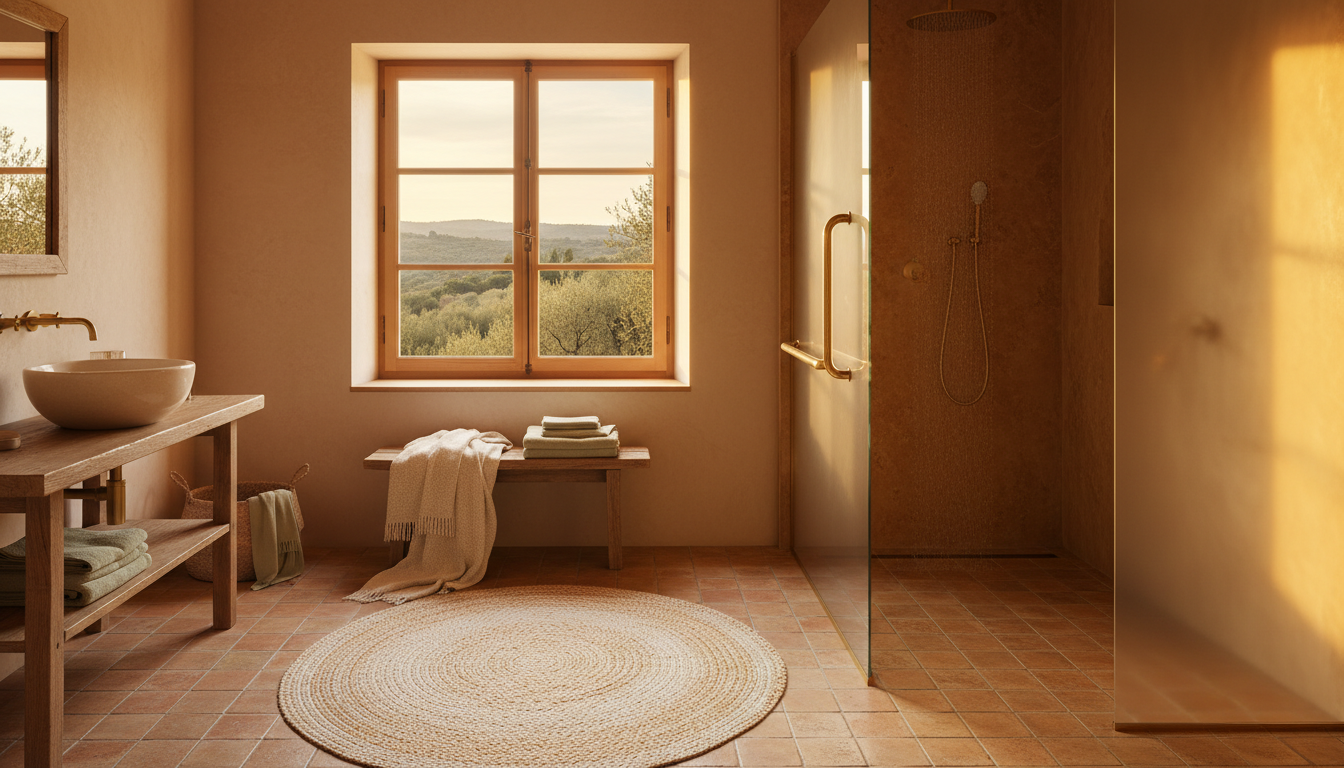 Bright, accessible Provenal bathroom with walk-in rainfall shower, terracotta tiles, and a window ov
Proximity to Amenities
The dreamy isolated farmhouse surrounded by lavender fields? Gorgeous. Also potentially a nightmare if you can't drive or don't want to navigate narrow French roads.
For seniors, I recommend prioritizing properties within walking distance—under a kilometer—of a boulangerie, a pharmacy, a small grocery store or market, a café or restaurant, and some kind of transit option. Towns that consistently offer this walkability include Aix-en-Provence (especially the Mazarin district), L'Isle-sur-la-Sorgue, Saint-Rémy-de-Provence, Apt, Carpentras, and Orange. The hilltop villages are spectacular but often require driving for basic necessities.
Best Provence Locations for Senior Home Swappers
Provence is huge—roughly the size of Massachusetts—and the experience varies dramatically depending on where you base yourself. Here's my honest breakdown for seniors prioritizing comfort and accessibility.
Aix-en-Provence: The Sophisticated Choice
If I could only recommend one Provence destination for seniors, it's Aix. This elegant university town has flat, wide sidewalks in the center, excellent public transit, world-class medical facilities, and that unmistakable Provençal charm without the tourist madness of some smaller villages.
The Cours Mirabeau—the main tree-lined boulevard—is perfect for leisurely strolls. Cafés spill onto sidewalks everywhere. The daily market at Place Richelme sells produce so fresh it practically glows. And because it's a real city of 145,000 people, you'll find English-speaking doctors, well-stocked pharmacies, and reliable taxi services.
Home exchange options here range from elegant apartments in 18th-century buildings (many with elevators) to modern condos in the newer neighborhoods. You'll find more availability than in the tiny villages, and more hosts who are experienced with international exchanges.
The TGV station connects Aix to Paris in 3 hours. Marseille's international airport is 25 minutes away by shuttle bus. The historic center is mostly pedestrianized, but taxis can drop you close to most locations.
L'Isle-sur-la-Sorgue: The Antique Lover's Paradise
This small town of about 20,000 sits on branches of the Sorgue River, with ancient water wheels still turning throughout the center. It's famous for its antique markets—the Sunday market is one of the largest in France—but it's also genuinely livable.
The town center is flat, compact, and walkable. Everything you need is within a 10-minute stroll. The pace is slower than Aix, the tourists fewer (except Sunday mornings), and the sense of community stronger.
My parents' home exchange here was in a converted mill house with original stone floors, modern amenities, and a small garden where my dad read every afternoon. The host left detailed notes about which market vendors had the best olives, which café served the strongest espresso, and which pharmacy stayed open latest. That kind of local knowledge? You can't buy it.
One caveat: there's no train station in town, but Avignon TGV is 25 minutes by car or bus. You'll want either a car or a willingness to rely on the regional bus system, which is decent but not frequent.
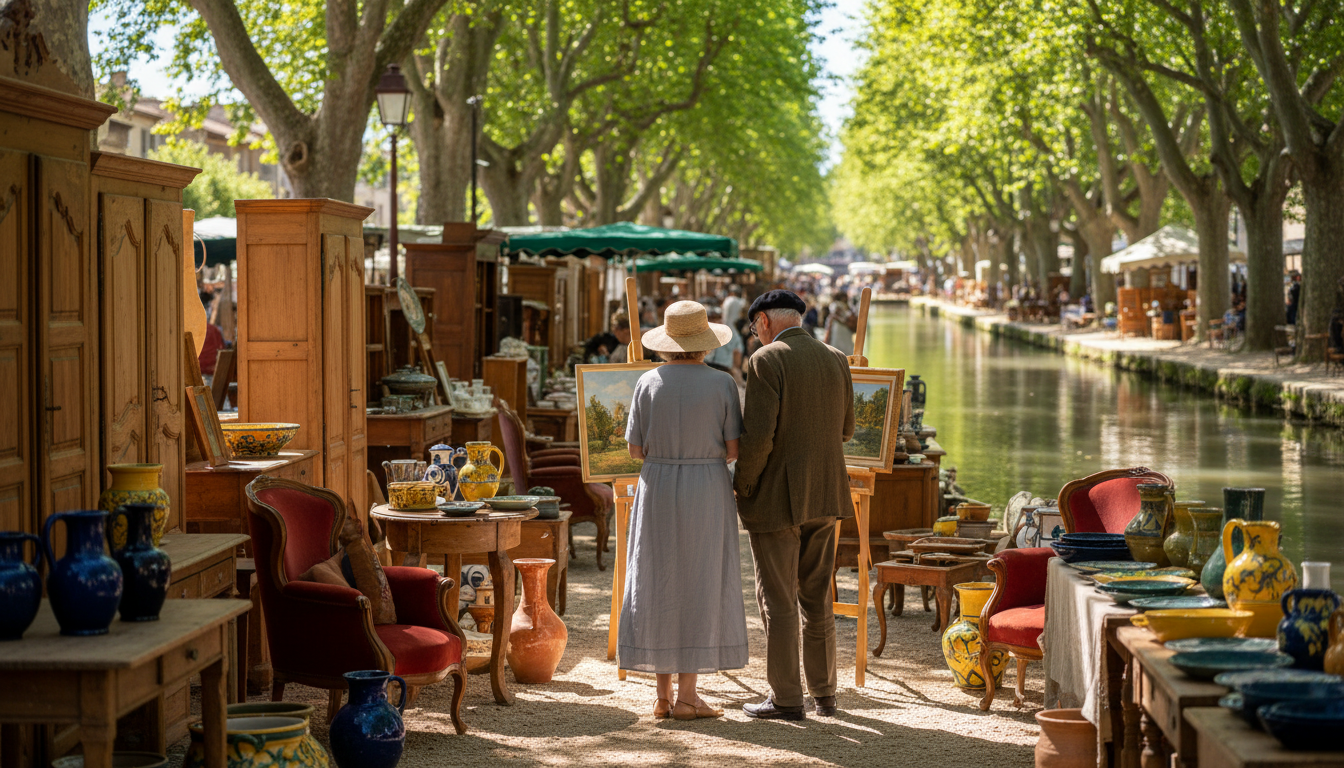 Sunday antique market in LIsle-sur-la-Sorgue, showing vintage furniture and ceramics along a canal,
Saint-Rémy-de-Provence: Van Gogh's Retreat
Saint-Rémy is where Van Gogh painted "Starry Night" during his time at the asylum just outside town. It's small, beautiful, and remarkably accessible for a Provençal village.
The center is flat and pedestrian-friendly. Wednesday market is legendary. The atmosphere is artistic and slightly bohemian—lots of galleries, good restaurants, interesting shops. It's more upscale than some villages but not pretentious about it.
Home exchange options tend toward charming village houses and apartments. Check carefully for stairs, as some properties climb up from street level. About 20 minutes from Avignon, 45 minutes from Marseille airport. A car is helpful but not essential if you're content to stay local.
Avignon: History and Accessibility Combined
The city of the Popes offers something rare in Provence: genuine urban infrastructure combined with medieval beauty. The historic center inside the walls is UNESCO-listed and spectacular, but it's also well-served by buses, has flat main streets, and offers every amenity you could need.
The famous Palais des Papes is impressive but involves significant walking and stairs. The city itself, though, is very manageable—excellent restaurants, shops, and cultural events year-round.
Home exchanges in Avignon range from apartments inside the historic walls to houses in the quieter neighborhoods just outside. The TGV station makes this an excellent base for day trips throughout the region, with direct trains to Paris in 2 hours 40 minutes, Lyon in an hour, and Marseille in 35 minutes.
Timing Your Provence Home Swap
Provence has distinct seasons, and your choice matters more for seniors than for younger travelers.
The Sweet Spot: May-June and September-October
These shoulder seasons offer the best combination of pleasant weather, manageable crowds, and available home exchanges. Temperatures hover between 65-80°F, the light is golden, and you won't be competing with August vacationers for every restaurant table.
May brings wildflowers and the first outdoor dining weather. June sees the lavender beginning to bloom—peak is usually late June through mid-July. September offers harvest season, wine festivals, and warm but not oppressive temperatures. October is quieter, slightly cooler, and perfect for leisurely exploration.
Avoid: July-August
I'm going to be direct: unless you have a specific reason, skip high summer. Temperatures regularly exceed 95°F, the mistral wind can be brutal, and every village is packed with tourists. Many home exchange hosts are traveling themselves during August (the French vacation month), which actually increases availability—but the heat and crowds make it challenging for seniors.
Winter Possibility: December-February
Provence in winter is quiet, affordable, and surprisingly mild compared to northern Europe. Temperatures range from 40-55°F, and while some restaurants and attractions close, the region doesn't shut down entirely.
The Christmas markets are charming. The light is soft and beautiful for photography. And you'll have the villages almost to yourself. Just be aware that some home exchange properties may have limited heating—always ask about this before confirming a winter exchange.
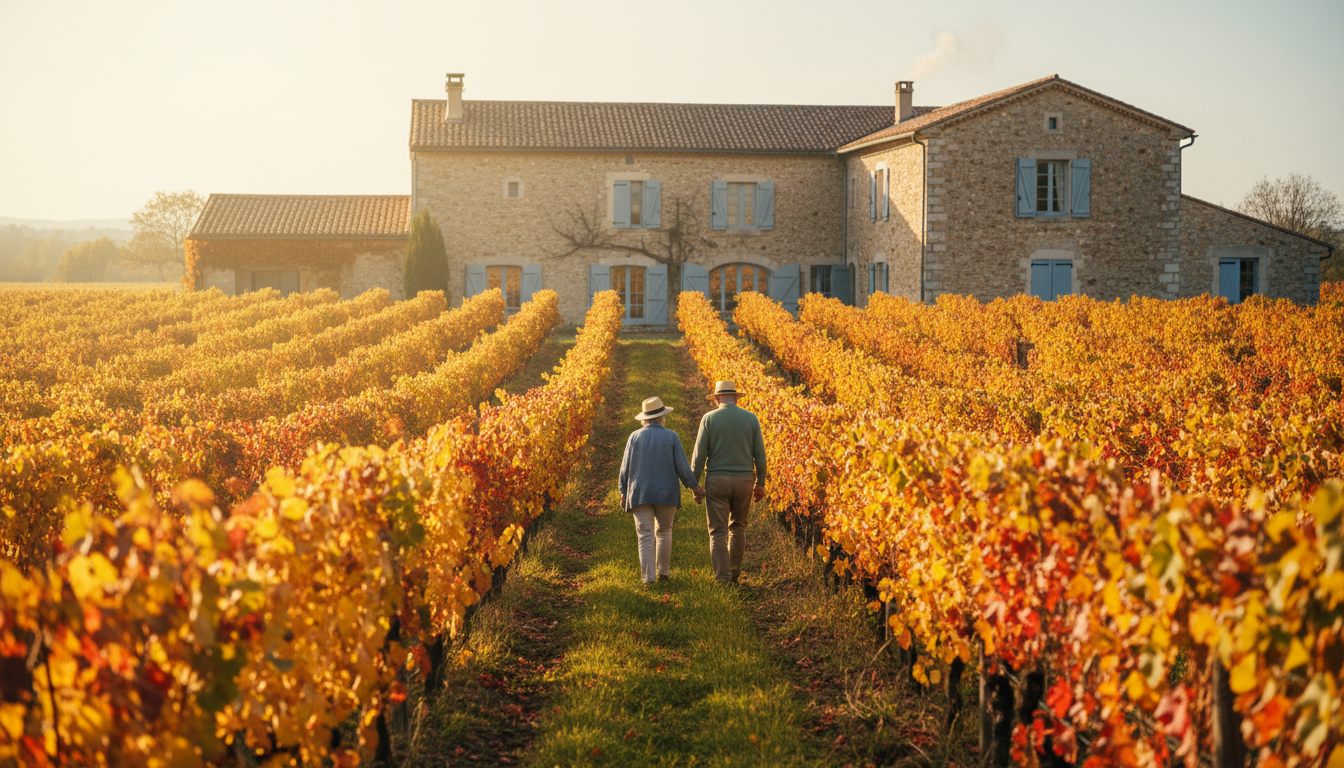 Autumn vineyard in Provence with golden and red leaves, stone farmhouse in background, elderly coupl
Practical Considerations for Senior Home Swappers
Healthcare and Pharmacies
France has excellent healthcare, but navigating it as a visitor requires some preparation.
Before you go, ensure your travel insurance covers medical care in France—Medicare does NOT cover international travel. Bring sufficient prescription medications for your entire stay, plus extra. Carry a letter from your doctor listing your medications with generic names, since French pharmacies may not recognize US brand names. And get a copy of your medical records for any chronic conditions.
Once you're there, pharmacies marked with green crosses can handle minor medical issues and often have English-speaking staff. For emergencies, dial 15 for SAMU (ambulance) or 112 (the European emergency number). Major hospitals are in Marseille, Aix-en-Provence, Avignon, and Nîmes. One thing that trips people up: many pharmacies close for lunch from 12:30 to 2:30 PM and on Sundays. One pharmacy per area stays open on a rotating basis—called "pharmacie de garde"—and your host or any local can tell you which one.
Transportation Options
Driving in Provence is beautiful but not strictly necessary, especially if you choose your base carefully.
If you're comfortable driving, rent an automatic transmission car—specify this, because manuals are the default in France. GPS is essential since French road signage can be confusing. Parking in village centers is often limited, so look for peripheral lots. And honestly? Avoid driving in Marseille if possible. It's chaotic.
If you prefer not to drive, base yourself in Aix-en-Provence or Avignon for the best public transit. Regional buses connect most towns—check zou.maregionsud.fr for schedules. TGV trains are excellent for longer distances. Taxis are expensive but reliable; ask your home exchange host for local numbers. You might also consider hiring a driver for day trips, around $300-400 for a full day, which becomes quite reasonable when split between couples or groups.
Communication and Connectivity
Most home exchange properties have WiFi—confirm before booking. Your US cell phone will work but roaming charges are brutal, so consider a French SIM card or an international plan. Orange, SFR, and Free Mobile offer prepaid SIM cards available at tabacs and phone stores. WhatsApp is widely used in France and works on WiFi.
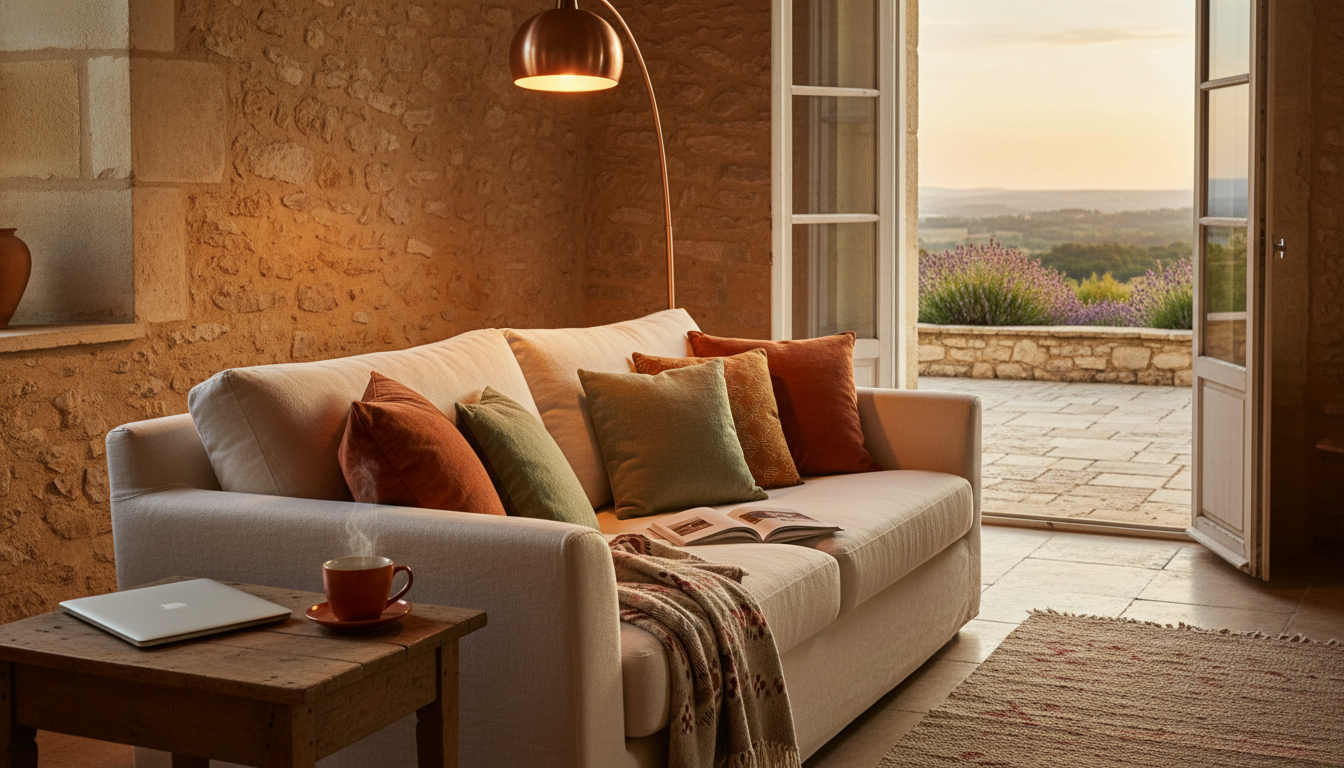 Cozy Provenal living room with stone walls, comfortable sofa with reading lamp, French doors open to
Setting Up Your First Provence Home Exchange
If you're new to home swapping, the process might seem daunting. It's not. Here's exactly how it works.
Creating Your SwappaHome Profile
Your profile is your introduction to potential exchange partners. For senior travelers, I recommend emphasizing your flexibility with dates—this is a huge advantage you have over working-age travelers. Mention your experience as a homeowner and your respect for others' property. State any accessibility needs clearly but positively. And include your interests—art, food, wine, history—that suggest you'll appreciate Provence.
Upload clear, well-lit photos of your home. Hosts in desirable locations like Provence receive many requests; make yours stand out by showing a welcoming, well-maintained space.
The Credit System Explained
SwappaHome uses a simple credit system that's perfect for flexible travelers. You start with 10 free credits when you join. Host a guest at your home and earn 1 credit per night, regardless of your home's size or location. Stay at someone else's home and spend 1 credit per night, regardless of their home's size or location. No direct swap required—you don't need to find someone who wants your home when you want theirs.
This system is particularly advantageous for seniors because you can host during your preferred times—maybe when the weather at home is nice—and travel during ideal Provence seasons.
Reaching Out to Hosts
When you find a promising Provence listing, your initial message matters. Introduce yourself briefly: retired teacher, traveled to 15 countries, first time home swapping, whatever feels relevant. Explain why their specific property appeals to you. Mention your dates and flexibility. Ask any accessibility questions directly and politely. Offer to answer questions about your home.
Don't be discouraged if you don't hear back immediately. French hosts, especially in popular areas, may receive many requests. Follow up once after a week, then move on to other options.
Before You Confirm
Once a host responds positively, clarify these details before finalizing: exact accessibility features like stairs, shower type, and bed height. What's included—linens, towels, kitchen basics. The parking situation if you're renting a car. WiFi password and any tech quirks. Emergency contacts like a neighbor or local friend. House rules around recycling, quiet hours, any off-limits areas. And key exchange logistics—lockbox, neighbor handoff, or meeting in person.
Making the Most of Your Provence Stay
You've arrived. The shutters are open, the cicadas are singing, and you have a French kitchen at your disposal. Now what?
Embrace the Market Rhythm
Every town has market days, and they're the heartbeat of Provençal life. Plan your week around them. Monday brings markets in Cavaillon and Cadenet. Tuesday is Vaison-la-Romaine, Gordes, and Cucuron. Wednesday means Saint-Rémy and Sault. Thursday is Orange and Roussillon. Friday brings Carpentras and Lourmarin. Saturday is Apt and Arles. And Sunday—the big one—is L'Isle-sur-la-Sorgue and Coustellet.
Arrive early, before 10 AM, for the best selection and fewer crowds. Bring your own bags. Learn to say "C'est combien?" (How much?) and "Une barquette, s'il vous plaît" (One container, please).
Pacing Yourself
This is crucial for seniors, and honestly for anyone who wants to actually experience Provence rather than just check boxes.
Resist the urge to see everything. The Luberon has a dozen beautiful villages; you don't need to visit them all. Pick two or three that interest you most. Spend mornings exploring, afternoons resting, evenings dining slowly.
The French concept of "flâner"—to stroll without purpose—is your guide here. Sit in a café for two hours. Watch the light change on a stone wall. Let the day unfold.
Eating Well
Provençal cuisine is naturally healthy: olive oil, vegetables, fish, herbs. Take advantage of your kitchen to prepare simple meals with market ingredients.
For restaurant dining, lunch is often better value than dinner—many restaurants offer a "formule" (set menu) for €15-25 that includes two or three courses. Make reservations for dinner, especially on weekends.
Don't miss ratatouille, that slow-cooked vegetable stew. Or soupe au pistou, vegetable soup finished with a pungent basil-garlic paste. Tapenade on crusty bread. Fresh goat cheese from local farms. And rosé wine—Provence produces the best in the world, and I'll fight anyone who disagrees.
Connecting with Your Host's Community
One unexpected benefit of home swapping: your host's neighbors often become your temporary community.
My parents' host in L'Isle-sur-la-Sorgue left a note introducing them to the next-door neighbor, Marie-Claire, who spoke some English. Marie-Claire invited them for coffee, explained the recycling system, and recommended a doctor when my mom needed a prescription refilled.
This kind of connection doesn't happen in hotels. It's one of the genuine gifts of home exchange.
What If Something Goes Wrong?
I'll be honest with you: things can go wrong. Appliances break. Misunderstandings happen. Keys get lost. This is true whether you're in a hotel, an Airbnb, or a home exchange.
The difference with home swapping is that you're dealing with another human being who has trusted you with their home, just as you've trusted them. Most issues resolve through direct, polite communication.
If something breaks, contact your host immediately and offer to help arrange repairs or replacement. Most hosts are understanding about normal wear and accidents. If the property isn't as described, document with photos and contact the host to discuss. If it's a minor issue, adapt. If it's a major misrepresentation, you may need to find alternative accommodation. For medical emergencies, call 15 for SAMU, then notify your host and your travel insurance provider. If you need to leave early, communicate with your host as soon as possible—these situations are rare but handled case by case.
SwappaHome provides a platform for members to connect and a review system that builds accountability, but members are responsible for their own arrangements. I always recommend having travel insurance that covers accommodation issues, just as I would for any type of travel.
A Final Thought on Traveling Slower
My mother, after her three weeks in L'Isle-sur-la-Sorgue, said something that stuck with me: "I didn't feel like a tourist. I felt like I was borrowing someone else's life for a little while."
That's the magic of home swapping in Provence for seniors. You're not rushing through a checklist of sights. You're waking up in a real home, buying bread from a real bakery, sitting in a real garden as the afternoon light turns golden.
You have the time for this kind of travel. The flexibility. The appreciation for comfort and authenticity over novelty and adventure.
If you're considering your first home exchange, Provence is an ideal place to start. The hosts are generally experienced and welcoming. The infrastructure supports independent travelers. And the rewards—that sense of belonging somewhere beautiful, even temporarily—are worth every bit of planning.
Start browsing listings on SwappaHome. Message a few hosts. Ask your questions. And maybe, next spring, you'll be the one sitting in a Provençal garden, watching the lavender sway, feeling not like a visitor but like you belong.
Frequently Asked Questions
Is home swapping in Provence safe for seniors?
Yes, home swapping in Provence is generally very safe for seniors. SwappaHome's verification and review systems help build trust between members. Provence itself has low crime rates compared to major cities, and the home exchange community tends to attract responsible, like-minded travelers. I recommend reading host reviews carefully and communicating openly about any concerns before confirming an exchange.
How much can seniors save with home swapping versus hotels in Provence?
The savings are substantial. A comfortable hotel in Provence costs $150-250 per night, while home swapping through SwappaHome costs just 1 credit per night regardless of location. For a three-week stay, that's potentially $3,000-5,000 in accommodation savings. You also save on dining out since you'll have a full kitchen for preparing meals with fresh market ingredients.
What should seniors look for in a Provence home exchange listing?
Prioritize ground-floor or elevator access, walk-in showers rather than bathtubs, proximity to pharmacies and groceries (within 1 km), and good WiFi connectivity. Always message hosts directly to ask about specific accessibility features before confirming. Towns like Aix-en-Provence, L'Isle-sur-la-Sorgue, and Avignon offer the best combination of accessibility and authentic Provençal charm.
Do I need to speak French for home swapping in Provence?
While French is helpful, it's not required. Many home exchange hosts in Provence speak some English, especially in popular areas like Aix-en-Provence and Avignon. Learning basic phrases (greetings, numbers, "Do you speak English?") goes a long way. Translation apps work well for written communication, and younger French people often speak English comfortably.
What's the best time of year for seniors to home swap in Provence?
May-June and September-October offer the ideal combination of pleasant weather (65-80°F), manageable crowds, and good home exchange availability. Avoid July-August when temperatures exceed 95°F and tourists overwhelm the villages. Winter (December-February) is quiet and mild but some properties may have limited heating—always confirm before booking.
40+
Swaps
25
Countries
7
Years
About Maya Chen
Travel Writer & Home Exchange Expert
Maya is a travel writer with over 7 years of experience in the home swapping world. Originally from Vancouver and now based in San Francisco, she has completed more than 40 home exchanges across 25 countries. Her passion for "slow" and authentic travel led her to discover that true luxury lies in living like a local, not a tourist.
Ready to try home swapping?
Join SwappaHome and start traveling by exchanging homes. Get 10 free credits when you sign up!
Related articles
Lyon Home Exchange: Your Complete Guide to France's Hidden Gem for Home Swapping
Discover why Lyon home exchange is booming among savvy travelers. From Croix-Rousse to Presqu'île, find the best neighborhoods and insider tips for your swap.

Zurich Bucket List: 47 Unforgettable Experiences to Enjoy During Your Home Swap
Discover the ultimate Zurich bucket list for home swappers—from secret swimming spots to fondue rituals locals actually do. Save thousands while living like a true Zürcher.
Dublin Home Exchange Utilities Guide: WiFi, Heating & Everything Your Guests Need
Master Dublin home exchange utilities—from dodgy WiFi fixes to heating quirks. Practical tips from 7 years of swapping homes across Ireland.