Home Swapping vs House Sitting: Which Free Accommodation Option Is Right for You?

SwappaHome Editorial Team
Home Exchange & Slow Travel Editorial
Confused about home swapping vs house sitting? After 7 years of both, here's the real difference—and which one saves you more money.
I was sitting in a stranger's kitchen in Copenhagen last March, drinking her excellent coffee from her favorite mug, when my phone buzzed. A friend back home was asking me to explain—again—the difference between what I do and "that thing where you watch someone's cat."
Fair question. Home swapping vs house sitting gets confused constantly, and honestly? I get it. Both involve staying in someone else's home for free. Both sound slightly unhinged to people who've never tried them. But after seven years of doing both—40+ home swaps across 25 countries and a handful of house sits that changed how I travel—I can tell you they're fundamentally different experiences.
And choosing the wrong one for your travel style? That's how you end up resenting a lovely golden retriever in rural Portugal when you really just wanted to explore Lisbon.
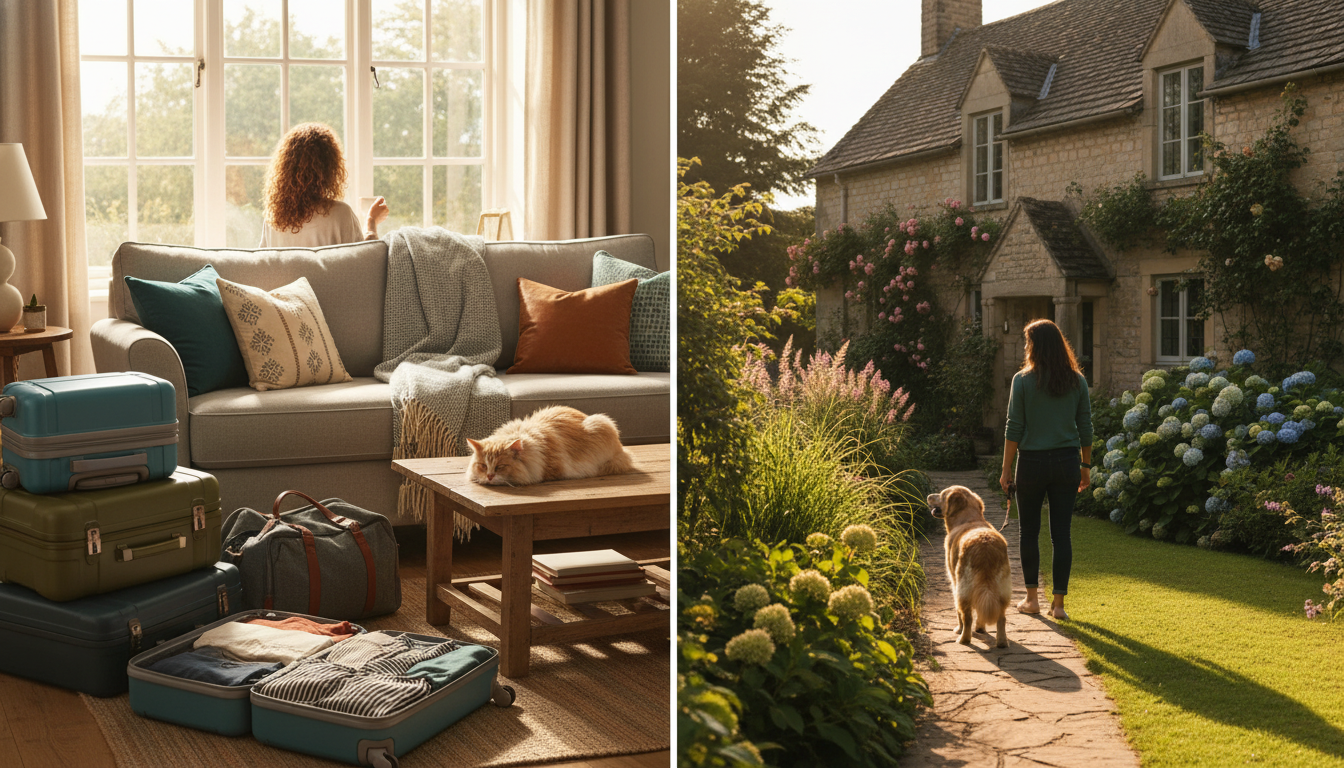 split-screen comparison showing a cozy living room with suitcases home swap side versus a person wal
What Is Home Swapping? The Basics Explained
Home swapping—also called home exchange—is exactly what it sounds like. You offer your home to other travelers, and in return, you get to stay in theirs. No money changes hands for accommodation. You're essentially trading living spaces.
Here's where it gets interesting, though. Modern home swapping doesn't require a direct, simultaneous swap anymore. That old model—I stay in your Paris apartment while you stay in my San Francisco condo during the exact same dates—still exists, but it's not the only option.
Platforms like SwappaHome use a credit system that changed everything for me. When you host someone in your home, you earn 1 credit per night. When you want to travel, you spend 1 credit per night to stay somewhere else. Always 1 credit = 1 night, regardless of whether you're hosting a studio in Kansas City or staying in a villa in Tuscany.
New members get 7 free credits to start. That means you can take a 10-night trip before you've hosted anyone. That's how I finally convinced my skeptical sister to try it—she didn't have to commit to hosting strangers until she'd experienced the magic herself.
The key thing about home swapping? You're a guest in someone's home, but you're also living like a local. You have full access to the space. You cook in their kitchen, sleep in their bed, use their Netflix account (usually). You're not there to provide a service—you're there to enjoy the home.
What Is House Sitting? Understanding the Commitment
House sitting is a different animal entirely. Literally, often.
When you house sit, you're staying in someone's home rent-free, but you're there to do a job. Usually that job involves caring for pets—dogs that need walking, cats that need feeding, chickens that need... whatever chickens need. Sometimes it's maintaining a garden, collecting mail, or simply being a presence in the home so it's not empty.
I did my first house sit in 2019—three weeks in a farmhouse outside Porto, caring for two elderly dogs and a one-eyed cat named Captain. The accommodation was free, the location was stunning, and I learned that I am absolutely not a morning person when dogs are involved.
 rustic Portuguese farmhouse with terracotta roof, olive trees in foreground, elderly golden retrieve
House sitting platforms like TrustedHousesitters or Nomador connect homeowners with sitters. You apply for sits, homeowners choose you based on your profile and references, and if selected, you commit to their dates and their pet care requirements.
The accommodation is free. But your time? That's the payment you're providing.
Home Swapping vs House Sitting: The 7 Key Differences
So what actually matters when you're deciding between these two? Let me break it down.
Flexibility and Freedom
This is the big one for me.
With home swapping, your time is completely your own. Want to spend all day exploring Rome's Trastevere neighborhood? Do it. Feel like taking a spontaneous day trip to Orvieto? Go. The home is yours to return to whenever you want—or don't want.
House sitting comes with responsibilities. Those dogs need walking at 7 AM and 6 PM. The cat needs medication twice daily. The plants need watering every other day. You're working around someone else's schedule, and that limits how far you can roam.
During my Porto house sit, I couldn't explore Lisbon—a 3-hour train ride—because I couldn't leave the dogs overnight. Beautiful farmhouse, genuine connection with those animals, but my travel radius was about 45 minutes in any direction.
Location Options
House sitting tends to cluster in suburban or rural areas. Why? Because that's where people have pets that need care and homes that need watching. You'll find sits in countryside estates, beach houses, and suburban family homes.
Home swapping gives you city center access. Apartments in Barcelona's Gothic Quarter. Flats in London's Shoreditch. Studios in Tokyo's Shibuya. Urban dwellers swap homes too, and they're often in the walkable, transit-connected neighborhoods travelers actually want.
I've done home swaps in the heart of Amsterdam (10 minutes from the Rijksmuseum), central Copenhagen (walking distance to Nyhavn), and Rome's Monti district (best carbonara of my life at a place called Roscioli). Try finding house sits in those locations—they're rare.
Cost Comparison
Both are "free" accommodation, but let's talk real costs.
Home swapping costs:
- Platform membership: SwappaHome's credit system means no annual fees for basic use
- Your home's utilities while guests stay (minimal impact)
- Cleaning before/after (or hiring someone, roughly $50-150 depending on location)
House sitting costs:
- Platform membership: TrustedHousesitters runs about $129/year, Nomador around $89/year
- Background checks: Some platforms charge $25-50 extra
- Getting to remote locations: Rural sits often mean rental cars ($40-80/day)
- Your time: This is the hidden cost—you're working
Over a two-week trip, home swapping in a central location often costs less total because you're not renting a car or paying for taxis to reach a suburban house sit.
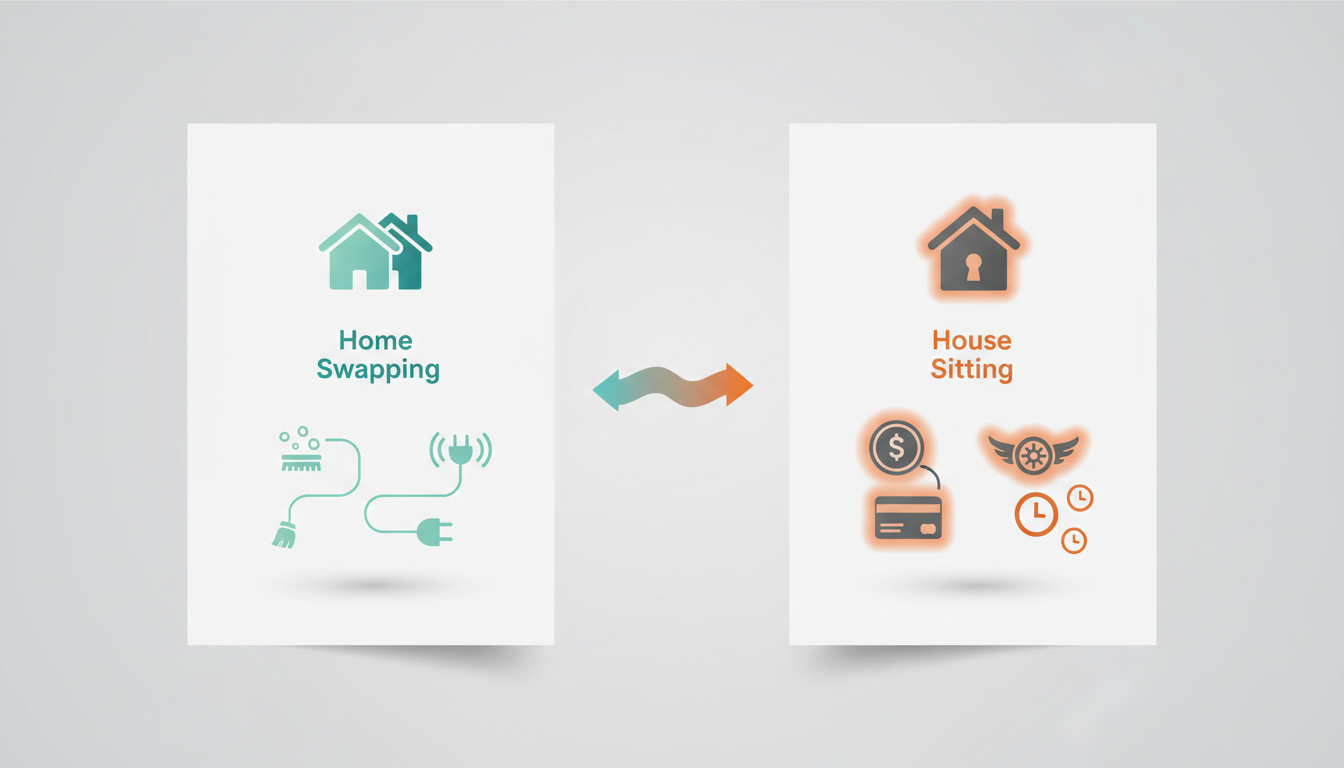 infographic comparing costs side-by-side home swap showing minimal expenses cleaning, utilities vers
Who Each Option Suits Best
Home swapping works brilliantly for couples and families who want space and a home base, people with their own homes to offer (homeowners, long-term renters with permission), travelers who want maximum exploration freedom, those who prefer urban destinations, and remote workers who need reliable WiFi and a desk setup.
House sitting is ideal for solo travelers comfortable with pet responsibility, retirees with flexible schedules and no time pressure, animal lovers who miss having pets while traveling, budget travelers willing to trade time for accommodation, and people seeking rural or off-the-beaten-path experiences.
The Trust Factor
Both require trust, but in different directions.
In home swapping, trust is mutual. You're trusting someone with your home while they trust you with theirs. This creates natural accountability—if someone trashes your place, they know you could do the same. Plus, review systems on platforms like SwappaHome mean bad actors get identified quickly.
House sitting trust is one-directional. The homeowner trusts you, but you're not offering your home in return. This can make getting started harder—you need to build references from scratch, and homeowners can be (understandably) picky about who watches their beloved pets.
I remember applying to 15 house sits before landing my first one. With home swapping, my first request was accepted within a week because I had a real home to offer in exchange.
Length of Stay
House sits tend to be longer—often 2-4 weeks minimum because homeowners want stability for their pets. Short sits exist but are competitive.
Home swaps offer more flexibility. I've done 3-night weekend swaps in nearby cities and month-long stays in far-flung destinations. The credit system means you can mix and match—use 3 credits for a long weekend, save the rest for a bigger trip.
Social Dynamics
This one's subtle but real.
Home swapping often involves meeting your hosts briefly—a handover where they show you the coffee machine and recommend their favorite breakfast spot. Sometimes you become friends. I still exchange Christmas cards with a couple from Barcelona whose apartment I stayed in four years ago.
House sitting involves more extensive communication. You'll have video calls before the sit, detailed instructions about pet routines, and often daily check-ins. Some homeowners are lovely; others are... anxious. I once had an owner text me seventeen times in one day asking for photos of her cat.
 cozy living room scene with two people having coffee, maps and travel guides spread on table, warm e
My Personal Experience: Why I Chose Home Swapping
I'll be real with you—I do both, but home swapping has become my primary travel accommodation.
The turning point was a house sit in Cornwall. Beautiful stone cottage, two sweet border collies, stunning coastal walks. But by day five, I was climbing the walls. The nearest town was a 20-minute drive. The dogs needed attention every few hours. I couldn't take the train to London for a day trip I'd been excited about.
I realized I was trading my travel freedom for free accommodation, and that math didn't work for me.
Contrast that with my home swap in Rome's Trastevere neighborhood last fall. I woke up whenever I wanted, walked to a café for cornetti and cappuccino, spent full days wandering the city, and came home to cook dinner in a real kitchen with ingredients from Campo de' Fiori market. The apartment owner was staying at my place in San Francisco, equally happy.
That's the home swap magic—you're not just saving money on hotels. You're living somewhere, not visiting it.
When House Sitting Makes More Sense
I'm not here to bash house sitting. It's genuinely wonderful for the right person and situation.
Choose house sitting when:
You don't have a home to offer. Digital nomads, people between leases, or those living with family can't home swap. House sitting gives you free accommodation without needing your own place.
You genuinely love animals. If walking dogs twice daily sounds like a feature, not a bug, house sitting lets you have pet companionship while traveling. I know people who specifically seek out sits with dogs because they miss their own.
You want rural immersion. That farmhouse in Provence, the cottage in the Scottish Highlands, the ranch in Montana—these rarely appear on home swap platforms but are common house sits.
You're staying put. If your travel plan is "spend three weeks in one place, working remotely and decompressing," house sitting's location limitations matter less.
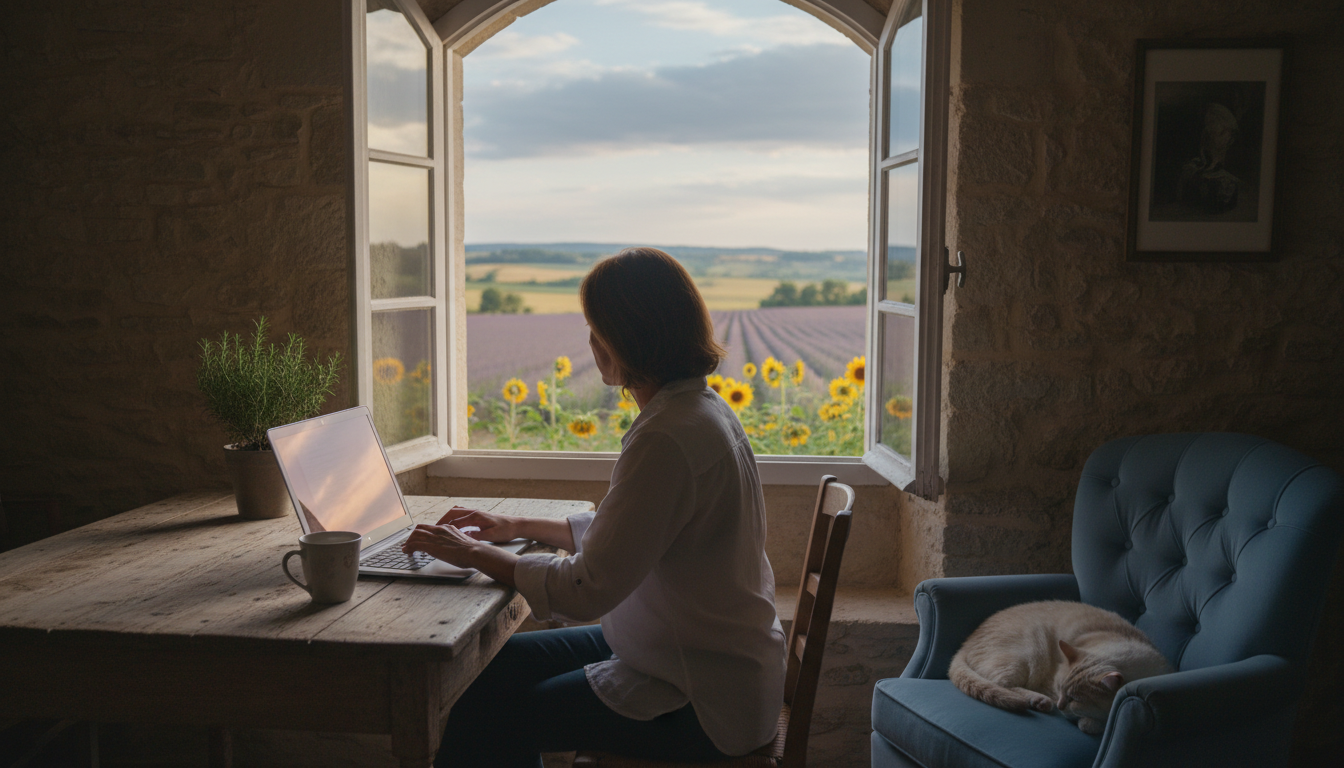 woman working on laptop at rustic wooden desk, French countryside visible through open window, cat s
The Practical Side: Getting Started with Each
Starting with Home Swapping
The barrier to entry is lower than you'd think.
You need a home to list. This can be a house, apartment, condo, or even a room in your home (some platforms allow this). You don't need a mansion—I've seen tiny Tokyo apartments and modest suburban homes get plenty of interest.
On SwappaHome, you'd create a profile with verification, list your home with honest photos and descriptions, receive your 10 free starting credits, browse listings and send booking requests, and message potential hosts to agree on dates and confirm.
The credit system means you can travel first if you want—use those 7 credits, then host when you return to replenish them.
A few tips from seven years of swapping: Take photos in natural light, showing real spaces (not magazine perfection). Be specific about your neighborhood's perks ("5-minute walk to the best tacos in the Mission"). Respond to messages within 24 hours—active members get more requests. And start with a shorter swap to build reviews.
Starting with House Sitting
House sitting requires more upfront effort.
You'll need to join a platform (TrustedHousesitters, Nomador, or MindMyHouse), create a detailed profile with photos and references, get a background check if required, apply to sits—often competing with dozens of other applicants, do video interviews with homeowners, and build reviews over time.
The first sit is hardest. Consider starting with shorter, less desirable sits (winter in cold climates, remote locations) to build your profile. Once you have 3-4 positive reviews, better opportunities open up.
Can You Do Both?
Absolutely. I do.
My strategy: home swapping for city trips and shorter stays, house sitting for longer rural retreats when I want to slow down and don't mind limited mobility.
Last year, I did a 2-week home swap in Lisbon (exploring the city, day trips to Sintra and Cascais), followed immediately by a 3-week house sit in the Alentejo countryside (writing, hiking, caring for two donkeys named Pedro and Pablo). Best of both worlds.
The Honest Downsides of Each
No travel hack is perfect. Here's what can go wrong.
Home Swapping Challenges
You need a desirable location. If you live somewhere tourists don't visit, finding swaps is harder (not impossible—someone always wants to see somewhere new—but harder).
Strangers in your home. This freaks some people out. I've gotten comfortable with it, but I know people who can't handle the idea. You can minimize risk through verification, reviews, and clear communication, but the discomfort is real.
Coordination logistics. Agreeing on dates, arranging key handoffs, aligning expectations—it takes effort. Not as much as planning a traditional trip, but it's not zero.
No guarantees. SwappaHome and similar platforms connect members, but they don't provide insurance or damage coverage. Members are responsible for their own arrangements. I recommend getting your own travel insurance and home insurance that covers guests if you're concerned.
House Sitting Challenges
You're working. I can't stress this enough. It's not a vacation—it's a job that happens to include free accommodation.
Cancellation risk. Homeowners can cancel sits, and you have no recourse. I've heard horror stories of people arriving in a country only to have their sit fall through.
Pet emergencies. If the dog gets sick, that's on you to handle. Vet visits, medication, middle-of-the-night crises. You're responsible.
Remote locations. That charming countryside cottage might be 45 minutes from the nearest grocery store. Factor in transportation costs and inconvenience.
Making Your Decision: A Quick Framework
Ask yourself these questions:
Do you have a home to offer? Yes → Home swapping is an option. No → House sitting or traditional accommodation.
How important is exploration freedom? Very important → Home swapping. I'm fine staying put → Either works.
How do you feel about pet responsibility? Love it → House sitting. Prefer none → Home swapping.
What kind of locations interest you? City centers → Home swapping. Rural/countryside → House sitting.
How long is your trip? Flexible/short stays → Home swapping. 2+ weeks in one place → Either works.
The Bottom Line
Home swapping vs house sitting isn't about which is "better"—it's about which fits your travel style, your life situation, and what you want from a trip.
I've had magical experiences with both. That Copenhagen kitchen where I started this article? Home swap. Those Porto dogs I still think about? House sit. Both gave me something hotels never could—a sense of actually living somewhere, not just visiting.
If you have a home and want maximum freedom, start with home swapping. Platforms like SwappaHome make it surprisingly easy—list your place, grab those 7 free credits, and book your first swap. You might be surprised how many people want to experience your neighborhood.
If you're between homes or genuinely love animals, house sitting opens doors to places and experiences you'd never find otherwise. Just go in with eyes open about the commitment.
Or do what I do—embrace both, and let each trip dictate which makes sense.
The best accommodation is the one that lets you travel the way you actually want to. Everything else is just logistics.
Frequently Asked Questions
Is home swapping safer than house sitting?
Both have safety considerations, but home swapping offers mutual accountability—if someone mistreats your home, you could theoretically do the same. Platforms like SwappaHome include verification systems and reviews that help build trust. Neither option includes insurance coverage, so consider getting your own travel and home insurance regardless of which you choose.
How much money can you save with home swapping vs hotels?
In major cities, home swapping saves $150-400 per night compared to hotels. A two-week trip to Paris could save you $2,800-5,600 on accommodation alone. House sitting saves similar amounts but factors in transportation costs to often-remote locations and the value of your time spent on pet care.
Can you home swap if you rent your apartment?
Yes, but check your lease first. Many landlords allow short-term guests, and home swapping typically falls under this category since no money changes hands. Get written permission if your lease is ambiguous. Some renters successfully swap without issues; others need landlord approval.
Do you have to swap homes at the same time?
Not anymore. Credit-based platforms like SwappaHome eliminated this requirement. Host guests whenever convenient, earn credits, then use those credits to stay anywhere in the network—even months later. This flexibility is why modern home swapping has exploded in popularity.
What happens if something breaks during a home swap?
Members communicate directly to resolve issues. Most minor problems (broken glass, clogged drain) get handled with apologies and reimbursement between reasonable adults. SwappaHome doesn't provide damage coverage or insurance, so members typically rely on their own home insurance policies. Building trust through reviews and verification helps prevent issues before they happen.

Published by
SwappaHome
SwappaHome Editorial Team
Home Exchange & Slow Travel Editorial
The SwappaHome Editorial Team brings together travel research, home-exchange community insights, and platform data to produce practical guides for first-time and experienced home swappers. Every article cites real platforms, current market rates, and verifiable city-level facts so readers can make informed decisions without guessing.
Ready to try home swapping?
Join SwappaHome and start traveling by exchanging homes. Get 7 free credits when you sign up!
Related articles
People Like Us vs SwappaHome: Which Home Exchange Platform Wins in 2026?
Comparing People Like Us vs SwappaHome for home exchange in 2026. Real fee breakdowns, credit systems, and which platform fits your travel style.
SwappaHome Credits vs Cash: When to Use Which for Smarter Travel
Should you spend SwappaHome credits or save them? Here's exactly when each strategy maximizes your travel budget—with real scenarios and math.
Home Swap vs Hotel: 10 Reasons Why Home Exchange Wins Every Time
Discover why home swap beats hotels for authentic travel. From saving $200+/night to living like a local, here's what 7 years of home exchange taught me.