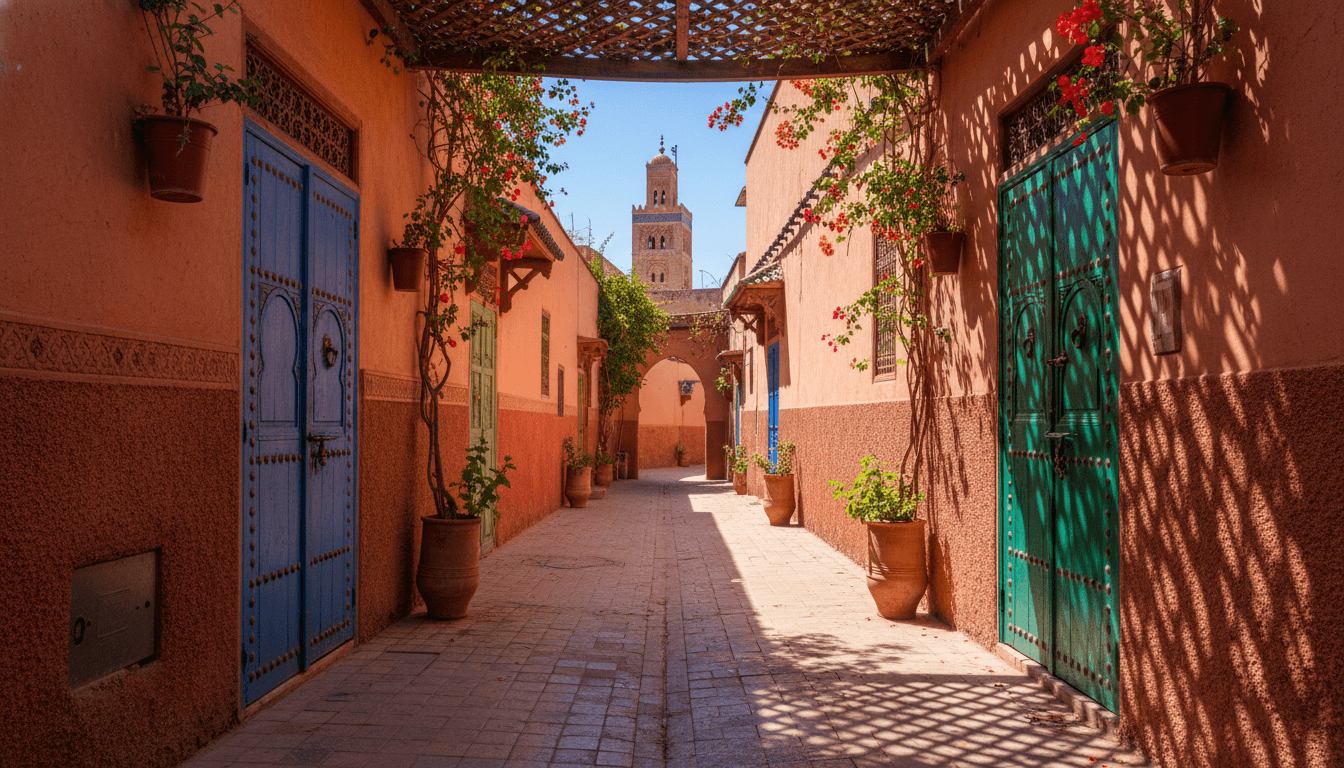
Home Swaps in Marrakech: The Working Professional's Guide to Morocco's Red City

SwappaHome Editorial Team
Home Exchange & Slow Travel Editorial
Discover the best home swaps in Marrakech for remote workers—from riads with rooftop WiFi to modern Guéliz apartments perfect for video calls.
The call to prayer echoed across the medina as I finished my morning client call, laptop balanced on a zellige-tiled table, mint tea cooling beside me. That was my first morning in a home swap in Marrakech, and I remember thinking: why did I wait so long to try this?
I'd been hesitant about Morocco for remote work. Would the WiFi hold up? Could I really take video calls from a 400-year-old riad? Turns out, my assumptions were embarrassingly outdated. Marrakech has quietly become one of the most compelling destinations for working professionals who want to experience something extraordinary without sacrificing productivity.
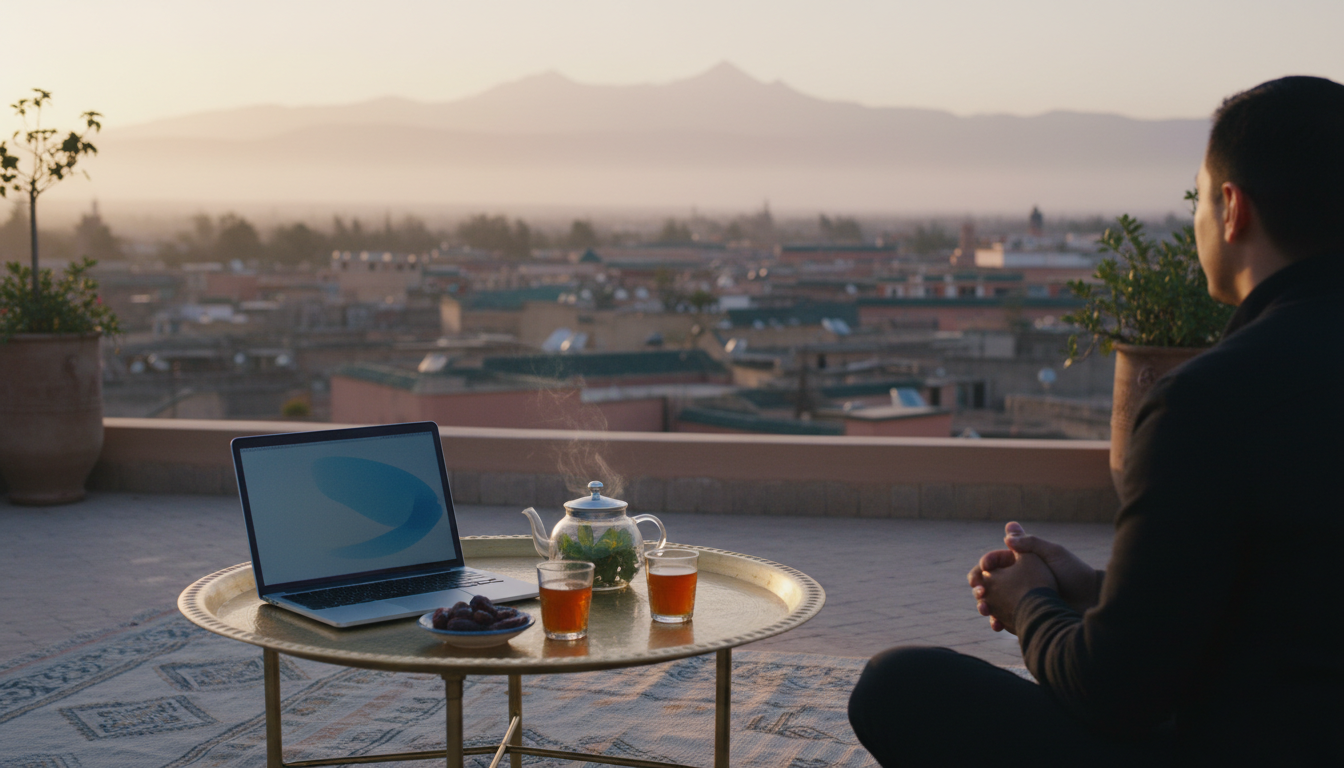 sunrise view from a traditional riad rooftop terrace in Marrakech medina, laptop open on a brass tra
Over the past two years, I've done three separate home swaps in Marrakech—each in a different neighborhood, each teaching me something new about what makes this city work for remote professionals. This guide is everything I wish someone had told me before that first trip.
Why Home Swaps in Marrakech Work for Remote Professionals
Here's what surprised me most: Marrakech isn't just affordable (though it absolutely is). It's genuinely set up for the kind of deep-focus work that's impossible in most tourist destinations.
The city operates on a rhythm that actually supports productivity. Mornings are quiet—locals don't really get moving until 10 or 11am. That gives you a solid 4-5 hours of uninterrupted work time before the souks come alive. Then there's the afternoon lull from roughly 1-4pm when the heat sends everyone indoors. Another work block. By the time you're ready to explore, the city is waking up for its evening performance.
I've tried the digital nomad thing in Bali, Lisbon, Mexico City. Marrakech has something none of them offer: genuine disconnection from Western hustle culture while maintaining the infrastructure you need. The WiFi situation has improved dramatically—most riads now advertise speeds, and fiber connections are common in the Ville Nouvelle neighborhoods.
The cost equation is almost unfair. A home swap means you're paying zero for accommodation, and your daily expenses—we're talking incredible food, transportation, workspace access—rarely exceed $30-40 USD. I tracked my spending during my last three-week stay: $847 total, including a weekend trip to Essaouira.
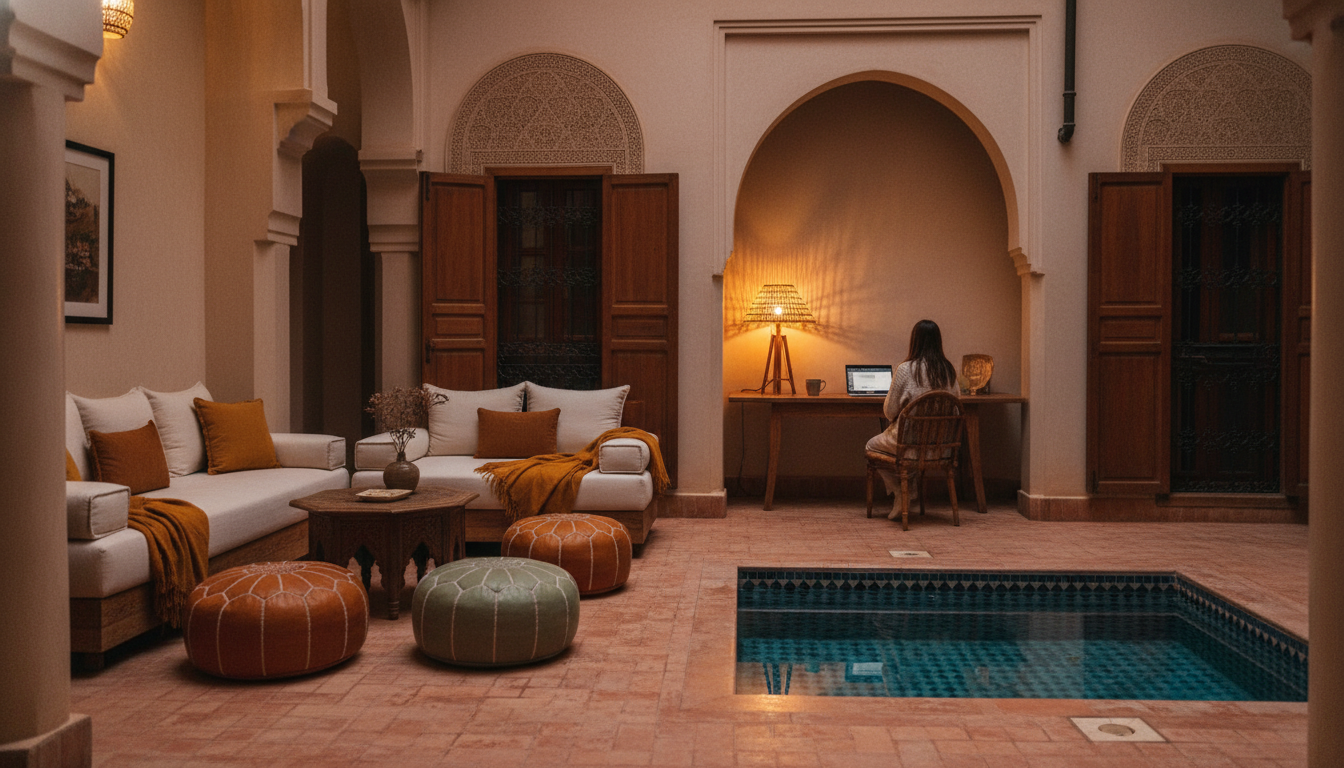 interior of a renovated riad courtyard with a small plunge pool, comfortable seating area with Moroc
Best Marrakech Neighborhoods for Home Swaps: A Working Professional's Breakdown
Not all neighborhoods are created equal when you need reliable internet and a quiet place to think. After testing several areas, here's my honest take.
The Medina: For Those Who Want the Full Experience
The medina is why you came to Marrakech. Let's just be honest about that. Those narrow alleyways, the sudden courtyards, the way light falls through mashrabiya screens—it's intoxicating.
But can you work from here?
Yes. With caveats.
The best medina home swaps for professionals are the renovated riads with modern infrastructure hidden behind ancient walls. Look for listings that specifically mention fiber internet (not just "WiFi available") and backup connectivity options. I stayed in a three-bedroom riad near Mouassine that had 80 Mbps fiber plus a 4G backup router. My Zoom calls were flawless.
The trade-off: noise. The medina is alive. Donkeys, motorcycles, vendors, tourists. My solution was scheduling important calls for early morning or during the afternoon quiet hours. The thick riad walls actually provide decent sound insulation once you're in the courtyard.
Through home swapping on SwappaHome, you're exchanging credits rather than cash—1 credit per night regardless of the property. Outside of swaps, comparable riads run $150-300/night on traditional rental platforms.
Guéliz: The Practical Choice
Guéliz is the French-built Ville Nouvelle, and honestly? It's underrated for remote workers.
The neighborhood has a completely different energy. Wide boulevards, European-style cafés, reliable infrastructure. The WiFi situation is consistently excellent—this is where Marrakech's business community lives and works. You'll find modern apartments with dedicated office spaces, proper air conditioning, and the kind of predictable quiet that lets you forget you're in Morocco.
That last part is both the appeal and the drawback. Guéliz could be Nice or Barcelona. You lose some magic.
My recommendation: Guéliz makes sense if you're on a particularly demanding work sprint or if you've got a week of back-to-back video calls. The home swaps here tend to be contemporary apartments with all the amenities—washing machines, full kitchens, sometimes even gyms in the building.
I did a two-week swap in a Guéliz apartment last November. Tenth floor, mountain views, 150 Mbps internet, complete silence. I got more done in those two weeks than the previous two months. But I also felt like I'd missed something essential about being in Marrakech.
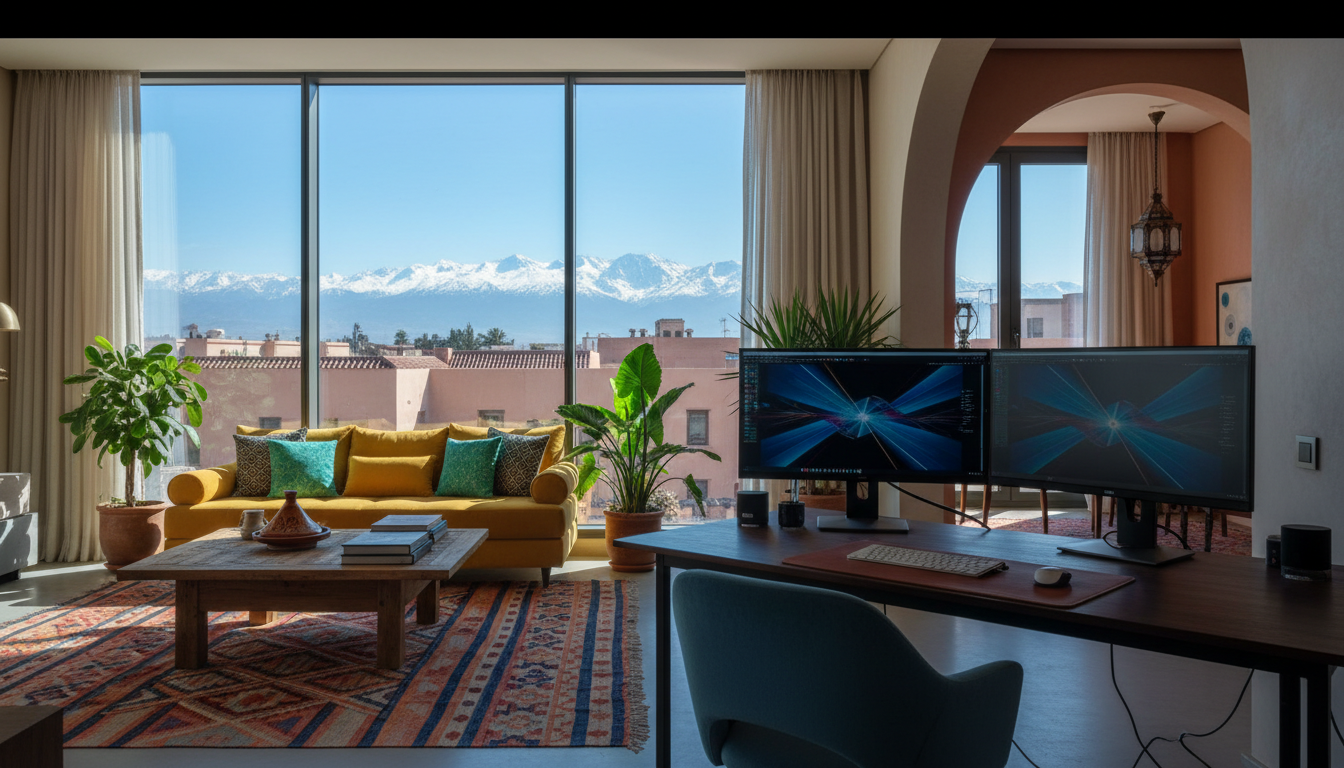 modern apartment interior in Guliz with floor-to-ceiling windows showing Atlas Mountain views, minim
Hivernage: The Sweet Spot
If I had to pick one neighborhood for working professionals doing home swaps in Marrakech, it's Hivernage.
This area sits between the medina and Guéliz—geographically and spiritually. You get tree-lined streets, upscale residences, and that particular Marrakech atmosphere without the medina's chaos. The infrastructure is modern (most buildings are post-2000), but the architecture still feels Moroccan.
Hivernage home swaps tend to be spacious apartments or small villas with gardens. The WiFi is reliable, the noise level is manageable, and you're a 15-minute walk from both the Jemaa el-Fnaa madness and the Guéliz café scene.
The neighborhood also has practical advantages: good grocery stores, pharmacies, a handful of excellent restaurants that locals actually use. My favorite discovery was a tiny place called Café Clock (not the famous one—a different spot) where I'd work for a few hours each afternoon, nursing a single coffee for $1.50 USD while they left me completely alone.
The Palmeraie: For Serious Retreat Mode
The Palmeraie is Marrakech's palm grove district, about 15-20 minutes from the city center. Out here, you'll find sprawling villas with pools, gardens, and the kind of silence that makes you wonder if your ears are working.
Home swaps in the Palmeraie are ideal for deep work retreats or if you're traveling with family and need space. The properties are often stunning—I'm talking private pools, multiple bedrooms, staff quarters (though staff aren't typically included in swaps).
The catch: you need transportation. There's no walking to dinner or popping out for supplies. Budget for taxis (around $8-10 USD each way to the medina) or rent a car. The isolation is the point, but make sure it's what you actually want.
I did a week in a Palmeraie villa during a book deadline. Four bedrooms, a pool I used exactly once, and so much quiet I started talking to myself. Finished the manuscript, but I was genuinely relieved to return to civilization.
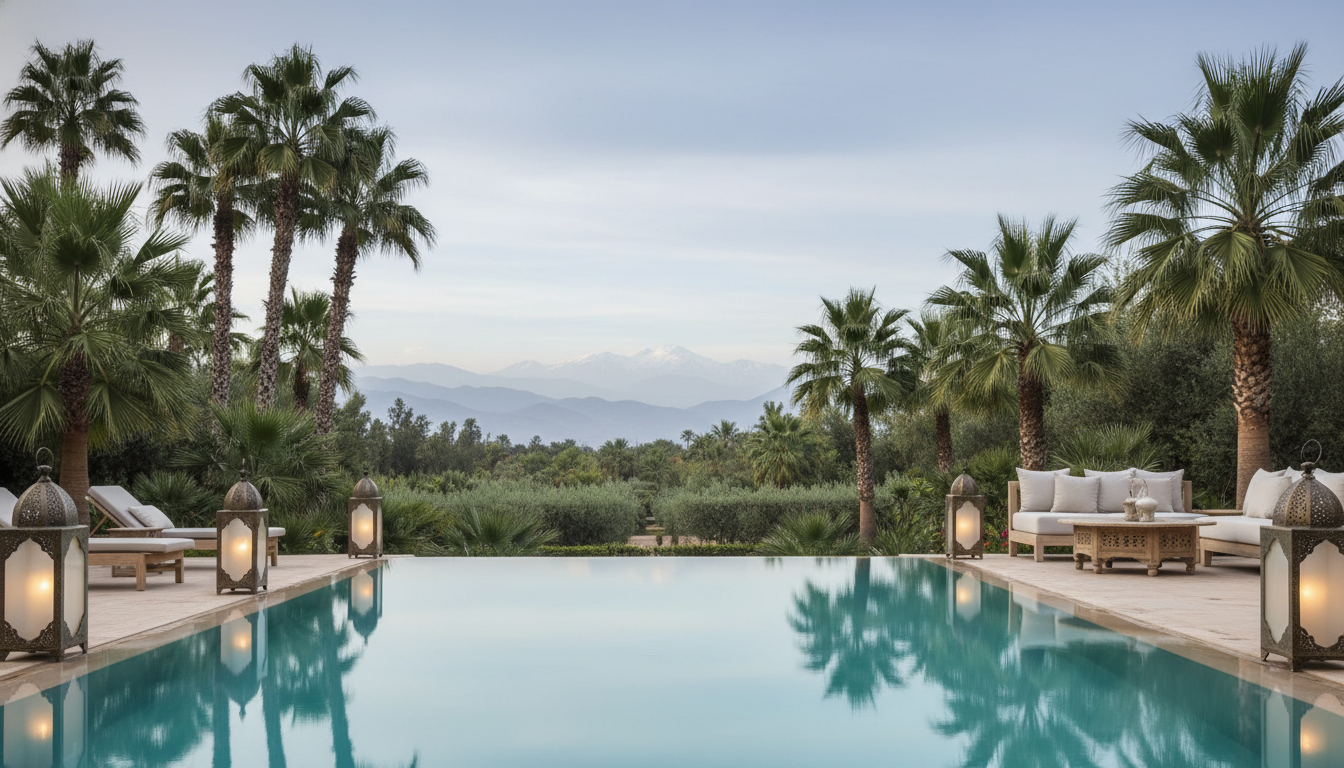 luxurious Palmeraie villa exterior with a turquoise pool surrounded by palm trees, traditional Moroc
Setting Up Your Marrakech Home Swap for Productive Work
Let me share what I've learned about making these arrangements actually work.
The WiFi Conversation
This is non-negotiable: before confirming any swap, get specific about internet. I ask for speed test results (speedtest.net screenshots work great) and information about the connection type. Fiber is ideal. ADSL is risky. Mobile hotspot as primary connection is a dealbreaker for me.
Through SwappaHome's messaging system, I'll typically write something like: "I work remotely and need reliable internet for video calls. Could you share a recent speed test? Also curious if there's a backup option if the main connection goes down."
Most hosts are happy to provide this. If they're vague or defensive, that's information too.
Power and Backup Plans
Marrakech's electrical grid is generally reliable, but outages happen. Ask your swap partner about backup power—some riads have generators, others don't. At minimum, bring a good power bank for your laptop.
The voltage is 220V with European-style plugs. Bring adapters, and consider a small surge protector if you're bringing expensive equipment.
The Workspace Question
Not every beautiful riad has a comfortable place to work for eight hours. I've learned to ask specifically about desk space, chair comfort, and lighting. A gorgeous courtyard is useless for work if the only seating is low poufs that destroy your back.
My checklist for swap inquiries now includes: Is there a proper desk and chair? What's the lighting like in the workspace? Is there air conditioning or heating in the work area (Marrakech gets cold in winter and brutal in summer)?
Coworking Backup Options
Even with the best home swap setup, sometimes you need a change of scenery or a more professional environment for an important meeting.
Marrakech's coworking scene has exploded. My favorites:
The Spot Coworking (Guéliz) — Day passes around $15 USD, excellent internet, good coffee, professional vibe. This is where I go when I need to feel like a serious person.
Café Clock (Medina) — Not technically coworking, but they're laptop-friendly during off-peak hours. The rooftop is magical. Budget $5-10 for food/drinks to earn your seat.
Workstation Marrakech (Hivernage) — Newer space, very reliable infrastructure, meeting rooms available. Day pass around $20 USD.
 interior of a stylish Marrakech coworking space with traditional Moroccan design elements, modern er
Making the Most of Your Marrakech Home Swap Experience
You didn't come all this way just to stare at a screen. Here's how to balance work and actually experiencing the city.
The Productive Day Structure
I've tested various schedules across my Marrakech stays. This one works best for me:
6:00-7:00am: Wake up with the call to prayer (you will, whether you want to or not). Coffee on the terrace.
7:00-11:00am: Deep work block. This is when the city is quietest and your energy is highest.
11:00am-1:00pm: Break. Walk through the medina, grab lunch, run errands. The souks are alive but not yet overwhelming.
1:00-4:00pm: Second work block during the afternoon heat. Most locals are resting; you should be productive.
4:00pm onward: Done. Go live your life. The city is waking up for its evening performance, and you should be part of it.
This schedule gives you 7-8 hours of work while still leaving genuine time for exploration. Adjust based on your time zone requirements—if you're syncing with US clients, you might flip this entirely.
Food Situation for Busy Professionals
Cooking in your swap accommodation is tempting, but honestly? Eating out in Marrakech is so affordable that it often makes more sense.
A proper lunch at a local spot runs $3-6 USD. Dinner at a mid-range restaurant is $10-20 USD. Even the fancy places rarely exceed $50 USD per person.
My go-to strategy: stock the kitchen with breakfast supplies and snacks, then eat out for lunch and dinner. The time you save not cooking is worth more than the modest cost difference.
For groceries, Carrefour in Guéliz has everything, including familiar Western products. The Marjane supermarket chain is also reliable. Local markets (souks) are great for produce but require some bargaining skills.
The Social Angle
Remote work can get lonely, especially in a foreign city. Marrakech has a surprisingly robust expat and digital nomad community.
The Marrakech Digital Nomads Facebook group is active and genuinely helpful. They organize regular meetups, share workspace recommendations, and can connect you with other professionals in the city.
I've also found that mentioning you're doing a home swap is a great conversation starter. People are curious about it, and you'll often get invited to things.
Home Swap Etiquette: Morocco-Specific Considerations
A few cultural notes that matter for successful swaps in Marrakech.
Household Staff
Many riads and larger homes in Marrakech have regular cleaning staff, gardeners, or guardians. This can be awkward in a home swap context—are they included? Who pays them?
Clarify this upfront with your swap partner. In my experience, staff arrangements vary widely. Some hosts pause their staff during swaps; others maintain them and include the cost in their regular household budget. A few expect you to tip staff directly (usually 100-200 MAD per week, roughly $10-20 USD).
Ramadan Awareness
If your swap falls during Ramadan, be prepared for a different experience. Many restaurants close during daylight hours, the city's rhythm shifts dramatically, and there are cultural sensitivities around eating, drinking, or smoking in public during fasting hours.
Ramadan can actually be a beautiful time to visit—the iftar (breaking fast) meals are incredible, and the nighttime energy is unlike anything else. But it requires adjustment and respect.
The Neighbor Factor
Medina homes share walls with neighbors, and sound travels. Be mindful of noise levels, especially during prayer times and late at night. Your swap partner's reputation in their community matters—don't be the reason their neighbors complain.
Real Costs: What to Budget Beyond Your Free Accommodation
Let me break down actual expenses from my last Marrakech home swap (three weeks in February):
Flights: $680 USD round-trip from San Francisco (this varies wildly by origin) Accommodation: 0 (home swap via SwappaHome—21 nights at 1 credit per night) Food: $340 USD ($16/day average, eating well) Transportation: $85 USD (taxis, one day trip to Essaouira) Coworking: $45 USD (three day passes when I needed a change) Activities/Entertainment: $120 USD (hammam, cooking class, souks shopping) Miscellaneous: $75 USD (SIM card, pharmacy, random purchases)
Total: $1,345 USD for three weeks, flights included.
Without the home swap, comparable accommodation would have added $2,100-4,500 USD depending on neighborhood and property type. The math is almost embarrassing.
Finding the Right Marrakech Home Swap on SwappaHome
A few practical tips for searching.
Start your search 2-3 months before your intended travel dates. Marrakech is popular, and the best properties get booked. Use the platform's filters to narrow by neighborhood—knowing whether you want medina, Guéliz, or Hivernage makes a huge difference.
Read reviews carefully. Look for mentions of internet reliability, workspace comfort, and noise levels. Previous remote workers will often mention these specifics.
When you reach out to potential swap partners, be specific about your needs. Mention that you work remotely, ask about WiFi, and explain your typical schedule. This helps them assess whether their space works for you and sets expectations for both sides.
The credit system on SwappaHome keeps things simple: you earn 1 credit for each night you host someone, and you spend 1 credit for each night you stay somewhere else. New members start with 7 free credits, which could cover a solid week-plus in Marrakech. No money changes hands between members for the stays themselves.
When to Go: Timing Your Marrakech Home Swap
Marrakech is a year-round destination, but timing matters for working professionals.
October-November: My favorite. Warm but not brutal (70-80°F), minimal rain, shoulder season pricing on flights. The city has energy without peak tourist chaos.
February-April: Also excellent. Similar temperatures, almond blossoms in the surrounding valleys, and you can escape to the coast for weekend breaks.
December-January: Cooler (50-65°F), occasionally rainy. Many riads don't have heating, so check before booking. Quieter, which can be nice for focused work.
May-September: Hot. Really hot. July and August regularly hit 100°F+. Air conditioning becomes essential, not optional. The upside: fewer tourists, and locals are incredibly welcoming to the brave souls who show up.
The Honest Downsides
I'd be doing you a disservice if I didn't mention the challenges.
The hassle factor is real. Marrakech requires more navigation than, say, Lisbon or Barcelona. Language barriers exist (French helps enormously; Arabic is appreciated), the medina is genuinely disorienting, and some interactions require negotiation skills you might not have.
Internet can still be unpredictable. Despite improvements, you might hit a bad connection or an outage at the worst possible time. Always have a backup plan—a mobile hotspot, a nearby café, a coworking space you've already scouted.
The sensory intensity is exhausting. Marrakech doesn't let you fade into the background. The sounds, smells, colors, and constant stimulation can be overwhelming, especially if you're also trying to focus on demanding work.
Stomach issues happen. Be careful with street food initially, drink bottled water, and bring basic medications just in case.
None of these are dealbreakers. They're just realities to prepare for.
My Final Thought
I keep coming back to Marrakech. Not despite the challenges, but honestly, partly because of them.
There's something about working from a city that's been trading, creating, and surviving for a thousand years. It puts your spreadsheets and Slack messages in perspective. The work still matters, but it exists within a larger context—one that includes the call to prayer, the smell of cedar and spices, the way sunset turns the whole city gold.
Home swapping makes this accessible in a way that hotels never could. You're not visiting Marrakech; you're briefly living there. You have a kitchen, a neighborhood, a routine. You wave at the same shopkeeper each morning. You know which café makes the best coffee.
If you're a working professional considering a Marrakech home swap, my advice is simple: do it. Figure out the logistics, ask the right questions about WiFi, and trust that you'll adapt. The city has been welcoming travelers for centuries. It knows what it's doing.
Frequently Asked Questions
Is home swapping in Marrakech safe for solo professionals?
Yes, Marrakech is generally safe for solo travelers, including remote workers. The home swap community adds an extra layer of trust through reviews and verification. Standard travel precautions apply—be aware of your surroundings, especially in crowded medina areas, and keep valuables secure. Most working professionals find the city welcoming and manageable.
How reliable is WiFi for remote work in Marrakech home swaps?
It varies—a lot. Modern apartments in Guéliz and Hivernage typically offer 50-150 Mbps fiber connections. Medina riads range from excellent to problematic, so always request speed test results before confirming. Budget $15-20/day for coworking backup if your work requires guaranteed connectivity.
What's the best neighborhood in Marrakech for remote workers?
Hivernage offers the best balance for most working professionals—reliable infrastructure, moderate noise levels, and proximity to both the medina and modern amenities. Guéliz suits those prioritizing work over atmosphere, while the medina works for flexible schedules and adventurous spirits willing to adapt their call times.
How much can I save with a Marrakech home swap versus hotels?
Quite a bit, actually. Comparable riad accommodations cost $150-300/night on traditional platforms, meaning a three-week stay runs $3,150-6,300 USD. Through home swapping, you exchange credits (1 credit per night) rather than cash. Combined with Marrakech's low daily expenses ($30-40 USD), a month-long stay can cost under $1,500 USD total including flights.
Do I need to speak French or Arabic for a Marrakech home swap?
Not required, but French significantly eases daily interactions—most Moroccans in Marrakech speak French fluently. English is common in tourist areas and among younger residents. Learning basic Arabic greetings ("Salaam alaikum," "Shukran") earns goodwill. Translation apps handle most situations; your swap host can often provide helpful phrases.

Published by
SwappaHome
SwappaHome Editorial Team
Home Exchange & Slow Travel Editorial
The SwappaHome Editorial Team brings together travel research, home-exchange community insights, and platform data to produce practical guides for first-time and experienced home swappers. Every article cites real platforms, current market rates, and verifiable city-level facts so readers can make informed decisions without guessing.
Ready to try home swapping?
Join SwappaHome and start traveling by exchanging homes. Get 7 free credits when you sign up!
Related articles

Home Swap in Rome: Where to Find the Best Properties for Your Italian Exchange
Discover where to find the best home swap properties in Rome—from Trastevere's cobblestone charm to Testaccio's local authenticity. Real neighborhoods, real advice.

Home Swap in Bangkok: Where to Find the Best Properties for Free Stays
Discover where to find the best home swap properties in Bangkok—from riverside condos in Charoen Krung to family homes in Ari. Real neighborhoods, real savings.

Home Swap for Beach Lovers: 12 Coastal Destinations Ranked for 2026
Discover the best coastal destinations for home swapping in 2026. From Portugal's Algarve to Australia's Gold Coast, find your perfect beach exchange.