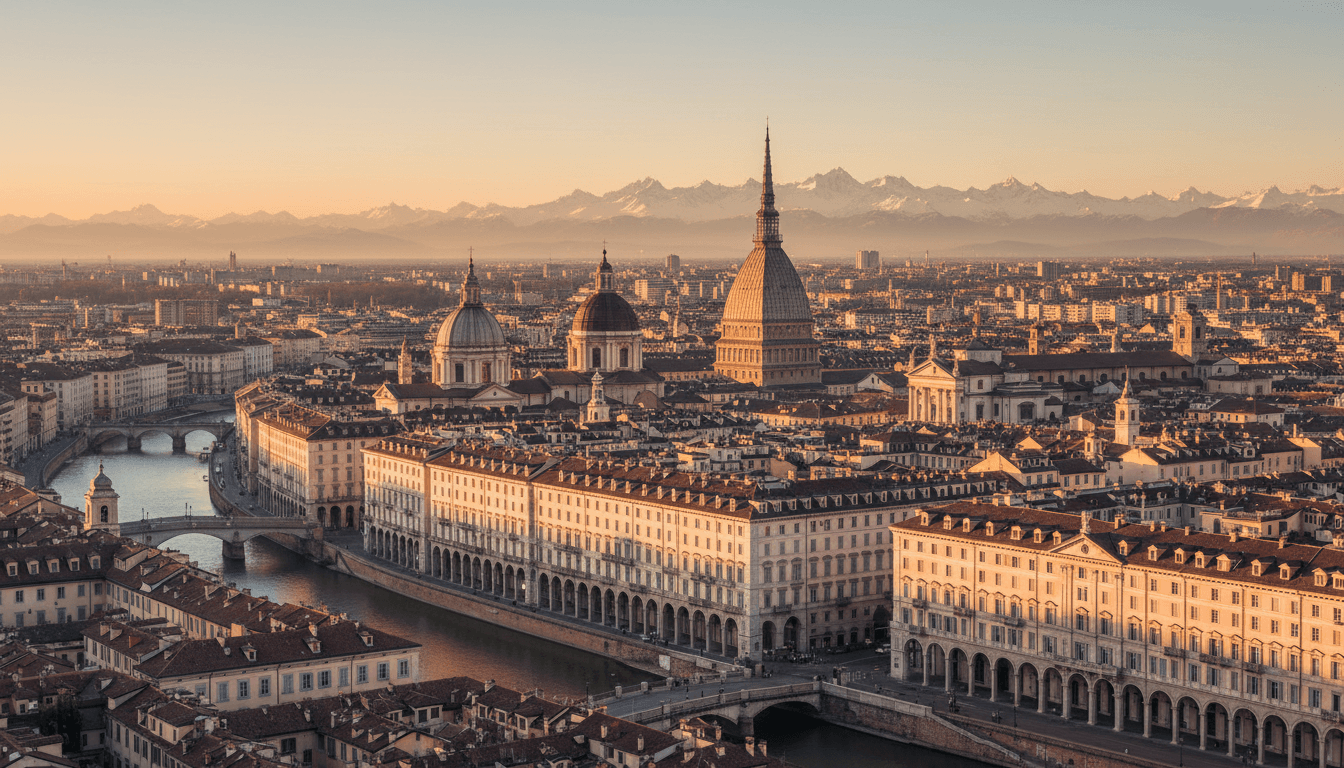
Home Swaps in Turin: The Remote Worker's Guide to Italy's Hidden Tech Hub

SwappaHome Editorial Team
Home Exchange & Slow Travel Editorial
Discover why Turin is becoming the go-to destination for remote workers seeking affordable home swaps in Italy—with fast WiFi, coworking culture, and half the crowds of Milan.
I'm going to tell you something that might save you thousands of dollars and completely change how you think about working remotely in Italy.
Forget Rome. Skip Florence for now. If you're a working professional looking for home swaps in Turin, you're about to discover what digital nomads have been quietly hoarding for years—a sophisticated Italian city with blazing-fast internet, stunning architecture, and rent prices that won't make you cry into your aperitivo.
I spent six weeks in a home swap in Turin last autumn, working from a converted industrial loft in the San Salvario district. Every morning, I'd grab a bicerin (Turin's signature chocolate-coffee drink) from Caffè al Bicerin—yes, the one that's been serving it since 1763—and walk along the porticoed streets to find a sunny spot in Piazza Vittorio Veneto. My laptop stayed connected at 200+ Mbps. My Zoom calls never dropped. And my bank account? Still intact.
Here's the thing about Turin that nobody tells you. While everyone's fighting for overpriced apartments in Milan or dealing with Rome's notoriously unreliable internet, this former industrial powerhouse has quietly reinvented itself as one of Europe's most livable cities for remote professionals.
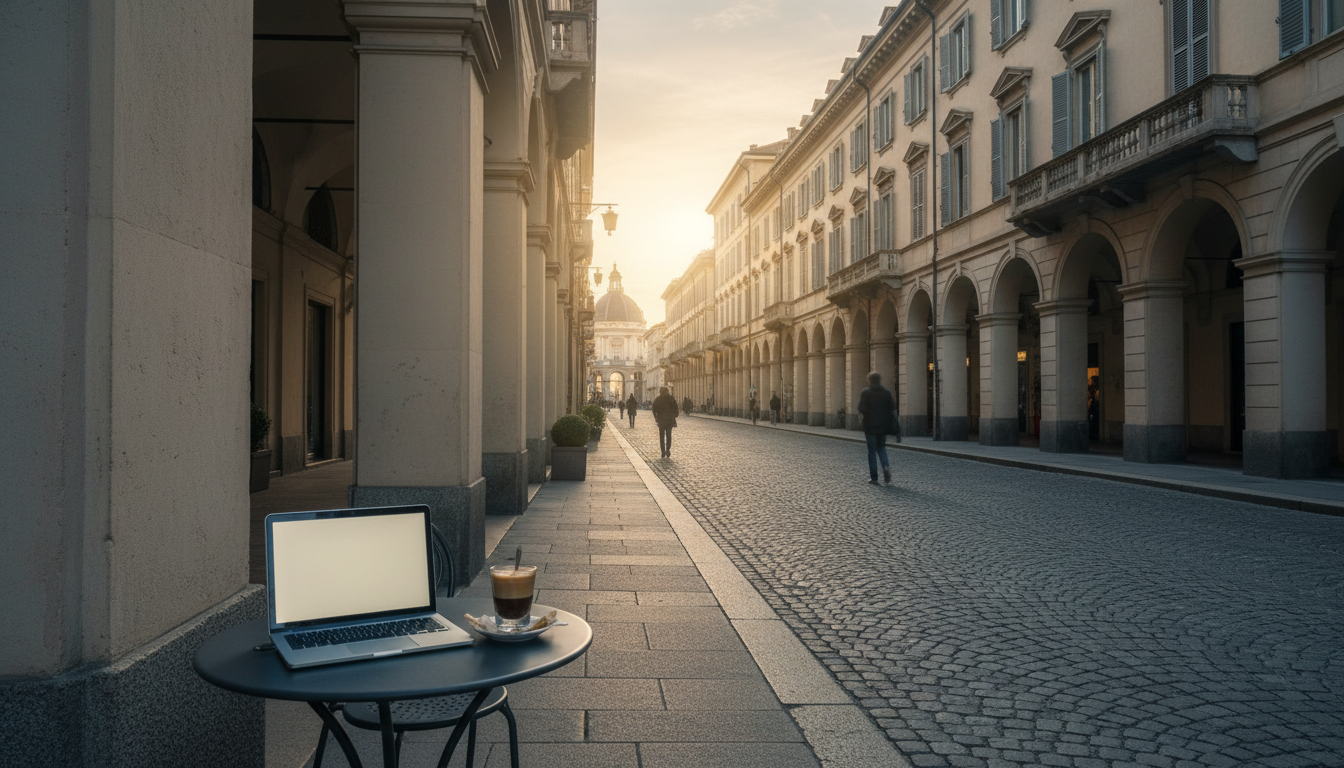 Morning light streaming through the porticoes of Via Po in Turin, with a laptop and bicerin on a caf
Why Home Swaps in Turin Work Perfectly for Remote Professionals
I wish someone had told me this before I dropped €3,200 on a cramped Milan Airbnb: Turin offers everything Milan does—the fashion, the food, the culture—at roughly 40% less cost. Add home swapping into the equation and you're looking at accommodation costs of essentially zero, minus your SwappaHome membership.
So why does Turin specifically work for people who need to actually get work done?
The internet situation is genuinely excellent. Turin was Italy's industrial capital for over a century—home to Fiat, Lavazza, and a massive engineering sector. That infrastructure legacy means fiber optic coverage across most of the city center. In my six weeks there, I worked from four different neighborhoods. The slowest connection I encountered? 85 Mbps. Compare that to the 12 Mbps I suffered through in a "high-speed" Florence rental.
The timezone is workable for both US and Asian markets. GMT+1 means you can take a 9 AM call with London, have a proper Italian lunch, then catch Singapore or Sydney at the end of their day. I managed clients across three continents without destroying my sleep schedule—something I've never pulled off from Lisbon or Barcelona.
The city actually wants remote workers. Turin's municipal government launched "Torino City of Design" and various digital nomad initiatives. There's a growing ecosystem of coworking spaces, and locals are genuinely accustomed to seeing people working from cafés. You won't get the stink-eye for nursing an espresso while typing away.
 Interior of Toolbox Coworking in Turin, showing exposed brick walls, modern furniture, and professio
Best Turin Neighborhoods for Working Professional Home Swaps
Not all neighborhoods are created equal when you need reliable WiFi, walkable amenities, and a space that actually functions as an office. After my own stay and conversations with a dozen other home swappers, here's my honest breakdown.
San Salvario: The Sweet Spot for Most Remote Workers
This is where I stayed, and I'm biased—but hear me out.
San Salvario sits just south of the city center, sandwiched between Parco del Valentino and the Porta Nuova train station. It's Turin's most multicultural neighborhood, which means incredible food diversity, and it's packed with young professionals and university students.
The home swap I found through SwappaHome was a 75-square-meter apartment on Via Madama Cristina, owned by a graphic designer spending three months in San Francisco. Her space had a dedicated desk area with a 27-inch monitor I could plug into, blackout curtains (essential for video calls), and—this is crucial—a separate room I could close off when I needed focus time.
If you were renting here, you'd pay €800-1,400/month, but you're swapping, so that's not your problem. You'll find excellent café culture, the Mercato di San Salvario for fresh produce, and a 10-minute walk to the city center. The vibe is young, slightly bohemian, and very much alive after 6 PM. If you need absolute quiet, this might not be your spot. But if you want to actually have a social life alongside your work? Perfect.
Crocetta: Quiet Elegance for Focused Work
If San Salvario feels too lively, Crocetta is your answer.
This residential neighborhood sits west of the center, near the Politecnico di Torino. It's quieter, greener, and attracts a slightly older professional crowd. A colleague of mine swapped into a three-bedroom apartment here while her family traveled. She described it as "the kind of place where you can hear yourself think."
The streets are lined with Liberty-style buildings (Italy's version of Art Nouveau), and there's a weekly farmers market in Piazza Benefica that became her Saturday morning ritual. You'll find larger apartments suitable for families or those who want a dedicated home office, excellent schools if you're traveling with kids, and easy access to Parco Ruffini for walking meetings or lunch breaks.
Home swaps in Crocetta tend to be with established professionals—architects, professors, doctors—which often means better-equipped home offices and more reliable setups.
Vanchiglia: Creative Energy and Riverside Walks
Vanchiglia has transformed over the past decade from a working-class district into Turin's creative hub. Independent galleries, design studios, and some of the city's best aperitivo spots along the Po River—it's all here.
For working professionals, Vanchiglia offers a specific advantage: proximity to both the Murazzi riverside area (perfect for walking calls) and the Quadrilatero Romano (the historic center with its Roman-era street grid). You can work all morning, grab lunch in a 200-year-old osteria, and be back at your desk in 15 minutes.
I spent a week in Vanchiglia during my Turin stay, subletting from a friend who'd found a home swap there. The apartment was smaller—maybe 50 square meters—but the natural light was extraordinary. Floor-to-ceiling windows facing east meant I was naturally awake by 7 AM, which my US clients appreciated. You'll find converted industrial spaces with character, a younger creative crowd, and excellent coffee at places like Orso Laboratorio Caffè. Parking can be tricky if you're planning to rent a car, though.
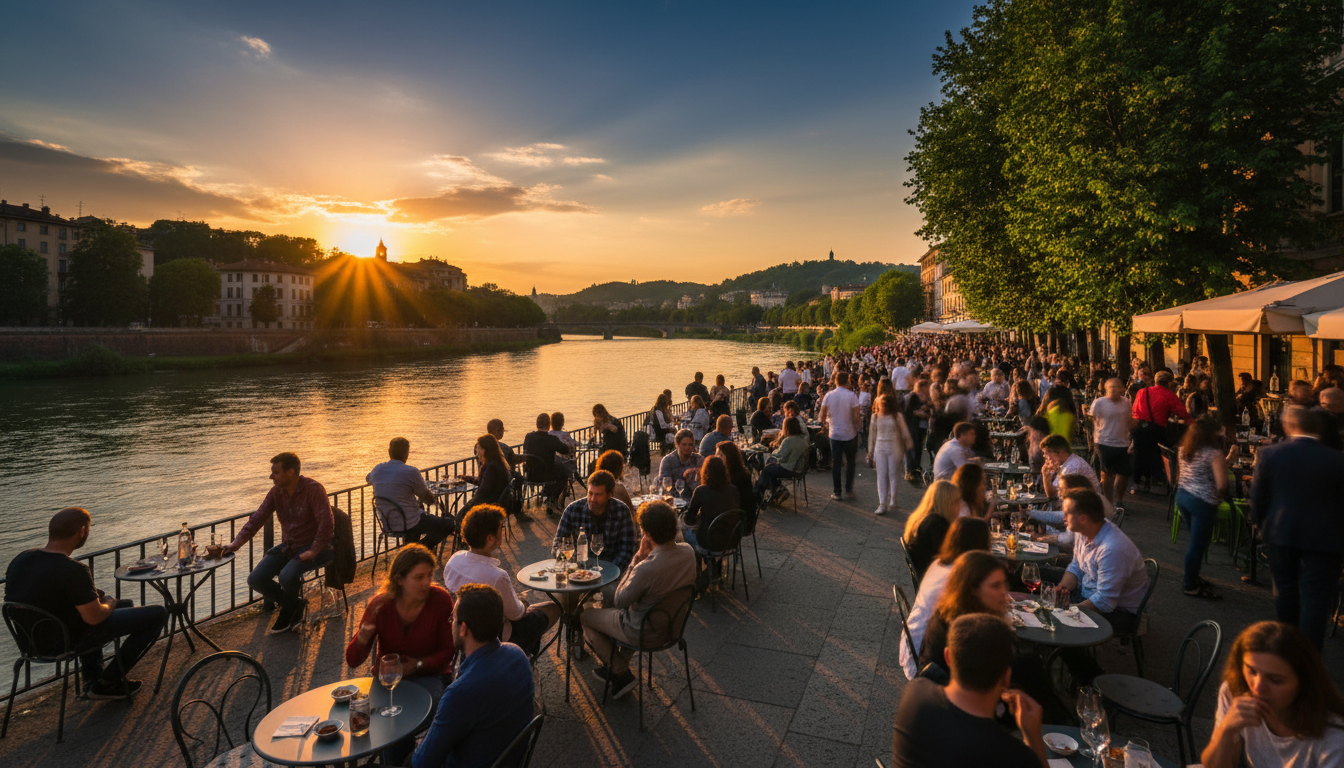 Evening aperitivo scene along the Murazzi riverside in Vanchiglia, with people gathered at outdoor t
Centro (Quadrilatero Romano): History Meets Hustle
The historic center is, predictably, the most expensive area if you were renting—but with home swapping, that's irrelevant. What matters is whether it suits your working style.
The Quadrilatero Romano is Turin's oldest neighborhood, with streets laid out by Roman engineers 2,000 years ago. It's beautiful, walkable, and absolutely packed with tourists during peak season. If you're working standard European hours, this is fine—you'll be at your desk while the crowds are out. But if you need to step out for a 3 PM coffee, expect company.
The advantage here is pure convenience. Everything is within walking distance: the Egyptian Museum (second largest collection outside Cairo), the Mole Antonelliana, the Royal Palace, and dozens of restaurants ranging from Michelin-starred to €8 lunch spots. For short-term home swaps—say, two weeks—the Centro makes sense. For longer stays, I'd recommend one of the residential neighborhoods.
Aurora and Barriera di Milano: The Emerging Option
I'm including these northeastern neighborhoods with a caveat: they're not for everyone, but they might be perfect for you.
Aurora and Barriera di Milano were historically working-class areas that fell into decline when Fiat downsized. Now they're experiencing the kind of regeneration that happened in Brooklyn's Bushwick or Berlin's Neukölln a decade ago. Rents are low, creative spaces are opening, and there's genuine community energy.
For home swaps, you'll find larger spaces at lower equivalent values—which means your credits go further in terms of square footage. A three-bedroom apartment here might swap for the same credit value as a studio in the Centro. The trade-off? Fewer polished amenities and a grittier urban feel.
I met a software developer from Portland who'd spent three months in Aurora. "It's not Instagram-pretty," he told me, "but my apartment had a dedicated office, a rooftop terrace, and I was paying nothing. The neighborhood felt real."
Setting Up Your Turin Home Swap for Productive Remote Work
Finding a home swap is one thing. Finding one that actually supports your work life is another. Here's what I've learned to look for—and ask about—before committing.
The Non-Negotiables for Working Professionals
Internet speed verification. Ask your potential swap partner to run a speed test and share the results. Anything above 50 Mbps download is workable; 100+ Mbps is ideal. Also ask about the provider—TIM and Fastweb are generally reliable; some smaller providers can be spotty.
Dedicated workspace. This doesn't have to be a full home office, but you need somewhere that isn't the kitchen table. A desk near a window, a converted corner of the living room, even a proper dining table that you can claim as yours. Ask for photos of where you'd actually work.
Natural light situation. Turin's winters are gray. If you're swapping between November and March, ask about light exposure. South-facing windows are gold. A dark apartment will destroy your mood and productivity faster than any timezone challenge.
Noise assessment. Is the apartment on a busy street? Above a bar? Near a school? These things matter less for vacation stays but become critical when you're taking client calls. Ask your swap partner to describe the noise situation honestly—most people will tell you if there's a 6 AM garbage truck or a nightclub next door.
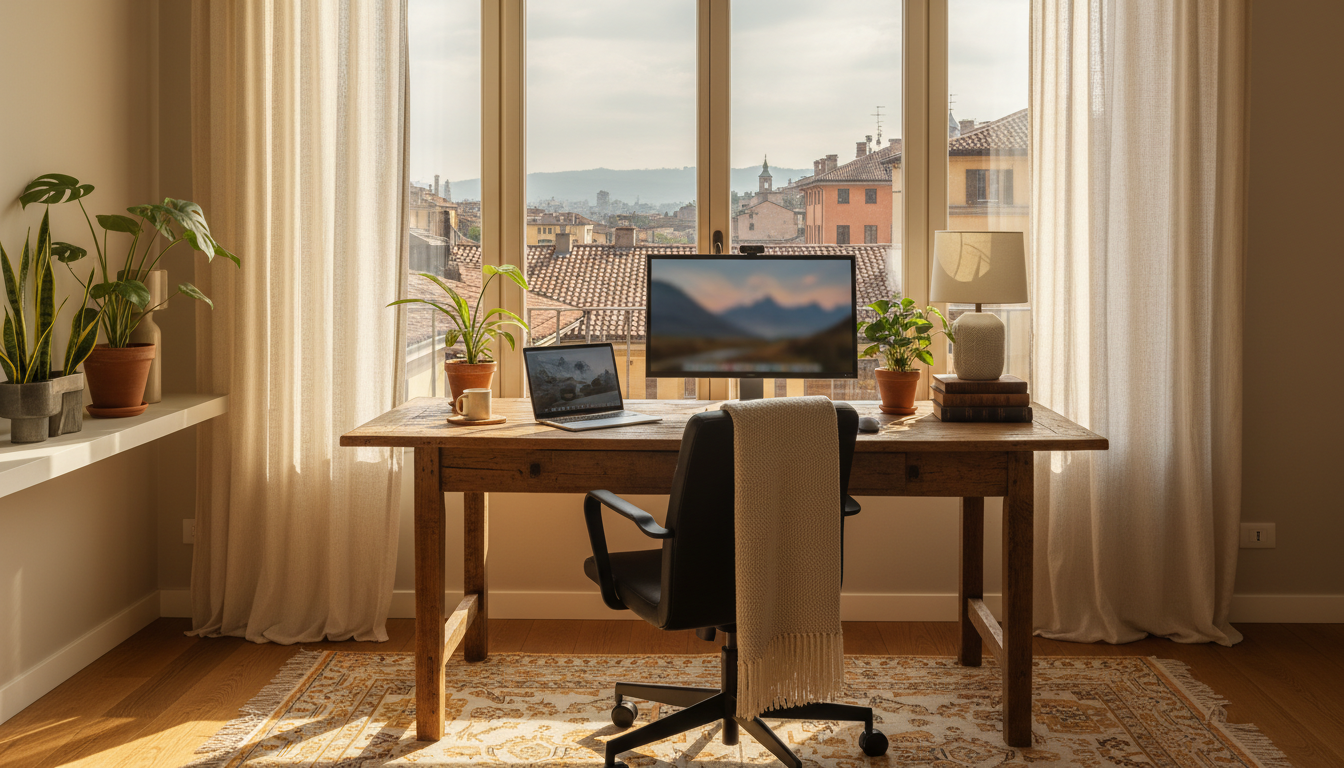 Well-lit home office setup in a Turin apartment, featuring a wooden desk by a large window overlooki
Questions to Ask Before Confirming Your Turin Home Swap
Through SwappaHome's messaging system, I always send a detailed questionnaire before finalizing any swap. Here's what I ask specifically for work-focused stays:
- What's your typical internet speed? (Ask for a screenshot of speedtest.net results)
- Is there a desk or dedicated workspace? Can you send a photo?
- How's the natural light throughout the day?
- What's the noise situation—street traffic, neighbors, nearby venues?
- Is there air conditioning? (Turin summers hit 35°C/95°F)
- Are there any regular interruptions I should know about—cleaning services, maintenance visits, neighbors who have keys?
- What's the best café within walking distance for a change of scenery?
Most swap partners appreciate the thoroughness. It shows you're serious and helps them understand what kind of guest you'll be.
Coworking Spaces and Backup Work Spots in Turin
Even with a perfect home swap setup, you'll want alternatives. Maybe you need a meeting room for a video presentation. Maybe you just need human contact after three days of solo work. Turin's coworking scene has expanded dramatically—here are my tested recommendations.
Toolbox Coworking
This is the big one. A 7,000-square-meter converted industrial space that's become Turin's creative hub. Day passes run €25, weekly passes €80, and monthly memberships start at €180. The space includes private phone booths (essential for calls), a café, regular networking events, and some of the best natural light I've seen in any coworking space.
Location: Via Agostino da Montefeltro 2, in the Lingotto area. About 20 minutes by tram from the center.
Rinascimenti Sociali
Smaller and more intimate, this coworking space focuses on social impact and creative industries. The vibe is less corporate, more community. Day passes are €20, and they often host interesting talks and workshops. It's in the San Salvario neighborhood, which made it my go-to backup spot.
Location: Via Maria Vittoria 38.
Café Working Spots
Sometimes you just want a coffee shop. These are my tested favorites for actual work (meaning: good WiFi, power outlets, and staff who won't glare at you for staying three hours):
Orso Laboratorio Caffè (Via Matteo Pescatore 8) — Specialty coffee, fast WiFi, and a back room that's quieter than the front. Order the filter coffee; it's exceptional.
Caffè Basaglia (Via Mantova 34) — Social enterprise café with a mission, excellent pastries, and a relaxed atmosphere that welcomes laptop workers.
Open Baladin (Via Sant'Agostino 23) — Yes, it's primarily a craft beer bar, but their daytime hours are surprisingly work-friendly. Great for afternoon writing sessions that transition into evening socializing.
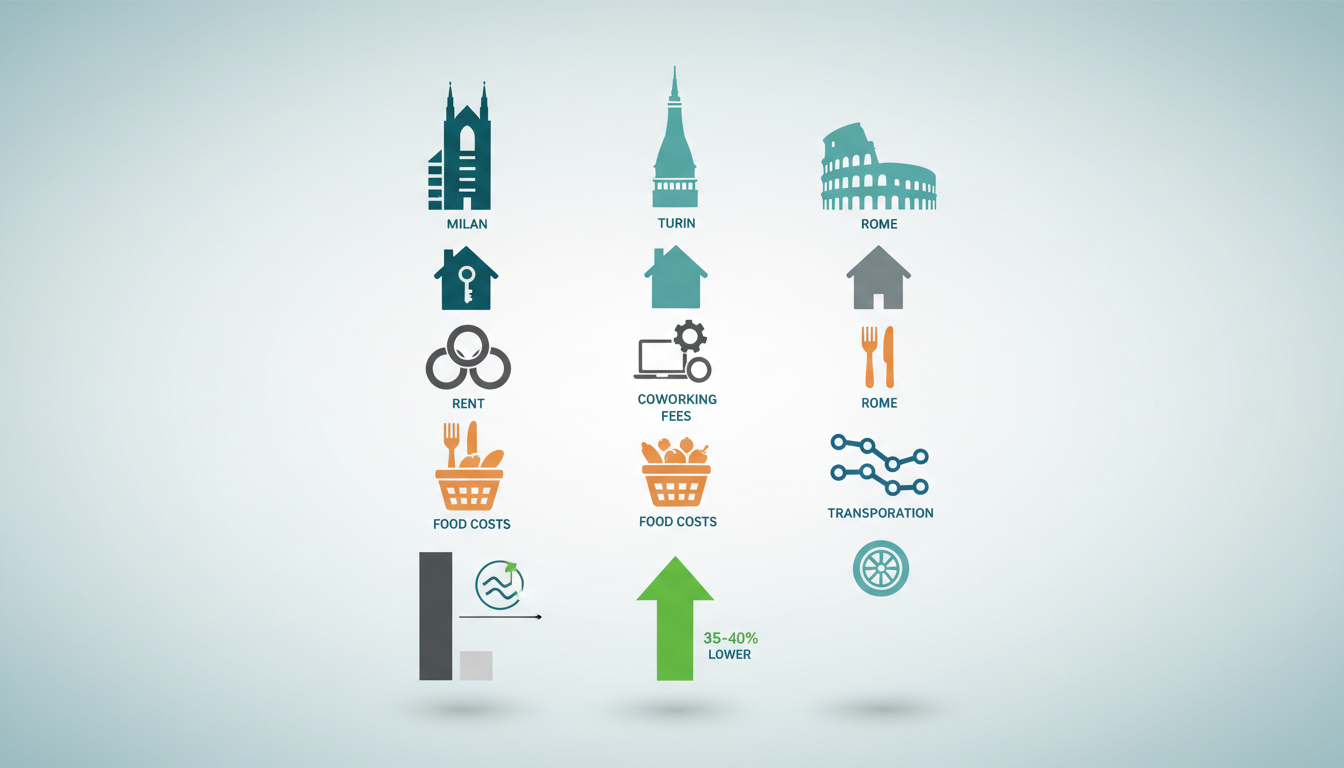 Comparison infographic showing monthly costs for remote workers Milan vs Turin vs Rome, including av
The Practical Stuff: Living and Working in Turin
Beyond the workspace, here's what you need to know about actually functioning as a working professional in this city.
Getting Around
Turin is flat and compact. I walked almost everywhere during my stay, averaging 8-10 kilometers daily without trying. The city has an efficient metro (one line, but useful), extensive tram and bus networks, and a bike-sharing system called ToBike that costs €25/year.
From the airport (Torino-Caselle), the Sadem bus takes 45 minutes to the center and costs €7.50. A taxi runs about €40-50. If you're planning weekend trips to the Alps or Piedmont wine country, consider renting a car. Enjoy (car-sharing) has vehicles scattered around the city for €0.25/minute, which works out cheaper than traditional rentals for day trips.
Cost of Living for Remote Workers
Here's my actual spending from six weeks in Turin, converted to USD:
- Accommodation: $0 (home swap through SwappaHome)
- Coworking (occasional day passes): $80 total
- Groceries: $320 (cooking most meals)
- Eating out: $450 (aperitivo culture is real)
- Coffee/cafés: $120
- Transportation: $45 (mostly walking, occasional tram)
- Weekend trips: $380 (wine country, Milan day trip, Alps)
- Miscellaneous: $150
Total: approximately $1,545 for six weeks, or about $260/week.
Compare that to my Milan month at $3,200 for accommodation alone, and you'll understand why I keep coming back to Turin.
Food and the Working Lunch
Italian work culture includes a proper lunch break, and Turin takes this seriously. The "pranzo" (lunch) scene offers incredible value for remote workers.
Look for places advertising "menu del giorno" or "pranzo completo"—a set lunch menu that typically includes primo (pasta), secondo (protein), contorno (vegetable side), water, and coffee for €12-18. My favorites:
Tre Galline (Via Bellezia 37) — Traditional Piedmontese cuisine, €15 lunch menu, been operating since 1575.
Scannabue (Largo Saluzzo 25) — Modern Italian, €14 lunch special, excellent for client lunches if you need to impress.
Mercato Centrale (Porta Palazzo) — Food hall with multiple vendors, perfect for quick €8-10 lunches when you're short on time.
Making the Most of Your Turin Home Swap
Six weeks taught me a lot about working effectively from this city. Here's what I'd do differently—and what I'd absolutely repeat.
Establish Routines Quickly
The first week of any home swap involves adjustment. You're learning the apartment's quirks, finding your coffee spot, figuring out which grocery store has the best produce. Front-load this exploration. Spend your first weekend actively discovering the neighborhood so that by Monday, you can focus on work.
I made the mistake of treating my first week like vacation. By week two, I was scrambling to meet deadlines while still figuring out where to buy decent olive oil. Don't be me.
Embrace the Aperitivo Transition
Italian aperitivo—the pre-dinner drink with snacks, typically 6-8 PM—is the perfect forcing function for ending your workday. When I was struggling to log off, I'd commit to meeting someone for aperitivo. Suddenly, 6 PM became a hard stop.
In Turin, aperitivo often includes substantial food. At places like Pastis (Piazza Emanuele Filiberto 9), your €8 spritz comes with access to a buffet that can legitimately replace dinner. It's social, it's affordable, and it's the best way to meet locals and other remote workers.
Use Weekends Strategically
Turin's location is absurdly convenient. Within 90 minutes, you can reach the Langhe wine region (Barolo, Barbaresco, truffle country), the Italian Alps (Sestriere, Bardonecchia), the Italian Riviera (Genoa, Portofino), Milan (for those who need a dose of chaos), and the Aosta Valley (Mont Blanc views, incredible hiking).
I used my weekends for complete disconnection—no laptop, no email. Friday evening I'd take a train or rental car somewhere beautiful, return Sunday night, and start Monday genuinely refreshed. The work-life balance that Turin enables is part of its magic.
Connect with the Local Remote Work Community
Turin has a growing community of remote workers, freelancers, and digital nomads. Find them through Toolbox events (check their calendar for networking nights), Meetup.com (search for "Turin Digital Nomads" or "Torino Freelancers"), Nomad List (Turin has an active forum thread), and Instagram hashtags (#torinodigitalnomad, #workingfromtorino).
I met two of my now-closest professional contacts at a random Tuesday evening event at Toolbox. One became a client; the other became a collaborator on a project I'm still working on. Don't underestimate the value of showing up.
Why Turin Over Other Italian Cities for Home Swaps
I've done home swaps in Rome, Florence, Milan, and Bologna. Each has its merits. But for working professionals specifically, Turin wins on almost every metric.
Versus Milan: Similar professional infrastructure, but Milan's cost of living is 35-40% higher, and the city's intensity can be exhausting for long stays. Turin has Milan's sophistication without its stress.
Versus Rome: Rome's internet infrastructure is genuinely problematic—I've had multiple swaps there with sub-20 Mbps speeds. The city is also overwhelming for focused work. Beautiful for vacation, challenging for productivity.
Versus Florence: Overtourism has made Florence's center nearly unlivable during peak season. The crowds, the noise, the prices—it's a different city than it was even five years ago. Turin offers comparable art and architecture with a fraction of the tourists.
Versus Bologna: This is the closest competitor. Bologna has excellent food, good infrastructure, and a strong university culture. But Turin edges it out on international connectivity (larger airport), coworking options, and weekend trip possibilities.
Getting Started with Your Turin Home Swap
If I've convinced you—and I hope I have—here's how to actually make this happen.
Start by creating a profile on SwappaHome that emphasizes your professional needs. Mention that you're a remote worker, that you need reliable internet, and that you'll be respectful of the space (working professionals tend to be ideal guests—we're too busy to throw parties).
Search for Turin listings and filter for amenities that matter: WiFi, workspace, natural light. Read reviews carefully, looking for mentions of previous remote workers or long-term stays. When you find promising options, send thoughtful messages. Explain your work situation, your typical hours, and what you're looking for. Ask the specific questions I mentioned earlier. Most Turin hosts are excited to share their city with professionals who'll appreciate it properly.
And remember—with SwappaHome's credit system, every night you host someone at your place earns you a credit you can spend in Turin. It's a beautifully simple exchange: your San Francisco apartment for six weeks in a Piedmontese paradise.
I'm already planning my return to Turin. There's a home swap listing I've been eyeing in the Vanchiglia neighborhood—a photographer's studio with a darkroom-turned-office and a terrace overlooking the Po. The owner wants to spend autumn in California.
Sometimes, the math just works out.
Frequently Asked Questions
Is Turin good for remote workers and digital nomads?
Honestly? It's one of the best-kept secrets in Europe. Turin offers reliable high-speed internet (typically 100+ Mbps), affordable coworking spaces starting at €20/day, and a cost of living 35-40% lower than Milan. The city's industrial past means consistent connectivity across most neighborhoods, and the growing digital nomad community provides solid networking opportunities.
How much does it cost to live in Turin as a remote worker?
You're looking at roughly $1,000-1,500 per month excluding accommodation. That covers groceries ($200-300), eating out and aperitivo ($300-400), coworking day passes ($80-150), transportation ($40-60), and entertainment. With a home swap eliminating accommodation costs, Turin becomes one of Europe's most affordable professional destinations.
What neighborhoods in Turin are best for home swaps?
San Salvario offers the best balance of cafés, nightlife, and residential calm for most remote workers. Crocetta suits families and those needing quiet focus time. Vanchiglia attracts creative professionals with its riverside location and gallery scene. The Centro (Quadrilatero Romano) provides historic charm but expect higher tourist density during peak season.
Is the internet reliable enough in Turin for video calls?
Absolutely. Turin has excellent internet infrastructure with fiber optic coverage throughout the city center. Most apartments offer 50-200 Mbps speeds through providers like TIM and Fastweb. Video calls on Zoom, Google Meet, and Teams work reliably. Just ask your home swap partner for a speed test screenshot before confirming your exchange—always worth double-checking.
How does home swapping in Turin compare to renting an Airbnb?
Home swapping through platforms like SwappaHome eliminates accommodation costs entirely—you exchange stays using credits rather than money. A typical Turin Airbnb runs €80-150/night ($2,400-4,500/month), while home swapping costs only your membership fee. Plus, home swaps often provide better-equipped spaces since you're staying in someone's actual home rather than a rental property optimized for turnover.

Published by
SwappaHome
SwappaHome Editorial Team
Home Exchange & Slow Travel Editorial
The SwappaHome Editorial Team brings together travel research, home-exchange community insights, and platform data to produce practical guides for first-time and experienced home swappers. Every article cites real platforms, current market rates, and verifiable city-level facts so readers can make informed decisions without guessing.
Ready to try home swapping?
Join SwappaHome and start traveling by exchanging homes. Get 7 free credits when you sign up!
Related articles
Home Swap in Rome: Where to Find the Best Properties for Your Italian Exchange
Discover where to find the best home swap properties in Rome—from Trastevere's cobblestone charm to Testaccio's local authenticity. Real neighborhoods, real advice.

Home Swap in Bangkok: Where to Find the Best Properties for Free Stays
Discover where to find the best home swap properties in Bangkok—from riverside condos in Charoen Krung to family homes in Ari. Real neighborhoods, real savings.
Home Swap for Beach Lovers: 12 Coastal Destinations Ranked for 2026
Discover the best coastal destinations for home swapping in 2026. From Portugal's Algarve to Australia's Gold Coast, find your perfect beach exchange.