
7 Honeymoon Alternatives for Every Kind of Couple

SwappaHome Editorial Team
Home Exchange & Slow Travel Editorial
A memorable honeymoon isn't defined by a resort package, a private pool, or a familiar beach itinerary. It's defined by how you want to spend your first days…
A memorable honeymoon isn't defined by a resort package, a private pool, or a familiar beach itinerary. It's defined by how you want to spend your first days as a married couple. If you'd rather cook together, climb mountains, serve a community, work from another country, or recover from wedding planning, a conventional resort may be the wrong choice.
These honeymoon alternatives are organized around seven priorities: value, adventure, purpose, flexibility, food, freedom, and recovery. Use the list. Identify the priority that matters most, decide which compromise you can accept, then pair the travel format with an accommodation strategy that protects your budget. A home exchange can add space, kitchens, privacy, and local immersion to several of these itineraries. The global service market facilitated about 580,000 home swaps in 2024, with listings across more than 150 countries, according to home exchange market data. That makes it a practical lodging layer, not a novelty.
Table of Contents
- 1. Home Exchange Honeymoons
- 2. Adventure and Active Honeymoons
- 3. Volunteer and Service Honeymoons
- 4. Digital Nomad and Remote Work Honeymoons
- 5. Culinary and Food-Focused Honeymoons
- 6. Road Trip and Self-Guided Adventure Honeymoons
- 7. Wellness and Retreat-Based Honeymoons
- 7 Honeymoon Alternatives Comparison
- Choose the Honeymoon You Will Actually Enjoy
1. Home Exchange Honeymoons
Choose a home exchange honeymoon if value, privacy, and local living matter more than hotel service. Instead of paying for a room designed for short stays, you can base yourselves in an apartment, townhouse, or house with a kitchen, living room, and neighborhood character. You might spend a week in a Paris apartment, prepare breakfast before exploring, and return to a real home rather than a crowded lobby.
Home exchange also works well for couples who want to stretch one itinerary across several destinations. A couple could swap a London flat for a Paris apartment, then use credits for another stay in a coastal home or countryside property. In 2024, one major home exchange service reported about 360,000 listings, up from 270,000 in 2023, while platforms in the sector operated across more than 150 countries. Those figures show that home swapping has enough supply and geographic reach to support serious honeymoon planning.
Make the exchange feel personal
Start by listing your home during your engagement so you can build credits before traveling. Choose partners with complete profiles, community reviews, and clear information about the property. Ask about heating, stairs, cooking equipment, outdoor space, transportation, and any household quirks before you commit.
A welcome guide builds trust in both directions. Include appliance instructions, emergency contacts, neighborhood recommendations, and house rules. If the concept feels unfamiliar, start with a shorter exchange before planning a long international stay. Shoulder-season travel can also improve availability and create a calmer, more residential experience.
Practical rule: Confirm the home's real features, not just its photographs. Your honeymoon base should support the way you intend to spend each day.
For a destination-specific example, explore this Copenhagen honeymoon home swap guide. The best fit is a couple willing to trade hotel amenities for space, independence, and a more authentic daily rhythm.
 An infographic showing a five-step process for organizing a home exchange honeymoon for couples.
2. Adventure and Active Honeymoons
An active honeymoon suits couples who bond through shared challenge. Hiking, kayaking, wildlife tracking, climbing, snorkeling, and glacier walks create stories you'll retell long after a quiet beach week would blur together. A Machu Picchu route with mountain lodge stays, a Costa Rican rainforest itinerary, or a New Zealand road adventure can combine physical activity with romantic scenery and memorable evenings.
The compromise is obvious. Adventure travel demands energy, preparation, and tolerance for changing conditions. It also exposes differences in fitness, risk tolerance, and preferred pace. Don't book an itinerary built around activities that only one partner enjoys. Select experiences both of you can approach with confidence, then add one or two stretch activities rather than making every day a test.
Build recovery into the itinerary
Train together before departure if hiking or water sports will dominate the trip. Practice with the footwear, packs, or equipment you'll use. Book reputable local guides for technical activities, wildlife encounters, or unfamiliar terrain, and verify what equipment they provide.
Use a simple rhythm: one demanding day, one lighter day, then a romantic evening or relaxed exploration. A Costa Rican zip-line excursion might pair with a quiet eco-lodge night. An Iceland glacier walk should leave room for a geothermal soak and an unhurried dinner.
- Match ability levels: Choose activities that challenge both partners without leaving one behind.
- Pack for conditions: Bring layers, sun protection, sturdy shoes, and quick-drying clothing where appropriate.
- Protect the memories: Use a compact camera or phone pouch that can handle the environment.
- Add local expertise: A good guide improves safety and often reveals places independent travelers miss.
Before booking, confirm cancellation terms, weather contingencies, transfers, and medical or travel insurance requirements. Couples who love the outdoors but want a softer base can add a private lodge or home exchange stay between active segments. For a water-focused itinerary, consider Kona snorkel tours couples love.
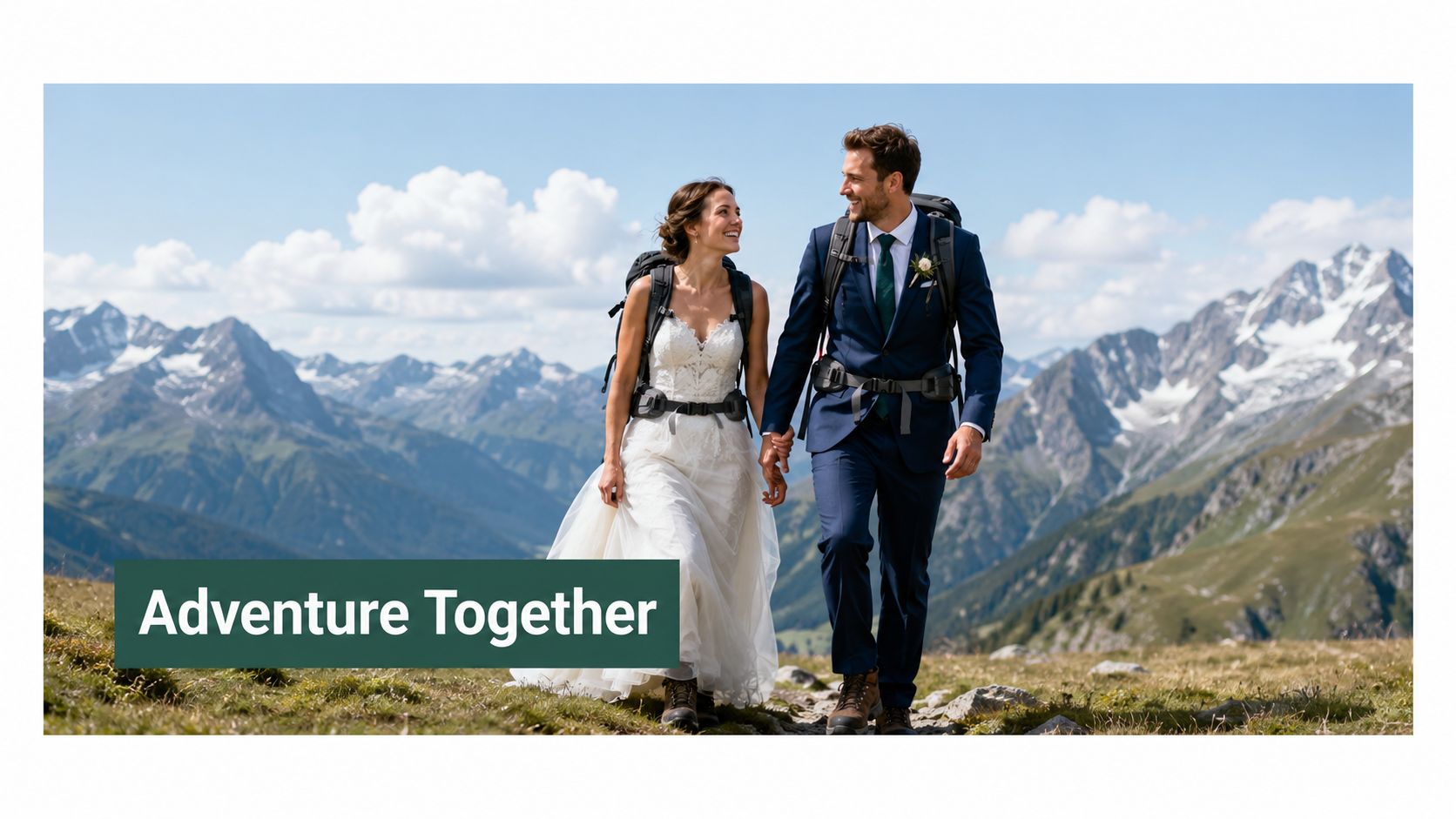 A newlywed couple in wedding attire hiking with backpacks through a scenic, mountainous landscape during their honeymoon adventure.
3. Volunteer and Service Honeymoons
A service honeymoon is for couples who want their travel to reflect a shared purpose. You might teach, support environmental conservation, help with sustainable agriculture, assist at a wildlife sanctuary, or contribute professional skills to a community project. The destination becomes more than a backdrop. Your days have a defined relationship with the people and places you visit.
Choose the organization before choosing the scenery. Responsible programs explain who leads the work, how local residents participate, what volunteers are qualified to do, and how the project measures useful outcomes. Avoid placements that turn vulnerable communities, children, or animals into tourist attractions. A couple shouldn't arrive expecting to fix complex local problems during a brief visit.
Pair service with restorative travel
A strong structure is a service placement followed by leisure. Spend the first part of the trip contributing to a marine conservation project in Costa Rica or Indonesia, then move to a quiet coastal stay. Teaching English in Thailand or Vietnam could lead into a food and culture itinerary. Sustainable agriculture in Central America could be followed by time in a rural guesthouse or exchanged home.
Plan the work around both partners' skills and interests. If one person has teaching experience and the other prefers environmental work, choose a project with complementary roles. Ask about working hours, accommodation, meals, transport, required vaccinations, and local supervision before paying a deposit.
Service should benefit the host community first. If the program's main product is an emotional experience for visitors, keep looking.
Bring a journal for private reflection, learn useful local phrases, and talk together about what you're observing without turning the community into a travel story about yourselves. Pack practical clothing, durable shoes, reusable items, and anything the organization specifically requests. Leave room for unstructured conversations and local experiences, because meaningful travel isn't created by a packed schedule alone.
The right fit is a couple who wants purpose without pretending that service replaces rest. Book through an established organization, understand the ethical standards, and make the post-placement recovery portion part of the original plan.
4. Digital Nomad and Remote Work Honeymoons
Remote work can turn a fixed honeymoon into a longer, slower shared adventure. Couples with flexible jobs, freelance practices, or location-independent businesses can spend weeks in one place, work part of the day, and explore with more depth than a rushed itinerary allows. Barcelona, Lisbon, Bali, and other well-connected destinations can support a routine that combines ordinary workdays with extraordinary surroundings.
This format only works if you protect the relationship from becoming a business trip. Agree on working hours, quiet periods, meeting boundaries, and the amount of exploration you expect each week. A couple might work from a home base during the week, take a full day for local discovery, and reserve the weekend for a longer excursion. Another might alternate work-focused weeks with travel-focused weeks.
Test the setup before departure
Confirm internet reliability through recent accommodation reviews and direct questions to the host. A dedicated desk, comfortable chair, separate sleeping area, and access to a coworking space can matter more than a photogenic view. Test video calls, charging equipment, backup connectivity, and time-zone workflows before leaving.
Visa rules, tax obligations, employer policies, client confidentiality, and health coverage all require attention. Don't assume a tourist entry automatically permits the work arrangement you have in mind. Create a shared calendar that shows meetings, deadlines, travel days, and protected couple time.
- Set a work boundary: Keep laptops and client conversations away from meals and planned dates.
- Choose the base carefully: A quiet apartment with a practical workspace may beat a central but noisy hotel.
- Plan local depth: Stay long enough to develop routines, revisit favorite cafés, and shop at neighborhood markets.
- Keep an exit plan: Know how you'll handle a connectivity failure, illness, or urgent return home.
A home exchange can make a remote-work stay more comfortable by providing a kitchen, living space, and a residential setting. This home exchange guide for digital nomads offers a useful starting point for evaluating that accommodation model. For additional remote-work logistics, review Global Pet Sitter's remote travel playbook.
5. Culinary and Food-Focused Honeymoons
Food-led travel gives couples a clear way to explore a place together. A cooking class in Tuscany, a market visit in Bangkok, a paella workshop in Valencia, or a street-food walk through Hanoi turns meals into activities rather than background details. The best culinary honeymoons mix instruction with spontaneity, so you learn a technique in the morning and then follow your appetite through the rest of the day.
 A happy couple wearing aprons cooks a healthy vegetable stir-fry together in a kitchen setting.
Research the instructor, class size, accessibility, dietary accommodations, and transportation. A highly rated school isn't automatically the right fit if it feels formal, rushed, or disconnected from local food culture. Balance one planned class with farmers markets, casual bakeries, family-run restaurants, and neighborhood food tours.
Build a trip around shared tastes
Choose a destination based on the food experiences you both want. Tuscany works for couples who enjoy cooking and wine. Provence suits travelers drawn to produce, markets, and long lunches. Thailand offers a stronger balance of market exploration, spice education, and hands-on cooking. Vietnam rewards couples who want to compare street food, regional dishes, and coffee culture.
Book one anchor experience, not every meal. The unplanned snack or tiny restaurant often becomes the story you remember.
A farm stay or agritourism property can connect accommodation with the food itself. A home exchange adds a kitchen where you can prepare ingredients from the market and recreate a dish together. Explore this home exchange food culture guide when comparing lodging options.
Keep a shared recipe journal, record the names of ingredients, and note the small techniques that made a dish work. After returning home, schedule a cooking date and make one honeymoon recipe together. That habit extends the trip beyond the flight home.
6. Road Trip and Self-Guided Adventure Honeymoons
Choose a road trip when freedom and control matter most. Driving lets you decide when to stop, change the route, linger in a small town, or replace a crowded attraction with a quiet viewpoint. A Pacific Coast Highway journey, New Zealand South Island circuit, Iceland Ring Road route, European van trip, or Route 66 itinerary can feel more personal than moving between preselected hotels and tours.
The main trade-off is shared driving and shared decision-making. Long hours in a vehicle test patience, especially when weather, traffic, navigation, or fatigue changes the plan. Decide in advance who drives, how you'll handle wrong turns, and what each person considers a reasonable travel day.
Plan the spine, leave the edges open
Reserve the major stops and essential accommodation, especially during busy travel periods. Don't schedule every hour. Leave room for a farm shop, a roadside hike, a beach detour, or a town that deserves an extra night.
Budget for the vehicle, fuel, food, parking, tolls, activities, and emergencies. A campervan can reduce some accommodation moves but brings its own demands, including limited space, cleaning, cooking, and campsite logistics. A rental car paired with guesthouses or home exchanges may provide more comfort.
- Download offline maps: Keep navigation available when coverage disappears.
- Pack comfort items: Bring water, snacks, layers, pillows, and a way to organize the vehicle.
- Create a shared playlist: Music can make long drives feel like part of the celebration.
- Schedule rest days: A slow day prevents the trip from becoming a driving assignment.
- Record the route: Photos, notes, and saved locations create a tangible travel record.
A self-guided honeymoon suits couples who enjoy making decisions together. It isn't the best choice if either partner wants every logistical detail handled by someone else. Before departure, check rental restrictions, driving documentation, border rules, roadside assistance, insurance coverage, and parking at each overnight stop. For inspiration, browse this self-drive Cornwall road-trip visual.
7. Wellness and Retreat-Based Honeymoons
Wedding planning can leave couples craving recovery rather than stimulation. A wellness honeymoon gives you permission to slow down through yoga, meditation, spa treatments, nature walks, nourishing meals, and quiet mornings. Ubud, Chiang Mai, Costa Rica, the Maldives, Sedona, and Big Sur all offer different versions of retreat travel, from structured programs to flexible spa-focused stays.
Don't book a retreat because the photographs look peaceful. Read the philosophy, daily schedule, treatment approach, food policy, privacy arrangements, and cancellation terms. Some retreats emphasize intensive yoga, meditation, or detox practices. Others provide a comfortable hotel with optional classes. Choose the level of structure that matches both partners.
Define recovery together
One person may want sunrise yoga and a planned treatment schedule. The other may want sleep, reading, and unstructured time. Discuss those preferences before booking, then choose a property that supports both. Private couple sessions can create shared experiences without forcing you into every activity together.
Balance wellness with gentle exploration. A morning meditation can lead to an afternoon market visit. A spa treatment can be followed by a slow dinner rather than another scheduled excursion. Shoulder-season dates may provide a calmer atmosphere and improved availability, but verify the destination's weather and operating schedule before committing.
- Agree on the purpose: Decide whether you want rest, physical renewal, mental space, or a new daily practice.
- Avoid overprogramming: Leave open time so relaxation doesn't become another obligation.
- Pack for comfort: Bring loose clothing, suitable footwear, sleepwear, and anything required for classes.
- Continue one practice: Choose a simple habit, such as evening walks or shared breathing exercises, to take home.
Journal separately and together about what helped you recover. The best wellness honeymoon doesn't demand perfection. It gives you both enough quiet to begin married life feeling present, rested, and connected.
7 Honeymoon Alternatives Comparison
| Option | 🔄 Implementation complexity | Resource requirements | ⚡ Speed / efficiency | 📊 Expected outcomes ⭐ | 💡 Ideal use cases |
|---|---|---|---|---|---|
| Home Exchange Honeymoons | Medium, listing, verification & coordination | Low cash cost; requires a suitable home, time to host/list | ⚡ Moderate, planning upfront, economical during stay | 📊 ⭐ High comfort, privacy, local immersion and strong cost savings | 💡 Cost-conscious couples who want authentic long stays and neighborhood life |
| Adventure & Active Honeymoons | Medium, logistics, guides, fitness prep | Moderate, guide fees, equipment, travel to remote sites | ⚡ High-pace during activities; schedule-dependent | 📊 ⭐ Memorable bonding, physical challenge, unique experiences | 💡 Physically fit couples seeking shared adventures and nature focus |
| Volunteer & Service Honeymoons | High, vetting organizations and commitments | Low-to-moderate cash (program fees possible); time and skills | ⚡ Slower, work-focused schedule with limited leisure | 📊 ⭐ Deep meaning, cultural immersion, measurable social impact | 💡 Purpose-driven couples wanting meaningful contribution over relaxation |
| Digital Nomad & Remote Work Honeymoons | Medium, remote setup, visa/work research | Needs reliable internet, workspace, ongoing income | ⚡ Flexible, can maintain productivity while traveling | 📊 ⭐ Extended travel + income continuity, deeper local integration | 💡 Remote-working couples who want prolonged travel without pausing careers |
| Culinary & Food-Focused Honeymoons | Low, booking classes/tours; minimal logistics | Moderate, classes, tastings, regional travel | ⚡ Moderate, daily activities but leisurely pace | 📊 ⭐ Strong cultural immersion, practical skills, memorable meals | 💡 Food-loving couples who value learning and tasting regional cuisine |
| Road Trip & Self-Guided Adventure Honeymoons | Medium, route planning, vehicle prep | Variable, vehicle rental/fuel, camping or lodging costs | ⚡ Very flexible, pace set by couple, spontaneous detours possible | 📊 ⭐ High freedom, regional exploration, intimate shared time | 💡 Couples who prioritize spontaneity, driving comfort, and exploration |
| Wellness & Retreat-Based Honeymoons | Low, select and book retreat programs | Moderate-to-high, retreat fees; time off work | ⚡ Low-pace, restorative and schedule-driven | 📊 ⭐ High relaxation, stress reduction, structured self-care | 💡 Couples seeking recovery, mindfulness, and bonded wellness practices |
Choose the Honeymoon You Will Actually Enjoy
The right honeymoon format depends on the experience you want to repeat in your memories, not the package that photographs best. Choose home exchange when space, value, and local immersion matter most. Choose active travel when you want a shared challenge and don't mind physical effort. Choose service travel when purpose should shape the itinerary. Choose remote work travel when flexibility and a longer stay matter more than a clean break from professional life.
Pick culinary travel if food is your favorite way to understand a place. Choose a road trip if you want control over the route, pace, and daily decisions. Select a wellness retreat if recovery after the wedding is your immediate priority. You can also combine these formats. A couple might use an exchanged apartment as a base for an active city-and-mountain itinerary, or complete a volunteer placement before moving into a quiet home for several days of recovery.
Phased planning gives couples more control when one large trip feels too expensive, too tiring, or impossible to schedule immediately. A 2026 wedding-and-honeymoon report found that 59% of couples are choosing mini-moons and delaying the main honeymoon, while 1 in 10 travel advisors reported an increase in pre-moon trips, according to Fora's 2026 wedding and honeymoon report. Another report found that 43% of couples chose multiple honeymoon experiences, and 64% of advisors saw growing interest in off-season travel, as reported in Fora's honeymoon trend coverage. A short recovery stay after the wedding, followed by a longer adventure or culinary trip, is a practical design rather than a compromise.
Before booking, answer these questions together:
- Shared priorities: Do you want rest, challenge, purpose, food, freedom, value, or time?
- Total budget: Include transport, accommodation, activities, meals, insurance, and an emergency reserve.
- Time away from work: Decide whether the trip needs to fit one leave period or several.
- Physical demands: Be honest about fitness, sleep, mobility, and recovery needs.
- Booking lead time: Secure limited-capacity guides, classes, retreats, vehicles, and distinctive homes early.
- Insurance and documents: Check passports, visas, driving requirements, medical coverage, and cancellation protection.
- Accommodation needs: Confirm kitchens, workspaces, privacy, laundry, accessibility, and transport connections.
- Recovery days: Add breathing room after flights, intense activities, service placements, or long drives.
- Backup plan: Know what you'll do if weather, illness, connectivity, or transport disrupts the itinerary.
Don't choose between romance and practicality. Pair the travel concept with a stay that supports your real habits, whether that's an exchanged home with a kitchen, an eco-lodge near the trailhead, a retreat with private space, or a comfortable base between road-trip stops. Your honeymoon should feel like the beginning of your shared life, not a performance of someone else's idea of luxury.
SwappaHome offers verified members a credit-based home exchange community where you can list your home, host fellow members, and redeem credits for stays in homes across more than 12 countries. For a honeymoon alternative with more space, kitchens, and neighborhood character, visit SwappaHome and explore stays that can support an adventure, food-focused trip, remote-work journey, or restorative escape.

Published by
SwappaHome
SwappaHome Editorial Team
Home Exchange & Slow Travel Editorial
The SwappaHome Editorial Team brings together travel research, home-exchange community insights, and platform data to produce practical guides for first-time and experienced home swappers. Every article cites real platforms, current market rates, and verifiable city-level facts so readers can make informed decisions without guessing.
Ready to try home swapping?
Join SwappaHome and start traveling by exchanging homes. Get 7 free credits when you sign up!