
How to choose Greece travel packages for your ideal island getaway

SwappaHome Editorial Team
Home Exchange & Slow Travel Editorial
Key Takeaways The right Greece trip balances your travel style, available time, preferred destinations, and real total budget. Decide whether you want islands,…
Key Takeaways
The right Greece trip balances your travel style, available time, preferred destinations, and real total budget.
- Decide whether you want islands, mainland highlights, or a combination.
- Compare package types by flexibility, guidance, comfort, and included services.
- Leave enough time for ferries, airport transfers, and slower island days.
- Check taxes, meals, activities, baggage, and cancellation terms before paying.
- Choose a provider that communicates clearly and supports you during the trip.
Define your ideal Greece vacation
Before comparing prices, picture the kind of holiday you actually want. Greece can be a relaxed beach escape, a history-focused journey, a food trip, or a lively island break. A package is only useful when its pace and inclusions fit that vision.
Match the trip to your travel style
Start with the way you like to travel. Independent travelers may prefer a simple flight-and-hotel arrangement, while first-time visitors often appreciate transfers and guided sightseeing. Couples might want privacy and unhurried evenings, whereas families usually value practical rooms, easy transport, and nearby beaches.
Your preferred rhythm matters as much as the destination. A tightly scheduled tour can be rewarding but tiring, while a flexible package leaves room for wandering, long lunches, and spontaneous swims. For a more local approach, you could also consider solo home exchange in Greece rather than limiting your search to conventional hotels.
Choose between islands, mainland Greece, or both
The mainland gives you Athens, archaeological sites, mountain scenery, and access to places that are difficult to fit into an island-only holiday. The islands offer a different mood: swimming, harbor towns, boat trips, and evenings shaped by the sea. Combining both can create variety, but it also adds transportation and coordination.
Think about how much movement you genuinely enjoy. If your priority is rest, one island with a few day trips may be enough. If you want history and beaches in the same vacation, begin in Athens and add one island rather than trying to collect several.
Decide how much time to spend in each destination
A short stay can work in Athens, but island visits usually feel better when you allow several nights rather than treating each stop as a quick photo opportunity. Travel days involve checkouts, ports, airport waits, and transfers, even when everything runs smoothly. Build your itinerary around experiences, not just a list of places.
As a general planning habit, allow a buffer before an international flight and avoid placing a complicated ferry connection immediately before it. A slower itinerary often feels richer because you have time to notice neighborhood cafés, local markets, and the changing light along the coast.
Set priorities for beaches, history, food, and nightlife
Write down your top two or three priorities before you shop. Beach lovers may care most about water access and boat excursions, history enthusiasts may want Athens and archaeological sites, and food-focused travelers may prefer neighborhoods with tavernas and markets over isolated resorts.
If nightlife is central, check how far the hotel is from the evening scene and whether transport is available late. For food and culture, a home with a kitchen and neighborhood setting can be appealing; a food and culture home swap offers that type of local-living perspective. Use these priorities to judge the package, not the other way around.
Compare the main types of Greece travel packages
Greece travel packages vary less by destination than by the amount of planning they take off your hands. Some bundle nearly everything, while others simply combine airfare and accommodation. Read the structure carefully so you are paying for help you want, rather than convenience you will not use.
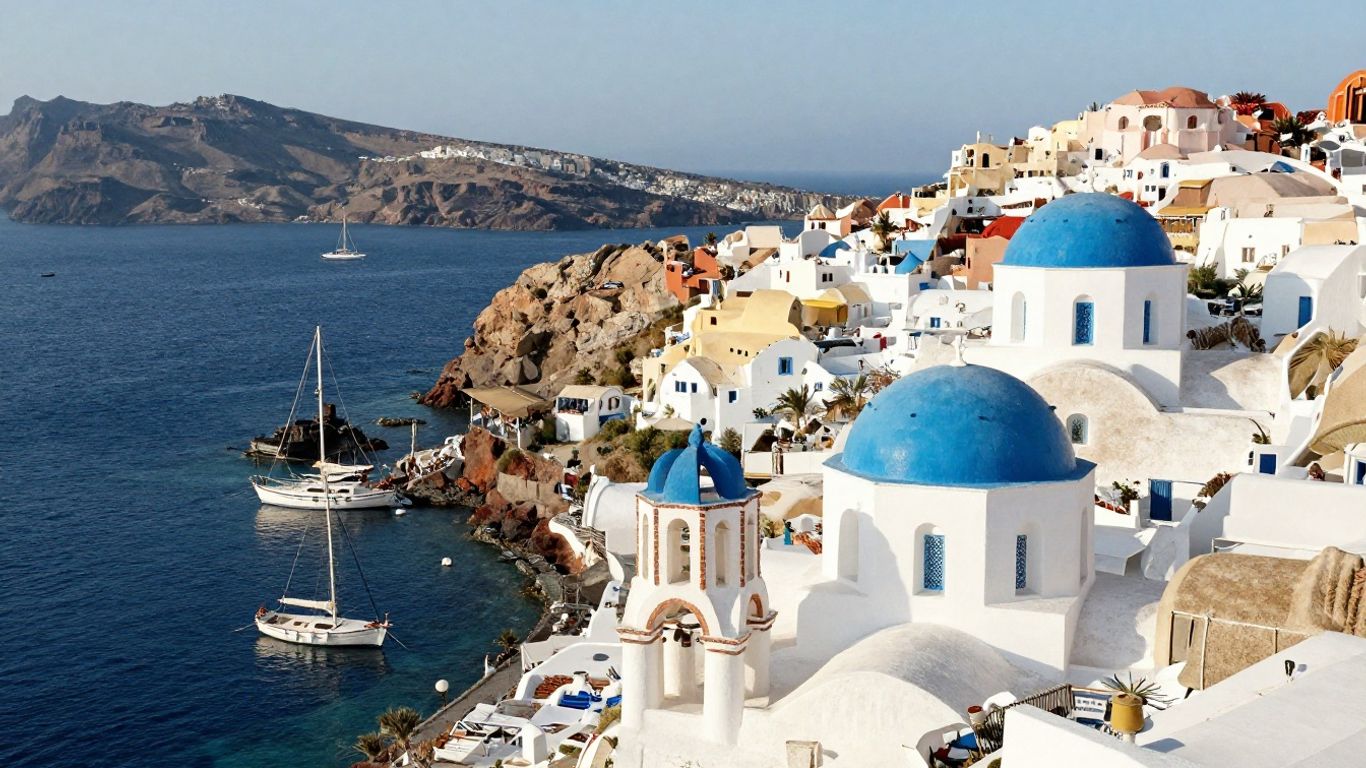 Sunlit Greek island harbor with whitewashed homes
All-inclusive packages for easy planning
All-inclusive options can make spending easier to predict, particularly at a resort where meals, drinks, and activities are available on site. They suit travelers who want to settle in without arranging each day. The trade-off is that you may spend less time in local restaurants or smaller towns.
Check what “all-inclusive” actually covers. Premium drinks, special dining, airport transfers, water sports, and off-site excursions may still cost extra. The package works best when the resort itself is a meaningful part of your holiday rather than simply a place to sleep.
Flight and hotel packages for flexibility
A flight-and-hotel package is a useful middle ground. It can reduce the work of matching dates and rooms while leaving you free to plan museums, beaches, ferries, and meals independently. You can often improve the experience by choosing a hotel near the area you want to explore instead of accepting a remote property.
Look beyond the headline fare. Compare flight times, connection length, room category, breakfast terms, and the cost of getting from the airport to the hotel. Flexibility is valuable only when the booking allows reasonable changes.
Guided tours for cultural immersion
Guided tours are well suited to travelers who want context as they move through Greece. A knowledgeable guide can add meaning to ancient sites and make logistics simpler, especially when the itinerary includes several mainland destinations. Small-group and private formats may offer more room for questions and personal interests.
Review the daily schedule before booking. Count early departures, long drives, free afternoons, and optional excursions. A tour should provide enough structure to make the history accessible without turning every day into a race between landmarks.
Luxury packages for premium experiences
Luxury packages usually focus on higher service levels, distinctive hotels, private transfers, or tailored sightseeing. They can be worthwhile for a honeymoon or milestone trip when privacy and ease matter more than finding the lowest price. Browse luxury Greece vacation journeys for an example of how private guides, scenic overnights, and island travel can be combined.
Do not assume luxury means every detail is included. Ask whether transfers are private, whether excursions are exclusive, and which room category is guaranteed. The best premium package is specific about what makes the experience more comfortable.
Family and honeymoon packages for specialized needs
Specialized packages can save time when the traveler’s needs are clear. Families may need adjoining rooms, kitchens, pools, child-friendly beaches, and short transfers; honeymooners may care more about privacy, views, flexible dining, and memorable experiences. A family-friendly home swap is another planning reference for travelers who value space, kitchens, and kid-welcoming neighborhoods.
Ask for practical details rather than relying on labels. “Family-friendly” does not automatically mean a stroller-suitable property, and “romantic” does not guarantee privacy. Match every promise to a room description, schedule, or written inclusion.
Choose the best destinations for your itinerary
The best Greek destination is the one that supports your priorities and travel time. Famous islands can be wonderful, but they are not interchangeable, and mainland stops can add depth to a beach holiday. Build around a few strong choices instead of trying to see the entire country at once.
Explore Athens and its ancient landmarks
Athens works well as a first or final stop because it combines ancient landmarks with lively neighborhoods, restaurants, museums, and easy connections. Give yourself enough time to visit the Acropolis area without squeezing it between flights. Early starts can make major sites more comfortable during hot months.
Where you stay changes the experience. A central neighborhood can make evening walks and casual meals easier, while a quieter area may offer better value. For ideas about local districts and residential stays, see this guide to authentic home exchange in Athens, then compare its neighborhood perspective with your hotel options.
Compare Santorini and Mykonos
Santorini is associated with caldera views, dramatic villages, and sunset scenery, while Mykonos is known for beaches, dining, and a more energetic social atmosphere. Both can be expensive in peak periods, so hotel location and travel dates deserve close attention. Neither island needs to define your entire trip.
Choose Santorini when scenery and atmosphere lead your list. Choose Mykonos when beach time and nightlife are more central. If you want a quieter version of island travel, compare nearby alternatives before committing to the most recognizable name.
Discover Crete, Rhodes, and Corfu
Crete suits travelers who want scale and variety, with room for beaches, villages, food, and historical sites. Rhodes combines an atmospheric old town with coastal resorts and a long history, while Corfu brings lush landscapes, Venetian influence, and a distinct island character. Their size and transport needs differ, so a package itinerary should explain how sightseeing works.
Avoid judging these islands only by resort photographs. Look at driving times, excursion departure points, and whether the hotel is near a town or isolated along the coast. A beautiful property can feel inconvenient if every meal or activity requires a lengthy transfer.
Consider lesser-known islands for a quieter trip
Smaller or less heavily marketed islands can offer calmer beaches, intimate villages, and a more relaxed evening rhythm. They may also have fewer direct transport options and a narrower choice of package hotels. That is not necessarily a drawback, but it calls for more careful planning.
Ask how often ferries run, whether the property can arrange transfers, and what happens if weather disrupts a connection. A quieter island is most enjoyable when the practical details are settled before departure.
Combine destinations without overpacking your schedule
Two destinations often provide more satisfaction than four rushed stops. Pair Athens with one island, or combine islands that share a convenient ferry route. Leave a full day or two for settling in, weather changes, and the simple pleasure of doing very little.
For broader inspiration, browse Greece vacation ideas before turning inspiration into a booking. Then remove anything that requires a chain of tight connections. Your itinerary should have a clear shape, not just an impressive number of pins on a map.
Evaluate what each package includes
The advertised package price is only a starting point. Two trips with the same hotel and dates can differ considerably once transfers, meals, ferry tickets, entrance fees, and baggage are added. Request a complete schedule and a written list of inclusions before comparing offers.
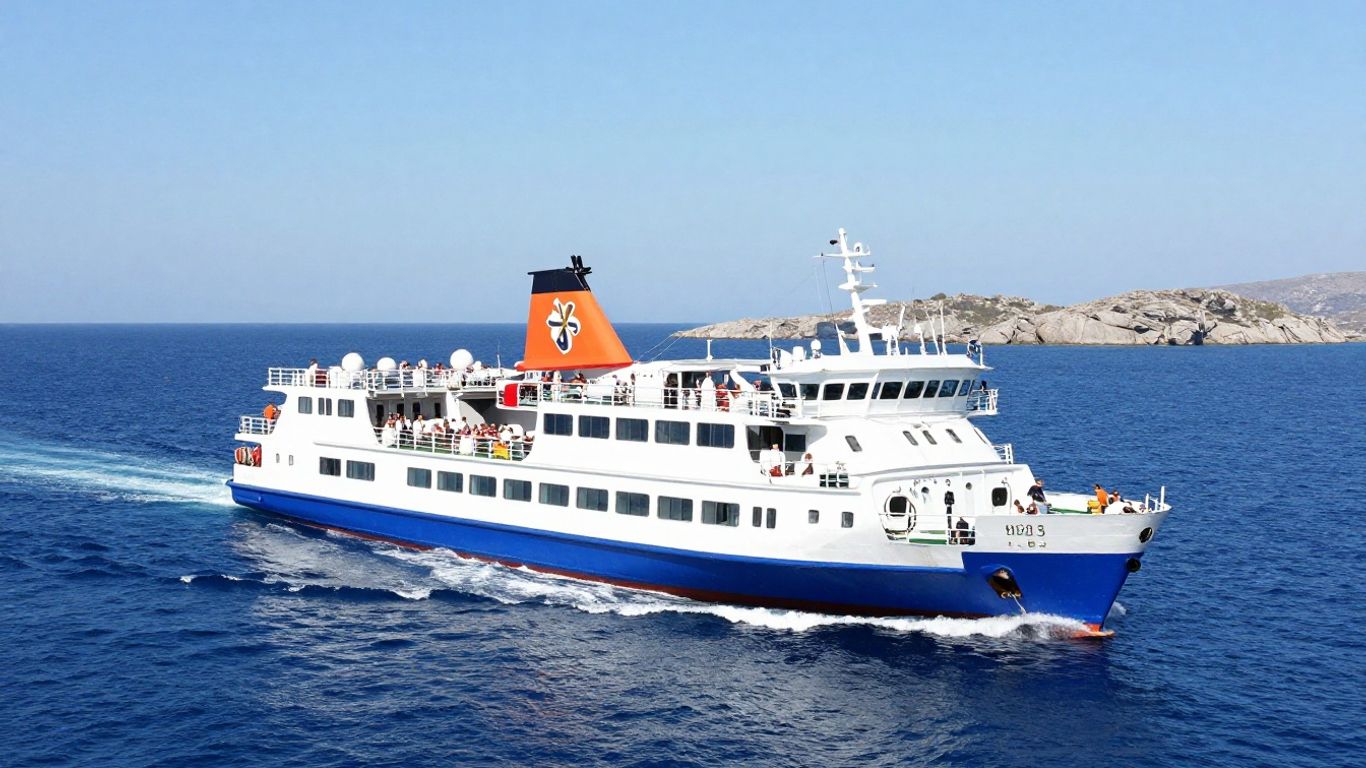 Greek ferry crossing blue Aegean waters
Review flights, hotels, and airport transfers
Check the exact flight numbers, connection times, baggage allowance, room type, and hotel address. An airport transfer may be shared, private, or unavailable outside certain arrival windows. Confirm what happens if a delayed flight causes you to miss the scheduled vehicle.
Hotel location deserves equal weight. A property near a port may be convenient for island-hopping but less pleasant for nightlife, while a resort far from town may require taxis for every outing. Ask whether taxes, resort fees, and local charges are included.
Check tours, activities, and entrance fees
A package may list sightseeing without covering admission, audio guides, reservations, or transportation to the site. Read the itinerary line by line and distinguish between included activities and optional suggestions. This is especially useful for archaeological sites and boat excursions, where costs can accumulate.
A clear schedule should tell you the meeting point, duration, group size, guide language, and cancellation terms. If those details are missing, treat the activity as unconfirmed until the provider explains it.
Understand meals, drinks, and resort inclusions
“Breakfast included” is very different from full board, and a drinks package can exclude imported spirits, bottled water, or beach service. Ask whether meals are buffet or à la carte, whether reservations are needed, and whether unused meals have any value on travel days.
If you expect to eat outside the resort, a narrower meal plan may be better value. Conversely, an all-inclusive stay can simplify a family holiday when the property has the facilities you actually plan to use.
Look for ferry tickets and inter-island transportation
Inter-island transportation is one of the easiest costs to overlook. Confirm whether ferry tickets are included, whether seats are reserved, and who handles port transfers. Also check whether the itinerary depends on a particular sailing or leaves enough flexibility for seasonal timetable changes.
A package that coordinates ferries can be worthwhile, but only if the responsibility is clear. Keep confirmation numbers together and allow time between arrival at a port and the next transfer, especially with luggage.
Identify exclusions and possible add-on costs
Before paying, make a simple total-cost list. Include the items that most often sit outside the advertised rate:
- Airport and port transfers not explicitly listed
- Checked baggage and seat selection
- Entrance fees and optional excursions
- Resort, city, or local taxes
- Meals, drinks, and transport outside the itinerary
Once these costs are visible, the comparison becomes fairer. You can also decide which extras matter and which are easy to skip. For unrelated practical research, links such as cleaning services, DiscoverCars.com, Clarity-GMS, IPTV service guidance, and VinoSomm should be treated as separate resources, not as components of a Greece package.
Plan your budget and travel timing
Price is shaped by demand, availability, location, and the amount of service included. A low advertised rate may be attractive, but it can lose its advantage after transfers and meals are added. Set a realistic ceiling, then compare like with like.
Compare prices by season
Peak summer generally brings stronger demand for popular islands, while spring and fall can offer a gentler pace and more moderate prices. Weather and ferry schedules vary, so the cheapest date is not automatically the best date for your priorities.
Compare the same room category and flight standard across several dates. If you are traveling for beaches, check likely swimming conditions; if you are traveling for history and food, cooler shoulder-season days may be especially pleasant.
Calculate the total cost beyond the advertised rate
Build a per-person estimate that includes airfare, lodging, transfers, food outside the plan, activities, insurance, and a contingency for taxis or schedule changes. This prevents a package with a low entry price from appearing cheaper than a more inclusive alternative.
Use the provider’s terms as the source of truth. Search snippets and promotional language can omit important conditions, so ask for a final quote with taxes, fees, room details, and payment deadlines shown clearly.
Find value during shoulder-season travel
Late spring and early fall can be attractive for travelers who want pleasant sightseeing weather, fewer peak-season crowds, or better accommodation availability. Some seasonal businesses may operate on reduced schedules, however, so confirm that the restaurants, ferries, and excursions you want will be running.
Shoulder-season value is strongest when your itinerary is flexible. A slightly less expensive room in a better location may save money on taxis and make the trip more enjoyable overall.
Balance hotel location with package price
A cheaper hotel outside the center may look like a bargain until daily transport is added. On the other hand, paying for a prime address makes less sense if you plan to spend most of the day on organized excursions. Map your likely activities before choosing between two properties.
Read recent reviews for noise, walkability, nearby food, and transfer access. Photos tell you what a hotel looks like; location tells you how the holiday will feel.
Check cancellation and change policies
Policies can differ between the flight, hotel, ferry, and tour portions of one booking. Find out which parts are refundable, how close to departure changes are allowed, and whether credits or fees apply. Save the policy documents with your confirmation.
Do not rely on a verbal promise that a booking is flexible. The useful version of flexibility is written, specific, and easy to locate when plans change.
Book a Greece travel package with confidence
A good booking process should leave you with fewer unanswered questions, not a rush to click “pay.” Before committing, compare the final itinerary, provider support, and protection available if something goes wrong. A little paperwork now can prevent a stressful conversation later.
Verify the provider’s reputation and support
Look for a clear business identity, reachable customer service, and transparent booking terms. Ask who you contact during the trip and whether support operates outside the provider’s home time zone. You should know whether the provider, hotel, airline, or local operator is responsible for each part of the booking.
Check that payment pages are secure and that confirmation documents name the actual suppliers. Clear documentation is a reassuring sign, particularly for multi-stop itineraries.
Read recent traveler reviews carefully
Reviews are most helpful when they discuss details relevant to your trip: transfer punctuality, room accuracy, guide quality, communication, and how problems were handled. Give more weight to recent, specific accounts than to vague praise or one dramatic complaint.
Look for patterns across several sources. A recurring comment about a remote location or extra charges is more useful than a single opinion about décor.
Confirm passport, visa, and insurance requirements
Check entry rules for your nationality and travel date through official government or consular sources. Make sure your passport validity meets the requirements and that your insurance covers the activities you plan to do, such as boat trips or hiking.
Keep digital and printed copies of key documents. Requirements can change, and the responsibility for having correct travel documents usually remains with the traveler.
Check baggage rules and transfer details
Airlines and ferries may apply different baggage limits, while small vehicles may have limited room for large cases. Confirm luggage allowances for every leg, as well as meeting points, driver contact details, and what happens after a delayed arrival.
If you are moving between islands, pack with those transitions in mind. A smaller case can make ports, stairs, and hotel changes much easier.
Protect your booking with travel insurance
Travel insurance can help with eligible cancellations, medical emergencies, delays, and lost belongings, depending on the policy. Read exclusions carefully and check whether pre-existing conditions, ferry disruption, or activities on your itinerary are covered.
Buy coverage soon enough to benefit from any time-sensitive cancellation protections. Keep the policy number and emergency contact details somewhere accessible during the trip.
Conclusion
Choosing among Greece travel packages becomes simpler when you start with the holiday you want, compare complete costs, and leave realistic space for travel between destinations. Whether your plans center on Athens, one island, or a carefully paced combination, the strongest package is the one whose details match your priorities in writing.
Frequently Asked Questions
What is usually included in Greece travel packages?
Packages may include flights, hotels, transfers, meals, tours, ferry tickets, or some combination of these. Always check the itemized inclusions because similar labels can cover very different services.
How many days are enough for a Greece vacation?
A week can support Athens plus one island, while longer trips allow a second island or a mainland extension. Keep travel days separate from sightseeing days so the itinerary does not become exhausting.
Is Santorini or Mykonos better for a first trip?
Santorini often suits travelers focused on scenery and atmosphere, while Mykonos may appeal more to those seeking beaches, dining, and nightlife. The better choice depends on your priorities, budget, and travel season.
When is the best time to visit Greece?
Late spring and early fall can offer comfortable sightseeing conditions and potentially better value than peak summer. Check local operating schedules if you plan to visit smaller islands outside the busiest months.
Are all-inclusive Greece packages worth it?
They can be worthwhile when you expect to spend much of your time at the resort and want predictable meal and activity costs. They may be less suitable if exploring local restaurants and towns is central to the trip.
Should I visit more than one Greek island?
You can, but each additional island adds ferry or flight logistics. Two well-connected destinations are often more enjoyable than several stops with little time to settle in.
What should I check before booking a package?
Review the exact flights, hotel location, room type, transfers, baggage rules, activities, taxes, cancellation terms, and insurance options. Ask for any unclear detail in writing before making payment.

Published by
SwappaHome
SwappaHome Editorial Team
Home Exchange & Slow Travel Editorial
The SwappaHome Editorial Team brings together travel research, home-exchange community insights, and platform data to produce practical guides for first-time and experienced home swappers. Every article cites real platforms, current market rates, and verifiable city-level facts so readers can make informed decisions without guessing.
Ready to try home swapping?
Join SwappaHome and start traveling by exchanging homes. Get 7 free credits when you sign up!