
How to choose Italy trip packages for an unforgettable Italian vacation

SwappaHome Editorial Team
Home Exchange & Slow Travel Editorial
Key Takeaways The best Italy trip packages are the ones that fit your interests, energy, budget, and preferred way of traveling. Compare the details behind the…
Key Takeaways
The best Italy trip packages are the ones that fit your interests, energy, budget, and preferred way of traveling. Compare the details behind the headline price before you commit.
- Choose an itinerary that leaves room for the experiences you care about most.
- Compare destinations, travel time, hotel locations, and included activities.
- Match the season and trip length to your preferred pace.
- Calculate extras such as meals, tickets, transfers, and optional excursions.
- Read the booking terms carefully and keep some flexibility in your plans.
Define your ideal Italy travel experience
Italy can be a museum-filled city break, a leisurely countryside escape, or a coastal holiday shaped by long lunches and sea views. Before comparing packages, decide what you want to remember most. A clear travel style makes it easier to ignore attractive itineraries that simply do not suit you.
Match the trip to your interests
Start with the experiences that would make the trip feel personal. Art lovers may want extra time in Florence, while food-focused travelers might prefer market visits, regional cooking, or a stay near smaller towns. History, architecture, fashion, hiking, wine, and beaches can all guide the shape of the itinerary.
Write down three priorities rather than trying to include everything. That short list will help you judge whether a package gives enough time to explore or merely passes through a destination.
Choose between cities, countryside, and coast
Italy’s regions have distinct rhythms. A city route offers museums, piazzas, and celebrated landmarks, while the countryside brings vineyards, hill towns, and slower mornings. Coastal packages may be more relaxing, but transfers can take longer than the map suggests.
Think about how often you want to unpack. Combining Rome, Tuscany, and the Amalfi Coast can be rewarding, but a single base may feel more comfortable if you value quiet mornings and spontaneous walks.
Decide whether to travel independently or with a guide
Independent travel gives you control over restaurant choices, detours, and the length of each visit. A guided package can simplify logistics and add context at major sites, especially when you are visiting Italy for the first time.
For a more local-feeling stay, Italy home exchanges can offer an alternative to a conventional hotel itinerary. SwappaHome describes a credit system in which one credit equals one night, with no bidding or price surges; that can suit travelers who want a real neighborhood base and more independence.
Set expectations for pace, flexibility, and group size
An itinerary with a new hotel every night may look efficient but feel tiring in practice. Check how many early departures, long transfers, and guided visits are scheduled in a row. Group size matters too: a small group may feel more intimate, while a larger one can be lively and less expensive.
A comfortable pace matters more than squeezing in one additional city. Choose a package that leaves enough time for coffee, wandering, and the occasional change of plan.
Compare Italy trip packages by itinerary
Once your travel style is clear, compare routes rather than package names. Two Italy trip packages may both promise a classic vacation while offering very different amounts of time in each place. Look at nights per destination, travel days, and whether the itinerary moves logically from one region to the next.
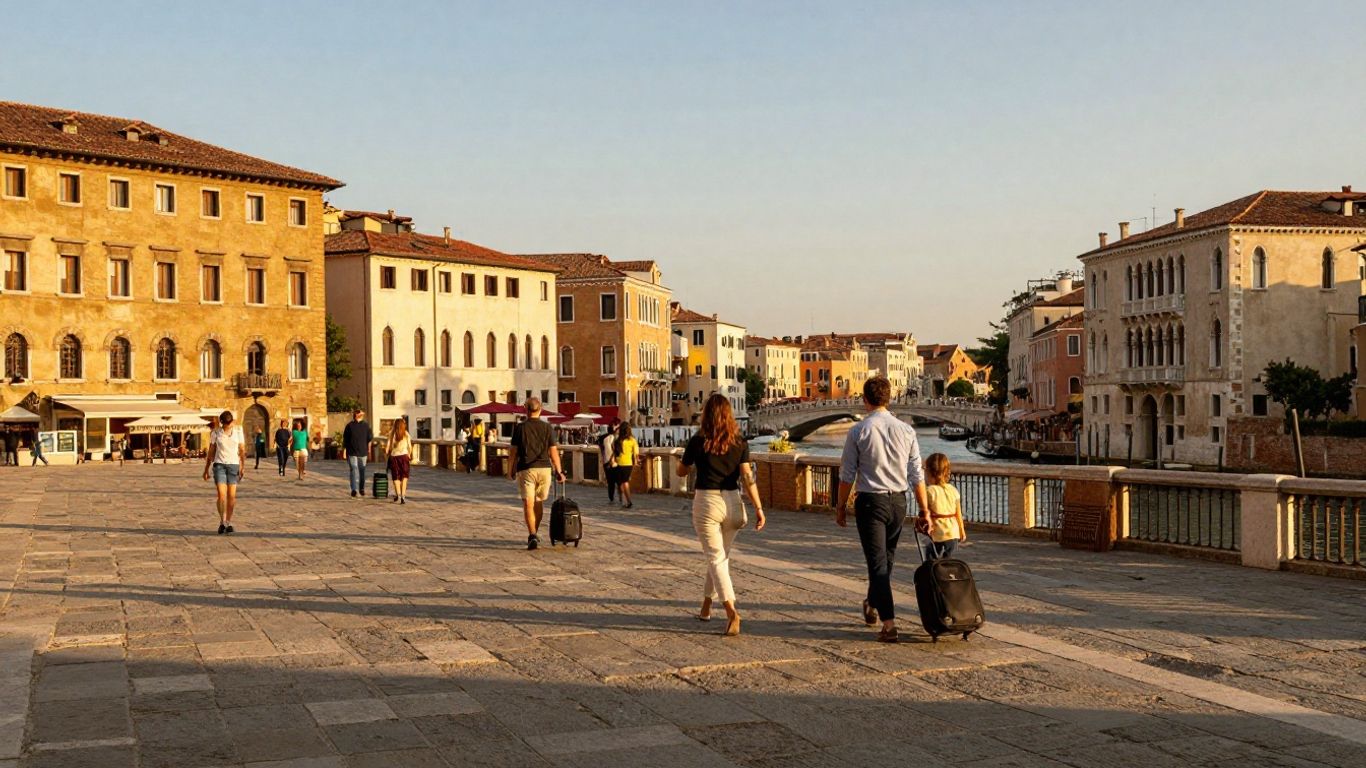 Rome Florence Venice travel scene
Explore classic routes through Rome, Florence, and Venice
The Rome–Florence–Venice route is popular for good reason: it brings together ancient history, Renaissance art, and northern Italian atmosphere. It works well for a first visit, provided the schedule does not reduce each city to a hurried overnight stop.
See whether the package includes centrally located hotels and meaningful time at major attractions. A route that includes a Rome-to-Florence itinerary may also add southern stops or Tuscany, so read the day-by-day plan instead of relying on the destination list alone.
Consider southern Italy and the Amalfi Coast
Southern Italy offers a different mood, with dramatic coastlines, archaeological sites, lively cities, and distinctive food traditions. The Amalfi Coast is visually spectacular, but its winding roads and seasonal traffic can make short transfers feel surprisingly demanding.
Look for packages that allow at least a few relaxed evenings. Pairing Rome with Sorrento, Pompeii, or Capri can create a strong balance of history and scenery, especially when the route does not overfill every day.
Add Tuscany, the Italian Lakes, or Sicily
Add-on regions can make a familiar itinerary feel more tailored. Tuscany suits travelers drawn to hill towns, vineyards, and rural landscapes; the Italian Lakes offer elegant villages and water views; Sicily brings ancient sites, strong regional cuisine, and a culture shaped by many civilizations.
Choose additions based on geography as well as interest. Sicily usually deserves more than a quick extension, while a lake stop may work neatly between northern cities if the transport connections are practical.
Identify one-region packages for a slower vacation
A one-region package can be the most satisfying choice when you prefer depth over coverage. Staying in Tuscany, Puglia, Sicily, or the Lakes lets you settle into one hotel and take carefully chosen day trips rather than constantly managing luggage.
This format is also useful for repeat visitors and families. A slower base gives everyone room to rest, shop for groceries, or follow a promising street without worrying about the next check-in.
Evaluate what each package includes
The advertised itinerary is only one part of the value. A package may include flights and hotels but leave local transport, entrance tickets, and several meals to you. Make a simple comparison of what is covered, what is optional, and what you would have purchased independently.
Review flights, accommodations, and transfers
Check the airline, baggage allowance, arrival airport, and flight times. A low fare with a late arrival or long connection may affect the first day more than expected. Hotel details deserve equal attention: room category, neighborhood, breakfast, air conditioning, and distance from transit all matter.
Transfers should be described clearly. Confirm whether airport pickup, rail connections, ferries, and transportation between hotels are included or merely recommended.
Check whether tours, meals, and attraction tickets are included
“Included” can mean different things, so read the fine print. A tour may be a brief orientation rather than a full-day visit, and breakfast may be covered while lunches and dinners remain your responsibility. Attraction tickets may also apply only to selected sites.
A useful comparison is easier when the inclusions are organized by category:
| Package element | What to verify | Why it matters |
|---|---|---|
| Flights | Airports, baggage, and connection times | Affects arrival comfort and total cost |
| Hotels | Location, room type, and breakfast | Shapes daily convenience |
| Transport | Rail, coach, ferry, and airport transfers | Prevents unexpected logistics |
| Activities | Guides, entry tickets, and duration | Clarifies how much sightseeing is covered |
After making this comparison, estimate the value of the free time too. A package with fewer included tours may be better for an independent traveler, while a first-time visitor may appreciate more structured sightseeing.
Understand optional excursions and upgrade costs
Optional excursions can be a pleasant way to personalize a trip, but they should not be treated as small add-ons automatically. Ask how much time each one takes, where it begins, and whether you would miss included activities by joining it.
Also check room upgrades, private transfers, premium seating, and guided-entry supplements. Add the options you are genuinely likely to choose to the advertised price before comparing packages.
Look for exclusions, taxes, and resort fees
Read the exclusions line by line. City taxes, baggage charges, tips, drinks, porterage, travel between an airport and an unlisted hotel, and resort fees can all alter the final figure.
Keep a small contingency in your budget for ordinary travel costs. That cushion makes the trip feel easier and prevents every gelato, taxi, or train change from becoming a financial decision.
Choose the right travel season and duration
The ideal time to visit Italy depends on your priorities rather than a universal best month. Weather, crowds, prices, daylight, and local events change throughout the year. Your available time should also shape the route, since a short trip cannot comfortably cover the whole country.
 Italian coastline and countryside in golden light
Compare Italy in spring, summer, fall, and winter
Spring often brings fresh landscapes and comfortable sightseeing weather, while summer offers long days and lively coastal destinations but usually greater demand. Fall can be appealing for food, wine, and softer temperatures. Winter is quieter in many places, although some coastal businesses and seasonal attractions operate on reduced schedules.
Check the conditions in every region on your route. Northern mountain areas, central cities, and southern coasts can feel quite different during the same month.
Plan around weather, crowds, and local events
Popular cities are busiest when school holidays and major events overlap. Booking early may be sensible for high-demand periods, but shoulder-season travel can provide a gentler experience and sometimes more choice in accommodation.
Allow for weather-related changes, particularly on coastal or ferry-based itineraries. A flexible day can protect the trip when rain, heat, or transport disruption affects an outdoor plan.
Select the ideal length for a first visit
A long weekend can work for one city, while seven to ten days gives a first-time visitor room for a carefully chosen multi-city route. Two weeks allows a more balanced combination of cities, countryside, and coast without turning every morning into a departure.
Do not measure the trip only by the number of destinations. Three well-explored places often leave stronger memories than six places seen through a coach window.
Balance sightseeing time with rest days
Rest days are not wasted days. They provide time to recover from flights, do laundry, browse a market, or return to a neighborhood you enjoyed. They also make the itinerary less fragile when a museum reservation runs late or a train is delayed.
If the package has a dense schedule, identify where you can skip an optional activity. A little unplanned time often becomes one of the most enjoyable parts of an Italian vacation.
Find the best package for your budget
Price comparisons become meaningful only when the packages are built on similar assumptions. A budget route may use hotels outside the historic center, while a luxury package may include private transfers and more generous room categories. Decide which comforts are worth paying for and which do not affect your experience.
Compare luxury, mid-range, and budget options
Luxury packages tend to prioritize premium hotels, private services, and highly curated experiences. Mid-range options can offer a useful balance of location, comfort, and structure. Budget packages may work well when you care more about seeing Italy than spending time in the room.
For a broader sense of what premium itineraries can include, browse luxury Italy journeys as a reference point, then compare the actual inclusions rather than the tone of the description. The right tier is the one that supports your priorities without forcing you to economize on everything else.
Calculate the total cost beyond the advertised price
Build a trip budget that includes meals, local transit, attraction tickets, tips, baggage, city taxes, and airport transfers. Remember that a package with breakfast may still require substantial spending on lunches and dinners, particularly in expensive city centers.
SwappaHome’s pages describe home exchanges as a way to stay in residential neighborhoods rather than hotels, using credits for nights. For travelers considering a different lodging model, budget-friendly Italian stays may be worth comparing with the hotel portion of a package, while keeping the responsibilities and terms of an exchange in view.
Assess hotel locations and room categories
A cheaper hotel can cost more in time and transport if it is far from the places you plan to visit. Review the nearest station, walking conditions, evening atmosphere, and whether the package guarantees a particular room type or only a hotel category.
For families or longer stays, a kitchen, laundry access, and extra space may matter more than a formal star rating. Couples may instead prioritize a balcony, quiet setting, or central location.
Use airfare and early-booking promotions strategically
Promotional fares can be valuable when the dates and conditions genuinely suit you. Compare the complete fare, including baggage and seat charges, and check whether changing the flight would erase the saving.
Early booking is especially helpful for popular seasons and limited room categories. Still, do not rush into a nonrefundable package simply because a countdown clock suggests urgency.
Check the practical details before booking
The practical terms are less glamorous than choosing a destination, but they protect the experience you are paying for. Read the booking documents before submitting payment and save copies of the itinerary, inclusions, and contact details. If something is unclear, ask for the answer in writing.
Review cancellation and change policies
Find out when deposits become nonrefundable and whether changes incur both a supplier fee and an agency fee. Check the rules separately for flights, hotels, tours, and transfers because they may not share the same deadline.
A flexible booking can cost more at the outset but may be worthwhile if your dates are uncertain. Never assume that travel insurance replaces a flexible cancellation policy.
Confirm passport, visa, and travel insurance requirements
Check entry requirements using current government and consular sources for your nationality. Passport validity rules, visa requirements, transit rules, and health documentation can change, so confirm them close to departure as well as when booking.
Travel insurance should match the trip rather than simply satisfy a checkbox. Consider medical coverage, interruption, baggage, and activities such as hiking or boating if they are part of your plans.
Verify transportation between destinations
Ask how you will move between each overnight stop. High-speed rail, regional trains, coaches, private cars, and ferries create different levels of convenience and different luggage arrangements.
Look for station names and approximate travel times, not just broad labels such as “transportation included.” A transfer that appears short may involve a station change or a long walk with bags.
Research accessibility, dietary needs, and family considerations
Italy’s historic centers can include cobblestones, stairs, narrow lifts, and uneven paths. Tell the provider about mobility requirements before booking, and ask for specific answers rather than general assurances.
Families should check room configuration, child seats, stroller access, and meal timing. Travelers with dietary needs should confirm how meals, tours, and rural accommodations can accommodate them; a note in the booking file may not be enough.
Build a better itinerary after selecting a package
A package gives you a framework, not a requirement to spend every minute following it. Once the major logistics are settled, shape the open spaces around your own interests. The best additions usually fit the location and mood of the day rather than creating another demanding excursion.
Add meaningful free-time activities
Choose one or two activities that make the destination feel more personal. That might be a neighborhood food market, a quiet garden, a short cooking class, a local design shop, or a walk along the waterfront.
SwappaHome describes living in real Italian homes and exploring residential neighborhoods as part of its home-exchange approach. Even when you book a traditional package, local Italian experiences can remind you to leave room for ordinary rituals, not only headline attractions.
Reserve popular attractions and restaurants
Reserve museums, major archaeological sites, and timed-entry attractions when demand is high. Restaurants with a strong local reputation may also require advance planning, particularly in small towns or during weekends.
Do not reserve every meal. Keep a few lunches open for a bakery, market stall, or trattoria discovered while walking, and confirm the cancellation terms for reservations you do make.
Learn basic transportation and packing tips
Download rail and mapping tools before leaving, but keep offline details available in case your connection fails. Pack shoes that handle uneven streets, a light layer for churches and cool evenings, and luggage that you can manage on stairs.
A small day bag, refillable water bottle, and portable charger are useful without adding much weight. Check whether your accommodation has an elevator rather than assuming it does.
Keep the schedule flexible for unexpected discoveries
A missed turn can lead to a beautiful square, and a slow lunch may be more memorable than a rushed checklist. Leave a little margin around tours and transfers so one delay does not affect the entire day.
Write down your essential reservations, but treat the gaps as invitations. Flexibility is easier when the package has already handled the complicated parts of the route.
Conclusion
Choosing among Italy trip packages is less about finding the longest itinerary or the lowest headline price than finding a plan that fits the way you want to travel. Compare the route, inclusions, season, pace, and practical terms, then leave enough space for the small discoveries that make Italy feel like your own.
Frequently Asked Questions
What should I look for in Italy trip packages?
Compare the destinations, number of nights, hotel locations, transportation, included activities, meals, fees, and cancellation terms. The package should also match your preferred pace and travel style.
How many days are enough for a first trip to Italy?
Seven to ten days can support a focused first visit with two or three destinations. A longer trip makes it easier to add countryside or coast while preserving rest days.
Is it better to visit Italy in spring or fall?
Both seasons can offer comfortable sightseeing conditions and fewer crowds than peak summer. Compare regional weather, prices, local events, and the activities you want to enjoy.
Are flights usually included in Italy vacation packages?
Some packages include flights and others price airfare separately. Check airports, baggage, connections, seat costs, and change rules before comparing the advertised prices.
Should I choose a guided or independent Italy itinerary?
Guided travel can simplify logistics and provide context at major sites. Independent travel offers more control over restaurants, timing, neighborhoods, and spontaneous changes.
How can I avoid hidden costs when booking a package?
Ask about city taxes, resort fees, baggage, tips, transfers, attraction tickets, meals, and optional excursions. Add likely extras to the quoted price before deciding.
What is the best way to keep an Italy itinerary flexible?
Avoid scheduling every hour, leave space between major activities, and understand the change policies for reservations. One or two open periods can absorb delays and allow for unexpected discoveries.

Published by
SwappaHome
SwappaHome Editorial Team
Home Exchange & Slow Travel Editorial
The SwappaHome Editorial Team brings together travel research, home-exchange community insights, and platform data to produce practical guides for first-time and experienced home swappers. Every article cites real platforms, current market rates, and verifiable city-level facts so readers can make informed decisions without guessing.
Ready to try home swapping?
Join SwappaHome and start traveling by exchanging homes. Get 7 free credits when you sign up!