
Digital nomad visas: How to choose the right country for remote work in 2026

SwappaHome Editorial Team
Home Exchange & Slow Travel Editorial
Key Takeaways Choosing among digital nomad visas in 2026 takes more than finding a country with good weather and attractive scenery. Your income, tax position,…
Key Takeaways
Choosing among digital nomad visas in 2026 takes more than finding a country with good weather and attractive scenery. Your income, tax position, family situation, work hours, and practical living needs all matter.
- Check whether the visa permits work for your existing employer or overseas clients.
- Compare income thresholds, documentation, fees, insurance rules, and renewal terms.
- Treat tax residency as a separate question from immigration permission.
- Confirm internet quality, housing costs, healthcare, safety, and time-zone fit.
- Verify every requirement with the relevant authority before submitting an application.
Understanding how digital nomad visas work
Digital nomad visas are residence permissions designed for people who work remotely while earning income from outside the host country. They can make a longer stay more orderly than repeated tourist entries, but they do not create one universal legal category. Each country sets its own eligibility rules, permitted activities, and period of stay. Start with the visa’s legal scope, then consider whether the destination works for your actual routine.
What a digital nomad visa allows you to do
A digital nomad visa generally allows an eligible remote worker to live in a country for a defined period while working online for an employer, business, or clients located elsewhere. Some programs use terms such as telework, remote worker, or international professional rather than digital nomad. Permission to reside does not automatically mean permission to serve local customers, take a local job, or operate a locally registered business. Read the wording closely before assuming your work arrangement fits.
The practical value is stability: you may be able to rent a home, arrange local services, and plan around a lawful period of residence instead of relying on short visits. Still, immigration approval is only one part of the move. Tax, employment, licensing, and insurance questions can remain open.
Who typically qualifies as a remote worker
The typical applicant is an employee, freelancer, consultant, or business owner whose work can be completed through digital systems and whose income comes from outside the destination. Countries may ask for a contract, employer letter, client agreements, business records, or evidence of professional experience. Some programs also require a degree, specialized qualifications, or a minimum history of employment.
Your ability to work from a laptop is not enough by itself. Review the exact definition of an eligible professional and check whether independent contractors are assessed differently from employees. The digital nomad visa guide offers useful background on how these permits differ from ordinary visitor status.
How these visas differ from tourist and work visas
A tourist visa is usually meant for visits, not for establishing a remote work base. A conventional work visa commonly depends on a local employer, sponsorship, or a local labor-market process. A digital nomad visa sits between those models: it may authorize residence and remote work without requiring a host-country employer, while still restricting local economic activity.
That middle ground is why the fine print matters. A permit can be suitable for an employee of a foreign company but unsuitable for a freelancer with local clients. It can also allow family members to accompany the main applicant without granting them identical work rights.
Common visa durations and renewal options
Visa periods vary widely, from several months to a year or more, with some programs offering extensions or a route to a longer residence authorization. The initial approval period is not the same as the time you may ultimately spend in the country. Renewal can depend on continued income, valid insurance, a clean record, and compliance with time-in-country rules.
Create a personal calendar that includes the application date, approval date, entry date, expiry date, and renewal window. Also check whether an extension must be filed from inside the country or through a consulate. A generous duration is helpful only when the renewal conditions are realistic.
Comparing digital nomad visa requirements
Requirements can look similar on a comparison page while differing substantially in practice. One country may focus on monthly income, another on professional specialization, and another on a formal employment relationship. Documents may need translation, notarization, apostille certification, or a specific validity period. Build a side-by-side comparison before you become attached to a destination.
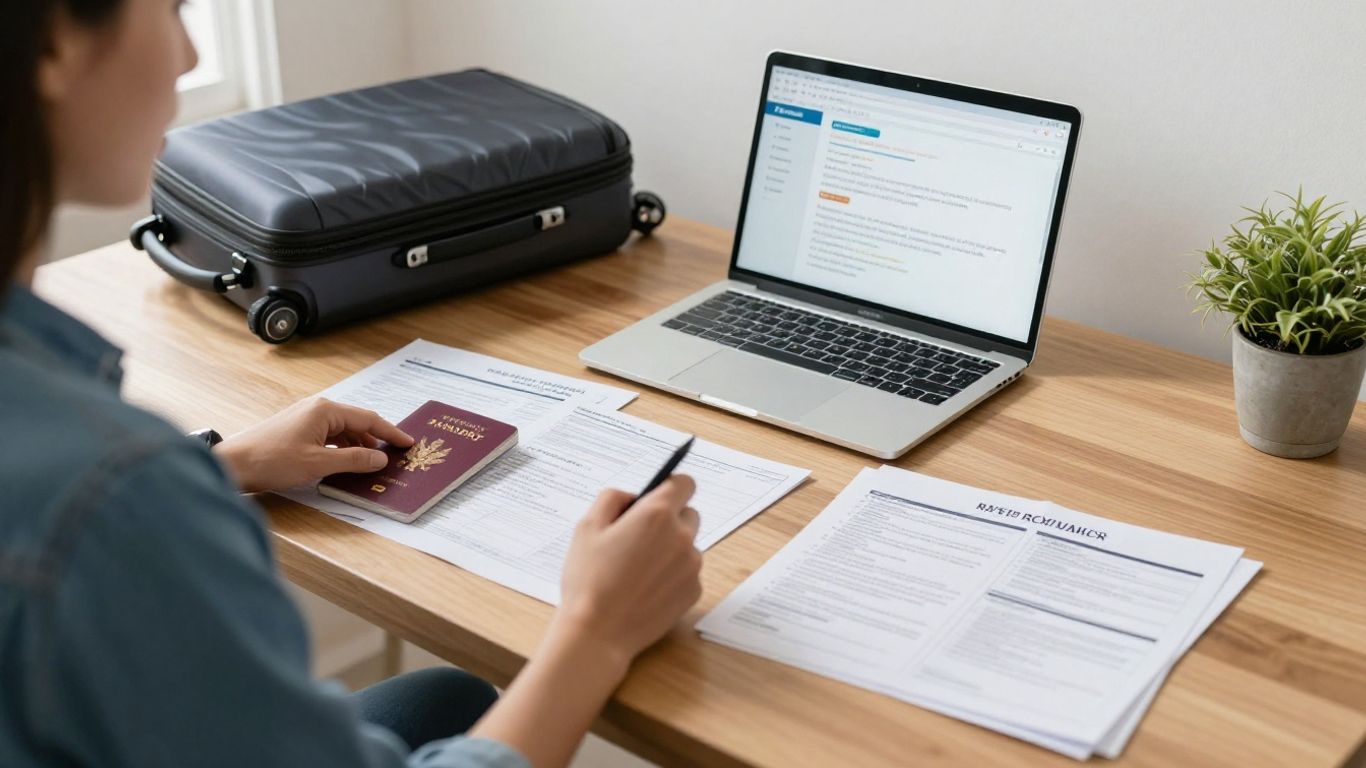 Remote worker organizing visa documents beside laptop
Minimum income and proof of employment
Income thresholds are among the most decisive requirements for digital nomad visas. Authorities may calculate the threshold monthly or annually and may use a different figure for a spouse or each dependent. Evidence can include bank statements, payslips, tax returns, contracts, invoices, or a letter confirming your role and salary.
Use documents that tell one consistent story. If your bank deposits fluctuate, prepare an explanation and supporting contracts rather than relying on a single strong month. For a useful country-level starting point, compare the eligibility details in this 2026 visa countries overview, then confirm the figures with the issuing authority.
Health insurance, background checks, and documentation
Many applications require health insurance covering the intended stay, along with a criminal-record check and proof of accommodation or residence. Passports may need extra validity beyond the planned arrival date, and civil documents for dependents can require certified translations. The details are administrative, but a missing certificate can delay an otherwise straightforward application.
Before booking an appointment, assemble a document folder with:
- A passport copy and recent photographs.
- Employment, client, or business-income evidence.
- Health insurance and, where requested, medical documentation.
- A police certificate or other background check.
- Marriage, partnership, or birth records for accompanying family members.
This sequence keeps the application practical: identify the evidence, check its validity, then confirm whether it needs translation or legalization. Do not assume a document accepted by one consulate will be accepted by another.
Application fees, processing times, and procedures
Fees may include the visa charge, residence-card cost, document certification, translations, courier services, and appointments. Processing times are often estimates rather than guarantees, particularly when applications move between a consulate and a national immigration office. Some countries require an in-person appointment, biometric data, or a local registration step after arrival.
Budget both time and money for the process. Avoid scheduling a nonrefundable move around the shortest published processing estimate, and keep copies of every submission. If the official procedure is unclear, ask the consulate a precise question in writing so you have a record of the answer.
Requirements for spouses, partners, and children
Family rules can make one destination far more workable than another. A spouse, unmarried partner, dependent child, or dependent parent may be eligible to accompany the primary applicant, but the relationship and dependency tests differ. Their applications may require separate forms, fees, insurance, and proof of funds.
Check work rights separately for every family member. Some accompanying permits allow residence but not employment, while others may provide broader permission. A family-friendly visa is not necessarily a family-friendly budget, since each dependent can raise the income threshold and insurance cost.
Evaluating the best countries for digital nomads
The best country for one remote worker can be a poor choice for another. A low rent may be offset by difficult tax administration, unreliable connectivity, or a time zone that makes meetings exhausting. Look at the destination as a working environment and a legal commitment, not just a holiday backdrop. A balanced shortlist usually has two or three serious candidates rather than one favorite chosen too early.
Tax residency and double-taxation considerations
A visa may authorize your stay without deciding whether you become tax resident. Tax residency can depend on days spent in the country, your home, personal ties, economic interests, or a statutory test. Double-taxation treaties may reduce overlapping liabilities, but treaty eligibility and filing obligations require careful analysis.
When comparing countries, record the residence threshold, local treatment of foreign income, reporting dates, and any available special regime. The country comparison for remote workers can help frame questions about taxes, infrastructure, and living costs, but it should not replace official tax guidance.
Internet access, coworking spaces, and work infrastructure
Internet quality should be tested at the neighborhood and building level, not judged only by national reputation. Ask a prospective host or landlord for the connection type, download and upload speeds, router location, and outage history. A mobile-data backup and a nearby coworking space can make a meaningful difference on presentation days.
Work infrastructure also includes power reliability, noise, desk quality, transport, and access to printing or meeting rooms. SwappaHome describes work-ready homes with reliable WiFi, dedicated workspaces, and neighborhood settings in the United Kingdom, which illustrates the kind of listing detail a remote worker should seek when arranging accommodation.
Cost of living, housing, and everyday expenses
Compare the complete monthly picture rather than rent alone. Include utilities, deposits, groceries, transport, coworking, mobile service, insurance, visa fees, and occasional travel. Short-term furnished housing can cost more than a local lease, while a longer visa may make a slower and more stable arrangement worthwhile.
A home exchange can change the accommodation calculation, but it does not remove immigration or tax duties. For example, Vietnam home exchange options describe homes with WiFi, workspaces, and neighborhood living; that may help reduce lodging costs for a qualifying traveler, while the visa decision remains a separate matter.
Safety, healthcare, climate, and quality of life
Quality of life is personal, but several questions apply almost everywhere: Can you access routine healthcare? Will your climate support your work habits? Is the area safe for your household at the hours you travel? Can you manage language, transportation, and daily errands without constant friction?
Think about the ordinary Tuesday rather than the dramatic weekend. A quiet apartment, a manageable commute, a grocery store nearby, and a comfortable social rhythm often matter more than a famous view. The right country lets work and life coexist without either one consuming the other.
Understanding taxes and legal obligations
Immigration permission and tax compliance operate through different systems. The visa office may care about your right to stay, while tax authorities examine residence, income, business activity, and reporting. Employers may also have obligations when staff work from another country. Separate the legal questions early so a successful visa application does not create an expensive surprise later.
 Laptop, passport, and calculator on relocation desk
When a visa can trigger tax residency
A visa itself does not always make you tax resident, but it can make a longer stay possible and therefore increase the chance that a day-count or domicile test applies. Spending most of a tax year in one country, renting a permanent home, or moving family and financial interests may strengthen the case for local residency.
Track entry and exit dates from the first day. Keep leases, travel records, and evidence of where your work and personal life are based. If the rules use a rolling period rather than a calendar year, a simple annual spreadsheet may not be enough.
How local and home-country taxes may overlap
Your home country may continue to tax worldwide income, citizenship-based income, or income connected to an ongoing business. The host country may also tax income earned while you are resident there. Relief can come through a treaty, foreign tax credit, or exclusion, but eligibility depends on facts and documentation.
Do not treat a low-tax destination as automatically tax-free for you. Determine which returns must be filed, whether foreign accounts must be reported, and how employment or self-employment income is classified in each jurisdiction. The answer can change when your days, clients, or business structure change.
Social security, payroll, and employer compliance
Remote work from abroad can affect payroll withholding, social-security contributions, benefits, labor protections, and the risk that an employer is considered to have a taxable presence locally. An employee should tell the employer where the work will take place before making arrangements. A freelancer should separately review registration, invoicing, and local business rules.
The visa may be the simplest part of the compliance picture. Keep written approval from your employer, document the agreed work location, and ask whether the company has a policy for cross-border remote work. Never assume that an immigration permit settles payroll obligations.
Why professional tax advice may be necessary
Professional advice is especially useful when you will cross a day-count threshold, move with dependents, earn from several countries, own a company, or retain substantial ties at home. A qualified adviser can map the facts to both jurisdictions and identify filing deadlines before they arrive.
Prepare for that conversation with contracts, pay records, travel dates, housing details, and a list of countries where you earn income. Good advice depends on specifics, and vague descriptions of a “remote lifestyle” make the analysis harder. The cost of advice is often easier to manage before the move than after a missed filing.
Planning your application and relocation
Once a destination passes the legal and financial tests, turn the idea into a sequence of manageable decisions. Application timing, housing, connectivity, banking, and work hours all affect the move. A remote worker does not need a perfect plan, but does need a dependable first month. Leave room for delays and a backup option.
Choosing a destination that fits your work schedule
Start with your fixed meetings and collaboration windows. A destination several time zones away may be wonderful for focused work but difficult for a team that expects afternoon availability in your home country. Consider daylight, public holidays, airport access, and whether you want a city routine or a quieter base.
Shortlist places where your normal week feels sustainable. If you are comparing Spain, Italy, Portugal, or another country, check the actual permit rules alongside the lifestyle appeal. A destination that works beautifully for a two-week trip may be tiring over six months.
Gathering documents and meeting financial requirements
Make a checklist from the official application page, then give each document an expiration date and a status. Request police certificates early, since they may take longer than expected. Ask employers and clients for letters using the wording the authority requests, and retain original and scanned copies.
Build a small buffer above the stated income threshold if your earnings vary. That does not guarantee approval, but it gives you room to explain exchange-rate changes or an irregular invoice. Submit only after names, dates, addresses, and passport numbers match across the file.
Finding accommodation and setting up reliable connectivity
Accommodation should support both the application and daily work. Confirm whether a lease is acceptable as proof of address, whether utilities are included, and whether the desk is genuinely usable for a full workday. Ask for recent internet testing rather than relying on a listing’s general description.
Arrange a local SIM or eSIM when practical and identify a coworking space before arrival. SwappaHome focuses on Portuguese home exchanges with reliable WiFi, workspaces, and walkable neighborhoods, showing how accommodation research can include work-specific details rather than only location and price.
Building a realistic relocation budget
Separate one-time costs from monthly costs. One-time expenses may include flights, visa fees, deposits, translations, furniture, and emergency travel. Monthly expenses include rent or exchange-related costs, food, transport, utilities, insurance, taxes, and a reserve for unexpected repairs or medical care.
A simple relocation budget should account for these five items:
- The full application and document-preparation cost.
- At least one month of housing overlap or temporary lodging.
- Connectivity, equipment, and a backup workspace.
- Health, travel, and emergency reserves.
- Tax, banking, and professional-advice expenses.
This exercise often changes the shortlist in a useful way. A destination with a higher headline rent may be cheaper overall if it offers dependable transport and fewer temporary-housing costs, while a lower-cost place may require a larger connectivity or contingency budget.
Avoiding common digital nomad visa mistakes
Most problems are not caused by one dramatic error. They come from treating an informal online summary as law, overlooking a small deadline, or assuming that residence permission covers every kind of work. Before you apply, test your plan against the exact facts of your employment, income, family, and travel history. Keep a written record of the sources you used and the date you checked them.
Assuming visa approval eliminates tax obligations
Visa approval confirms that an immigration authority has accepted your application under its rules. It does not necessarily determine tax residency, income-tax treatment, social-security contributions, or reporting in your home country. Continue tracking days, income, and financial ties after approval.
If your circumstances change, reassess rather than relying on the original application. A longer stay, a new client, a local contract, or a move with family can alter the analysis even when the visa remains valid.
Overlooking limitations on local clients or employers
Many digital nomad programs are designed around foreign employers or overseas clients. Some allow a limited amount of local professional activity; others prohibit it altogether. The distinction between an employee, independent professional, contractor, and business owner can affect eligibility and permitted work.
Read the activity restrictions in the actual authorization, not just the marketing description. Spain’s telework visa information, for example, describes remote work for companies outside Spain and sets specific limits for professional activity, so the precise wording matters.
Ignoring renewal deadlines and time-in-country rules
A visa can expire while you are busy with work, especially when the renewal process requires an appointment or new supporting documents. Set reminders several months ahead and check whether travel outside the country affects renewal or residence calculations.
Keep copies of approvals, registrations, insurance, and prior filings. If you leave temporarily, record the dates. These habits make it easier to demonstrate compliance and spot a problem before a border crossing or renewal appointment.
Failing to verify current requirements before applying
Visa programs change. Income thresholds, appointment procedures, required forms, fees, and tax treatment may be updated after an article or social-media post is published. Use secondary guides to create questions, then verify the answers on the embassy, consulate, immigration, and tax websites relevant to your case.
A final review should confirm the current form, fee, document validity, appointment location, family rules, and work restrictions. For Italy, the remote worker visa details identify separate categories and qualification requirements; that kind of official distinction is exactly what a broad country list can miss.
Conclusion
The right digital nomad visa is the one that fits your work, finances, family, taxes, and everyday habits at the same time. Compare the legal permission first, test the practical reality second, and verify the details immediately before applying. With that order of operations, choosing a country becomes a reasoned relocation decision rather than a guess based on a postcard.
Frequently Asked Questions
What is a digital nomad visa?
It is a residence permission intended for eligible remote workers who earn income from employers, businesses, or clients outside the host country. The exact work rights and conditions depend on the issuing country.
Can I work for a local employer on a digital nomad visa?
Usually not automatically. Many programs are designed for foreign employment or overseas clients, while some permit limited local professional activity. Check the authorization’s specific restrictions.
Does a digital nomad visa make me tax resident?
Not necessarily. Tax residency is determined under local law and may depend on days spent in the country, personal ties, housing, and economic interests. Analyze tax rules separately from visa rules.
How much income do I need to qualify?
There is no universal amount. Each program sets its own threshold, which may increase when a spouse or dependent joins you. Confirm the current figure and the accepted forms of proof.
Can my family join me?
Many programs provide a route for spouses, partners, and children, but the definitions of dependency and eligible relationships vary. Family members may also need separate insurance, documents, and fees.
How long do digital nomad visas last?
Terms range from several months to a year or longer, with some countries offering extensions. Renewal may require continued income, insurance, lawful conduct, and compliance with time-in-country rules.
Should I hire a tax professional before relocating?
It is wise to consider professional advice when you have multiple income sources, dependents, a business, significant home-country ties, or a planned stay near a tax-residency threshold. Bring complete travel, income, housing, and employment records to the consultation.

Published by
SwappaHome
SwappaHome Editorial Team
Home Exchange & Slow Travel Editorial
The SwappaHome Editorial Team brings together travel research, home-exchange community insights, and platform data to produce practical guides for first-time and experienced home swappers. Every article cites real platforms, current market rates, and verifiable city-level facts so readers can make informed decisions without guessing.
Ready to try home swapping?
Join SwappaHome and start traveling by exchanging homes. Get 7 free credits when you sign up!