
How to choose vacations travel packages for the best value and stress-free planning

SwappaHome Editorial Team
Home Exchange & Slow Travel Editorial
Key Takeaways A good package is not simply the one with the lowest advertised price. It is the one that fits your priorities, shows its full cost clearly, and…
Key Takeaways
A good package is not simply the one with the lowest advertised price. It is the one that fits your priorities, shows its full cost clearly, and leaves you comfortable with the provider and booking terms.
- Define your destination, dates, pace, and total budget first.
- Compare everything included, from flights and rooms to transfers and meals.
- Match the package type to the way you actually like to travel.
- Judge value through location, quality, flexibility, and useful inclusions.
- Save every confirmation and check practical details before departure.
Define your ideal vacation before comparing packages
The most useful comparison starts before you open a booking site. A clear idea of what you want makes attractive but unsuitable deals easier to dismiss. It also gives you a fair basis for comparing vacations travel packages that appear similar at first glance. Write down your non-negotiables, then leave room for a few pleasant possibilities.
Set your destination, dates, and trip length
Choose the destination with your travel companions, available time, and tolerance for long journeys in mind. A three-night city break calls for different arrangements than a two-week beach stay, especially when transfers or multiple flights are involved. Check whether your dates overlap with school holidays, festivals, or peak weather periods, since those can affect both availability and cost.
If your dates are flexible, compare a few departure days rather than searching only one. A small shift in timing may produce a better room, a more convenient flight, or a less crowded experience without changing the basic plan.
Choose between relaxation, adventure, culture, and family travel
A quiet resort, an activity-heavy itinerary, and a museum-focused city trip demand different package features. Relaxation travelers may care most about a convenient property and included meals, while adventurous travelers may value transport, equipment, or access to guided excursions. Families often need space, predictable routines, and activities that work for different ages.
Write a short description of the trip you hope to have. “Slow mornings, two planned outings, and easy dinners” is more useful than simply labeling the trip a beach vacation.
Determine your preferred travel pace and flexibility
Some travelers want every transfer arranged; others prefer a loose plan with time to wander. Count the number of hotel changes, early departures, and prebooked activities in each offer. A package can look efficient on paper while feeling exhausting once the daily schedule is clear.
Flexible travelers should check whether they can alter dates, rooms, or activities without a large penalty. If your schedule is fixed, prioritize dependable connections and clear confirmation details over a small theoretical saving.
Establish a realistic total budget
Start with the amount you can comfortably spend, then divide it among transportation, lodging, food, activities, and a reserve for surprises. Include costs that are easy to overlook, such as airport parking, local transit, tips, and travel documents. A realistic budget protects the trip from becoming a string of uncomfortable compromises.
The SwappaHome travel guides can also broaden your planning perspective with material on home swapping, sustainable travel, and digital nomad visas. That is a different lodging model, but it is a useful reminder to compare the whole travel experience rather than only the headline package price.
Understand what vacations travel packages include
Package names can conceal meaningful differences in what you receive. One offer may combine airfare and a room, while another adds transfers, meals, or excursions. Read the inclusions as carefully as the destination description, and ask for clarification before assuming two packages are equivalent.
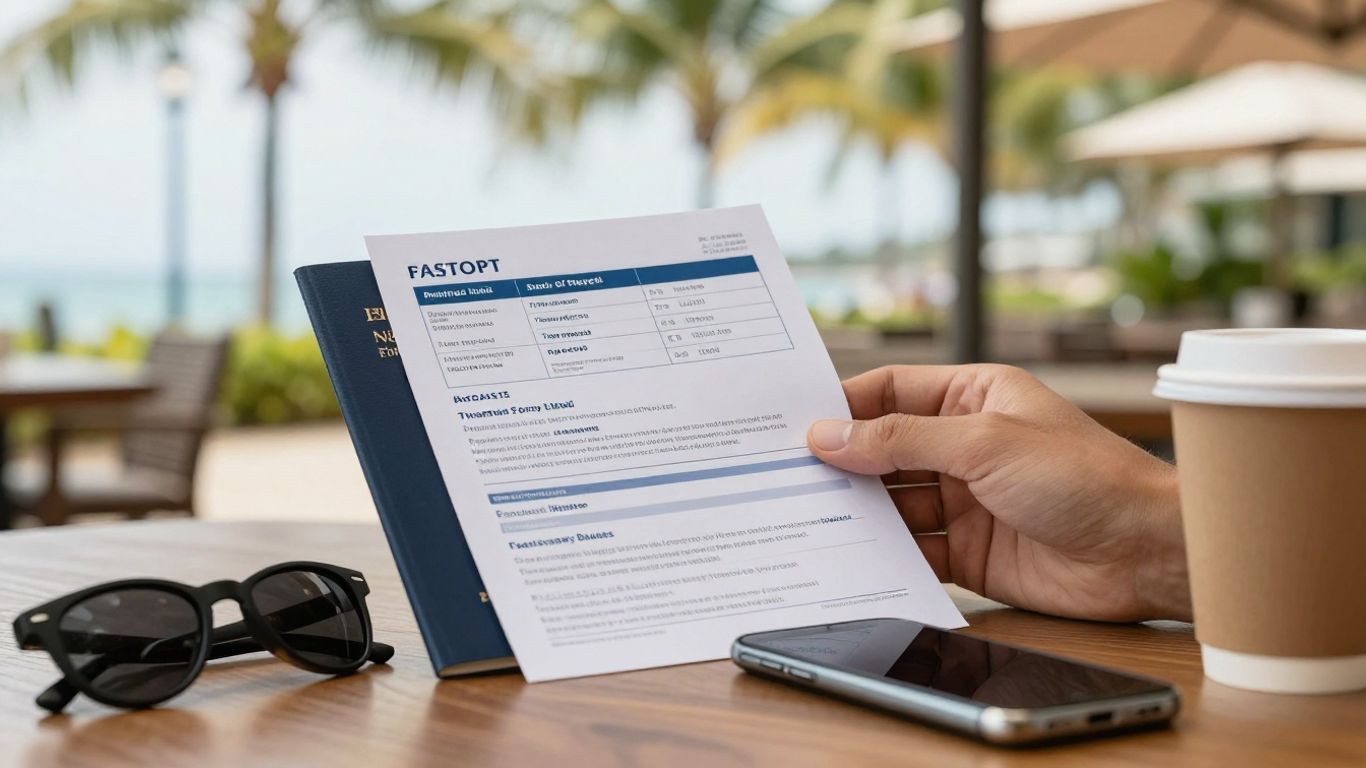 Traveler reviewing vacation package details at a sunny table
Compare flights, accommodations, transfers, and activities
Make a simple inventory of the major components in every offer. Check the airline, airports, flight times, room category, number of nights, transfer method, and activities included. A lower fare may involve an inconvenient airport or a long layover, while a cheaper room may sit far from the places you want to visit.
The following comparison can help you spot gaps quickly:
| Package element | What to compare | Why it matters |
|---|---|---|
| Flights | Airports, times, baggage, connections | Convenience and extra transport costs |
| Accommodation | Room type, location, nights, rating | Comfort and access to activities |
| Transfers | Shared or private, scheduled or flexible | Arrival time and ease |
| Activities | Number, duration, reservations, equipment | Actual usefulness for your itinerary |
After filling in the details, compare like with like. A package with fewer included activities may still be better if it offers a far more convenient hotel and flight schedule.
Check whether meals, drinks, and resort amenities are covered
“All-inclusive” does not always describe the same dining hours, restaurants, beverages, or services. Find out whether snacks, specialty restaurants, room service, premium drinks, pools, fitness facilities, and beach equipment are included or subject to limits. At a non-resort property, confirm whether breakfast is included and what kind of meal it is.
Consider how you normally spend on food. A package with fewer meals may suit someone eager to explore local restaurants, while full board may provide better value for travelers who want predictable costs and minimal planning.
Review taxes, resort fees, baggage charges, and service costs
Look for a complete price breakdown before paying a deposit. Taxes, resort fees, checked baggage, seat selection, airport transfers, and booking or service charges can materially change the total. Ask whether the displayed figure is for one traveler, one room, or the entire party.
Keep a note of mandatory charges separately from optional upgrades. This makes it easier to compare an apparently inexpensive offer with one that presents more of its costs upfront.
Identify exclusions that could increase the final price
Read the exclusions line by line. Common gaps include airport transfers, destination fees, activities, meals outside set hours, internet access, and transportation between independently booked hotels. Travel insurance, visas, and vaccinations may also sit outside the package.
Before deciding, list the extras you are most likely to buy. The vacation package deals available through a broad travel search may be useful inspiration, but any offer still needs to be checked against your own exclusions and total budget.
Compare package types for different travel styles
There is no universally best package format. The right choice depends on how much structure you want, how often you plan to move, and whether you enjoy arranging details yourself. Compare formats by the work they remove as well as the experiences they make possible.
Evaluate all-inclusive resort packages
All-inclusive packages can simplify a stay when meals, drinks, entertainment, and many on-site facilities are central to the experience. They work particularly well for travelers who want to settle in rather than make daily decisions. Check the resort’s actual location, dining restrictions, and activity schedule instead of relying only on the label.
They may be less suitable if your main goal is independent exploration. In that case, calculate the value of paying for meals and facilities you may rarely use.
Consider flight-and-hotel bundles
A flight-and-hotel bundle is often a practical middle ground. It can reduce the number of separate reservations while leaving you free to choose restaurants, tours, and local transportation. Pay close attention to the hotel’s distance from the airport and the neighborhoods you plan to visit.
The Marriott vacation packages page, for example, illustrates a bundled approach combining flights, hotels, and car rentals. Treat any package as a starting point for comparison: verify the exact room, dates, rental terms, and final charges attached to your search.
Explore guided tours and escorted vacations
Guided tours can be worthwhile when a destination has complicated transport, language barriers, or many sites spread across several areas. They may provide a knowledgeable guide and a reliable sequence of hotels and transfers. The tradeoff is less control over meal times, free hours, and spontaneous detours.
Ask how much independent time is included and how physically demanding the itinerary is. A tour that looks rich in destinations may feel rushed if every day involves packing, checking out, and traveling onward.
Look at cruises, city breaks, and multi-destination itineraries
Cruises, city breaks, and multi-destination trips each concentrate planning in a different way. Cruises combine transport and accommodation but can offer limited time in each port. City breaks reduce travel between stops, while multi-destination itineraries offer variety at the cost of more transitions.
Use a calendar to map the nights and travel hours. That visual check often reveals whether the package gives you meaningful time in each place or merely a long list of stops.
Find the best value without choosing on price alone
Price is a useful filter, not a final verdict. A package can be inexpensive because it uses an inconvenient airport, a remote property, or restrictive terms. Look at what the money buys, how much effort remains, and how confidently you can estimate the final bill.
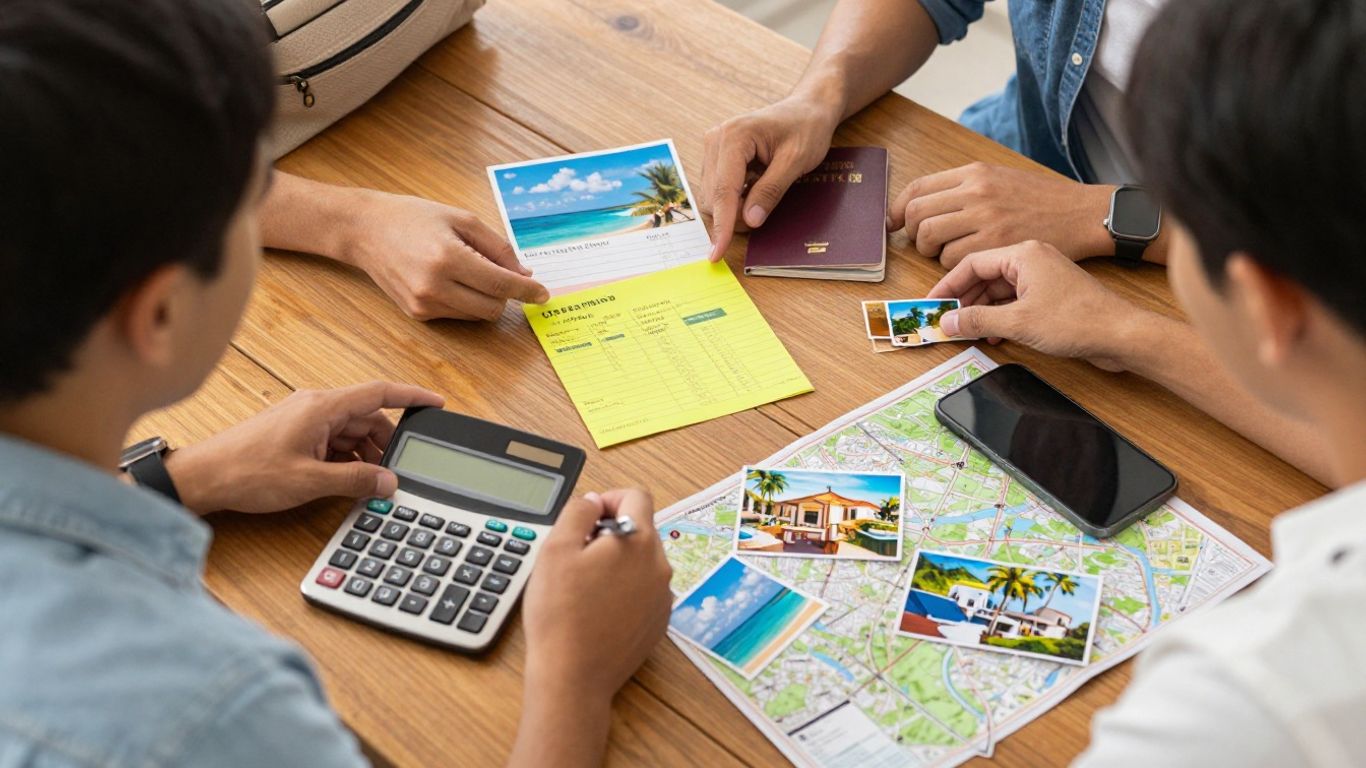 Couple comparing vacation package costs beside travel maps
Compare the total cost across multiple providers
Use the same dates, room standard, baggage assumptions, and transfer needs when checking different offers. Record the final total rather than the first number shown in search results. Also compare payment schedules, since a low deposit does not necessarily mean a lower overall price.
A small spreadsheet is enough. Put every mandatory cost in one column and likely extras in another, then compare the totals with a reasonable contingency added.
Weigh location, room quality, and included amenities
A well-located hotel can save money and time on taxis, trains, and meals between activities. Room size, noise, bedding, air conditioning, and bathroom arrangements can matter more than a polished lobby. Read recent reviews for details that official descriptions often leave out.
Amenities only have value when you will use them. A pool, kids’ club, kitchen, or reliable workspace may be worth paying for; a facility you will never visit should not decide the comparison.
Look for seasonal offers, member rates, and early-booking discounts
Promotions can improve value, but read their conditions before treating them as savings. Check whether a member rate requires an account, whether an early-booking offer is nonrefundable, and whether a seasonal deal applies only to selected dates or room categories.
The seasonal travel guide from SwappaHome is a useful planning resource for thinking about when destinations may suit different kinds of trips. Timing can affect crowds and experience as much as it affects price.
Calculate the value of included activities and meals
Estimate what you would reasonably pay for included meals, transfers, and activities if you booked them separately. Do not assign full value to an excursion you would skip or a meal plan that does not fit your habits. The best comparison reflects your likely behavior, not an imaginary maximum use of every benefit.
For a broader budgeting contrast, a home exchange guide explains how swapping homes can reduce accommodation costs in some destinations. It is not the same as a conventional package, but it may help you identify which part of your trip deserves the most spending.
Check providers, accommodations, and booking terms
A pleasant itinerary can still become stressful if the provider is vague or the terms are hard to understand. Research who is responsible for each part of the booking and keep copies of the details you relied on. Reviews are most useful when they reveal recurring patterns rather than isolated frustrations.
Verify provider reputations and traveler reviews
Check the provider’s contact information, customer support hours, and recent traveler feedback. Look for comments about changes, refunds, communication, and how problems were handled, not just opinions about the destination. Review several sources and pay attention to whether the same issue appears repeatedly.
You can use a guide to choosing a marketing agency as an unlikely but helpful reminder of the same evaluation habit: clarify your needs, compare expertise and transparency, and do not rely on a polished presentation alone.
Confirm hotel ratings, locations, and accessibility
Confirm the property’s rating system, exact address, distance from transport, and access to the places you plan to visit. If accessibility matters, ask specific questions about entrances, elevators, bathroom layouts, pool access, and transfer vehicles. “Accessible” can mean different things to different properties.
Use maps and recent photographs where possible. A hotel’s stated neighborhood may cover a large area, so check the actual walking routes and terrain.
Read cancellation, change, and refund policies
Read the policy before entering payment details. Identify deadlines, penalty amounts, name-change rules, date-change fees, and what happens if a flight or hotel component changes. Separate the provider’s policy from the airline, hotel, tour operator, or cruise line’s policy when several suppliers are involved.
Save the version of the terms that applied when you booked. Policies displayed later may not be identical, and documentation makes future conversations clearer.
Review travel insurance and supplier protection options
Travel insurance can cover different risks, so compare medical limits, cancellation reasons, baggage protection, and exclusions. Check whether preexisting conditions, adventure activities, or travel interruptions require special terms. Also understand what protection, if any, applies if a supplier fails.
Insurance is not a substitute for reading the booking contract. It is another layer of planning, and its usefulness depends on the risks that matter for your destination and party.
Match a package to your travel party
A package that suits two adults may be awkward for a family, a solo traveler, or someone with mobility or dietary needs. Start with the people going, not with the package category. Their sleep patterns, energy levels, comfort requirements, and interests should shape the search.
Choose family-friendly features and flexible room options
Look for room layouts that let everyone sleep comfortably, plus kitchens, laundry access, pools, kids’ activities, and convenient meal options when those features matter. Confirm occupancy limits and whether a crib, connecting room, or rollaway bed costs extra. Shorter transfers and simple routines can be more valuable than a packed activity schedule.
If a family trip involves several ages, choose at least a little unstructured time. Children often enjoy a manageable day more than an ambitious itinerary that leaves everyone tired.
Find packages suited to couples and romantic getaways
Couples may prefer privacy, a walkable setting, attractive dining, or a slower itinerary rather than a long list of included activities. Check whether “romantic” features are included or sold as add-ons, and ask about room placement, noise, and transfer times.
For ideas beyond standard hotels, romantic home exchanges can offer couples a different kind of stay, including intimate apartments and villas. Compare the privacy, location, and responsibilities involved before deciding which format fits the occasion.
Consider solo travel costs and social activities
Solo travelers should check single supplements, room occupancy rules, and whether activities require a minimum number of participants. A package with shared tours, communal meals, or optional group outings may make it easier to meet people, while a private itinerary may better suit someone seeking quiet.
Calculate the cost per person honestly. A package priced for two can look attractive until the single-room surcharge and individual transfer costs are added.
Plan for accessibility, dietary needs, and special occasions
Tell the provider about accessibility requirements, allergies, dietary restrictions, celebrations, or medical needs before booking. Ask what can be confirmed in writing and what is merely a request. For a birthday, anniversary, or wedding trip, leave enough time for a backup plan if a promised extra is unavailable.
Specific questions produce better answers than broad assurances. Keep those answers with your booking documents so every supplier involved can see what was agreed.
Finalize your booking and prepare for departure
The final stage is mostly careful administration, but it can prevent avoidable stress. Review the itinerary as one connected journey rather than as separate reservations. Confirm who is responsible for each transfer, when each payment is due, and what you need to carry on travel day.
Confirm traveler details, documents, and visa requirements
Check every name, date of birth, passport detail, and loyalty number against the relevant documents. Research passport validity, visas, entry permissions, vaccination rules, and transit requirements well before departure. Requirements can vary by nationality and may change, so use official government or consular sources for the final check.
If a name is entered incorrectly, contact the provider promptly. Small errors are easier to correct before tickets or reservations become restrictive.
Check flight schedules, transfers, and local transportation
Recheck flight times and connection lengths, especially if the booking was made months earlier. Confirm where a transfer driver will meet you, what happens after a delay, and whether public transportation or a rental car is needed at the destination. Include a backup route for late arrivals.
Keep the first day light when possible. A little margin after a long journey makes the whole itinerary feel more manageable.
Save booking confirmations and emergency contacts
Download tickets, hotel confirmations, insurance documents, payment receipts, and transfer instructions for offline access. Save the provider’s emergency number, accommodation contact, airline information, and the details of anyone traveling with you.
Keep digital and paper copies separately. A small folder with essential details can be useful if your phone battery, connection, or access to an app fails.
Build a budget for tips, shopping, and optional excursions
Set aside money for gratuities, local transportation, snacks, shopping, and activities not included in the package. Decide which optional excursions are priorities before you arrive, then leave some room for an unplanned meal or discovery. This keeps “small” purchases from quietly taking over the trip budget.
A final spending check should include currency conversion fees and payment methods. Knowing what you can comfortably spend makes it easier to say yes to worthwhile extras and no to pressure purchases.
Conclusion
The best vacation package is the one that fits your actual travel style and remains understandable after every fee, restriction, and practical detail is considered. Define the experience first, compare complete totals, inspect the terms, and prepare a simple departure file. That approach takes a little time up front, but it gives you a calmer trip and fewer expensive surprises.
Frequently Asked Questions
What is usually included in a vacation package?
Packages commonly combine some mix of flights, accommodations, transfers, car rental, meals, or activities. The exact combination varies, so read the inclusion and exclusion lists rather than relying on the package label.
Are vacation packages cheaper than booking each part separately?
They can be, but not always. Compare the complete cost of flights, lodging, baggage, transfers, taxes, and likely activities against separate reservations using the same dates and standards.
How far in advance should I book a vacation package?
The right timing depends on destination, season, party size, and flexibility. Booking earlier may provide more choice, while flexible travelers may find later offers; restrictive discounts should be weighed against the value of change options.
What fees are easy to miss in vacation packages?
Resort fees, baggage, seat selection, transfers, service charges, taxes, destination fees, and optional meal or activity costs are common sources of surprise. Ask for a complete price breakdown before paying.
How can I compare two packages fairly?
Use identical dates, traveler numbers, room standards, baggage assumptions, and transportation needs. Then compare total price, location, schedule, flexibility, included services, and the quality of the accommodation.
Should I buy travel insurance for a package trip?
Insurance may be worthwhile when medical treatment, cancellation, interruption, or supplier failure would create a serious financial risk. Compare coverage limits and exclusions with the specific trip rather than choosing only by premium.
What should I do immediately after booking?
Check all traveler details, save confirmations, review cancellation deadlines, verify passport and entry requirements, and record emergency contacts. Recheck flight and transfer information before departure because schedules can change.

Published by
SwappaHome
SwappaHome Editorial Team
Home Exchange & Slow Travel Editorial
The SwappaHome Editorial Team brings together travel research, home-exchange community insights, and platform data to produce practical guides for first-time and experienced home swappers. Every article cites real platforms, current market rates, and verifiable city-level facts so readers can make informed decisions without guessing.
Ready to try home swapping?
Join SwappaHome and start traveling by exchanging homes. Get 7 free credits when you sign up!