
How to Negotiate a Home Swap: Tips for First-Timers

SwappaHome Editorial Team
Home Exchange & Slow Travel Editorial
Trading houses with a stranger halfway across the world sounds a little unhinged when you say it out loud. And yeah, there's some faith involved. But here's what I've learned after enough swaps to...
Trading houses with a stranger halfway across the world sounds a little unhinged when you say it out loud. And yeah, there's some faith involved. But here's what I've learned after enough swaps to lose count: the ones that go well aren't lucky. They're negotiated well. The way you talk to your swap partner, the expectations you set, the details you actually write down instead of assuming, that's the whole ballgame. Whether you're dreaming about two weeks in Lisbon or just a long weekend a couple states over, this is the stuff that separates "best trip of our lives" from "why is there no hot water and where is the cat." So let's get into how to do it right the first time.
Table of Contents
- What Is a Home Swap Negotiation, Exactly?
- Before You Reach Out: Preparing Your Profile and Priorities
- How Do You Start a Conversation With a Potential Swap Partner?
- Setting Expectations: The Details That Make or Break a Swap
- How Long Does It Take to Finalize a Home Swap Agreement?
- Common Home Swap Negotiation Mistakes First-Timers Make
- Comparing Negotiation Styles: Direct Swap vs. Points-Based Exchange
- After the Agreement: Locking in Logistics
- FAQ: Home Swap Negotiation for First-Timers
What Is a Home Swap Negotiation, Exactly?
A home swap negotiation is just the back-and-forth between two households working out the terms of temporarily trading places. No fixed price list, no standardized contract. Every single detail, from the exact dates to who's feeding the cat, gets hashed out directly between you and the other party.
And that's what makes this so different from booking a hotel. You're not reserving a room off a menu. You're building a tiny, temporary partnership with actual humans who live somewhere. So the conversation ends up covering the practical stuff (dates, house rules, who pays if the water bill spikes) and the trust stuff (verifying who they are, insurance questions, figuring out how you'll both communicate). This tracks with what home exchange communities have been saying for years. A 2023 survey they've referenced found that first-time swappers point to unclear expectations, not mismatched properties, as the biggest source of post-trip frustration. Which, honestly, tells you everything. It's not the house that ruins the swap. It's the conversation you didn't have.
Before You Reach Out: Preparing Your Profile and Priorities
The best thing you can do to improve how your negotiations go is boring: do the prep before you send a single message. A strong, honest profile plus a clear sense of your own dealbreakers will save you hours of pointless back-and-forth down the line.
Build a Profile That Sells (Honestly)
Your listing is your first impression, and in home swapping, being upfront builds trust way faster than a gorgeous photo shoot ever could. So put in recent, well-lit photos of every room. Write an honest description of your neighborhood, walkability, how noisy it gets, where the nearest grocery store is. Square footage, bedrooms, parking, pets, all of it.
And if your place has quirks? Say so. The temperamental water heater, the stairs that would be rough for someone with mobility issues, the driveway you share with a grumpy neighbor. Mention it now. People who admit the flaws early build more trust during the negotiation than the ones who let their partner discover the "surprise" on arrival. Nobody likes surprises when they're the ones sleeping there for two weeks.
Know Your Non-Negotiables Before You Talk to Anyone
Before you message anybody, sit down and write out your must-haves and your absolute no's. Do you need someone who doesn't smoke? Are you only comfortable with families who have at least one prior swap on the books? Are your dates flexible at all, or set in stone?
Having that list ready is what lets you screen fast instead of getting three weeks deep into a friendly chat about a swap that was never going to work anyway. It also helps to actually understand the platforms before you sink your time into one. If you're still deciding, the breakdown in Swappahome vs HomeExchange: Which Platform Is Right for You? walks through fees, verification, and community size, all of which shape how negotiations actually play out on each one.
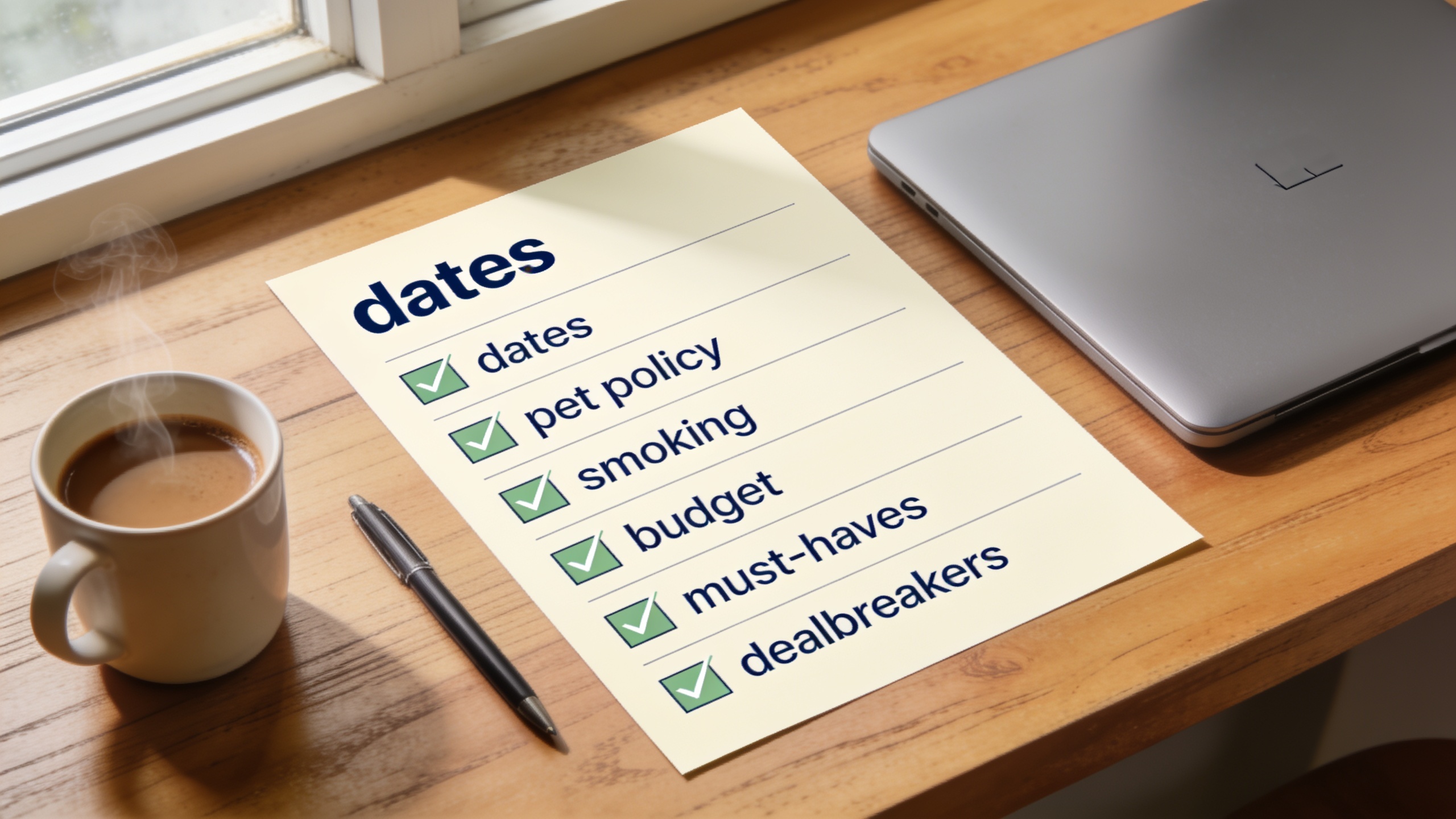 A home swap negotiation checklist showing must-haves and dealbreakers for planning a successful exchange
How Do You Start a Conversation With a Potential Swap Partner?
Start with a specific, personalized message that name-checks something from their actual listing, states your dates clearly, and asks one or two open questions. Generic copy-paste messages get ignored, full stop. Think of that first message as a little pitch. It should prove you actually read their profile and give them a reason to hit reply.
A good opener usually has four things: a greeting that mentions their city or something specific about the place ("I noticed your loft near Retiro Park..."), your proposed or flexible dates, a one-line summary of your own home and why they might like it, and one easy question. Not five questions. One. Nobody wants to answer an interrogation from a stranger on day one.
Reading Signals During Early Conversations
Pay attention to how they respond, not just what they say. Somebody who answers vaguely or vanishes for a week during the negotiation phase is quietly telling you how they'll communicate during the actual swap, including if something goes wrong at 2 a.m. That's useful information, take it seriously. The flip side is great too. When someone answers thoroughly, asks smart follow-up questions, and volunteers stuff like "want to hop on a video call?" without being prompted, that's the reliability tell you're looking for.
Video Calls: The Underrated Negotiation Tool
I'll die on this hill: do at least one video call before you finalize anything, especially your first swap. Ten, fifteen minutes is plenty. You get to confirm the person matches their profile, see a quick live walkthrough of a room or two, and read their communication style in real time. This one step kills off a huge chunk of the miscommunication that wrecks swaps later on. It's the single highest-value thing on this whole list and it costs you nothing.
Setting Expectations: The Details That Make or Break a Swap
Setting expectations means explicitly agreeing, in writing, on every practical detail before anyone books a flight or takes time off work. This is the heart of the whole thing. Skip it and you've found the number one reason swaps blow up mid-trip.
The Core Details to Nail Down
At an absolute minimum, your conversation needs to cover:
- Exact dates and check-in/check-out times, plus any buffer day for cleaning or overlap
- House rules: smoking, guests, parties, quiet hours
- Utilities and consumables: who covers extra water usage, whether pantry basics are fair game, thermostat settings
- Pet and plant care: feeding schedules, vet info, watering instructions
- Emergency contacts: a trusted neighbor, family member, or property manager on both sides
Cars deserve their own separate conversation, by the way. If you're swapping vehicles too, talk insurance, mileage, and fuel policy on their own, don't just bundle it into the home stuff. And figure out what "leave it as you found it" actually means to each of you, because that phrase means wildly different things to different people.
Money Talk: What's Actually Free in a Home Swap
Most swaps involve zero money changing hands for the accommodation itself, and that's the whole appeal. A family profiled in How One Family Saved $3,000 on Vacation With Home Swapping found that wiping out lodging costs entirely let them stretch a trip by almost a week. But "free" doesn't mean nobody spends anything. Talk about who eats the utility overages, whether either of you expects a stocked fridge or a welcome basket (lovely gesture, not a requirement), and what happens if an appliance dies while someone's staying there. Because it will, eventually. Murphy's Law loves a home swap.
Get It in Writing
Even the friendliest, most casual exchange should end with a written summary. An email, a shared doc, or just the messaging thread on your swap platform, listing every term you agreed on. This isn't about not trusting each other. It's about memory. Everything makes perfect sense the day you agree to it and turns into total mush three months later when you're both frantically packing. Some platforms even hand you a home exchange agreement template to formalize it, and using one is smart even for the most laid-back swap.
How Long Does It Take to Finalize a Home Swap Agreement?
Most home swap negotiations take somewhere between a few days and several weeks, depending on how far ahead you're planning and how fast everyone replies. A simple, last-minute local swap can come together in 48 to 72 hours. An international one booked months out usually moves slower, because now you're both juggling work schedules, school calendars, and everything else life throws at you.
Realistically it goes something like this. Initial outreach and profile-reading takes a day to three. The first real exchange about dates and basic compatibility, another three to seven days. Then the video call and the deeper logistics talk, a few days to a week. And finally the written agreement once dates are locked. Building in that timeline actually matters, because rushing it (say, cramming everything into one conversation because a flight sale ends tonight) is exactly when details slip through the cracks.
So if you're swapping during peak season, summer in Europe, winter somewhere warm, start two or three months earlier than you think you need to. The good properties and good dates get snapped up fast.
Common Home Swap Negotiation Mistakes First-Timers Make
The most common first-timer mistake is assuming the other person shares your unspoken assumptions, about cleanliness, guests, how often you should be texting. They don't. They can't, they're strangers. Here are the specific traps worth watching for.
Being too vague about dates. Saying "sometime in July" instead of proposing actual ranges wastes everyone's time and usually ends with someone else swooping in with firmer plans and stealing the match. Propose specific windows, even if you've got flexibility.
Skipping the reference and verification check. If your platform offers reviews, ID verification, or references from past swaps, use them. A first-timer with no reviews isn't automatically sketchy, but it does mean you should lean harder on video calls and detailed written communication before you commit to anything.
Overpromising to close the deal. This one's sneaky. People get so eager to lock down a dream location that they agree to stuff they're not actually okay with, allowing pets they hadn't planned for, promising cleaning standards nobody could realistically hit. Then reality shows up and everyone's resentful. Negotiate honestly, even if it means the swap falls through. A dead swap is better than a swap you spend the whole time regretting.
Not talking through the "what ifs." What if one of you has to cancel? What if a pipe bursts while you're 4,000 miles away? Good swappers always have the contingency conversation: agree on a cancellation window, discuss whether either home has landlord or homeowner insurance that covers guest stays, and name a local contact who can handle emergencies. For an older property where plumbing or heating worries you, some swappers even ask their host for a local service contact, kind of like how homeowners in the UK might keep a provider such as Dmplumbingheating on hand for emergency repairs. Just so everybody knows the fallback plan exists.
Comparing Negotiation Styles: Direct Swap vs. Points-Based Exchange
Not every swap gets negotiated the same way, and knowing the two main models tells you what kind of conversation you're walking into.
| Feature | Direct (Reciprocal) Swap | Points-Based Exchange |
|---|---|---|
| How it works | Two households trade homes for matching or overlapping dates | Members earn points by hosting and spend points to stay elsewhere, no simultaneous dates required |
| Negotiation focus | Mutual scheduling, matching expectations between two specific parties | Availability and point value of a listing; less person-to-person back-and-forth |
| Flexibility | Requires both parties to be free at the same time | More flexible timing since you're not tied to one partner's calendar |
| Relationship building | Builds a direct connection; often leads to repeat swaps | More transactional; less ongoing relationship |
| Best for | First-timers who want simplicity and a single point of contact | Frequent travelers who want scheduling flexibility across many destinations |
| Typical negotiation length | Days to a few weeks | Often shorter, since terms are more standardized |
For most first-timers, I'd steer you toward a direct swap. One relationship, one set of terms, one person to build trust with. A points system has its own rules that vary by platform, and that's just more to keep straight when you're already nervous.
After the Agreement: Locking in Logistics
Once you've both agreed on the terms, the last job is turning that agreement into an actual concrete plan, travel logistics, home access, day-of-arrival details. This is where all that earlier negotiating pays off, because you're not debating anything anymore. You're just running the play you already called.
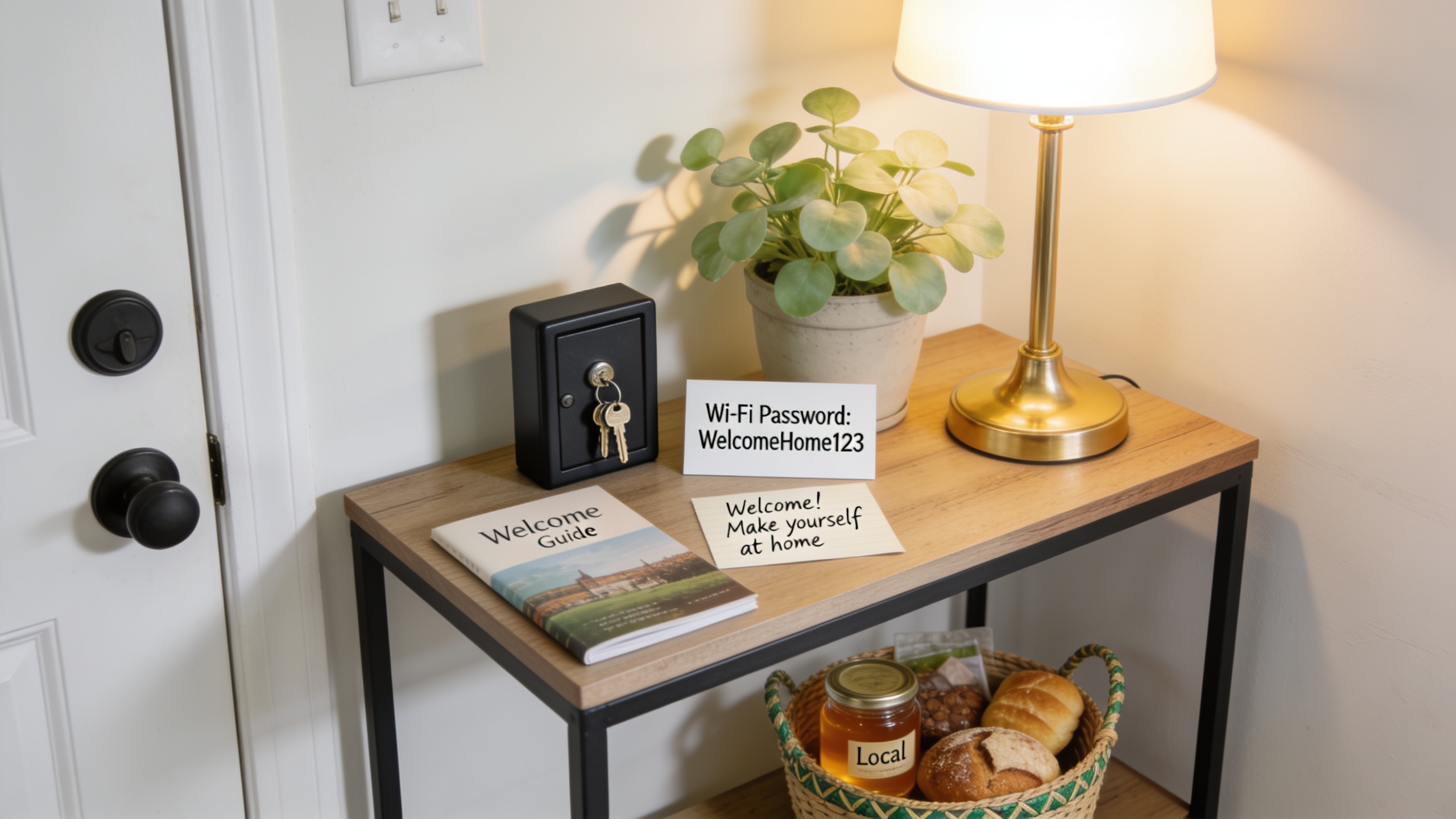 A thoughtfully prepared welcome setup for home swap guests including a guide, keys, and local information
Access and Keys
Sort out the keys early. Mailed ahead of time, left with a neighbor, or handled through a smart lock or lockbox. If you're going keyless, test it before your partner arrives and send backup instructions in case the tech decides to be difficult that day. It always picks the worst moment.
A Welcome Guide Goes a Long Way
Write up a simple guide, a page or two, with the Wi-Fi password, appliance quirks, trash and recycling schedule, nearest grocery store and pharmacy, emergency numbers, and any local quirks worth knowing. It's a small effort that dramatically cuts down the number of panicked texts you'll get during their stay. Repeat swappers rave about this one, and for good reason.
Confirm Insurance and Liability Basics
Check whether your homeowner's or renter's insurance says anything about guest stays or property exchanges, and ask your partner to check theirs. This isn't doom-planning, it's just being informed. And if either of you rents instead of owns, make sure your lease doesn't quietly forbid short-term guest arrangements. Better to know now than to find out from an angry landlord later.
Keep the Communication Channel Open During the Stay
Pick a preferred way to stay in touch during the swap, text, WhatsApp, the platform inbox, whatever, and agree on what's reasonable for response times. Non-emergencies versus urgent stuff. This keeps the little hiccups (a confused appliance, a delayed flight) from spiraling into a stressful mess.
If you're curious how this stuff plays out once you're actually living day-to-day in a swapped home, it helps to understand how local services operate too. General guides on how service industries communicate, like the marketing and consumer-facing tips over at Sukhweb, can give you a window into how small businesses talk to customers in different regions. Which, weirdly, comes in handy when you're in a new neighborhood trying to find a reliable plumber or electrician fast.
Platforms and Tools That Streamline the Process
Beyond the dedicated swap platforms, some people use general project or messaging tools to keep all their negotiated details in one spot, the same organizing instinct behind tools discussed on platforms like RobinRank for communication workflows. The principle's identical: one single organized record beats details scattered across a dozen email threads. Keep your terms, contacts, and welcome guide together in one accessible doc and you'll spare both households a ton of confusion.
One last thing worth remembering. Home swapping is global, and cultural norms around hospitality, punctuality, and communication genuinely differ from place to place, much like consumer expectations shift across retail markets, something you see in wholesale and distribution businesses such as t7b, where local customs shape how deals get done. Just being aware that your partner's default expectations might not match yours, especially internationally, means you'll ask better clarifying questions during the negotiation instead of assuming you're both on the same page. You're probably not, and that's fine, as long as you talk about it.
FAQ: Home Swap Negotiation for First-Timers
Do I actually need to sign a formal contract for a home swap? Nope, a formal legal contract isn't required for most swaps. But a written summary of your agreed terms, dates, house rules, responsibilities, contingency plans, is strongly recommended. Plenty of platforms offer a simple home exchange agreement template that covers the basics without dragging a lawyer into it.
What if my swap partner cancels right before the trip? This is exactly why you discuss a cancellation policy during the initial negotiation, how much notice is fair and what happens if someone has to bail. A lot of experienced swappers won't stake high-stakes travel (a wedding, say) on a single swap, and they keep a backup accommodation in their pocket, especially for a first exchange.
Should I swap cars along with my home? Totally optional, and negotiate it separately from the home, because it drags in extra insurance and liability questions. If you do go for it, confirm coverage with both insurance providers first and put mileage and fuel expectations in writing. Don't wing the car stuff.
How do I handle a partner who suddenly wants to bring extra guests? Bring up guest numbers explicitly, don't assume. If your listing says "sleeps 4" and they casually mention a fifth person, clarify whether that changes bedding, parking, or utilities before you confirm anything. Way easier to sort now than to argue about it at check-in.
Is it normal to feel nervous about my first swap? Completely. It's honestly part of why thorough negotiation matters so much. Verifying profiles, doing a video call, getting every detail in writing, that's the exact process that turns the nerves into confidence. Everybody feels it the first time.
Look, home swap negotiation gets easier every single time you do it, and most of the first-timer anxiety comes from uncertainty that one clear, honest conversation can wipe out. Start small. Ask direct questions. Put your agreements in writing. And treat your swap partner the way you'd want to be treated as a guest in their home. Do that, and the rest tends to sort itself out.

Published by
SwappaHome
SwappaHome Editorial Team
Home Exchange & Slow Travel Editorial
The SwappaHome Editorial Team brings together travel research, home-exchange community insights, and platform data to produce practical guides for first-time and experienced home swappers. Every article cites real platforms, current market rates, and verifiable city-level facts so readers can make informed decisions without guessing.
Ready to try home swapping?
Join SwappaHome and start traveling by exchanging homes. Get 7 free credits when you sign up!