
How One Family Saved $3,000 on Vacation With Home Swapping

SwappaHome Editorial Team
Home Exchange & Slow Travel Editorial
The Martinez family of Denver kept $3,000 in their bank account on a single summer trip, and they did it by not paying for a hotel. That's not a marketing figure someone made up. Maria and Carlos...
The Martinez family of Denver kept $3,000 in their bank account on a single summer trip, and they did it by not paying for a hotel. That's not a marketing figure someone made up. Maria and Carlos actually sat down and ran the numbers before they went anywhere.
Here's what happened. They wanted to take their two kids to Lisbon for 10 days in July. Before booking a thing, Maria built a spreadsheet (she's that kind of planner, God bless her) comparing a normal hotel-and-restaurants vacation against a home exchange set up through Swappahome. The gap between the two columns came out to exactly three grand. So this piece walks through their trip line by line, because I think seeing where the money actually goes is more useful than a hundred "top budget travel tips" posts.
Whether you're a parent trying to make a summer budget stretch, a retiree eyeing a long stay abroad, or a remote worker who just wants a decent home base somewhere new, this is a real example of what's possible.
Table of Contents
- Meet the Martinez Family: A Real-World Home Swap Savings Story
- How Much Does a Traditional Family Vacation Actually Cost?
- The Home Swap Savings Breakdown: Line-by-Line Comparison
- What Is Home Swapping and How Does It Work?
- Beyond the Dollars: Other Benefits the Martinez Family Discovered
- How Can Your Family Get Started With Home Swapping?
- Is Home Swapping Right for Every Budget Family Vacation?
- Frequently Asked Questions
Meet the Martinez Family
Carlos, Maria, and their two kids (ages 9 and 12) traded their three-bedroom Denver home for a similar-sized apartment in Lisbon owned by a Portuguese family, for 10 nights in July. They set it up through Swappahome. And because both families were feeling generous, they also swapped cars, which is a pretty common add-on with these exchanges and knocks even more off the bill.
Like I said, Maria ran the math first. Her traditional plan assumed a mid-range hotel, three meals a day mostly eaten out, and a rental car. The swap version assumed free lodging, a mix of home cooking and the occasional restaurant, plus free use of the host family's car. When she tallied it all up, the difference was $3,000 on the nose. That money didn't get spent on the trip. It went straight into a college fund.
And honestly, this is the part that gets me about home swapping for families. A hotel room, even a fancy "family suite," almost never gives four people room to actually breathe. You can't cook a real meal. You can't do laundry. You're all sleeping in one room listening to each other snore. A whole apartment gives you all of that by default.
How Much Does a Traditional Family Vacation Actually Cost?
A 10-day international trip for a family of four usually runs somewhere between $6,000 and $9,000 once you total up flights, lodging, food, transport, and activities, which lines up with the family trip breakdowns you'll see from outlets like NerdWallet and Value Penguin. The Martinez traditional estimate came in at $7,850, right in the middle of that range and pretty realistic for a Denver-to-Lisbon trip at peak summer prices.
Here's the traditional total, broken out:
- Round-trip flights for four (Denver to Lisbon): $2,400
- Hotel, 10 nights, family-friendly: $2,750
- Meals, mostly eating out: $1,600
- Rental car and gas: $500
- Activities and attractions: $600
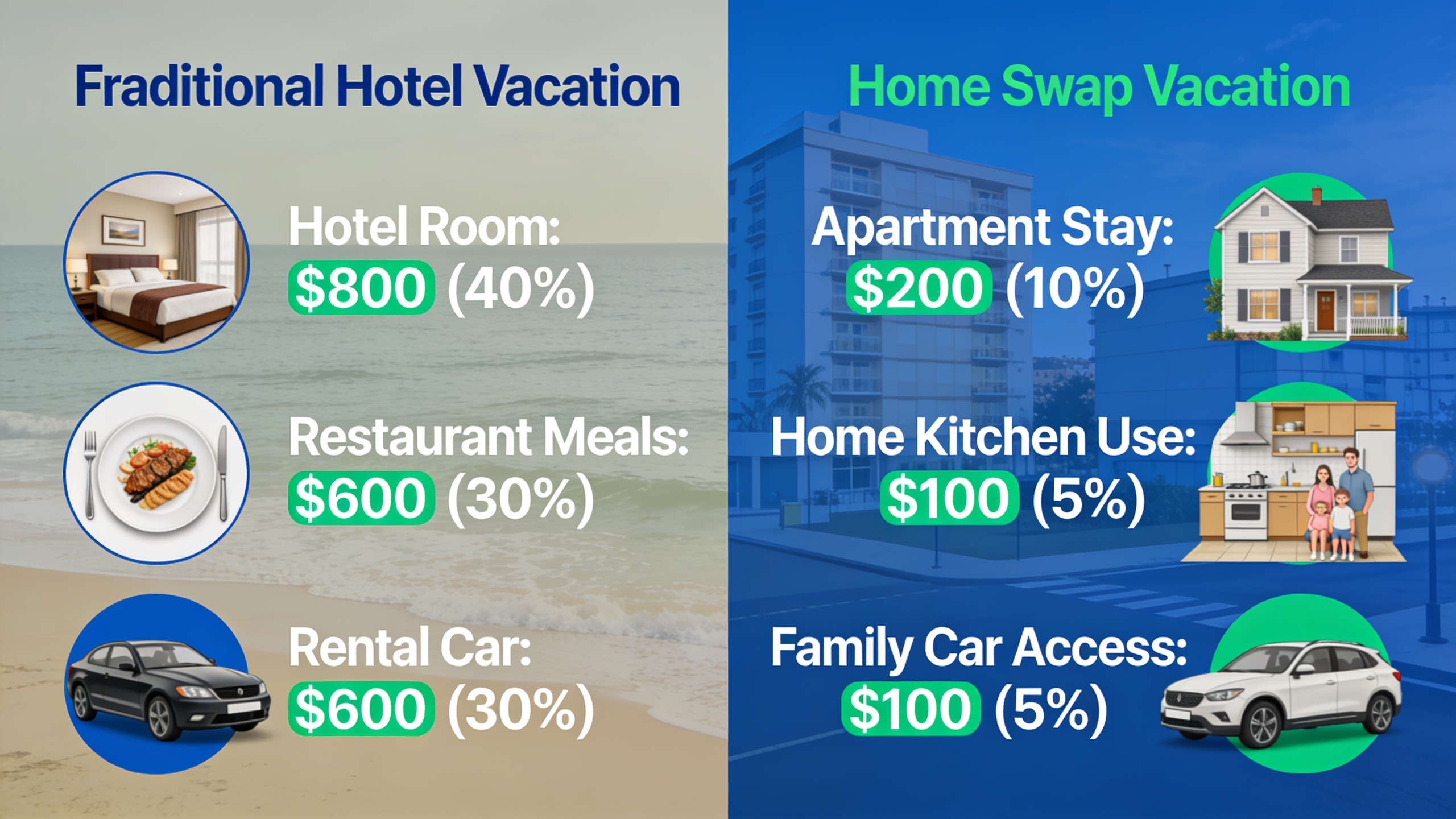 Budget comparison infographic showing traditional hotel vacation versus home swap vacation expenses
The flights are the one thing that don't budge no matter where you sleep. Airfare is airfare. So the interesting stuff, the stuff you can actually move, is lodging, food, and getting around town. That's exactly where a home swap does its work.
And look at the split. The hotel alone ate up 35% of the whole budget, with food right behind at just over 20%. Put those two together and you've spent more than half your money before you've done a single fun thing. That's the trap most families fall into. Accommodation and dining are the two biggest levers you can pull, and they happen to be the two things a home exchange flips completely on their head.
The Home Swap Savings Breakdown: Line-by-Line Comparison
Most of the Martinez family's savings came from two moves: killing the hotel bill entirely, and cutting their food spend nearly in half by cooking in a real kitchen. Here's their planned traditional trip next to what they actually spent.
| Expense Category | Traditional Vacation | Home Swap Vacation |
|---|---|---|
| Round-trip flights (4 people) | $2,400 | $2,400 |
| Accommodation (10 nights) | $2,750 | $0 |
| Swappahome annual membership | $0 | $150 |
| Food (dining out vs. home-cooked) | $1,600 | $1,500 |
| Local transportation | $500 | $200 |
| Activities and attractions | $600 | $600 |
| Total | $7,850 | $4,850 |
$7,850 minus $4,850. That's your three thousand dollars, from one trip. Money they didn't have to work overtime for, didn't have to raid savings for, and didn't put on a credit card racking up interest.
A couple of these lines are worth a second look. Accommodation went from $2,750 to zero because, well, they swapped homes instead of renting a room. The only lodging-related cost was the flat annual membership fee, which is less than what one night at a mid-range Lisbon hotel would've cost them. Food only dropped $100 on paper, but that number's misleading. They cooked about 60% of their meals in the apartment using stuff from the local market and only ate out for dinners or special occasions. And the local transport line fell from $500 to $200 because they had the host family's car. They just paid for gas and tolls.
If you want to see how families set these up before they book, the guide on how home swapping can completely change the way you vacation walks through the planning process people like the Martinezes use to line up a swap months out.
What Is Home Swapping and How Does It Work?
Home swapping is when two people or families trade the use of their homes for a set period, usually with no money changing hands for the stay itself. Instead of paying nightly rates, you just live in each other's place. Sometimes at the same time, sometimes at different points in the year. The lodging cost is basically zero once you've paid a platform membership.
Platforms like Swappahome connect homeowners who want to travel with other homeowners in places they'd like to visit. You list your home, browse other listings, and work out dates directly with your matches. Often you throw in extras like car use, pet care, or just a list of "here's where the locals actually eat." And here's the thing I like about it: because both sides have skin in the game, home swapping tends to attract people who are house-proud and respectful, not the party-till-3am crowd.
The mechanics are simple enough. You post your home with photos, a neighborhood description, and your available dates. People reach out, you agree on terms, and once it's locked in, everyone's got full access to a real, furnished home somewhere new. It's fundamentally different from renting a vacation place because no cash trades hands for the lodging. The currency is the home itself.
If you're wondering whether your own place is swap-ready, try to picture how it'd feel to a stranger walking in for the first time. A comfortable, well-put-together living room (the kind of solid setup you might get from a maker like Oak Castle Furniture, which does durable solid oak dining and living room pieces) goes a long way toward making a listing feel inviting when someone's scrolling through options online. Believe it or not, comfort and quality in the shared spaces often matter to swap guests as much as location does.
Beyond the Dollars: Other Benefits the Martinez Family Discovered
The savings aren't just about lodging and food. Families also get space, authenticity, and a trip that feels grounded in a way that's genuinely hard to price. The Martinez kids each had their own bedroom in Lisbon instead of all four of them crammed into one hotel room. Maria said it made the whole thing feel less like camping out in a stopover and more like actually living somewhere.
Being in a real neighborhood changed the whole texture of the trip, too. They weren't holed up in some tourist-district hotel. They shopped at the same corner grocery as their Portuguese hosts, got dinner tips from actual neighbors, and picked up a few Portuguese phrases just from daily life. This immersive, local thing is one of the most common reasons families pick home exchanges over hotels, at least according to the exchange organizations that survey their members on how happy they were with their trips.
 Family cooking together in a home swap apartment kitchen with local Portuguese ingredients and neighborhood groceries
Oh, and there's a benefit that's easy to miss. While the Martinez family was in Lisbon, their Portuguese swap partners were staying in the Denver house. Which means the place wasn't sitting dark and empty for 10 days. A lived-in home is just plain safer than a vacant one, and a lot of swappers treat this mutual house-sitting arrangement as a real perk. Try getting that from a hotel.
How Can Your Family Get Started With Home Swapping?
Getting started means building an appealing listing for your own home, browsing matches in your target destination, and confirming the details with a partner well before you travel. Most families find it takes anywhere from a few weeks to a few months to lock in a swap, especially for popular spots in peak season. So plan early. I can't stress that enough.
Step one is a listing that actually represents your home and makes people want to stay there. Good photos. An honest description. Clear info on what's included, whether that's car use, WiFi, how close you are to a train, whatever. For a full walkthrough, the piece on creating a standout Swappahome listing in 7 steps covers what makes a listing get noticed instead of buried.
Once you're live, communication is everything. Talk through the expectations up front: house rules, emergency contacts, who handles cleaning, what happens if plans blow up. A lot of the smart swappers do a video call before confirming, which honestly just makes both sides feel better about handing over the keys.
If you also run a side hustle, a blog, or a rental listing and want your online presence to look as sharp as your swap profile, a service like Digital Fusion Hub can help with web design and content so you come across as professional and trustworthy. That matters more and more as these platforms grow and travelers get pickier about who they'll swap with. And families juggling swap dates, flight bookings, and messaging across time zones sometimes lean on organizational tools or consulting from folks like SamaiSolutions to keep it all straight, especially if they're doing a few trips a year.
Is Home Swapping Right for Every Budget Family Vacation?
Home swapping works best for families who can be flexible on where they go, don't mind communicating directly with strangers, and will treat someone else's home the way they'd want theirs treated. It's not automatically the cheapest or easiest choice for every trip. A last-minute weekend getaway, for example, is way harder to pull off as a swap than a longer trip you've planned months ahead. Finding the right match takes time.
The families who squeeze the most value out of it tend to share a few things. They're taking trips of a week or longer, so the nightly savings really pile up. They're happy to cook at least some meals instead of eating out for every single one. And they've got a home worth listing, meaning a place other travelers would actually want, whether that's an apartment in a walkable city or a house near good hiking and lakes.
That said, this isn't a families-only thing. Retirees use exchanges all the time to afford longer trips than a hotel budget would ever allow, sometimes a month or more in one spot. Remote workers and digital nomads use swaps to grab a quiet, comfortable place with solid WiFi without paying the short-term rental markup. The thread running through all of it is the same one that got the Martinez family going: a swap turns a fixed lodging cost into basically nothing, which frees up your budget for the stuff that actually makes a trip memorable. The meals out. The activities. The experiences.
Frequently Asked Questions
How much can a family realistically save with a home swap? It depends on trip length, destination, and how often you cook versus eat out. But the Martinez family's 10-day Lisbon trip saved $3,000 against a traditional hotel vacation, mostly by wiping out the $2,750 hotel bill and cutting local transport by more than half. And the longer your trip, the bigger the savings, because that avoided accommodation cost just keeps growing with every night.
Is home swapping safe for families with children? Yes, as long as you take the usual precautions. Verify your swap partner's identity, read their reviews or references, and put a clear written agreement in place covering house rules, expectations, and emergency contacts before you go. Most platforms, Swappahome included, are built around reciprocal trust anyway. Both families are handing over their homes at the same time, so nobody's got the upper hand.
Do you have to swap homes at the same time as your partner family? Nope. Simultaneous swaps are common but not required. Plenty of families do non-simultaneous exchanges, where one family stays during a different window, maybe during the partner's off-season or a stretch when the house would just be sitting empty anyway. That flexibility makes it a lot easier to match with people whose ideal dates don't perfectly line up with yours.
What happens if something gets damaged during a home swap? Most platforms suggest both parties document the condition of their homes before the swap, and a lot of members already carry homeowner's insurance that covers damage from short-term guests, though this varies by policy and location. Definitely check with your own insurer before finalizing anything so you know exactly what's covered and what isn't.
Is home swapping only useful for international trips? Not at all. It works just as well for domestic travel, and plenty of families use it for regional getaways where the flights are cheap but hotels in the popular spots are still brutal. The math works the same regardless of distance. The bigger the accommodation cost you're dodging, the bigger the savings on the whole trip.
For the Martinez family, a swap turned an ordinary $7,850 summer vacation into a $4,850 one with the same flights, similar activities, and arguably a more genuine taste of Lisbon, all while keeping an extra $3,000 in their pocket. And I think that's the real lesson here. The biggest costs in travel are almost never the flights or the sightseeing. They're the nightly bed and the daily meals. Those are exactly the two things a well-planned home exchange can rewrite.

Published by
SwappaHome
SwappaHome Editorial Team
Home Exchange & Slow Travel Editorial
The SwappaHome Editorial Team brings together travel research, home-exchange community insights, and platform data to produce practical guides for first-time and experienced home swappers. Every article cites real platforms, current market rates, and verifiable city-level facts so readers can make informed decisions without guessing.
Ready to try home swapping?
Join SwappaHome and start traveling by exchanging homes. Get 7 free credits when you sign up!