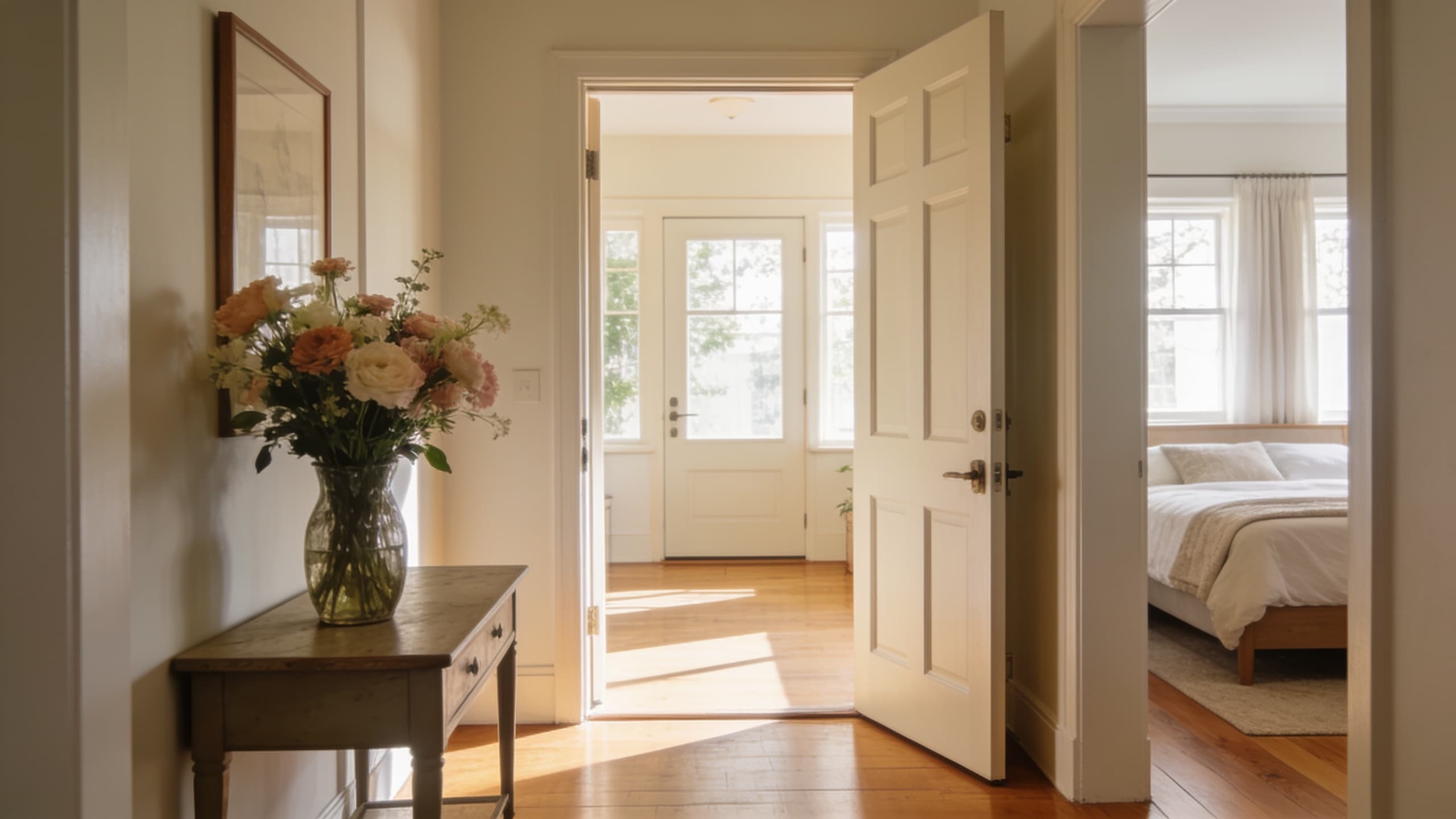
How to Prepare Your Home for a Swap: A Complete Checklist

SwappaHome Editorial Team
Home Exchange & Slow Travel Editorial
Getting your home ready for a swap is about way more than a pre-guest tidy-up. You're deep cleaning, staging, decluttering, and figuring out which doors get locked, all so your swap partner walks in...
Getting your home ready for a swap is about way more than a pre-guest tidy-up. You're deep cleaning, staging, decluttering, and figuring out which doors get locked, all so your swap partner walks in feeling welcome while your stuff stays protected. First timer or a regular on platforms like Swappahome, doesn't matter. What matters is having a plan, because a plan is the difference between a stressful pile of chores and a process that's actually kind of satisfying. This guide takes you through the whole thing, from that first serious clean to the last walkthrough before your guests turn the key.
Home swapping (or home exchange, if you want to be formal about it) isn't the fringe thing it used to be. A 2023 report from the American Hotel and Lodging Association found that alternative lodging like home exchanges and short-term rentals now makes up a meaningful chunk of leisure travel bookings, mostly because budget-minded travelers want a place that feels like home without hotel prices. And preparing well isn't just being polite. It shapes your reviews, your future swap invites, and honestly, how relaxed you feel actually handing someone your keys.
Table of Contents
- Why Preparing Your Home Matters for a Successful Swap
- How Do You Prepare Your Home for a Swap?
- Deep Cleaning Checklist: Room-by-Room Guide
- Staging Your Home to Impress Your Swap Guest
- Decluttering and Organizing for Space and Storage
- Securing Personal Items and Setting Boundaries
- What Should You Include in a Home Exchange Checklist for Guests?
- Final Walkthrough: Home Swap Checklist Timeline
- Frequently Asked Questions
Why Preparing Your Home Matters for a Successful Swap
A well-prepared home is basically what decides whether you get a glowing review or an awkward apology email. Home swapping runs on trust and give-and-take. This isn't a hotel where a faceless staff cleans up after you. Your guest is living in your actual space, and you're probably living in theirs, so both of you have real skin in the game to leave things better than you found them.
Think of it as a non-monetary exchange economy, sort of like the barter-based systems that keep popping back up alongside the digital finance trends covered by outlets like Cryptocoinsjournal. Value moves directly between two people, no middleman. In a home swap, the "currency" is comfort, cleanliness, and clear communication. Do the prep work well and you're building a reputation that keeps paying you back, in future swaps, referrals, and repeat exchanges with families you actually like.
And selfishly? Prep kills your own anxiety. When you know exactly what's been cleaned, locked up, and explained, you can actually enjoy your trip instead of lying awake in a foreign bed wondering if you left the stove on.
How Do You Prepare Your Home for a Swap?
Preparing your home for a swap comes down to four phases: deep cleaning every room, staging the space so it feels good, decluttering and organizing storage, and locking away valuables while setting clear household rules. Most hosts kick this off two to four weeks before the arrival date and work backward from move-in day.
Roughly, a home exchange checklist sorts into cleaning (kitchen, bathrooms, bedrooms, common areas, outdoor spaces), staging (fresh linens, welcoming touches, furniture that actually makes sense), organizing (clearing closets, labeling storage, freeing up drawers and cabinets), and the security stuff (locking away valuables, setting rules, sharing instructions). We'll get into each.
If you haven't matched with a swap partner yet, it's honestly worth skimming Top 15 Destinations Perfect for Your Next Home Swap first. It'll give you a feel for which homes and locations people actually want, and that can quietly shape how you present your own place to attract a similar kind of traveler. Once you've locked in a match, the real work starts, and the timeline further down will help you pace it out instead of panicking three days before.
Deep Cleaning Checklist: Room-by-Room Guide
A deep clean means sanitizing and refreshing every surface a guest might touch, not just shoving clutter into a closet and running a duster over the coffee table. This is the single most reviewed part of any home swap. People notice grime in the grout and dust on the ceiling fan way more than they notice whether your throw pillows match.
Kitchen
Wipe the inside and outside of the fridge, oven, and microwave. Empty and clean the trash and recycling bins completely (a lingering smell is a fast way to lose points). Run the dishwasher empty on a cleaning cycle, and make sure any cabinets and drawers you're leaving open for guests are wiped down and crumb-free. Fun fact that'll make you scrub harder: according to the American Cleaning Institute, kitchens actually harbor more bacteria per square inch than bathrooms in a lot of homes, especially on sponges, cutting boards, and fridge handles. So don't skimp there.
Bathrooms
Scrub the grout, disinfect the toilets, and swap out any shower curtain or liner that's gone mildewy. Restock the toilet paper and leave at least one full spare roll where people can see it. Clean the mirrors with something streak-free, because bathroom mirrors are one of the first things a guest actually clocks when they check in.
Bedrooms
Wash all the linens, mattress protectors, and pillowcases, even the ones that look perfectly clean. Your guest can't tell freshness by looking, and they'll assume the worst. Vacuum under the beds and dust the nightstands, headboards, and blinds. If guests are using the closets, vacuum the closet floor and wipe the shelves too.
Common Areas and Floors
Vacuum the carpets and rugs, mop the hard floors, and dust the baseboards, light fixtures, and ceiling fan blades. Clean the windows and glass doors, especially if your listing photos bragged about a view. Nothing kills a great view faster than a smudged pane.
Outdoor Spaces
Sweep the porches and patios, wipe down the outdoor furniture, and clear cobwebs from the entryway. Got a yard? Mow it right before your guests show up, not a week out.
Staging Your Home to Impress Your Swap Guest
Staging means arranging your furniture, lighting, and little details so the place feels warm and move-in ready the second your guest walks through the door. This is a different job from cleaning. Cleaning is about sanitation. Staging is about atmosphere.
Start with fresh linens on every bed, even the ones nobody's sleeping in, because a single unmade guest room somehow makes the whole house feel half-finished. Put out two or three extra towels per person. And think about a small welcome basket: local snacks, a bottle of wine, whatever's regional. Retirees and families especially seem to love this kind of thing, at least judging by the feedback that gets tossed around constantly in home exchange communities and travel forums.
Lighting matters more than most hosts expect. Open the blinds and curtains before your guests arrive so the place isn't dim and cave-like, and leave a lamp on a timer for anyone showing up after dark. If you want to set an easy mood for that first night, you could even leave a playlist recommendation. Sites like Afro House King have Afro House, Amapiano, and Deep House tracks that make for a laid-back welcome-home soundtrack, and a lot of international travelers genuinely enjoy stumbling onto new music in a new city.
Last thing: leave a welcome guide, printed or digital. Wi-Fi password, appliance quirks, trash days, a few local tips. If there's a great restaurant nearby, name it. People love a real recommendation way more than whatever Google spits out. A host in Texas, for instance, might point guests toward somewhere like Palate Garden, a Nepali-Indian spot in Saginaw with a warm dine-in vibe, as a memorable first dinner near their temporary home.
Decluttering and Organizing for Space and Storage
Decluttering means clearing out enough of your personal stuff that your guest actually has room to unpack and live, not just cramming your mess behind closed doors and hoping nobody opens them. A cluttered home, even a spotless one, feels cramped and unwelcoming when you're living out of a suitcase for one to four weeks.
Start with closets and drawers. A guest usually needs at least one empty closet or a few empty drawers per adult. Aim to clear out 30 to 50 percent of your usual closet space. Box up the off-season clothes and stash them in the garage, the basement, or a closet you can lock.
Same idea in the kitchen. Clear one or two cabinet shelves plus a section of the fridge and pantry so your guest can put groceries away without playing Tetris around your stuff. And label anything that's genuinely off-limits, something like "Host's Pantry, please don't touch," instead of expecting people to read your mind.
Bathroom counters and medicine cabinets need to be cleared of your toiletries and, importantly, any prescription meds. Leave one shelf or drawer obviously empty and available. Out in the common areas, put away the photo albums, the mail, the financial paperwork, the sentimental knick-knacks. Not because your guest is a thief, but because a clear surface just reads as calmer and more hotel-like. It's a psychology thing.
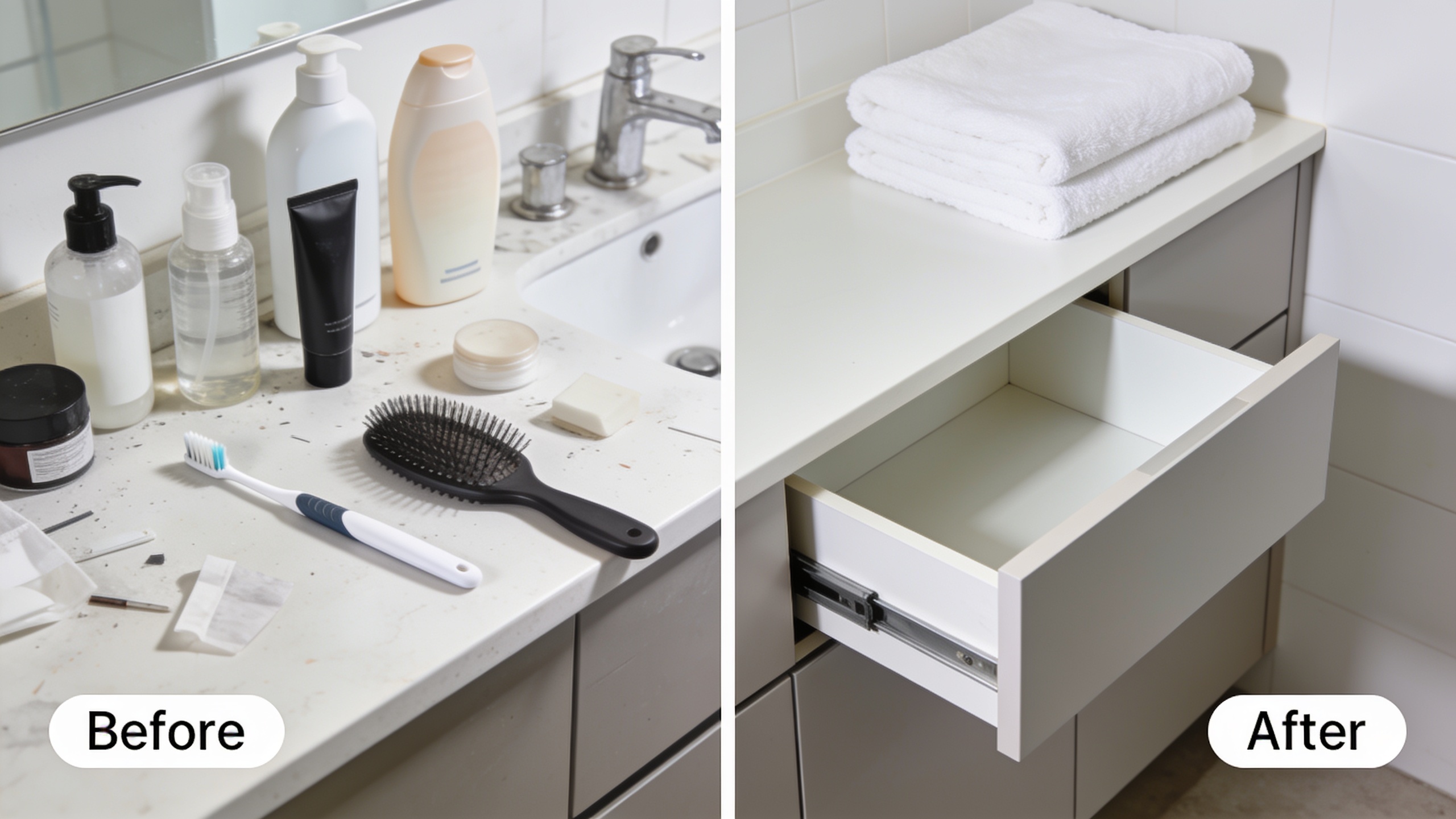 Before and after bathroom organization showing cluttered versus clean, guest-ready bathroom counter
| Area | What to Remove or Store | What to Leave Accessible |
|---|---|---|
| Closets | Off-season clothing, personal shoes | 1-2 empty closets or half a closet per guest |
| Kitchen | Personal grocery items, sentimental cookware | 2+ empty cabinet shelves, fridge space, basic cookware |
| Bathroom | Prescriptions, personal toiletries | Clean towels, empty shelf or drawer, toilet paper |
| Living Room | Family photos, mail, valuables | Remote controls, Wi-Fi info, streaming logins if shared |
| Home Office | Documents, electronics, sensitive files | Desk space if offered, printer instructions if applicable |
| Garage/Storage | Boxed personal belongings | Labeled guest parking spot or bike storage if available |
Securing Personal Items and Setting Boundaries
Securing your home means physically locking away the valuables and sensitive documents, and setting boundaries means telling your guest what's off-limits before they ever show up. Both steps protect you and head off the kind of misunderstandings that can quietly ruin an otherwise great swap.
Lock away passports, jewelry, expensive electronics, firearms, and financial documents in a locked closet, a safe, or an off-site storage unit. Plenty of experienced swappers just designate one closet or room as a "host-only" space with a simple lock, and then mention it in the welcome guide so nobody's confused or offended by a door that won't open.
Log out of or password-protect your personal accounts on any shared computers, smart TVs, or streaming devices, and change your smart home codes after the swap if you use keyless entry. If you've got security cameras, tell your guest exactly where they are, in advance. Undisclosed indoor cameras are one of the fastest ways to torch trust in a home exchange, and a lot of platforms flat-out ban hidden cameras in private spaces. So don't be that host.
Boundaries go beyond locks, though. Decide ahead of time whether guests can have visitors, use certain rooms, walk pets, or park extra cars, and get it in writing. If this kind of upfront negotiating feels awkward to you, How to Negotiate a Home Swap: Tips for First-Timers walks through how to bring this stuff up diplomatically before you finalize a match, which is a whole lot better than having the conversation after your guest has already moved in.
What Should You Include in a Home Exchange Checklist for Guests?
A guest checklist should have practical instructions, emergency contacts, and local recommendations, basically everything someone needs to live comfortably without texting you every twenty minutes. It's arguably the most useful thing you'll prepare, and once the cleaning and staging are done, most hosts can throw it together in under an hour.
Include instructions for anything that isn't obvious: a tankless water heater, a smart thermostat, a washing machine with a mind of its own. List trash and recycling days and where the bins live. Write the Wi-Fi network name and password out in big clear print near the router (nobody wants to squint at a laptop sticker). And add emergency contacts, ideally a trusted neighbor or local friend who can swing by if something breaks while you're gone.
Then round it out with local recommendations: grocery stores, pharmacies, transit stops, and two or three favorite restaurants or cafés. If you want help getting the wording clean without spending your whole evening on it, AI writing tools like RobinRank can draft a tidy set of guest instructions, or even help polish your original swap listing, which matters more than you'd think since a well-written listing tends to pull in more serious, compatible partners in the first place.
Oh, and tailor it to who's coming. Digital nomads and remote workers really care about the workspace: internet speed, whether there's an actual desk, quiet hours in the building. Families will be hunting for nearby parks, kid-friendly restaurants, and any baby gear you're able to leave out.
Final Walkthrough: Home Swap Checklist Timeline
A final walkthrough is one last pass through your home 24 to 48 hours before your guest arrives, to confirm everything on your list is actually done and not just theoretically done. Even seasoned hosts skip this when they're crunched for time, and it's almost always where the small stuff gets caught: a forgotten load of laundry, an overflowing bin, a lightbulb that quietly died last week.
Spreading the prep across a few weeks is so much less brutal than cramming it into the final days. Here's a timeline that works for most swaps:
| Timeframe Before Arrival | Key Tasks |
|---|---|
| 4 weeks before | Confirm swap details, begin decluttering closets and storage, review house rules with household members |
| 2-3 weeks before | Deep clean major appliances, arrange for lawn care or maintenance, order any needed household supplies |
| 1 week before | Wash all linens and towels, finalize the welcome guide, secure valuables and documents |
| 2-3 days before | Full deep clean of every room, restock toiletries and pantry basics, test Wi-Fi and appliances |
| Final walkthrough (24-48 hrs) | Check every room against your checklist, take arrival-condition photos, set out welcome basket and guide |
One habit worth building: snap timestamped photos of each room during your final walkthrough. It does two things. It documents the condition you're leaving the place in, and it gives you an easy before-and-after when you get back. Frequent swappers do this almost religiously now, precisely because it takes the guesswork out of any damage dispute later on.
Frequently Asked Questions
How far ahead should I actually start prepping my home for a swap? Most experienced hosts get serious about four weeks out, starting with decluttering and any repairs, then shifting into deep cleaning and staging over the final week or two. Spreading it out like this saves you from a miserable last-minute cleaning marathon.
Do I have to remove all my personal stuff before a swap? No, but you should lock away valuables, sensitive documents, prescription meds, and anything irreplaceable or sentimental. Loads of hosts just keep one closet or room locked as host-only storage rather than emptying the whole house, which is way more realistic and a lot less exhausting.
What cleaning supplies should I leave for my guest? Leave the basics: all-purpose cleaner, dish soap, laundry detergent, sponges, paper towels, and a vacuum or broom they can get to. That way your guest can keep the place tidy during their stay without having to make a grocery run the second they land.
Should I leave instructions for the appliances? Yes, especially for anything non-standard, like a smart thermostat, a tankless water heater, an induction stove, or a weird washer/dryer combo. A simple printed card or a page in your welcome guide heads off the confused midnight texts and cuts down the odds of something getting broken.
How do I handle keys and access for a home swap? Sort out the key exchange with your partner well before arrival, whether that's mailing physical keys, using a lockbox, or sharing a smart lock code. Confirm exact arrival and departure times in writing so both of you know precisely when access starts and ends.
At the core, prepping your home for a swap is just treating your guest the way you'd want to be treated in their place: a clean, organized space, clear communication, a few thoughtful touches. Work through the checklist in stages, lean on a realistic timeline, and don't underestimate how much a little welcome basket or a well-written guest guide can shape someone's whole impression of their stay. Get the groundwork done, and you're free to focus on the actual point of home swapping. Enjoying somewhere new while your own place is in good hands.

Published by
SwappaHome
SwappaHome Editorial Team
Home Exchange & Slow Travel Editorial
The SwappaHome Editorial Team brings together travel research, home-exchange community insights, and platform data to produce practical guides for first-time and experienced home swappers. Every article cites real platforms, current market rates, and verifiable city-level facts so readers can make informed decisions without guessing.
Ready to try home swapping?
Join SwappaHome and start traveling by exchanging homes. Get 7 free credits when you sign up!