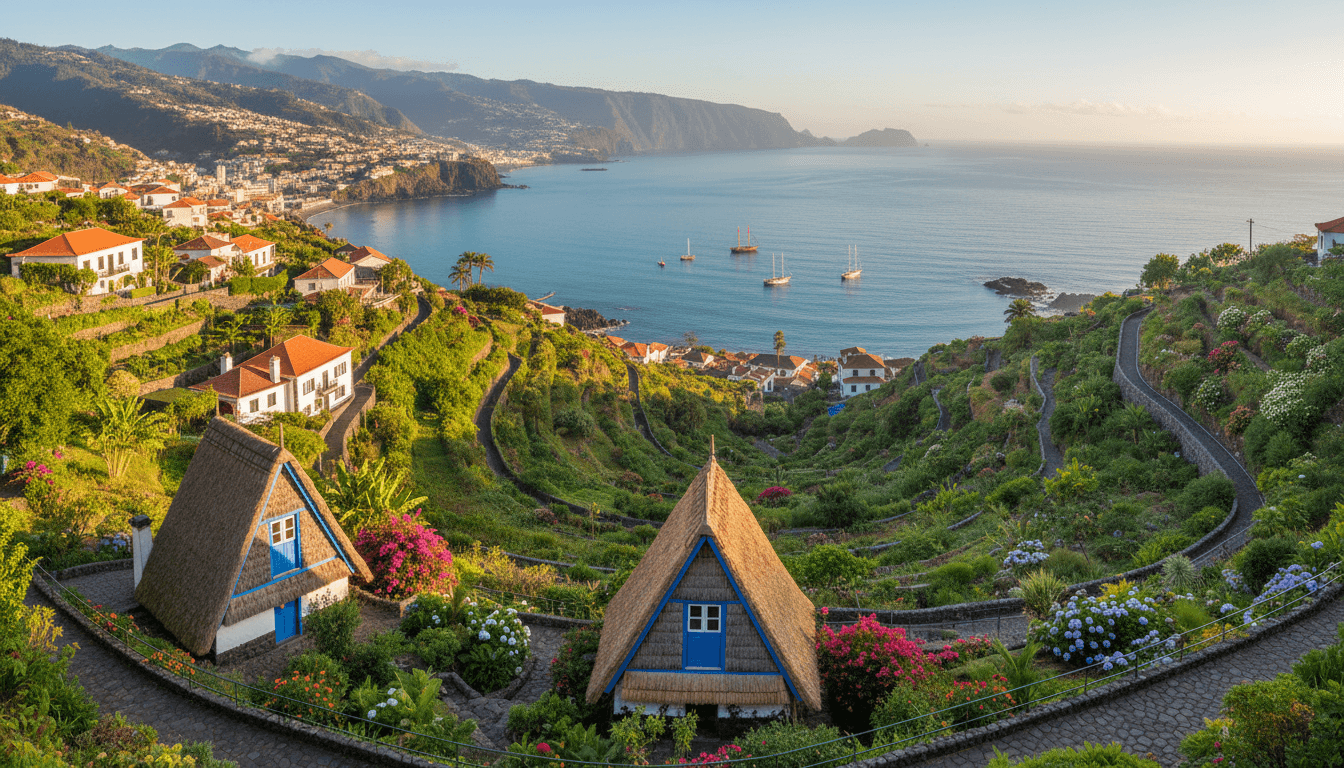
Long-Term Home Exchange in Madeira: The Complete Remote Worker's Guide to Island Living
Maya Chen
Travel Writer & Home Exchange Expert
Discover how long-term home exchange in Madeira lets remote workers live on this Portuguese island paradise for months—without hotel costs eating your budget.
Three months into my Madeira home exchange, I stopped counting days. That's when I knew something had shifted.
I was sitting on a terrace in Funchal's old town, laptop open but completely ignored, watching afternoon light turn the Atlantic into liquid gold. The apartment wasn't mine—it belonged to a Portuguese architect spending winter in my San Francisco place. But after twelve weeks, it felt like home in a way hotels never could.
Long-term home exchange in Madeira has become something of an open secret among remote workers. The island delivers what most digital nomad hotspots only promise: reliable high-speed internet, a cost of living that won't drain your savings, year-round mild weather, and a quality of life that makes you question why you ever paid Bay Area rent.
The catch? There isn't one, really—except you need to know how to set it up right.
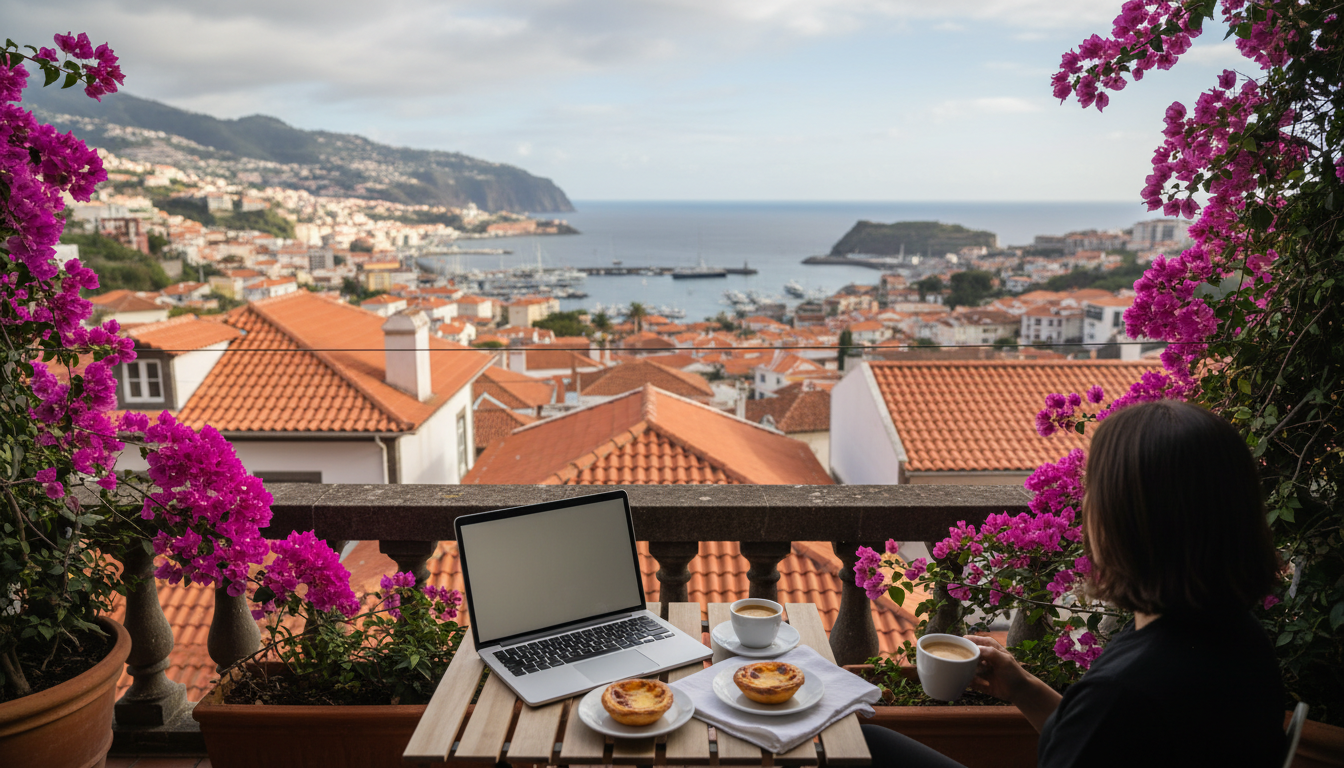 Morning view from a Funchal apartment terrace overlooking terracotta rooftops cascading down to the
Why Madeira Has Become the Remote Worker's Home Exchange Destination
Madeira wasn't even on my radar until a fellow home swapper mentioned it at a travel meetup in Lisbon. "It's like someone took the best parts of Portugal, added tropical plants, and removed the tourist chaos," she said.
She wasn't wrong.
The island sits about 600 miles off the coast of Morocco—technically European but climatically something else entirely. January temperatures hover around 65°F (18°C). August rarely exceeds 77°F (25°C). For someone who'd spent years chasing good weather for remote work, this consistency felt almost suspicious.
But weather alone doesn't make a destination. What makes Madeira exceptional for long-term stays is the infrastructure that's quietly developed over the past few years. Fiber internet covers most of the island now—I consistently got 200+ Mbps in my Funchal apartment, faster than my connection back home. The time zone (GMT/GMT+1) works reasonably well for both European and East Coast US meetings. And because Madeira is part of Portugal, you get EU consumer protections, excellent healthcare, and none of the visa complications that plague popular nomad destinations in Southeast Asia.
The cost equation is what really seals the deal, though. A decent one-bedroom apartment in Funchal rents for €800-1,200/month ($870-1,300). Hotels run €80-150/night ($87-163) for anything remotely comfortable. Through home exchange? That accommodation cost drops to essentially zero.
How Long-Term Home Exchange Actually Works for Extended Madeira Stays
So here's the thing—the mechanics really matter.
Traditional home swapping, where you and another person swap homes for the same dates, works great for two-week vacations. For long-term stays of one to six months? Nearly impossible to coordinate. That's where credit-based systems like SwappaHome change everything.
The concept is straightforward. When you host travelers in your home, you earn credits. When you stay somewhere else, you spend credits. One night hosted equals one credit earned. One night stayed equals one credit spent. No direct swap required.
For my three-month Madeira stay, I'd accumulated credits over the previous year by hosting guests in my San Francisco apartment during weekends I was traveling anyway. By the time I was ready for Madeira, I had enough credits for an extended stay—plus the Portuguese architect who wanted my place was earning his own credits to use elsewhere later.
The key for long-term exchanges is starting your search early. At least three to four months ahead. Madeira homeowners who are open to multi-month exchanges usually have specific windows in mind, often tied to their own travel plans or the island's tourist seasons.
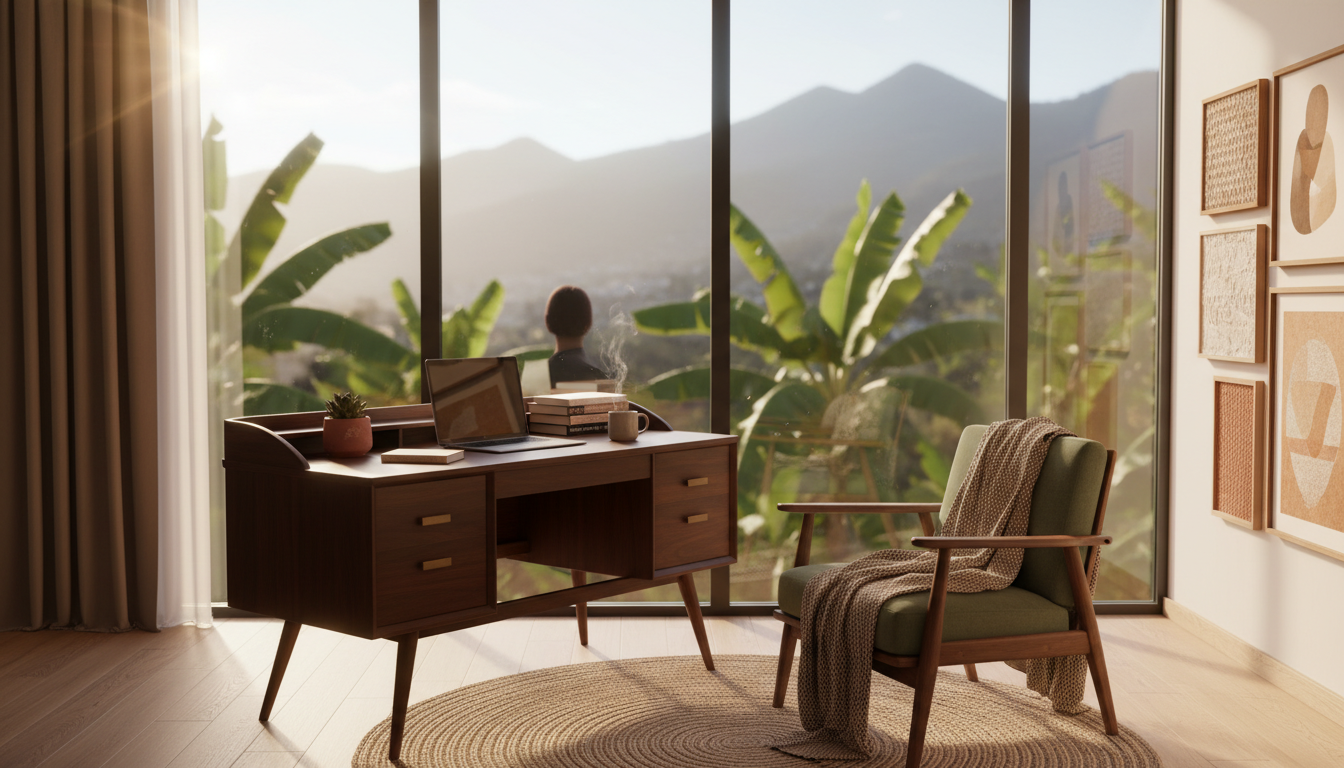 Cozy home office setup in a Madeiran apartment with large windows showing banana plants and mountain
Best Neighborhoods in Madeira for Remote Workers Doing Home Exchange
Not all parts of Madeira are created equal for long-term stays. After exploring most of the island, here's my honest breakdown.
Funchal Centro and Old Town
This is where most remote workers end up, and for good reason. Funchal's center has everything within walking distance—supermarkets, pharmacies, coworking spaces, restaurants, the main hospital. The old town (Zona Velha) has more character with its narrow streets, street art, and family-run tascas, but can get noisy on weekend nights when the bars fill up.
Expect home exchange listings here to go quickly. Properties range from renovated traditional Madeiran houses to modern apartments in newer buildings. Internet is universally excellent. Walking score? Exceptional. You won't need a car for daily life.
São Martinho and Ajuda
These residential neighborhoods sit just west of Funchal's center, climbing up the hillside. Quieter. More local. Better value. Many homes here have gardens and terraces with ocean views that would cost a fortune in the center.
The trade-off is walkability—you'll want a car or be comfortable with frequent bus rides (€1.95 per trip, or €35/month for unlimited). Several remote workers I met preferred this area specifically because the separation from tourist zones helped them maintain work routines.
Câmara de Lobos
About 15 minutes west of Funchal, this fishing village has become increasingly popular with longer-term visitors. Winston Churchill famously painted here, and the harbor still looks much like it did in his canvases.
Câmara de Lobos offers a more authentic Madeiran experience—fewer tourists, lower costs, a strong sense of community. The poncha bars (serving the island's traditional rum-based drink) are legendary. Internet infrastructure is solid in the main village but can be spotty in surrounding hills.
The North Coast: São Vicente and Porto Moniz
I spent two weeks in São Vicente during my stay, house-sitting for a home exchange member who needed someone to water plants. The north coast is dramatically different—lusher, rainier, more rugged. Stunning for weekend exploration but challenging for full-time remote work.
Internet can be unreliable outside main villages. Services are limited. Weather is noticeably wetter. Unless you're specifically seeking isolation, I'd recommend the south coast for long-term home exchange in Madeira.
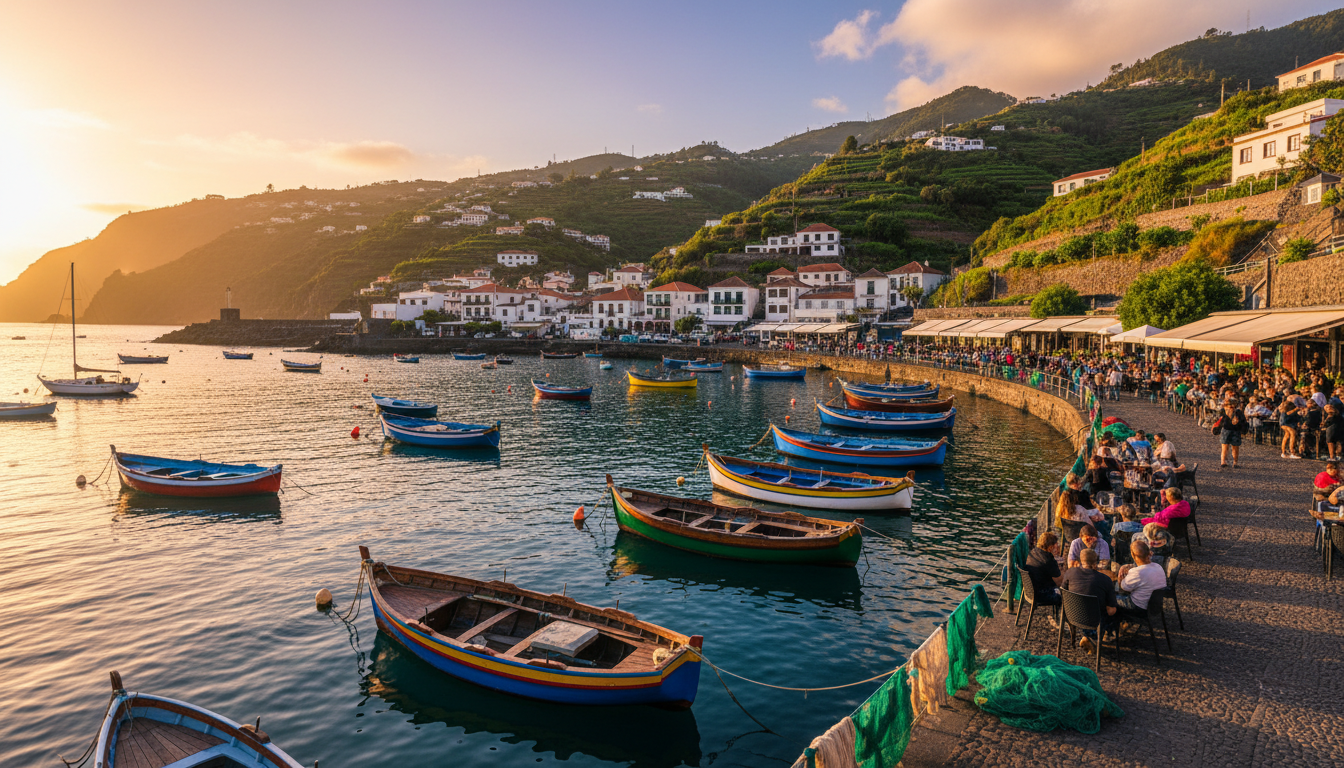 Cmara de Lobos harbor at golden hour, colorful fishing boats bobbing in calm water, terraced hillsid
Setting Up Your Long-Term Madeira Home Exchange: A Practical Timeline
Four months before departure, I started browsing Madeira listings on SwappaHome. Here's the timeline that worked for me.
Four to Five Months Out: Create or update your home listing with fresh photos and detailed descriptions. Madeira homeowners are often particular—they want to know who's staying in their space for months, not days. Include information about your work schedule, lifestyle, and why you're interested in Madeira specifically. Start reaching out to listings that match your dates, and be flexible on exact timing if you can. Shifting your stay by a week or two can open up options that otherwise wouldn't work.
Three Months Out: Narrow down to two or three serious possibilities. Video calls with potential hosts are standard for long-term exchanges—treat them like you would a rental interview. Ask about internet speeds (request a speed test screenshot), neighborhood noise, and any quirks of the property. Discuss practical matters: utility costs, who handles what if something breaks, whether there are plants or pets that need attention. For my exchange, we agreed I'd cover electricity over a baseline amount, which felt fair given I was working from home daily.
Six to Eight Weeks Out: Confirm your exchange and sort out logistics. Get detailed instructions for everything—appliances, heating systems, where to find the fusebox. Exchange emergency contacts and preferred communication methods. Book your flights. TAP Air Portugal flies direct from several US cities to Lisbon, with short connections to Funchal. Prices vary wildly—I've seen round trips from San Francisco range from $450 to $1,200 depending on season and timing.
Two Weeks Out: Do a final video walkthrough of both properties. This isn't about distrust—it's about preventing misunderstandings. Document the condition of your home before you leave. Set up mail forwarding, pause deliveries, and brief any neighbors who might need to know about incoming guests at your place.
The Real Costs of Long-Term Living in Madeira
Accommodation through home exchange: essentially free.
Everything else? Here's what I actually spent during my three-month stay.
Groceries: €250-300/month ($270-325). Madeiran supermarkets are well-stocked and reasonably priced. Pingo Doce and Continente are the main chains. Local markets—especially the Mercado dos Lavradores in Funchal—offer incredible produce at lower prices. I ate extremely well on this budget, cooking most meals at home with occasional splurges on fresh seafood.
Dining Out: €150-250/month ($163-270). A typical lunch at a local tasca runs €7-10 ($8-11) for a full meal with drink. Dinner at a mid-range restaurant costs €15-25 ($16-27) per person. The tourist-trap restaurants along Funchal's waterfront charge more, but you learn to avoid them quickly.
Transportation: €100-150/month ($109-163). I rented a car for the first month (€450 total through a local agency—Rodavante offered better rates than international chains), then switched to buses and occasional car rentals for weekend exploration. If you're staying in central Funchal, you might skip the car entirely.
Utilities Contribution: €50-80/month ($54-87). This was my agreed contribution toward electricity above normal usage. Madeira doesn't need heating or air conditioning most of the year, which keeps costs down.
Coworking (Optional): €150-200/month ($163-217). Funchal has several coworking spaces now. Digital Nomads Madeira near the marina charges €180/month for unlimited access. I used it occasionally for video calls requiring professional backgrounds, but honestly worked from my apartment terrace most days.
Total Monthly Spend: €700-980 ($760-1,065). Compare that to my San Francisco monthly costs, and you'll understand why I extended twice.
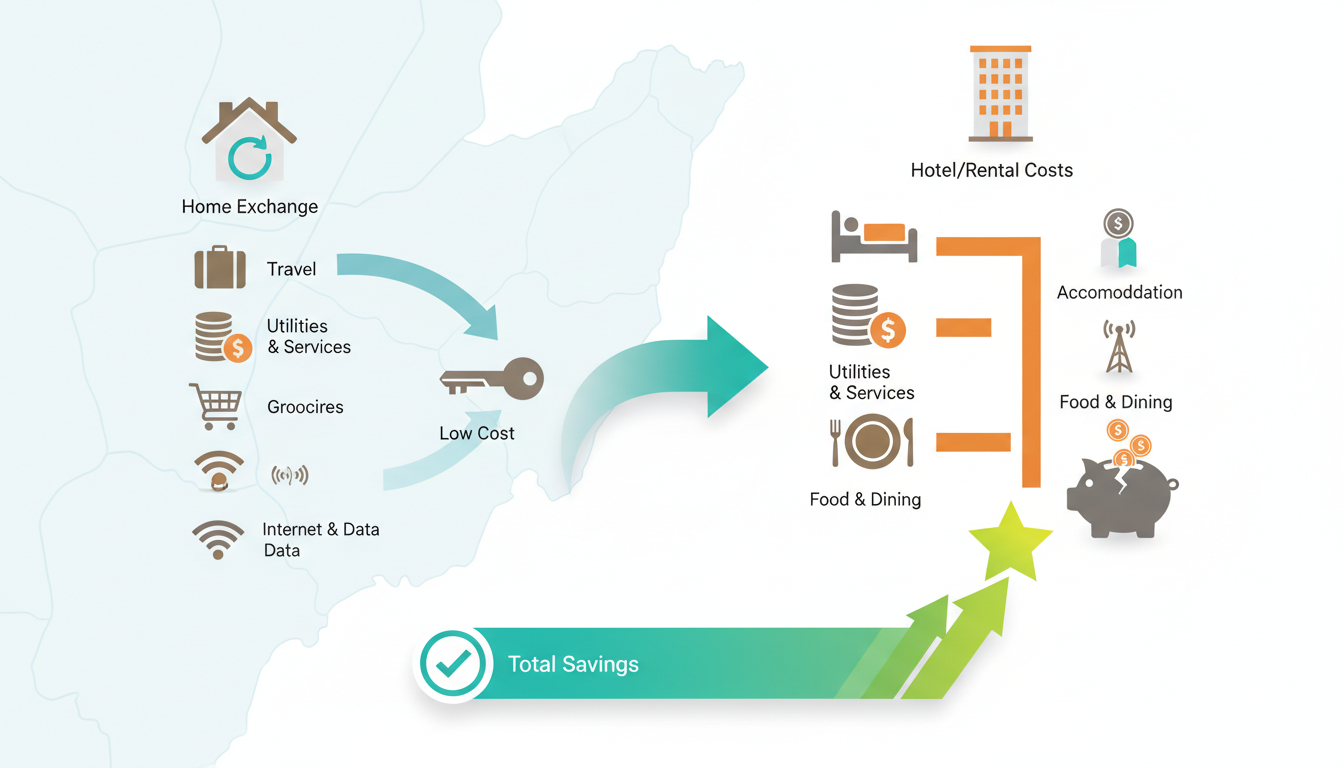 Infographic showing monthly cost breakdown for remote workers in Madeira, comparing home exchange co
What Makes a Home Exchange Listing Stand Out in Madeira
After three months of talking to Madeiran homeowners and other exchangers, I've learned what makes the difference between getting accepted and getting ignored.
Your listing photos matter more than you think. Madeirans take pride in their homes—they want to see that you do too. Include photos that show your space is clean, well-maintained, and genuinely lived in. Staged real estate photos feel impersonal; authentic shots of your morning coffee spot or your favorite reading corner tell a story.
Your profile description should explain why you want to visit Madeira specifically. "I want to explore Europe" is generic. "I've been researching Madeira's levada hiking trails for two years and want to finally experience them while finishing a book project" shows genuine interest.
Respond to messages promptly and thoroughly. The home exchange community is smaller than you might think—reputation travels. I've had hosts tell me they accepted my request partly because another member vouched for me from a previous exchange.
Be clear about your work schedule. If you'll be on video calls during European evening hours (US daytime), mention it. If you need absolute quiet during certain hours, say so. Mismatched expectations cause more exchange problems than anything else.
Navigating Legalities: Visas and Taxes for Long-Term Stays
I have to be careful here—I'm a travel writer, not an immigration lawyer. But here's what I learned.
US citizens can stay in Portugal (including Madeira) for up to 90 days within any 180-day period without a visa. This covers most extended home exchanges. If you want to stay longer, you'll need to look into Portugal's visa options—the D7 passive income visa or the digital nomad visa are the most relevant for remote workers.
The digital nomad visa, introduced in 2022, requires proof of remote employment or freelance income of at least €3,040/month (roughly $3,300). Processing takes several months, so plan well ahead if you're considering stays beyond 90 days.
Tax implications depend on your specific situation and home country. Generally, staying under 183 days in Portugal in a calendar year keeps you from triggering Portuguese tax residency, but consult with a tax professional who understands international remote work.
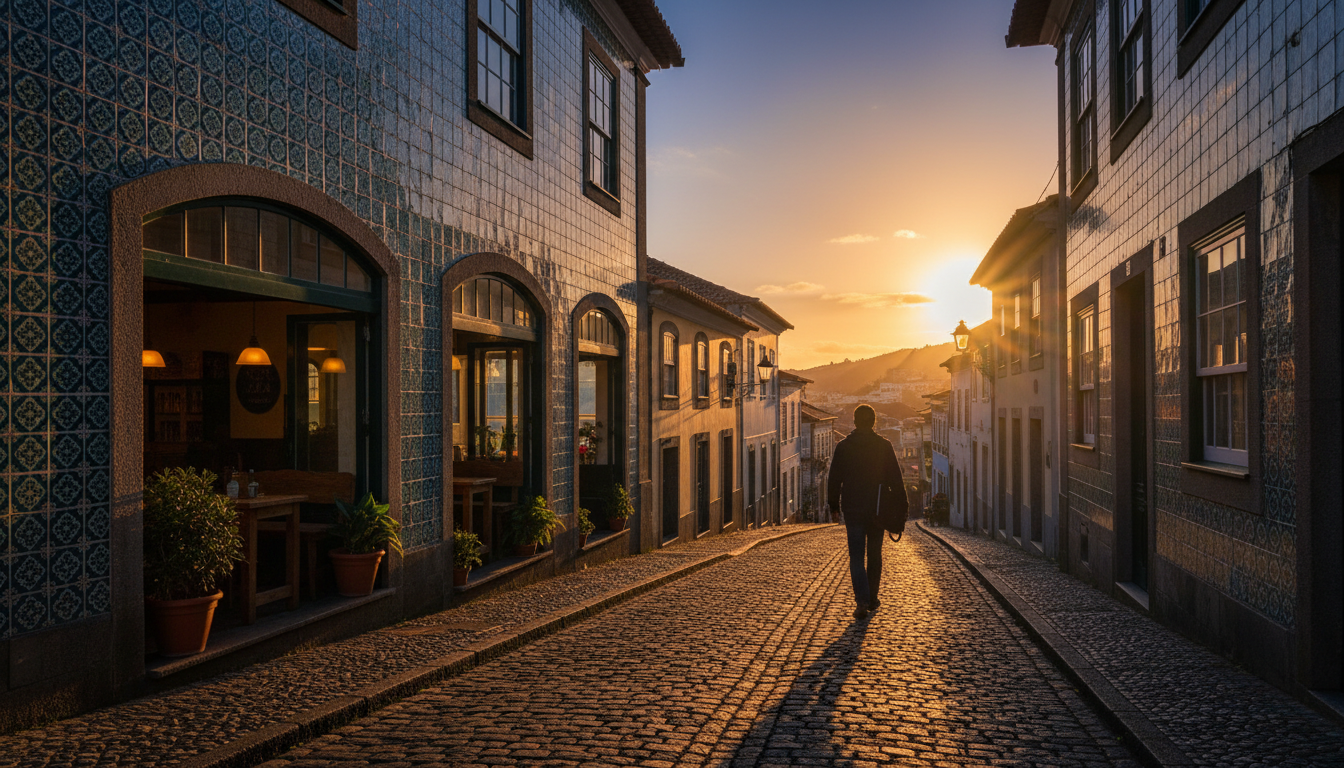 Remote worker walking along a Funchal street at sunset, laptop bag over shoulder, passing traditiona
Building a Routine: Daily Life as a Remote Worker in Madeira
The rhythm of long-term home exchange in Madeira feels different from vacation travel. You're not rushing to see everything—you're living.
My typical day started around 7:30 AM with coffee on the terrace, watching the city wake up below. I'd work through the morning, breaking for a walk to the nearby bakery around 10 AM for a pastel de nata and espresso (€1.80 total—I never got over how cheap good coffee was). Lunch was usually something simple at home, then more work until late afternoon.
Around 5 PM, I'd close the laptop and explore. A different levada walk each week. A new restaurant in a neighborhood I hadn't tried. Or just wandering through Funchal's back streets.
Weekends were for bigger adventures—driving the hair-raising roads to the island's peaks, swimming in the natural pools at Porto Moniz, or taking the cable car up to Monte and walking back down through tropical gardens.
The key was treating it as real life, not extended vacation. I kept my morning routine, maintained work hours, exercised regularly. The people I saw burn out on long-term travel were usually those who tried to be tourists every day.
Community and Connection: You're Not Alone Out There
One thing that surprised me about long-term home exchange in Madeira was how easy it was to find community.
The Digital Nomads Madeira group (active on Facebook and Telegram) organizes regular meetups, hikes, and coworking sessions. I met several other home exchangers through these events—we'd compare notes on properties, share tips about local services, occasionally house-sit for each other during short trips.
Madeirans themselves are welcoming once you show you're not just passing through. My neighborhood café owner started remembering my order after the second week. The woman at the produce stand would set aside the best tomatoes when she saw me coming. These small connections made the difference between staying somewhere and actually belonging.
The home exchange community adds another layer. My host in Funchal introduced me via email to three other Madeiran members, all of whom offered advice and local recommendations. One invited me to a family birthday party. This kind of thing doesn't happen in hotels.
When Things Go Wrong: Handling Challenges During Extended Exchanges
I'd be lying if I said everything was perfect. Extended stays mean extended opportunities for problems.
Three weeks into my exchange, the apartment's water heater failed. In a hotel, you'd call the front desk. In a home exchange, you're troubleshooting yourself. I messaged my host, who walked me through the reset procedure via WhatsApp video. When that didn't work, he connected me with his usual repair person. Total downtime: about 18 hours. Cost: €85, which my host insisted on covering since it was an aging unit.
Another time, I accidentally broke a ceramic dish that turned out to be a family heirloom. Mortifying. I immediately messaged my host, apologized profusely, and offered to replace it or compensate however they preferred. They were gracious about it—these things happen in lived-in homes—but I still felt terrible.
The lesson? Communication and honesty solve most problems. Home exchange works on trust and mutual respect. When issues arise, address them immediately and transparently. Most hosts understand that accidents happen; what they won't forgive is being blindsided when they return home.
For peace of mind, I always recommend getting your own travel insurance that covers personal liability. SwappaHome connects members but doesn't provide coverage for damages—that's on you to arrange. I use World Nomads, which has a specific policy for long-term travelers that includes liability coverage.
Making the Most of Shoulder Seasons in Madeira
Timing your long-term home exchange in Madeira matters more than you might think.
Peak tourist season runs from April through October, with spikes around Christmas and New Year. During these months, flights are expensive, the island is crowded, and home exchange availability is limited—Madeiran homeowners often use peak season to earn rental income instead.
The sweet spot for long-term stays is January through March or November. Weather is still mild (rarely below 60°F/15°C), tourist crowds thin dramatically, and homeowners are more likely to be interested in extended exchanges. My January-to-April stay hit this perfectly.
Avoid February if you're noise-sensitive—Carnival in Madeira is a big deal, with parades and street parties that run late. Unless you want to experience it, in which case, plan around it.
Preparing Your Own Home for Long-Term Guests
Your home exchange works both ways. While you're enjoying Madeira, someone is living in your space. Setting them up for success matters.
Create a detailed house manual covering everything from WiFi passwords to trash day schedules. Include recommendations for your neighborhood—your favorite coffee shop, the best grocery store, where to find parking. Think about what you'd want to know arriving somewhere new.
Remove or secure anything truly irreplaceable or valuable. I'm not talking about hiding everything—that defeats the purpose of a lived-in exchange. But grandmother's jewelry and original artwork should probably go in a safe or a trusted friend's keeping.
Arrange for someone local to be a point of contact for emergencies. A neighbor, a friend, a family member—someone who can help if your guest locks themselves out or can't figure out the heating system.
Leave your home clean but not sterile. Stock basic supplies: toilet paper, dish soap, coffee, a few pantry staples. These small gestures set the tone for how guests will treat your space.
The Return: What Long-Term Home Exchange in Madeira Teaches You
I extended my original six-week plan to three months. Then I started looking at how to come back.
Long-term home exchange changes how you think about travel. It's not about checking boxes or collecting passport stamps. It's about depth over breadth—actually knowing a place instead of just visiting it.
Madeira taught me that I could work effectively from anywhere with good internet and a comfortable chair. That I didn't need the expensive apartment in the expensive city to be happy. That community forms faster than you'd expect when you stay long enough to become a regular.
When I finally flew home, my Funchal host sent me a message: "The apartment feels too quiet without someone working on the terrace. Come back soon."
I'm already planning my return. This time, maybe I'll try Câmara de Lobos.
If you're considering your own long-term home exchange in Madeira, start building your credits now. List your home on SwappaHome, host a few guests, begin reaching out to Madeiran members. The island isn't going anywhere—but the best properties get booked months in advance.
Your terrace with the ocean view is waiting. You just have to be ready to claim it.
Frequently Asked Questions
How long can I do a home exchange in Madeira as a US citizen?
US citizens can stay in Portugal, including Madeira, for up to 90 days within any 180-day period without a visa. For longer stays, you'll need to apply for a Portuguese visa such as the digital nomad visa, which requires proof of remote income of at least €3,040/month and takes several months to process.
Is the internet in Madeira reliable enough for remote work?
Yes—Madeira has excellent internet infrastructure, especially in Funchal and surrounding areas. Fiber connections offering 200+ Mbps are common in most residential areas. Always ask potential home exchange hosts for a speed test screenshot before confirming, and note that north coast villages may have less reliable connectivity.
How much money can I save with long-term home exchange in Madeira compared to renting?
A typical one-bedroom apartment in Funchal rents for €800-1,200/month ($870-1,300), while hotels cost €80-150/night ($87-163). Through home exchange, your accommodation cost is essentially zero—you exchange the use of your home for theirs. Over a three-month stay, this represents savings of €2,400-3,600 ($2,600-3,900) compared to renting.
What's the best time of year for long-term home exchange in Madeira?
The ideal months are January through March or November. Weather remains mild (rarely below 60°F/15°C), tourist crowds are minimal, and Madeiran homeowners are more likely to accept extended exchanges since they're not earning peak-season rental income. Avoid February if you're noise-sensitive due to Carnival celebrations.
Do I need a car for long-term living in Madeira?
It depends on your neighborhood. In central Funchal, you can manage without a car using buses (€35/month unlimited) and walking. For neighborhoods like São Martinho or Câmara de Lobos, a car makes daily life easier. Many remote workers rent a car for the first month to explore, then rely on public transport and occasional rentals for weekend trips.
40+
Swaps
25
Countries
7
Years
About Maya Chen
Travel Writer & Home Exchange Expert
Maya is a travel writer with over 7 years of experience in the home swapping world. Originally from Vancouver and now based in San Francisco, she has completed more than 40 home exchanges across 25 countries. Her passion for "slow" and authentic travel led her to discover that true luxury lies in living like a local, not a tourist.
Ready to try home swapping?
Join SwappaHome and start traveling by exchanging homes. Get 10 free credits when you sign up!
Related articles

Lyon Home Exchange: Your Complete Guide to France's Hidden Gem for Home Swapping
Discover why Lyon home exchange is booming among savvy travelers. From Croix-Rousse to Presqu'île, find the best neighborhoods and insider tips for your swap.

Zurich Bucket List: 47 Unforgettable Experiences to Enjoy During Your Home Swap
Discover the ultimate Zurich bucket list for home swappers—from secret swimming spots to fondue rituals locals actually do. Save thousands while living like a true Zürcher.
Dublin Home Exchange Utilities Guide: WiFi, Heating & Everything Your Guests Need
Master Dublin home exchange utilities—from dodgy WiFi fixes to heating quirks. Practical tips from 7 years of swapping homes across Ireland.