
Long-Term Home Exchange in Ottawa: The Remote Worker's Complete Guide to Living Like a Local
Maya Chen
Travel Writer & Home Exchange Expert
Discover how remote workers are using long-term home exchange in Ottawa to live affordably in Canada's capital. Real costs, best neighborhoods, and insider tips.
I was three weeks into my long-term home exchange in Ottawa when I realized I'd made a critical error. Not with the swap itself—that was going beautifully. I was staying in a sun-filled condo in the Glebe, my temporary cat roommate had finally stopped hissing at me, and I'd discovered that the coffee at Bridgehead was worth walking six blocks in -15°C weather. No, my mistake was telling my remote work colleagues about my setup.
"Wait, you're paying nothing for rent?" my coworker Sarah messaged during our standup. "In a capital city? For two months?"
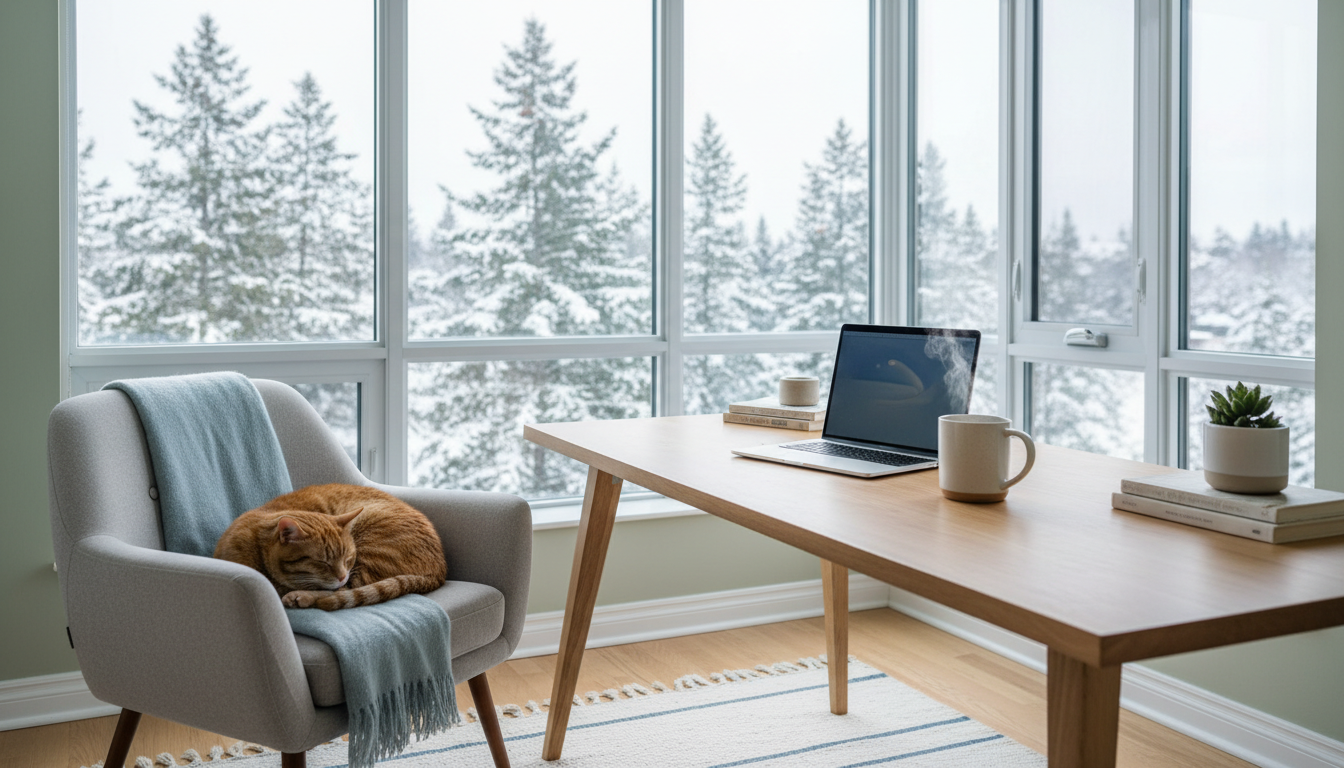 cozy home office setup in a bright Ottawa condo with large windows showing snow-covered trees outsid
That's the thing about long-term home exchange in Ottawa that catches people off guard. We're not talking about a weekend getaway or a quick vacation swap. This is about remote workers—people like you and me—who've figured out that we can live in one of North America's most underrated cities for weeks or months at a time, paying nothing for accommodation while our own homes earn us credits back home.
Ottawa doesn't have Toronto's flash or Vancouver's Instagram appeal. But that's precisely why it works so well for extended stays. The city moves at a pace that actually lets you work, the cost of living won't make your accountant weep, and there's a surprising depth to the neighborhoods once you get past the Parliament Hill postcards.
I've done three long-term swaps in Ottawa over the past two years, ranging from six weeks to three months. Let me walk you through everything I've learned—the neighborhoods that actually work for remote workers, the real costs you'll encounter, and how to set yourself up for a swap that feels less like travel and more like temporarily relocating your entire life.
Why Ottawa Works for Long-Term Home Exchange (When Other Cities Don't)
Here's something I've noticed after seven years of home swapping: not every city is built for extended stays. Paris sounds romantic until you're trying to focus on quarterly reports while tourists clog every café. New York's energy is electric, but that electricity costs $4,000/month in rent—even with a swap, you're burning through credits fast.
Ottawa hits differently.
The city has this peculiar quality where it feels simultaneously like a capital and a large town. You've got world-class museums and a genuinely interesting political scene, but also quiet residential neighborhoods where you can hear yourself think. The remote work infrastructure is solid—reliable high-speed internet is standard in most homes, and there's a café culture that actually welcomes laptop workers rather than side-eyeing them after 45 minutes.
For long-term home exchange in Ottawa specifically, there's another advantage: the city attracts a certain type of homeowner. Government workers, academics, embassy staff—people who travel for work, who understand the value of reciprocity, and who tend to maintain their homes well. I've found Ottawa swap partners to be among the most communicative and organized I've encountered anywhere.
The seasonal factor matters too. Ottawa empties out in summer as locals flee to cottages in the Gatineau Hills or along the Rideau Lakes. Winter brings its own exodus—snowbirds heading to Florida or Arizona. Both seasons create prime opportunities for multi-month swaps with homeowners who are genuinely away, not just looking to make a quick buck on a spare room.
 aerial view of Ottawas Parliament Hill and the Rideau Canal in autumn, with colorful trees lining th
Best Ottawa Neighborhoods for Remote Workers Doing Extended Swaps
Not all Ottawa neighborhoods are created equal when you're planning to actually live somewhere for months. Tourist-friendly doesn't always mean work-friendly. Here's my honest breakdown:
The Glebe: My Personal Favorite
I keep coming back to the Glebe, and I'm not subtle about why. This neighborhood south of downtown has the density of amenities you need for daily life—grocery stores, pharmacies, excellent restaurants—without the chaos of being in the city center. Bank Street runs through the heart of it, lined with independent shops and cafés that have become my unofficial offices.
The housing stock here trends toward character homes and well-maintained condos. Expect to find listings with proper home offices, good natural light, and owners who've thought about things like ergonomic chairs. A lot of professionals live here, which means a lot of professionals swap here.
Real talk: the Glebe is popular, which means competition for swaps can be stiff. I'd recommend reaching out to potential swap partners 3-4 months in advance for summer stays, 2-3 months for winter.
Coffee shop offices: Bridgehead on Bank Street (fast wifi, tolerant of campers), The Rowan (quieter, great for calls)
Grocery situation: Metro and Whole Foods within walking distance, plus the Lansdowne farmers market on Sundays
Westboro: The Hip Alternative
Westboro sits along the Ottawa River, about 15 minutes west of downtown by bus or bike. It's got a slightly younger, more artsy vibe than the Glebe—think yoga studios, craft breweries, and a genuinely excellent bookstore called Perfect Books that I've spent too much money in.
For remote workers, Westboro offers something the Glebe doesn't: direct access to the river pathways. When you've been staring at spreadsheets for four hours, being able to walk out your door and be on a scenic running path in two minutes is worth more than any coworking space membership.
The swap inventory here includes a lot of townhouses and smaller single-family homes. I did a six-week winter swap in Westboro and appreciated having a garage for my rental car—something to consider if you're planning a longer stay during Ottawa's more aggressive months.
Centretown: For Those Who Want the Action
Centretown is Ottawa's downtown residential neighborhood, stretching from Parliament Hill south to the Queensway. If you want to be in the thick of things—walking distance to museums, restaurants, the ByWard Market—this is your spot.
I'll be honest: Centretown is my least favorite for extended stays, but that's a personal preference. The apartments trend smaller, street noise is real, and you're more likely to encounter the tourist crowds that I specifically come to Ottawa to avoid. That said, if you don't have a car and want maximum walkability, Centretown makes logistical sense.
The swap options here are predominantly condos and apartments. Look for units facing courtyards or side streets if street noise bothers you.
Sandy Hill: The Quiet Intellectual
Tucked between the University of Ottawa and the Rideau River, Sandy Hill has a scholarly calm that I find genuinely conducive to focused work. The neighborhood is full of heritage homes—many converted to apartments—and tree-lined streets that feel almost European in their proportions.
The catch? Sandy Hill's swap inventory is smaller than other neighborhoods. When you do find a listing here, jump on it. I stayed in a professor's Victorian-era apartment for two months while she was on sabbatical in Berlin, and it remains one of my favorite Ottawa experiences.
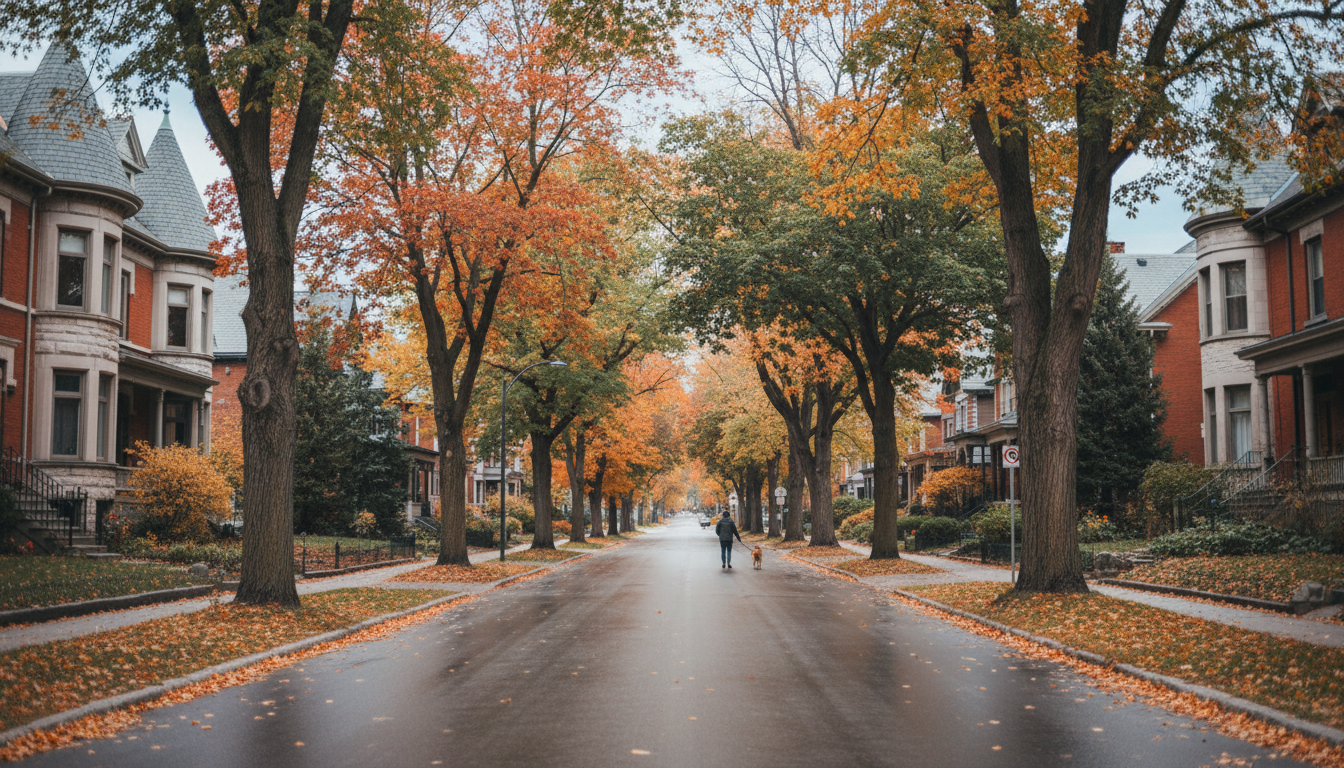 tree-lined residential street in Sandy Hill Ottawa during autumn, Victorian homes with colorful leav
Setting Up Your Long-Term Ottawa Swap: A Month-by-Month Timeline
Extended home exchanges require more planning than weekend swaps. Here's the timeline I've developed after some trial and error:
4-6 Months Before: Start Your Search
Begin browsing Ottawa listings on SwappaHome, even if you're not ready to commit. Get a sense of what's available, which neighborhoods have inventory, and what the typical home looks like. Create saved searches for your target dates.
This is also when you should optimize your own listing. For long-term swaps, Ottawa homeowners want to see that you're responsible, that your home is well-maintained, and that you understand the commitment involved. Add photos of your home office setup if you have one—it signals that you're a fellow remote worker who gets it.
3-4 Months Before: Make Contact
Start reaching out to potential swap partners. For long-term exchanges, I always suggest a video call before committing. You're going to be living in each other's spaces for weeks or months; you want to make sure the vibe is right.
Questions I always ask:
- What's the internet speed, and is it reliable? (Get actual numbers, not just "it's good")
- Is there a dedicated workspace, or will I be setting up at the kitchen table?
- What's the heating/cooling situation? (Crucial for Ottawa's temperature extremes)
- Are there any quirks I should know about? (Every home has them)
2 Months Before: Lock In Details
Once you've agreed on dates, get specific about logistics. Exchange detailed home guides—I create a Google Doc with everything from wifi passwords to the neighbor's name (the one who'll call the cops if she sees a stranger in your yard). Discuss mail handling, plant watering, and any maintenance that might come up.
For stays longer than a month, I also recommend discussing a check-in protocol. My Ottawa swap partners and I typically do a quick message every two weeks, just to confirm everything's going smoothly on both ends.
1 Month Before: Handle the Logistics
Book your flights, arrange transportation from the airport (the OC Transpo light rail now connects the airport to downtown, which is a game-changer), and start thinking about what you'll need to bring versus what you'll buy there.
If you're driving, confirm parking arrangements. Many Ottawa homes have driveways or garage access, but downtown condos often don't include parking—and monthly parking in Centretown runs $200-300 CAD ($145-220 USD).
The Real Costs of Living in Ottawa Long-Term (Even With Free Accommodation)
Let's talk money. Yes, your accommodation is covered through the swap—that's the whole point. But Ottawa isn't free, and I want to give you realistic numbers based on my actual spending.
Monthly Budget Breakdown (in USD)
Food and Dining: $400-600 Ottawa's grocery prices are reasonable by Canadian standards. A weekly shop at Metro or Loblaws runs me about $80-100 CAD ($58-73 USD). I cook most meals at home—one of the joys of having a real kitchen—and eat out maybe 2-3 times per week. A decent dinner for one with a drink runs $35-50 CAD ($25-36 USD).
Transportation: $0-150 If you're in a walkable neighborhood and don't need a car, you can get by on foot and occasional transit. A monthly OC Transpo pass is $125.50 CAD ($92 USD). If you want a car for weekend trips to Gatineau Park or Montreal, budget for a rental—weekly rates run $250-400 CAD ($180-290 USD) depending on season.
Coworking (Optional): $0-300 I rarely use coworking spaces in Ottawa because the café culture is so accommodating, but options exist. Impact Hub Ottawa offers day passes for $35 CAD ($25 USD) or monthly memberships around $350 CAD ($255 USD). Most remote workers I know just rotate between coffee shops.
Entertainment and Activities: $100-300 Ottawa's museums are excellent, and many are free or cheap. The National Gallery of Canada is $20 CAD ($15 USD), but admission is free on Thursday evenings. The Canadian Museum of History across the river in Gatineau is $23 CAD ($17 USD). Budget for the occasional hockey game if you're there in winter—Senators tickets start around $40 CAD ($29 USD) for upper bowl.
Miscellaneous: $100-200 Laundry if your swap doesn't have in-unit machines, household supplies, the occasional Uber, random stuff you forgot to pack.
Total Monthly Budget: $600-1,550 USD
Compare that to renting an apartment in Ottawa, where a one-bedroom averages $1,800-2,200 CAD ($1,310-1,600 USD) per month before utilities. The math on long-term home exchange makes itself.
 infographic showing cost comparison between traditional Ottawa rental, hotel stay, and home exchange
Making Remote Work Actually Work in Ottawa
I've learned some things the hard way about maintaining productivity during extended swaps. Ottawa has taught me a few specific lessons.
The Internet Situation
Canada's internet infrastructure is generally solid, and Ottawa benefits from being the capital—there's been significant investment in connectivity. That said, I always confirm actual speeds before committing to a swap. You want at least 50 Mbps download for reliable video calls; 100+ Mbps is ideal if you're doing anything data-intensive.
Most Ottawa homes use either Rogers or Bell for internet. Both are reliable in my experience. If your swap partner offers to leave their wifi router credentials and you're staying for months, ask if they'd be comfortable with you upgrading the plan temporarily if needed—you'd cover the difference, obviously.
Time Zone Considerations
Ottawa is Eastern Time, same as New York and Toronto. If you work with a West Coast team, you're three hours ahead—meaning your workday can end at 2 PM Pacific if you start at 6 AM local. I've found this schedule works beautifully in Ottawa: early start, done by mid-afternoon, plenty of daylight left for exploring.
For those working with European teams, Ottawa's time zone is less forgiving. You might find yourself on calls at 6 AM to catch London at 11 AM. Worth considering when planning your swap dates.
Creating a Routine That Doesn't Feel Like Vacation
This is the psychological challenge of long-term swaps that nobody talks about. You're in a new city, surrounded by things to explore, and your brain keeps whispering that you should be out experiencing things instead of answering emails.
What works for me: I treat weekdays like actual workdays. I wake up at my normal time, do my normal morning routine (adapted to the new kitchen), and sit down to work at my normal hour. I don't go to tourist attractions on Tuesday afternoons. I save exploration for evenings and weekends, just like I would at home.
This structure also helps with the social isolation that can creep in during extended solo travel. Routine creates normalcy. Normalcy keeps you sane.
 person working at a laptop in a bright Ottawa caf, winter scene visible through the window, coffee a
Seasonal Considerations: When to Plan Your Ottawa Swap
Summer (June-August)
Pros: Perfect weather (20-28°C / 68-82°F), festivals everywhere, the Rideau Canal becomes a beautiful walking and cycling path, patios are open, daylight until 9 PM.
Cons: Peak tourist season, highest competition for swaps, some neighborhoods feel busier than usual.
Best for: Those who want to combine work with outdoor activities. The ability to take your laptop to a park and work outside is genuinely lovely.
Fall (September-November)
Pros: Stunning foliage (seriously, Ottawa in October is breathtaking), fewer tourists, comfortable temperatures, university is back in session so neighborhoods feel alive.
Cons: Weather becomes unpredictable by late October, daylight shortens quickly.
Best for: My personal favorite season for Ottawa swaps. The energy is right—busy enough to feel vibrant, calm enough to focus.
Winter (December-February)
Pros: The Rideau Canal freezes and becomes the world's largest skating rink, Winterlude festival in February, cozy indoor culture, excellent swap availability as snowbirds head south.
Cons: It's cold. Like, genuinely cold. Expect temperatures of -15 to -25°C (5 to -13°F) with wind chill making it feel worse. Snow is persistent. You will need proper winter gear.
Best for: Those who embrace winter and want maximum swap options. Also great if you work with teams in warmer climates—they'll be jealous of your skating commute stories.
Spring (March-May)
Pros: The Tulip Festival in May is genuinely spectacular (over a million tulips bloom across the city), city emerges from winter hibernation, good swap availability.
Cons: March is still winter in disguise. April is muddy and unpredictable. True spring doesn't arrive until mid-May.
Best for: Timing your swap to catch the Tulip Festival (usually early-to-mid May) is worth it if you can swing it.
Building a Life During Your Extended Stay
Here's where long-term home exchange differs fundamentally from traveling: you're not visiting Ottawa, you're living there. That distinction matters.
Find your spots early. In my first week, I always identify: my regular coffee shop (where the baristas start to recognize me), my go-to grocery store (learn where everything is), my walking route (for when I need to clear my head), and one restaurant where I can sit at the bar and not feel weird eating alone.
Say yes to things. Ottawa has a surprisingly active community calendar—pub trivia nights, book clubs, running groups, language exchanges. I joined a casual hiking group during one of my swaps and ended up with genuine friends I still keep in touch with.
Don't underestimate the swap partner connection. Some of my most meaningful Ottawa relationships have been with my swap partners themselves. We've met up when our travels overlapped, recommended each other to our networks, and in one case, done a repeat swap three years running. There's something bonding about trusting someone with your home.
What to Know About Hosting Ottawa Visitors in Return
The beauty of SwappaHome's credit system is that you don't need to do a simultaneous swap. You can host Ottawa residents at your place whenever it works for you, earning credits that fund your own travels. But if you do end up hosting Ottawa folks, here's what I've noticed about them as guests:
They're generally excellent houseguests. Maybe it's the government worker conscientiousness, maybe it's Canadian politeness, but Ottawa-based swappers have consistently been among my most respectful guests. They communicate clearly, they leave places tidy, and they write thoughtful reviews.
They often travel in shoulder seasons. Ottawa residents tend to escape during the brutal winter months or the humid summer weeks, which means they might be looking to stay at your place during times when you'd be happy to be elsewhere anyway.
They appreciate homes with character. Ottawa has a lot of heritage architecture, so visitors from there often gravitate toward listings with personality rather than generic modern apartments. If your home has quirks, lean into them in your listing.
Practical Tips I Wish Someone Had Told Me
Bring layers. Ottawa's weather can swing 15 degrees in a single day, and buildings are aggressively air-conditioned in summer and heated in winter. I always pack a light jacket even in July.
Get a SIM card or eSIM with Canadian data. Roaming charges will destroy your budget otherwise. Fido and Koodo offer reasonable prepaid plans; I usually pay around $40 CAD ($29 USD) per month for unlimited talk/text and 15GB of data.
Learn basic French. Ottawa is officially bilingual, and while you can absolutely get by with English only, knowing a few phrases opens doors—especially if you cross the river to Gatineau (which you should, because Gatineau Park is spectacular and the restaurants in Hull are underrated).
Join the Ottawa subreddit. Seriously. r/ottawa is active and locals are helpful with recommendations. I've gotten tips on everything from the best pho in Chinatown to which Service Ontario location has the shortest lines.
Don't skip the ByWard Market on Saturday mornings. Yes, it's touristy. Yes, you'll go anyway, and you'll understand why. The BeaverTails are worth the hype. Get the maple butter one.
When Things Go Wrong (Because Sometimes They Do)
I've been lucky with my Ottawa swaps, but I've heard stories. Pipes can freeze in winter if heating isn't managed properly. Power outages happen during ice storms. Once, a swap partner's cat got sick while I was there and I had to navigate the Canadian veterinary system at 10 PM on a Sunday.
The key is preparation and communication. Before your swap, make sure you have:
- Your swap partner's phone number (not just SwappaHome messaging)
- Contact info for a local friend or neighbor who can help in emergencies
- The location of the circuit breaker, water shutoff, and furnace
- A plan for what to do if something breaks (who to call, who pays)
For longer stays, I also recommend getting your own travel insurance that covers extended trips. Your regular travel insurance might have limits on continuous days abroad—read the fine print. I use World Nomads for stays over 30 days, though there are other options.
The Bigger Picture: Why This Lifestyle Works
I've been doing this—long-term home exchanges as a remote worker—for years now, and Ottawa keeps drawing me back. It's not the flashiest city I've stayed in. It doesn't have Barcelona's beaches or Tokyo's energy or Lisbon's melancholy beauty.
But it has something that matters more for this particular lifestyle: it lets me work. The pace is right. The infrastructure is solid. The people are warm without being overwhelming. And the fact that I can live there for months without paying rent—while my own apartment earns me credits back home—makes the whole equation make sense.
If you're a remote worker considering your first long-term home exchange, Ottawa is an excellent place to start. It's forgiving of mistakes, easy to navigate, and close enough to major hubs (Montreal is two hours, Toronto is four) that you don't feel isolated.
Set up your profile on SwappaHome, start browsing Ottawa listings, and reach out to a few homeowners whose places catch your eye. The worst that happens is they say no. The best that happens is you find yourself three weeks into a Glebe condo swap, wondering why you ever paid for hotels.
I'll be back in Ottawa next fall, probably. Maybe I'll see you at Bridgehead.
Frequently Asked Questions
How long can you do a home exchange in Ottawa?
There's no set limit—swaps can last anywhere from a few weeks to several months, depending on what you arrange with your swap partner. I've personally done exchanges lasting up to three months. The key is finding a homeowner whose travel plans align with yours, which is easier in Ottawa due to the high number of government workers and academics who take extended trips.
Is Ottawa good for remote workers?
Honestly? It's one of the best cities I've found for this lifestyle. Reliable high-speed internet is standard in most homes, cafés actually welcome laptop workers, and the Eastern time zone works well for North American teams. The city's calm pace makes it easier to stay productive than more chaotic destinations. Coworking spaces exist but you probably won't need them.
How much does it cost to live in Ottawa for a month?
With accommodation covered through home exchange, expect to spend $600-1,550 USD monthly depending on your lifestyle. That breaks down to groceries ($250-400), transportation ($0-150), dining out ($150-300), and entertainment ($100-300). Compare this to renting an apartment at $1,310-1,600 USD monthly before utilities—the savings are substantial.
What is the best neighborhood in Ottawa for long-term stays?
The Glebe is my go-to for long-term home exchange in Ottawa. It's walkable, has excellent cafés for remote work, and offers a strong inventory of swap-friendly homes. Westboro suits outdoor enthusiasts with river pathway access, while Sandy Hill appeals to those seeking quiet, scholarly surroundings. Centretown works for maximum walkability but can be noisier.
Do you need a car for a long-term stay in Ottawa?
Not for most neighborhoods. The Glebe, Westboro, Centretown, and Sandy Hill are all walkable with good transit connections via OC Transpo. That said, a car is useful for weekend trips to Gatineau Park, Montreal, or cottage country. If your swap includes parking, consider renting for specific excursions rather than the entire stay.
40+
Swaps
25
Countries
7
Years
About Maya Chen
Travel Writer & Home Exchange Expert
Maya is a travel writer with over 7 years of experience in the home swapping world. Originally from Vancouver and now based in San Francisco, she has completed more than 40 home exchanges across 25 countries. Her passion for "slow" and authentic travel led her to discover that true luxury lies in living like a local, not a tourist.
Ready to try home swapping?
Join SwappaHome and start traveling by exchanging homes. Get 10 free credits when you sign up!
Related articles

Lyon Home Exchange: Your Complete Guide to France's Hidden Gem for Home Swapping
Discover why Lyon home exchange is booming among savvy travelers. From Croix-Rousse to Presqu'île, find the best neighborhoods and insider tips for your swap.

Zurich Bucket List: 47 Unforgettable Experiences to Enjoy During Your Home Swap
Discover the ultimate Zurich bucket list for home swappers—from secret swimming spots to fondue rituals locals actually do. Save thousands while living like a true Zürcher.
Dublin Home Exchange Utilities Guide: WiFi, Heating & Everything Your Guests Need
Master Dublin home exchange utilities—from dodgy WiFi fixes to heating quirks. Practical tips from 7 years of swapping homes across Ireland.