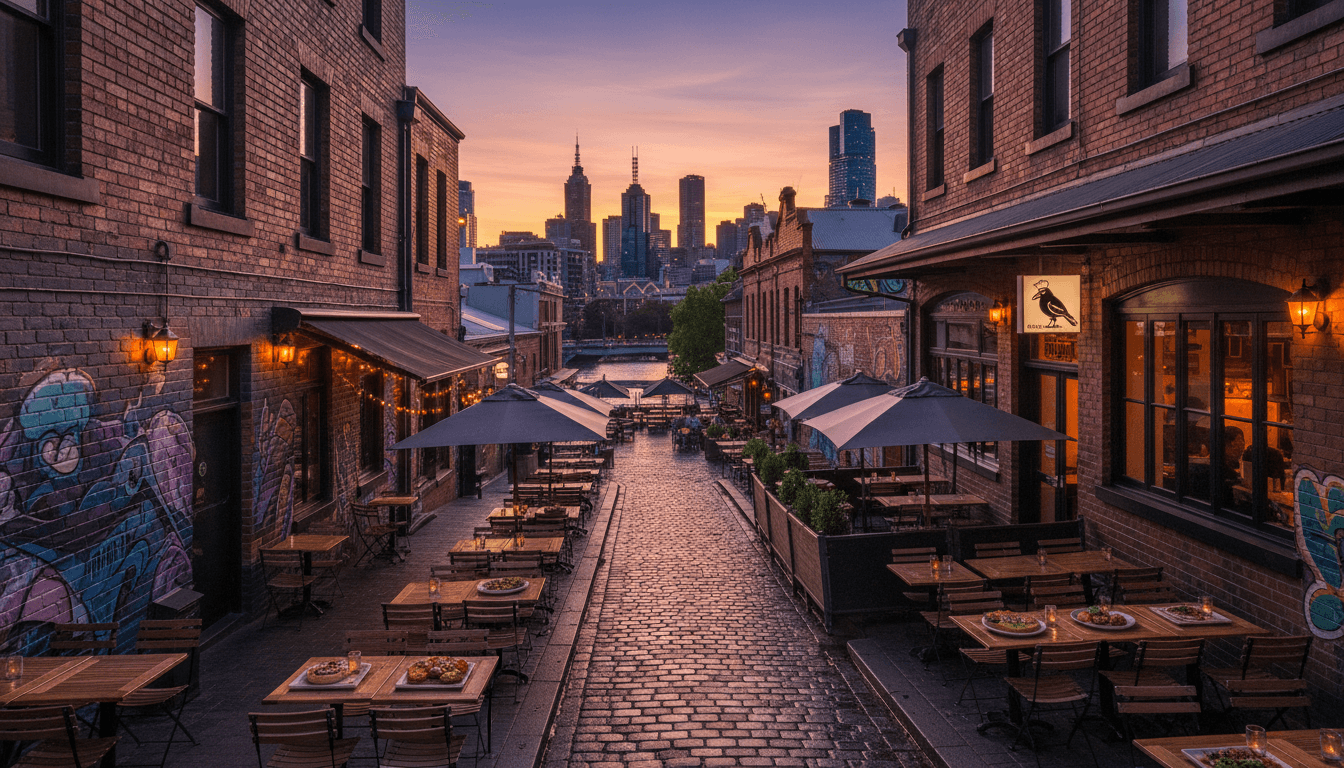
Melbourne Food Scene: The Ultimate Culinary Guide for Home Exchange Travelers
Maya Chen
Travel Writer & Home Exchange Expert
Discover Melbourne's incredible food scene during your home exchange—from hidden laneway cafés to world-class markets. A local's guide to eating like a Melburnian.
The espresso hit me before I'd even taken a sip.
That unmistakable aroma—dark, complex, slightly fruity—drifting from a hole-in-the-wall café down a graffiti-covered laneway in Fitzroy. I'd been in Melbourne for exactly fourteen hours, jet-lagged and disoriented after the flight from San Francisco, and I'd already stumbled into what would become my favorite coffee spot for the next three weeks.
That's the thing about the Melbourne food scene during a home exchange—you don't just visit restaurants. You accidentally become a regular somewhere. You develop opinions about which Vietnamese bakery does the best bánh mì (Nhu Lan on Victoria Street, fight me). You learn that the best flat white in your borrowed neighborhood comes from a place with no sign, just a faded number above the door.
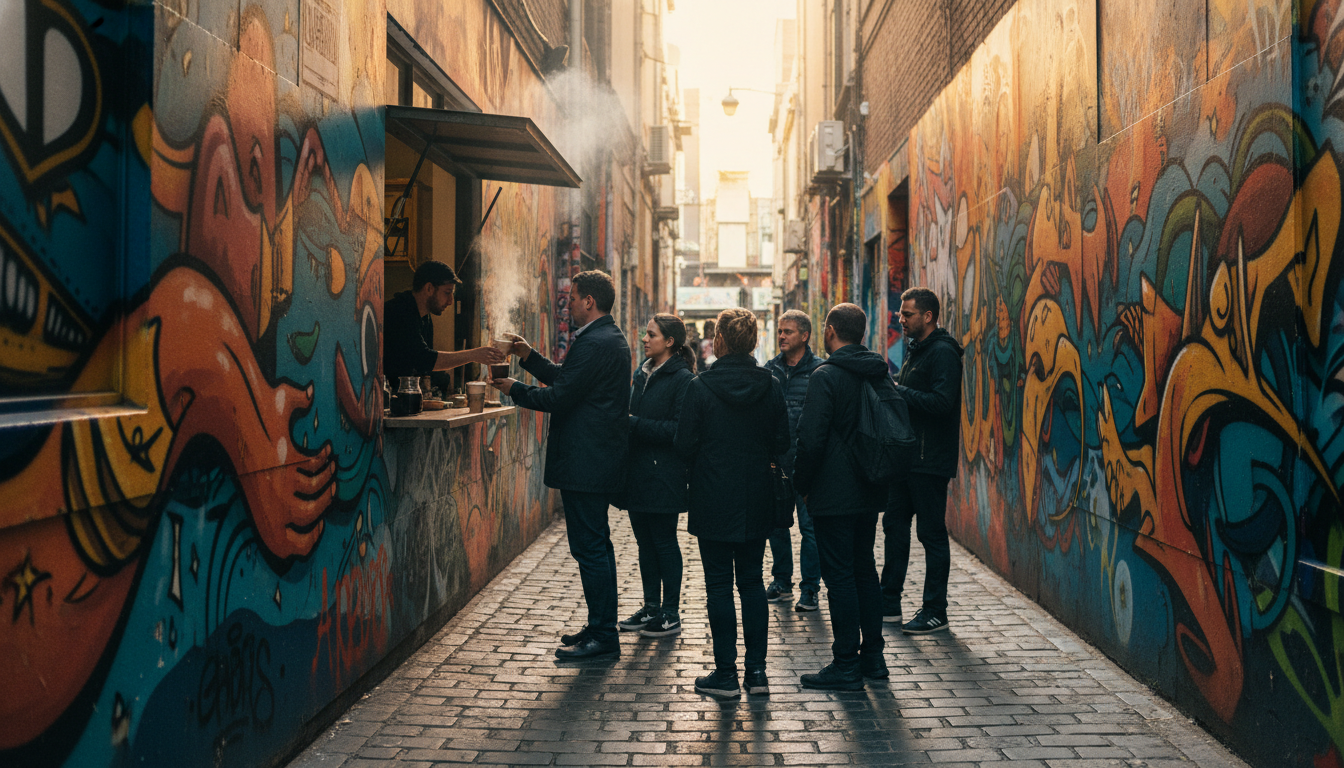 A narrow Melbourne laneway covered in colorful street art, with a tiny caf window serving coffee to
I've done home swaps in food cities around the world—Lyon, Tokyo, Mexico City—but Melbourne genuinely surprised me. Not because of Michelin stars or celebrity chefs (though it has those), but because the entire city seems to organize itself around one question: "Where should we eat?"
So here's everything I wish someone had told me before my first Melbourne home exchange. The neighborhoods. The markets. The unwritten rules. And yes—how to actually use that fancy espresso machine your host probably has in their kitchen.
Why Melbourne's Food Scene Is Perfect for Home Exchange Travelers
Here's what most travel guides won't tell you: Melbourne's best food experiences aren't designed for tourists. They're designed for locals who live here, who have kitchens to cook in, who need a great bakery within walking distance of home.
Which is exactly why a home exchange unlocks this city in ways hotels never could.
When I stayed in a converted warehouse apartment in Collingwood, my host had left me a handwritten note with her personal food map. Not the obvious stuff—her favorite butcher for lamb cutlets (Hagen's on Smith Street), which day the sourdough drops at Loafer Bread, the Thai place that doesn't do delivery but will if you call and ask nicely. This is the Melbourne food scene that matters. The neighborhood knowledge. The relationships. The understanding that good food here isn't an event—it's just Tuesday.
A few reasons why home exchange specifically works so well here:
You have a kitchen. Melbourne's food markets are legendary, but they're designed for people who cook. Queen Victoria Market on a Saturday morning is overwhelming if you're just looking. It's magical if you're shopping for tonight's dinner.
You're in a real neighborhood. Melbourne's food culture is hyper-local. Each suburb has its own personality, its own cafés, its own fierce debates about who makes the best souvlaki. Staying in someone's home means you inherit their food ecosystem.
Time moves differently. The best Melbourne food experiences require patience—the line at Lune Croissanterie, the wait for a table at Chin Chin, the slow Saturday morning working through breakfast at a café with the newspaper. Hotels make you feel like you should be doing something. Home exchanges let you just... be.
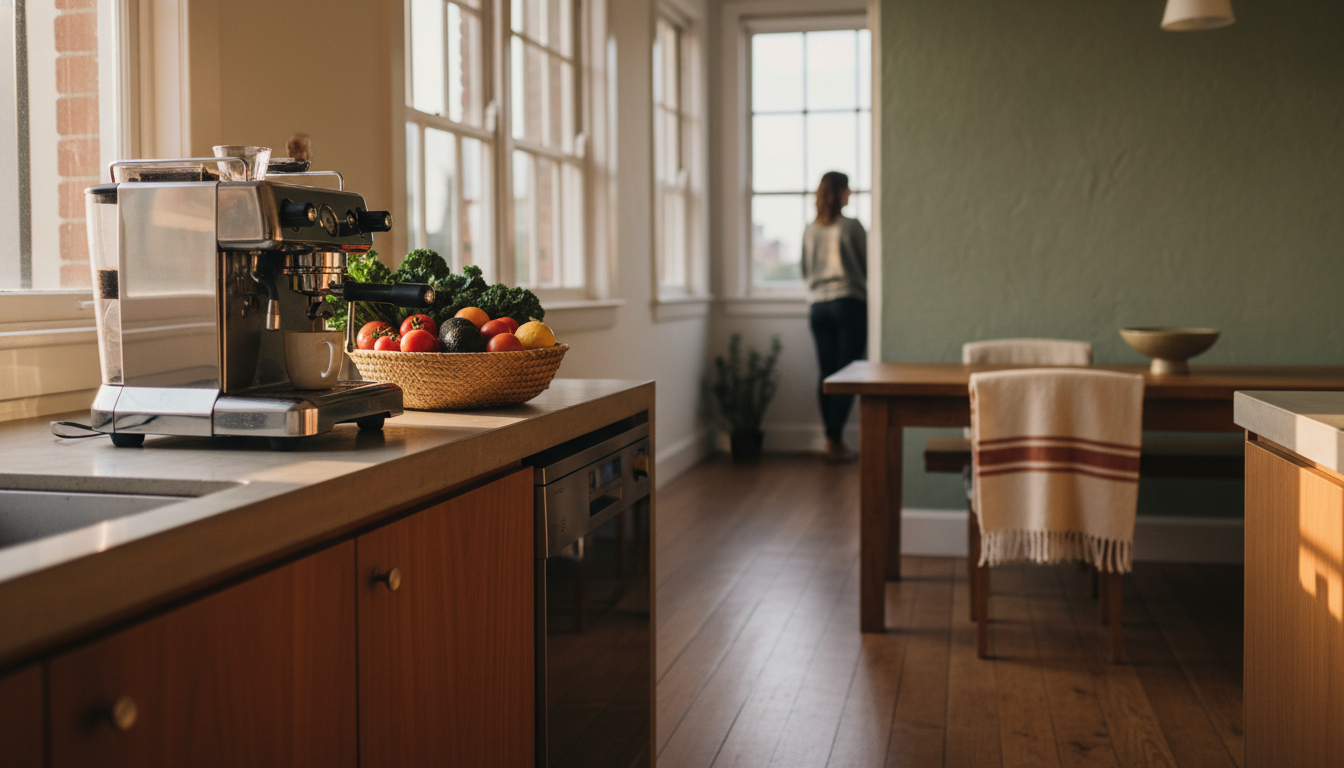 Interior of a bright Melbourne apartment kitchen with a professional espresso machine on the counter
Melbourne Food Markets: Your Home Exchange Kitchen Starts Here
I'm going to say something controversial: skip the restaurant reservations your first few days. Hit the markets instead.
Melbourne's food markets aren't tourist attractions that happen to sell food. They're where the city actually shops. And when you're doing a home exchange, you're not a tourist—you're someone who needs groceries.
Queen Victoria Market: The Essential Melbourne Food Experience
Queen Vic (never call it "Queen Victoria Market" unless you want to sound like a guidebook) sprawls across seven acres in the CBD. It's been here since 1878, and honestly? It feels like it.
The deli hall is where you'll lose an hour. Massive wheels of parmesan. Olives in every color. Salumi hanging from the ceiling. The cheese guy will let you taste everything if you look even slightly interested—and you should, because this is how you'll discover that Australian cheddars are genuinely world-class.
My strategy: arrive at 7 AM on Saturday. I know, brutal. But trust me. The produce section is quietest, the coffee cart has no line, and you can actually hear yourself think while choosing stone fruit. By 10 AM, it's chaos.
Prices are reasonable—around $25-30 AUD ($16-20 USD) will get you enough produce, cheese, and bread for several days of excellent home cooking.
South Melbourne Market: The Foodie's Favorite
If Queen Vic is Melbourne's supermarket, South Melbourne Market is its specialty store. Smaller, more curated, slightly more expensive—but the quality is absurd.
The dim sims at South Melbourne Dim Sims are a Melbourne institution. They're nothing like Chinese dim sum—they're a uniquely Australian creation, crispy-fried and served with soy sauce. Get the fried ones. Don't @ me.
Aptus Seafood has fish so fresh it's almost concerning. If your home exchange has a decent kitchen (and most Melbourne homes do), this is where you buy the fish you'll remember for years. The fishmongers will tell you exactly how to cook whatever you buy—they're genuinely helpful, not just trying to upsell you.
Prahran Market: Where Melbourne Chefs Shop
This is the smallest of the big three, and arguably the most intense. Prahran Market is where restaurant chefs come on their days off. The produce is pristine, the prices are higher, and everyone seems to know exactly what they want.
Gary's Quality Meats has been here forever. The Essential Ingredient sells every obscure spice and specialty item you didn't know you needed. And Gewürzhaus? Their smoked paprika alone is worth the trip. It will ruin you for supermarket spices forever.
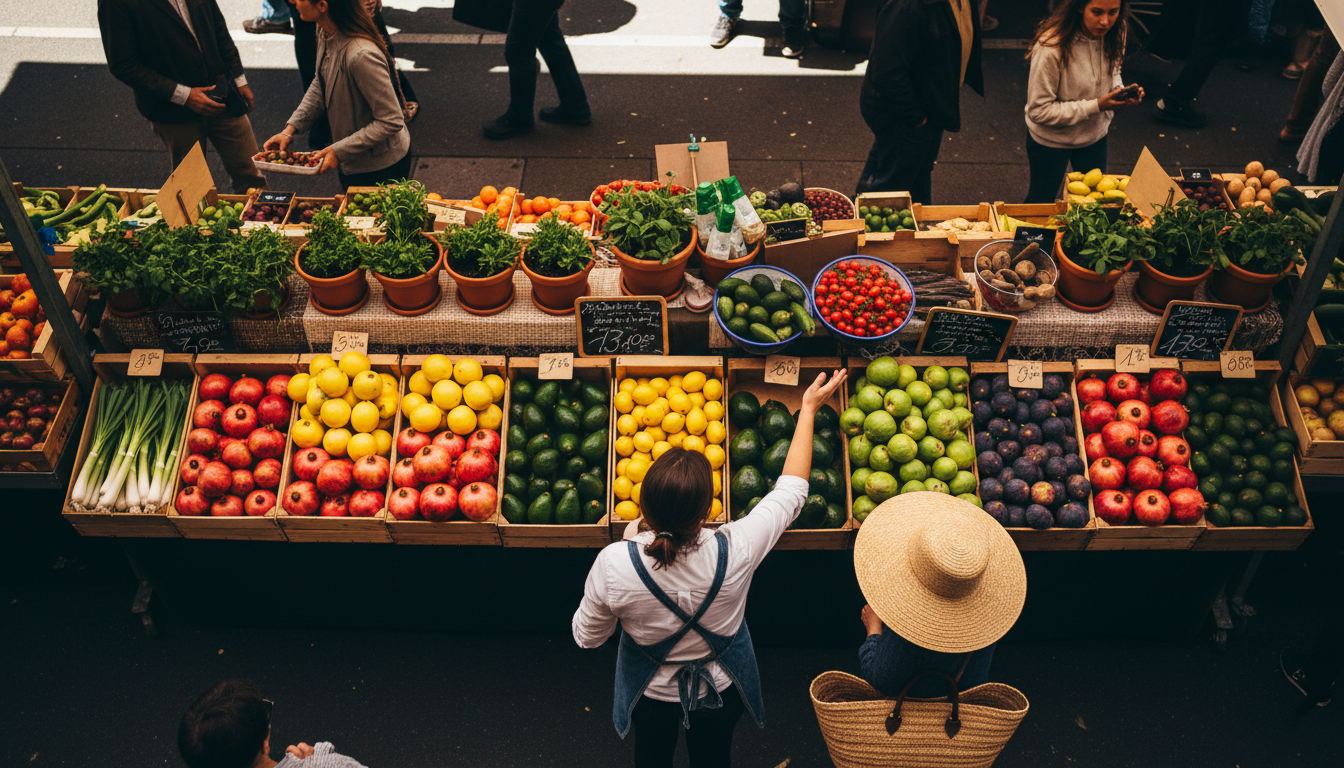 Overhead shot of a bustling Melbourne market stall with colorful seasonal produce arranged in wooden
Best Melbourne Neighborhoods for Food: A Home Exchange Location Guide
Where you stay determines what you eat. That sounds obvious, but in Melbourne it's especially true. Each neighborhood has developed its own food personality, and choosing where to do your home exchange is basically choosing your culinary adventure.
Fitzroy and Collingwood: The Creative Food Heart
If Melbourne's food scene has a spiritual home, it's somewhere along Smith Street or Brunswick Street. This is where the city's food creativity lives—where chefs open passion projects, where cuisines collide, where a converted auto shop becomes a natural wine bar.
Industry Beans on Rose Street does coffee with scientific precision. Their menu reads like a chemistry experiment, but the results are genuinely extraordinary. Expect to pay around $6 AUD ($4 USD) for a filter coffee that will recalibrate your understanding of the beverage.
Cutler & Co remains one of Melbourne's best restaurants after all these years. Andrew McConnell's cooking is technically brilliant but never cold—dinner here (around $150 AUD / $100 USD per person) is worth it for a special night.
For everyday eating, Alimentari on Brunswick Street does Italian provisions and sandwiches that could hold their own in Rome. And Gelato Messina—the Sydney import that Melbourne has grudgingly accepted—makes flavors like salted caramel and white chocolate that justify any queue.
Carlton: Old-School Italian, New-School Everything Else
Carlton is Melbourne's Little Italy, and while it's gotten a bit touristy along Lygon Street, the bones are still good. More importantly, it's evolved. The old red-sauce joints now share space with some of the city's most exciting new restaurants.
DOC Pizza & Mozzarella Bar does Neapolitan pizza properly—wood-fired, leopard-spotted, eaten within minutes of leaving the oven. The burrata is flown in from Italy, which sounds excessive until you taste it.
Heartattack and Vine is a tiny wine bar with a menu that changes constantly and a vibe that feels like you've wandered into someone's very cool dinner party. Expect to spend around $80-100 AUD ($55-70 USD) for food and wine for two.
For groceries, King & Godfree has been Melbourne's Italian deli since 1884. The upstairs wine bar? Hidden gem.
Richmond and Cremorne: Victoria Street and Beyond
Victoria Street is Melbourne's Vietnamese heart, and it's glorious. Block after block of phở restaurants, bánh mì shops, Asian grocers, and herbal medicine stores. It's not curated or gentrified—it's a working immigrant neighborhood that happens to have incredible food.
Phở Hung Vuong 2 does the beef phở I dream about. Rich, complex broth that's been simmering for hours, fresh herbs piled high, and prices that feel almost unfair—around $16 AUD ($11 USD) for a massive bowl.
For bánh mì, I'm partial to Nhu Lan, but honestly, you can't really go wrong. These are $8-10 AUD ($5-7 USD) sandwiches that would cost three times as much in San Francisco.
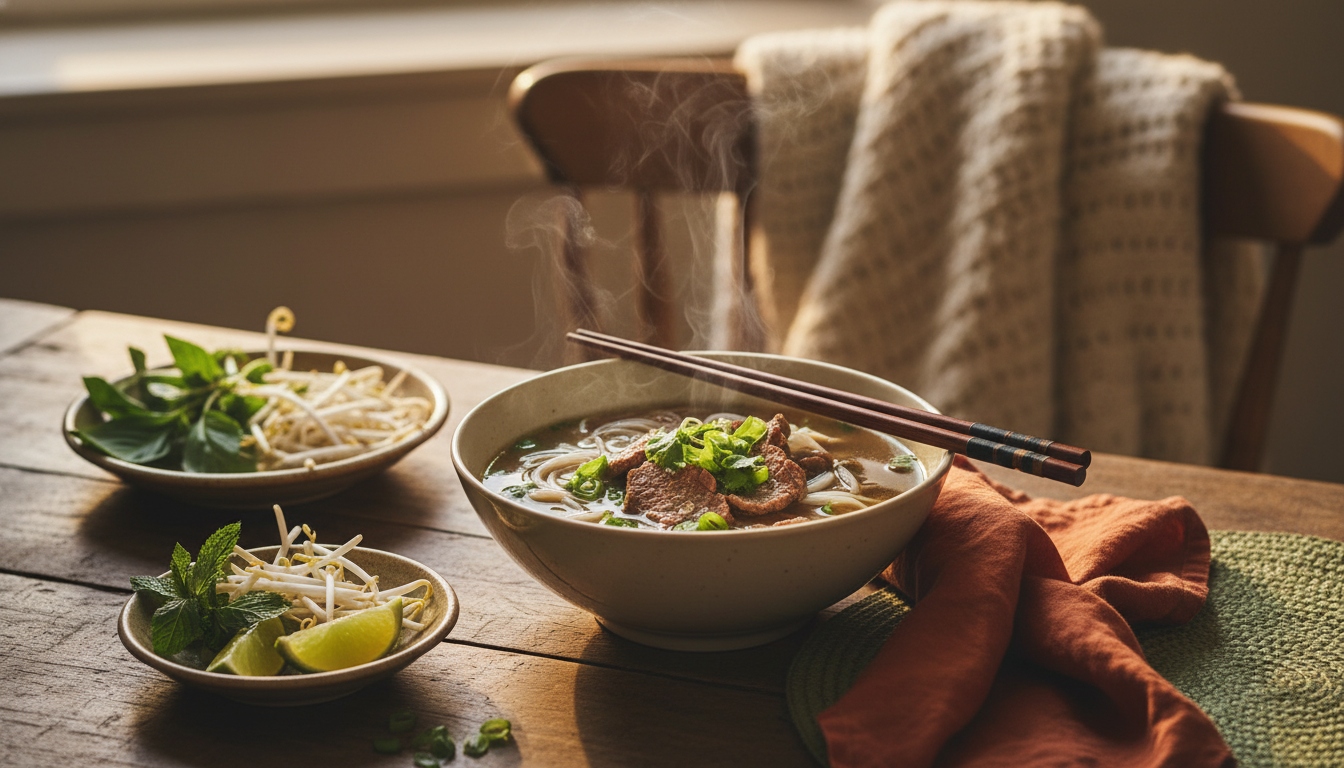 A steaming bowl of Vietnamese ph on a worn wooden table, surrounded by plates of fresh herbs, bean s
St Kilda and Balaclava: Beachside Eating
St Kilda's food scene has had its ups and downs, but a home exchange here means beach access plus some genuinely excellent eating. The Esplanade on Sunday has a market worth exploring, and the neighborhood's Jewish heritage means exceptional bakeries.
Monarch Cakes on Acland Street has been making continental cakes since 1934. The kugelhopf is perfect with afternoon coffee.
Cicciolina on Acland Street is a Melbourne institution—Italian-leaning, always packed, with a back bar that serves excellent cocktails. Dinner for two runs around $120 AUD ($80 USD).
Brunswick and Coburg: The New Food Frontier
North of the city, Sydney Road runs through Brunswick and into Coburg, and this is where Melbourne's food future is being written. Middle Eastern grocers, African restaurants, vegan cafés, natural wine bars—all jumbled together in a way that feels genuinely exciting.
A1 Bakery does Lebanese flatbreads and spinach pies that are worth the trip alone. Arrive early—they sell out.
Barkly's Bar is a corner pub that's been transformed into a neighborhood restaurant with serious food. The fried chicken sandwich has a cult following. I get it now.
Melbourne Coffee Culture: A Home Exchange Essential
I need to talk about coffee, because you cannot understand Melbourne without understanding its coffee obsession.
This city essentially invented the flat white. It has more cafés per capita than anywhere I've traveled. Melburnians will drive across town for a specific roaster's beans. Your home exchange host almost certainly has an espresso machine, and they almost certainly have opinions about how to use it.
The good news: coffee here is genuinely excellent almost everywhere. The better news: it's cheap by American standards. A flat white runs $4.50-5.50 AUD ($3-3.75 USD), and it'll be better than anything you've had at home.
A few places worth seeking out:
Patricia Coffee Brewers in the CBD is standing-room only, deliberately. The idea is that you drink your coffee and leave, which sounds rude but actually creates this wonderful energy of strangers sharing a moment.
Market Lane Coffee has multiple locations, but the one inside Queen Victoria Market is special. Get a coffee, then shop. It's the Melbourne way.
Proud Mary in Collingwood is where serious coffee people go to geek out. The tasting flights let you compare beans from different origins—educational and delicious.
Seven Seeds in Carlton roasts their own beans and takes the whole thing very seriously without being pretentious about it. Their house blend is what I bring home as gifts.
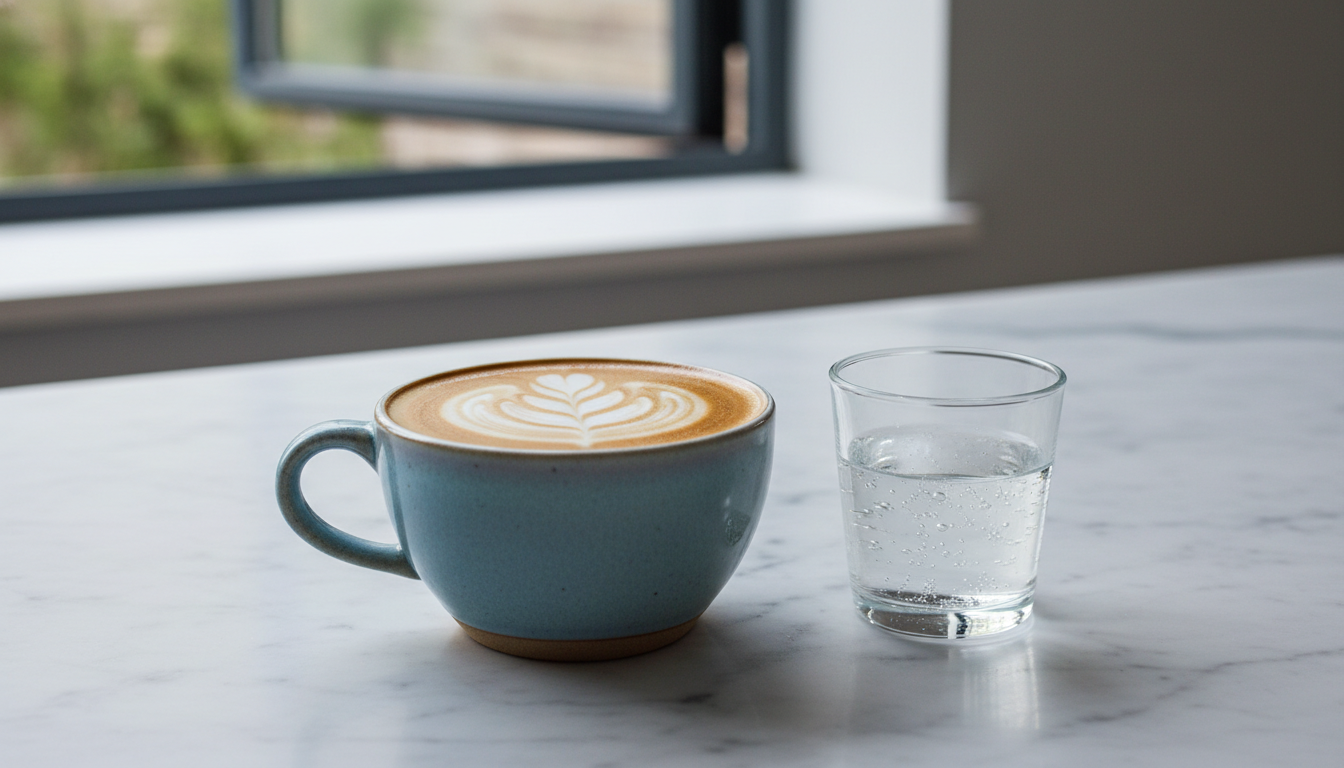 Close-up of a perfectly poured flat white in a ceramic cup, with intricate latte art, on a marble co
Cooking in Your Melbourne Home Exchange: Making the Most of Local Ingredients
One of the great joys of a Melbourne home exchange is actually cooking. The produce here is exceptional, the kitchens are generally well-equipped, and there's something deeply satisfying about shopping at the markets and making dinner in someone else's beautiful apartment.
A few ingredients to look for:
Australian olive oil is world-class and weirdly underrated internationally. Cobram Estate and Boundary Bend are both excellent and available everywhere.
Tasmanian salmon is some of the best I've eaten anywhere. Find it at any good fishmonger—South Melbourne Market and Prahran Market both have excellent options.
Murray River pink salt comes from ancient underground deposits and has this beautiful, delicate flavor. It's become my go-to finishing salt.
Australian lamb is grass-fed, tender, and genuinely superior to what we get in the US. Don't overcook it. Please.
Stone fruit in summer (December through February) is transcendent. White peaches, yellow nectarines, cherries from the Yarra Valley—eat as much as you can while you're here.
Most home exchange hosts will leave you basics—olive oil, salt, pepper, maybe some spices. But I always bring a few things from home: my favorite hot sauce, a good knife if I have room, and usually some specialty ingredient I can't get in Australia.
Melbourne Dining Experiences Worth the Splurge
Not every meal needs to be a home-cooked market haul. Melbourne has restaurants worth dressing up for, worth saving for, worth remembering.
Attica in Ripponlea is Ben Shewry's exploration of Australian ingredients and indigenous foods. It's expensive (around $350 AUD / $235 USD per person for the tasting menu), it's hard to book, and it's genuinely one of the most memorable meals I've ever had. The emu egg, if it's on the menu, is worth the trip alone.
Flower Drum in the CBD has been Melbourne's best Chinese restaurant for decades. The Cantonese cooking is refined and elegant, the service is old-school formal, and the Peking duck requires 24-hour advance notice. Budget around $150-200 AUD ($100-135 USD) per person.
Cumulus Inc on Flinders Lane is Andrew McConnell's more casual spot, and it's where I'd take anyone visiting Melbourne for the first time. The breakfast is legendary (those eggs!), but dinner is equally good. Around $80-100 AUD ($55-70 USD) per person for a full meal.
Supernormal does modern Asian food in a space that feels like a very cool Tokyo basement. The New England lobster roll is famous for a reason. Expect $70-90 AUD ($45-60 USD) per person.
Practical Tips for Eating Your Way Through Melbourne
After three home exchanges in Melbourne over the years, I've learned a few things the hard way:
Book ahead for dinner, especially weekends. Melbourne restaurants are busy, and the good ones fill up. Use the restaurant's website or Instagram DMs—Australians are weirdly resistant to booking apps.
Breakfast and lunch are more casual. Most cafés don't take reservations, and the culture is more relaxed. Expect to wait for popular spots on weekend mornings, but it's rarely more than 20-30 minutes.
Tipping is not required. Australia has actual minimum wages, so service staff are paid properly. Round up or leave 10% for exceptional service, but don't feel obligated.
BYO is common. Many restaurants, especially in the suburbs, are "bring your own" for wine. There's usually a small corkage fee ($5-10 AUD per bottle). This is a great way to try Australian wines without restaurant markup.
The food hall at Melbourne Central is actually good. I know that sounds like a cop-out recommendation, but when you're exhausted from jet lag and need something quick, the options there are genuinely solid.
Ask your host. Seriously. Most home exchange hosts love sharing their food recommendations, and their suggestions will be more current than any guidebook.
Making Melbourne Food Connections Through Home Exchange
One thing I didn't expect from my Melbourne home exchanges: the food friendships.
My first host, Sarah, left me a note introducing me to her neighbor, who happened to be a food writer. We ended up having coffee, then dinner, then she invited me to a cookbook launch. By the end of my three weeks, I had a whole network of Melbourne food people.
This happens more than you'd think. Home exchange creates a different kind of travel relationship. You're not a tourist passing through—you're someone living in their space, caring for their home, becoming temporarily part of their community.
I've had hosts invite me to family dinners. I've been included in neighborhood barbecues. One host's mother taught me her secret laksa recipe.
These connections don't happen in hotels. They happen when you're borrowing someone's life for a few weeks, including their neighborhood, their routines, their favorite café where the barista knows their order.
Planning Your Melbourne Food Home Exchange
If you're convinced (and honestly, you should be), here's how I'd approach planning a Melbourne food-focused home exchange:
Timing matters. Melbourne's food scene is great year-round, but summer (December-February) means stone fruit season, outdoor dining, and the Australian Open if you're into that. Autumn (March-May) brings truffle season and excellent weather. Winter (June-August) is cozy café season—there's something special about it.
Location, location, location. For a first visit, I'd prioritize Fitzroy, Collingwood, or Carlton—central enough to explore easily, but with their own distinct food personalities. Richmond is great for Asian food. St Kilda is perfect if you want beach access.
Kitchen priorities. When browsing home exchange listings on SwappaHome, look for kitchens with good equipment. A decent espresso machine is almost standard in Melbourne, but check for things like a good knife, a heavy pan, and enough counter space to actually cook.
Length of stay. Melbourne rewards longer stays. Two weeks is good; three is better. You need time to find your spots, become a regular somewhere, actually use that kitchen.
Leave room for spontaneity. Don't over-plan. Some of my best Melbourne food memories were accidental discoveries—a random dumpling shop, a wine bar I walked past, a café someone mentioned on the tram.
The Melbourne Food Scene: Why It Changes How You Travel
I've been thinking about why Melbourne's food scene hits differently, and I think it comes down to this: it's a city that takes everyday eating seriously.
Not just special occasion dining. Not just Instagram-worthy brunch spots. The whole thing—the morning coffee, the market shop, the neighborhood bistro, the late-night bánh mì run.
When you do a home exchange here, you get to participate in that. You're not observing Melbourne's food culture from the outside. You're living it.
You learn that flat whites are ordered by size, not name. You discover that Melburnians will queue for good food without complaint. You understand why every suburb has fierce loyalty to its own coffee roaster, its own Vietnamese restaurant, its own bakery.
And you come home changed. Not just with recipes and recommendations, but with a different relationship to food itself. More intentional. More curious. More willing to wait for something good.
That's what Melbourne gave me. That's what a home exchange here can give you.
The espresso machine in your borrowed apartment is waiting. The markets open early. Your neighborhood café doesn't know you yet—but give it a week.
Frequently Asked Questions
What is the best time of year to experience Melbourne's food scene?
Melbourne's food scene thrives year-round, but summer (December-February) offers incredible stone fruit, outdoor dining, and bustling markets. Autumn (March-May) brings truffle season and pleasant weather. Winter means cozy café culture and hearty comfort food. Each season offers unique culinary experiences for home exchange travelers.
How much should I budget for food in Melbourne during a home exchange?
With a home exchange kitchen, budget around $50-80 AUD ($35-55 USD) daily for excellent eating—mixing market groceries with café meals and occasional restaurant dinners. Fine dining splurges run $100-200 AUD ($70-135 USD) per person. Melbourne's food scene offers value at every price point, especially when you can cook.
Which Melbourne neighborhood has the best food scene for home exchange?
Fitzroy and Collingwood offer Melbourne's most diverse food scene—creative restaurants, excellent coffee, and vibrant markets within walking distance. Carlton suits Italian food lovers, Richmond excels for Vietnamese cuisine, and Brunswick appeals to adventurous eaters seeking emerging food trends. Choose based on your culinary priorities.
Do I need to book Melbourne restaurants in advance?
For dinner at popular restaurants, book 1-2 weeks ahead, especially for weekends. Breakfast and lunch are typically walk-in friendly, though expect 20-30 minute waits at buzzy spots on Saturday mornings. Fine dining venues like Attica and Flower Drum require booking several weeks in advance.
Is Melbourne's coffee culture really that special?
Absolutely. Melbourne essentially invented the flat white and has more cafés per capita than almost any city globally. Expect exceptional espresso everywhere—even random corner cafés serve better coffee than most specialty shops elsewhere. A flat white costs around $4.50-5.50 AUD ($3-3.75 USD), and your home exchange host will likely have an espresso machine.
40+
Swaps
25
Countries
7
Years
About Maya Chen
Travel Writer & Home Exchange Expert
Maya is a travel writer with over 7 years of experience in the home swapping world. Originally from Vancouver and now based in San Francisco, she has completed more than 40 home exchanges across 25 countries. Her passion for "slow" and authentic travel led her to discover that true luxury lies in living like a local, not a tourist.
Ready to try home swapping?
Join SwappaHome and start traveling by exchanging homes. Get 10 free credits when you sign up!
Related articles

Lyon Home Exchange: Your Complete Guide to France's Hidden Gem for Home Swapping
Discover why Lyon home exchange is booming among savvy travelers. From Croix-Rousse to Presqu'île, find the best neighborhoods and insider tips for your swap.

Zurich Bucket List: 47 Unforgettable Experiences to Enjoy During Your Home Swap
Discover the ultimate Zurich bucket list for home swappers—from secret swimming spots to fondue rituals locals actually do. Save thousands while living like a true Zürcher.
Dublin Home Exchange Utilities Guide: WiFi, Heating & Everything Your Guests Need
Master Dublin home exchange utilities—from dodgy WiFi fixes to heating quirks. Practical tips from 7 years of swapping homes across Ireland.