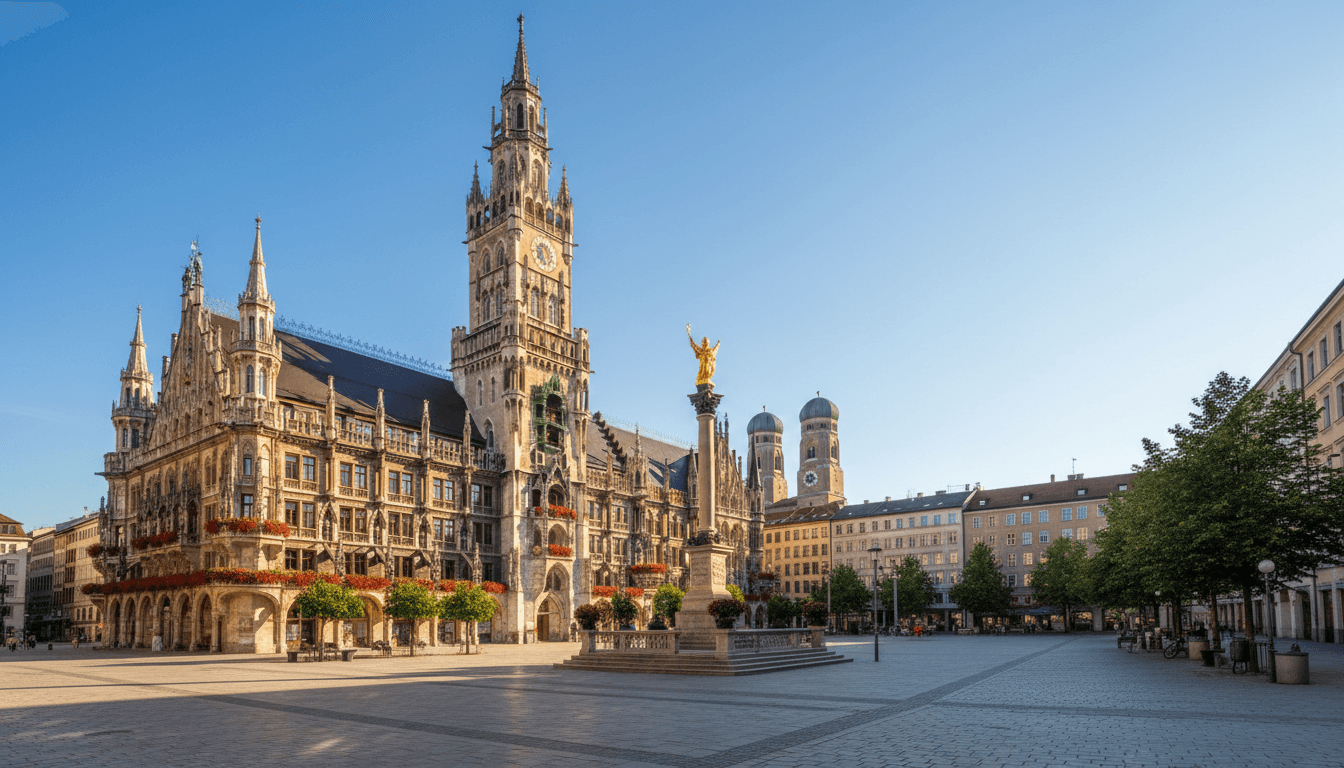
Munich for Couples: Intimate Home Exchange Experiences That Beat Any Hotel

SwappaHome Editorial Team
Home Exchange & Slow Travel Editorial
Discover why Munich for couples is magical through home exchange. Skip the generic hotels and wake up in Bavarian apartments with alpine views and local secrets.
The first morning I woke up in Munich with my partner, I genuinely thought I was still dreaming. We were in a third-floor apartment in Haidhausen, sunlight streaming through tall windows, and somewhere below us a bakery was filling the entire street with the smell of fresh Brezen. My boyfriend shuffled to the kitchen—someone else's kitchen, technically—and started making coffee in a ceramic pot our host had left with a handwritten note explaining exactly how to use it.
That's the thing about Munich for couples doing home exchange: you don't just visit the city. You actually live there, even if it's just for a week.
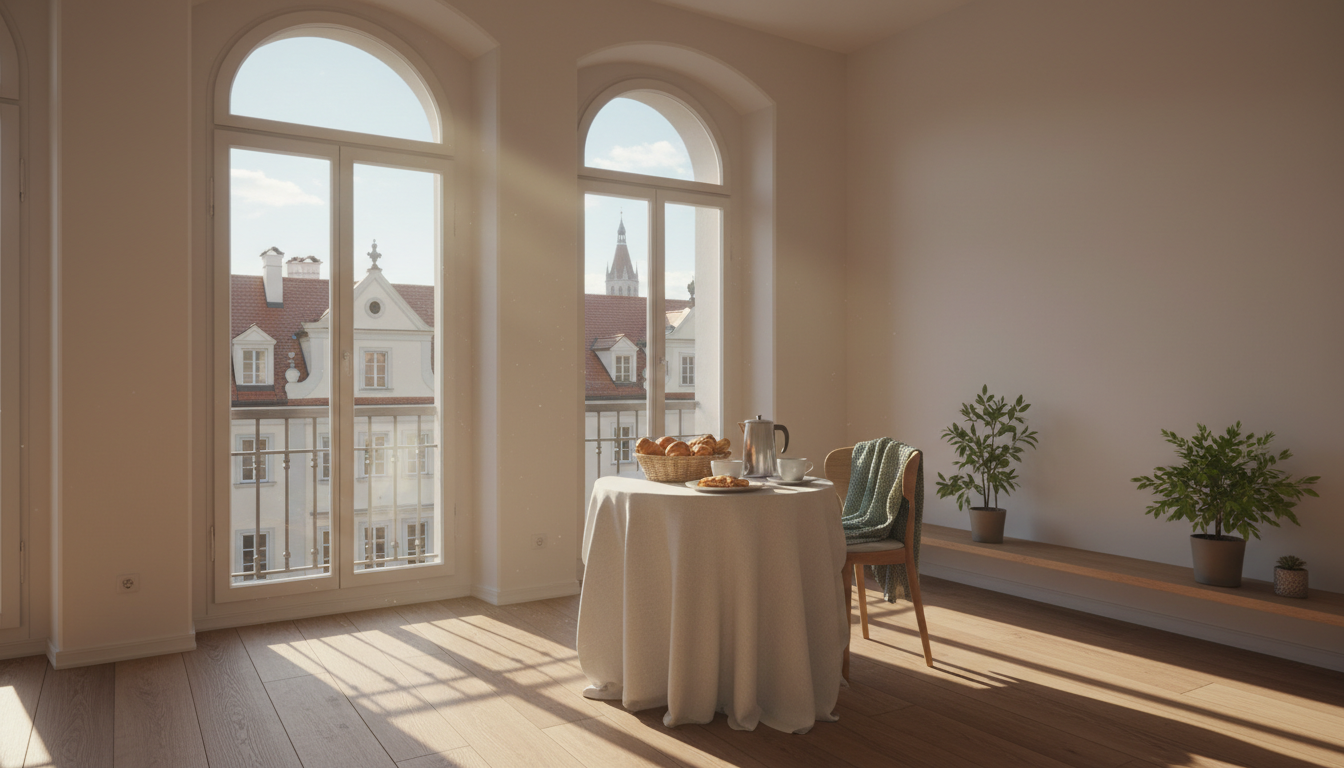 Morning light flooding through tall windows of a Haidhausen apartment, wooden floors, a small breakf
I've done a lot of romantic trips in my seven years of home swapping—Paris, obviously, and that converted barn in Tuscany I'll never shut up about—but Munich surprised me. It's not the first city that comes to mind when you think "couples getaway," and maybe that's exactly why it works so well. No one's trying too hard. The romance isn't manufactured. It just... exists, in the beer gardens at dusk and the quiet walks along the Isar and the way the city feels both cosmopolitan and village-like at the same time.
Why Home Exchange in Munich Creates Better Couple Experiences
So here's what I've learned after 40+ home swaps: the accommodation shapes the entire trip. Stay in a hotel, and you're tourists. Stay in someone's actual home, and you become temporary locals—which changes everything when you're traveling as a couple.
In Munich specifically, this matters more than most places. Bavarian culture is deeply rooted in Gemütlichkeit—that untranslatable German word for cozy conviviality. You can't really experience it in a hotel lobby. But cooking dinner together in a local's kitchen while their cat watches you suspiciously from the windowsill? That's Gemütlichkeit.
The practical benefits are obvious: home exchange through platforms like SwappaHome means you're not paying €200-300 per night for a decent Munich hotel (and trust me, Munich hotels are expensive). Instead, you're earning and spending credits—one credit per night, regardless of the property—which means your accommodation cost is essentially zero. That money you saved? It goes toward better dinners, day trips to the Alps, or that couples' spa experience at Müller'sches Volksbad you've been eyeing.
But the real advantage is privacy. Hotels give you a room. Home exchange gives you a space. A living room to sprawl in after a long day of walking. A kitchen where you can make breakfast in your pajamas. A balcony where you can drink wine at midnight without anyone judging you. For couples, that breathing room transforms the trip.
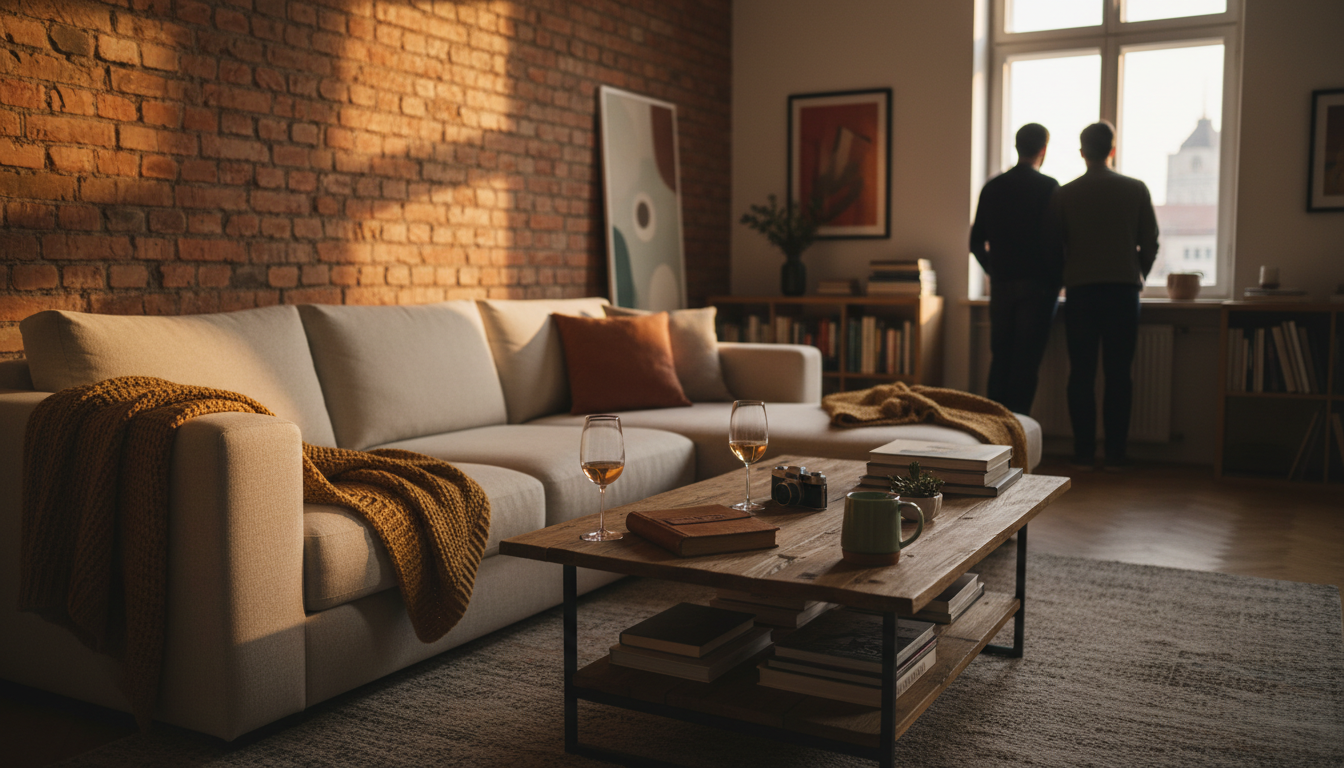 Cozy living room in a Munich apartment with exposed brick, soft lighting, a couples belongings casua
Best Munich Neighborhoods for Couples Home Exchange
Not all Munich neighborhoods are created equal for romantic stays. After multiple visits and extensive research (okay, and a lot of wandering around holding hands), here's where I'd actually recommend looking for your home exchange.
Haidhausen: The Sweet Spot
This is where we stayed on that first trip, and I'm biased, but I think it's perfect for couples. Haidhausen sits just east of the Isar River, which means you're a 15-minute walk from the old town but in a neighborhood that feels distinctly residential. The streets are lined with Gründerzeit buildings—those gorgeous late 19th-century apartment blocks with high ceilings and ornate facades—and the ground floors are filled with independent cafés, wine bars, and restaurants that locals actually go to.
The Wiener Platz market operates daily, which means you can pick up fresh produce, flowers, and incredible cheese for an impromptu picnic. There's a small square with outdoor seating where we spent an entire afternoon just people-watching and splitting a bottle of Franconian wine (around €25-30 at most wine bars, or €8-12 if you buy a bottle at the market).
Home exchange options here tend to be apartments in those beautiful old buildings—expect parquet floors, tall windows, and that particular European apartment charm that makes you want to immediately redecorate your place back home.
Schwabing: Intellectual Romance
If your idea of a romantic evening involves bookshops, art galleries, and heated debates over craft cocktails, Schwabing is your neighborhood. It's Munich's historic bohemian quarter—Kandinsky lived here, and so did Thomas Mann—and while it's gentrified considerably, it still has that creative, slightly intellectual energy.
The English Garden borders Schwabing, which gives you easy access to Munich's massive urban park. I'm talking about a park where you can walk for hours, stumble upon a Chinese pagoda serving beer, and watch surfers ride a standing wave in the middle of the city. Yes, really. The Eisbach wave is one of Munich's weirdest and most wonderful attractions.
Apartments in Schwabing tend to be either classic pre-war units or more modern renovations. Prices on SwappaHome are the same regardless—one credit per night—but you'll find a good mix of styles.
Glockenbachviertel: For the Foodie Couple
Glockenbach is Munich's LGBTQ+ neighborhood, but more broadly, it's where you go if food and nightlife are priorities. The density of excellent restaurants here is absurd. You've got everything from traditional Bavarian spots to Vietnamese street food to natural wine bars to a place that only serves variations of dumplings.
For couples who bond over meals—and honestly, is there any other kind?—Glockenbach means you can eat somewhere different every night without repeating. The neighborhood is also walkable to the Viktualienmarkt, Munich's famous food market, where you can assemble the ingredients for the best picnic of your life.
Fair warning: Glockenbach gets lively at night, especially on weekends. If you're light sleepers, ask your home exchange host about street noise before confirming.
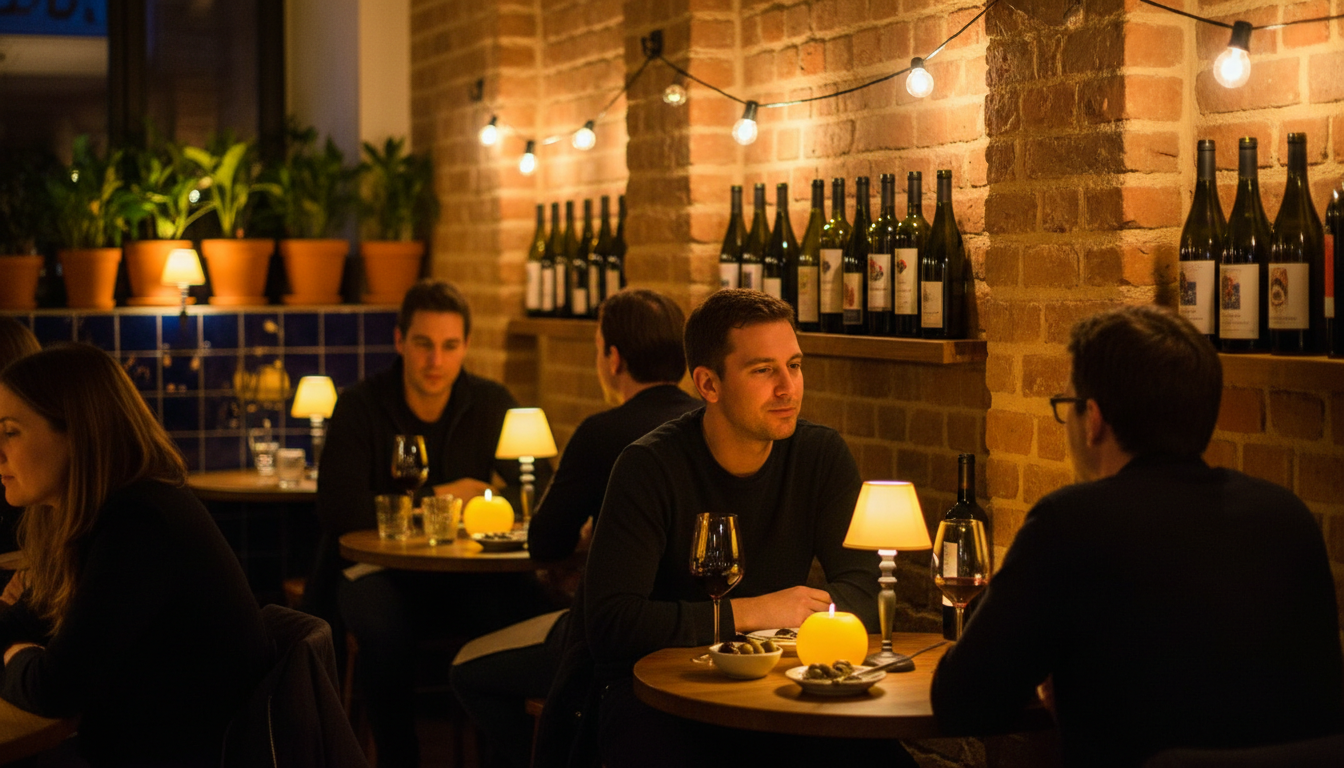 Evening scene at a small wine bar in Glockenbachviertel, warm lighting, couples at intimate tables,
Maxvorstadt: Museum District Romance
Maxvorstadt is where Munich keeps its culture. The Pinakothek museums are here—three of them, covering old masters to modern art—plus the Lenbachhaus with its incredible Kandinsky collection. If you and your partner are the type to spend hours in museums and then argue passionately about what you saw over dinner, this is your base.
The neighborhood itself is a mix of students (the university is here) and established residents, which gives it energy without feeling chaotic. Türkenstraße is lined with cafés and boutiques, and there's a particular bookshop there—Literatur Moths—where I once spent two hours while my partner napped off his jet lag.
Apartments in Maxvorstadt often come with the bonus of being close to the Augustiner Keller, one of Munich's best beer gardens. Not that I'm suggesting you plan your accommodation around beer garden proximity. But also, I'm not not suggesting that.
How to Find the Perfect Munich Home Exchange for Couples
Alright, practical stuff. Here's how I actually approach finding a home exchange that'll work for a romantic trip.
First, I filter for apartments rather than full houses. In Munich, apartments are the norm anyway, but specifically, I look for places with a dedicated living space separate from the bedroom. That separation matters for couples—sometimes you need to read on the couch while your partner takes a call, or one of you wants to sleep in while the other makes coffee. Hotels don't give you that flexibility.
Second, I read the reviews obsessively. Not just for cleanliness or accuracy of photos, but for vibe. Does the host seem warm? Did previous guests mention feeling welcomed? On SwappaHome, the review system is genuinely useful here—members rate each other, so you can get a sense of what kind of experience to expect.
Third—and this is specific to Munich—I check the building's position relative to the street. Ground-floor apartments in busy areas can be noisy. Top-floor apartments might not have elevators (and after a day of walking, those stairs feel eternal). Third or fourth floor in a building with a lift? Chef's kiss.
Finally, I message hosts before confirming. I'll introduce myself and my partner, explain that we're looking for a romantic week in Munich, and ask if there's anything special about their neighborhood we should know. The responses tell you a lot. The best hosts send paragraphs of recommendations. Those are the places where you'll find handwritten notes about the coffee maker.
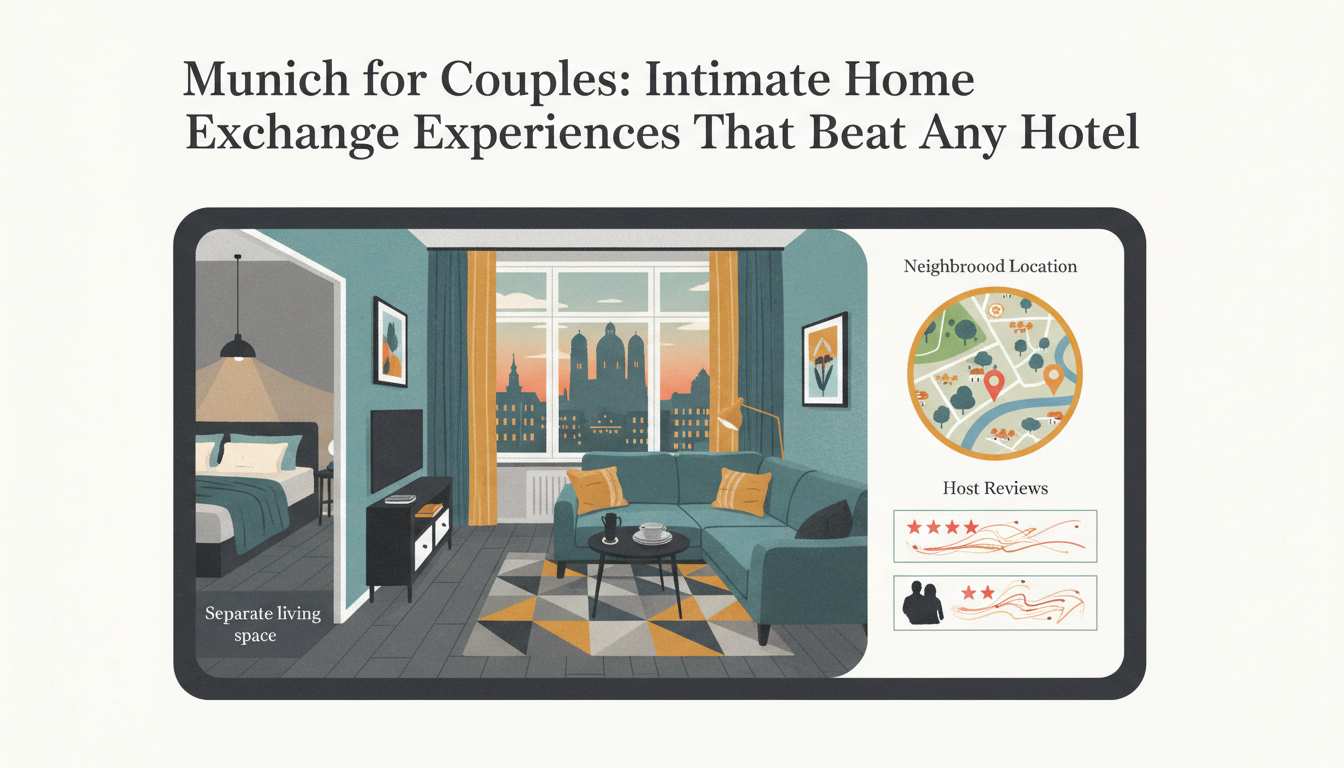 Screenshot-style illustration of a home exchange listing with a charming Munich apartment, showing k
Romantic Experiences in Munich (That Aren't in Every Guidebook)
Once you've got your home exchange sorted, here's what to actually do. I'm skipping the obvious stuff—yes, go to Marienplatz, yes, see the Glockenspiel—and focusing on what makes Munich special for couples.
Morning: Isar River Walks
The Isar River runs through Munich, and the city has done something brilliant with it: they've restored long stretches to a natural state, with gravel banks and wild vegetation. On a sunny morning, walking along the Isar feels like you've escaped the city entirely. Start at Reichenbachbrücke and head south toward Flaucher—that's about a 45-minute walk through increasingly pastoral scenery.
In summer, locals swim in the river. In fall, the trees turn golden and the light gets that particular soft quality that makes everything feel like a film. Pack pastries from your neighborhood bakery (Rischart is reliable, but any local spot will do) and find a spot on the gravel bank.
Afternoon: Nymphenburg Palace Gardens
Everyone knows about Nymphenburg Palace, but most tourists do a quick tour of the interior and leave. Mistake. The gardens are massive—about 200 hectares—and designed for wandering. There are hidden pavilions, a lake with swans, and long tree-lined avenues where you can walk for twenty minutes without seeing another person.
I'd recommend skipping the palace interior entirely (unless you're really into Baroque decoration) and spending those two hours in the gardens instead. Bring a blanket. Find a spot near the Badenburg, a smaller building on the grounds that was basically an 18th-century pool house. It's absurdly romantic.
Entrance to the gardens is free. The palace interior is €8 per person if you decide you want it.
Evening: Beer Garden at Golden Hour
You cannot visit Munich as a couple and not do a beer garden properly. But "properly" doesn't mean the touristy ones in the city center. It means finding a neighborhood spot, arriving around 6 PM, and staying until the light fades.
My favorite is Hirschgarten, which is the largest beer garden in the world (8,000 seats) but somehow still feels intimate if you find the right corner. It's in the Nymphenburg area, so you could combine it with the palace gardens. A Mass (liter) of beer runs about €10-11, and you can bring your own food or buy from the self-service counters.
Alternatively, the Augustiner Keller near Hauptbahnhof has incredible beer (Augustiner is the last family-owned Munich brewery) and a slightly more local crowd. Get there early on weekends—by 7 PM the good tables are gone.
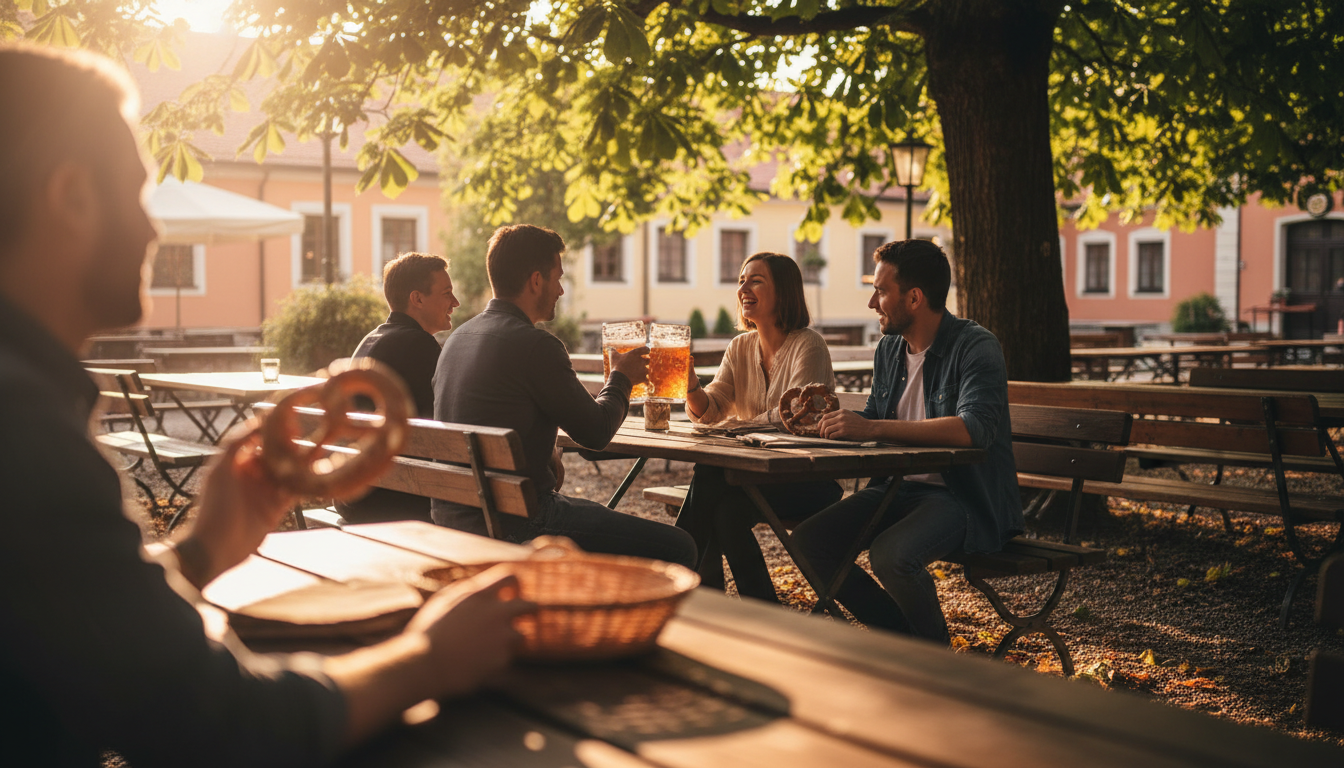 Golden hour at a Munich beer garden, dappled light through chestnut trees, couples at wooden tables
Night: Rooftop Bars and Hidden Speakeasies
Munich's nightlife is underrated. It's not Berlin, but it's not trying to be. For couples, I'd point you toward a few specific spots.
The Flushing Meadows Hotel rooftop bar has views over the old town and a crowd that skews young professional rather than tourist. Cocktails are €12-16, but the view is free. Go at sunset if you can manage it.
For something more intimate, Zephyr Bar in Glockenbachviertel is a proper cocktail bar—small, dim, serious about drinks. The bartenders will make you something based on your preferences if you can't decide. Budget around €15 per cocktail.
And if you want something completely different, Hofbräukeller (not Hofbräuhaus—the Keller, out in Haidhausen) has a beer hall that feels like stepping back in time. It's where locals go when they want the beer hall experience without the tourist crowds.
What to Expect from Your Munich Home Exchange Host
Munich hosts tend to be—how do I put this—thorough. In the best way. German culture values clarity and preparation, which translates into home exchanges where you'll receive detailed instructions about everything from garbage separation (it's complicated, but they'll explain) to which bakery has the best Butterbrezel.
Expect a clean, well-organized space. Expect a welcome folder or document with local recommendations. Expect the wifi password to be clearly labeled and the heating system to be explained. Munich hosts take hospitality seriously.
What you might not expect: the level of trust. Germans tend to be private people, but once they've decided to host you, they're genuinely welcoming. I've had Munich hosts leave me their favorite books, their museum membership cards ("just use mine, it's fine"), and once, memorably, a bottle of champagne with a note saying "for your anniversary."
The verification system on SwappaHome helps here—both you and your host can verify your identities, which builds confidence on both sides. I always complete verification before requesting stays in Germany; hosts here appreciate the extra assurance.
Practical Tips for Couples Home Exchange in Munich
A few things I wish someone had told me before my first Munich home exchange:
Bring slippers. Germans don't wear outdoor shoes inside homes, and your host will expect you to remove yours at the door. Many leave guest slippers, but not all. Pack a lightweight pair.
Learn the quiet hours. Germany has actual laws about noise levels, and Munich takes them seriously. Quiet hours are typically 10 PM to 6 AM on weekdays, all day Sunday, and 1-3 PM for a midday rest period. This means no loud music, no vacuuming, no enthusiastic... anything. Plan accordingly.
The U-Bahn is your friend. Munich's public transit is excellent, and most neighborhoods worth staying in are well-connected. A day pass is €8.80 for the inner city, or €17.60 for a partner day pass covering two adults. That's way cheaper than taxis and often faster.
Sunday everything is closed. Like, actually closed. Supermarkets, most shops, many restaurants for lunch. Plan your groceries for Saturday, or embrace the German tradition of Sunday as a genuine rest day. Some bakeries open briefly in the morning, and restaurants open for dinner, but don't expect to run errands.
Tipping is modest. Round up to the nearest euro or add 5-10% at restaurants. You don't need to tip 20% like in the US.
When to Visit Munich as a Couple
Timing matters here more than in some cities.
September-October is peak season because of Oktoberfest, and honestly? I'd avoid it for a romantic trip unless beer festivals are specifically your thing. The city is crowded, accommodations are scarce, and prices for everything spike.
December is magical if you like Christmas markets. Munich has several, and they're genuinely charming—mulled wine, handmade ornaments, the smell of roasted almonds everywhere. It's cold (expect temperatures around 0-5°C / 32-41°F), but that's what cozy apartments are for.
May-June is my favorite. The weather is warm enough for beer gardens but not hot. The city is green. The crowds are manageable. And the days are long—sunset around 9 PM means extended golden hours for those Isar walks.
Late October-November is underrated. The fall colors are beautiful, the tourists have left, and you'll have museums and restaurants to yourselves. Pack layers and embrace the coziness.
Making the Most of Your Home Exchange Space
One last thing, because I think it's important: don't just use your home exchange as a place to sleep. That's what hotels are for.
Cook at least one meal together. Hit the Viktualienmarkt, buy too much cheese, pick up a bottle of wine, and spend an evening in. Some of my best travel memories are kitchen conversations—the kind that happen when you're chopping vegetables and there's nowhere to be.
Have a slow morning. Munich isn't a city that rewards rushing. Make coffee, sit on the balcony if there is one, read the guidebook together, argue about what to do. The apartment gives you permission to take your time.
Leave a good review. Seriously. The home exchange community runs on trust and reciprocity. If your host made your trip special—and in Munich, they probably did—take ten minutes to write something thoughtful. It matters.
Munich isn't the obvious choice for a romantic getaway. It doesn't have Paris's reputation or Rome's drama or Barcelona's beaches. But maybe that's exactly why it works.
When you stay in someone's apartment in Haidhausen or Schwabing, when you wake up to church bells and bakery smells, when you spend your evenings in beer gardens rather than hotel bars—you experience something that feels real. Not performed. Not curated for Instagram. Just a beautiful city, a cozy home, and the person you love.
SwappaHome has solid listings in Munich, especially in the neighborhoods I mentioned. Start there, message a few hosts, and see what clicks. The credits you save on accommodation? Put them toward that couples' massage at Müller'sches Volksbad. Or another bottle of wine for the balcony. Or, honestly, just more time in the city.
Munich will surprise you. It surprised me.
Frequently Asked Questions
Is home exchange in Munich safe for couples?
Home exchange in Munich is very safe, particularly through platforms like SwappaHome where members verify their identities and review each other. Munich itself consistently ranks among Europe's safest cities. The community-based trust system means hosts and guests are accountable to their reputations, and most Munich hosts are exceptionally welcoming and thorough with their home preparations.
How much can couples save with home exchange vs hotels in Munich?
Munich hotel rooms average €180-300 per night for decent central locations. A week-long stay costs €1,260-2,100 in hotels. With home exchange, you spend credits (one per night) instead of cash—meaning couples can save €1,200+ per week. New SwappaHome members start with 7 free credits, covering a full week of accommodation.
What's the best Munich neighborhood for a romantic home exchange?
Haidhausen is ideal for most couples—it offers beautiful 19th-century apartments, excellent local restaurants, the Wiener Platz market, and easy access to the Isar River. Glockenbachviertel suits foodie couples, while Schwabing works well for those who prefer intellectual and artistic vibes near the English Garden.
When should couples avoid visiting Munich for home exchange?
Avoid late September through early October during Oktoberfest unless that's specifically your goal. The city is extremely crowded, home exchange availability drops significantly, and the atmosphere shifts from romantic to raucous. November and May-June offer better value and more intimate experiences for couples.
Do Munich home exchange hosts provide couple-friendly amenities?
Most Munich hosts are exceptionally prepared, providing detailed welcome guides, kitchen essentials, quality linens, and local recommendations. Many leave thoughtful touches like wine, breakfast items, or their favorite coffee. German hosts value thoroughness, so expect clear instructions for everything from appliances to neighborhood tips.

Published by
SwappaHome
SwappaHome Editorial Team
Home Exchange & Slow Travel Editorial
The SwappaHome Editorial Team brings together travel research, home-exchange community insights, and platform data to produce practical guides for first-time and experienced home swappers. Every article cites real platforms, current market rates, and verifiable city-level facts so readers can make informed decisions without guessing.
Ready to try home swapping?
Join SwappaHome and start traveling by exchanging homes. Get 7 free credits when you sign up!
Related articles

Bachelor and Bachelorette Parties in Singapore: The Complete Home Swap Group Guide for 2026
Planning a bachelor or bachelorette party in Singapore? Discover how home swapping lets groups of 6-12 stay together in luxury condos, saving thousands while partying in Marina Bay.
Cycling in Lisbon: 7 Home Swap Bike Tour Itineraries for Every Rider
Discover the best cycling routes in Lisbon with these home swap bike tour itineraries—from waterfront paths to hilltop adventures, all starting from your borrowed home.
Graduation Trip to Barcelona: How Home Swapping Gives New Graduates the Ultimate Celebration
Planning a graduation trip to Barcelona? Discover how home swapping lets new graduates explore Spain's most vibrant city without the hostel crowds or hotel costs.