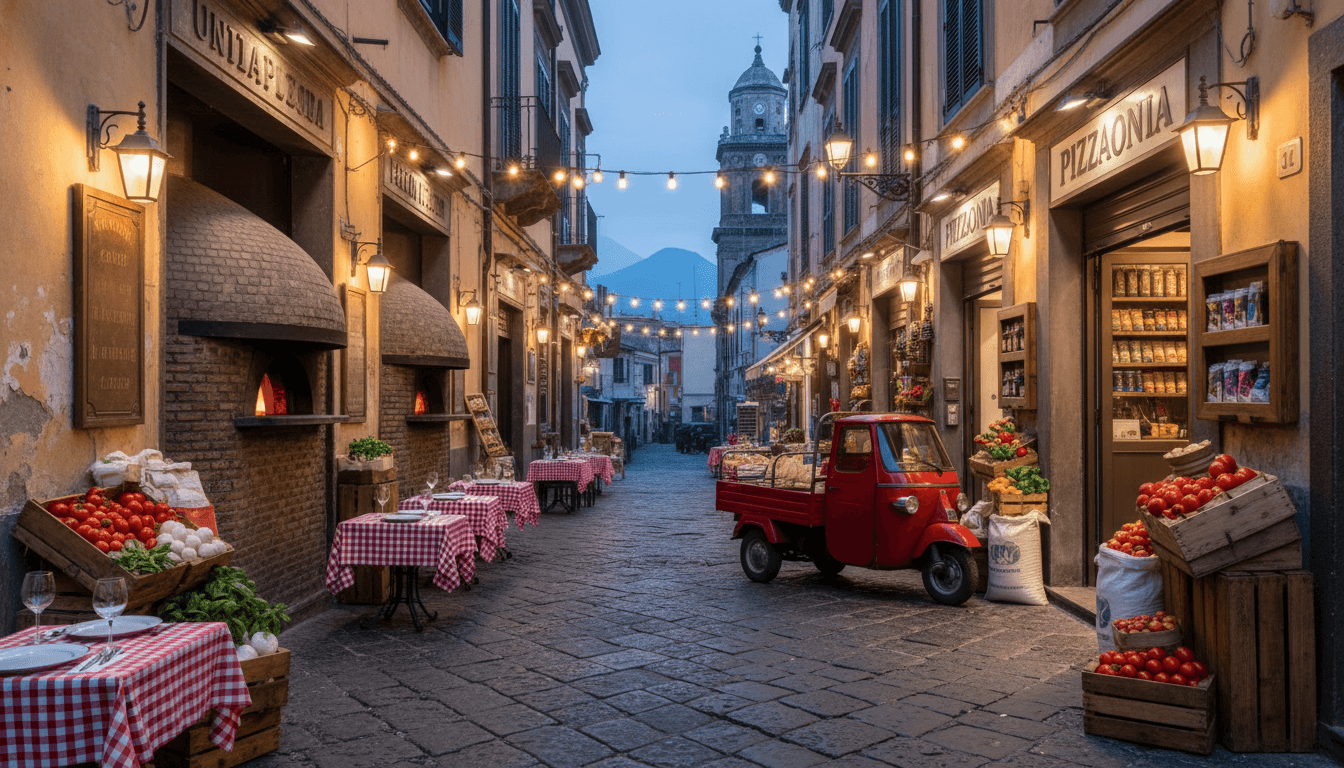
Naples Food Scene: The Ultimate Culinary Guide for Home Exchange Travelers

SwappaHome Editorial Team
Home Exchange & Slow Travel Editorial
Discover Naples' legendary food scene through a local lens. From €1 pizza to hidden trattorias, here's how home exchange unlocks authentic Neapolitan cuisine.
The first time I bit into a pizza margherita in Naples, I actually stopped mid-chew and looked around the tiny pizzeria like I'd been lied to my entire life. Every pizza I'd eaten before that moment? A pale imitation. The Naples food scene didn't just meet my expectations—it completely rewired my understanding of what Italian food could be.
I was staying in a third-floor apartment in the Quartieri Spagnoli through SwappaHome, and my host had left me a handwritten list of her favorite spots. That list became my bible for two weeks. And honestly? It's why I'm convinced that experiencing the Naples food scene through a home exchange is the only way to truly understand this city's obsession with eating well.
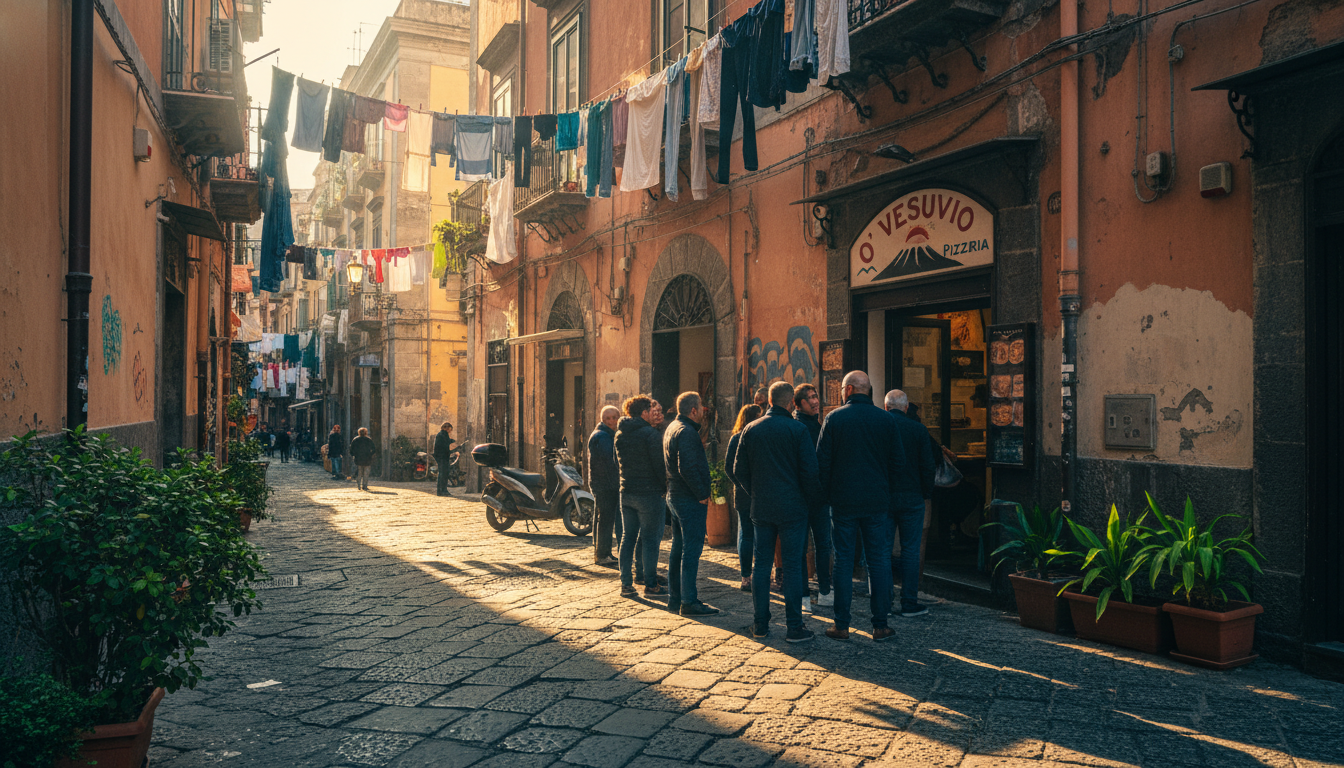 narrow Naples street in Quartieri Spagnoli with laundry hanging between buildings, a small pizzeria
Why the Naples Food Scene Hits Different During a Home Exchange
So here's the thing about Naples: the best food isn't in the places with English menus and TripAdvisor stickers in the window. The legendary spots—the ones Neapolitans have been arguing about for generations—are tucked into residential neighborhoods, open weird hours, and require a local's knowledge to find.
When you're staying in someone's actual home, you inherit their food map. My host Maria left sticky notes on her kitchen cabinets: "DON'T buy mozzarella anywhere except the shop on Via Toledo with the blue awning. Trust me." She was right. That €3 ball of burrata ($3.25 USD) was so fresh it was still warm.
Hotels can't give you this. The concierge at a four-star property will send you to the same ten restaurants they send everyone. But Maria? She sent me to her grandmother's favorite frittatina spot—a place with no sign that's been making the same fried pasta balls since 1952.
The Essential Naples Food Experiences You Can't Miss
Pizza: Where It All Began
I'm going to say something controversial: you don't need to wait three hours at L'Antica Pizzeria da Michele (yes, the Eat Pray Love place). Is it good? Absolutely. Is it worth standing in the Naples sun for half your day? Not when there are dozens of pizzerias just as good—or better—within walking distance of any residential neighborhood.
During my home exchange in the Vomero district, I discovered Pizzeria Starita, which has been making pizza since 1901. Their pizza fritta (fried pizza) is a revelation—imagine a calzone that's been deep-fried until the outside shatters and the inside stays impossibly molten. It costs €5 ($5.40 USD) and it will ruin you for regular pizza forever.
 close-up of hands stretching pizza dough in a traditional Naples pizzeria, wood-fired oven glowing o
A few rules for Naples pizza, in case you're wondering: stick to margherita or marinara for your first time (don't be the tourist ordering pepperoni), eat it with a fork and knife while folding as you go, and know that the char on the crust is intentional and perfect. Oh, and a whole pizza is a personal serving here—no sharing required.
Expect to pay €4-8 ($4.30-8.60 USD) for a pizza that would cost $25 in New York. This is why home exchange travelers can eat like royalty on a backpacker budget.
Street Food: The Neapolitan Way of Life
Naples invented street food. I'm not exaggerating—this city has been serving food from windows and carts since ancient Roman times. When you're staying in a local neighborhood, you start to notice the rhythms: the morning coffee rush, the mid-afternoon snack break, the evening passeggiata where everyone seems to be eating something fried.
Cuoppo is my absolute favorite—a paper cone filled with fried seafood (calamari, shrimp, tiny fish) that you eat while walking. Find it at any friggitoria for €5-7 ($5.40-7.50 USD). The one on Via dei Tribunali near Piazza Bellini is my go-to, but honestly, they're all good.
Then there's sfogliatella, this shell-shaped pastry that comes in two versions: riccia (crispy layers) and frolla (shortcrust). The riccia from Pintauro on Via Toledo has been made the same way since 1785. It's €2 ($2.15 USD) and worth every calorie. And don't skip the taralli—ring-shaped crackers studded with almonds and black pepper that are Naples' answer to chips. Buy a bag from any bakery for €1-2 ($1.08-2.15 USD) and snack while exploring.
 elderly Neapolitan man in white apron frying cuoppo in a tiny shop, golden seafood sizzling in oil,
Coffee Culture: Serious Business
I need to prepare you for something: coffee in Naples is not what you're used to. It's not a casual thing you grab while checking emails. It's a ritual, a religion, a point of civic pride that Neapolitans will defend with startling passion.
Order at the bar and drink standing up (sitting costs extra, often double). "Un caffè" means espresso—always. It should be served "bollente" (boiling hot) in a warm cup. You can ask for it "macchiato" (with a drop of milk) but never order a cappuccino after 11am unless you want the barista to judge you silently.
Gran Caffè Gambrinus in Piazza del Plebiscito is the historic choice—Hemingway drank here, the interior is absurdly ornate, and a standing espresso costs €1.50 ($1.60 USD). But I actually preferred the no-name bar around the corner from my home exchange apartment, where the espresso was €1 ($1.08 USD) and the barista started recognizing me by day three. That's the home exchange advantage: you become a regular somewhere. You get the nod, the extra foam, the "ciao bella" that tourists never hear.
Neighborhood Guide: Where to Eat Based on Where You're Staying
Centro Storico (Historic Center)
This is where most tourists stay, and for good reason—it's a UNESCO World Heritage site packed with history. The food scene here is excellent but can be touristy. Stick to side streets.
For pizza: Sorbillo (Via dei Tribunali 32) is famous and usually has a line, but the pizza is genuinely transcendent. Go for lunch to avoid the worst crowds. A margherita runs €5 ($5.40 USD).
For seafood: Trattoria da Nennella is chaotic, loud, and perfect. No menu—they tell you what's fresh. Expect to pay €15-20 ($16-21.50 USD) for a full meal with wine. They might throw bread at you. This is normal.
For pastries: Scaturchio in Piazza San Domenico Maggiore has the best ministeriale (chocolate and rum cake) in the city. €3.50 ($3.75 USD).
Quartieri Spagnoli (Spanish Quarters)
This is where I did my longest Naples home exchange, and I'm biased—I think it's the best neighborhood for food. It's gritty, loud, and intensely local. The streets are so narrow that neighbors have conversations between balconies.
For pizza: Pizzeria Oliva on Via Toledo makes a pizza fritta that I still dream about. €4 ($4.30 USD).
For home cooking: Tandem Ragù serves only two things: ragù napoletano and genovese. Both are meat sauces that have been simmering for 6+ hours. A plate with bread costs €8 ($8.60 USD) and it's the most comforting thing you'll ever eat.
For late-night: The friggitorie (fry shops) stay open late here. Look for the one with the longest line of teenagers—that's your spot.
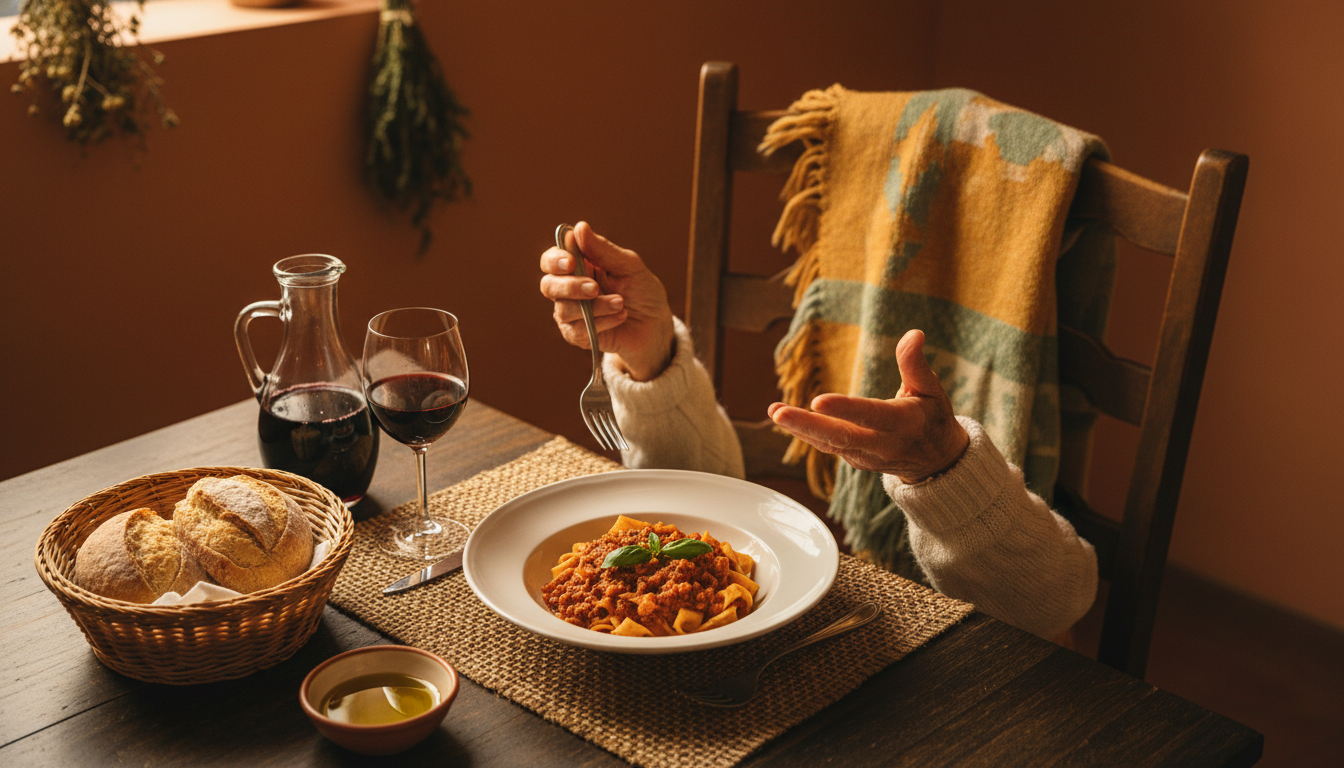 overhead view of a small trattoria table with pasta al rag, local red wine, basket of bread, and a g
Vomero
Up the hill from the chaos, Vomero is where middle-class Neapolitan families live. It's quieter, cleaner, and the food is more "Sunday dinner at nonna's" than street food chaos.
For pizza: Pizzeria Starita (mentioned above) is worth the funicular ride. Their montanara (fried then baked pizza) is legendary.
For aperitivo: The bars along Via Scarlatti do proper Neapolitan aperitivo—€5-7 ($5.40-7.50 USD) for a spritz and enough snacks to call it dinner.
For groceries: If you're cooking in your home exchange kitchen, the Vomero market on Via Luca Giordano has incredible produce. Go early for the best selection.
Chiaia & Lungomare
The fancy neighborhood. Waterfront views, designer boutiques, and restaurants where you might need a reservation. The food is excellent but pricier.
For seafood: Umberto on Via Alabardieri is a splurge—expect €40-60 ($43-65 USD) per person—but the seafood risotto is worth it for a special night.
For gelato: Gay-Odin on Via Toledo (technically nearby) makes chocolate gelato that's been famous since 1894. Two scoops for €3 ($3.25 USD).
Cooking in Your Naples Home Exchange: A Guide to Local Markets
One of the best parts of home exchange travel is having a kitchen. And in Naples, using that kitchen means shopping like a local—which is an experience in itself.
Mercato di Porta Nolana
This is the real deal—a sprawling, chaotic fish market where Neapolitans have been buying seafood for centuries. Go early (before 9am) for the best selection. The vendors will try to upsell you, but that's part of the charm.
What to buy: fresh mozzarella (look for "mozzarella di bufala"—buffalo milk), San Marzano tomatoes (the only tomatoes worth using for sauce), anchovies packed in salt (rinse before using), and whatever fish the vendor says is freshest.
Mercato di Pignasecca
Smaller and more manageable than Porta Nolana, this market in the Spanish Quarters is where my host Maria did her daily shopping. It's perfect for picking up ingredients for a simple pasta dinner.
I spent maybe €15 ($16 USD) on tomatoes, pasta, garlic, basil, and a ball of mozzarella—enough for two dinners. Try doing that at a restaurant.
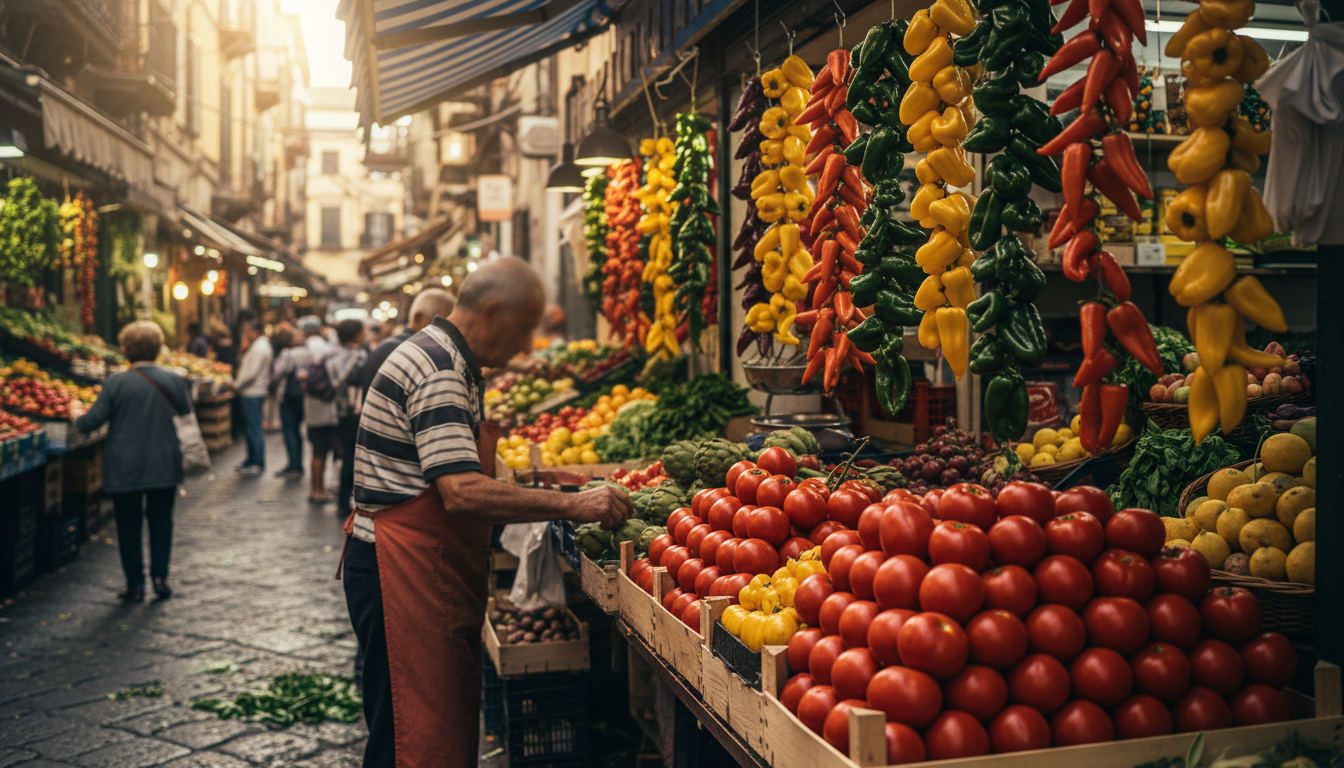 colorful produce stall at Mercato di Pignasecca with pyramids of San Marzano tomatoes, hanging peppe
What to Cook
Naples isn't about complicated recipes. It's about perfect ingredients treated simply.
Pasta al pomodoro is where I'd start—San Marzano tomatoes, garlic, basil, good olive oil. That's it. The tomatoes do all the work. Insalata caprese is even easier: buffalo mozzarella, tomatoes, basil, olive oil. Don't refrigerate the mozzarella—eat it at room temperature. And if you're feeling ambitious, buy fresh clams at Porta Nolana and make spaghetti alle vongole. White wine, garlic, parsley. No cheese. Ever.
The Naples Food Scene Beyond the Obvious
Day Trip to Pompeii with a Food Twist
Everyone visits Pompeii from Naples, but here's what most guides don't tell you: the town of Pompei (modern spelling, one 'i') has excellent food that's way less touristy than Naples itself.
After the ruins, walk 15 minutes to Ristorante President. It's a Michelin-starred restaurant where you can get a lunch tasting menu for €45 ($48 USD)—a fraction of what you'd pay in Naples' fancy spots.
The Amalfi Coast Connection
If your Naples home exchange is long enough, take a day trip to the Amalfi Coast. The ferry from Naples to Positano takes about an hour and costs €20 ($21.50 USD).
In Positano, skip the waterfront restaurants (tourist traps) and climb the stairs to La Tagliata. It's a family farm restaurant where the grandmother still cooks. Set menu is €35 ($38 USD) and includes homemade limoncello that will make you understand why everyone's obsessed with Amalfi lemons.
Wine: The Underrated Naples Scene
Naples isn't Tuscany, but the wines here are seriously underrated. Lacryma Christi is a white or red from the slopes of Mount Vesuvius—yes, volcanic wine is a thing. Falanghina is a crisp white that pairs perfectly with seafood. And Aglianico is a bold red that can stand up to ragù.
Most restaurants charge €12-20 ($13-21.50 USD) for a bottle of local wine. Enoteca Belledonne in Chiaia has an excellent selection if you want to buy bottles to bring back to your home exchange apartment.
Practical Tips for Eating Your Way Through Naples
Timing Matters
Neapolitans eat late. Like, really late. Breakfast happens 7-10am (just coffee and a pastry, standing at a bar). Lunch is 1-3pm and it's the big meal—many places close 3-7pm. Aperitivo runs 7-9pm (drinks and snacks), and dinner doesn't really start until 9-11pm (lighter than lunch, often pizza).
Show up at a restaurant at 6pm and it will either be closed or completely empty. Adjust your clock.
The Language Thing
English is less common in Naples than in Rome or Florence, especially at local spots. A few phrases go a long way: "Un tavolo per due" (a table for two), "Il conto, per favore" (the check, please), "Cosa consiglia?" (what do you recommend?), and "Buonissimo" (delicious—use liberally, they love it).
Tipping
Italy doesn't have American tipping culture. A service charge (coperto) of €1-3 per person is usually included. Round up or leave a few euros for exceptional service, but 20% would be weird.
Allergies and Dietary Restrictions
Real talk: this is tricky in Naples. Vegetarians will be fine—pasta, pizza, and vegetables are everywhere. Vegans will struggle—cheese and eggs are in everything. Gluten-free is possible but requires advance communication.
For serious allergies, write your restrictions in Italian and show the server. "Sono allergico/a a..." (I am allergic to...) is essential.
Why Home Exchange Makes the Naples Food Scene Better
I've been to Naples three times now—once in a hotel, once in an Airbnb, and once through SwappaHome. The home exchange trip was incomparably better for one simple reason: I had a local's insight.
My host Maria didn't just leave me a list of restaurants. She left me her life. Her favorite bakery. The butcher who saves her the good cuts. The wine shop owner who knows exactly what she likes. When I walked into these places and mentioned her name, I was treated like family.
That's not something you can buy. It's not something a hotel concierge can arrange. It's the magic of staying in someone's actual home, in their actual neighborhood, with their actual recommendations.
And here's the practical part: home exchange means you have a kitchen. After three days of eating out for every meal, even in a food paradise like Naples, you start craving something simple. Being able to cook pasta in a real kitchen, with ingredients from the local market, is a luxury that costs nothing.
On SwappaHome, you earn 1 credit for every night you host someone at your place, and you spend 1 credit for every night you stay somewhere else. My two weeks in Naples cost me 14 credits—credits I'd earned hosting travelers in my San Francisco apartment. No hotel bills, no Airbnb fees, just pure food budget.
The Naples Food Scene: What It All Comes Down To
I could write another 5,000 words about eating in Naples and still not cover everything. I haven't mentioned the taralli vendors outside the train station, or the secret bakery in Sanità that only opens at 3am, or the way the city smells like espresso and pizza dough and possibility.
But here's what I want you to take away: the Naples food scene isn't about checking items off a list. It's about surrendering to a city that takes food more seriously than anywhere else on earth. It's about trusting the nonna who insists you try her special ragù. It's about eating pizza for lunch and dinner because life is short and you're in Naples.
And if you do it through a home exchange? You're not just visiting. You're living there, even if just for a week. You're shopping at the market, cooking in a real kitchen, becoming a regular at the corner bar.
That's the difference between being a tourist and being a traveler. And in Naples, where food is life, that difference matters more than anywhere else I've been.
Frequently Asked Questions
What is the best neighborhood for food in Naples?
The Centro Storico and Quartieri Spagnoli offer the most authentic Naples food scene experiences. Centro Storico has famous pizzerias like Sorbillo, while Quartieri Spagnoli has more local, undiscovered gems. For home exchange stays, both neighborhoods provide easy walking access to the best trattorias, street food vendors, and markets.
How much should I budget for food in Naples per day?
Budget €25-40 ($27-43 USD) per day for excellent eating in Naples. A pizza costs €4-8, street food €2-7, and a full trattoria meal €15-25. Coffee runs €1-1.50 standing at the bar. Home exchange travelers with kitchens can reduce this significantly by cooking with market ingredients.
Is Naples food scene safe for tourists?
Yes, the Naples food scene is safe for tourists, though use common sense in crowded areas. Stick to busy restaurants and street food stalls with high turnover. The historic center and main food areas are well-trafficked and secure. Markets like Porta Nolana are safe during morning hours when locals shop.
What food is Naples most famous for?
Naples is most famous for inventing pizza margherita, but the food scene extends far beyond. The city is renowned for sfogliatella pastries, fried street food like cuoppo and pizza fritta, ragù napoletano (slow-cooked meat sauce), and espresso culture. Buffalo mozzarella from nearby Campania is another must-try.
When is the best time to visit Naples for food?
Spring (April-June) and fall (September-October) offer the best Naples food scene experiences. Summer is hot and crowded, with some local restaurants closing for August holidays. Winter is mild and sees fewer tourists, meaning better access to popular spots. Markets operate year-round but have the best produce in warmer months.

Published by
SwappaHome
SwappaHome Editorial Team
Home Exchange & Slow Travel Editorial
The SwappaHome Editorial Team brings together travel research, home-exchange community insights, and platform data to produce practical guides for first-time and experienced home swappers. Every article cites real platforms, current market rates, and verifiable city-level facts so readers can make informed decisions without guessing.
Ready to try home swapping?
Join SwappaHome and start traveling by exchanging homes. Get 7 free credits when you sign up!
Related articles

Bachelor and Bachelorette Parties in Singapore: The Complete Home Swap Group Guide for 2026
Planning a bachelor or bachelorette party in Singapore? Discover how home swapping lets groups of 6-12 stay together in luxury condos, saving thousands while partying in Marina Bay.

Cycling in Lisbon: 7 Home Swap Bike Tour Itineraries for Every Rider
Discover the best cycling routes in Lisbon with these home swap bike tour itineraries—from waterfront paths to hilltop adventures, all starting from your borrowed home.

Graduation Trip to Barcelona: How Home Swapping Gives New Graduates the Ultimate Celebration
Planning a graduation trip to Barcelona? Discover how home swapping lets new graduates explore Spain's most vibrant city without the hostel crowds or hotel costs.