
Santiago with Kids: Why Home Exchange Is Perfect for Family Travel in Chile

SwappaHome Editorial Team
Home Exchange & Slow Travel Editorial
Discover why home exchange in Santiago transforms family travel—from kid-friendly neighborhoods to savings that fund real adventures across Chile's capital.
My daughter was three hours into a meltdown. We'd been in Santiago for exactly one day, crammed into a hotel room the size of a generous closet, and she'd just discovered that Chilean hotels don't stock the specific brand of crackers that apparently sustain her will to live. My husband was googling "family-friendly restaurants Santiago" for the fifteenth time while I stared at the minibar prices and did depressing math.
That was 2019. Last year, we returned to Santiago with kids—this time through home exchange—and it was like visiting an entirely different city. Not because Santiago had changed, but because we had a three-bedroom apartment in Providencia with a fully stocked kitchen, a balcony where the kids could burn energy, and a local family's collection of board games that my son still talks about.
Here's what I've learned after doing family home swaps in seven countries: traveling with children isn't just about finding kid-friendly attractions. It's about having space to breathe, kitchens to cook familiar foods at 2 AM when jet lag hits, and neighborhoods where your kids can actually live for a week instead of just visit.
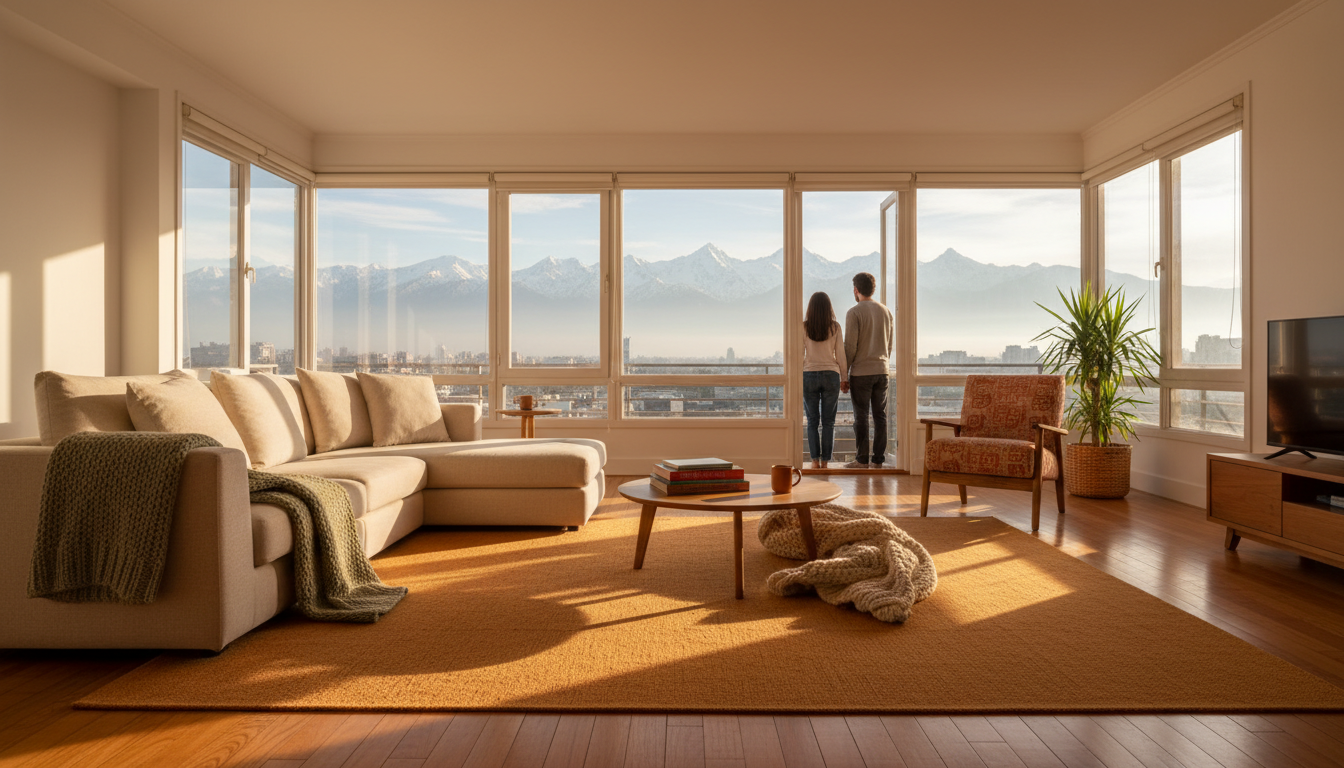 spacious living room in a Santiago apartment with large windows showing Andes mountain views, childr
Why Home Exchange in Santiago Works So Well for Families
Santiago isn't a city that immediately screams "bring the kids!" It doesn't have the obvious theme park appeal of Orlando or the beach-and-gelato simplicity of Barcelona. But that's exactly why home exchange transforms it from a challenging family destination into something genuinely special.
First, the practical stuff. A decent family hotel room in Santiago's safer neighborhoods—Providencia, Las Condes, Vitacura—runs $180-250 USD per night. That's before breakfast, before the inevitable room service when someone gets hangry, before the desperate late-night snack run. A week in a hotel with two kids? You're looking at $1,500-2,000 just for accommodation.
With home exchange through SwappaHome, that cost drops to essentially zero. You're using credits you've earned by hosting other travelers, or the 7 free credits you get when you join. One credit per night, regardless of whether you're staying in a studio or a four-bedroom house with a pool.
But honestly? The money is almost secondary to what you gain.
Space That Actually Fits a Family
Hotel rooms are designed for adults who sleep, shower, and leave. They're not designed for a five-year-old who needs to practice her cartwheel routine at 6 AM, or a toddler who requires a precise bedtime ritual involving seventeen stuffed animals arranged in a specific formation.
The Santiago home we stayed in last year had separate bedrooms—revolutionary concept, I know. My husband and I could actually have a conversation after 8 PM without whisper-fighting. The kids could spread out their toys without us tripping over Legos every time we walked to the bathroom. There was a washing machine, which sounds boring until you've experienced the particular joy of not packing fourteen outfits per child "just in case."
Kitchens Change Everything
I cannot stress this enough: traveling with kids and having access to a kitchen is a completely different experience than traveling without one.
Chilean breakfast at restaurants is usually just coffee and maybe a sad croissant. Fine for adults, catastrophic for children who need protein and familiar foods to function. In our home exchange, I could make scrambled eggs at 7 AM while the kids were still in pajamas. I could stock the fridge with the specific yogurt brand that my picky eater would actually consume. I could make pasta at 5 PM when everyone was melting down and restaurants weren't open yet.
The local family who owned our apartment had left us a note about the best nearby grocery store—Jumbo in Costanera Center—and even mentioned that their kids loved the dulce de leche from a specific brand. That kind of local knowledge doesn't come with hotel concierge recommendations.
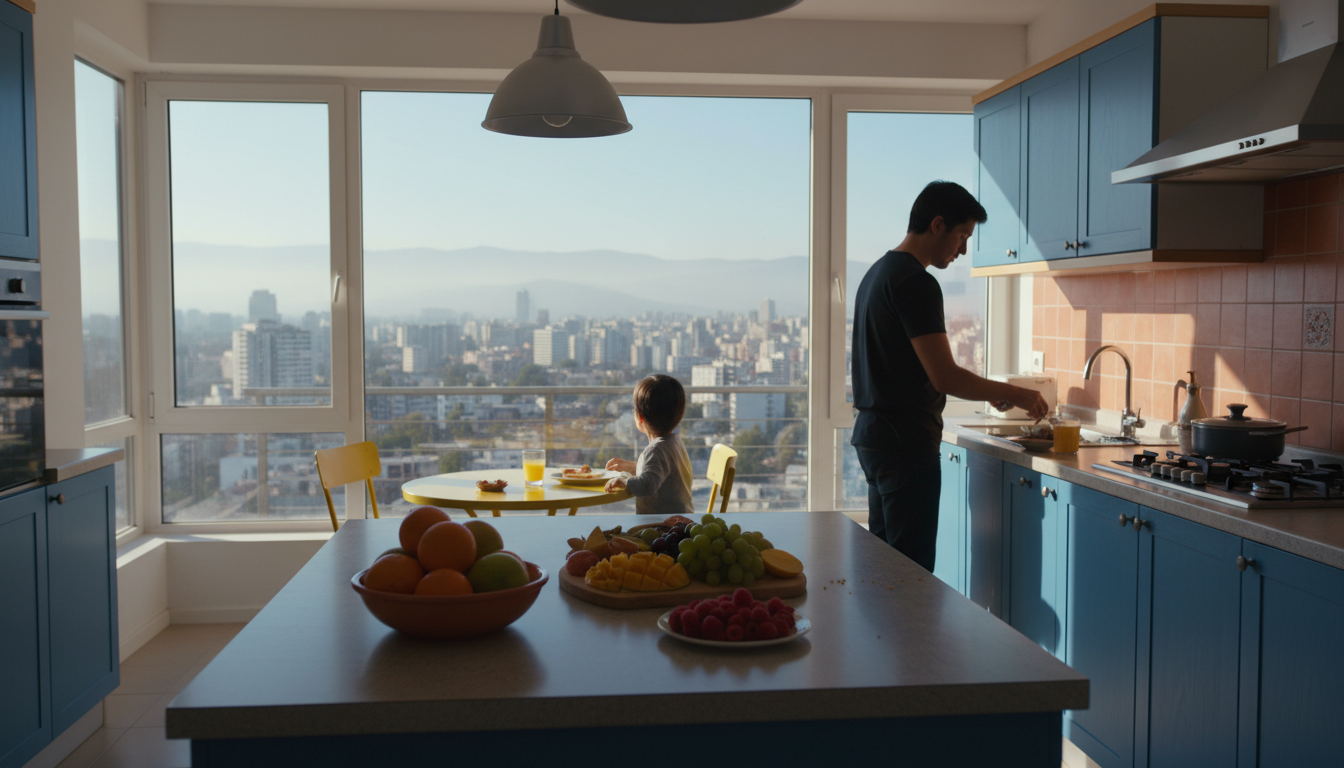 bright modern kitchen in a Chilean home with a parent preparing breakfast, fresh fruit on the counte
Best Santiago Neighborhoods for Family Home Exchange
Not all Santiago neighborhoods are created equal when you're traveling with kids. After two trips and way too much research, here's my honest breakdown.
Providencia: The Sweet Spot for Families
This is where we stayed, and I'd do it again in a heartbeat. Providencia hits the perfect balance between residential calm and easy access to everything.
The streets are walkable and relatively quiet. There are playgrounds scattered throughout—Parque de las Esculturas has a great one near the river, and the kids can run around while you actually look at the art. Café culture is strong here, with spots like Café Colonia and Le Fournil where you can get a decent breakfast without the downtown chaos.
Metro access is excellent. Stations like Pedro de Valdivia and Los Leones put you within easy reach of downtown attractions without actually staying in the noise and crowds. And the Costanera Center mall—love it or hate it—has a massive food court, a movie theater, and enough distractions to save a rainy afternoon.
Home exchange options in Providencia tend to be apartments in mid-rise buildings. Expect two to three bedrooms, modern kitchens, and often a small balcony. Prices for similar rentals would be $120-180 USD per night, so the savings are real.
Las Condes: More Space, More Suburban
If you want a house with a yard—and with kids, sometimes you really want a house with a yard—Las Condes delivers. This neighborhood is more residential, more spread out, and feels distinctly less urban than Providencia.
The trade-off is that you'll need to use taxis or Uber more often. Metro coverage is spottier, and walking to attractions isn't really a thing here. But if your kids need outdoor space to run, or if you're traveling with a baby and want a quieter environment, Las Condes makes sense.
Parque Araucano is the big draw here—a massive green space with dedicated kids' areas, paddle boats, and enough room for everyone to spread out. It's also right next to Parque Arauco mall, which has a good children's play area and a Starbucks for when you need a taste of home.
Vitacura: Upscale but Worth Considering
Vitacura is Santiago's fancy neighborhood, and it shows. Wide streets, expensive restaurants, and a general air of wealth that feels a bit removed from "authentic" Santiago.
But here's the thing: Parque Bicentenario is here, and it's genuinely one of the best family spaces in the city. Flamingos. Actual flamingos, just wandering around. Plus a great playground, wide paths for scooters and bikes, and usually a food truck or two. My kids still ask about the flamingos.
Home exchanges in Vitacura tend to be larger—houses with gardens, sometimes pools. If you're traveling with multiple families or grandparents, the extra space might be worth the slightly inconvenient location.
 children playing in Parque Bicentenario with flamingos visible in the background pond, green grass,
Making Santiago with Kids Actually Work: Practical Tips
Alright, let's get into the stuff that actually matters when you're on the ground with small humans.
Timing Your Trip
Santiago's seasons are flipped from the Northern Hemisphere, which messes with people's planning. December through February is summer—hot, dry, and honestly a bit much with kids. The city empties out as locals head to the beach, which means fewer crowds but also fewer services.
March through May (Chilean autumn) is my favorite for families. Temperatures are comfortable—60-75°F most days—and the city is fully operational. September through November (spring) is also excellent, with jacaranda trees blooming purple everywhere and pleasant weather.
Winter (June-August) is cold and sometimes rainy, but it's also when you can do day trips to ski resorts in the Andes. If your kids are old enough for skiing, this opens up some incredible options just 90 minutes from the city.
Getting Around with Kids
Santiago's Metro is clean, efficient, and surprisingly kid-friendly. Stations have elevators (mostly working), and locals are genuinely helpful with strollers. We used the Metro constantly and never had a bad experience.
That said, with multiple kids and all their stuff, Uber is often easier. Rides are cheap—$5-10 USD for most trips within the city—and you can request car seats through the app (though availability is inconsistent, so bring your own if your kids need them).
Renting a car makes sense only if you're planning day trips outside the city. Santiago traffic is aggressive, parking is annoying, and you really don't need a car for daily exploration.
The Food Situation
Chilean food is not spicy, which is great for cautious kid palates. Empanadas are everywhere and universally loved by children. Completos (Chilean hot dogs loaded with avocado and mayo) are messy but delicious. Fresh fruit is incredible—especially in summer, when you'll find cherries and stone fruits that put supermarket produce to shame.
Restaurant culture here skews late. Lunch is 1-3 PM, dinner doesn't really start until 8 PM. This is where having a kitchen saves you—you can feed kids on their schedule and then do a nice dinner out once they're asleep with a babysitter, or just eat at home and save the restaurant energy for when everyone's adjusted.
One specific recommendation: Fuente Alemana in Providencia does incredible sandwiches and has been feeding Santiago families since 1930. It's chaotic, loud, and perfect for kids who need to make some noise.
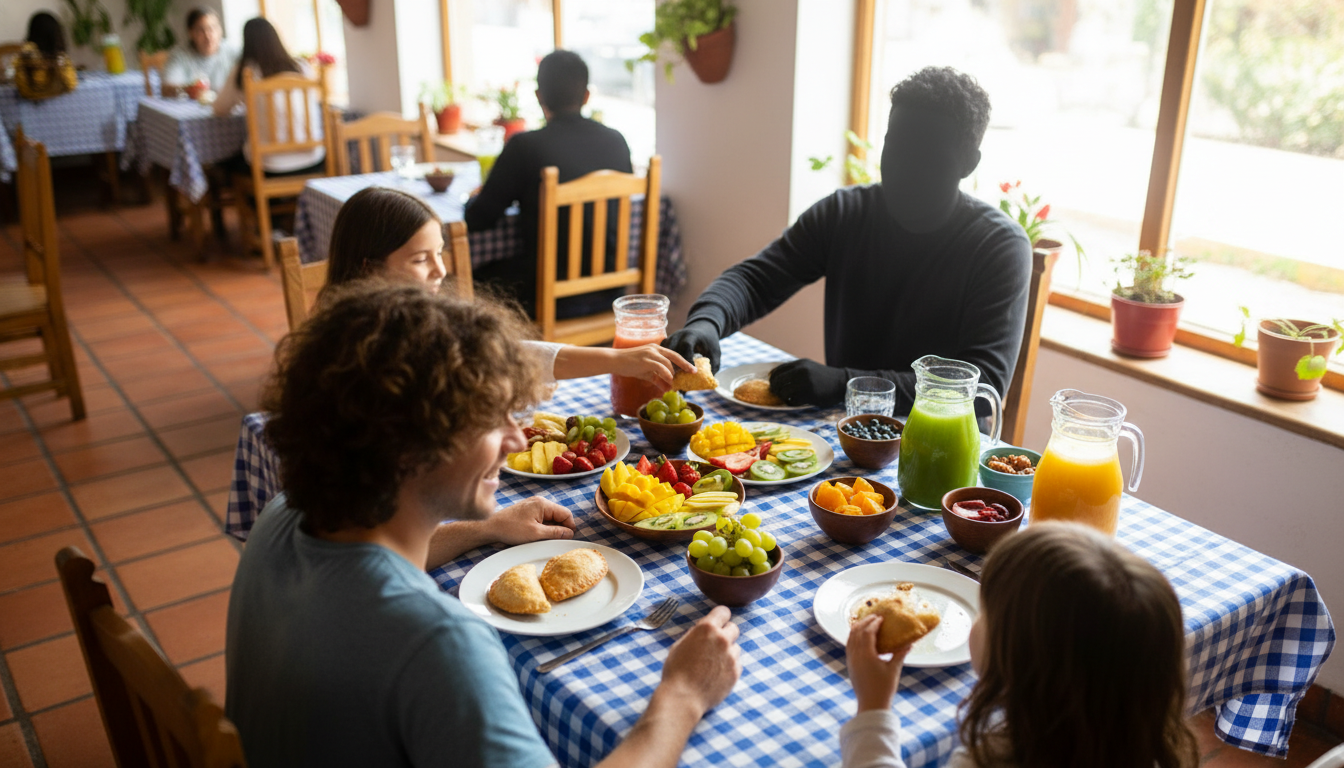 family sharing empanadas and fresh fruit at a casual Chilean restaurant with checkered tablecloth, n
Kid-Friendly Santiago Attractions That Don't Suck
I'm going to be honest: some "family attractions" in Santiago are pretty underwhelming. Here's what's actually worth your time.
Cerro San Cristóbal
Take the funicular up. This is non-negotiable. The ride itself is the attraction for kids—a steep, rattling climb up the hill with views that get progressively more dramatic. At the top, there's a giant Virgin Mary statue, a small chapel, and panoramic views of the city with the Andes behind.
The zoo (Zoológico Nacional) is also on the hill. It's not San Diego Zoo, but it's perfectly fine for a couple of hours, and kids love seeing South American animals like pudús (tiny deer) and condors. Entry is about $5 USD for adults, $2.50 for kids.
Pro tip: Go in the morning when the air is clearer and the smog hasn't built up. Afternoon views can be disappointingly hazy.
MIM (Museo Interactivo Mirador)
This is Santiago's hands-on science museum, and it's legitimately great. Everything is designed to be touched, climbed on, and experimented with. My kids spent three hours here and would have stayed longer.
It's located in La Granja, about 30 minutes from central Santiago by Uber. Worth the trip, especially on a rainy day. Entry is around $4 USD for kids, $6 for adults. Closed Mondays.
Fantasilandia
Santiago's amusement park, located in Parque O'Higgins. It's not Disneyland—let's be clear about that—but it has enough rides to fill a solid half-day. The roller coasters are decent for older kids, and there's a dedicated area for little ones.
Entry plus unlimited rides runs about $25 USD per person. Go on a weekday if possible; weekends are packed.
Day Trip: Cajón del Maipo
If your kids are old enough for a day trip (and you can handle the logistics), the Cajón del Maipo valley is spectacular. It's about an hour from Santiago, with dramatic Andean scenery, rivers, and small towns.
You can do horseback riding, visit hot springs (Termas Valle de Colina is the famous one, but it's a rough road), or just drive through and stop for lunch in San José de Maipo. This is where having a home exchange with local recommendations really pays off—our host family told us exactly which restaurant to hit and which tourist traps to skip.
 family hiking on a trail in Cajn del Maipo with snow-capped Andes peaks in the background, a clear r
How to Find the Perfect Santiago Home Exchange for Your Family
Not all home exchanges are equal, and when you're traveling with kids, the details matter more than usual.
What to Look for in Listings
On SwappaHome, filter for properties that specifically mention being family-friendly. Look for:
- Separate bedrooms: You need them. Trust me.
- Kitchen photos: If they're not showing the kitchen, there's probably a reason.
- Outdoor space: Even a small balcony makes a difference.
- Washer/dryer: Life-changing for family travel.
- High chair/crib availability: Many families with kids will have these; just ask.
Read the reviews carefully. Other families will mention things like "great for kids" or "neighborhood was quiet at night" that tell you what you need to know.
Communication Before Your Stay
I always send a detailed message before confirming any family home exchange. I mention the ages of my kids, any specific needs (crib, high chair, baby gates), our typical schedule (early risers vs. late nights), and questions about the neighborhood (nearest playground, family-friendly restaurants).
Most hosts are incredibly helpful, especially if they have kids themselves. Our Santiago hosts sent us a detailed PDF with their favorite spots, emergency contacts, and even the Wi-Fi password for the building's rooftop terrace (which they technically weren't supposed to share, but parents look out for each other).
Setting Up Your Own Home for Exchanges
Here's the thing about home exchange: it's reciprocal. You're not just taking—you're also hosting. If you want to attract families to your home, make it family-friendly.
This doesn't mean turning your house into a daycare. It means having a pack-n-play stored in a closet, mentioning that you have a fenced backyard, noting which streaming services you have (parents traveling with kids need Bluey access, I'm just saying). The more family-friendly your listing, the more families will want to exchange with you.
The Real Reason Home Exchange Works for Family Travel
I've been doing this for seven years now, and here's what I keep coming back to: home exchange doesn't just save money (though it absolutely does). It changes the entire texture of family travel.
When you stay in someone's home, you're not a tourist in quite the same way. You shop at their grocery store. You walk their streets. You figure out which café has the best pastries and which playground has the good swings. Your kids make memories of living somewhere, not just passing through.
My daughter doesn't remember the hotel room from our first Santiago trip. But she remembers the apartment in Providencia—the books on the shelf, the view of the mountains from the balcony, the neighbor's cat that would visit the terrace. She remembers feeling like she had a home there, even if it was just for a week.
That's worth more than any hotel concierge or room service menu.
What Home Exchange Doesn't Cover (And What You Should Know)
I want to be straight with you because I think transparency matters, especially when kids are involved.
SwappaHome connects you with other members, but it doesn't provide insurance or damage protection. If something goes wrong—a broken lamp, a stained couch, a misunderstanding about checkout times—you're working that out directly with your host. The platform has a review system that keeps people accountable, and in my experience, the community is incredibly respectful. But it's not a hotel with a liability department.
For family travel, I always recommend getting your own travel insurance that covers accommodation issues. It's usually $50-100 for a trip and gives you peace of mind. I also take photos of the home when I arrive and communicate openly about any concerns.
The verification system on SwappaHome helps—you can see if hosts have confirmed their identity and read reviews from other families. But ultimately, you're trusting another person, and that requires a bit of faith. In seven years and 40+ exchanges, I've never had a serious problem. But I also do my homework.
Frequently Asked Questions
Is home exchange in Santiago safe for families with young children?
Santiago is generally safe for families, especially in neighborhoods like Providencia, Las Condes, and Vitacura. Home exchange adds security because you're staying in residential areas rather than tourist zones, and the SwappaHome community includes verified members with reviews from other families. Always research specific neighborhoods and communicate with your host about local safety considerations.
How much can families save with home exchange in Santiago compared to hotels?
Families typically save $1,200-1,800 USD per week compared to hotel stays in Santiago's family-friendly neighborhoods. A decent family hotel room costs $180-250 per night, while home exchange through SwappaHome uses credits (one credit per night) that you earn by hosting. Add kitchen savings of $50-100 per day on meals, and a two-week trip could save $3,000 or more.
What's the best age for kids to do a home exchange trip to Santiago?
Santiago works well for kids of all ages, but families with children ages 4-12 often get the most value. Toddlers benefit from the space and kitchen access, while school-age kids can appreciate attractions like MIM museum and Cerro San Cristóbal. Teenagers might prefer beach destinations, though Santiago's urban culture and day trip options can appeal to older kids too.
Do Santiago home exchange hosts provide baby equipment like cribs and high chairs?
Many Santiago families on SwappaHome have children and can provide baby equipment—just ask before confirming your exchange. Specify exactly what you need: crib, high chair, baby gates, or stroller. If your host doesn't have equipment, Santiago has rental services, or you can purchase affordable items at stores like Jumbo or Falabella and leave them for future guests.
How far in advance should families book a Santiago home exchange?
For peak seasons (December-February and September-November), book 3-4 months ahead to secure family-friendly properties in desirable neighborhoods. Off-season travel allows more flexibility—6-8 weeks is usually sufficient. Start browsing SwappaHome listings early to understand what's available and message potential hosts to gauge interest before committing.

Published by
SwappaHome
SwappaHome Editorial Team
Home Exchange & Slow Travel Editorial
The SwappaHome Editorial Team brings together travel research, home-exchange community insights, and platform data to produce practical guides for first-time and experienced home swappers. Every article cites real platforms, current market rates, and verifiable city-level facts so readers can make informed decisions without guessing.
Ready to try home swapping?
Join SwappaHome and start traveling by exchanging homes. Get 7 free credits when you sign up!
Related articles

Bachelor and Bachelorette Parties in Singapore: The Complete Home Swap Group Guide for 2026
Planning a bachelor or bachelorette party in Singapore? Discover how home swapping lets groups of 6-12 stay together in luxury condos, saving thousands while partying in Marina Bay.

Cycling in Lisbon: 7 Home Swap Bike Tour Itineraries for Every Rider
Discover the best cycling routes in Lisbon with these home swap bike tour itineraries—from waterfront paths to hilltop adventures, all starting from your borrowed home.

Graduation Trip to Barcelona: How Home Swapping Gives New Graduates the Ultimate Celebration
Planning a graduation trip to Barcelona? Discover how home swapping lets new graduates explore Spain's most vibrant city without the hostel crowds or hotel costs.