Sharing economy travel: 93% savings and real local life

SwappaHome Editorial Team
Home Exchange & Slow Travel Editorial
Sharing economy travel: 93% savings and real local life !Travelers plan day in lived-in kitchen > TL;DR: > > - The sharing economy allows travelers...
Sharing economy travel: 93% savings and real local life
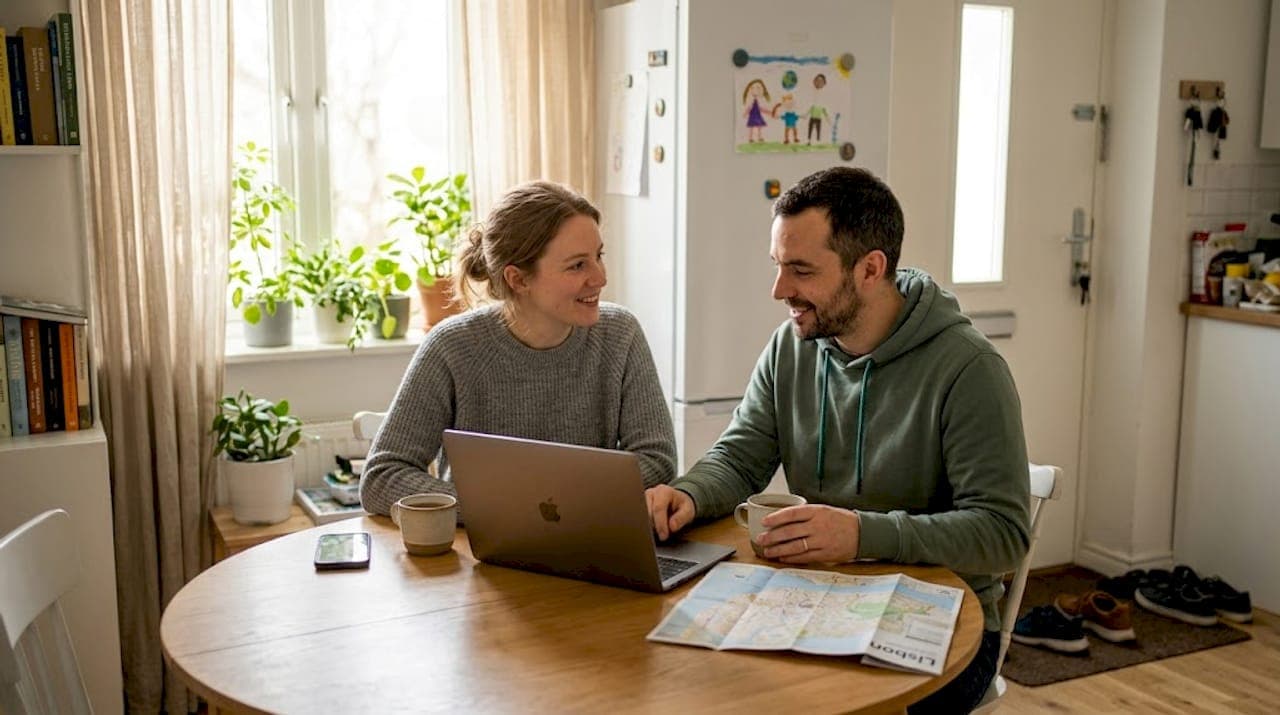
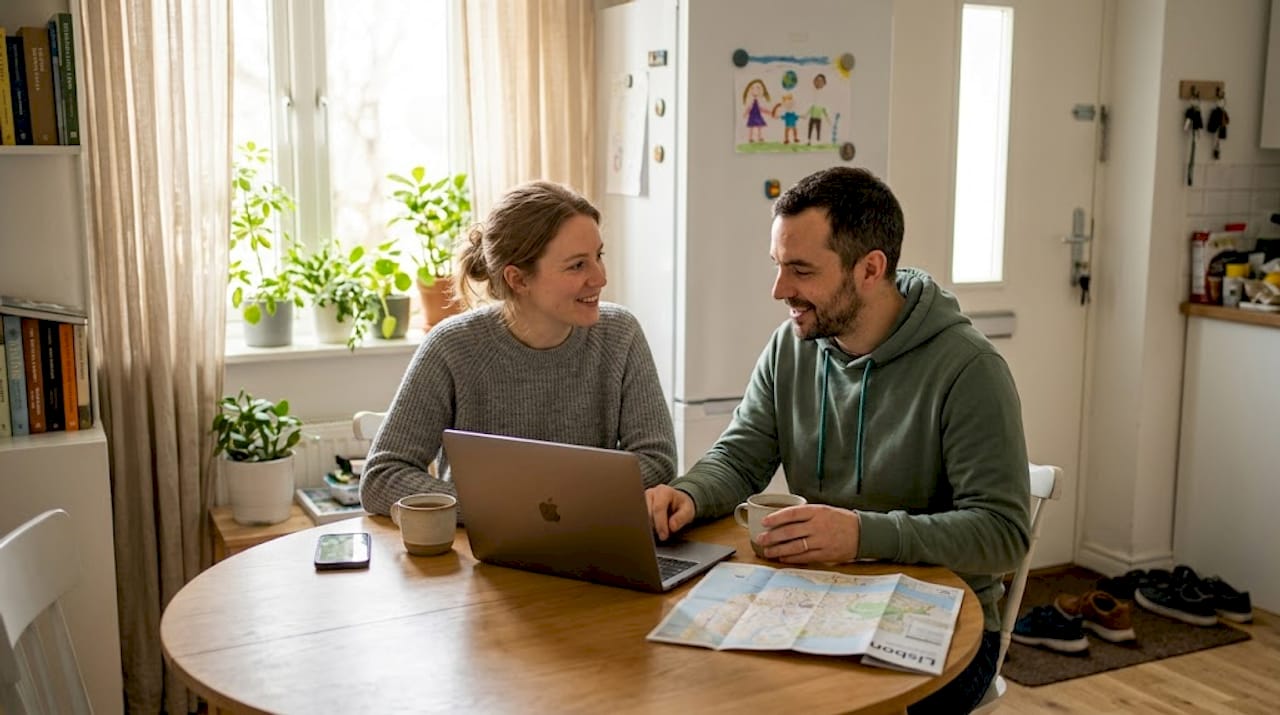 Travelers plan day in lived-in kitchen
TL;DR:
- The sharing economy allows travelers to save up to 93% on accommodation costs through home swapping. It fosters authentic local experiences by enabling cultural immersion and community engagement. Verified platforms with safety measures help mitigate risks for both hosts and travelers.
One week of accommodation. Two options: a home swap at $17 or an Airbnb at $1,208. That 93% savings difference is not a typo. The sharing economy has quietly rewritten the rules of travel, making it possible to stay in real homes, real neighborhoods, and real communities without spending a fortune. This article breaks down exactly how the sharing economy works for travelers, why it delivers more authentic experiences than traditional options, and how you can start using it to travel better for far less money.
Table of Contents
- What is the sharing economy for travel?
- How the sharing economy saves you money on travel
- Cultural immersion and authentic local living
- How home swapping and sharing platforms work
- Risks, challenges, and how to stay safe
- Our take: The sharing economy rewards the curious, not just the frugal
- Ready to travel smarter with Swappahome?
- Frequently asked questions
Key Takeaways
| Point | Details |
|---|---|
| Save big on travel | Home swapping and sharing economy platforms can cut accommodation costs by over 90% for budget travelers. |
| Live like a local | Sharing economy models open the doors to real neighborhoods, culture, and genuine host connections. |
| Flexible exchange options | Modern platforms use credits and flexible swap types, so anyone can find an arrangement that fits their schedule and needs. |
| Stay smart and safe | While there are risks, using vetted platforms and following safety best practices can help you travel with peace of mind. |
What is the sharing economy for travel?
The sharing economy is a system where people share access to goods, services, or spaces directly with each other, cutting out the traditional middleman like hotels, rental agencies, or tour operators. In travel, this means peer-to-peer exchanges of homes, rides, and local experiences through digital platforms.
The top travel sharing services fall into a few clear categories:
- Home swapping: You offer your home to another traveler while you stay in theirs, either at the same time or using a credit system.
- Short-term rentals: Platforms like Airbnb let homeowners rent out their spaces for nightly fees.
- Ride sharing: Services like Uber or BlaBlaCar connect drivers with passengers going the same direction.
- Experience sharing: Local hosts offer cooking classes, tours, or cultural workshops directly to travelers.
What makes the sharing economy different from a hotel stay is the human element. You are not checking into a branded room with a minibar and a checkout time. You are stepping into someone's actual life. Their kitchen, their neighborhood, their favorite coffee shop around the corner.
Platforms like Swappahome make this possible at scale. Technology handles the trust layer, connecting verified hosts and travelers through profiles, reviews, and secure messaging. Sharing economy platforms like home swapping services enable budget-conscious travelers to save significantly compared to traditional rentals. And the affordable home swap options available today span dozens of countries, from apartments in Tokyo to farmhouses in Tuscany.
For a deeper look at how the sharing economy reshapes travel habits, sharing economy travel insights from experienced budget travelers show just how transformative this model can be.
How the sharing economy saves you money on travel
Let's talk real numbers. Most travelers assume that saving money on accommodation means hostels, thin walls, and shared bathrooms. The sharing economy flips that assumption completely.
Here is a simple comparison of what a week of travel actually costs across different accommodation types:
| Accommodation type | Estimated weekly cost | Notes |
|---|---|---|
| Hotel (mid-range) | $700 to $1,400 | Per room, no kitchen |
| Airbnb (private home) | $800 to $1,200 | Per-night fees add up fast |
| Home swap (credit-based) | $17 to $50 | Annual fee divided per stay |
The math is striking. Travelers save $5,000 to $15,000 per year through home swapping, with a single week costing as little as $17 compared to $1,208 on Airbnb. That is a 93% reduction in accommodation costs.
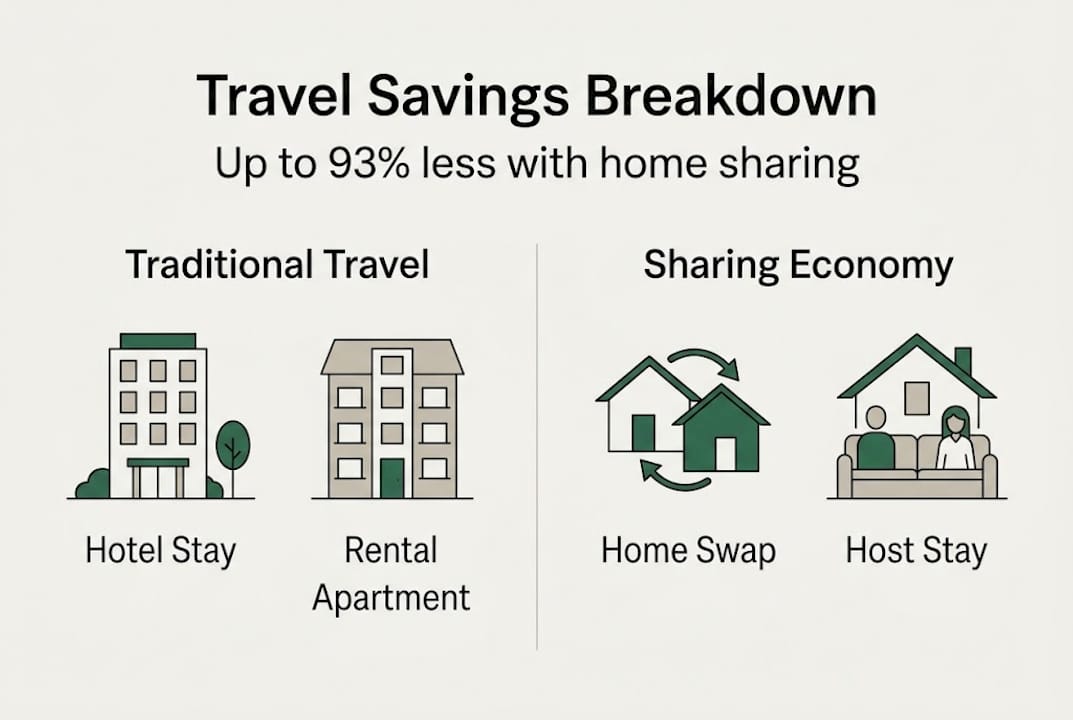 Infographic comparing travel cost savings
Platforms like Swappahome charge a flat annual membership fee, meaning every additional night you stay costs you nothing extra. Compare that to per-night platforms where costs stack up relentlessly. For families traveling together, the savings are even more dramatic because you need space, and space costs money on traditional platforms.
Here is how the savings scale over time:
- One trip per year: You likely break even or save a few hundred dollars.
- Two to three trips per year: Savings start to compound quickly, often exceeding $3,000.
- Digital nomad lifestyle: Annual savings can reach $10,000 or more when you factor in long stays.
For a detailed breakdown of platform costs, the home swap services comparison lays out annual fees, credit systems, and what you actually get for your money. You can also see how HomeExchange vs Airbnb costs stack up in real-world scenarios.
Pro Tip: Sign up for an annual plan and commit to at least two or three trips per year. Each extra night you use brings your effective nightly cost closer to zero.
Cultural immersion and authentic local living
Beyond cost savings, the sharing economy unlocks something just as valuable: real local connections and culture. This is the part that hotels simply cannot replicate, no matter how many amenities they offer.
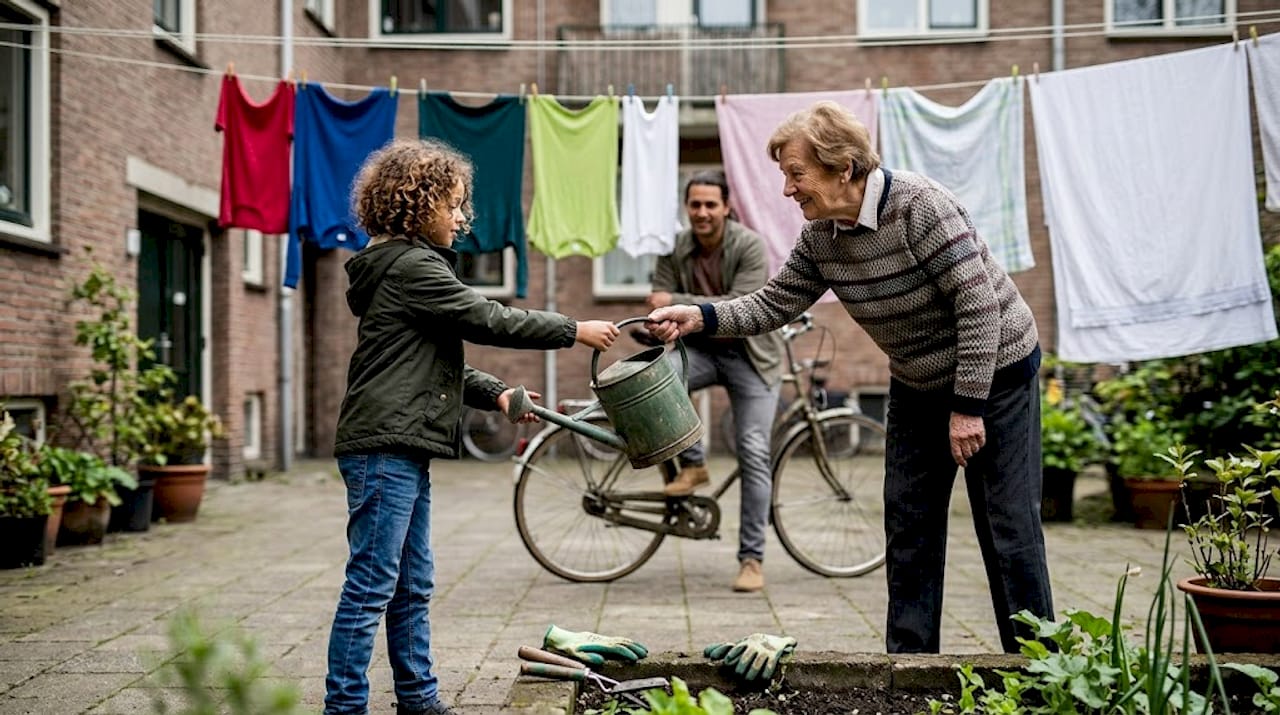 Family and neighbor gardening together courtyard
When you stay in someone's home, you are not in a tourist zone. You are in their neighborhood. You shop at the same market they shop at. You walk the same streets. You might find a handwritten note on the counter recommending the best local bakery or a hidden trail nearby that no guidebook mentions.
Home swappers report experiences that go far beyond sightseeing:
- Cooking local meals using ingredients from neighborhood markets
- Chatting with neighbors who share stories, tips, and invitations
- Language immersion that happens naturally through daily interactions
- Craft and cultural exchanges organized between hosts and guests
- Slow travel where you actually feel what it is like to live somewhere
"Home swappers engage 40% more with local communities than typical tourists, including food sharing, language immersion, and craft collaborations."
This kind of travel is especially powerful for families. Kids get to experience real daily life in another country, which is a far richer education than any museum tour. For long-stay travelers, it creates a sense of belonging that short hotel stays never deliver.
If you want to go deeper, there are practical guides for organizing cultural travel experiences through home swaps, as well as travel exchange guides that cover how to set up meaningful exchanges from the start. And for a broader look at how this lifestyle works day to day, how home exchange fosters local living is worth reading.
How home swapping and sharing platforms work
To make the most of these travel opportunities, it is important to understand how sharing platforms actually work in practice. The process is simpler than most people expect.
Here is how it typically unfolds:
- Create your profile: List your home with photos, a description, and your travel preferences.
- Get verified: Most platforms, including Swappahome, verify members to build community trust.
- Choose your swap type: Decide whether you want a reciprocal, non-reciprocal, or hospitality exchange.
- Send or receive requests: Browse available homes and connect with potential swap partners.
- Confirm and travel: Agree on dates, share house details, and enjoy your stay.
The mechanics of home swapping involve three main exchange types:
| Swap type | How it works | Best for |
|---|---|---|
| Reciprocal | Both parties swap homes at the same time | Coordinated travelers |
| Non-reciprocal (credit-based) | Host earns credits, redeems later | Flexible schedules |
| Hospitality | Host welcomes guests without swapping | Community-focused travelers |
The credit-based system is particularly useful. You earn credits by hosting someone, then spend those credits to stay anywhere else in the network. You do not need to travel at the same time as your guest. This flexibility is what makes platforms like Swappahome work so well for people with unpredictable schedules.
For a full walkthrough, how Swappahome works explains the process clearly. You can also explore how travel networks unlock home swaps globally, or check out digital nomad home exchange options if you are planning extended stays. The HomeExchange platform guide also offers a useful reference for understanding how similar platforms operate.
Pro Tip: Start by hosting first. It earns you credits, builds your review history, and makes it much easier to get accepted when you request stays from other members.
Risks, challenges, and how to stay safe
While the benefits are clear, it is important to go in with eyes open to potential challenges and how to address them. The sharing economy is not perfect, and pretending otherwise would not serve you well.
The main concerns travelers and homeowners face include:
- Trust and safety: Especially relevant for women and solo travelers staying in private spaces
- Property damage: Guests may not treat your home with the same care you would
- Personal privacy: Opening your home to strangers requires a level of comfort not everyone has
- Regulatory gaps: Some cities restrict home sharing, creating legal uncertainty for hosts
- Housing market impacts: High-volume short-term rentals can affect local housing availability
Sharing economy risks include trust and safety issues, property damage, unpredictable host income, and regulatory gaps that vary widely by location. These are real concerns, not hypothetical ones.
The good news is that established platforms have built systems to address most of them. Verified profiles, two-way reviews, secure messaging, and homeowner agreements all reduce risk significantly. Many platforms also offer access to insurance options or damage protection programs.
For a practical breakdown of precautions, the safe home swapping steps guide covers what to check before, during, and after a swap. You can also review sharing economy financial risks to understand the broader picture.
Pro Tip: Always read a member's full review history, not just their star rating. The details in written reviews reveal far more about how someone treats a home and communicates.
Our take: The sharing economy rewards the curious, not just the frugal
Most articles about the sharing economy focus almost entirely on the money you save. And yes, the savings are real and significant. But framing it purely as a budget strategy misses the deeper reason it works so well for certain travelers.
The sharing economy is not just cheaper. It is structurally different from traditional travel. When you stay in a hotel, you are a customer. The relationship is transactional by design. When you swap homes, you are a guest in the truest sense. That shift changes everything about how you experience a place.
We have seen travelers who initially joined Swappahome purely for the savings end up completely changing how they think about travel. They stop rushing through attractions and start lingering in neighborhoods. They cook more, walk more, talk to more people. The slower pace is not a side effect of the model. It is the model.
There is also an underappreciated reciprocity at the heart of home swapping. You are not just taking. You are giving your home to someone else, trusting them with your space, and extending the same good faith you hope to receive. That mutual trust creates a different kind of traveler. One who is more careful, more curious, and more connected.
The travelers who get the most out of the sharing economy are not the ones hunting for the cheapest deal. They are the ones genuinely interested in how other people live. If that sounds like you, the savings are just a bonus.
Ready to travel smarter with Swappahome?
If the idea of saving thousands on accommodation while actually living like a local sounds right for you, Swappahome was built for exactly that. It is a members-only home swapping platform where verified homeowners exchange stays using a simple credit system. One credit equals one free night, and new members get free credits to start.
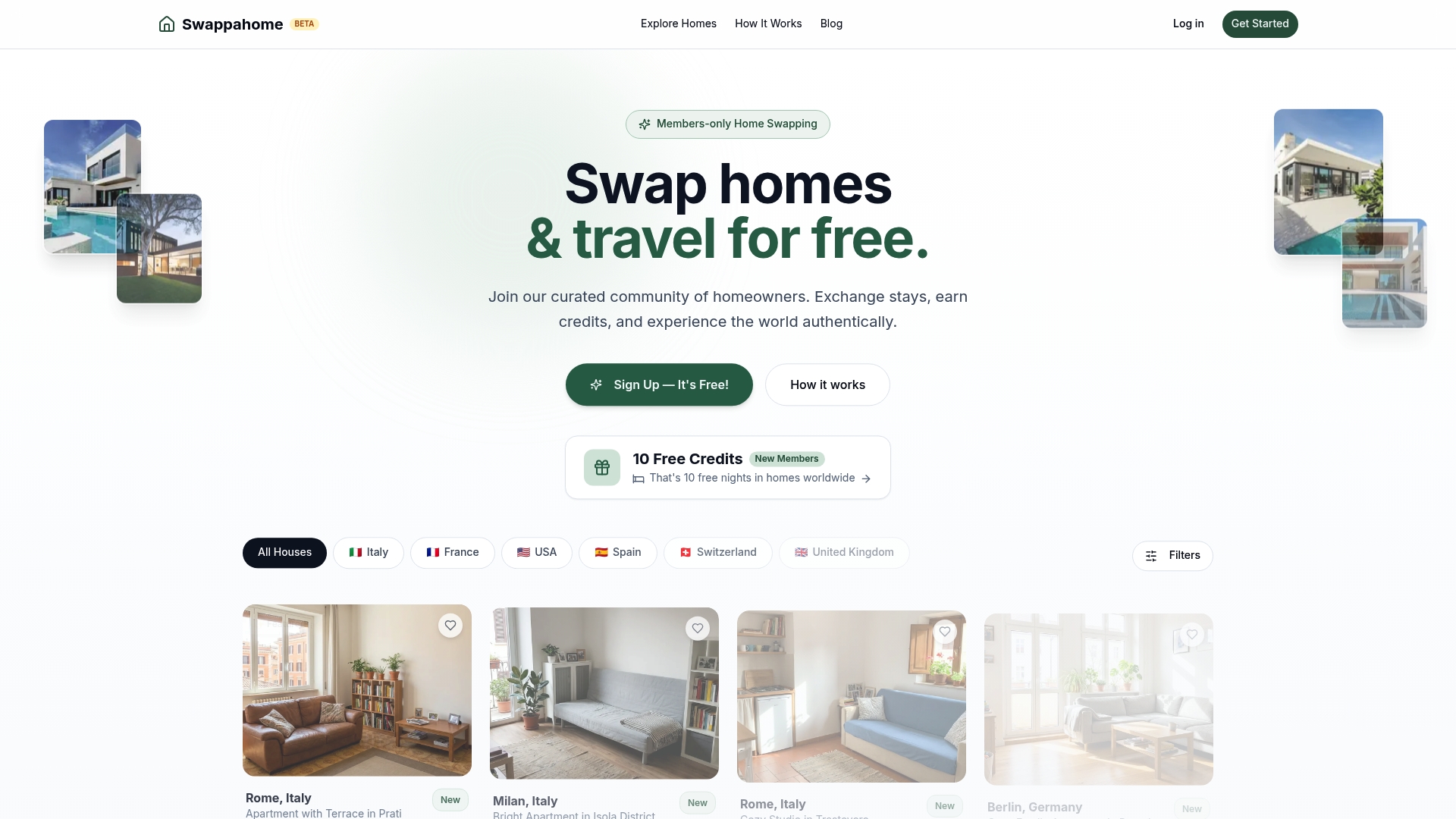 https://swappahome.com
The platform connects travelers across dozens of countries, with homes ranging from city apartments to countryside retreats. You list your home, earn credits by hosting, and use those credits to stay anywhere in the network. No nightly fees. No surprises. Just real homes and real communities waiting for you. Explore how it works and see which destinations are available for your next trip.
Frequently asked questions
How much can you actually save with home swapping?
Typical travelers save $5,000 to $15,000 per year, with savings growing the more trips you take, especially for families and longer stays where accommodation costs are highest.
Is the sharing economy safe for solo travelers?
Trust and safety risks are real, particularly for women in private spaces, but verified platforms with strong review systems reduce these risks significantly when you take time to vet hosts carefully.
Who is home swapping best for?
Home swapping works especially well for families needing space and kitchens, digital nomads on long stays, and frequent travelers who want meaningful experiences over standard hotel convenience.
Are there risks for property owners in sharing economy platforms?
Property damage and regulatory gaps are genuine concerns, but established platforms provide dispute resolution processes and insurance options that protect most homeowners effectively.
Recommended
- 7 Inspiring Examples of Sharing Economy Travel for Homeowners | SwappaHome Blog
- How community-led travel platforms unlock affordable adventures | SwappaHome Blog
- Difference Between Home Swapping and Airbnb: Real Savings | SwappaHome Blog
- Home Swapping vs Rentals: Real Savings for Travelers | SwappaHome Blog
- Why choose local car rental in Albania: save money

Published by
SwappaHome
SwappaHome Editorial Team
Home Exchange & Slow Travel Editorial
The SwappaHome Editorial Team brings together travel research, home-exchange community insights, and platform data to produce practical guides for first-time and experienced home swappers. Every article cites real platforms, current market rates, and verifiable city-level facts so readers can make informed decisions without guessing.
Ready to try home swapping?
Join SwappaHome and start traveling by exchanging homes. Get 7 free credits when you sign up!