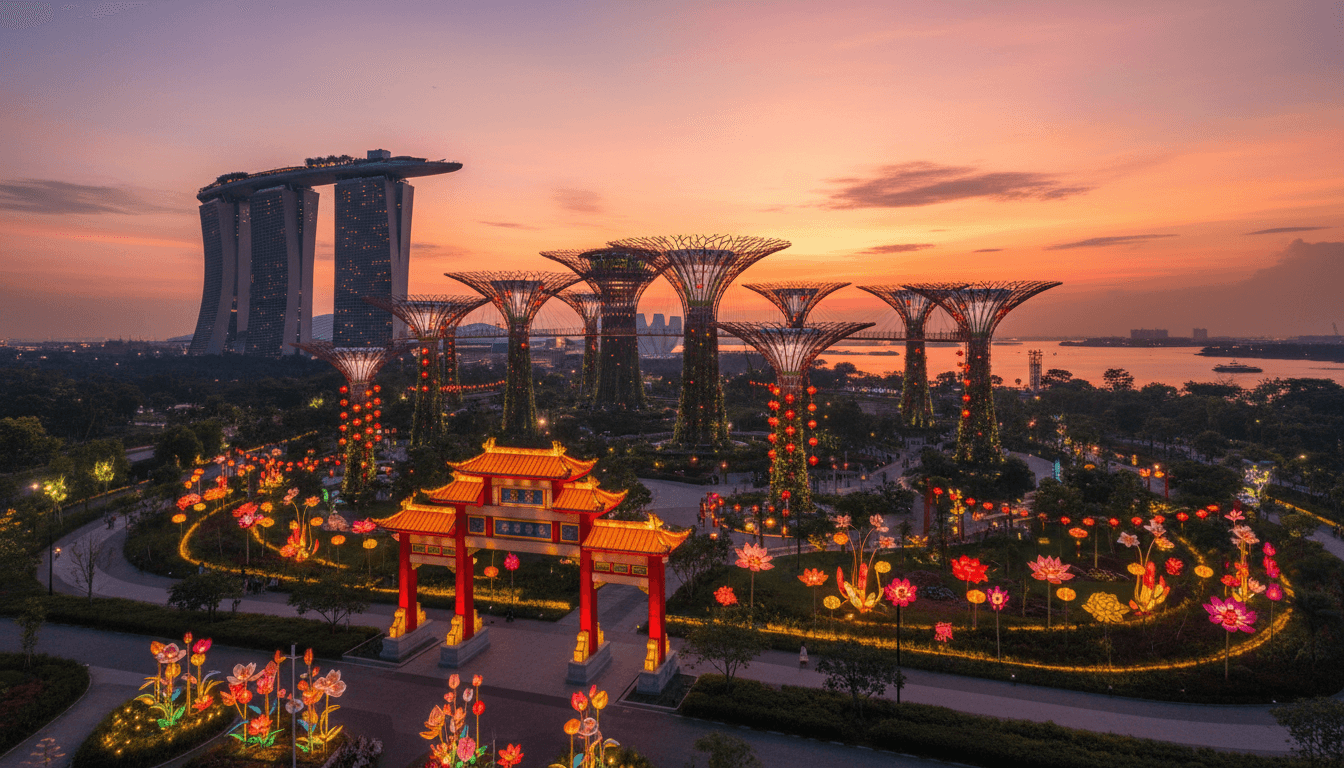
Singapore Festivals and Events: The Complete Home Swap Planning Calendar for 2025-2026

SwappaHome Editorial Team
Home Exchange & Slow Travel Editorial
Plan your Singapore home swap around the city-state's best festivals and events. From Chinese New Year in Chinatown to F1 night races at Marina Bay, this calendar covers it all.
You step off the MRT at Chinatown station during Mid-Autumn Festival, and the lanterns hit you before the humidity does. Thousands of illuminated structures stretch across Eu Tong Sen Street, transforming the ordinary into something that borders on dreamlike. Stay in a local home rather than a hotel room, and you're not just watching the celebration unfold—you're actually part of it.
Planning a home swap in Singapore around the city-state's festivals takes some strategic thinking. The Lion City packs an extraordinary number of celebrations into its 728 square kilometers, from the thunderous roar of Formula 1 cars tearing through Marina Bay to the quiet reverence of Vesak Day processions along Temple Street. Time it right, and you'll experience Singapore at its most vibrant. Time it wrong, and you might find yourself competing with 19 million annual visitors for accommodation during peak periods.
This calendar breaks down exactly when to book, what to expect, and how to secure the best exchanges throughout the year.
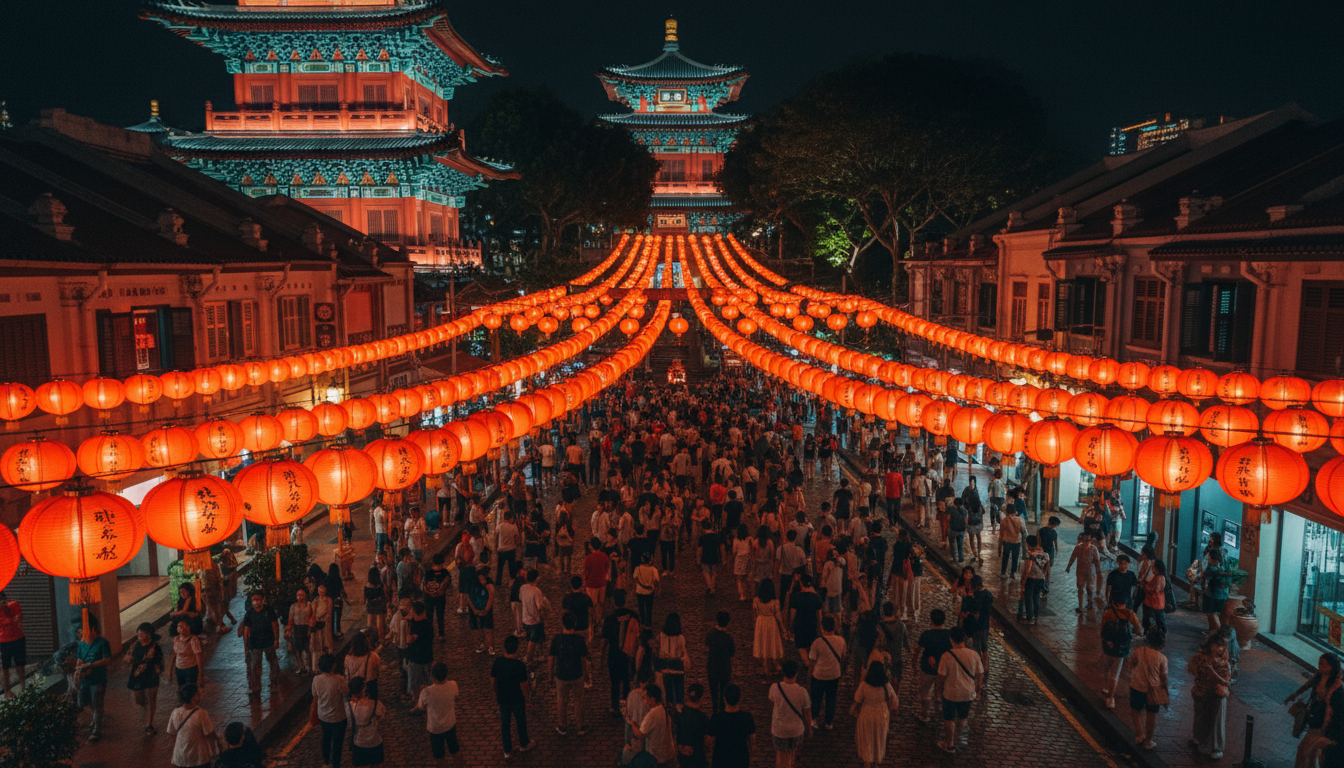 Aerial view of Singapores Chinatown district at night during Chinese New Year, with red lanterns str
Why Singapore's Festival Calendar Makes Home Swapping Essential
Here's the honest truth about Singapore accommodation: it's expensive. The average hotel room in the city center runs S$250-400 (roughly $185-295 USD) per night during regular periods. During major festivals? Those prices can spike 40-60% higher. A standard room at Marina Bay Sands during the F1 Grand Prix weekend regularly exceeds S$1,200 ($890 USD) per night.
Home swapping changes this equation entirely. SwappaHome members in Singapore typically list properties across neighborhoods like Tiong Bahru, Katong, and Holland Village—areas where you'd actually want to live, not just sleep. The credit system means you're paying the same whether you're staying during the quiet weeks of January or the madness of Chinese New Year.
The SwappaHome community in Singapore has grown steadily, with listings concentrated in the central region and East Coast. Most hosts are Singaporean professionals or long-term expats who genuinely know which hawker centers serve the best char kway teow and which MRT lines to avoid during rush hour.
January–February: Chinese New Year and the Peak Season Challenge
Chinese New Year (Late January–Mid February)
Chinese New Year in Singapore isn't just a holiday—it's the holiday. The city essentially shuts down for at least two days, with many businesses closing for a full week. Chinatown becomes a sea of red and gold, with the annual light-up along New Bridge Road and Eu Tong Sen Street drawing hundreds of thousands of visitors nightly.
For home swappers, this period presents both opportunity and challenge. Many Singaporean families travel during CNY (often to Malaysia, Indonesia, or further abroad), which means some listings become available specifically during this window. But demand from incoming travelers is equally intense.
Booking timeline: Request your swap 4-6 months in advance. Seriously. The SwappaHome community sees Singapore requests for CNY period surge starting in August.
What to expect: Hawker centers may have limited hours. The Chingay Parade (usually held the weekend after CNY) transforms the F1 pit building area into a massive celebration with floats, performers, and fireworks. River Hongbao at The Float @ Marina Bay features carnival rides, food stalls, and nightly fireworks displays.
Neighborhood tip: A home swap in Joo Chiat or Katong puts you in the heart of Peranakan culture, where the celebrations blend Chinese and Malay traditions in ways you won't see in Chinatown.
Thaipusam (Late January–Early February)
Thaipusam draws significantly smaller crowds than CNY but offers one of Singapore's most visually striking religious processions. Devotees carry kavadi (elaborate decorated structures) from Sri Srinivasa Perumal Temple on Serangoon Road to Sri Thendayuthapani Temple on Tank Road—a 4.5-kilometer journey that begins before dawn.
The procession route passes through Little India, making a home swap in the Farrer Park or Jalan Besar area ideal for witnessing this without fighting tourist crowds.
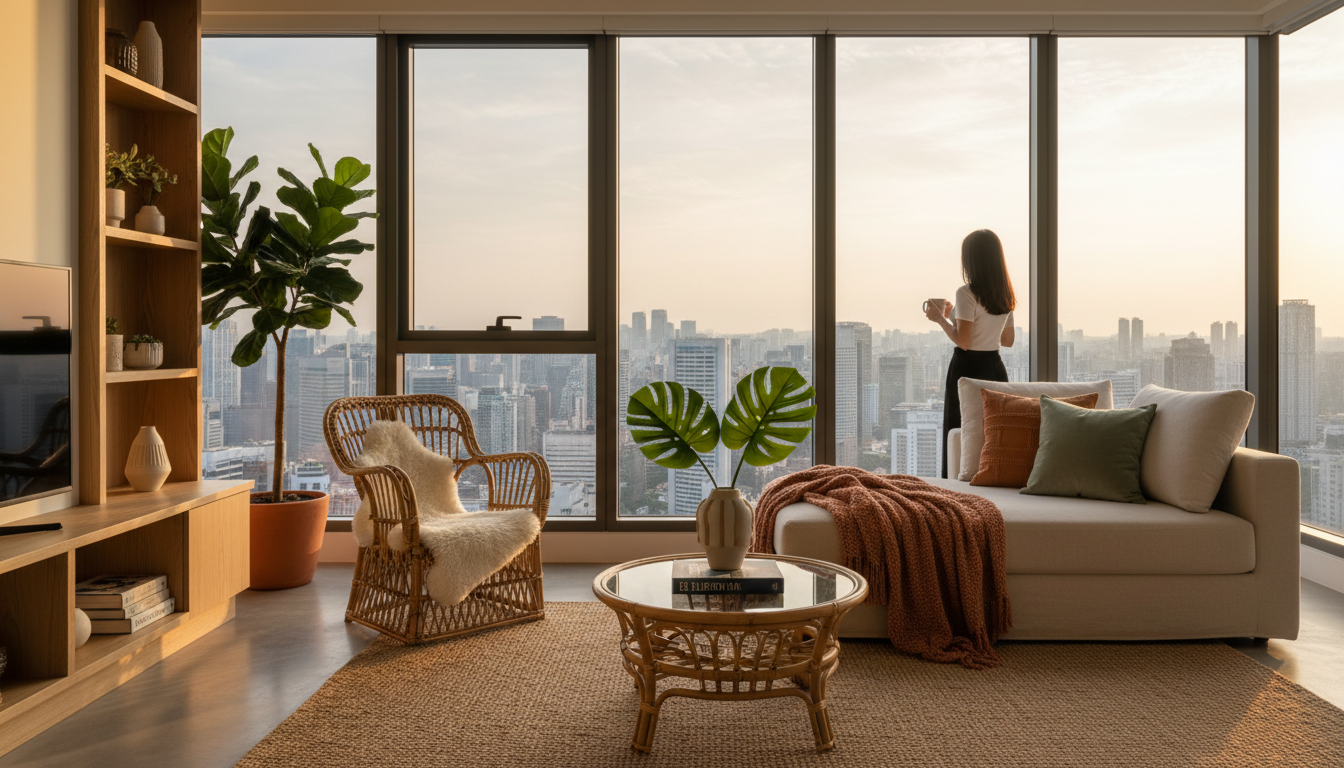 Interior of a modern Singapore HDB flat living room with floor-to-ceiling windows overlooking the ci
March–April: Shoulder Season Sweet Spot
These months represent the sweet spot for Singapore home swaps. The CNY rush has subsided, school holidays haven't started, and the weather is relatively stable (though "stable" in Singapore still means 30°C and humid).
Qing Ming Festival (Early April)
This ancestor-remembrance period isn't a public celebration but does affect local rhythms. Many Singaporean families visit Choa Chu Kang Cemetery or Mandai Crematorium, and you'll notice more subdued activity in traditionally Chinese neighborhoods.
Singapore International Jazz Festival (Late March–Early April)
Held at Marina Bay Sands, this festival draws international headliners and jazz enthusiasts from across Southeast Asia. Hotel prices near Marina Bay spike accordingly, making a home swap in nearby Tanjong Pagar or Telok Ayer particularly valuable—you're a 15-minute walk from the venue but paying nothing for accommodation.
Worth noting: The festival typically releases its lineup in January. If the headliners appeal to you, that's when to lock in your swap request.
May–June: Cultural Diversity on Display
Vesak Day (May, date varies with lunar calendar)
Singapore's Buddhist community marks the Buddha's birth, enlightenment, and death with candlelit processions, vegetarian feasts, and temple visits. The Buddha Tooth Relic Temple in Chinatown becomes a focal point, but the Kong Meng San Phor Kark See Monastery in Bishan offers a more immersive experience away from tourist crowds.
A home swap in the Bishan or Ang Mo Kio area puts you within walking distance of the monastery and gives you a glimpse of heartland Singapore—the HDB estates where 80% of Singaporeans actually live.
Hari Raya Puasa (Date varies annually)
The end of Ramadan transforms Geylang Serai into a month-long bazaar. The pasar malam (night market) along Sims Avenue is one of Singapore's largest, with food stalls, clothing vendors, and carnival rides stretching for blocks.
Accommodation reality check: Geylang itself has limited home swap options due to the neighborhood's complex reputation, but nearby Paya Lebar and Eunos offer excellent alternatives. The new Paya Lebar Quarter development has attracted young professionals whose apartments occasionally appear on SwappaHome.
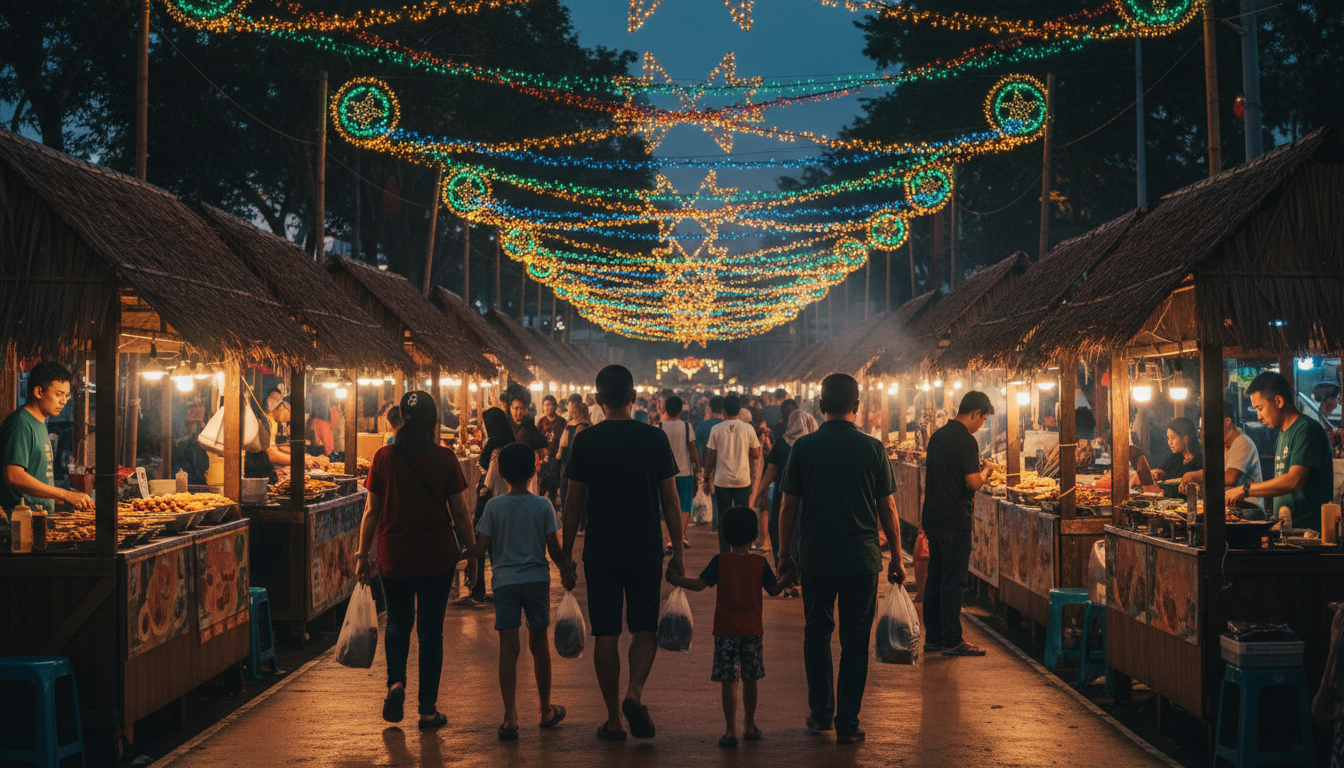 Geylang Serai bazaar during Hari Raya season at dusk, with colorful lights strung overhead, food sta
July–August: The Great Singapore Sale and National Day
Great Singapore Sale (June–August)
Once a shopping phenomenon that drew visitors from across Asia, the GSS has evolved into a more modest affair. That said, Orchard Road still sees significant foot traffic, and retailers do offer genuine discounts. If shopping is part of your Singapore agenda, this period works well.
From a home swap perspective, July and August represent moderate demand—lower than festival peaks but higher than true off-season months.
Singapore National Day (August 9)
National Day transforms the Marina Bay area into a celebration of Singaporean identity. The parade at the Padang features military displays, civilian performances, and a fireworks finale that lights up the entire waterfront.
Here's what seasoned travelers know: the best views aren't from the ticketed stands. A home swap in the Marina Bay Residences, The Sail @ Marina Bay, or any of the Tanjong Rhu condominiums offers unobstructed sightlines to the fireworks without the crowds.
Critical booking note: National Day falls during Singapore school holidays. Local families often travel abroad, creating swap opportunities—but international demand also increases. Aim to book 3-4 months ahead.
Singapore Food Festival (July)
This month-long celebration of Singaporean cuisine includes special menus at hawker centers, cooking demonstrations, and food trails through neighborhoods like Tiong Bahru and Joo Chiat. It's a lower-key festival compared to the major cultural celebrations, but for food-focused travelers, it's ideal.
A home swap during this period means you can actually cook some of what you're learning. Several SwappaHome listings in Singapore mention well-equipped kitchens—a rarity in a city where eating out is often cheaper than cooking.
September–October: The Mid-Autumn Festival and Formula 1
Mid-Autumn Festival (September–October, date varies)
The lantern displays along Chinatown's streets during Mid-Autumn Festival rival Chinese New Year for visual impact. The official light-up typically runs for about a month, with the festival itself falling on the 15th day of the eighth lunar month.
Mooncakes appear in every bakery and shopping mall—the queue at Tai Chong Kok along Sago Street can stretch for an hour during peak periods. Gardens by the Bay hosts special lantern displays that are less crowded than Chinatown and equally stunning.
Singapore Grand Prix (September, date varies)
The F1 night race is Singapore's marquee international event. The street circuit winds past Marina Bay Sands, through the Padang, and around the Esplanade, with cars screaming past at speeds exceeding 300 km/h under floodlights.
Accommodation during race weekend is the most competitive of the year. Hotels within viewing distance of the track charge premium rates—we're talking S$800-1,500+ per night for properties that normally run S$300.
The home swap advantage: Several SwappaHome listings in Tanjong Pagar and the CBD area offer balconies with partial track views. Even without direct sightlines, staying in a local home means you're not paying the F1 tax that hotels impose.
Booking timeline: This is the one event where 6+ months advance planning is genuinely necessary. Race dates are announced the previous year, so you can start your swap search early.
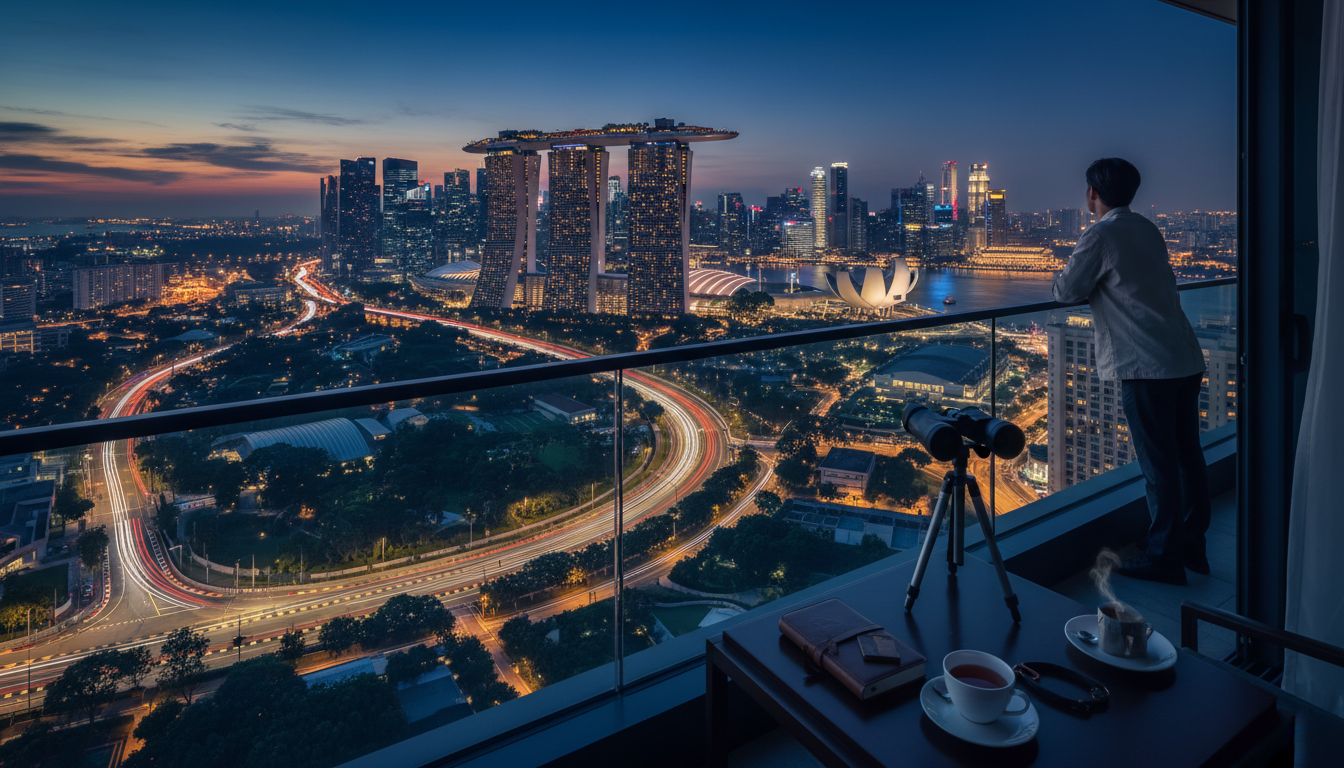 Singapore F1 night race viewed from a high-rise apartment balcony, showing the illuminated street ci
November–December: Festival Season Finale
Deepavali (October–November, date varies)
The Festival of Lights transforms Little India into a spectacle of color and illumination. The light-up along Serangoon Road and Race Course Road runs for about a month, with the festival itself marking the Hindu New Year.
Unlike Chinese New Year, Deepavali doesn't shut down the city—but Little India becomes significantly more crowded, especially on the festival day itself. The Mustafa Centre (Singapore's legendary 24-hour shopping complex) operates as usual but with longer queues.
Neighborhood recommendation: A home swap in Farrer Park or Lavender puts you within walking distance of the celebrations while offering easy MRT access to the rest of the city.
Christmas and New Year (December)
Singapore takes Christmas seriously despite its multicultural, majority-Buddhist/Taoist population. Orchard Road's Christmas light-up is an annual tradition, with each shopping mall competing to create the most elaborate displays.
New Year's Eve centers on Marina Bay, where the countdown celebration includes fireworks, concerts, and massive crowds. Secure a home swap with a Marina Bay view, and you've essentially won the accommodation lottery for this night.
December reality check: This is peak tourist season. Families travel, hotels fill up, and prices spike. However, many Singaporean professionals without children stay put during this period—their listings may be available when family-oriented properties are not.
Practical Planning: Singapore Home Swap Logistics
Understanding Singapore's Neighborhoods for Home Swaps
Singapore's compact size means you're never more than 45 minutes from anywhere by MRT. That said, neighborhood choice significantly impacts your festival experience.
Chinatown/Tanjong Pagar: Ground zero for Chinese New Year and Mid-Autumn Festival. Older shophouse apartments offer character; newer condos offer amenities. And here's the thing—SwappaHome's credit system means you pay the same regardless of timing or demand.
Little India/Farrer Park: Essential for Deepavali and Thaipusam. The area has seen significant gentrification, with new condos rising alongside traditional shophouses. Home swap options range from heritage units to modern apartments.
Katong/Joo Chiat: The Peranakan heartland offers a distinctly Singaporean experience. This neighborhood is further from the CBD but connected by the Thomson-East Coast MRT line. Excellent for travelers who want local character over central convenience.
Marina Bay/Downtown Core: Premium location for F1, National Day, and New Year's Eve. Listings here are fewer but highly desirable—worth requesting early if these events are your priority.
Tiong Bahru: Singapore's hipster neighborhood, known for its art deco architecture, independent cafes, and weekend farmers' market. A home swap here puts you in the most photogenic part of the city.
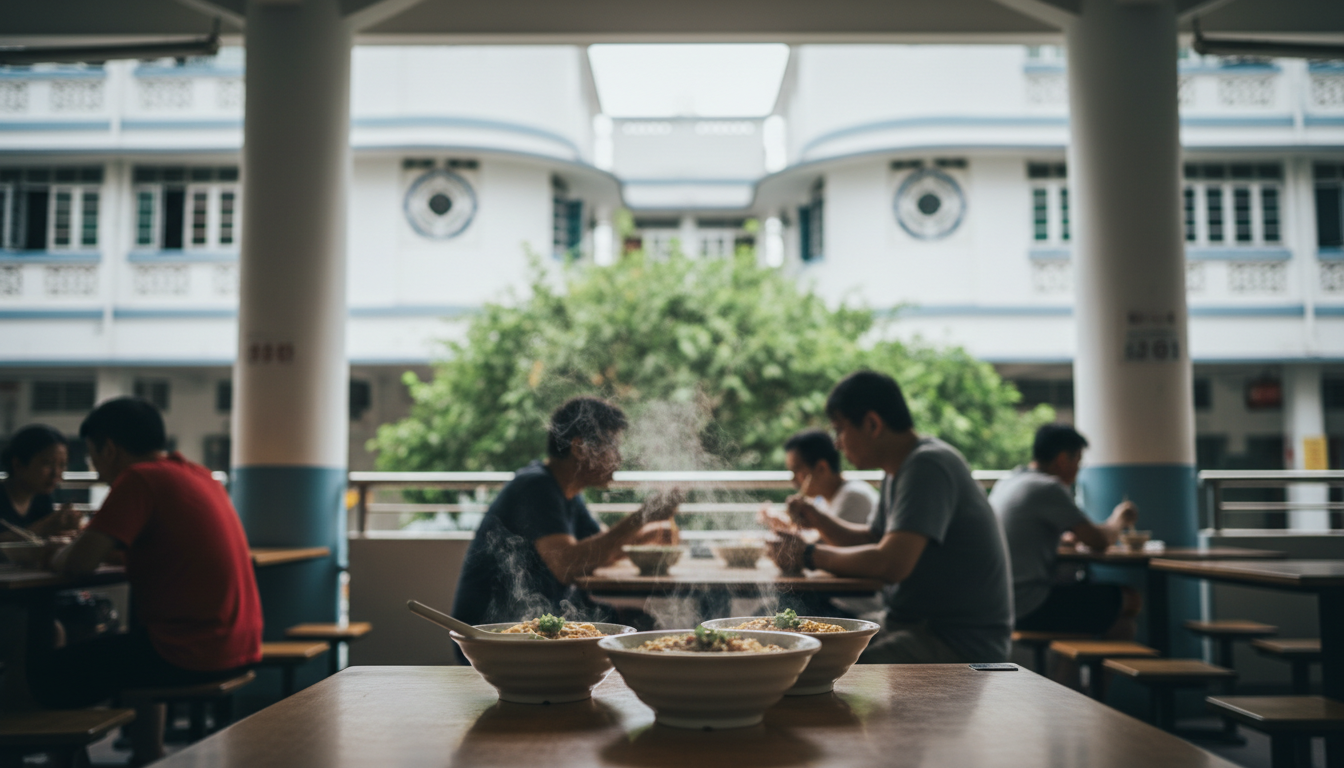 Morning scene at Tiong Bahru hawker center with locals eating breakfast, steam rising from bowls of
Transportation During Festival Periods
Singapore's MRT system runs extended hours during major festivals and events. During F1 weekend, certain stations near the circuit close, but alternative routes are well-signposted.
The EZ-Link card (Singapore's transit card) works on MRT, buses, and even some taxis. Your home swap host can likely leave one for you—a common courtesy in the SwappaHome community here.
Grab vs. Taxis: Grab (Southeast Asia's Uber equivalent) works throughout Singapore but surges significantly during major events. Regular metered taxis don't surge but can be harder to find. During F1 weekend, expect 2-3x normal Grab prices in the Marina Bay area.
Weather Considerations
Singapore sits one degree north of the equator. It's hot and humid year-round, with temperatures rarely dropping below 24°C or exceeding 34°C. The main variable is rain.
The northeast monsoon (November–January) brings heavier rainfall, often in intense afternoon thunderstorms. Chinese New Year can be particularly wet. The inter-monsoon periods (April–May, October–November) see more unpredictable weather patterns.
For outdoor festivals, morning events typically offer better weather than afternoon ones. The F1 night race specifically chose its timing partly to avoid the afternoon heat.
Visa and Entry Requirements
Most Western passport holders receive 30-90 day visa-free entry to Singapore. The immigration process at Changi Airport is famously efficient—often under 15 minutes from plane to taxi.
Singapore has strict rules about what you can bring in. Chewing gum is famously banned (though you can bring small quantities for personal use). Vaping devices are prohibited entirely. Cigarettes above the duty-free allowance (one opened pack) incur significant taxes.
Currency and Costs
The Singapore dollar (SGD) trades at roughly 0.74 USD as of early 2025. Credit cards are accepted almost everywhere, and ATMs are abundant.
Daily costs (beyond accommodation, which your home swap covers):
- Hawker center meal: S$4-8 ($3-6 USD)
- Restaurant dinner: S$25-60 ($18-44 USD)
- MRT ride: S$1-3 ($0.75-2.20 USD)
- Attraction entry (Gardens by the Bay, etc.): S$20-40 ($15-30 USD)
- Coffee at a specialty cafe: S$6-9 ($4.50-6.70 USD)
Month-by-Month Home Swap Demand Overview
January: High demand (CNY preparations), book 4-6 months ahead February: Very high demand (CNY period), book 4-6 months ahead March: Moderate demand, book 2-3 months ahead April: Moderate demand, book 2-3 months ahead May: Moderate demand, book 2-3 months ahead June: Moderate-high demand (school holidays), book 3-4 months ahead July: Moderate demand, book 2-3 months ahead August: High demand (National Day, school holidays), book 3-4 months ahead September: Very high demand (F1 weekend), book 6+ months ahead for race dates October: Moderate demand, book 2-3 months ahead November: Moderate-high demand (Deepavali), book 2-3 months ahead December: High demand (Christmas/NYE), book 3-4 months ahead
Making Your Singapore Home Swap Request Stand Out
Singapore hosts receive numerous swap requests, particularly during festival periods. The SwappaHome community here tends to be discerning—they're offering their homes in one of the world's most expensive cities, after all.
A few patterns that successful requesters follow:
Be specific about your dates and flexibility. "We're hoping to visit during Mid-Autumn Festival, ideally September 15-22, but could adjust by a few days if that helps" works better than "sometime in September."
Mention why you're visiting during that specific period. Hosts appreciate guests who understand and respect the cultural significance of festivals.
Offer something in return. Even if the host isn't planning to travel, mentioning your own listing and its features creates reciprocity potential for future exchanges.
Ask thoughtful questions. "Is your neighborhood affected by road closures during F1 weekend?" shows you've done research and respect the host's local knowledge.
The Festivals You Might Not Know About
Beyond the major celebrations, Singapore hosts numerous smaller festivals that offer authentic experiences without the crowds.
Pongal (January): A Tamil harvest festival celebrated in Little India with rice-boiling ceremonies and kolam (rice flour art) on sidewalks.
Hungry Ghost Festival (August-September): The seventh lunar month sees offerings, opera performances, and elaborate dinners throughout Chinese neighborhoods. Locals advise against swimming, getting married, or moving house during this period—useful cultural context for your stay.
Nine Emperor Gods Festival (September-October): Centered on the Kiu Ong Yah Temple in Upper Serangoon, this Taoist festival includes vegetarian feasts and processions.
Thaipusam (January-February): Already mentioned, but worth emphasizing—this is one of the most visually striking religious events you'll witness anywhere.
Final Thoughts on Singapore Festival Planning
Singapore rewards the prepared traveler. The city-state's efficiency extends to its festival calendar—events run on schedule, public transport handles crowds remarkably well, and the infrastructure rarely lets you down.
Home swapping amplifies these advantages. Instead of retreating to a generic hotel room after a day of festival crowds, you return to a real home in a real neighborhood. You can cook the ingredients you bought at the Geylang Serai bazaar. You can watch the National Day fireworks from a balcony with a glass of wine. You can ask your host where the locals actually go for supper after the tourist crowds disperse.
The SwappaHome community in Singapore continues to grow, with new listings appearing regularly across the city's diverse neighborhoods. Whether you're timing your visit for the roar of F1 engines at Marina Bay or the quiet glow of lanterns in Chinatown, there's likely a home waiting for you.
Start your search early, be specific about your festival interests, and remember: in Singapore, the best experiences aren't in the tourist zones. They're in the neighborhoods where people actually live.
Frequently Asked Questions
When is the best time to home swap in Singapore for festivals?
The optimal window depends on which festivals interest you most. For Chinese New Year (late January–February), book 4-6 months ahead. For the F1 Grand Prix (September), 6+ months is advisable. The March–April shoulder season offers easier booking with fewer crowds, though fewer major festivals occur during this period.
How much can I save with a Singapore home swap versus hotels?
During regular periods, Singapore hotels average S$250-400 ($185-295 USD) per night in central areas. During major festivals like F1 weekend or Chinese New Year, prices spike to S$500-1,200+ ($370-890 USD). A two-week home swap during F1 could save you $2,500-5,000 compared to hotel accommodation, using SwappaHome's credit system where every night costs the same regardless of timing.
Is Singapore safe for home swapping during festival periods?
Singapore consistently ranks among the world's safest cities. Festival periods bring larger crowds but no significant safety concerns. The SwappaHome community's review system helps ensure trustworthy exchanges, and Singapore's strict laws mean property crime rates remain extremely low. Members are encouraged to arrange their own travel insurance for personal belongings.
Which Singapore neighborhood is best for experiencing local festivals?
Chinatown (for Chinese New Year and Mid-Autumn Festival), Little India (for Deepavali and Thaipusam), and Geylang Serai area (for Hari Raya) each offer immersive experiences for their respective celebrations. For F1 and National Day, Marina Bay or Tanjong Pagar provide proximity to the action. Tiong Bahru offers a central location with authentic local character year-round.
Can I find last-minute home swaps in Singapore during major festivals?
Last-minute availability during peak festivals is rare but not impossible. Cancellations do occur, and some hosts list properties on short notice when their own travel plans solidify. Check SwappaHome regularly in the weeks before your target dates, and consider setting up alerts for new Singapore listings. Having flexibility on exact dates significantly improves your chances.

Published by
SwappaHome
SwappaHome Editorial Team
Home Exchange & Slow Travel Editorial
The SwappaHome Editorial Team brings together travel research, home-exchange community insights, and platform data to produce practical guides for first-time and experienced home swappers. Every article cites real platforms, current market rates, and verifiable city-level facts so readers can make informed decisions without guessing.
Ready to try home swapping?
Join SwappaHome and start traveling by exchanging homes. Get 7 free credits when you sign up!
Related articles
Bachelor and Bachelorette Parties in Singapore: The Complete Home Swap Group Guide for 2026
Planning a bachelor or bachelorette party in Singapore? Discover how home swapping lets groups of 6-12 stay together in luxury condos, saving thousands while partying in Marina Bay.
Cycling in Lisbon: 7 Home Swap Bike Tour Itineraries for Every Rider
Discover the best cycling routes in Lisbon with these home swap bike tour itineraries—from waterfront paths to hilltop adventures, all starting from your borrowed home.
Graduation Trip to Barcelona: How Home Swapping Gives New Graduates the Ultimate Celebration
Planning a graduation trip to Barcelona? Discover how home swapping lets new graduates explore Spain's most vibrant city without the hostel crowds or hotel costs.