
Summer Home Swap in Budapest: Your Complete Guide to the Best Time to Visit

SwappaHome Editorial Team
Home Exchange & Slow Travel Editorial
Planning a summer home swap in Budapest? Discover when to visit, what to expect, and how to experience Hungary's capital like a local—all while staying for free.
The first time I saw the Danube at golden hour from a stranger's apartment balcony in Buda, I understood why people fall hard for this city. It was late June, the air smelled like linden blossoms and someone's paprikás csirke drifting up from a kitchen below, and I remember thinking: this is why I home swap.
A summer home swap in Budapest remains one of my most recommended experiences for anyone who's tired of generic hotel rooms and wants to actually live somewhere for a while. Hungary's capital is wildly underrated, absurdly affordable, and during summer? It transforms into this vibrant, outdoor-living paradise that rivals any Mediterranean destination—without the Mediterranean prices.
But here's the thing about Budapest summers: timing matters more than you'd think. Get it right, and you're swimming in thermal baths at sunset, catching outdoor concerts in ancient courtyards, and eating the best lángos of your life at a ruin bar. Get it wrong, and you're melting in 40°C heat with half of Europe's tour groups.
So let me break down exactly when to plan your summer home swap in Budapest, what you'll actually experience, and how to make the most of staying in someone's real Hungarian home.
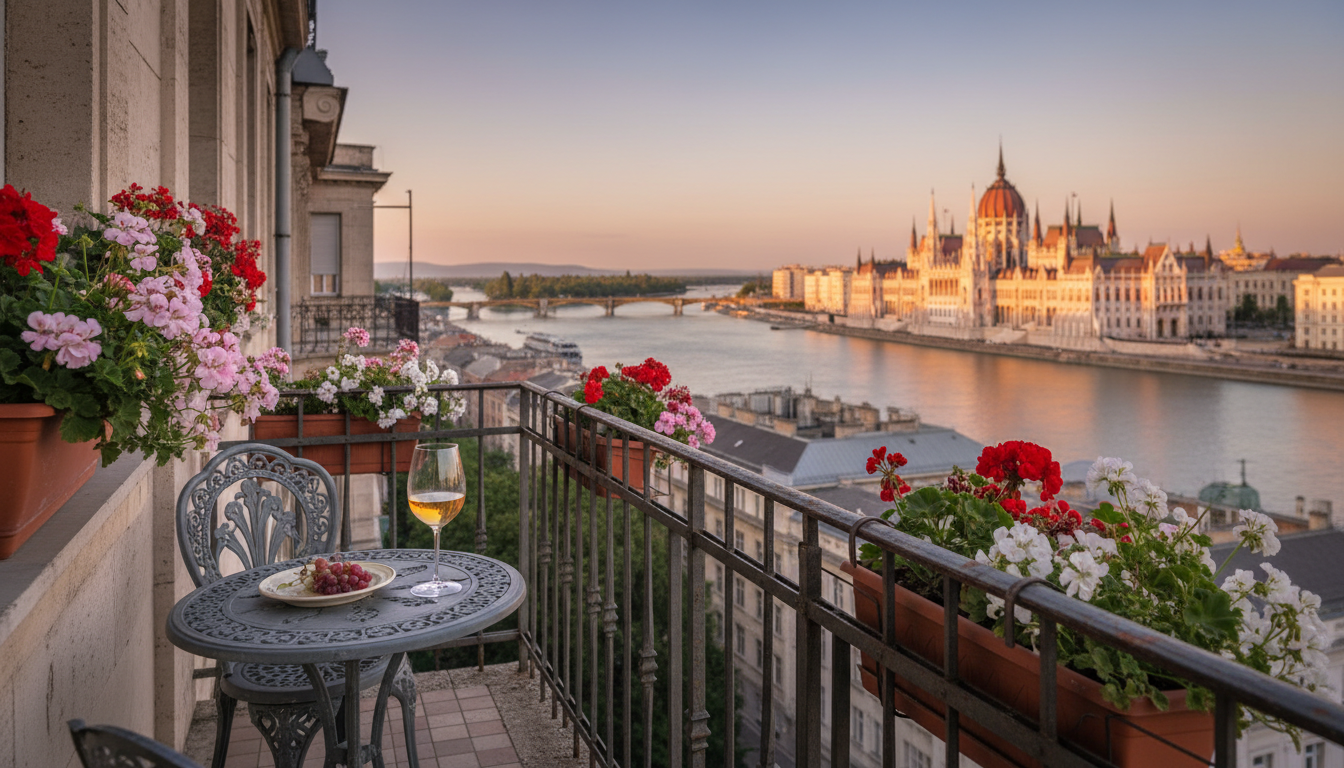 Golden hour view over the Danube from a residential balcony in Buda, with the Parliament building gl
Why Budapest is Perfect for Summer Home Swapping
I've done home exchanges in 25 countries now, and Budapest consistently ranks in my top five for summer stays. There are a few reasons it works so well.
The housing stock, for one. Budapest has these incredible apartments—high ceilings, parquet floors, those massive windows that Europeans do so well. Many buildings date from the late 1800s Austro-Hungarian era, which means you're often staying in spaces with genuine architectural character. I once swapped into a place in the VII district (the old Jewish Quarter) with original Art Nouveau tiles in the entryway. No boutique hotel could match that.
Then there's the fact that Hungarians travel in summer. Like, really travel. The country essentially empties out in August as locals head to Lake Balaton, Croatia, or anywhere with a beach. This means tons of Budapest apartments become available for home exchange right when you want to visit.
And—this matters—the cost of living means your credits go further. On SwappaHome, you're spending 1 credit per night regardless of location, but the experience you get in Budapest rivals cities where you'd pay $300+ per night for a hotel. You're essentially getting Paris-level beauty at a fraction of typical travel costs.
The thermal bath culture alone makes summer home swapping here worthwhile. Imagine waking up in your borrowed apartment, making coffee in someone's kitchen, then walking ten minutes to a 500-year-old bathhouse. That's just a Tuesday in Budapest.
Best Time for a Summer Home Swap in Budapest: Month-by-Month
Not all summer months are created equal here. Let me give you the honest breakdown.
June: The Sweet Spot
If I had to pick one month for a Budapest home exchange, it's June. Every time.
Temperatures hover around 25-28°C (77-82°F)—warm enough for outdoor everything, cool enough to actually walk around and explore. The days are impossibly long, with sunset around 9 PM giving you these extended golden evenings perfect for Margaret Island picnics or rooftop bar hopping.
June also hits the cultural sweet spot. The Budapest Summer Festival kicks off, meaning free concerts in courtyards, open-air cinema, and events scattered across the city. I caught a jazz performance in a crumbling palace courtyard during my first June here—completely free, completely magical.
The catch? June is when savvy travelers book, so start your home swap search early. I'd recommend reaching out to potential hosts on SwappaHome at least 2-3 months ahead.
July: Peak Season Reality
July brings the heat—both temperature-wise and tourist-wise. Expect 30-35°C (86-95°F) regularly, with occasional spikes above 38°C. The thermal baths become less "relaxing soak" and more "survival strategy."
That said, July has its advantages. The Sziget Festival preparations begin, ruin bars hit their stride, and the city's outdoor pools (like Palatinus on Margaret Island) become the social center of Budapest life. If you can handle heat and crowds, July delivers peak summer energy.
For home swapping specifically, July offers excellent availability. Many Hungarian families leave for vacation, making their apartments available. I've noticed more family-sized homes—3 bedrooms, full kitchens, sometimes even gardens in the Buda hills—pop up in July.
August: The Great Exodus
August in Budapest is... interesting. The first half brings Sziget Festival (usually around August 10-15), which transforms the city. If you're into massive music festivals, this is your moment. If you're not, maybe avoid that specific week—accommodation of any kind becomes scarce and expensive.
Post-Sziget August, though? The city belongs to you. Locals have fled, tourist numbers drop slightly from July peaks, and you get this strange, almost empty-city feeling. Some restaurants close for owner vacations, but the ones that stay open are grateful for your business.
Temperatures remain high—often the hottest month—so plan your days around early mornings and late evenings. The local rhythm shifts to long lunches, afternoon naps, and nighttime everything.
 Crowded outdoor pool at Szchenyi Thermal Bath on a July afternoon, steam rising from the yellow neo-
What to Expect from Your Budapest Home Exchange
Staying in someone's actual Budapest apartment differs from a hotel in ways both obvious and subtle. Here's what I've learned from multiple swaps here.
The Neighborhoods That Work Best
Location matters enormously in Budapest, and where your home swap lands you will shape your entire experience.
District V (Belváros) puts you in the absolute center—walking distance to Parliament, the Basilica, and the Danube promenade. Apartments here tend toward smaller and pricier (in hotel terms), but for home swapping, you're just spending your 1 credit per night regardless. The downside: it's touristy, and you'll hear more English than Hungarian on the streets.
District VII (Erzsébetváros) is my personal favorite for summer stays. This is the old Jewish Quarter, now home to the famous ruin bars, the best street food, and an energy that doesn't quit until 4 AM. Apartments here often have that crumbling-grandeur aesthetic—slightly worn but full of character. The Szimpla Kert ruin bar is here, along with dozens of smaller spots.
District VI (Terézváros) offers a nice middle ground. Andrássy Avenue runs through it (Budapest's Champs-Élysées equivalent), giving you easy access to the Opera House, Hero's Square, and the City Park thermal baths. More residential feeling than V or VII, which I actually prefer for longer stays.
Buda side (Districts I, II, XI, XII) delivers a completely different experience. Quieter, hillier, more residential. If your home swap lands you in Buda, expect to use the tram more but enjoy a more authentic neighborhood feel. The Castle District in District I is stunning but very touristy; the hills of District II feel like a different city entirely.
What Hungarian Homes Are Actually Like
A few things consistently surprised me about Budapest apartments.
The windows. Hungarians are obsessed with proper ventilation, so expect massive windows with multiple opening configurations. Learn the system—there's usually a way to tilt them for airflow without fully opening. Summer nights, this becomes essential since not all apartments have air conditioning.
Speaking of AC: don't assume. Many beautiful old buildings don't have it, relying instead on thick walls and cross-ventilation. Always confirm with your host before booking a July or August swap. Some hosts have portable AC units; some just have fans.
The kitchens are usually fully equipped but compact. Hungarian cooking happens, so you'll find proper pots and pans, but counter space might be limited. Most apartments have washing machines (often in the bathroom, European-style) but dryers are rare—you'll hang-dry on a rack or balcony line.
Shoes off at the door. This is non-negotiable in Hungarian homes. Many hosts leave house slippers for guests.
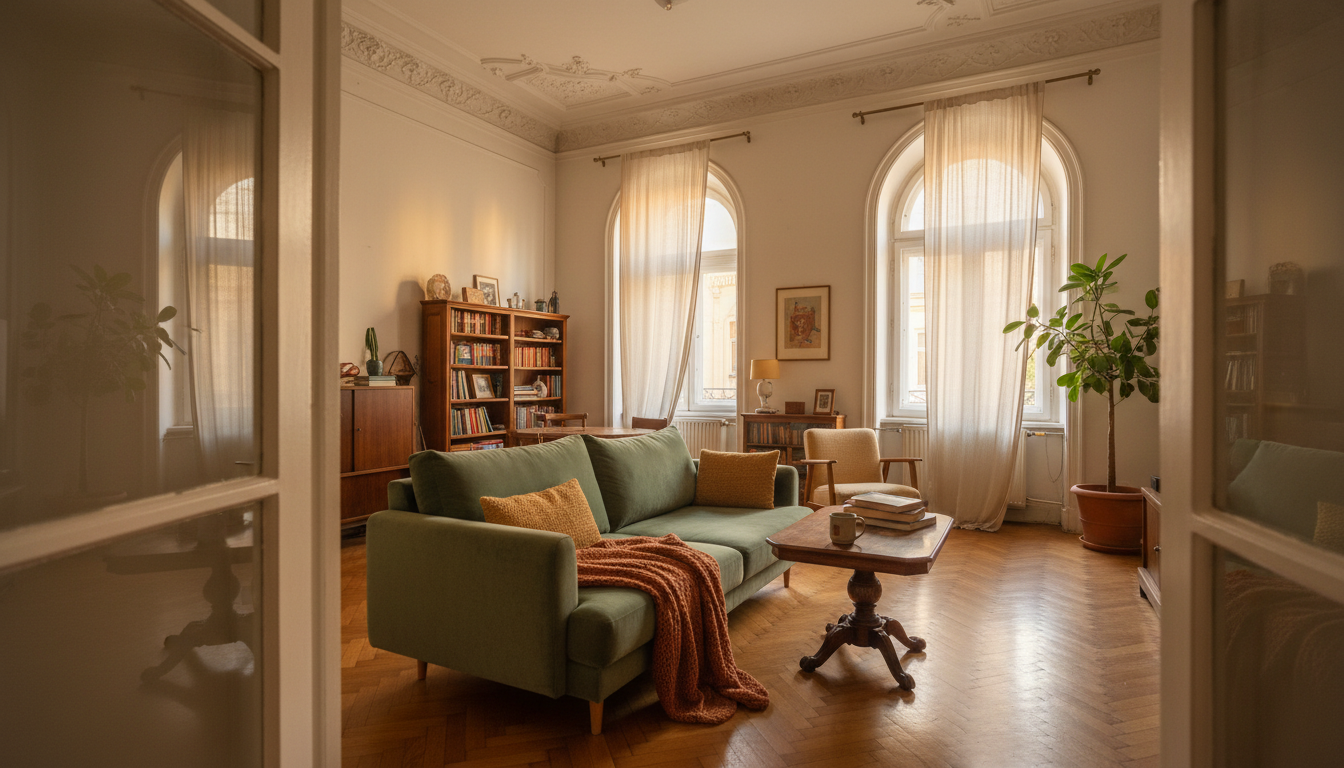 Interior of a typical Budapest apartment in District VIIhigh ceilings with ornate molding, parquet f
Summer Activities You Can Only Do with a Home Base
Here's where home swapping transforms from "budget accommodation" to "completely different travel experience."
The Thermal Bath Routine
With a hotel, you visit the thermal baths once, maybe twice. With a home base and a full kitchen? You develop a routine.
My Budapest summer ritual: wake up around 7 AM, make coffee in the apartment, walk to Széchenyi or Gellért baths right when they open (6 AM for Széchenyi, 6 AM for Gellért). The morning crowd is almost entirely locals doing their daily soak before work. You'll see the same faces, start nodding hello, maybe even get invited into a chess game.
Entry costs around 7,500-9,000 HUF ($20-25 USD) for a day pass, but if you're staying a week or more, look into the monthly passes or multi-entry tickets. Your host might even have tips on which baths are less crowded when.
After the bath, I'd walk home through the waking city, stop at a small bakery for fresh kifli (crescent rolls), and have a proper breakfast in the apartment. This rhythm—impossible with a hotel checkout looming—is what makes home swapping feel like living somewhere.
Market Shopping and Cooking
The Great Market Hall (Nagyvásárcsarnok) is touristy but genuinely excellent. Go early on a weekday morning for the real experience. The ground floor has produce, meat, and cheese vendors; upstairs is more souvenirs and lángos stands.
But honestly? The smaller neighborhood markets deliver better value and atmosphere. Lehel Market in District XIII, Fény Street Market in Buda near Mammut mall, or the Rákóczi Square market in District VIII—these are where actual Hungarians shop.
With a kitchen, you can buy fresh Hungarian paprika (the real stuff, not tourist-trap powder), túró (a fresh cheese essential for Hungarian cooking), seasonal produce—summer means peppers, tomatoes, and stone fruits—kolbász (sausages) for easy dinners, and local wines for a fraction of restaurant prices.
A week's worth of groceries runs about 15,000-25,000 HUF ($40-70 USD) depending on how much you cook. Compare that to eating every meal out.
The Ruin Bar Experience, Done Right
Ruin bars are Budapest's gift to nightlife—abandoned buildings transformed into sprawling, eclectic bars filled with mismatched furniture, art installations, and a vibe that defies description.
Szimpla Kert is the original and still worth visiting, but it's become extremely touristy. With local knowledge (ask your home swap host), you'll find the smaller spots: Instant-Fogas, Anker't, or the constantly changing pop-up bars in District VII.
Summer transforms these spaces. Most have outdoor areas or courtyards that become the main attraction. Arrive around 8-9 PM when it's still light, grab a cheap beer (600-900 HUF / $1.70-2.50), and watch the night unfold.
Having an apartment nearby means you can actually enjoy this. Pop home to change, drop off bags, take a break between venues. No lugging everything around or worrying about hotel curfews.
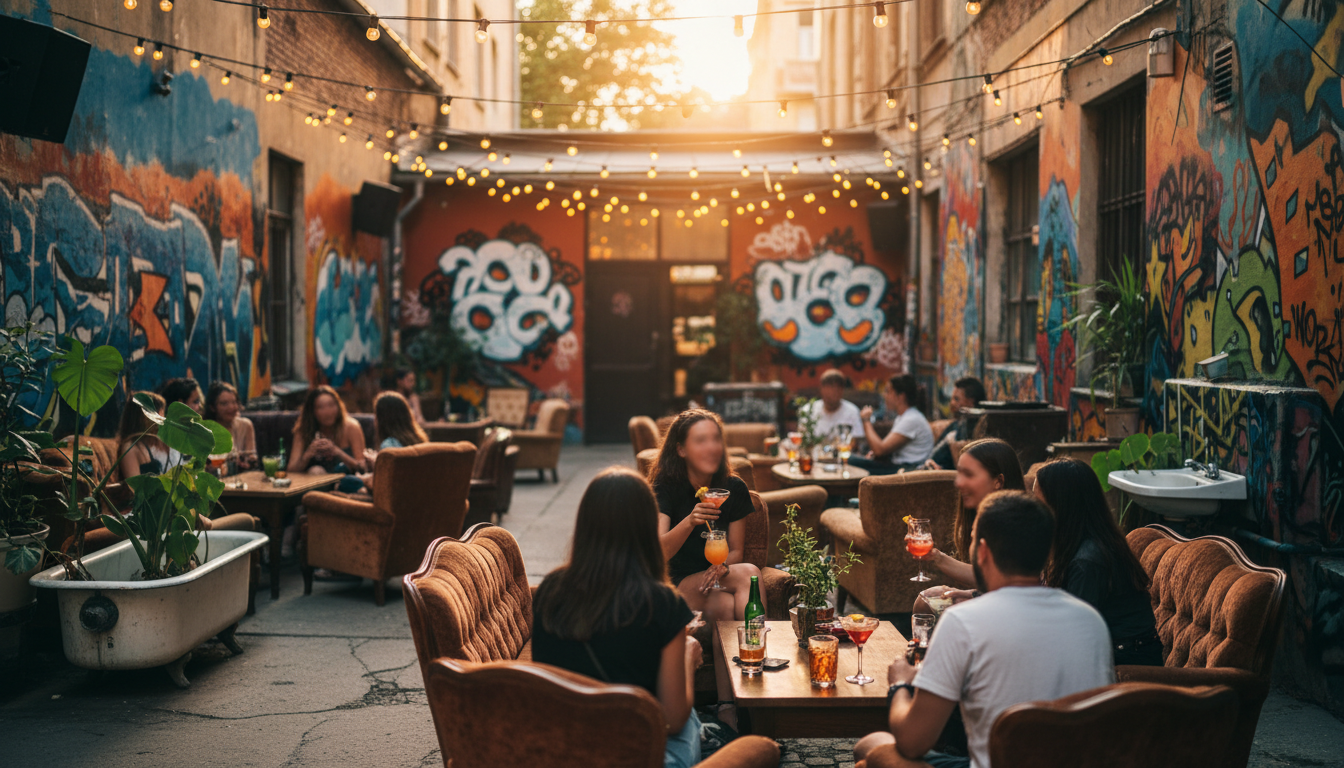 Evening scene in a Budapest ruin bar courtyardstring lights overhead, mismatched vintage furniture,
Practical Tips for Your Summer Budapest Home Swap
After multiple summers here, I've accumulated some hard-won wisdom.
Transportation Without a Car
You absolutely don't need a car in Budapest. The public transport system—trams, metro, buses—is excellent and cheap. A monthly pass costs about 9,500 HUF ($26 USD), or you can buy single tickets for 450 HUF ($1.25) each.
The trams are particularly wonderful in summer. Tram 2 runs along the Pest side of the Danube with Parliament views; trams 4 and 6 circle the Grand Boulevard and run 24 hours.
Budapest is also extremely walkable, and in summer, you'll want to walk. The neighborhoods reveal themselves on foot—hidden courtyards, small parks, that perfect coffee shop you'd never find otherwise.
Dealing with the Heat
Budapest summers get genuinely hot. A few survival strategies:
Plan your outdoor activities for morning (before 11 AM) or evening (after 6 PM). The midday hours are for museums, cafés, or retreating to your air-conditioned (hopefully) apartment.
The Danube islands—Margaret Island especially—offer relief. The shade from massive old trees drops temperatures noticeably, and there's always a breeze off the water.
Ice cream shops (fagylaltozó) are everywhere and excellent. Budget about 500-800 HUF ($1.40-2.20) per scoop. Gelarto Rosa near the Basilica does flower-shaped scoops that are Instagram-famous but actually good.
Stay hydrated. Tap water in Budapest is perfectly safe and actually quite good—fill a bottle before you head out.
Money Matters
Hungary uses the forint (HUF), not the euro. As of my last visit, roughly 360 HUF = $1 USD, though this fluctuates.
Cards are widely accepted in central areas, but smaller shops, market vendors, and some ruin bars prefer cash. ATMs are everywhere; avoid the Euronet ones that charge terrible rates.
Budget roughly: coffee runs 600-1,200 HUF ($1.70-3.30), beer at a bar is 700-1,500 HUF ($2-4), lunch at a local spot costs 2,500-4,500 HUF ($7-12), a nice dinner runs 8,000-15,000 HUF ($22-42), and thermal bath entry is 7,500-9,000 HUF ($20-25).
Your home swap eliminates accommodation costs entirely, so even with a generous daily budget, Budapest remains remarkably affordable.
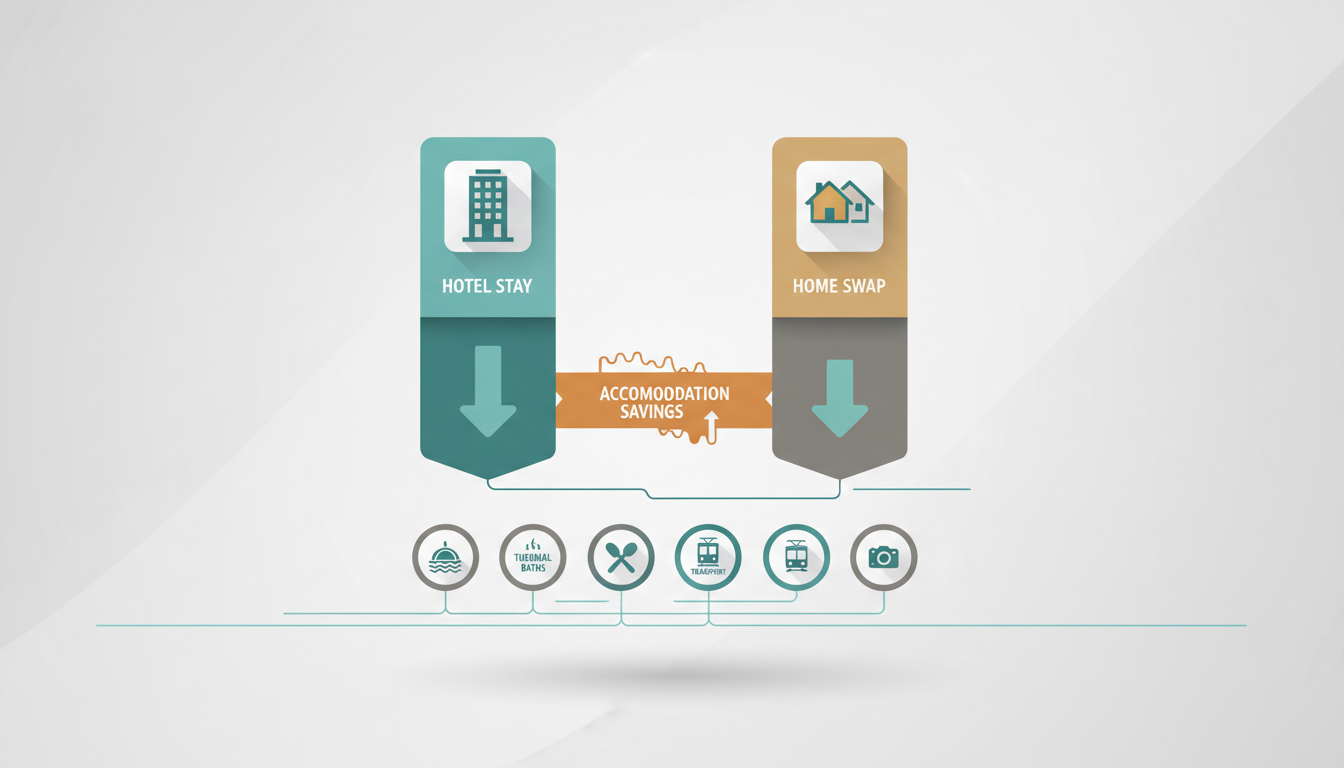 Comparison infographic showing typical summer trip costshotel stay vs home swap in Budapest over 10
Making Your Budapest Home Exchange Work
A few specific tips for the SwappaHome side of things.
Finding the Right Match
Start your search early—ideally 3-4 months before your summer trip. Filter for Budapest listings and read the descriptions carefully. Look for air conditioning status (critical for July/August), which district they're in, balcony or outdoor space (makes summer evenings magical), washing machine access, and whether they have specific house rules.
The photos tell you a lot, but the description tells you more. Hosts who write detailed, personal descriptions tend to be the most communicative and helpful.
Communication That Works
Hungarians can seem reserved initially but warm up quickly. When reaching out through SwappaHome's messaging, be specific about your dates, mention something you noticed about their place, and share a bit about yourself.
Ask practical questions: Is there AC? What's the neighborhood like? Any local recommendations? Most hosts love sharing their city and will send you a list of favorite spots.
Exchange phone numbers (WhatsApp works well) for arrival coordination. Hungarian hosts are generally punctual and appreciate the same.
Being a Good Guest
The usual home swap etiquette applies, but a few Hungary-specific notes:
Leave the apartment as you found it—Hungarians tend toward tidiness. Take out trash, wash dishes, strip the beds if your host prefers.
A small gift isn't expected but appreciated. I usually bring something from my home city—local coffee, chocolate, or a small souvenir.
Respect quiet hours. Hungarian apartment buildings often have rules about noise after 10 PM. Summer nights make it tempting to have balcony drinks until late—just keep the volume reasonable.
Write a genuine review afterward. The SwappaHome community runs on trust, and detailed reviews help everyone.
Day Trips Worth Taking
With a home base in Budapest, you can explore beyond the city without the hassle of moving hotels.
Szentendre (40 minutes by HÉV suburban train, ~750 HUF/$2) is a charming artist town on the Danube bend. Cobblestone streets, galleries, Serbian Orthodox churches, and excellent ice cream. Go on a weekday to avoid crowds.
Lake Balaton (1.5-2 hours by train, ~3,500 HUF/$10) is Hungary's summer playground. The southern shore has beaches and party vibes; the northern shore (Tihany, Balatonfüred) offers more charm. Easily doable as a day trip, though you might want to stay overnight.
Eger (2 hours by train, ~3,200 HUF/$9) has a castle, a beautiful baroque old town, and the famous Valley of the Beautiful Women—a horseshoe of wine cellars where you can taste Egri Bikavér (Bull's Blood) directly from the barrel.
Visegrád and Esztergom (1-1.5 hours by bus or boat) along the Danube Bend offer medieval castle ruins and Hungary's largest basilica. The boat trip up the Danube is particularly scenic in summer.
The Honest Downsides
I'd be doing you a disservice if I only painted the rosy picture.
Budapest summers can be brutally hot. If you're sensitive to heat and your home swap doesn't have AC, July and August will test you. I've had swaps where I basically lived at the thermal baths and air-conditioned cafés during peak afternoon hours.
The language barrier is real. Hungarian is notoriously difficult, and while English is common in tourist areas, you'll encounter situations—small shops, outer neighborhoods, older locals—where communication gets creative. Learn "köszönöm" (thank you), "szia" (hi/bye casual), and "beszél angolul?" (do you speak English?).
Some apartment buildings show their age. Elevators might be tiny or nonexistent. Plumbing can be quirky. The charm of those 19th-century buildings sometimes comes with 19th-century infrastructure challenges.
And August specifically: many local restaurants and shops close for summer vacation. Your favorite café might be shuttered for three weeks. The city functions, but with a slightly reduced rhythm.
Why I Keep Coming Back
I've done summer home swaps in Barcelona, Lisbon, Copenhagen, and a dozen other cities. Budapest keeps pulling me back.
Maybe it's the thermal baths—there's something about starting your day floating in 38°C water in a building older than most American cities. Maybe it's the food, which doesn't get the attention it deserves (someone needs to write an ode to Hungarian sour cherry soup). Maybe it's the way the city straddles being deeply European and entirely its own thing.
Mostly, I think it's how home swapping here makes you feel like a temporary local. You have your neighborhood bakery, your preferred tram route, your sunset spot along the Danube. You're not visiting Budapest—you're living there, just for a little while.
That converted barn in Tuscany remains my favorite swap ever. But my Budapest summers come close.
If you're considering your first home exchange or looking for somewhere new, check out the Budapest listings on SwappaHome. Start with those 7 free credits, find an apartment with a balcony and (please, trust me) air conditioning, and give yourself at least a week. You'll need it—not because there's so much to see, but because the city rewards slow mornings and late nights, and you'll want time to settle into its rhythm.
The Danube at golden hour will be waiting.
Frequently Asked Questions
What is the best month for a summer home swap in Budapest?
June hits that sweet spot—warm temperatures around 25-28°C, daylight stretching until 9 PM, and noticeably fewer crowds than July or August. The cultural calendar starts buzzing with outdoor events, and Hungarian hosts are actively listing their apartments before heading off on their own summer adventures.
How much can I save with a Budapest home exchange versus hotels?
A decent central Budapest hotel runs $80-150 per night in summer. Over a 10-day trip, that's $800-1,500. With SwappaHome's credit system (1 credit per night regardless of location), your accommodation costs nothing beyond your membership. Factor in cooking some meals in your apartment kitchen, and total savings typically hit $1,000-2,000 per trip.
Is Budapest safe for home swapping in summer?
Budapest is generally very safe for travelers and home swappers. The city center and main tourist areas have low crime rates. Standard precautions apply—lock doors, don't leave valuables visible. SwappaHome's review system helps you connect with verified, trusted hosts, and the community aspect creates mutual accountability.
Do I need air conditioning for a summer Budapest home swap?
For July and August? Yes—I can't stress this enough. Budapest regularly hits 35°C+ during these months. Always confirm AC availability with your host before booking. June stays are more flexible; those thick-walled older buildings with good ventilation can stay comfortable without AC during early summer.
How far in advance should I book a Budapest summer home exchange?
Start searching 3-4 months before your trip for the best selection, especially for June dates. July and August have more last-minute availability as Hungarian families finalize their own vacation plans. Popular neighborhoods like District VII fill up fastest, so early planning gives you more choices for location and amenities.

Published by
SwappaHome
SwappaHome Editorial Team
Home Exchange & Slow Travel Editorial
The SwappaHome Editorial Team brings together travel research, home-exchange community insights, and platform data to produce practical guides for first-time and experienced home swappers. Every article cites real platforms, current market rates, and verifiable city-level facts so readers can make informed decisions without guessing.
Ready to try home swapping?
Join SwappaHome and start traveling by exchanging homes. Get 7 free credits when you sign up!
Related articles
Home Swap in Rome: Where to Find the Best Properties for Your Italian Exchange
Discover where to find the best home swap properties in Rome—from Trastevere's cobblestone charm to Testaccio's local authenticity. Real neighborhoods, real advice.

Home Swap in Bangkok: Where to Find the Best Properties for Free Stays
Discover where to find the best home swap properties in Bangkok—from riverside condos in Charoen Krung to family homes in Ari. Real neighborhoods, real savings.

Home Swap for Beach Lovers: 12 Coastal Destinations Ranked for 2026
Discover the best coastal destinations for home swapping in 2026. From Portugal's Algarve to Australia's Gold Coast, find your perfect beach exchange.