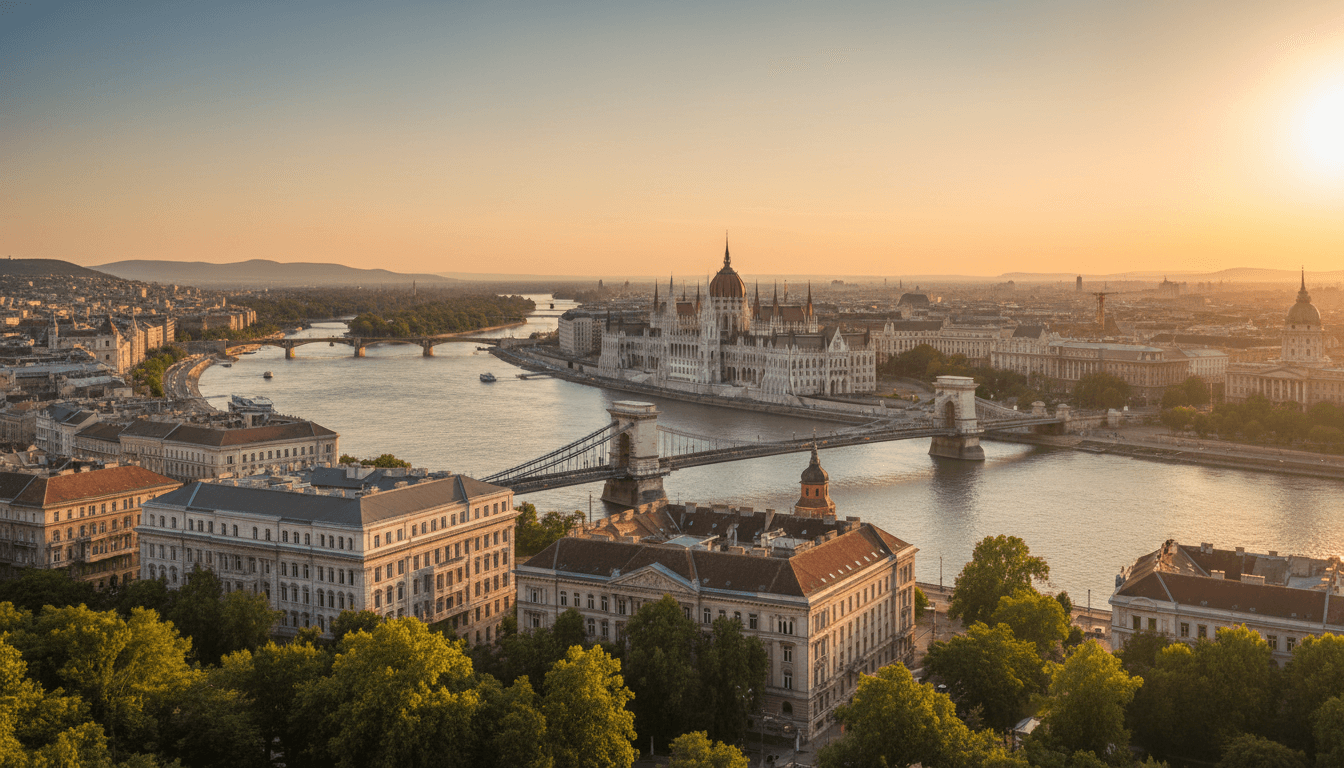
Retirement Travel to Budapest: Why Home Exchange is the Perfect Choice for Extended Stays

SwappaHome Editorial Team
Home Exchange & Slow Travel Editorial
Discover why retirement travel to Budapest through home exchange offers the ideal blend of affordability, comfort, and authentic Hungarian experiences for longer stays.
I was sitting in a thermal bath in Budapest last October—the Széchenyi, with its baroque yellow buildings and steam rising into the cool autumn air—when I overheard two retired American women discussing their accommodation situation. They'd booked a hotel for two weeks and were already dreading the impersonal breakfasts, the tiny room, the $180 per night slowly draining their travel fund.
I couldn't help myself. I leaned over and said, "You know, I'm staying in a three-bedroom apartment in the Jewish Quarter for free."
Their faces. Honestly, I wish I'd photographed them.
Retirement travel to Budapest has exploded in recent years, and for good reason. This city offers everything retirees dream about: world-class thermal baths, affordable healthcare, stunning architecture, and a cost of living that makes your pension stretch like taffy. But here's what most retirement travel guides won't tell you—how you stay matters just as much as where you go. And for extended stays in Budapest, home exchange isn't just a budget hack. It's genuinely the best way to experience this city.
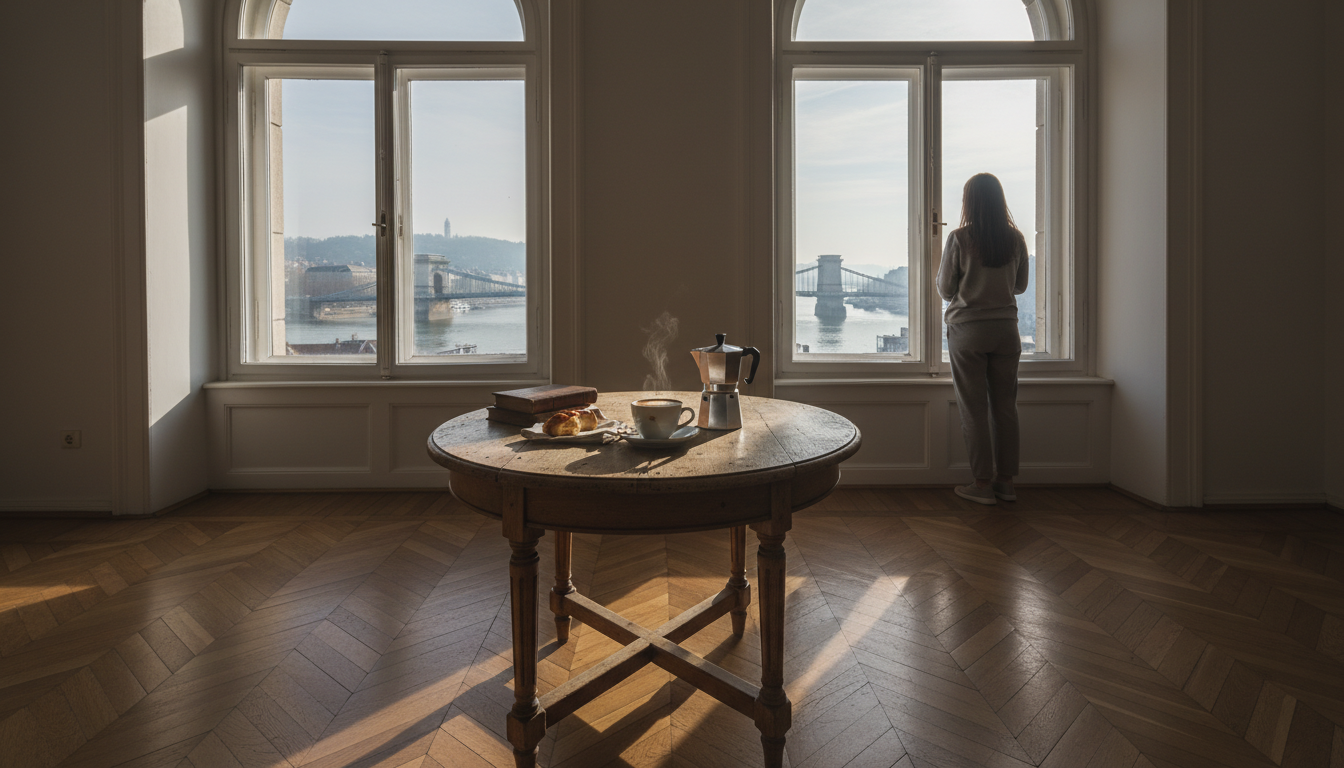 Morning light streaming through tall windows of a classic Budapest apartment, parquet floors, coffee
Why Budapest Has Become a Retirement Travel Hotspot
Let me give you some context before we dive into the home exchange stuff.
Budapest isn't just cheap—though it absolutely is compared to Western Europe. A three-course meal at a mid-range restaurant runs about $15-20 (5,500-7,500 HUF). A monthly public transport pass? Roughly $12 (4,500 HUF) for seniors over 65. A visit to one of the famous thermal baths costs around $25 (9,000 HUF) for a full day.
But beyond the numbers, Budapest offers something harder to quantify. The pace here is different. Hungarians take their coffee seriously—sitting for hours in grand coffeehouses that haven't changed since the Habsburg era. The city moves slowly enough that you can actually absorb it, rather than racing through a checklist of attractions.
For retirees, the appeal runs even deeper. Healthcare tourism is massive here—dental work costs about 70% less than in the US, and the quality is excellent. Many retirees combine extended stays with medical procedures. The thermal bath culture isn't just tourist kitsch either. It's genuine wellness. Locals visit the baths weekly for arthritis, joint pain, and general relaxation. The medicinal waters at Gellért and Rudas have been used therapeutically since the Ottoman era. And the expat community? Established and welcoming. You won't be the first retiree figuring out how to get a SIM card or find an English-speaking doctor.
So the destination makes sense. The question becomes: where do you actually stay for a month, two months, or longer?
The Problem with Traditional Retirement Travel Accommodation in Budapest
Here's where I get a little ranty. Bear with me.
Most retirement travel advice suggests either hotels (expensive, impersonal, designed for short stays) or long-term apartment rentals (complicated, often requiring local bank accounts or guarantors, and still pricey in desirable neighborhoods).
Hotels in Budapest's tourist areas—District V, near the Parliament, along the Danube—run $100-200 per night for anything decent. That's $3,000-6,000 for a month. You get daily housekeeping, sure, but you also get a room the size of a closet, no kitchen, and the vague feeling of being processed through a system designed for business travelers on expense accounts.
Long-term rentals seem better on paper. A nice one-bedroom in the Jewish Quarter (District VII) might cost $800-1,200 per month. But here's what the listings don't mention: many landlords require 2-3 months' deposit upfront, utility bills are often separate and confusing, lease agreements may be in Hungarian only, and you're completely on your own if the heating breaks or the wifi dies. The apartment might look nothing like the photos either—I've learned this the hard way.
And the biggest issue? You're still just a tenant. You're not connected to anyone. You don't have a local showing you which bakery has the best kifli or warning you that the construction on Király utca will make your mornings miserable.
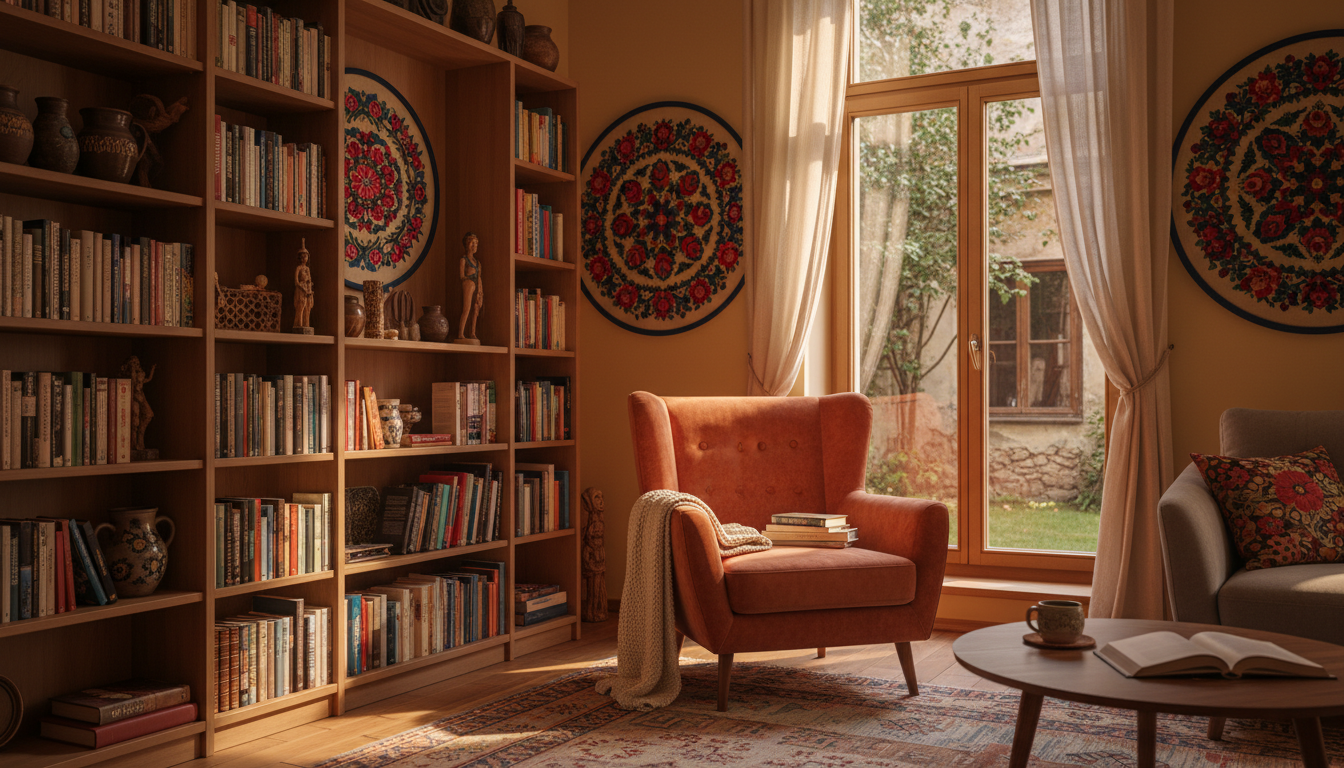 Cozy Budapest apartment living room with bookshelves, Hungarian folk art on walls, comfortable readi
Why Home Exchange Works Perfectly for Retirement Travel to Budapest
I've done maybe a dozen home exchanges in Budapest over the years—both staying in Hungarian homes and hosting Hungarians in San Francisco. And I can tell you: for retirement travel specifically, this model just works.
The Financial Reality
Let's do some math. On SwappaHome, you earn one credit for every night you host someone, and you spend one credit for every night you stay somewhere. New members start with 7 free credits.
So if you host travelers in your home for two weeks before your trip, you've earned 14 credits. That's 14 nights in Budapest—completely free. No nightly rate, no cleaning fees, no tourist taxes adding up.
For a retired couple on a fixed income, this changes everything. Instead of budgeting $150/night for accommodation, you're budgeting $0. That $4,500 you would have spent on a month's hotel? It goes toward thermal bath passes, day trips to the Danube Bend, cooking classes, or just... staying longer.
The Space Factor
Hotel rooms shrink the longer you stay in them. By day five, you're climbing the walls. By day fourteen, you're having arguments about who left the suitcase open.
Home exchanges give you actual living space. The Budapest apartments I've stayed in through swaps have had full kitchens (essential for managing dietary restrictions or just wanting breakfast at home), separate living areas, sometimes balconies or terraces, and always—always—more personality than any hotel.
One swap I did was in a professor's apartment near the Central European University. Floor-to-ceiling bookshelves, a collection of Hungarian ceramics, a balcony overlooking a quiet courtyard where I'd drink my morning coffee and listen to church bells. Try getting that at a Marriott.
The Local Connection
This is the part that's hard to explain until you've experienced it.
When you do a home exchange, you're not just getting keys to an apartment. You're getting a relationship. Your host leaves you notes about their favorite spots. They tell you which market stall has the best paprika, which tram line to avoid during rush hour, which ruin bar is actually good versus which ones are tourist traps.
For retirement travel, this matters enormously. You're not racing through a city in four days. You're settling in. You need to know where to get prescriptions filled, which pharmacy has English-speaking staff, where to find the good bread.
I still email with a couple I swapped with in 2019. They stayed in my San Francisco apartment; I stayed in their place in Buda, up in the hills near Normafa. They've since recommended their dentist to me (I got a crown done for $200 that would have cost $1,200 at home), invited me to their daughter's wedding, and become genuine friends.
That doesn't happen with Airbnb.
 Elderly couple walking hand-in-hand through Budapests Great Market Hall, colorful produce stalls and
Best Budapest Neighborhoods for Retirement Home Exchange
Not all neighborhoods are created equal for longer stays. Here's my honest assessment:
District V (Belváros-Lipótváros) – The Postcard District
This is where the Parliament sits, where the Danube views are most dramatic, where tourists cluster. It's beautiful. It's also expensive, crowded, and weirdly soulless once you've walked past the same chain restaurants enough times.
District V works well for short visits and first-timers who want to be in the thick of it. But for extended retirement stays? Too touristy, too noisy, and limited home exchange options since most properties here are commercial rentals.
District VII (Erzsébetváros) – The Jewish Quarter
This is my favorite for longer stays. The Jewish Quarter has transformed over the past decade from a crumbling historic district into Budapest's most vibrant neighborhood. Ruin bars, independent cafés, street art, the stunning Dohány Street Synagogue, and—crucially—actual residents living actual lives.
It's ideal for active retirees who want culture, nightlife options, excellent restaurants, and walkability. Home exchange availability is high here too—lots of young professionals and academics with apartments who love to travel. Just watch out for noise on some streets during weekend nights. Ask your host about this specifically.
District II (Buda Hills)
If you want quiet, green space, and a more residential feel, the Buda side delivers. District II includes areas like Rózsadomb (Rose Hill) and stretches up toward the forests of Normafa. It's where wealthy Budapestis live, but also where you'll find professors, artists, and families in more modest apartments.
Perfect for retirees prioritizing peace, nature access, and a slower pace. Properties here tend to be houses rather than apartments, often with gardens. The trade-off? You'll need to take trams or buses to reach most attractions. And the hills are hilly—consider mobility needs.
District XIII (Újlipótváros)
This is my sleeper pick. District XIII sits just north of the tourist center, along the Danube, and offers an authentic Budapest neighborhood experience. Tree-lined streets, local markets, the Margaret Island park complex right there for morning walks, and significantly lower tourist density.
Great for retirees who want to live like locals, with excellent value and easy Danube access. Home exchange availability is growing—this neighborhood has lots of young families who travel during school holidays. Bonus: the Lehel Market here is where actual Hungarians shop. Much better prices than the Great Market Hall.
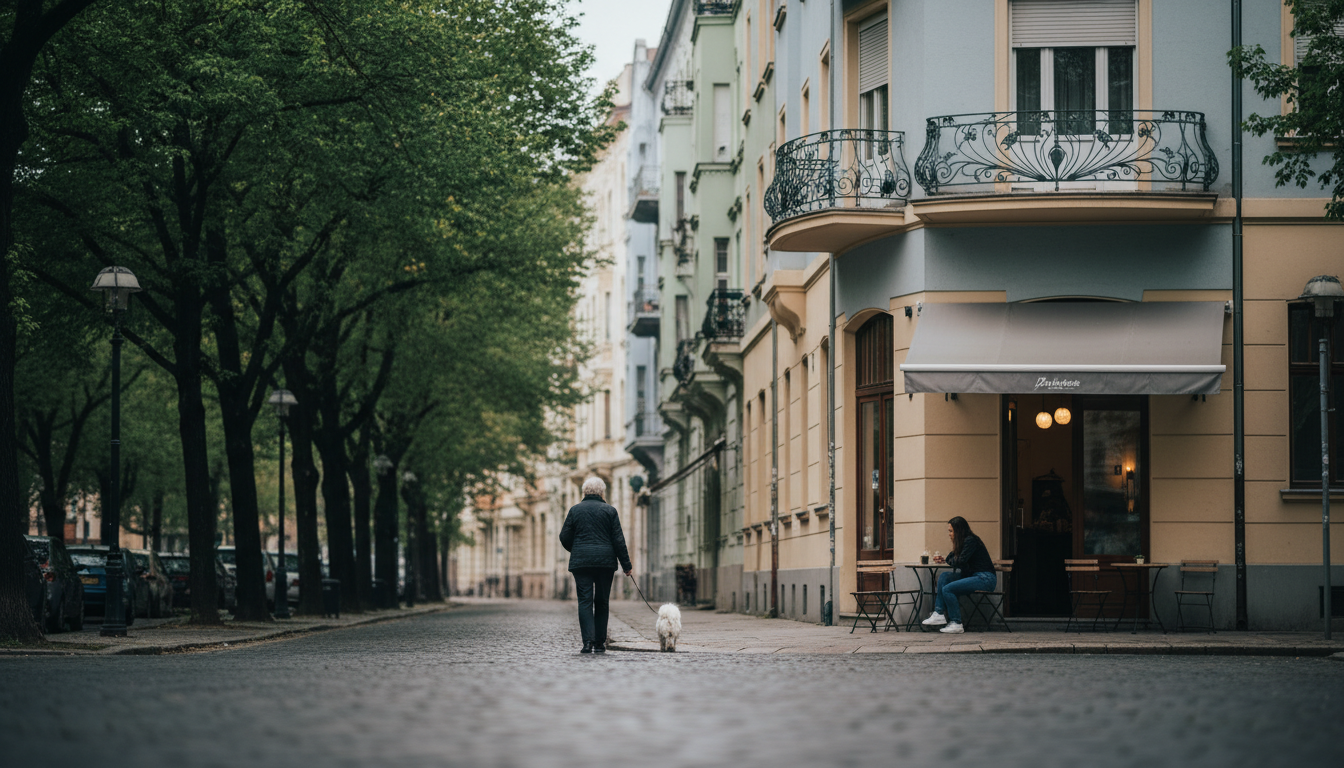 Quiet tree-lined street in Budapests District XIII, Art Nouveau apartment buildings, elderly local w
Practical Tips for Your Budapest Home Exchange
Alright, let's get into the logistics. I've made enough mistakes over the years that I can hopefully save you some headaches.
Timing Your Exchange
Budapest has distinct seasons, and they matter for retirement travel.
Spring (April-May) is gorgeous. Cherry blossoms along the Danube, comfortable walking temperatures (60-70°F), shoulder-season pricing on everything. High demand for home exchanges though—start looking 3-4 months ahead.
Summer (June-August) gets hot. Like, genuinely hot. 85-95°F with humidity. Thermal baths become less appealing when it's sweltering outside. Lots of Hungarians leave the city, which actually increases home exchange availability but decreases the local atmosphere.
Fall (September-October) is my personal favorite. Harvest season means incredible food, wine festivals in the countryside, golden light on the Buda hills. Moderate exchange demand.
Winter (November-February) brings cold and grey skies, but there's magic around Christmas. The thermal baths hit differently when there's snow falling on your head while you soak. Lower demand for exchanges means easier to find options, though fewer choices overall.
Setting Up Your Exchange Profile
For retirement travelers specifically, I'd emphasize a few things in your SwappaHome profile.
Mention your flexibility. Retirees often have more scheduling freedom than working travelers. This is a huge advantage—hosts love guests who can accommodate their travel dates.
Be specific about your needs. If you need a ground-floor apartment, an elevator, a quiet neighborhood, or proximity to public transit, say so upfront. Better to filter early than discover problems later.
Share your interests. Love classical music? Mention it—your host might leave you tickets to an opera. Into food? They'll point you to their favorite restaurants. The more they know about you, the better they can help.
What to Expect from Budapest Apartments
Hungarian homes have some quirks that might surprise you.
Heating is often building-controlled. In older buildings, the radiators turn on in October and off in April, regardless of actual weather. Ask your host how this works. Hot water may be instant or tank-based—tank-based means you might need to wait between showers. Not a big deal once you know.
Kitchens are often small. Hungarian home cooking is real, but kitchens in city apartments can be galley-style. If cooking is important to you, ask for photos. Washing machines are common; dryers are not. You'll be hanging laundry to dry. There's usually a rack or balcony line.
The Paperwork Nobody Mentions
Hungary has some bureaucratic requirements that affect longer stays. EU citizens can stay indefinitely with just an ID card. US, Canadian, and Australian citizens can stay 90 days within any 180-day period without a visa. For stays over 90 days, you'll need to look into a long-stay visa or residence permit. This is beyond the scope of home exchange, but worth knowing.
Hungary also requires visitors to register their address with local authorities if staying more than 30 days. In hotels, this is automatic. In private accommodation, technically your host should help with this. In practice, enforcement is minimal for EU visitors but technically required. Ask your exchange partner about this.
 Infographic showing Budapest cost comparison hotel vs rental vs home exchange for 30-day stay, with
Making the Most of Your Extended Budapest Stay
Once you're settled into your exchanged home, the real adventure begins. Here's what I'd prioritize for a retirement-paced visit:
The Thermal Bath Circuit
Don't just hit Széchenyi once and check it off your list. Each bath has its own character.
Széchenyi (District XIV) is the famous one—massive, great for first-timers. Go on weekday mornings to avoid crowds. Full day pass runs about $25 (9,000 HUF). Gellért (District XI) is an Art Nouveau masterpiece, more elegant, better for a special occasion at around $28 (10,000 HUF). Rudas (District I) dates from the Ottoman era and has a recently renovated rooftop pool with Danube views. It has mixed days and single-sex days, so check the schedule. About $22 (8,000 HUF).
Király (District II) is smaller, less touristy, with authentic Ottoman architecture. My personal favorite for regular visits at roughly $15 (5,500 HUF). Lukács (District II) is where locals actually go. Less fancy, more functional, strong thermal waters. Around $12 (4,500 HUF).
Many retirees get monthly passes and visit 3-4 times per week. At that frequency, your joint pain might actually improve—this isn't just tourism marketing.
Day Trips Worth Taking
Budapest is perfectly positioned for excursions.
Szentendre is 40 minutes by HÉV train (about $3 round trip)—a charming artists' village on the Danube with Serbian Orthodox churches, galleries, and a marzipan museum. Easy half-day. Esztergom takes 1.5 hours by train (around $8 round trip) and features Hungary's largest basilica with views into Slovakia. Quieter than Szentendre. Full day.
Eger is 2 hours by train (roughly $12 round trip) and offers wine country, baroque architecture, thermal baths, and the famous "Valley of the Beautiful Women" wine cellars. Overnight recommended. Lake Balaton is 1.5-2 hours by train ($10-15)—Central Europe's largest lake with resort towns and vineyards. Best in late summer or early fall.
Building a Routine
This is the secret to extended travel that most guides miss. You need a routine.
Mine in Budapest looked like this: Morning coffee at Espresso Embassy on Arany János utca. Walk along the Danube. Thermal bath three times a week (alternating Király and Rudas). Lunch at home—something simple from the market. Afternoon exploring a new neighborhood or museum. Early dinner at a local étterem. Reading in the apartment.
It sounds boring written out. It was actually the most restorative travel I've ever done.
Common Concerns About Retirement Home Exchange (And Honest Answers)
I talk to a lot of retirees considering home exchange for the first time. Here are the questions that come up most:
"What if something breaks or gets damaged?"
This is the big one. And I'll be straight with you: SwappaHome is a platform that connects members, not an insurance company. If something happens, you're working it out with your exchange partner directly.
In seven years and 40+ exchanges, I've had exactly two incidents. Once, a guest accidentally cracked a ceramic pot. They told me immediately, apologized, and Venmo'd me $40 to replace it. Once, I broke a wine glass at someone's apartment in Lisbon. I replaced it before I left.
The home exchange community is built on mutual trust and respect. People treat your home well because they know you're treating theirs well. The review system creates accountability—nobody wants a bad review following them around.
That said, if you're worried, get your own travel insurance that covers property damage. Some homeowner's insurance policies extend to home exchanges; check with your provider. This is on you to arrange, not the platform.
"I'm not comfortable with strangers in my home."
Completely valid. Home exchange isn't for everyone.
But consider: these aren't random strangers. They're verified members with profiles, photos, reviews from previous exchanges, and their own homes on the line. They've chosen to participate in a system based on reciprocity. They have every incentive to be respectful.
You can also start small. Do a simultaneous exchange where you're staying in their home while they're in yours—nobody's in anyone's space at the same time. Or host someone for a weekend while you're traveling anyway, just to see how it feels.
"What about my stuff? My personal items?"
You don't leave everything out. Before any exchange, I do a quick "guest prep": lock one closet or room with personal documents, valuables, anything private. Clear bathroom cabinets of medications and personal items. Remove anything irreplaceable from common areas. Leave out what guests will need—linens, towels, kitchen basics.
It takes maybe two hours. Your home doesn't need to be a hotel—guests expect personality—but you're entitled to privacy.
"What if we don't like the apartment when we arrive?"
This is why communication matters. Before confirming any exchange, I do a video call with my exchange partner. I ask to see the space, ask about the neighborhood, ask about any quirks. They do the same with me.
If something's genuinely misrepresented, you handle it like adults. In the community, reputation matters. People don't lie about their spaces because the reviews would destroy them.
Getting Started: Your First Budapest Home Exchange
Alright, you're convinced (or at least curious). Here's the practical path forward:
Create your SwappaHome profile first. Be thorough. Good photos of your home, honest description, clear information about yourself. Mention that you're interested in extended stays—this helps match you with appropriate hosts.
Then search Budapest listings. Filter for your dates, your needs (elevator access, quiet neighborhood, whatever matters), and start reaching out. Don't just send one request—reach out to 5-10 possibilities.
Have real conversations once someone responds positively. Set up a video call. Ask questions. Get a feel for them as people. This isn't a hotel booking—you're entering a relationship.
Confirm and prepare once you've found your match. Exchange emergency contacts, discuss arrival logistics, ask about anything you're unsure about.
Then go live your Budapest life. Show up, settle in, and let the city reveal itself at retirement pace.
I think about those two women in the Széchenyi thermal bath sometimes. I gave them my email, explained how home exchange works, answered their questions while we all pruned in the medicinal waters.
One of them messaged me six months later. She'd done her first exchange—not Budapest, but Prague. "I can't believe I spent twenty years staying in hotels," she wrote. "This changes everything."
It really does.
Budapest is waiting. And somewhere in the Jewish Quarter or up in the Buda hills, there's an apartment with your name on it—figuratively speaking. A Hungarian traveler wants to see your hometown. You want to see theirs.
That's the whole beautiful simplicity of it.
Frequently Asked Questions
Is home exchange safe for retirement travel to Budapest?
Home exchange is built on community trust and accountability. SwappaHome members are verified, reviewed by previous exchange partners, and have their own homes at stake. While the platform doesn't provide insurance coverage, the mutual respect inherent in the system creates natural safety. Many retirees also purchase separate travel insurance for additional peace of mind during extended stays.
How much can retirees save with home exchange in Budapest compared to hotels?
For a 30-day stay, Budapest hotels in central locations cost $3,000-6,000. Long-term apartment rentals run $800-1,500 plus deposits and utilities. Home exchange costs zero for accommodation—just the credits you've earned by hosting. A retired couple could save $4,000+ monthly, making extended retirement travel to Budapest financially sustainable on a fixed income.
What's the best time of year for retirement travel to Budapest?
Spring (April-May) and fall (September-October) offer ideal conditions: comfortable temperatures for walking, fewer crowds than summer, and beautiful light on the city's architecture. Winter appeals to thermal bath enthusiasts who enjoy soaking in hot springs while snow falls. Summer can be uncomfortably hot (85-95°F) for extended outdoor exploration.
Do I need to speak Hungarian for a home exchange in Budapest?
No. English is widely spoken in Budapest, especially in central districts, tourist areas, and among younger Hungarians. Your exchange host will typically leave instructions in English and can recommend English-friendly services. Basic Hungarian phrases ("köszönöm" for thank you, "szia" for hello) are appreciated but not required for a comfortable stay.
How far in advance should I arrange a Budapest home exchange for retirement travel?
For peak seasons (spring and fall), begin searching 3-4 months ahead. Summer and winter offer more flexibility with 6-8 weeks lead time often sufficient. Retirees have an advantage here—schedule flexibility makes you attractive to hosts who need specific travel dates covered. Mention your flexibility in your initial messages to potential exchange partners.

Published by
SwappaHome
SwappaHome Editorial Team
Home Exchange & Slow Travel Editorial
The SwappaHome Editorial Team brings together travel research, home-exchange community insights, and platform data to produce practical guides for first-time and experienced home swappers. Every article cites real platforms, current market rates, and verifiable city-level facts so readers can make informed decisions without guessing.
Ready to try home swapping?
Join SwappaHome and start traveling by exchanging homes. Get 7 free credits when you sign up!
Related articles

Bachelor and Bachelorette Parties in Singapore: The Complete Home Swap Group Guide for 2026
Planning a bachelor or bachelorette party in Singapore? Discover how home swapping lets groups of 6-12 stay together in luxury condos, saving thousands while partying in Marina Bay.

Cycling in Lisbon: 7 Home Swap Bike Tour Itineraries for Every Rider
Discover the best cycling routes in Lisbon with these home swap bike tour itineraries—from waterfront paths to hilltop adventures, all starting from your borrowed home.

Graduation Trip to Barcelona: How Home Swapping Gives New Graduates the Ultimate Celebration
Planning a graduation trip to Barcelona? Discover how home swapping lets new graduates explore Spain's most vibrant city without the hostel crowds or hotel costs.