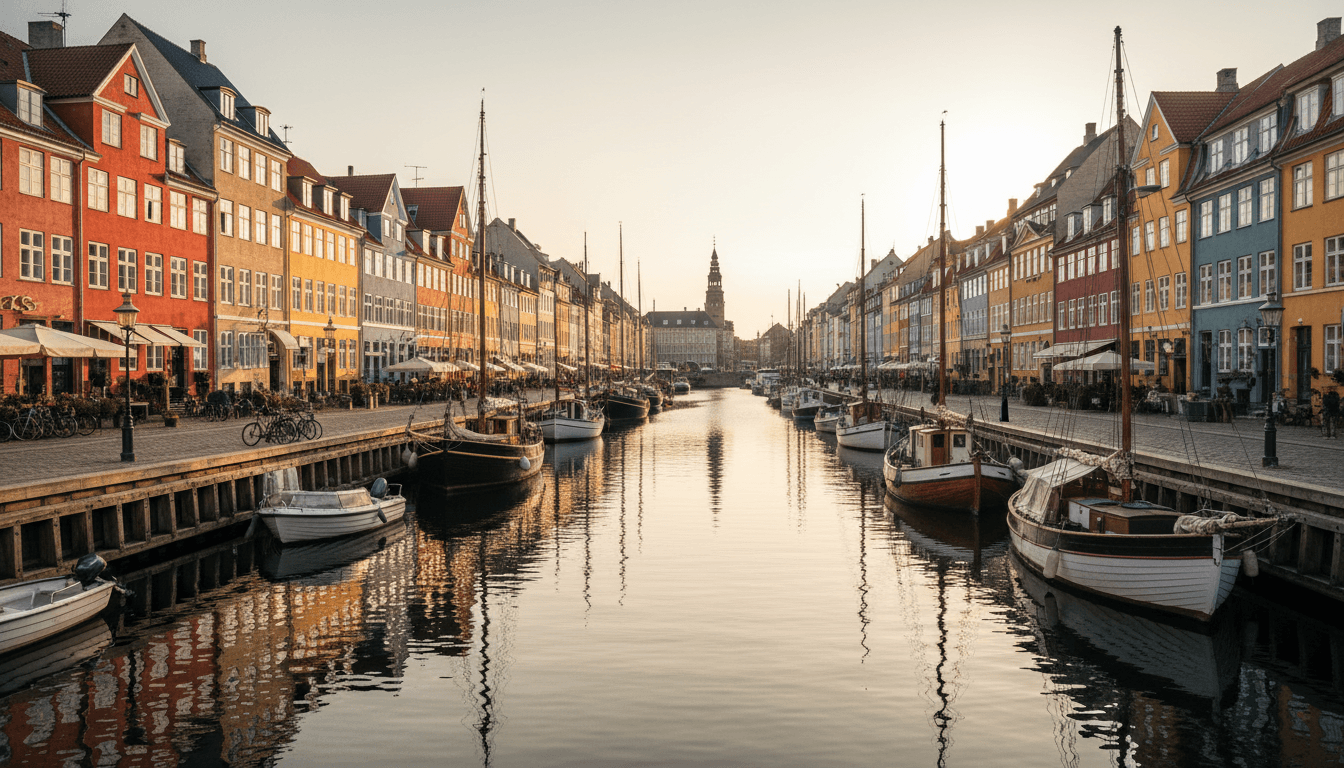
Summer Home Swap in Copenhagen: Your Complete Guide to the Best Season in Denmark

SwappaHome Editorial Team
Home Exchange & Slow Travel Editorial
Planning a summer home swap in Copenhagen? Discover why June-August is magical, which neighborhoods to target, and how to experience hygge without the hotel price tag.
I still remember stepping off the train at Copenhagen Central Station last July, dragging my suitcase through crowds of cyclists and wondering if I'd made a terrible mistake. My home swap host had warned me: "Summer in Copenhagen is chaos—the good kind." She wasn't wrong.
Three weeks later, I'd eaten my weight in smørrebrød, learned to navigate bike lanes without causing international incidents, and discovered why Danes consistently rank among the happiest people on Earth. A summer home swap in Copenhagen changed how I think about travel entirely—and I'm convinced it might do the same for you.
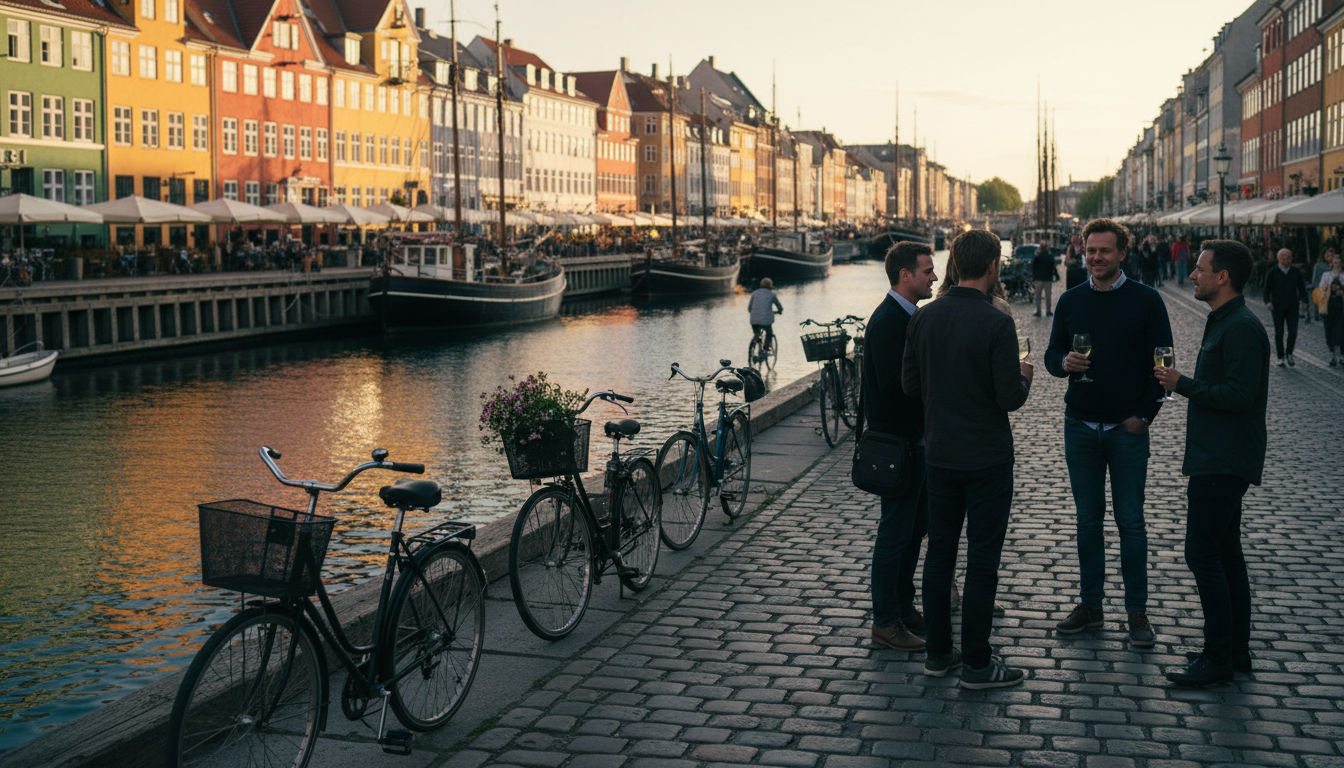 Golden hour light washing over Nyhavns colorful townhouses with locals drinking wine on the canal ed
Why Summer Is the Best Time for a Copenhagen Home Swap
So here's the thing guidebooks won't tell you: Copenhagen is essentially two different cities depending on when you visit. The winter version is cozy but dark—we're talking 17 hours of darkness in December. But summer? That's when the city transforms into something almost Mediterranean in spirit, despite being firmly planted in Scandinavia.
From mid-June through August, the sun barely sets. I'm not exaggerating. During my July swap, I once looked up from a book at 10:30 PM to find the sky still glowing pink. Locals call it "the bright nights," and it fundamentally changes how the city operates. Restaurants spill onto sidewalks. Parks become living rooms. That famous Danish reserve? It melts away with the extended daylight.
The practical benefits for home swappers are significant too. Summer means your host's apartment will likely have better natural light for photos, outdoor spaces actually get used, and you'll have access to bicycles that aren't buried under snow gear. Most Copenhagen apartments are compact by American standards—averaging 65-80 square meters—but honestly, summer living happens outside anyway.
Temperature-wise, expect highs between 68-77°F (20-25°C). Sounds mild, but Danes treat anything above 72°F as a heat wave. You'll see sunbathers at the harbor baths the moment it hits 65°F. Pack layers—mornings can be crisp, and that sea breeze off the Øresund is no joke.
Best Copenhagen Neighborhoods for Your Summer Home Exchange
Not all Copenhagen neighborhoods are created equal for home swapping, especially in summer. After my own experience and countless conversations with other SwappaHome members who've done Copenhagen exchanges, here's my honest breakdown.
Vesterbro: Perfect for First-Timers
Vesterbro is where I stayed, and I'd do it again in a heartbeat. This former red-light district (yes, really) has transformed into Copenhagen's most dynamic neighborhood. Think Brooklyn circa 2010, but cleaner and with better pastries.
The Kødbyen—that's the Meatpacking District—comes alive in summer with outdoor bars and restaurants in converted warehouses. My host's apartment was a 10-minute walk from there, a third-floor walkup with a tiny balcony overlooking a courtyard where neighbors gathered for evening drinks. Rent equivalent for similar places runs around 15,000-18,000 DKK monthly ($2,100-$2,500 USD), which gives you an idea of what you're accessing through a home swap.
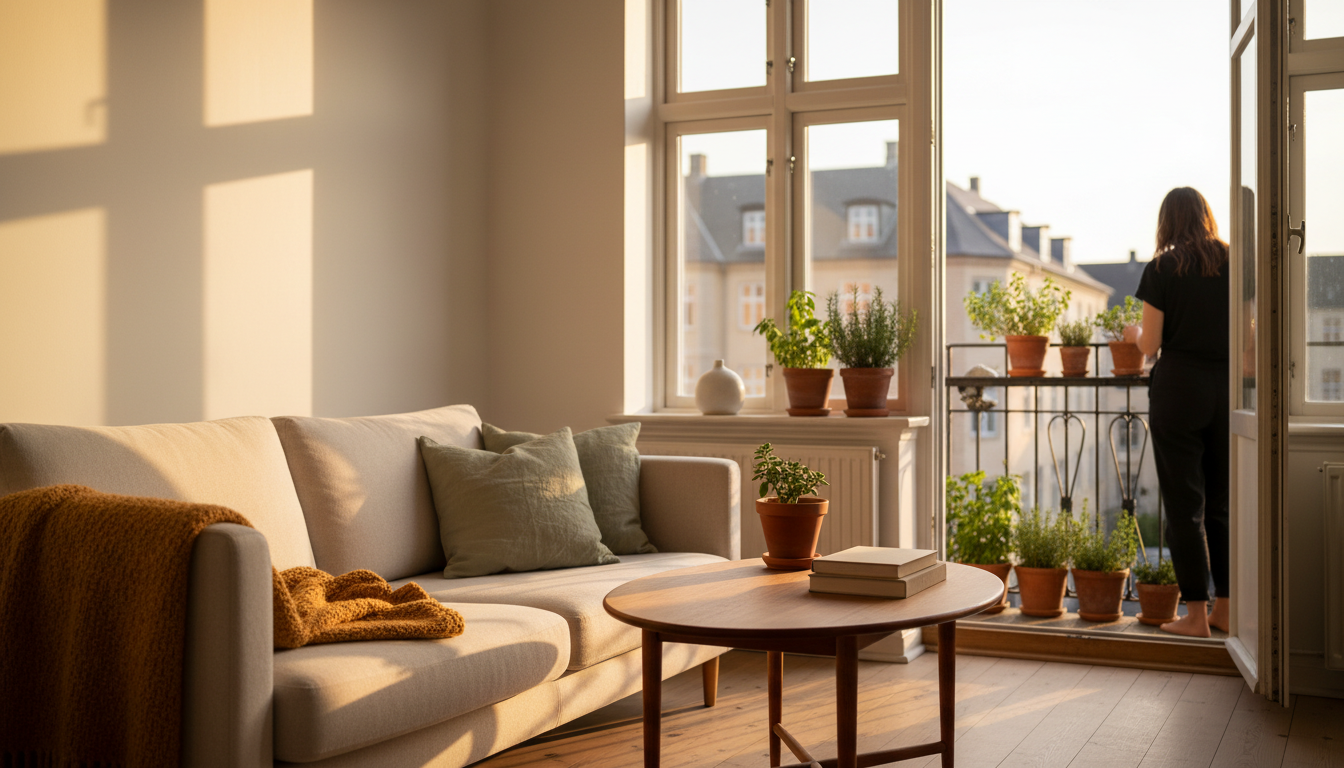 A cozy Vesterbro apartment interior with white walls, Danish modern furniture, large windows letting
Nørrebro: For the Culturally Curious
If Vesterbro is Brooklyn, Nørrebro is the Lower East Side—multicultural, a bit gritty in places, and absolutely buzzing with energy. Jægersborggade street has become a destination for independent shops and cafés. The Assistens Cemetery (where Hans Christian Andersen is buried) doubles as a summer picnic spot—Danes are wonderfully pragmatic about these things.
Home swaps here tend to be in older buildings with character: high ceilings, creaky floors, and that particular Scandinavian light that interior designers try to replicate everywhere else. Expect smaller kitchens but bigger personalities.
Frederiksberg: Summer Gardens and Family Vibes
Technically its own municipality (Danes will correct you on this), Frederiksberg feels like Copenhagen's elegant older sibling. The massive Frederiksberg Gardens are stunning in summer—think Versailles if it were actually used by regular people having barbecues.
Home swaps here often mean more space: actual houses, gardens, family-sized apartments. If you're traveling with kids or just want a quieter base, this is your spot. It's about 20 minutes by bike to the city center, which in Copenhagen terms is practically next door.
Christianshavn: Canals and Character
This is the postcard Copenhagen—canals, houseboats, the famous Christiania freetown. Summer here means kayaking to dinner, canal-side drinks, and that particular magic of water reflecting endless twilight.
Home swaps in Christianshavn are highly competitive. The neighborhood is small, desirable, and residents tend to travel less. If you find one, grab it. Just know that Christiania itself can be polarizing—some visitors love the alternative community vibe, others find it uncomfortable.
What to Expect from Your Copenhagen Summer Home Swap
Real talk: Danish apartments require some adjustment for most Americans. Here's what surprised me and what I wish I'd known.
The Space Situation
Danish homes are efficient. Ruthlessly so. My Vesterbro apartment was 55 square meters (about 590 square feet) for a one-bedroom, and my host considered it spacious. Storage is built-in and hidden. Every piece of furniture serves multiple purposes. You'll learn to appreciate this—it's actually quite liberating—but don't expect walk-in closets.
Kitchens are typically galley-style with compact appliances. Refrigerators are often half the size of American ones, which means you'll shop more frequently. This turns out to be a feature, not a bug—it gets you into the rhythm of Danish daily life.
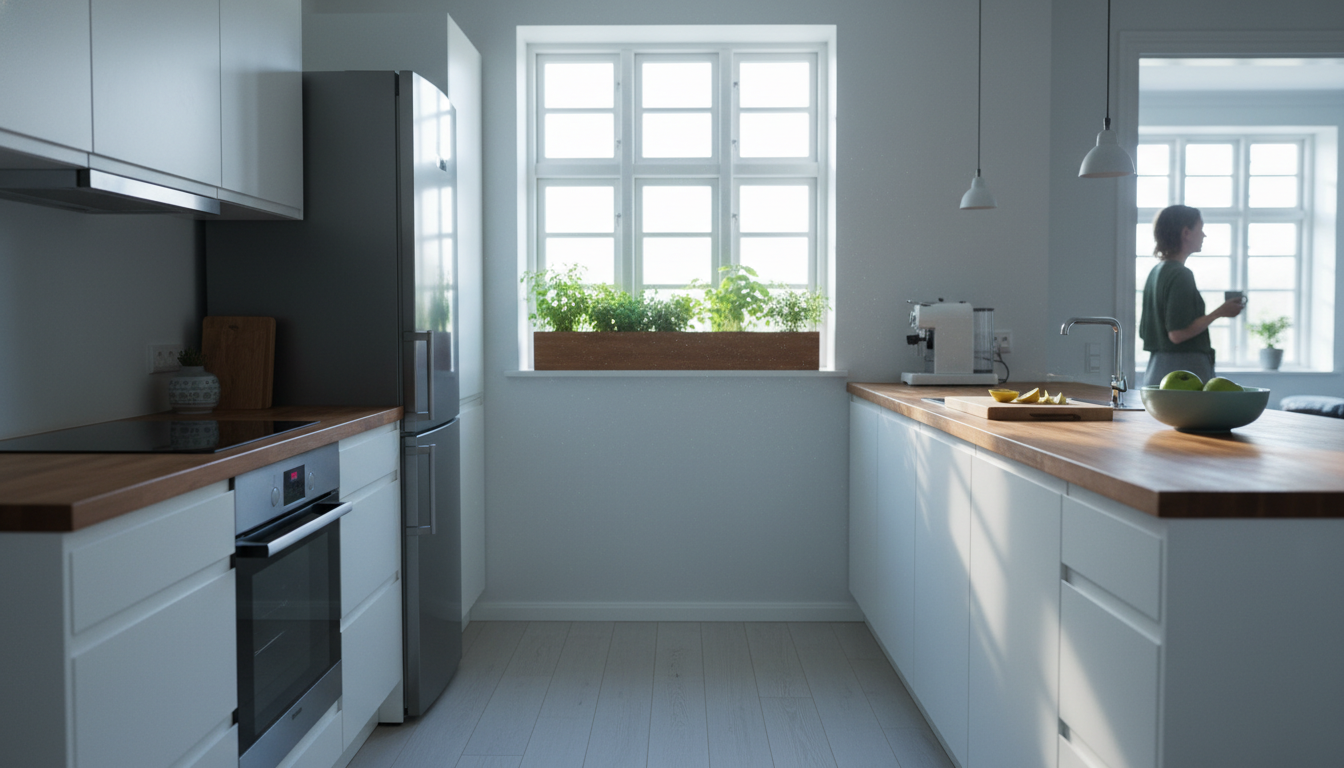 A typical Danish galley kitchen with white cabinets, butcher block counters, small but efficient app
The Bicycle Expectation
Your host will likely leave you a bicycle. Use it.
Copenhagen has more bikes than people (seriously—670,000 bikes for 600,000 residents), and the infrastructure is impeccable. Dedicated bike lanes, traffic lights for cyclists, even bike traffic jams during rush hour.
My host left detailed notes about her bike: where she'd last had it serviced, which gear was sticky, her favorite routes. This is standard Copenhagen hospitality. She also warned me about the unwritten rules: never bike in the pedestrian lane, always signal before turning, and for the love of hygge, don't stop suddenly in the bike lane.
If your swap doesn't include a bike, rentals run about 100-150 DKK per day ($14-21 USD), but weekly rates drop significantly. Donkey Republic and Bycyklen are the main apps.
Summer-Specific Quirks
July is when Copenhagen empties out. Danes take their summer holidays seriously—often three to four consecutive weeks. This is actually perfect for home swapping because it means more available homes and hosts who genuinely want to travel.
The flip side: some local shops and restaurants close for "sommerferie." That beloved neighborhood café your host recommended? It might be shuttered until August 15th. Larger establishments stay open, but the city has a different rhythm.
And here's something nobody warned me about—air conditioning is rare. Like, genuinely uncommon. Danes consider 77°F (25°C) hot, and buildings are designed for heat retention, not cooling. Your host might have fans; they probably won't have AC. The good news is that summer nights cool down significantly, and those "bright nights" mean you can open windows without security concerns in most neighborhoods.
Planning Your Copenhagen Summer Home Exchange Timeline
Timing matters more than you might think for a summer home swap in Copenhagen. Here's the strategic approach I've developed.
When to Start Looking
Begin your search on SwappaHome at least 4-6 months before your desired dates. Copenhagen is a popular summer destination, and the best properties—especially those with outdoor space—get booked early. I started looking in February for my July trip and still felt like I was cutting it close.
The sweet spot for travel dates is late June through mid-August. Early June can still be chilly (highs around 64°F/18°C), and late August starts the slide toward autumn. The summer solstice around June 21st is magical if you want maximum daylight—the sun sets around 10 PM and rises before 4:30 AM.
Crafting Your Request
Danish hosts appreciate directness. When I reached out through SwappaHome, I was specific: my dates, my household situation (just me, no pets, non-smoker), and what I was hoping to experience. I also shared details about my San Francisco apartment—the neighborhood, the amenities, what makes it special.
My host later told me she chose my request partly because I mentioned wanting to "live like a local, not a tourist." Danes value authenticity. They're not impressed by over-the-top flattery, but they respond to genuine curiosity about their culture.
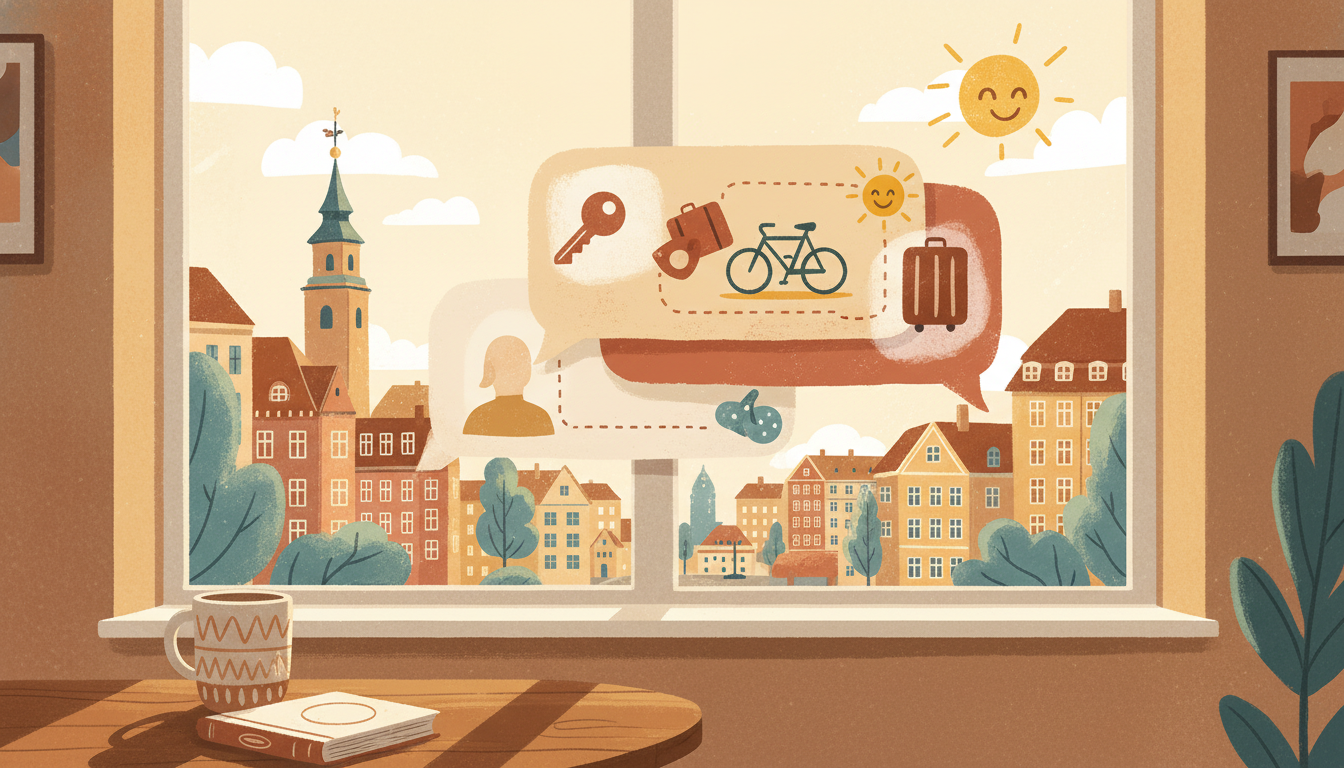 A SwappaHome-style message exchange showing a friendly conversation between two members, with Copenh
The Pre-Swap Communication
Once matched, expect thorough communication. Danish hosts tend to be organized—you'll likely receive detailed instructions about everything from the coffee maker to the best bakery within walking distance. My host sent a 12-page PDF. It sounds excessive until you're standing in front of a Danish washing machine at 11 PM trying to figure out the settings.
Discuss expectations clearly: Can you use the balcony grill? Is there a cleaning fee or expectation? What about the plants? Summer means plant-watering duties, which I actually enjoyed—it made the apartment feel more like home.
Making the Most of Your Copenhagen Summer Swap
Here's where having a home base transforms your experience. You're not checking out at 11 AM or eating every meal in restaurants. You're living.
Morning Routines
I developed a ritual: wake up around 7 AM (easy when the sun's been up for hours), bike to the nearest bakery for fresh rugbrød and pastries, then eat breakfast on the balcony while the city slowly stirred. Torvehallerne market opens at 10 AM and became my go-to for coffee and people-watching.
Grocery shopping at Irma or Føtex feels oddly satisfying. You'll pay more than in the US—Denmark is expensive—but cooking in your swap home saves significant money. A restaurant dinner for two easily runs 600-800 DKK ($85-115 USD) without drinks. A home-cooked meal using market ingredients? Maybe 150 DKK ($21 USD).
The Harbor Bath Experience
This is peak Copenhagen summer.
The harbor baths at Islands Brygge are free public swimming pools built right into the harbor—clean enough to swim in, thanks to decades of environmental work. Locals treat it like a beach club. I spent entire afternoons there, swimming, sunbathing, and marveling at how civilized it all felt.
Other harbor baths worth knowing: Fisketorvet (less crowded), Svanemøllen (family-friendly), and the new Nordhavn bath (architecturally stunning). All free. All summer-only.
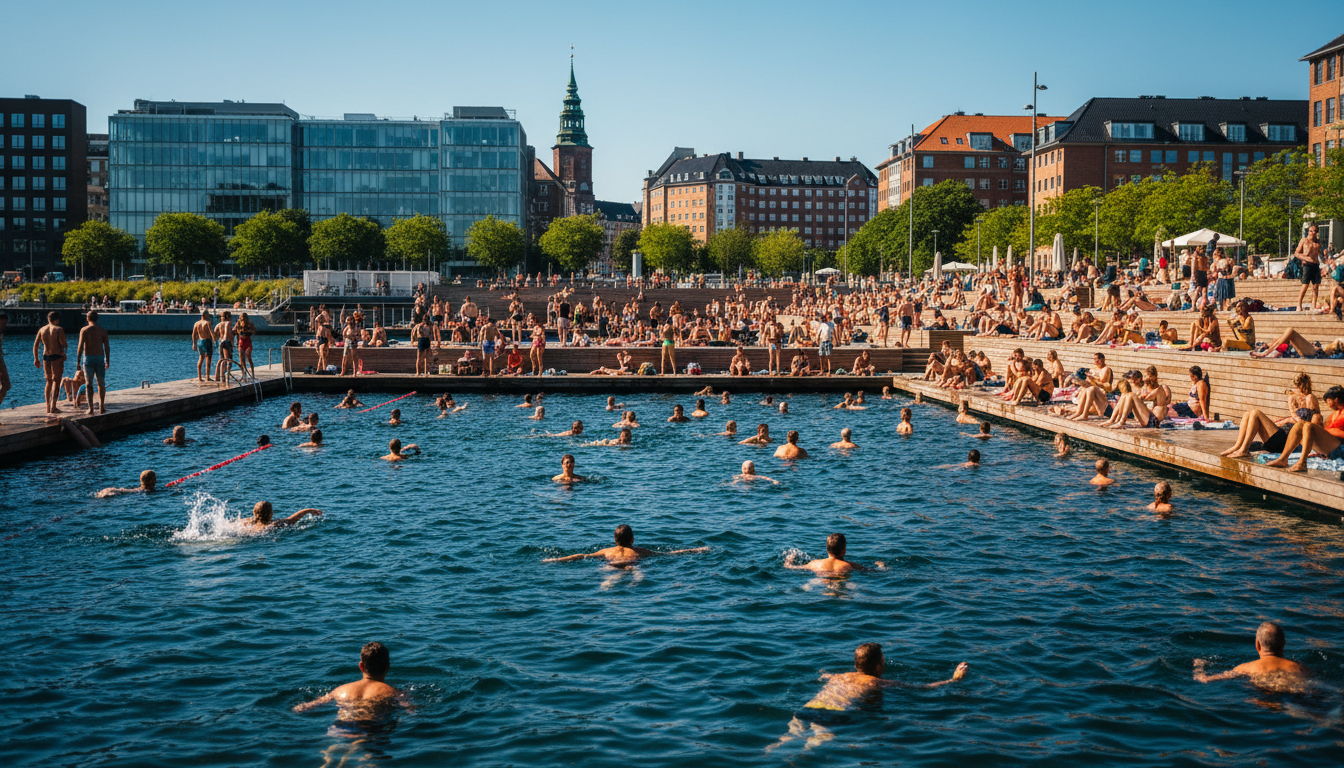 Islands Brygge harbor bath on a sunny summer day, swimmers in the clean harbor water, the wooden dec
Day Trips from Your Copenhagen Base
Having a home swap means you can travel light for day trips—no luggage storage stress. Summer opens up options.
Louisiana Museum of Modern Art in Humlebæk (35 minutes by train, 130 DKK/$18 USD entry) sits on the coast with sculpture gardens overlooking the Øresund. Go on a weekday morning. Malmö, Sweden is 35 minutes across the bridge—your Copenhagen transit pass might even cover it depending on zones. Different country, different vibe, excellent falafel. And Roskilde (25 minutes by train) has Viking ships and a massive cathedral. If you're there in early July, the famous music festival takes over—book your swap dates around it if that's your scene, or avoid it entirely if crowds aren't.
Evening Culture
Summer evenings in Copenhagen stretch forever, and the city takes full advantage. Tivoli Gardens stays open late and is genuinely magical after dark—yes, it's touristy, but the Danes love it too. Entry is 155 DKK ($22 USD), rides extra.
Free outdoor concerts pop up in parks throughout summer. Fælledparken and Kongens Have (the King's Garden) regularly host events. Check AOK.dk for listings—it's in Danish but Google Translate handles it.
The jazz festival in early July transforms the city. Street performances, club shows, free concerts—it's everywhere. My host specifically chose to travel during the festival because she'd "seen it a hundred times," which meant I got her apartment during peak cultural programming.
Costs and Savings: The Home Swap Advantage
Let me break down the actual economics of my Copenhagen summer swap versus what a traditional trip would have cost.
What I Spent (3 weeks)
Flights from San Francisco came to $890 roundtrip (booked 4 months ahead). I used 21 SwappaHome credits for accommodation—earned from previous hosting. Groceries and cooking at home ran approximately $380, while restaurant meals (maybe 8 dinners out) totaled $520. Local transportation was mostly biking with some metro, about $85. Activities and entrance fees added up to $210, and miscellaneous expenses like coffee, snacks, and small purchases came to $175.
Total: approximately $2,260 for three weeks.
What It Would Have Cost Without Home Swapping
Hotels in Copenhagen average $250-400/night for decent central locations in summer. Even a modest Airbnb runs $150-200/night. For 21 nights, that's $3,150-$8,400 just for accommodation.
Add in more restaurant meals (no kitchen), and you're looking at $5,000-$10,000 for a similar trip. The home swap saved me at minimum $3,000—probably closer to $5,000 when accounting for the cooking factor.
Preparing Your Home for Your Copenhagen Swap Partner
This part often gets overlooked, but it matters. While you're enjoying Copenhagen, someone might be staying in your place. Making that experience great ensures good reviews and future swap opportunities.
I cleaned thoroughly before leaving, stocked basic pantry items, and left a welcome guide similar to what I hoped to receive. Fresh flowers on the table. A bottle of local wine. Small touches that said "welcome" without being over-the-top.
My Copenhagen host did the same for me—a handwritten note, a small box of Danish chocolates, and her personal recommendations marked on a paper map. That map still hangs in my office.
Common Concerns About Summer Home Swaps in Copenhagen
I hear the same worries from people considering their first Copenhagen swap.
"What if something breaks?" Communication is key. My host and I exchanged WhatsApp numbers for emergencies. When her kitchen faucet started dripping (not my fault, just old plumbing), I texted her, she told me which neighbor had a spare key and basic tools, and I tightened it myself. No drama. For anything serious, having your own travel insurance gives peace of mind—SwappaHome connects you with hosts, but you're responsible for your own coverage.
"Is it safe?" Copenhagen regularly ranks among the world's safest cities. I walked home alone at midnight through quiet streets and never felt uneasy. The home swap community on SwappaHome has reviews and verification systems that help build trust between members.
"What about the language barrier?" Danes speak English better than most Americans speak anything. Seriously. You'll occasionally encounter older shopkeepers who prefer Danish, but even then, pointing and smiling works fine. Learn "tak" (thanks) and "undskyld" (excuse me) and you're golden.
The Intangible Magic of Living in Copenhagen
I've stayed in plenty of nice hotels. They're comfortable, predictable, and ultimately forgettable. My Copenhagen home swap was none of those things.
I remember the specific creak of the third stair. The way afternoon light hit the kitchen counter. The elderly neighbor who nodded at me each morning until, by week two, she actually said "godmorgen." The satisfaction of figuring out the recycling system (Denmark takes sorting seriously).
These aren't tourist memories. They're living memories. And that's the entire point.
Copenhagen in summer offers something increasingly rare: a major European capital that hasn't been completely overrun by tourism, where locals still outnumber visitors, where you can slip into the rhythm of a place rather than just observing it from the outside.
A home swap makes that possible in a way hotels simply can't. You're not a guest—you're a temporary resident. You have keys. You have a neighborhood. You have a life there, however brief.
If you're considering a summer home swap in Copenhagen, stop considering and start planning. List your own home on SwappaHome, start browsing Copenhagen properties, and reach out to potential hosts. The credits you've earned from hosting others? This is exactly what they're for.
The bright nights are waiting. The bikes are ready. And somewhere in Vesterbro or Nørrebro or Frederiksberg, there's an apartment with your name on it—at least for a few summer weeks.
Frequently Asked Questions
Is a summer home swap in Copenhagen worth it compared to hotels?
Absolutely. Hotel rates in Copenhagen average $250-400 per night in summer, while a home swap costs only SwappaHome credits you've earned from hosting. Beyond savings of $3,000-5,000 for a typical two-week stay, you gain kitchen access, local neighborhood immersion, and often a bicycle—transforming your trip from tourist visit to authentic Copenhagen living experience.
What is the best month for a Copenhagen home swap?
July offers the ideal combination of warm weather (68-77°F), maximum daylight hours, and abundant home availability since Danes take extended summer holidays. Late June captures the magical summer solstice with near-24-hour daylight, while early August provides slightly fewer crowds. Avoid early June when temperatures remain cool and late August when autumn approaches.
How far in advance should I book a Copenhagen summer home swap?
Start searching on SwappaHome 4-6 months before your desired dates. Copenhagen is a popular summer destination, and properties with desirable features like balconies, gardens, or central locations get requested quickly. February or March is ideal for July travel, giving you time to communicate thoroughly with potential hosts and finalize arrangements.
Do Copenhagen apartments have air conditioning for summer stays?
Most Copenhagen apartments lack air conditioning—Danes rarely experience temperatures above 77°F (25°C). Hosts typically provide fans, and summer nights cool significantly, making sleep comfortable with open windows. Buildings are designed for Scandinavian winters, so expect excellent insulation but limited cooling. The harbor baths and parks offer refreshing escapes during warmer afternoons.
What should I bring for a summer home swap in Copenhagen?
Pack layers for variable weather (mornings can be cool even in July), comfortable walking shoes, and rain gear—summer showers are common. Bring a small daypack for biking, sunscreen for the long daylight hours, and an eye mask if you're sensitive to light while sleeping. Leave formal clothes behind; Copenhagen style is casually elegant, and you'll want practical outfits for cycling everywhere.

Published by
SwappaHome
SwappaHome Editorial Team
Home Exchange & Slow Travel Editorial
The SwappaHome Editorial Team brings together travel research, home-exchange community insights, and platform data to produce practical guides for first-time and experienced home swappers. Every article cites real platforms, current market rates, and verifiable city-level facts so readers can make informed decisions without guessing.
Ready to try home swapping?
Join SwappaHome and start traveling by exchanging homes. Get 7 free credits when you sign up!
Related articles

Home Swap in Rome: Where to Find the Best Properties for Your Italian Exchange
Discover where to find the best home swap properties in Rome—from Trastevere's cobblestone charm to Testaccio's local authenticity. Real neighborhoods, real advice.

Home Swap in Bangkok: Where to Find the Best Properties for Free Stays
Discover where to find the best home swap properties in Bangkok—from riverside condos in Charoen Krung to family homes in Ari. Real neighborhoods, real savings.

Home Swap for Beach Lovers: 12 Coastal Destinations Ranked for 2026
Discover the best coastal destinations for home swapping in 2026. From Portugal's Algarve to Australia's Gold Coast, find your perfect beach exchange.