
The complete guide to the Germany digital nomad visa: How to apply and succeed

SwappaHome Editorial Team
Home Exchange & Slow Travel Editorial
Key Takeaways Transitioning to life in Central Europe requires careful planning regarding legal status and local requirements. This guide breaks down the…
Key Takeaways
Transitioning to life in Central Europe requires careful planning regarding legal status and local requirements. This guide breaks down the essential steps to base your remote career in Germany.
- No official Germany digital nomad visa exists; you should apply for a freelance or self-employment permit.
- Professional qualifications must be documented and demonstrate clear alignment with local economic interests.
- Securing high-quality health insurance is a mandatory prerequisite for any long-term residency application.
- Preparing an airtight business plan or portfolio is critical for obtaining approval from immigration authorities.
- Integrating locally through language learning and community involvement significantly improves your long-term success.
Understanding the Germany freelance and digital nomad visa options
Many professionals working remotely set their sights on Germany due to its central location and quality of life. Although there is no single document labeled as a Germany digital nomad visa, the country offers established residency permits that accommodate independent work. Understanding these pathways is the first step toward settling in.
Differentiating between freelance and self-employment visas
The Freiberufler permit is designed for independent professionals in non-commercial fields, such as writers, artists, and consultants. In contrast, the self-employment visa focuses on entrepreneurs launching ventures that show potential for economic growth. Each route requires evidence that your work holds value for the local market, as explained in reports on Germany's visa options.
Reality check on the "digital nomad" visa term in Germany
While social media often uses the term loosely, authorities look for concrete proof of an active, location-independent lifestyle that respects local regulations. You are not just a visitor; you are a resident applicant. Your professional activities must stay within the bounds of your specific permit, as detailed by experts at wfa.team.
The benefits of the German residency permit for remote workers
Holding a temporary residence permit provides stability in one of Europe’s largest economies. Beyond the right to live in the country, you gain access to a social system and the freedom to travel throughout the Schengen area. This is a common aspiration for those using SwappaHome to find flexible living arrangements across continents.
Eligibility requirements for German freelance residency
 A clean minimalist workspace in a bright Berlin apartment
Success in your application begins long before you reach the front desk. Authorities assess each candidate based on their ability to integrate into the professional ecosystem while maintaining financial independence.
Proving professional qualifications and experience
You must provide hard evidence of your skills, such as educational degrees or past work accolades. Employers or clients in the region should recognize your expertise. This evidence needs to be organized and persuasive, showcasing a clear project pipeline.
| Requirement | Purpose | Importance |
|---|---|---|
| Professional Portfolio | Demonstrate past work | High |
| Academic Degrees | Verify qualification | Medium |
| Client Contracts | Prove income stream | Critical |
Demonstrating economic interest for the German region
Your work should ideally benefit the German economy. If you are a consultant, this might mean having at least one local client. For technical professionals, proving how your work supports local businesses helps you qualify for the German Freelancer Visa effectively.
Health insurance requirements for long-term residents
Access to reliable, comprehensive health insurance is a non-negotiable requirement. You cannot clear the registration process without it. Because of this, many professionals prioritize securing a policy that is fully compliant with German law before arriving.
Essential documentation for your visa application
Documentation is the bedrock of your permit approval. Missing a single, notarized document can lead to significant delays and potential rejection of your entire residency application.
Preparing your business plan or freelance portfolio
A solid business plan outlines your revenue goals and projected client growth. This document shows officials that your work is not merely a hobby but a viable, sustainable enterprise that supports your living costs.
Securing a rental contract (Wohnungsgeberbestätigung)
To register your address, you need a document signed by your landlord confirming your residency. While finding housing in competitive cities can be difficult, platforms like SwappaHome provide reliable resources to help you find suitable spaces securely. Having a verified contract is essential for your residency application during your initial weeks in a new city.
Translating and notarizing professional certificates
All documents issued outside of Germany must be translated by a certified professional and, in many cases, notarized. Clear documentation prevents confusion for officials and ensures they can read your qualifications without delay.
Navigating the German bureaucratic application process
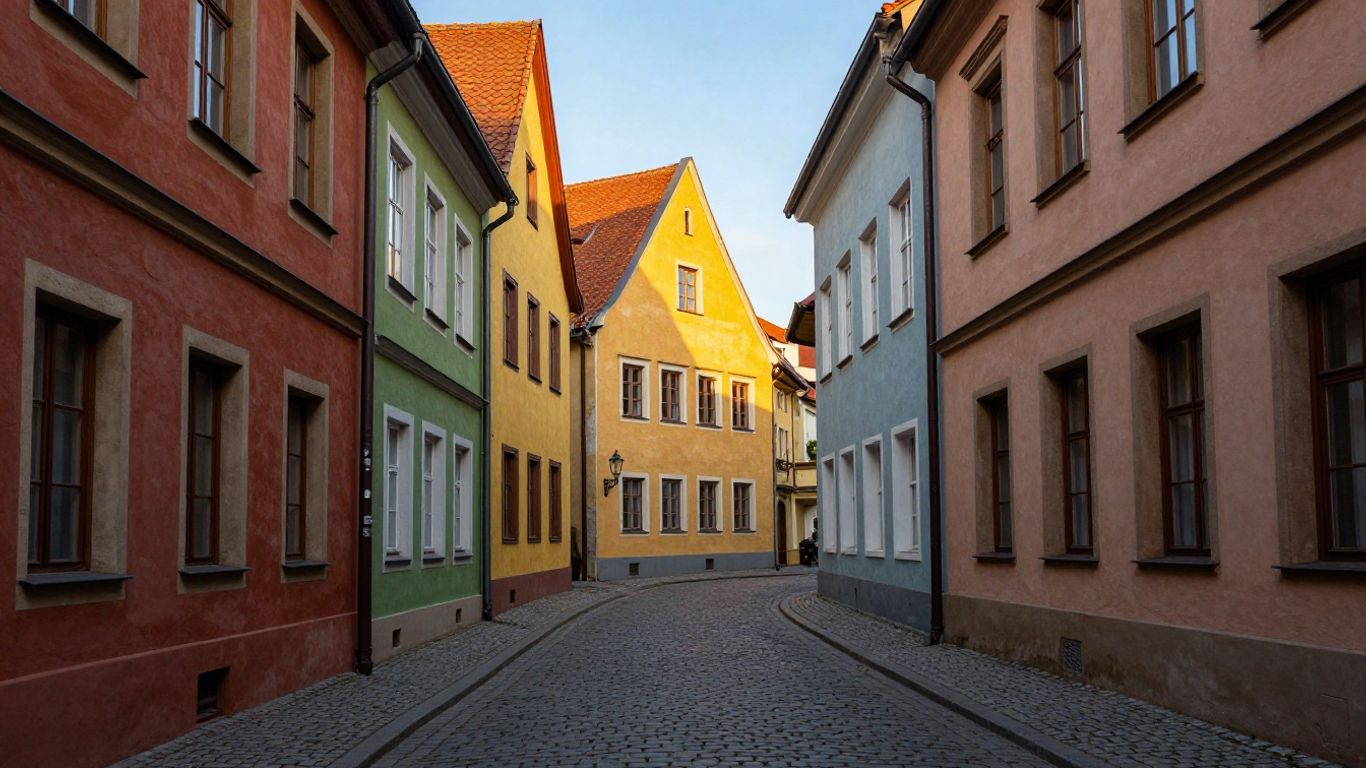 A historic cobblestone street scene in a German city
Applying for residency is a marathon, not a sprint. The process involves multiple, formal interactions that test your patience and your ability to follow strict instructions to the letter.
Booking your appointment at the local Ausländerbehörde
Availability at local immigration offices is extremely limited. You must check for openings immediately upon arrival or even while planning your entry. It is often recommended to utilize early-bird slots when the online system refreshes.
Managing interactions with immigration office officials
When meeting with officials, demeanor matters greatly. Be prepared to answer questions calmly and concisely. Having a neatly organized binder of all required forms shows that you are organized and respectful of their time constraints.
Estimated processing times and temporary residency status
- Initial appointment filing.
- Verification of documents by caseworkers.
- Issuance of a provisional D-visa.
- Production and collection of your electronic residence card.
Once the process begins, you often move into a temporary status that covers you while your permanent permit undergoes a thorough review.
Financial proof and tax considerations for digital nomads
Being able to self-sustain is the primary concern for the German government. You must be prepared to show that your income is not just stable, but sufficient for local needs.
Minimum income requirements to sustain residency
While the specific threshold can shift, authorities generally expect to see enough monthly income to cover your living costs plus a sufficient buffer. Documenting your income through bank statements over several months is usually necessary.
Understanding German tax obligations for freelancers
Germany has a robust, multi-layered tax system. You will likely be responsible for reporting your global income and might be subject to substantial contributions depending on your structure. Seeking advice from a local tax professional is advisable for any remote worker planning a long-term move.
Navigating social security contributions as a self-employed person
Unlike an employee who has taxes and insurance handled via payroll, you are responsible for your own payments. These contributions are part of the price of admission for long-term integration into the professional landscape.
Finding remote-friendly accommodation in German cities
Finding a place that supports your daily workflow is crucial. Urban centers offer everything from high-speed digital infrastructure to comfortable living spaces, provided you know where to look.
Searching for neighborhoods with reliable high-speed fiber internet
Top-tier cities like Berlin and Munich have extensive fiber networks, but some residential older buildings may have older connection types. Always verify the specific internet speed in potential apartments before signing any long-term lease agreement.
Utilizing home exchanges for flexible, work-ready housing
Home exchange offers a unique way to find living spaces that already include an existing desk and reliable Wi-fi. It is a cost-effective alternative to traditional rentals. This model often connects you with other remote workers who understand exactly what you need to be productive while living like a local.
Understanding the competitive German rental market landscape
The sheer volume of demand means that apartments disappear within hours if not minutes. For high-value or long-term needs, some professionals even rely on White Glove Home Delivery to manage their move if they are relocating significant assets along with them.
Tips for settling in and integrating as a remote worker
Moving to a new country means more than just finding a desk; it implies building a life. Integration happens in the small, daily moments of interaction with neighbors and colleagues alike.
Balancing remote work hours with local language learning
Dedicate time to consistent language study. Even basic proficiency in German will transform your daily interactions, from the local market to dealings with your neighborhood government offices.
Accessing the local coworking and professional freelancer community
There are numerous hubs and professional communities where you can meet others thriving in similar fields. Networking locally helps you navigate common hurdles and provides a supportive circle for both professional and personal pursuits.
Managing the transition to a sustainable German work-life culture
Embrace the concept of down-time and the respect for weekends that is common in German culture. Developing a sustainable rhythm helps ensure you don't burn out while juggling multiple time zones and business responsibilities.
Conclusion
Navigating the residency process in Germany for a digital nomad requires patience, meticulous organization, and a forward-thinking mindset. By following the legal pathways established for freelancers and entrepreneurs, you can build a stable, rewarding base that allows you to work globally while enjoying the unique local rhythm of German life, provided you approach each bureaucratic step with diligence and proper preparation.
Frequently Asked Questions
Can I arrive as a tourist and apply for the visa?
Usually, you can enter visa-free to look for opportunities, but you must strictly follow the local application process for upgrading your status to a residency permit well before your 90-day visa-free period expires.
What happens if I lose my freelance clients?
Your residency is tied to your ability to support yourself. If you lose significant work, you must actively demonstrate that you have other means or a plan to replace that income effectively to maintain your compliance.
Are there specific cities that are better for digital nomads?
Berlin, Munich, Hamburg, and Cologne are popular due to their connectivity, but smaller cities are increasingly building fast fiber infrastructure and professional communities that cater to remote workers.
Is the cost of living significantly higher in Germany?
While urban centers have become more expensive in terms of housing, the overall cost of living including healthcare, education, and transport is often considered reasonable compared to many major global financial hubs.
Do I need to be fluent in German to succeed?
While many professional environments operate in English, basic conversational German is highly recommended to manage banking, government, and community interactions effectively.
Can I bring my family with me?
Under certain conditions, it is possible for spouses and children to join you, though they will have their own specific application requirements for family reunification residency permits.
How often do I need to renew my residency permit?
Renewal periods vary depending on your specific permit and circumstances, but you should always initiate the renewal process several months before your existing permit expires to prevent any gaps in your status.

Published by
SwappaHome
SwappaHome Editorial Team
Home Exchange & Slow Travel Editorial
The SwappaHome Editorial Team brings together travel research, home-exchange community insights, and platform data to produce practical guides for first-time and experienced home swappers. Every article cites real platforms, current market rates, and verifiable city-level facts so readers can make informed decisions without guessing.
Ready to try home swapping?
Join SwappaHome and start traveling by exchanging homes. Get 7 free credits when you sign up!