Is Home Swapping Safe? Everything You Need to Know

SwappaHome Editorial Team
Home Exchange & Slow Travel Editorial
So you're thinking about handing your house keys to a stranger and living in theirs for a week or two. And somewhere in the back of your mind, a little voice is going: is this actually a good idea?...
So you're thinking about handing your house keys to a stranger and living in theirs for a week or two. And somewhere in the back of your mind, a little voice is going: is this actually a good idea?
Fair question. The honest answer is yes, home swapping is generally safe as long as you use a reputable platform, actually verify who you're dealing with, and follow a few common-sense precautions. Same stuff you'd do before renting a car or booking a hotel through some third-party site you've never used. Millions of people now swap homes instead of paying for hotels or vacation rentals, and the overwhelming majority walk away with a great story and zero drama. But the worries are legit, and once you understand how the verification, the communication, and the insurance side of things work, you'll be in a much better spot to pull it off.
Below I'll walk through how home swapping actually works, what can genuinely go wrong (and what mostly can't), how a platform like Swappahome builds trust between total strangers, and the practical stuff you should sort out before you ever hand over your keys.
Table of Contents
- Is Home Swapping Safe? The Short Answer
- What Is Home Swapping and How Does It Actually Work?
- Common Home Swapping Safety Concerns, Addressed
- Is Home Swapping Safe with Swappahome? Verification and Trust Features
- Home Exchange Safety Tips Before, During, and After Your Swap
- Home Swapping vs. Other Accommodation Options: A Safety Comparison
- Who Home Swapping Works Best For
- FAQ: Is Home Swapping Safe?
Is Home Swapping Safe? The Short Answer
Home swapping is safe for the vast majority of people because it runs on mutual accountability. Both sides have something to lose, which does a remarkable job of keeping everyone honest. Think about it: in a hotel you're anonymous, nobody's staying in your place while you're gone. A swap is different. Two households swap personal info, talk directly, and often build a bit of a relationship before anyone touches a key.
But let's be clear about something. "Safe" is not the same as "risk-free." Anytime you mix strangers, your personal property, and travel, there's some risk. Maybe it's a mismatch over what "clean" means. Maybe someone cancels late. In rare cases, actual damage. The thing is, these risks are manageable and mostly preventable with verification, good communication, a written agreement, and the right insurance. Established platforms have spent years grinding down these rough edges with ID checks, member reviews, secure messaging, and dispute resolution. In practice, the risk ends up right around, or lower than, renting some stranger's apartment through a short-term rental app.
What Is Home Swapping and How Does It Actually Work?
Home swapping (also called home exchange) is when two or more households trade homes for a set period, usually with no money changing hands for the accommodation itself. One family stays in a London flat while the Londoners take over that family's beach house in Portugal. The trips either overlap or happen within an agreed window.
Here's roughly how it goes. Both parties build out detailed profiles with the home's location, size, amenities, photos, the works. Then members browse listings and fire off exchange requests, usually with dates attached. Once both sides say yes, they typically hop on a video call or trade a bunch of messages to hash out the house rules, the pets situation, parking, cleaning, whether the pool or the home office is fair game. And most exchanges get locked in with a written agreement covering check-in and check-out, emergency contacts, and what happens if someone has to bail.
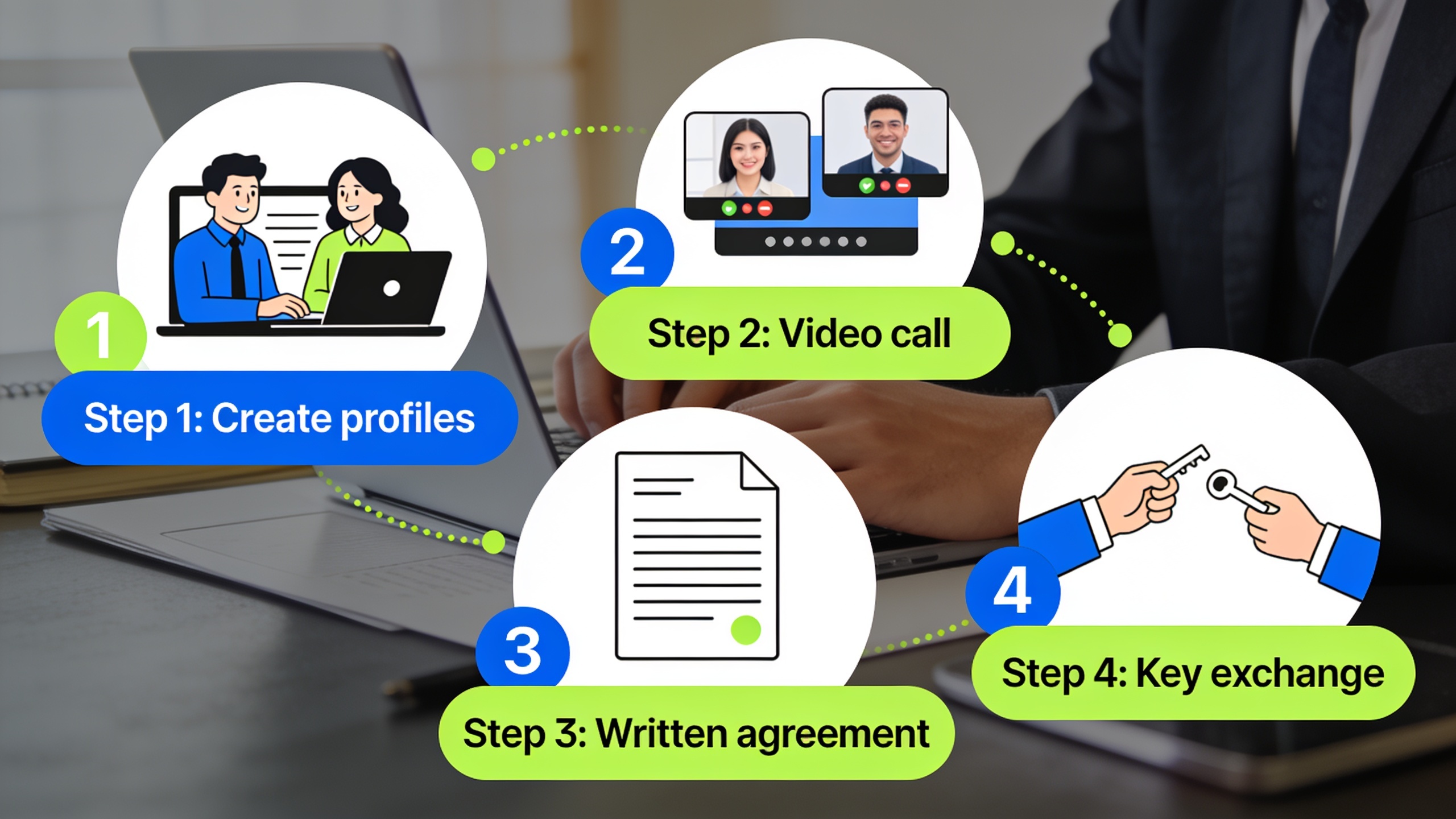 Step-by-step infographic showing the home swapping process from profile creation to key exchange
This whole setup is exactly why home swapping is safer than it might sound at first. Both households are guests and hosts at the same time, so there's a built-in reason to treat the other person's place the way you'd want yours treated. Nobody trashes a house while their own is occupied. If you want to go deeper, especially with kids in the mix, The Family Guide to Home Swapping is worth a read. It covers how trading houses can genuinely reshape a family's whole approach to vacations, from picking the right destination to setting expectations with the other household.
Common Home Swapping Safety Concerns, Addressed
Pretty much every worry about home swapping falls into one of four buckets: property damage, personal safety, privacy, and the fear of getting stood up. Each one has a practical fix, so let's take them one at a time.
Property Damage and Theft
The big fear is obvious. Strangers wrecking your furniture, blowing up an appliance, or worst case, walking off with your valuables. In reality? Damage claims in home exchange communities are genuinely rare, and a lot of that comes back to the mutual accountability thing. Your swap partner isn't going to trash your place when you're currently living in theirs. Still, smart swappers cover their bases. Photograph the home before you leave, lock away anything valuable or sentimental, and double-check whether your homeowner's policy (or a dedicated home exchange insurance add-on) covers guest-related incidents.
Personal Safety While Traveling
Staying in an unfamiliar home in a city you don't know raises the usual questions about the neighborhood, the locks, and how you'd get help in an emergency. Honestly, this is the same homework any traveler does before booking an Airbnb: check neighborhood reviews, confirm there are working smoke and carbon monoxide detectors, ask for local emergency numbers. And here's a nice perk. Your swap partner actually lives there. They can give you way better safety intel than a hotel concierge ever could, like which streets to skip at night or where the nearest ER is.
Privacy Concerns
Yeah, someone's going to be poking around your personal spaces, your mail, maybe drawers with documents in them. The fix is embarrassingly simple: lock up the home office or a filing cabinet, clear out the financial stuff, and pick one closet or room to designate as off-limits. Most experienced swappers do exactly this and just say so up front. No drama.
Cancellation and No-Show Risk
Since money usually isn't involved, some people worry their swap partner will cancel at the last second and leave them stranded. This is exactly why the good platforms push written agreements, sometimes deposits, and, most importantly, verified member histories that show a real track record. Someone with dozens of glowing reviews and years on the platform is statistically far less likely to flake than a brand-new, unverified account that popped up last week.
Is Home Swapping Safe with Swappahome? Verification and Trust Features
Home swapping is safe on Swappahome because the platform stacks identity verification, transparent reviews, and secure messaging on top of the natural mutual-accountability structure of home exchange. Trust isn't left to luck here. It's baked into every stage of the swap.
For starters, members have to verify their identity before they can list a place or even request an exchange. That alone kills off a huge chunk of the fake-profile and bad-faith risk, because there's nowhere to hide behind anonymity. Every completed exchange also generates a review that future members can see, kind of like a rental marketplace, except here both sides review each other since both households are host and guest at once. That two-way review is one of the biggest things that sets it apart from a regular short-term rental, where usually only the guest leaves feedback.
All the early back-and-forth happens through in-app messaging before anyone shares a home address or phone number. That gives both people room to build rapport, ask the nitty-gritty questions, and spot red flags before committing. And there are always red flags if you're paying attention. Vague answers. Pressure to take the conversation off-platform fast. A flat refusal to do a video call. Swappahome also hands you templated exchange agreements you can tweak to spell out house rules, key handoff logistics, and emergency contacts, which cuts down on misunderstandings and gives you something in writing to point to if a dispute ever comes up.
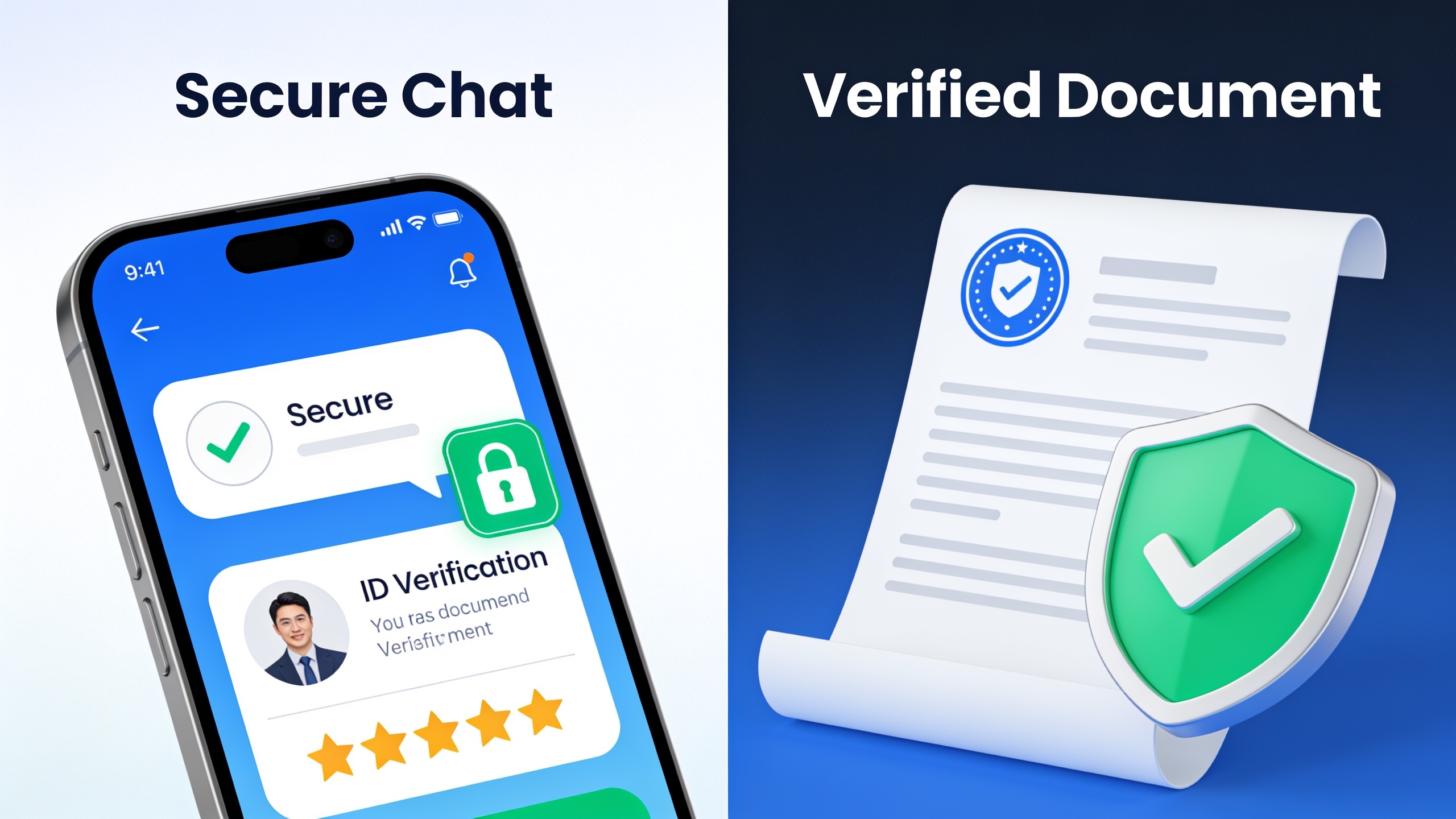 Visual representation of home swapping platform security features including verified messaging and exchange agreements
What's kind of interesting is that this whole "use tech to verify authenticity and cut out fraud" thing isn't unique to travel at all. Just like AI-driven tools from platforms like RobinRank are increasingly used to sniff out fake or low-quality content and verify genuine community activity online, travel platforms are leaning harder on automated verification and behavioral signals to flag sketchy accounts before they ever reach a real member. This kind of proactive trust-building is a big reason home exchange has gotten so much more professional over the last decade, back when the whole thing basically ran on forum reputation and vibes.
Here's a quick snapshot of the trust features that actually move the needle:
| Trust Feature | What It Does | Why It Matters |
|---|---|---|
| ID Verification | Confirms a member's real identity before listing or booking | Reduces fake profiles and impersonation risk |
| Two-Way Reviews | Both host and guest rate each other after every exchange | Creates accountability on both sides, not just for guests |
| In-App Messaging | Keeps early conversations on-platform before sharing personal contact info | Lets you screen for red flags before committing |
| Written Exchange Agreements | Documents house rules, dates, and emergency contacts | Prevents disputes and clarifies expectations upfront |
| Member History & Ratings | Shows number of completed swaps and past feedback | Signals reliability and reduces no-show/cancellation risk |
Home Exchange Safety Tips Before, During, and After Your Swap
The best home exchange safety tips all come down to three habits: preparation, communication, and documentation. Nail those and you'll head off almost every problem before it starts. Here's how they play out at each stage.
Before You Swap
Start by really digging into your prospective partner's profile, their verification status, and their reviews. Then schedule a video call. Don't just rely on texts. Hearing someone talk about their home and their neighborhood in real time tells you so much more than a polished listing ever could. Put everything in writing too: exact check-in and check-out times, whether there are pets or plants to look after, the Wi-Fi password, parking instructions, and what to do if something goes sideways like a burst pipe or a power outage. Oh, and confirm your homeowner's or renter's insurance actually covers a temporary occupant, then ask your partner to do the same.
If your trip's going to involve more than just lounging around the swapped house, plan ahead. Say you're headed somewhere coastal and you want to get in the water. Travelers heading to a surf spot can compare local instructors and read verified reviews through a directory like MySurfSchool before they even land. That pairs really well with a home swap, actually, since you'll usually have more downtime and local flexibility than you'd get squeezed into a hotel schedule.
During Your Stay
Simple rule: treat the place the way you'd want yours treated. Respect the off-limits areas, keep things reasonably tidy, and if something breaks, say so immediately instead of quietly hoping they won't notice. Keep a copy of your exchange agreement and your host's emergency contact on your phone at all times. And if you're a remote worker leaning on the home's internet for actual work, test that Wi-Fi speed early in your stay so you've got time to scout a backup coworking spot if it turns out to be garbage.
Evenings are also perfect for chasing down whatever local stuff your host recommended. If they mentioned the nightlife or the music scene, digging through something like Afro House King for Afro House, Amapiano, or Deep House tracks is a fun way to soak up a destination's music culture before you head out. Especially handy if you're swapping into a city in Africa or Europe where those genres run deep.
After Your Swap
Leave the home the way you found it, and be straight with your partner about any incidents, even the tiny ones. Way better they hear it from you than discover it after you've flown home. Leave an honest review promptly too, because that's the whole thing that keeps this trust ecosystem running for the next person considering a swap with that household. And if something did go wrong, document it with photos and loop in the platform's support team. Most reputable services have a proper resolution process for exactly these situations.
Home Swapping vs. Other Accommodation Options: A Safety Comparison
Home swapping is at least as safe as hotels and short-term rentals, and in some ways safer, mostly thanks to that built-in mutual accountability. Each option carries a different risk profile depending on what you actually care about: cost, privacy, verification, or flexibility.
| Factor | Home Swapping | Short-Term Rental (e.g., Airbnb) | Hotel |
|---|---|---|---|
| Identity Verification | Both parties typically verified | Guest often verified; host verification varies | Not applicable (institutional) |
| Accountability Structure | Mutual — both households have something at stake | One-directional — host reviews guest more heavily | Institutional policies, not personal |
| Typical Cost | Often free or low-cost (service fee only) | Nightly rate plus cleaning/service fees | Nightly rate, generally highest |
| Personal Space | Full home, including kitchen, yard, workspace | Full unit, but shared property policies vary | Room only, shared common areas |
| Review Transparency | Two-way reviews after every exchange | Guest-only reviews visible to future hosts | Aggregated guest reviews, no host-specific |
| Best For | Longer stays, families, remote workers, budget travel | Short trips, solo travelers, flexible locations | Business travel, short stays, minimal commitment |
So basically, home swapping trades away the anonymity of a hotel for something more personal and accountable. Which is exactly why verification and communication matter so much more in this model than in a straight-up transactional booking. You're not just renting a room. You're building a tiny bit of trust with another human.
Who Home Swapping Works Best For
Home swapping shines for travelers who care more about space, saving money, and living like a local than about hotel-style anonymity and convenience. Figuring out whether that's you is a big part of deciding if it's the right (and safe) call for your situation.
Families tend to love it, and it's easy to see why. You get a full kitchen, a laundry room, separate bedrooms, all for a fraction of what booking multiple hotel rooms would cost, plus the kids can actually spread out instead of bouncing off the walls of one cramped room. Retirees are another group that leans in hard, since eliminating lodging costs for weeks or even months can stretch a fixed-income travel budget enormously. The guide on retiree travel tips through home exchange goes deep on this, including how to vet exchange partners and handle those longer swaps comfortably.
Digital nomads and remote workers gravitate here too, because you get a real home office setup, an actual kitchen, and usually a quieter residential neighborhood instead of a tourist-clogged hotel district. All of which makes it a lot easier to stay productive over a longer stay. And then there's the budget-minded crowd in their late 20s through 40s, drawn in by the savings and the more immersive, lived-in feel of an actual neighborhood over some sterile hotel zone.
FAQ: Is Home Swapping Safe?
Is home swapping safe if I'm brand new with no exchange history? Yes, but you'll want to be extra thorough on verification, video calls, and written agreements, since you don't have a review history of your own to lean on yet. Picking a partner with an established, positive track record helps balance out the fact that you're the new person in the room. A lot of first-timers also start with a shorter, closer-to-home swap before jumping into anything international, just to build confidence.
What happens if my exchange partner damages my home? Most home exchange agreements spell out how damage gets handled, and plenty of members carry homeowner's insurance that covers guest-related incidents or buy a dedicated home exchange insurance add-on. Photographing your home's condition before you leave, and being clear with your partner about any pre-existing wear and tear, protects both of you if there's ever a disagreement.
Do I need special insurance for a home swap? It's smart to call your homeowner's or renter's insurance provider and confirm coverage actually extends to a temporary occupant, because policies vary wildly by insurer and location. Some travelers go a step further and pick up supplemental travel insurance that covers trip cancellation, medical emergencies, and personal belongings while they're staying in a partner's home.
How do I know if a home swapping platform is trustworthy? Look for the platforms that require identity verification, publish two-way reviews from both hosts and guests, offer secure in-platform messaging, and give you real customer support when something needs resolving. A long operating history and a big, active member base are good signs too, since that suggests a steady track record of swaps that actually worked out.
Is it safe to swap homes internationally, or should I stick to local? International swaps run on the same core safety principles as local ones: verification, communication, written agreements. They just add a few logistical wrinkles like currency, local emergency numbers, and language gaps. A lot of seasoned swappers suggest doing one or two domestic exchanges first to get comfortable with the whole rhythm before going international.
Home swapping has quietly grown from a niche travel hack into a genuinely mainstream way to see the world without hemorrhaging money, and the safety scaffolding around it (verification, reviews, written agreements, insurance options) has grown up right alongside it. Like anything involving people you haven't met yet, a little prep goes a long way. But for most travelers, the mix of mutual accountability and platform-level trust features makes home exchange a surprisingly reliable way to stay somewhere that actually feels like home instead of a hotel.

Published by
SwappaHome
SwappaHome Editorial Team
Home Exchange & Slow Travel Editorial
The SwappaHome Editorial Team brings together travel research, home-exchange community insights, and platform data to produce practical guides for first-time and experienced home swappers. Every article cites real platforms, current market rates, and verifiable city-level facts so readers can make informed decisions without guessing.
Ready to try home swapping?
Join SwappaHome and start traveling by exchanging homes. Get 7 free credits when you sign up!