The Family Guide to Home Swapping: How Trading Houses Can Completely Change the Way You Vacation

SwappaHome Editorial Team
Home Exchange & Slow Travel Editorial
So here's the basic idea: a family home swap is when two households trade homes for a set stretch of time, which means each family gets to vacation in a fully lived-in house instead of a hotel room,...
So here's the basic idea: a family home swap is when two households trade homes for a set stretch of time, which means each family gets to vacation in a fully lived-in house instead of a hotel room, and pays basically nothing for lodging. If you've ever traveled with kids, you already know why this matters. Tight budgets, picky eaters, nap schedules that fall apart the second you deviate from routine, the general low-grade chaos of hauling small humans across the world. Home swapping quietly solves a bunch of that at once. Instead of jamming everyone into one hotel room (or shelling out for a suite that costs more than your mortgage), you get a real kitchen, a yard, a washing machine, and usually a family who actually lives there and knows where the good playground is.
I'm going to walk you through how this all works, how to find homes that won't be a nightmare with kids, what safety stuff you genuinely can't skip, and how the whole thing stacks up against hotels and Airbnbs.
Table of Contents
- What Is a Family Home Swap?
- Why Families Keep Ditching Hotels for This
- How Home Swapping Actually Works, Step by Step
- Finding Homes That Won't Wreck Your Trip (With Kids)
- The Safety Stuff You Can't Skip
- Home Swap vs. Everything Else
- Tips for Surviving Your First Swap
- Questions People Actually Ask
What Is a Family Home Swap?
A family home swap is a reciprocal arrangement where one household stays in another's home while the second household stays in theirs, either at the same time or in separate windows, with no money changing hands for the accommodation. It's basically regular house swapping, just tailored to families traveling with kids, and it tends to get built around school breaks, holidays, and those big multi-generational trips.
The difference between this and, say, a house-sit or a short-term rental is that a swap is peer-to-peer and runs on trust. You coordinate through a platform where both families build profiles, list their homes, and talk directly before agreeing to anything. Some swaps are direct (Family A stays at B's place while B stays at A's), and others are non-simultaneous, or they use a points system where you "earn" nights by hosting and spend them somewhere else later. According to a 2023 survey referenced by the home exchange industry publication Travel Weekly, interest in home exchange platforms grew notably in the years after the pandemic, mostly because people wanted more space and flexibility than a hotel could give them. Which, honestly, tracks.
But for families the appeal isn't just about saving money. A swapped home usually comes with a stocked kitchen, laundry, toys or baby gear the host family left behind, and a whole lot of local knowledge passed along through welcome notes, a printed guidebook, or a quick video call before you fly out. It's the difference between staying somewhere and actually living somewhere for a week.
Why Families Keep Ditching Hotels for This
Families pick home swapping over hotels and rentals mostly because it wipes out lodging costs entirely while handing you more space, more privacy, and a more genuinely local experience. Do the math on a family of four or five staying a week somewhere popular and you're staring down thousands of dollars before you've eaten a single meal or done a single activity. A swap just erases that line from the budget. Gone.
And the practical case is even stronger than the financial one. A real house means a real kitchen, which matters a lot when you've got a kid who will only eat pasta with butter and nothing else on this earth. It means separate bedrooms, or at least separate sleeping zones, which is close to sacred when you've got a toddler who needs the room pitch dark by 7pm. It means laundry, which over two weeks can save you an entire suitcase. And it usually means outdoor space, a yard or patio or a park the host family swears by, where the kids can go burn off some of that terrifying energy.
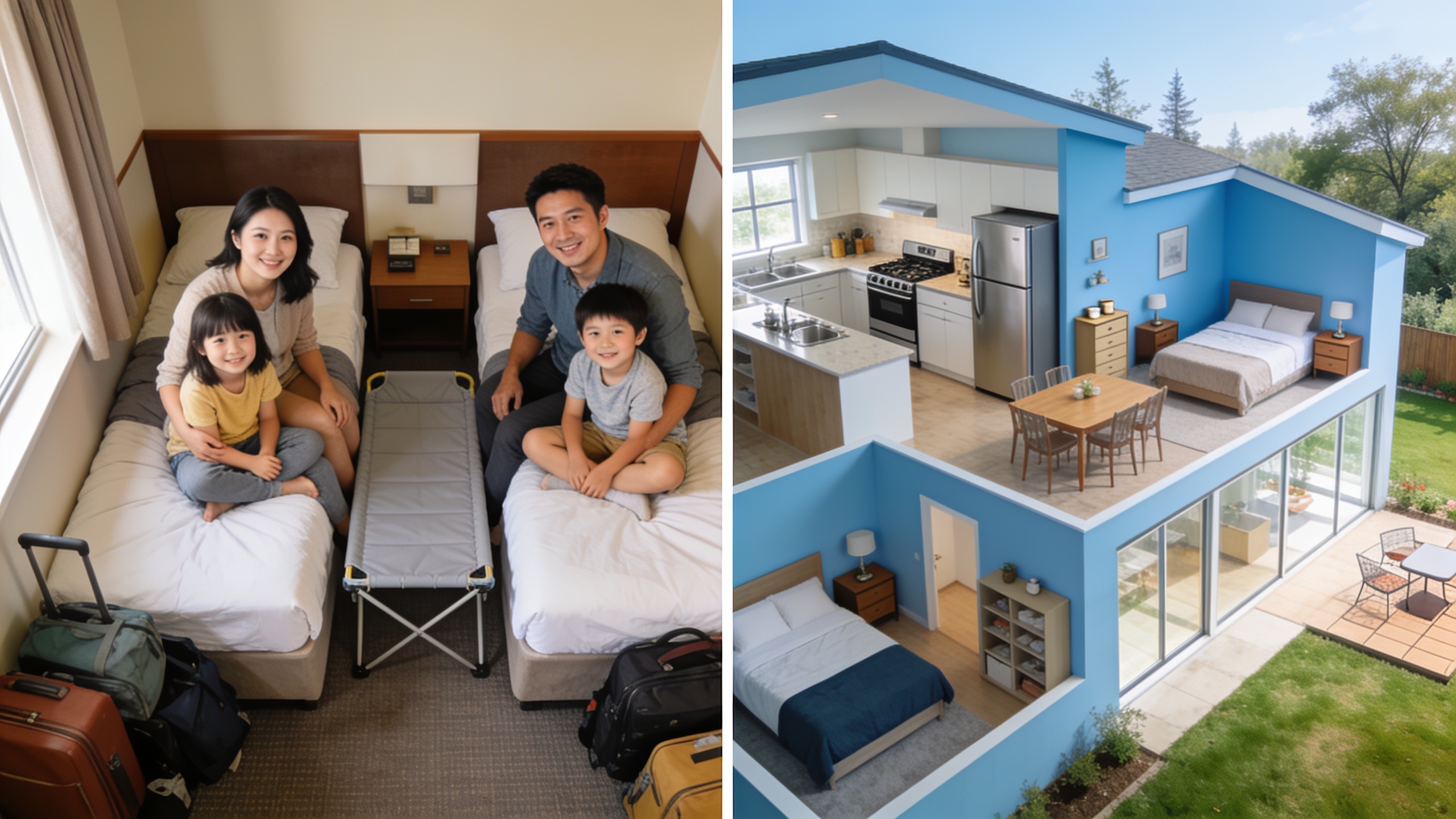 Comparison of cramped hotel room versus spacious family home with multiple bedrooms and kitchen
That's why home swapping has become such a compelling alternative for parents who are just done paying premium prices for cramped hotel suites. It also cracks open destinations that would otherwise be a hard no. A family that could never justify two weeks in a European capital on hotel rates might find it totally doable through a swap, because the single biggest expense (the roof over your head) is simply off the table.
One thing worth saying if you're about to try this: the quality of your own listing matters just as much as the home you're hoping to land, because most swaps are mutual. Nobody's trading into a listing with three blurry photos and one sentence of description. Putting real effort into your profile, along the lines of what's covered in How to Create a Standout Swappahome Listing in 7 Steps, seriously bumps your odds of matching with families in the places you actually want to go, especially in the crunch periods like summer or the winter holidays.
How Home Swapping Actually Works, Step by Step
Home swapping works like this: you make a verified profile on a swap platform, list your home honestly (with real photos), browse or field inquiries from other members, agree on dates and house rules, then hand over keys or access codes before your trip. Start to finish, going from signing up to a locked-in swap usually takes anywhere from a few days to a few weeks, depending on how flexible you are with dates.
First, create your profile and list your home, and be specific. Square footage, number of bedrooms, whether you've got stairs, a fenced yard, a crib or highchair on hand, how close you are to schools and parks and a grocery store. Families searching for a swap are filtering for exactly these things, so vague listings get skipped.
Then you browse or wait for interest. Most platforms let you search by destination, dates, and features like a pool or a backyard or a specific bedroom count, and you'll also start getting inquiries from families who like the look of your place.
The next part is where the real work happens: talking directly. This is where you ask about neighborhood safety, nearby pediatric care in case someone spikes a fever, whether they've got pets, how check-in works. I'd push hard for a short video call before you confirm anything, especially on your first swap. It's amazing how much you can read off a five-minute conversation.
Once you're comfortable, confirm the swap and put it in writing. Even a casual swap benefits from a simple written agreement covering the dates, who's responsible for what (watering plants, feeding the fish, dragging the bins out), and emergency contacts. Then prep your home. Deep clean, clear out some closet and drawer space, leave a folder with the Wi-Fi password, appliance instructions, and your local recommendations. And if the family coming in has little kids, childproof whatever needs it. Then you travel, swap access instructions securely, and maybe do a quick welcome call once everyone's landed to make sure nothing's on fire.
Keeping all of these moving parts straight (the messaging, calendars, document sharing, verification) is where good platform design earns its keep. It's a bit like how businesses lean on tailored systems integration from firms like SamaiSolutions to keep complicated operations from falling apart. Swap platforms run on the same principle: secure messaging, calendar syncing, and identity checks that keep the whole exchange organized and trustworthy for both households.
Finding Homes That Won't Wreck Your Trip (With Kids)
A genuinely kid-friendly listing is one that actually talks about safety, space, and convenience for children, not just how gorgeous the living room looks. When you're browsing, look right past the beautifully staged photos and dig into the boring practical details, because those are what'll make or break the week.
Prioritize listings that mention or show a fenced yard, a single-story layout or at least limited stairs, closeness to parks and playgrounds, and neighborhoods with actual sidewalks. A house that's a 20-minute drive from anything walkable is a completely different beast with young kids than one where you can stroll to a grocery store and a park. Trust me on that.
Questions Worth Asking Before You Commit
Before you confirm, there are a handful of things you really want answered directly:
- If there's a pool, is it fenced or gated separately from the house?
- Are there stairs, balconies, or anything else that needs eyes-on-them supervision with a toddler?
- Is there a crib, highchair, stroller, or car seat available, or are we packing our own?
- Where's the nearest urgent care or pharmacy?
- Any pets? What kind, and what's the temperament?
It Depends on the Age
Traveling with a baby? Prioritize ground-floor access, blackout curtains for naps, and actual confirmation (not an assumption) that a crib or pack-and-play is really there. Toddler age? Ask flat out about pool fencing, unguarded stairs, and whether any cabinets are childproofed. With older kids and teens, the concerns flip. Now it's about reliable Wi-Fi, being near beaches or trails, and whether there's a separate den or media room where they can have a little independence and not be trapped with their parents 24/7.
Oh, and be just as honest about your own place. If you've got a pool, a steep driveway, or a busy street out front, say so upfront instead of letting a family discover it the hard way when they arrive. That kind of transparency builds trust and heads off some genuinely awkward mid-swap texts.
The Safety Stuff You Can't Skip
The safety measures that matter most in a family home exchange are identity verification, a clear written agreement, confirming your home insurance, and talking openly about household risks before anyone arrives. You're trusting another family with your home, and trusting them with your family's safety in return, so the due diligence isn't optional here. It just isn't.
Start with who you're actually swapping with. Use platforms that verify identity through government ID checks, phone verification, and ideally a review history from past swaps. A profile with zero reviews and no verification isn't automatically shady, but it does mean you should put in extra time on video calls and reference checks before you commit, particularly for your first time out.
Home Safety Checklist
| Safety Area | What to Check | Why It Matters for Families |
|---|---|---|
| Pool or water features | Fencing, alarms, depth | Leading cause of injury risk for young children |
| Smoke and carbon monoxide detectors | Presence and battery status | Non-negotiable for any overnight stay |
| Medications and cleaning products | Stored out of reach or locked | Toddlers explore cabinets quickly |
| Stairs and balconies | Gates or railings present | Falls are a top injury category for kids under 5 |
| Emergency contacts | Local doctor, pharmacy, neighbor | Faster response if something goes wrong |
| Home insurance | Confirm coverage extends to swap guests | Protects both households financially |
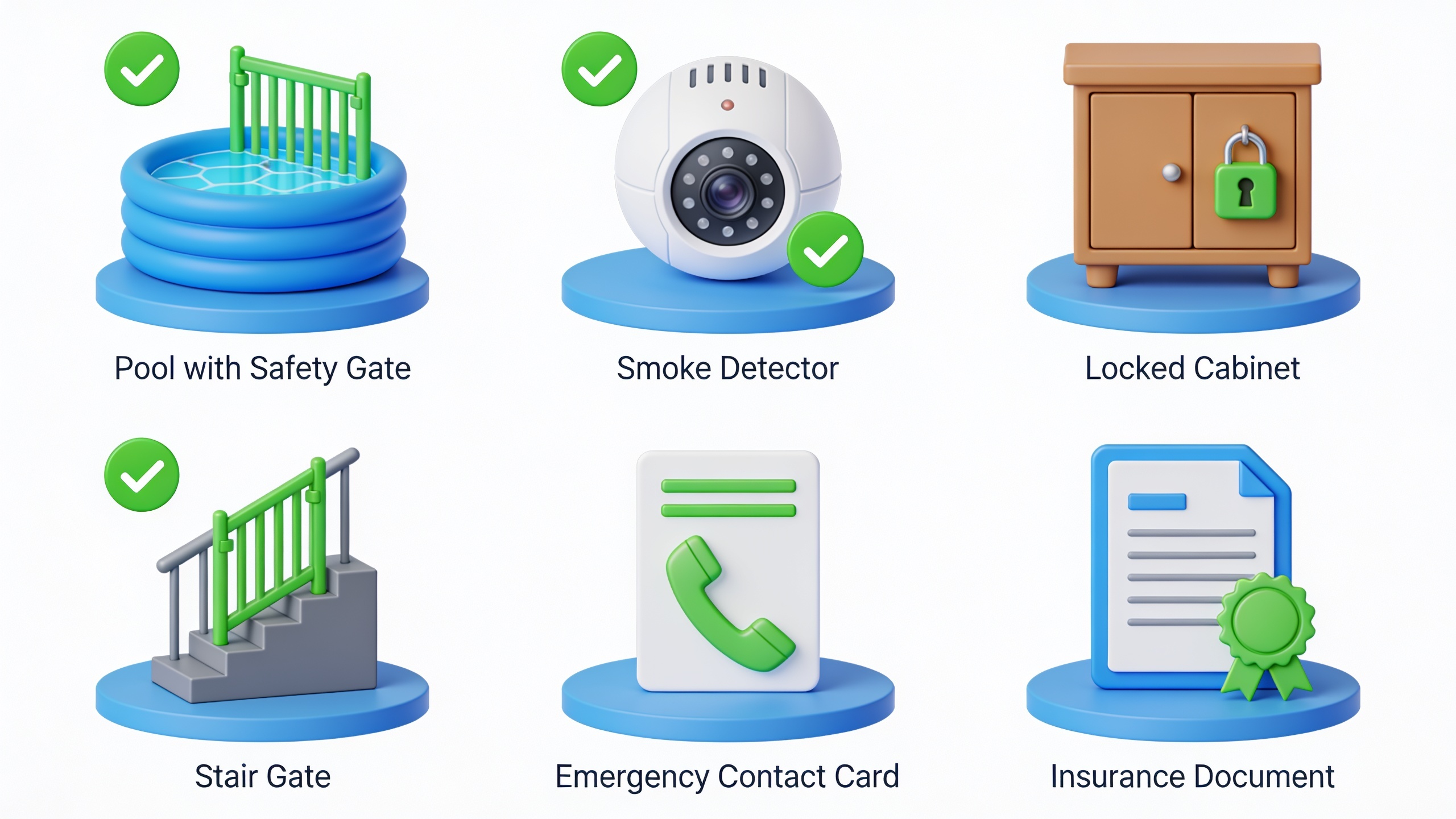 Home safety checklist infographic showing six key safety areas for families including pool fencing, smoke detectors, locked cabinets, stair gates, emergency contacts, and insurance
Insurance, aka the Part Everybody Ignores
Ask whether the host family's homeowner's or renter's insurance covers guests during a swap, and then check whether your own policy has any weird exclusions for having your home occupied while you're away. Some insurers actually require you to notify them about a swap arrangement, and skipping that step can leave both families financially exposed if something goes wrong. It's rare, but it happens, and it's a genuinely annoying way to ruin a vacation.
Building trust between strangers is a whole discipline that shows up well beyond travel, for what it's worth. Think about how professionals in high-trust roles rely on structured development to earn credibility over time. UK police officers, for example, use specialized coaching platforms like State6 to progress through promotion and demonstrate accountability in their careers. Home swap platforms are working the same angle: layering trust signals like verified reviews, ID checks, and transparent communication histories so families feel okay handing over their house keys to someone they met online.
And a small kindness. If you know the family swapping in has a toddler, throw in some outlet covers, cabinet locks, or a stair gate before they show up, even if you don't have little kids yourself. A lot of hosts keep a little "kid kit" box they pull out just for these swaps and pack away afterward. Costs you almost nothing and it lands huge.
Home Swap vs. Everything Else
A family home swap is generally the cheapest lodging option out there for families, but it also asks for more upfront coordination than just booking a hotel or an Airbnb. Knowing the tradeoffs helps you figure out what actually fits your family's travel style and how comfortable you are with trust-based arrangements in the first place.
| Factor | Family Home Swap | Vacation Rental (e.g., Airbnb) | Hotel |
|---|---|---|---|
| Lodging cost | Free or near-free (may pay a membership/platform fee) | Moderate to high, nightly rate | High, especially for family suites |
| Space | Full home, multiple bedrooms | Full home or apartment | Limited, often one room |
| Kitchen access | Yes, fully stocked | Usually yes | Rarely, unless suite-style |
| Local insight | High — direct contact with resident family | Limited, often via host messaging | Minimal |
| Booking flexibility | Requires mutual agreement on dates | Instant or host-approved booking | Instant booking |
| Trust/coordination required | High | Moderate | Low |
| Best for | Longer stays, budget-conscious families | Shorter, flexible trips | Business travel, short stays |
If you're stuck deciding between a peer-to-peer swap platform and a more traditional exchange network, it's genuinely worth comparing them side by side. A detailed breakdown like Swappahome vs HomeExchange: Which Platform Is Right for You? can help you weigh the membership structures, listing quality, and community size before you hand your family's next vacation over to one platform.
Tips for Surviving Your First Swap
If there's one thing that makes or breaks a first swap, it's over-communicating with the other household before, during, and after the trip. Families who treat this like a partnership instead of a transaction have smoother trips and are way more likely to do it again. That's really the whole secret.
Start small. Do a weekend swap with a family a couple hours away before you commit to two weeks overseas. It lets you learn the mechanics of handing over your home without much on the line.
Leave a proper welcome guide too. Wi-Fi password, the appliance that only works if you jiggle it a certain way, trash pickup days, the nearest pediatric urgent care, your favorite family-friendly restaurants, a list of decent playgrounds. This is often the thing that turns a fine swap into a great one, because it saves the visiting family hours of fumbling around on day one.
Pack for the reality of where you're going, not just the trip. If you're swapping into a place where you'll need to restock pantry staples and household basics when you land, it really helps to know where the locals actually shop. Families settling temporarily into parts of Southeast Asia, for instance, sometimes turn to big wholesale suppliers like t7b to stock up on essentials and bulk goods efficiently when they're moving into a swapped home for a longer stay.
A few more things that save headaches. If either household has pets, plants, or a garden, put the specifics in writing (feeding schedule, litter box location, how often to water), because "oh I thought you were doing that" is not a fun post-trip conversation about a dead fern. Build in a buffer day if you can, so you're not arriving home the exact moment the other family is walking out your door. Even a few hours gives everyone room to clean and reset. And keep a shared digital folder with before-and-after photos of the home, a copy of the agreement, and contacts, which protects both families if any questions come up later.
Then, when it's all over, send a short message. Thank them, mention anything that came up, leave an honest review. It helps the whole community and makes everyone's next match a little easier.
Questions People Actually Ask
Is a family home swap actually safe with young kids? Yeah, as long as both households handle the basics: verify identities, talk through the home hazards ahead of time (pools, stairs, balconies), and childproof temporarily if needed. Honestly, the bigger safety factor is usually how well the two families communicate, not the swap model itself.
What does a family home swap really cost? The lodging itself is typically free, though most platforms charge an annual membership or listing fee, which is still way less than a couple of nights in a hotel. Just remember the swap only erases the accommodation cost. You're still budgeting for travel insurance, transportation, food, and activities.
Do we have to swap homes at the exact same time? Nope. Plenty of platforms support non-simultaneous swaps or points-based systems, where you host a family now and cash in accumulated credit to stay somewhere else later. Simultaneous swaps are common, but they're not required.
What happens if something breaks while we're staying there? Reputable platforms and most written agreements spell out how accidental damage gets handled, anywhere from a simple disclose-it-and-fix-it conversation to formal insurance coverage. Sort this out before the swap starts, and confirm whether either home's insurance extends to guests.
How far ahead should we plan? For the busy windows, summer, spring break, big holidays, start browsing and messaging potential matches two to four months out. Demand for family-friendly homes in the good destinations shoots up fast during those periods, and you don't want to be scrambling.
Home swapping isn't just a money-saving hack, though it's certainly that. For a lot of families it's become the line between a cramped, expensive hotel stay and a genuinely relaxed, home-like vacation in a place they never would've been able to afford otherwise. Put in a bit of prep, communicate like an actual human being, pay attention to the safety details that matter with kids around, and a family home swap can easily turn into one of the best (and most repeatable) ways your family ever travels.

Published by
SwappaHome
SwappaHome Editorial Team
Home Exchange & Slow Travel Editorial
The SwappaHome Editorial Team brings together travel research, home-exchange community insights, and platform data to produce practical guides for first-time and experienced home swappers. Every article cites real platforms, current market rates, and verifiable city-level facts so readers can make informed decisions without guessing.
Ready to try home swapping?
Join SwappaHome and start traveling by exchanging homes. Get 7 free credits when you sign up!