Travel barter systems explained: Save big with home swapping

SwappaHome Editorial Team
Home Exchange & Slow Travel Editorial
Travel barter systems explained: Save big with home swapping !Families swapping homes in friendly handoff > TL;DR: > > - Travel barter systems allow...
Travel barter systems explained: Save big with home swapping
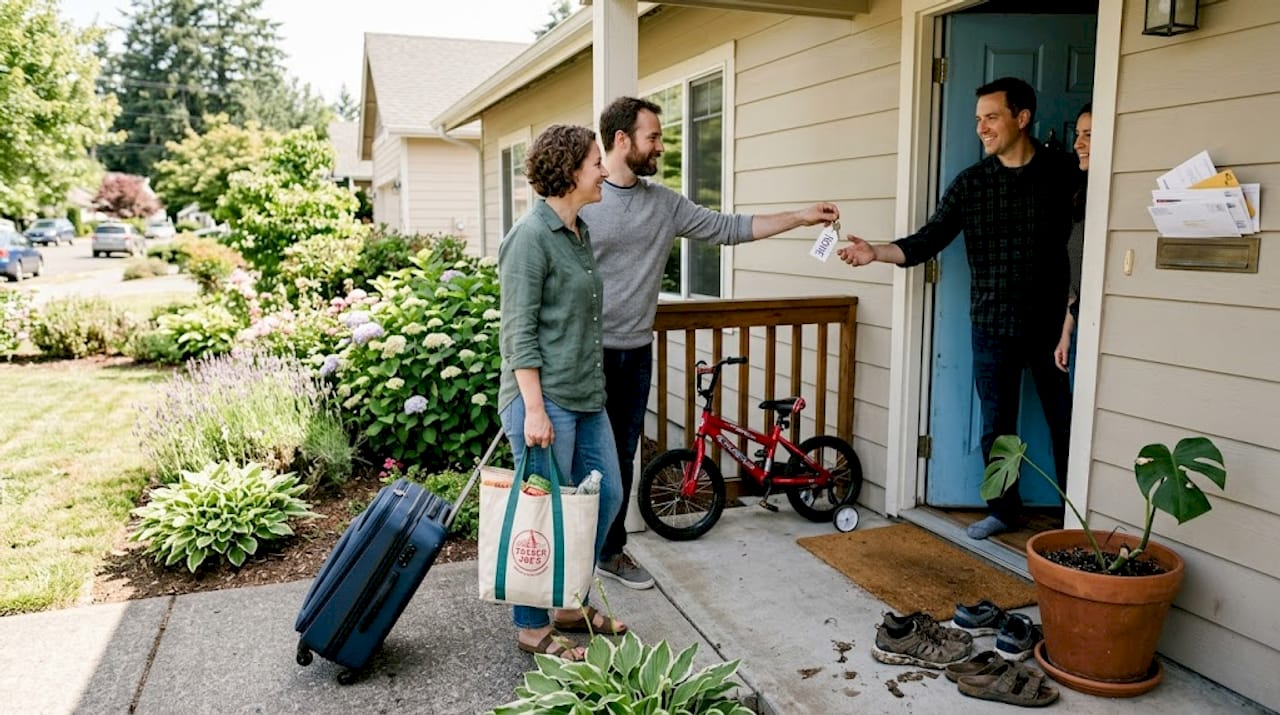 Families swapping homes in friendly handoff
TL;DR:
- Travel barter systems allow travelers to exchange accommodations or services without using money, significantly reducing lodging costs. These models include home swapping, guest points, pet sitting, and skill exchanges, which offer authentic experiences and substantial savings. Most platforms charge a yearly membership fee and use verification and review systems to ensure trust and safety.
Travelers who rely on hotels or short-term rentals spend a significant chunk of their budget before they even leave home. But a growing number of smart travelers are cutting lodging costs to nearly zero by using travel barter systems, and the savings are real. Users save $3,000 to $15,000 annually through home exchange alone. This article breaks down exactly how these systems work, what the risks and rewards look like, and whether this approach fits your travel style. If you have ever wondered whether free accommodation is actually possible, the answer is yes.
Table of Contents
- What are travel barter systems?
- How travel barter systems work: Models and mechanics
- Risks, rewards, and cultural immersion
- Who benefits and what to expect
- Our take: When travel barter systems are a game changer
- Start your travel barter journey with Swappahome
- Frequently asked questions
Key Takeaways
| Point | Details |
|---|---|
| Save on lodging | Home swapping can reduce travel accommodation costs by thousands annually. |
| Flexible exchange models | Choose between simultaneous swaps, point systems, and skills-based barters. |
| Culture and sustainability | Barter systems offer deeper cultural immersion and eco-friendly travel options. |
| Trust and reviews matter | Verification and community reviews are key to safe and rewarding swaps. |
| Ideal for families | Families benefit from spacious homes and kitchen access for less. |
What are travel barter systems?
A travel barter system is any arrangement where travelers exchange accommodations or services without using money. Instead of paying a nightly rate, you trade something of equal value, most commonly your home, your time, or a skill. Home exchange is the most popular form, but the broader category includes pet sitting, skill swaps, and hospitality exchanges.
These systems differ from traditional lodging in one fundamental way: no cash changes hands for the stay itself. You might pay a small platform membership fee, but you never pay per night. That shift alone changes how you budget for travel entirely.
The main forms of travel barter include:
- Home swapping: You stay in someone else's home while they stay in yours, either at the same time or at different times
- Guest point systems: You host a traveler, earn credits, and spend those credits on future stays anywhere in the network
- Pet and house sitting: You care for a home or pets in exchange for free accommodation, often facilitated through platforms like TrustedHouseSitters
- Skill-based exchanges: You offer a service such as cooking, language tutoring, or repairs in exchange for a place to stay
Each model has its own rhythm, but they all share the same core logic: mutual value without monetary transactions.
"Travel barter systems give you authentic stays, real cultural immersion, and serious budget savings that hotels simply cannot match. You are not a guest in a business. You are a guest in someone's life."
For a deeper look at how home swapping fits into the broader sharing economy, the home swapping guide from Swappahome covers the full picture. If you want to compare different models side by side, this exchange models overview is a solid starting point.
How travel barter systems work: Models and mechanics
Now that we know what barter systems are, let's break down how they function in practice. The mechanics fall into three main categories: simultaneous swaps, non-simultaneous exchanges, and credit or points systems.
Here is how each one works:
- Simultaneous swap: Both parties stay in each other's homes at the same time. This requires coordination but eliminates any trust gap around timing.
- Non-simultaneous swap: You stay in someone's home at a different time than they stay in yours. More flexible, but requires both parties to trust the arrangement over time.
- Credit or points system: You host a traveler, earn credits, and use those credits to book stays elsewhere in the network. No direct swap partner needed.
Most platforms charge an annual membership fee rather than nightly rates. That fee typically covers access to listings, verification tools, and customer support. For a full breakdown of affordable home swapping costs and savings, the numbers are compelling.
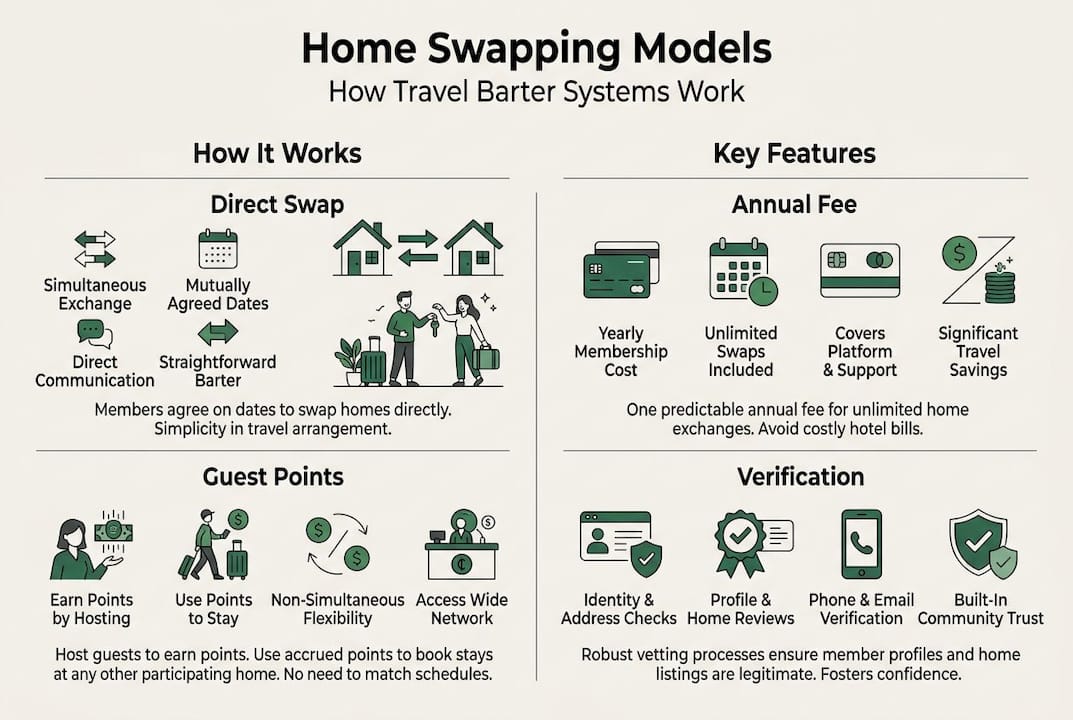 Infographic comparing home swapping models
| Platform | Annual fee | Swap model | Verification |
|---|---|---|---|
| HomeExchange | ~$220/year | Simultaneous, points | Yes |
| TrustedHouseSitters | ~$149/year | House/pet sitting | Yes |
| Swappahome | Low annual fee | Credit-based swaps | Yes, members only |
For a detailed comparison of top swapping networks and a closer look at swap options comparison, those resources can help you choose the right fit. You can also check best exchange sites for a broader industry view.
Pro Tip: Always read host reviews carefully and check whether the platform has a formal verification process before you commit to any swap. Certification and review history are your two strongest signals of a trustworthy exchange.
Risks, rewards, and cultural immersion
Understanding the mechanics is just the start. What actually happens when you swap?
The rewards are substantial. Beyond the financial savings, home swapping puts you inside a real neighborhood. You shop at local markets, cook in a real kitchen, and live the way residents do. That kind of authentic travel experience is hard to replicate in any hotel.
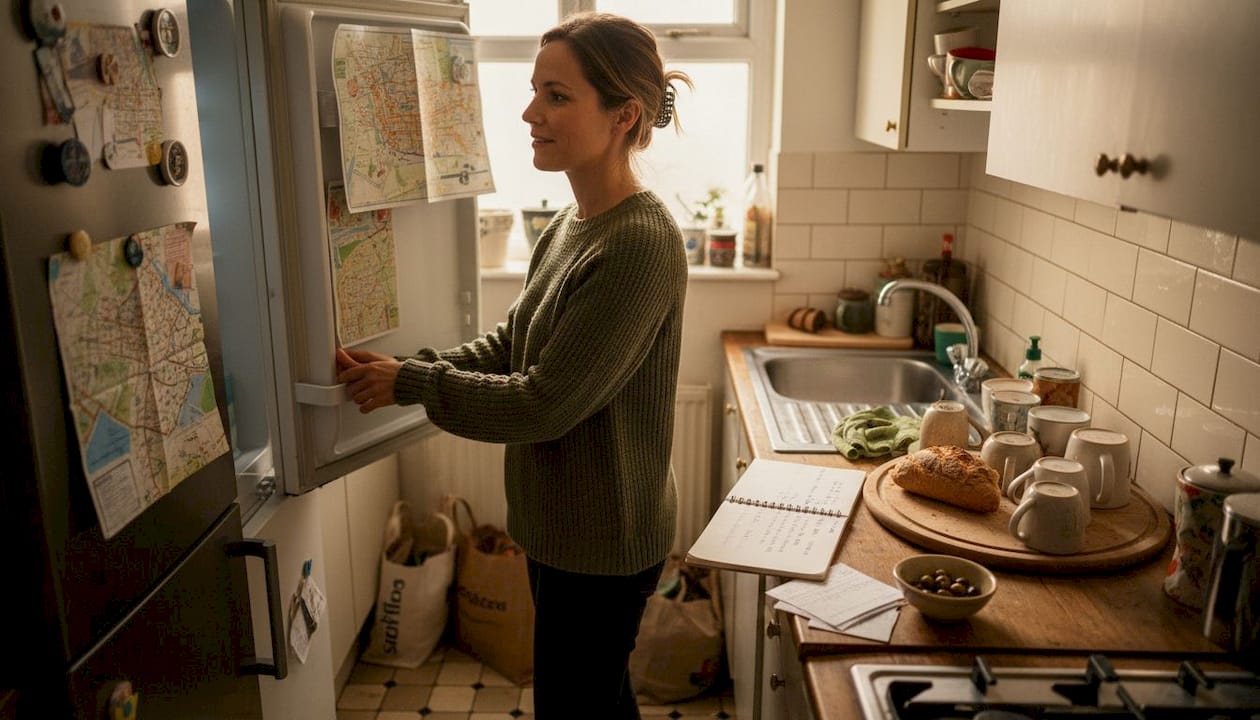 Visitor experiencing local life in swap home
The financial upside is significant too. Travelers who swap consistently report saving between $34,000 and $44,000 over three years across roughly 176 nights of free accommodation. Those are real numbers that change how often and how far you can travel.
Key trust safeguards most platforms provide:
- Identity verification: Members submit government ID and are reviewed before listing
- Review systems: Both hosts and guests leave ratings after each stay
- Home insurance options: Some platforms partner with insurers to cover property during swaps
- Community moderation: Platforms can remove members who violate conduct standards
The risks are real too. Some travelers feel uncomfortable hosting strangers in their home. Others worry about property damage or scheduling conflicts. These are valid concerns, and they deserve honest attention. Edge cases like Barter Weeks in Italy show creative ways communities have built trust through structured, event-based exchanges.
For travelers who want the savings without the direct swap, guest point arrangements are a smart middle ground. You host when it suits you, earn credits, and book stays on your own timeline. The accommodation advantages of this model are especially strong for people with flexible schedules.
Pro Tip: If you are new to home swapping, start with a guest point arrangement rather than a direct swap. It lets you ease into the system without needing to coordinate schedules with a specific partner.
The sustainability angle matters too. Home swapping uses existing housing stock rather than driving demand for new hotel construction. For travelers who care about their environmental footprint, that is a meaningful distinction. More on how global home exchange is reshaping affordable travel makes this point clearly.
Who benefits and what to expect
Once you understand the rewards and risks, it is important to know whether the system fits your needs.
The home exchange market is projected to grow from $4.2 billion in 2024 to $11.7 billion by 2033. That growth is driven by a specific kind of traveler: educated, eco-conscious, and often in the 35 to 65 age range. But younger travelers and digital nomads are joining fast.
Demographic snapshot of typical home swappers:
- Families with children who need more space than a hotel room provides
- Couples seeking longer, slower trips at lower cost
- Retirees with flexible schedules and homes worth swapping
- Remote workers who want to live like locals for weeks at a time
- Eco-conscious travelers who prefer low-impact accommodation
According to Canadian swapping trends, accommodation costs are the single biggest barrier to travel. Home swapping directly removes that barrier.
| Swaps per year | Avg. hotel cost saved | Avg. Airbnb cost saved |
|---|---|---|
| 2 swaps (14 nights) | $2,800 | $2,100 |
| 4 swaps (28 nights) | $5,600 | $4,200 |
| 8 swaps (56 nights) | $11,200 | $8,400 |
What you can expect from a typical swap: a full home with a kitchen, a neighborhood feel, local tips from your host, and far more space than a standard hotel room. The kitchen alone changes the economics of a trip. Eating out every meal is expensive. Cooking even half your meals cuts food costs dramatically.
"Families benefit most from the space and kitchen access that home swaps provide. A two-week family trip that would cost $5,000 in hotels can cost almost nothing with the right swap."
For more on how travel networks unlock affordable home swapping and the reasons joining home swap platforms makes financial sense, those resources offer strong practical guidance.
Our take: When travel barter systems are a game changer
Most travel advice focuses on finding cheaper hotels or better credit card points. That framing misses something important. The real opportunity is not to pay less for the same thing. It is to opt out of the transaction entirely.
Travel barter systems do exactly that. And the cultural and financial case is strong: home swapping promotes genuine cultural immersion, reduces environmental impact, and sidesteps the hidden fees that inflate short-term rental costs by up to 48% compared to listed prices.
Trust concerns are real, and we will not pretend otherwise. But experienced swappers consistently say the same thing: the verification systems and community reviews on reputable platforms do most of the heavy lifting. The psychological barrier is usually bigger than the actual risk.
The travelers who get the most from barter systems are the ones who approach it with flexibility and openness. Rigid itineraries and last-minute planning do not mix well with swapping. But if you can plan a few months ahead and stay open to different destinations, the sharing economy model rewards you generously.
Start your travel barter journey with Swappahome
If the idea of free, authentic accommodation sounds right for your travel style, Swappahome is built exactly for that. It is a members-only platform where verified homeowners exchange stays using a simple credit system. One credit equals one free night. No nightly fees, no surprises.
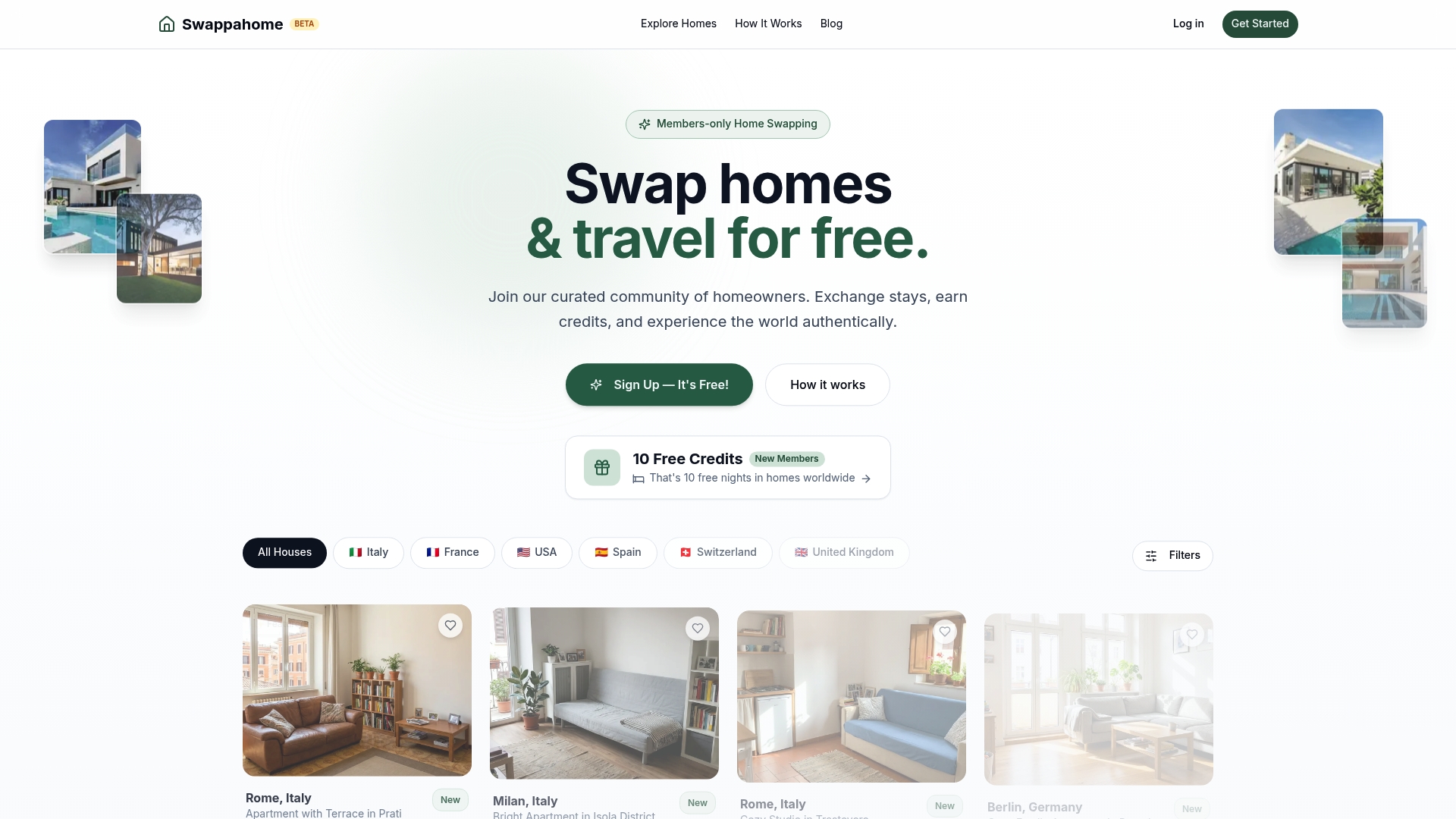 https://swappahome.com
New members receive free credits to get started, so you can book your first stay before you have even hosted anyone. Browse Swappahome listings to see verified homes across dozens of countries and find your next destination. The platform handles verification, reviews, and booking so you can focus on planning the trip itself. Travel smarter, spend less, and actually experience the places you visit.
Frequently asked questions
Is home swapping safe for first-time users?
Yes. Major platforms use identity verification, reviews, and insurance to reduce risk for all participants. Starting with a guest point arrangement rather than a direct swap also lowers the stakes for beginners.
Do travel barter systems require direct exchanges?
No. Many platforms offer credit systems where you host first and use the earned points to book future stays, with no need to coordinate with a specific swap partner.
What are typical costs of participating in a home swap platform?
Annual memberships run $150 to $250 with no nightly fees attached. That single annual cost often pays for itself after just one or two stays.
Can families and couples benefit from travel barter systems?
Absolutely. Families and couples gain access to full homes with kitchens and multiple bedrooms, delivering far more space and comfort than hotels at a fraction of the cost.
What happens if you are uncomfortable hosting strangers?
Travel barter systems may not be the right fit in that case. Platforms acknowledge this barrier and some offer hospitality exchanges or guest point models that reduce the need for direct in-home hosting.
Recommended

Published by
SwappaHome
SwappaHome Editorial Team
Home Exchange & Slow Travel Editorial
The SwappaHome Editorial Team brings together travel research, home-exchange community insights, and platform data to produce practical guides for first-time and experienced home swappers. Every article cites real platforms, current market rates, and verifiable city-level facts so readers can make informed decisions without guessing.
Ready to try home swapping?
Join SwappaHome and start traveling by exchanging homes. Get 7 free credits when you sign up!