
How to Travel for Free with Home Exchange: The Complete Guide to Swapping Your Way Around the World

SwappaHome Editorial Team
Home Exchange & Slow Travel Editorial
Learn how to travel for free with home exchange—real strategies from 40+ swaps that cut my travel costs by 70% and changed how I see the world.
I still remember the exact moment I realized I'd been doing travel wrong for a decade.
It was 3 AM in a cramped Lisbon Airbnb, and I was doing the math on my phone's calculator. Four nights in that tiny studio had cost me $680. Meanwhile, my perfectly good San Francisco apartment sat empty, probably collecting dust and definitely collecting zero value. That night, slightly jet-lagged and definitely frustrated, I stumbled onto the concept of home exchange—and honestly? It completely rewired how I think about exploring the world.
Seven years and 40+ home swaps later, I've stayed in a converted Tuscan barn surrounded by olive groves, a sleek Amsterdam canal house, a cozy cottage in the Scottish Highlands, and a beachfront apartment in Barcelona's Barceloneta neighborhood. Total accommodation cost for all of it: zero dollars.
 sun-filled living room of a charming European apartment with exposed brick, floor-to-ceiling bookshe
Free travel sounds too good to be true, right? Like one of those "one weird trick" internet scams. But home exchange is legitimately one of the oldest forms of travel accommodation, predating Airbnb by decades. And unlike house-sitting or travel hacking schemes that require you to game complex systems, the math here is beautifully simple: you have a home, someone else has a home, you swap.
What Is Home Exchange and How Does It Actually Work?
Home exchange is exactly what it sounds like—travelers swap homes instead of paying for hotels or rentals. But here's where it gets interesting: modern platforms have evolved way beyond the traditional "I'll stay at yours while you stay at mine" model.
The system I use most often works on credits. When you host someone in your home, you earn credits. When you want to travel, you spend those credits to stay somewhere else. One night hosted equals one credit earned. One night traveling equals one credit spent. Doesn't matter if you're hosting someone in a Manhattan penthouse or a modest studio in Milwaukee—the exchange rate stays the same.
This flexibility is what makes it actually practical. You're not waiting around hoping someone in Kyoto wants to visit your specific city at the exact time you want to visit theirs. You host a family from Germany in March, then use those credits for a week in Portugal in October. The timing and locations don't need to align.
When I joined SwappaHome, I started with 7 free credits—enough for a solid week-long trip before I'd even hosted anyone. That first swap in Copenhagen (a bright, plant-filled apartment in Nørrebro) cost me nothing but the courage to try something new.
Why Home Exchange Beats Every Other Budget Travel Option
I've tried it all. Hostels in my twenties (fun but exhausting). Couchsurfing (amazing hosts, but you're always a guest). Budget hotels (soul-crushingly identical). Airbnb (started affordable, now often pricier than hotels).
Here's why home exchange wins:
The money math is absurd. Last year, I did a two-week trip to Italy. Hotels in Rome and Florence during shoulder season would have run me roughly $2,800. Airbnbs, maybe $2,100 if I booked early. My home exchanges? I used 14 credits I'd earned hosting throughout the year. Fourteen nights of accommodation for the cost of... having guests in my apartment while I was at work anyway.
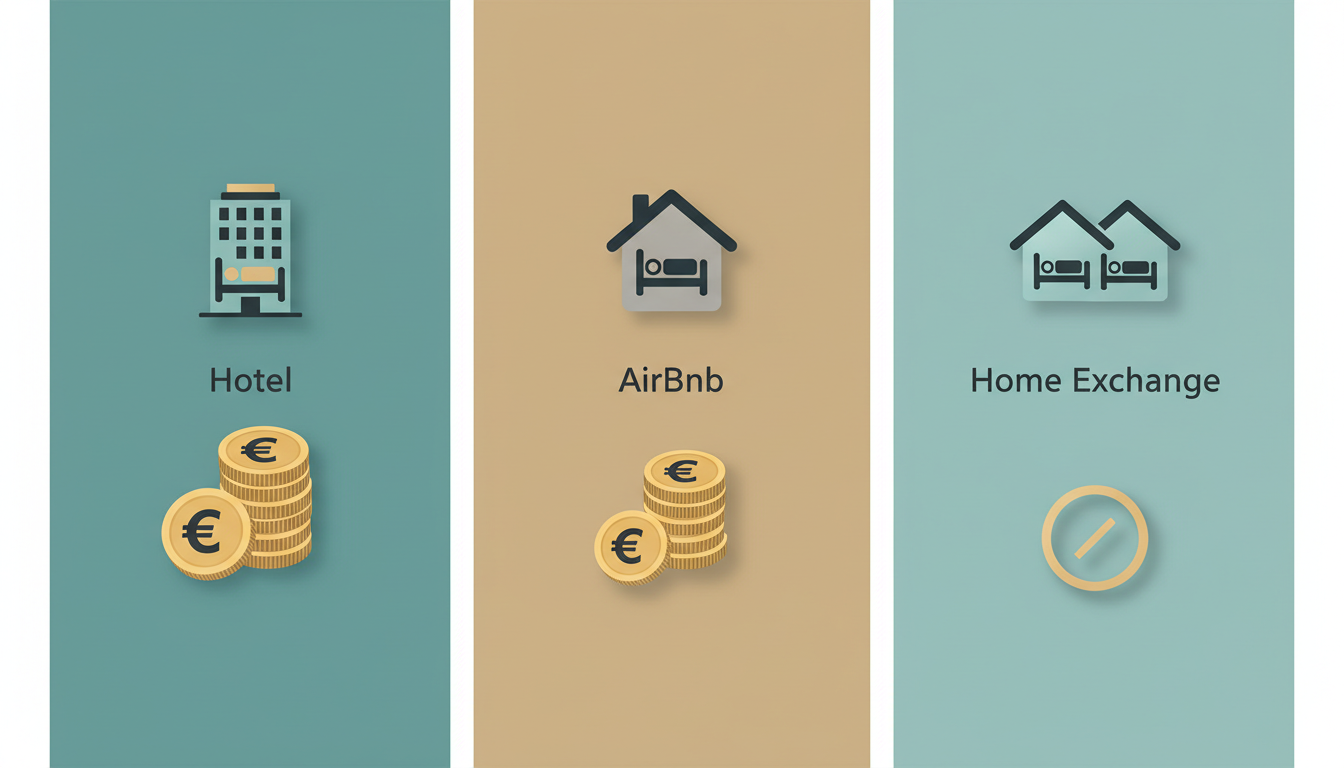 split-screen infographic comparing 14-night Italy trip costshotel column showing 2,800, Airbnb showi
You get actual homes, not tourist boxes. My Rome swap was in Trastevere, in a third-floor walkup with a tiny terrace overlooking terracotta rooftops. The kitchen had a moka pot, good olive oil, and a handwritten note about which vendor at Campo de' Fiori sells the best tomatoes. Maria, second stall from the left, in case you're wondering. You can't buy that kind of local insight.
The space changes everything. After a decade of cramming into hotel rooms, having a living room felt revolutionary. A kitchen meant I could eat breakfast in my pajamas instead of hunting for overpriced hotel buffets. A washing machine meant I could pack lighter. These sound like small things until you've spent two weeks living out of a suitcase in 200 square feet.
It's genuinely sustainable. No new construction, no corporate hotel chains, no contributing to housing shortages in the way some short-term rental markets do. You're using existing homes that would otherwise sit empty.
How to Get Started: The Real Process
Getting set up takes maybe an hour of actual work, spread over a few days. Here's what it actually looks like—not the sanitized version.
Creating a Listing That Gets Responses
Your home doesn't need to be fancy. I've seen successful listings for tiny Tokyo apartments, suburban houses in Ohio, and everything in between. What matters is honest, specific description.
Skip the real estate language ("sun-drenched" and "charming" mean nothing). Instead, tell people what staying at your place is actually like. I mention that my apartment is a 12-minute walk to the F train, that the coffee shop downstairs makes excellent cortados, that street noise is real but you get used to it, and that my cat will need feeding twice daily.
Photos matter more than words. Natural light, wide angles, and shots of the neighborhood—not just the interior. I always include a photo of the view from my living room window and the corner bodega where I buy emergency ice cream at midnight.
The Verification Thing
Most platforms offer identity verification. Do it. It takes five minutes and dramatically increases trust. I won't accept requests from unverified members, and I suspect I'm not alone in this.
 cozy home office setup with laptop showing a home exchange profile page, coffee mug, and window with
Your First Hosting Experience
Real talk: hosting strangers in your home feels weird the first time. My palms were sweaty when I handed over my keys to a retired couple from Lyon. But here's what I've learned after hosting 30+ groups—the vast majority of home exchangers are conscientious, respectful travelers. They're trusting you with their home too, remember. The mutual vulnerability creates mutual care.
Start by accepting shorter stays (2-3 nights) from members with good reviews. You'll build confidence quickly.
Planning Your First Trip
Once you've got some credits banked (or you're using those starter credits), here's how to actually plan a trip.
Flexibility Is Your Superpower
The travelers who get the best swaps are the ones who can flex on dates, destinations, or both. Instead of "I need a 2-bedroom in central Paris for July 14-21," try "I'm looking for somewhere in France for a week sometime in July." Your options multiply exponentially.
I once planned an entire Spain trip around which home exchanges were available. Ended up in Seville instead of my original Barcelona plan—and Seville in spring, with orange blossoms and empty plazas, turned out to be the better trip.
How to Search Like a Pro
Start broad, then narrow. Search your target country first, then filter by dates, then by amenities you actually need (not want—need). A washing machine is a need. A hot tub is a want.
Look at the map view. Sometimes the best listings are in neighborhoods you've never heard of—which often means more authentic experiences and fewer tourists.
Reading Between the Lines
After 40+ swaps, I've developed a sixth sense for listings. Fresh photos suggest an active, engaged host. Detailed house rules indicate someone who cares about their space. Vague descriptions with stock-photo vibes? I scroll past.
Reviews are gold. Not just the star ratings—read the actual text. "The apartment was exactly as described" is the highest praise in home exchange.
 travelers hands holding a smartphone displaying a map of European cities with home exchange pins, co
Making the Most of Your Exchange
Free accommodation is just the beginning. The real magic is how it transforms your entire travel experience.
Living Like a Local (For Real This Time)
I hate that phrase—"live like a local"—because it's usually marketing nonsense. But home exchange actually delivers on it. You're shopping at the neighborhood grocery store, nodding at the same dog walkers every morning, figuring out which café has the best wifi for remote work.
In Amsterdam, my host left a hand-drawn map of her favorite spots—including a tiny Indonesian restaurant that didn't appear on any tourist lists. Best rijsttafel of my life, and I never would have found it from a hotel in the tourist center.
The Communication Dance
Good communication makes or breaks a swap. I send a message before arrival confirming timing, ask about anything unclear in the listing, and always share my travel plans (just in case). During the stay, I send a quick "arrived safely, everything is wonderful" message. After, a genuine thank-you note and honest review.
This isn't just politeness—it's building reputation in a community where reputation is currency.
Handling the Awkward Stuff
What if something breaks? What if there's a problem?
Honestly, you handle it like adults. I once accidentally cracked a wine glass in Barcelona. I messaged the host immediately, apologized, and replaced it at a local shop. Total cost: €8 and zero drama.
For bigger concerns, I always recommend getting your own travel insurance that covers accommodation issues. Platforms like SwappaHome connect members but aren't responsible for what happens during stays—you're entering a trust-based arrangement with another person, not a corporate hotel chain with liability coverage. That's part of what makes it work, but it also means taking personal responsibility.
Advanced Strategies
Once you've got the basics down, here's how to level up.
Building a Credit Buffer
I try to keep at least 14 credits banked at all times—enough for a two-week trip if an amazing opportunity appears. This means hosting somewhat regularly, even when I'm not planning immediate travel. Those credits don't expire, and having them ready means I can say yes to spontaneous adventures.
Seasonal Arbitrage
Host during your city's peak season when demand is high. Travel during shoulder seasons when more homes are available and destinations are less crowded. I host tons of guests during San Francisco's September-October stretch (beautiful weather, no fog), then use those credits for off-season Europe trips when I have my pick of listings.
The Long-Stay Strategy
Home exchange gets even more valuable for extended trips. I did a month in Lisbon last year—30 nights that would have cost $3,000+ in rentals. Instead, I spent credits I'd accumulated over six months of occasional hosting. For digital nomads or anyone with location flexibility, this is genuinely life-changing.
 woman working on laptop at a sunlit kitchen table in a Portuguese apartment, tiled walls visible, fr
Building Relationships for Repeat Swaps
Some of my best swaps have been repeats—returning to homes I loved with hosts who've become friends. After staying at a gorgeous apartment in Edinburgh's Stockbridge neighborhood, I've now hosted the owners three times in San Francisco. We exchange Christmas cards. Their home has become my Scottish home base.
Common Mistakes (Learn From Mine)
I've made most of these:
Being too picky too early. Your first few swaps should be about building reviews and confidence, not finding the perfect Pinterest-worthy apartment. That comes later.
Underestimating your own home's appeal. Americans especially tend to think "nobody wants to visit my city." Wrong. I've hosted guests from 15+ countries who were genuinely excited about San Francisco. Your normal is someone else's adventure.
Forgetting the personal touch. Leave a welcome note. Stock basic supplies. Share your favorite local spots. These small gestures create the reciprocity that makes the whole system work.
Not being clear about expectations. If you have house rules, state them upfront. If certain rooms are off-limits, say so. Ambiguity creates problems; clarity creates good stays.
The Real Cost of "Free" Travel
Let's be honest about what home exchange requires:
Time: Setting up your listing, communicating with potential guests, preparing your home for visitors. Maybe 2-3 hours per hosting experience once you're established.
Trust: You're letting strangers into your space. This gets easier with experience and good vetting, but it's a real psychological investment.
Flexibility: The best deals go to travelers who can adapt. If you need exact dates in exact locations, home exchange is harder (though not impossible).
Effort: Unlike booking a hotel, you're participating in a community. That means being responsive, maintaining your listing, and being a good guest and host.
For me, these investments pay off massively. But home exchange isn't for everyone, and that's okay. If you value the predictability and anonymity of hotels, or if hosting strangers sounds genuinely stressful rather than just unfamiliar, this might not be your path.
Is Home Exchange Safe?
The question I get most often: "But isn't it risky?"
Here's my honest take after 40+ exchanges: the risk is real but manageable, and far lower than most people assume.
The community self-polices effectively. Bad actors get bad reviews and quickly find themselves unable to book swaps. The mutual vulnerability—you're in my home, I'm in yours—creates powerful incentives for good behavior.
That said, I take precautions. I only accept verified members with reviews. I secure valuables and personal documents before hosting. I have renter's insurance that covers guest damage (check your policy). I communicate clearly about expectations. And I trust my gut—if something feels off about a request, I decline.
In seven years, my worst experience was a guest who left dishes in the sink. That's it. Meanwhile, I've had countless wonderful interactions, made genuine friends, and saved literally tens of thousands of dollars on accommodation.
Your Action Plan for This Week
Enough theory. Here's what to do:
Day 1: Sign up for a home exchange platform like SwappaHome. Take advantage of those starter credits—they're essentially free travel waiting to happen.
Day 2-3: Create your listing. Take fresh photos in good light. Write honestly about your space and neighborhood. Get verified.
Day 4-5: Browse listings in a destination you've been dreaming about. Get a feel for what's available, what appeals to you, what the community looks like.
Day 6-7: Send your first inquiry or accept your first hosting request. The hardest part is starting.
That's it. A week from now, you could be on your way to your first free trip.
When I think back to that 3 AM moment in Lisbon, frustrated and doing math on my phone, I'm grateful for the insomnia that led me here. Home exchange has given me experiences I genuinely couldn't have afforded otherwise—not just the free accommodation, but the depth of connection that comes from living in real homes in real neighborhoods.
My Tuscan barn swap? I picked olives with the owner's 80-year-old neighbor and learned to make proper bruschetta. My Amsterdam canal house? I borrowed the host's bike and cycled to a swimming spot only locals know. These aren't things you can buy.
Home exchange isn't just a budget hack. It's a different philosophy of travel—one based on trust, reciprocity, and the radical idea that strangers can share their homes and both come out richer for it.
Your apartment, your house, your spare room—it's not just where you live. It's a ticket to anywhere.
Frequently Asked Questions
Is home exchange really free, or are there hidden costs?
Home exchange eliminates accommodation costs entirely—you're swapping homes, not paying rent. You'll still cover your own travel expenses like flights, food, and activities. Most platforms charge a small annual membership fee (typically $100-150/year), which pays for itself after just one or two nights of free accommodation compared to hotel rates.
How does the credit system work?
The credit system is simple: host guests and earn one credit per night, regardless of your home's size or location. Use credits to book stays anywhere in the network, also at one credit per night. New members on platforms like SwappaHome start with 7 free credits. No simultaneous swaps required—host someone from Paris in January, use credits for Tokyo in June.
What if something gets damaged?
Home exchange platforms connect members but typically don't provide damage coverage or insurance. Most issues are minor and resolved directly between members—in my experience, the mutual trust inherent in swapping homes creates careful, respectful guests. For peace of mind, check that your homeowner's or renter's insurance covers short-term guests, or consider additional travel insurance.
Can I do home exchange if I rent my apartment?
Many renters successfully participate in home exchange, but check your lease first. Some landlords permit it, others don't, and some require written permission. Be upfront with potential guests about any building rules or restrictions. If your lease prohibits subletting, home exchange may technically fall into a gray area—when in doubt, ask your landlord.
How do I know if a member is trustworthy?
Look for verified members with multiple positive reviews—these are your safest bets. Read review text carefully, not just star ratings. Communicate before confirming any exchange to get a feel for the person. Trust your instincts; if something feels off, decline. The community self-regulates effectively, as bad actors quickly accumulate negative reviews and can't book swaps.

Published by
SwappaHome
SwappaHome Editorial Team
Home Exchange & Slow Travel Editorial
The SwappaHome Editorial Team brings together travel research, home-exchange community insights, and platform data to produce practical guides for first-time and experienced home swappers. Every article cites real platforms, current market rates, and verifiable city-level facts so readers can make informed decisions without guessing.
Ready to try home swapping?
Join SwappaHome and start traveling by exchanging homes. Get 7 free credits when you sign up!
Related articles
How to Extend or Modify a Home Swap Mid-Stay: The Complete Flexibility Guide
Need to extend your home swap or change dates mid-trip? Here's exactly how to negotiate changes, handle credits, and keep both parties happy.

How to Visit Bali for Free with Home Exchange: The Complete 2026 Guide
Skip the $150/night villas. Home exchange in Bali lets you stay in Ubud rice field houses and Seminyak beach pads for zero accommodation cost. Here's exactly how.
How to Vet Home Swap Guests: 12 Red Flags Every Host Should Know
Learn how to vet home swap guests before handing over your keys. Spot the 12 red flags experienced hosts watch for—and protect your home with confidence.