
Travel trust factors for safe home swapping in 2026

SwappaHome Editorial Team
Home Exchange & Slow Travel Editorial
Travel trust factors for safe home swapping in 2026 !Couple verifying home swap trust online Most travelers hesitate at home swapping because they...
Travel trust factors for safe home swapping in 2026
 Couple verifying home swap trust online
Most travelers hesitate at home swapping because they imagine worst-case scenarios: strangers trashing their property, theft, or fraud. Yet data reveals a different story. Leading home swapping platforms report less than 0.3% serious incidents, with millions of successful exchanges happening yearly. The gap between perception and reality is massive. This guide explains the core trust factors that make home swapping safe, how verification systems work, what risks actually exist, and practical steps to ensure positive exchanges while enjoying authentic cultural experiences.
Table of Contents
- Key takeaways
- How home swapping platforms verify trust
- Understanding home swapping mechanics and credit systems
- Safety data, risks, and edge cases in home swapping
- Trust nuances and practical tips for authentic home swapping experiences
- Discover safe, flexible home swapping with SwappaHome
- FAQ
Key Takeaways
| Point | Details |
|---|---|
| Verification layers | Reputable platforms use identity confirmation, address validation, background screening, and contact verification to filter out bad actors before exchanges. |
| Detailed profiles | Members upload photos of their homes, neighborhood descriptions, and travel preferences to help others assess compatibility before committing. |
| Video verification | Video calls provide a personal connection that strengthens trust and helps evaluate suitability before a swap. |
| Reviews and accountability | After each exchange, both sides leave feedback that informs the community and guides future swaps. |
| Credit system flexibility | Earning credits by hosting allows money free swaps and flexible travel timing without needing simultaneous exchanges. |
How home swapping platforms verify trust
Reputable platforms implement multiple verification layers to establish trust before any exchange happens. Verification includes identity confirmation, home address validation, and background checks to ensure members are who they claim to be. This multi-step process filters out bad actors before they can access the community.
Detailed profiles serve as trust signals. Members upload photos of their homes, write descriptions of their neighborhoods, and share personal information about their travel styles and household rules. Trust relies on platform verification through ID checks and property documentation, combined with detailed profiles that let you assess compatibility before committing.
Video calls add another trust dimension. Talking face-to-face with your swap partner creates personal connection and makes fraud significantly harder. You can ask questions about the property, discuss house rules, and gauge whether someone feels trustworthy. This human element transforms an online transaction into a relationship.
User reviews provide ongoing transparency. After each exchange, both parties leave feedback visible to the entire community. Poor behavior gets documented, creating accountability. Members with consistently positive reviews build reputations that make future swaps easier. This system mirrors successful sharing economy models where reputation becomes currency.
Mutual reciprocity encourages responsible behavior naturally. When you host someone, you're trusting them with your home. When they host you, they're doing the same. This balanced exchange creates inherent motivation to treat properties respectfully. Nobody wants negative reviews that damage their ability to swap in the future. For more detailed guidance, check out home swapping safety tips that cover verification best practices.
Key verification elements include:
- Government-issued ID confirmation linking identity to real person
- Property ownership or rental documentation proving legitimate access
- Background screening checking for fraud history or criminal records
- Email and phone verification ensuring contactable members
- Social media profile linking adding additional identity validation layers
Understanding home swapping mechanics and credit systems
Traditional home swapping required simultaneous exchanges: you stay at someone's place while they stay at yours, same dates. This created scheduling nightmares and limited opportunities. Credit systems allow earning nights hosted for stays elsewhere, eliminating the need for perfectly timed swaps.
Here's how credits build trust and flexibility. You earn 1 credit per night hosted when someone stays at your home. Those credits sit in your account until you're ready to travel. When you want to stay somewhere, you spend credits booking nights at other members' properties. The host earns credits, you spend them, and both parties benefit without money changing hands.
This system solves the biggest trust barrier in traditional swapping: you don't need to let strangers into your home before experiencing the platform yourself. You can start by hosting, build credits, then use them when you're comfortable traveling. Or you can start with a simultaneous swap if that feels safer initially. The flexibility accommodates different comfort levels.
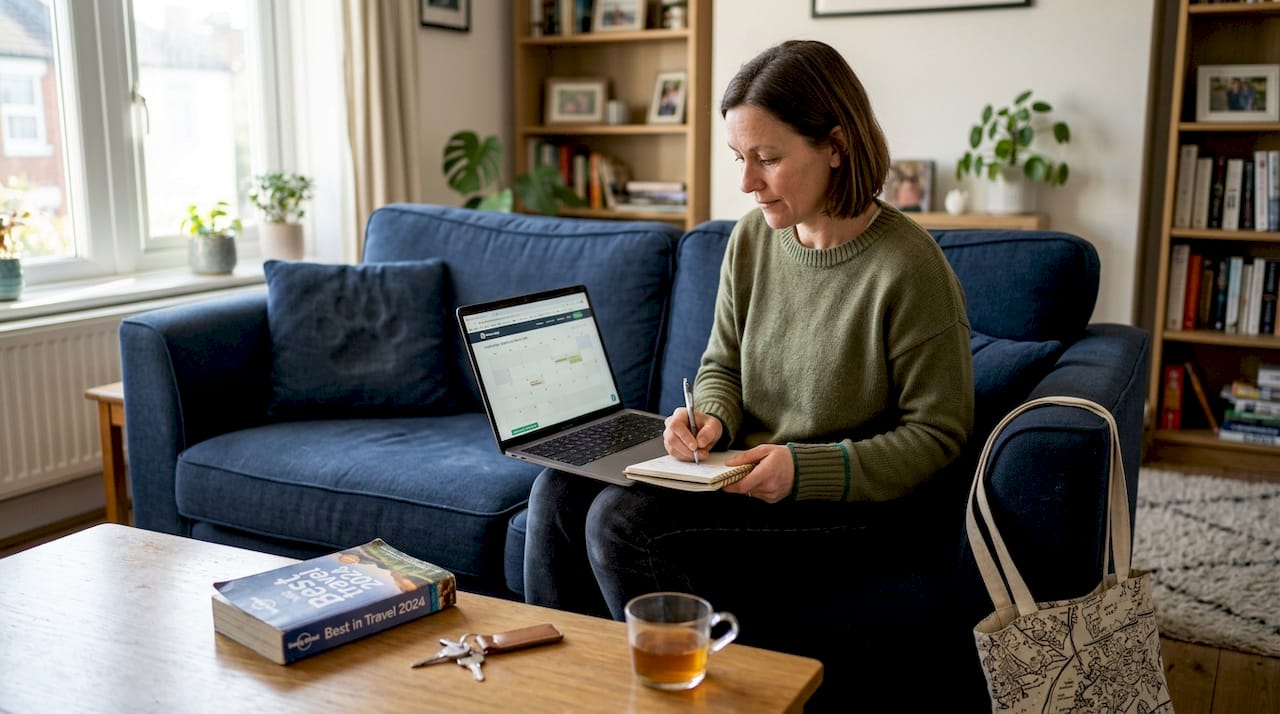 Traveler planning home swap with credit system
Credit systems also promote fairness. Everyone's night is worth one credit regardless of property size or location. A studio apartment in a small town equals a luxury home in a major city. This egalitarian approach prevents exploitation and ensures genuine cultural exchange rather than transactional tourism. It reinforces the sharing economy principle that home swapping operates on.
Simultaneous swaps remain available for members who prefer direct exchanges. Some travelers like the symmetry of staying at someone's home while they stay at yours. The credit system simply adds options rather than replacing traditional methods. More options mean more successful matches and higher trust in the platform's ability to meet your needs.
Pro Tip: Start by hosting locally to build credits and positive reviews before traveling. This establishes your reputation in the community and gives you firsthand experience with how exchanges work, reducing anxiety about your first trip.
Credit system advantages:
- Eliminates scheduling constraints of simultaneous swaps
- Lets you host first to build comfort before traveling
- Creates fair value exchange across different property types
- Provides flexibility for irregular travel schedules
- Builds trust through transparent, trackable transactions
Safety data, risks, and edge cases in home swapping
Numbers tell the real safety story. Serious incidents occur in less than 0.3% of exchanges, with HomeExchange reporting a 99.7% incident-free rate across millions of yearly swaps. These statistics rival or exceed hotel safety records. The perception of risk dramatically outweighs actual risk.
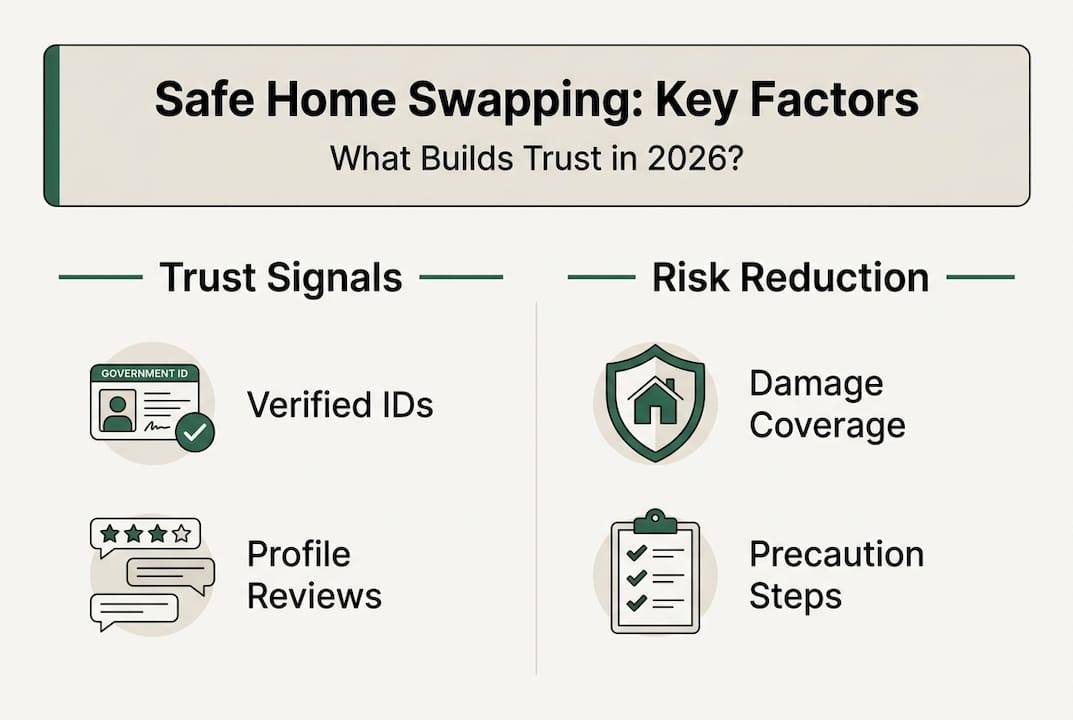 Infographic showing home swap trust and safety factors
What counts as a serious incident? Property damage beyond normal wear, theft of valuables, or fraud attempts. Minor issues like a broken dish or miscommunication about house rules happen occasionally but don't register as serious problems. Most exchanges proceed smoothly with zero issues.
| Risk type | Frequency | Mitigation strategy |
|---|---|---|
| Property damage | <0.2% exchanges | Homeowner insurance, damage protection plans |
| Theft of valuables | <0.1% exchanges | Secure items before guests arrive |
| Fraud attempts | <0.05% exchanges | Platform verification, video calls |
| Minor miscommunications | ~2-3% exchanges | Clear house rules, detailed property info |
Insurance becomes crucial despite low incident rates. Most platforms don't provide insurance, relying instead on homeowner policies. Contact your insurance provider to confirm your policy covers home swapping stays. Some insurers treat it like short-term rentals and may require additional coverage. Don't assume you're protected without verification.
Damage protection programs offer extra security. Some platforms provide up to $2M coverage for property damage during exchanges. This supplements rather than replaces homeowner insurance. Read the fine print to understand what's covered, deductibles, and claim processes. Protection programs add peace of mind but shouldn't replace due diligence in vetting swap partners.
Simple precautions reduce risks dramatically. Lock valuables, jewelry, and important documents in a secure location before guests arrive. Most incidents involve items left accessible rather than forced entry or deliberate theft. Remove temptation and you eliminate most potential problems. Create a pre-swap checklist covering security measures.
Pro Tip: Document your property's condition with photos before each exchange. This creates evidence if disputes arise and helps guests understand what's normal wear versus damage. Store photos in cloud storage with timestamps for credibility.
Edge cases exist but remain rare. Occasional stories circulate about major damage or theft, but these represent statistical outliers amplified by media attention. Millions of successful swaps happen without incident for every problem case. Understanding this context prevents fear from blocking opportunities. For comprehensive security guidance, review home swapping security tips covering property protection.
Trust nuances and practical tips for authentic home swapping experiences
Trust operates on multiple levels beyond platform mechanics. Self-selecting communities of responsible travelers naturally form around home swapping. People who choose this model typically value experiences over luxury, respect others' property, and embrace cultural exchange. This shared mindset creates inherent trust that formal verification systems can't fully capture.
Reciprocity builds mutual care automatically. When you've hosted someone and experienced their gratitude, you understand the emotional investment in home swapping. When you stay at someone's home and see their personal belongings, you feel responsibility to treat everything carefully. This psychological dynamic creates stronger behavioral incentives than any contract or deposit.
Not all platforms maintain equal trust standards. HomeSwapper receives 1.9/5 Trustpilot ratings due to poor matches and time-wasters, showing that platform quality varies dramatically. Research community reputation before joining. Look for platforms with active moderation, responsive support, and transparent policies. Cheap or free platforms sometimes attract less serious members.
Cultural understanding enhances authentic exchanges. Learning basic customs of your destination shows respect and prevents misunderstandings. If you're swapping internationally, research local norms around shoes indoors, noise levels, and guest behavior. Small cultural awareness efforts build trust and create better experiences for everyone involved.
Balance trust signals carefully. Too many verification requirements may overload users on general platforms, creating friction that discourages participation. Platforms must weigh security against user experience. As a member, you want enough verification to feel safe without bureaucratic hassles that make swapping feel like work.
"The most successful home swaps happen when both parties communicate openly, set clear expectations, and approach the exchange with generosity rather than suspicion. Trust grows through human connection, not just platform features."
Practical trust-building strategies:
- Communicate frequently before exchanges to build rapport and clarify expectations
- Share detailed house manuals covering everything from WiFi passwords to appliance quirks
- Offer local recommendations showing genuine hospitality beyond just property access
- Leave welcome gifts or stocked basics demonstrating thoughtfulness
- Follow up after exchanges with thank-you messages and honest reviews
Red flags to watch for include vague property descriptions, reluctance to video call, pressure to exchange outside platform systems, or profiles with no reviews after extended membership. Trust your instincts. If something feels off, it probably is. Plenty of legitimate swap opportunities exist, so don't force questionable matches.
For deeper insights into trust dynamics, explore the role of trust in home exchanges and understand how user reviews build trust within swapping communities.
Discover safe, flexible home swapping with SwappaHome
Ready to experience authentic travel through trusted home swapping? SwappaHome offers verified profiles, comprehensive background checks, and a supportive community of like-minded travelers. Our flexible credit system lets you host when convenient and travel when ready, eliminating scheduling stress.
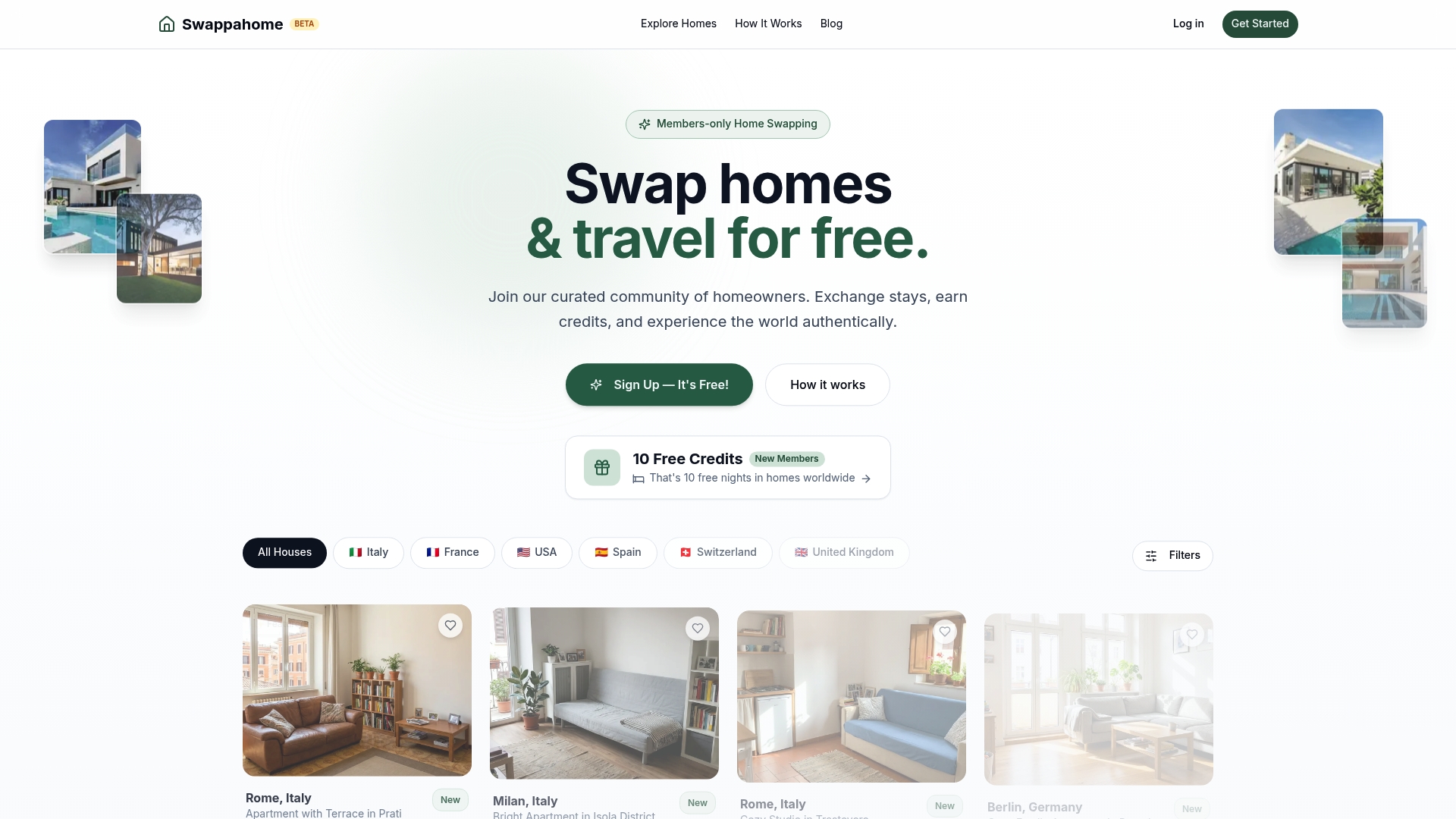 https://swappahome.com
We provide up to $2M damage protection, giving you peace of mind whether hosting or traveling. Our platform emphasizes cultural exchange over transactions, connecting you with homeowners who share your values. Browse verified home swap listings across dozens of countries, each carefully vetted for safety and authenticity. Discover how home exchange enhances food and culture experiences by connecting you with local communities. Start your safe swapping journey today and unlock affordable, authentic travel experiences.
FAQ
Is home swapping safe for first-time users?
Yes, first-time users can safely enjoy home swapping by following platform verification processes and taking basic precautions. Start by thoroughly reviewing potential swap partners' profiles, checking their reviews from previous exchanges, and scheduling video calls to build personal connection. Most platforms provide detailed safety guidelines specifically for new members. For comprehensive guidance, review home swapping safety tips covering verification and risk management.
How do credit systems reduce swapping risks?
Credit systems eliminate the biggest risk in traditional swapping: scheduling conflicts that force simultaneous exchanges with strangers. You earn credits by hosting, then spend them traveling whenever you choose. This flexibility lets you build platform experience and reputation before your first trip, reducing anxiety. Credits create fair value exchange where everyone's night equals one credit regardless of property differences, preventing exploitation and building trust through transparent transactions.
What precautions should homeowners take to protect their property?
Homeowners should first verify their insurance covers home swapping stays, as many standard policies exclude short-term guest situations. Secure all valuables, jewelry, important documents, and sentimental items in locked storage before guests arrive. Document your property's condition with timestamped photos stored in cloud backup. Consider enrolling in platform damage protection programs for additional coverage. Communicate house rules clearly in writing and via video call before exchanges. For detailed security strategies, check home swap security tips covering property protection.
What happens if something goes wrong during a home swap?
Most platforms provide dispute resolution processes and support teams to mediate issues. Document problems immediately with photos and written communication through the platform's messaging system to create records. Contact platform support as soon as issues arise rather than waiting until after the exchange. Many platforms offer damage protection programs that cover repair costs up to specified limits. Your homeowner insurance may also cover damages depending on your policy terms. Serious issues like theft should be reported to local police in addition to platform support.
How can I verify a swap partner is trustworthy?
Verify trustworthiness through multiple signals: check their profile completeness, read reviews from previous exchanges, confirm platform verification badges showing ID and property checks, and schedule video calls to assess personal compatibility. Ask specific questions about their home, neighborhood, and travel style to gauge authenticity. Request references from past swap partners if they're new to the platform. Trust your instincts during interactions. Legitimate members respond promptly, communicate clearly, and welcome verification questions rather than becoming defensive.
Recommended

Published by
SwappaHome
SwappaHome Editorial Team
Home Exchange & Slow Travel Editorial
The SwappaHome Editorial Team brings together travel research, home-exchange community insights, and platform data to produce practical guides for first-time and experienced home swappers. Every article cites real platforms, current market rates, and verifiable city-level facts so readers can make informed decisions without guessing.
Ready to try home swapping?
Join SwappaHome and start traveling by exchanging homes. Get 7 free credits when you sign up!