
Unlocking Global Adventures: Your Guide to the Cheapest Digital Nomad Visas in 2026

SwappaHome Editorial Team
Home Exchange & Slow Travel Editorial
Here are the main points to remember when planning your budget-friendly digital nomad journey: Key Takeaways Look for countries with specific digital nomad…
Here are the main points to remember when planning your budget-friendly digital nomad journey:
Key Takeaways
- Look for countries with specific digital nomad visas that have low application fees and reasonable income requirements.
- Consider destinations with a low cost of living to stretch your budget further, even if the visa itself isn't the absolute cheapest.
- Home swapping can drastically cut accommodation costs, freeing up money for other travel expenses or visa fees.
- Thoroughly research visa documentation, processing times, and all associated fees to avoid unexpected expenses.
- Join digital nomad and travel communities online for shared tips, support, and information on the latest budget-friendly options.
Understanding The Cheapest Digital Nomad Visa Options
So, you're dreaming of working from a beach in Thailand or a cafe in Lisbon, but the thought of visa costs is making your wallet sweat? You're not alone. The good news is, the world is opening up for remote workers, and many countries are rolling out specific digital nomad visas. But not all visas are created equal when it comes to price. We're going to break down what makes some of these permits cheaper than others and how to spot the real bargains.
Navigating Global Work Permits For Affordability
When we talk about digital nomad visas, it's easy to get lost in the details of income requirements and application processes. But let's focus on the money. Some countries see these visas as a way to attract skilled workers and boost their economy, so they keep the fees low. Others might have higher fees, perhaps because the visa offers more benefits or is part of a broader immigration strategy. It's a bit like shopping around for the best deal – you need to know what you're looking for.
Here's a quick look at what typically influences the cost:
- Application Fees: This is the most straightforward cost. Some countries charge a nominal fee, while others have more substantial processing charges. Think of it like paying for a service.
- Visa Duration: Longer stays often come with higher visa fees. A 6-month visa might cost less upfront than a 2-year permit, but you need to consider the cost per month.
- Mandatory Insurance: Many countries require you to have specific health insurance, and the cost of this can add up. Sometimes, you have to buy it from an approved provider, which can be pricier.
- Other Requirements: Things like proof of funds, police certificates, or even medical exams can incur their own costs before you even submit your visa application.
The cheapest digital nomad visas often come from countries looking to boost their tourism and local economies by attracting remote workers. They understand that keeping initial costs low encourages more people to choose their country as a base.
Key Factors In Securing Budget-Friendly Visas
Finding a visa that won't break the bank involves looking beyond just the sticker price. You need to consider the overall value and what's included. For instance, a visa with a slightly higher fee but a longer validity period might actually be more cost-effective in the long run. Also, some countries offer digital nomad visas as part of a broader package that might include tax incentives or easier residency options down the line, which can save you money in other ways.
Think about these points:
- Processing Times: While not a direct cost, a slow processing time can mean you need to extend your current visa or make last-minute travel plans, both of which can cost money.
- Renewal Fees: If you plan to stay longer, what are the costs associated with renewing your visa? Some renewals are straightforward and cheap, while others are almost like applying for a new visa.
- Location vs. Cost: Sometimes, a slightly less popular city or region within a country might have a cheaper visa process or a lower cost of living, making the overall experience more affordable.
Maximizing Savings With Visa Choices
When you're comparing different digital nomad visas, it's smart to create a little comparison chart. This helps you see the whole picture. For example, you might find a visa that requires a higher proof of income, but if the visa fee itself is very low and the cost of living in that country is also low, it could still be a cheaper option overall than a visa with a lower income requirement but hefty application fees and a high cost of living.
Here’s a simplified way to think about it:
| Visa Feature | Country A (Example) | Country B (Example) | Country C (Example) |
|---|---|---|---|
| Visa Fee | $50 | $200 | $100 |
| Validity Period | 6 months | 1 year | 1 year |
| Estimated Insurance | $300 | $500 | $400 |
| Proof of Funds | $2,000/month | $3,000/month | $2,500/month |
| Total Initial Cost | $350 | $700 | $500 |
As you can see, Country A has the lowest initial cost, but a shorter stay. Country C offers a good balance. It really depends on your travel plans and budget. Don't forget to factor in the cost of living in each destination, as that's a huge part of your overall expenses. For instance, a country with a low visa fee but a very high cost of living might not be the cheapest choice for your entire trip. You might find that a country with a slightly higher visa fee but a much lower cost of living is a better deal. Exploring options like home swapping can also drastically cut down on your biggest travel expense: accommodation.
Exploring Cost-Effective Destinations For Nomads
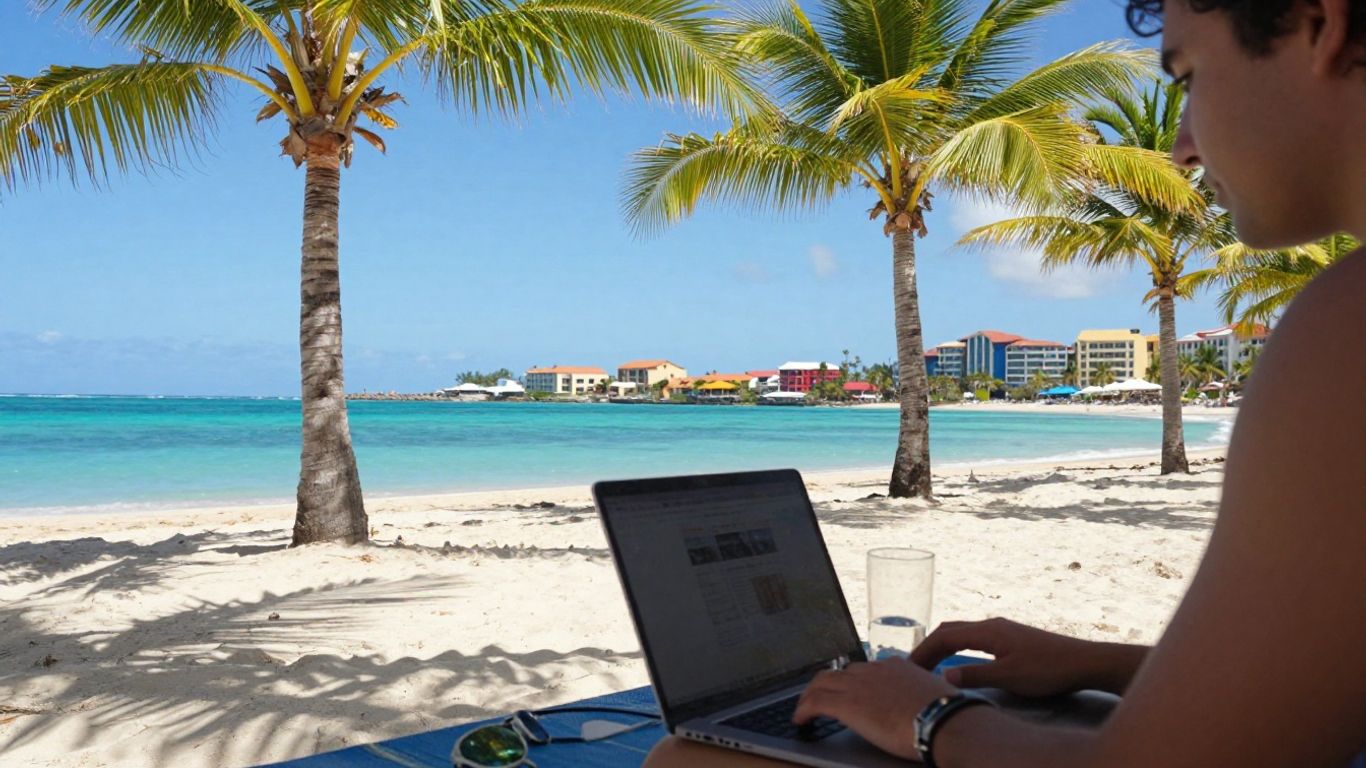 Digital nomad working on a laptop at a sunny beach.
So, you're looking to stretch your digital nomad budget further, right? That's totally understandable. While some countries might seem like they're calling your name with their trendy vibes, they can also come with a hefty price tag. The good news is, there are plenty of amazing places that offer a fantastic lifestyle for digital nomads without emptying your bank account. It’s all about finding those sweet spots where your money goes further and you can actually enjoy the experience.
Top Countries Offering Affordable Digital Nomad Visas
When we talk about affordable destinations, a few places consistently pop up. These countries often have lower costs of living, and importantly, they've rolled out specific digital nomad visas that are relatively easy on the wallet. Think about places like Portugal, which has been a favorite for years, not just for its sunny climate but also for its reasonable living expenses and accessible visa options. Then there's Colombia, which has seen a surge in digital nomads thanks to its vibrant culture, beautiful landscapes, and a cost of living that’s significantly lower than in many Western European or North American countries. Even some parts of Eastern Europe are becoming more popular. Countries like Croatia and Estonia offer competitive visa programs and a much lower cost of living compared to their Western neighbors.
- Portugal: Offers a D7 visa (passive income) and a new digital nomad visa, with a lower cost of living than many Western European countries.
- Colombia: Known for its friendly locals, diverse geography, and affordable lifestyle, with a new digital nomad visa.
- Croatia: Provides a temporary stay permit for digital nomads, with attractive coastal living options at a lower price point.
- Estonia: One of the first to offer a digital nomad visa, it boasts a tech-savvy environment and a reasonable cost of living.
Regions With Low Cost Of Living And Visa Perks
Beyond individual countries, certain regions stand out. Southeast Asia has long been a magnet for budget travelers and digital nomads. Countries like Thailand, Vietnam, and Malaysia offer incredibly low living costs, delicious food, and a rich cultural experience. While they might not all have dedicated digital nomad visas yet, many nomads find ways to stay long-term using tourist visas or other arrangements, though this requires careful planning and understanding of local regulations. The key here is that your daily expenses – food, accommodation, transportation – are a fraction of what you'd pay elsewhere. This allows you to save more or simply live a more comfortable life on the same budget. For instance, living and working remotely in Venice might sound expensive, but exploring home swapping options can drastically cut accommodation costs, making even pricier destinations more accessible.
Balancing Expenses With Visa Requirements
It's not just about the visa fee itself, but the entire financial picture. Some visas might have a lower application fee but require you to prove a higher monthly income, which can be a barrier. Others might have a slightly higher fee but a more manageable income requirement. You also need to factor in the cost of living in the specific city or region you choose. A digital nomad visa for a capital city might be more expensive to live in than a smaller town in the same country. Always research the average monthly budget for your target destination; for 2026, this typically falls between $1200 and $2500, depending heavily on your lifestyle and location.
Here’s a quick look at how some popular options stack up:
| Country/Region | Typical Monthly Expenses (USD) | Visa Type/Notes |
|---|---|---|
| Lisbon, Portugal | $1500 - $2200 | Digital Nomad Visa, D7 Visa |
| Medellin, Colombia | $1000 - $1600 | Digital Nomad Visa |
| Chiang Mai, Thailand | $800 - $1300 | Tourist Visa/Long-Term Stay (check regulations) |
| Budapest, Hungary | $1200 - $1800 | Digital Nomad Visa (White Card) |
Remember, these are just estimates. Your actual spending will depend on your personal habits, whether you cook at home or eat out, and your accommodation choices. Exploring options like home swapping can significantly reduce your accommodation expenses, freeing up more of your budget for experiences and daily life.
Leveraging Home Swapping For Budget Travel
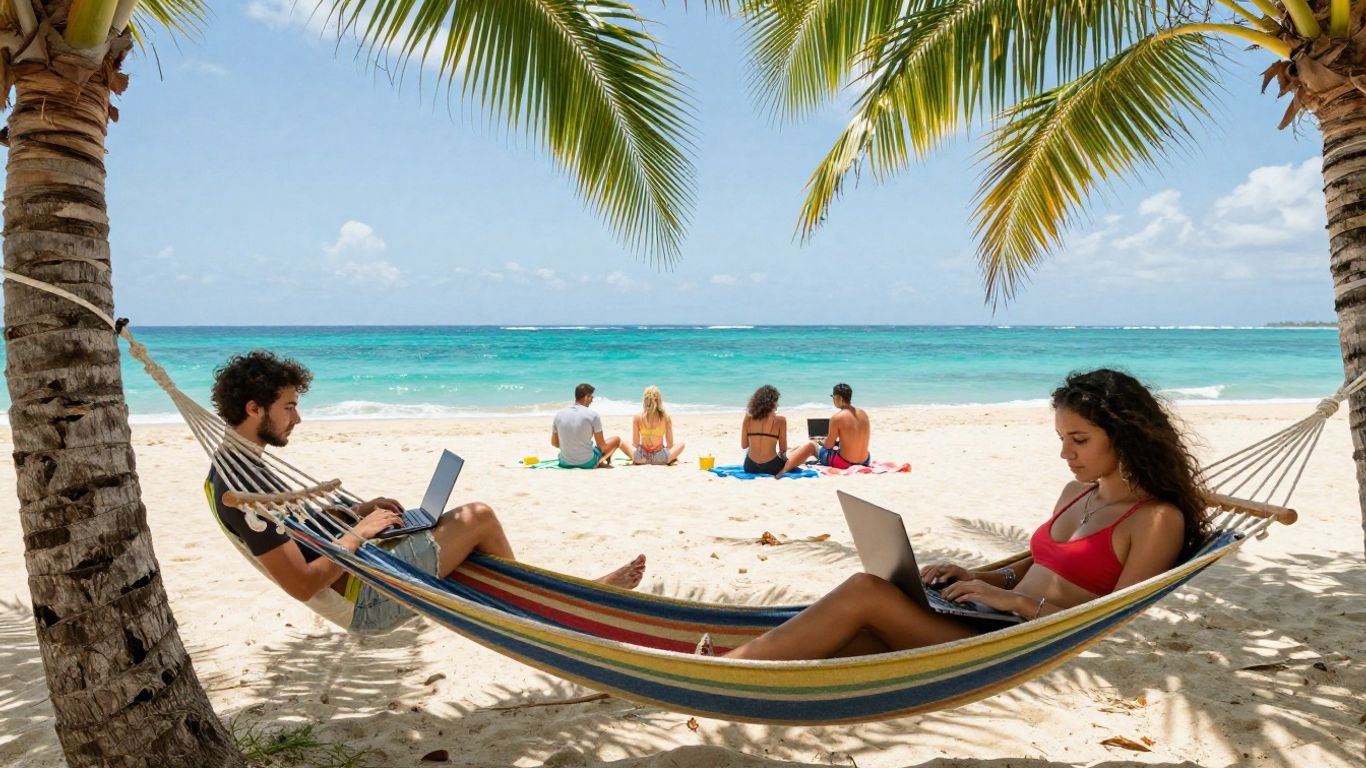 Digital nomads working on laptops on a tropical beach.
Okay, so we've talked about visas and destinations, but what about where you're actually going to sleep? If you're trying to keep costs way down, especially for longer stays, you really need to look into home swapping. Seriously, it's a game-changer. Instead of shelling out thousands on hotels or even rentals, you trade your place with someone else. It's like getting a free place to stay, and in return, they get to stay in yours. This can slash your accommodation costs to practically zero, leaving you with way more cash for, you know, actually experiencing the place you're visiting.
How Home Exchange Reduces Overall Travel Costs
Think about it: accommodation is usually the biggest chunk of any travel budget. Hotels, especially in popular spots or during peak season, can cost a fortune. Even a decent Airbnb can add up fast. Home swapping flips that script. You pay a membership fee for a platform, maybe a bit for verification, but then your stays are free. This isn't just about saving a few bucks; we're talking about potentially saving thousands, especially if you're planning a longer trip. For instance, staying in a place for a month or more via home exchange could save you upwards of $12,000 compared to hotel rates. Plus, having a full kitchen means you're not eating out for every single meal, which is another huge money saver. A family of four could easily save $50 to $80 a day just by cooking some of their own meals.
Here's a quick look at how it stacks up:
| Accommodation Type | Average Cost Per Night | Kitchen Access | Local Experience |
|---|---|---|---|
| Mid-range Hotel | $120 - $200 | No | Minimal |
| Short-term Rental (Peak) | $150 - $300 | Yes | Partial |
| Home Swap (Amortized Fee) | $0 - $15 | Yes | High |
| Hostel Dorm | $25 - $60 | Shared | Low |
Finding Reliable Accommodation Through Swaps
Now, you might be thinking, "Is this safe? How do I know I'll find a good place, or that my place will be respected?" That's where the community aspect comes in. Most home exchange platforms focus heavily on building trust. You create a profile, list your home with good photos and details, and verify your identity. The person you're swapping with does the same. You communicate directly, agree on house rules, and often, you can see reviews from previous swaps. It's a reciprocal system; you're trusting someone with your home, and they're trusting you with theirs. This mutual accountability means people tend to be really respectful. Plus, many platforms offer insurance or mediation services, just in case.
Getting started usually involves a few simple steps:
- Create Your Profile: Be honest and detailed about your home and neighborhood. Good photos are key!
- Search and Connect: Browse listings that match your travel plans and reach out to members.
- Arrange the Swap: Chat with potential partners to agree on dates, duration, and any specific needs.
- Verify and Confirm: Complete any necessary verification steps on the platform to build trust.
Building trust is paramount in home swapping. Verified profiles, clear communication, and a commitment to treating each other's homes with respect are the foundations of successful exchanges. It's about more than just a free place to stay; it's about building connections with people around the world.
Integrating Home Swapping With Visa Stays
Home swapping is particularly brilliant for digital nomads because it supports longer stays, which often align better with visa durations. Instead of hopping between expensive hotels every few weeks, you can arrange a swap for a month or even longer. This gives you the stability to really settle into a place, get into a routine, and explore beyond the usual tourist spots. You're not just visiting; you're living like a local. This kind of immersion is what makes travel truly memorable, and it's way more feasible when your accommodation costs are minimal. Many digital nomads find that by combining a few home swaps with other affordable options, they can significantly extend their travel time and deepen their experiences, all while staying within budget. It’s a fantastic way to make that digital nomad visa work harder for you and discover authentic travel experiences.
Strategies For The Cheapest Digital Nomad Visa Experience
So, you've got your digital nomad visa sorted, but how do you make sure your adventure doesn't break the bank? It's all about smart planning and knowing where to look for savings. Think of your visa duration not just as a time limit, but as a framework for your budget. Planning your itinerary around these durations means you can really settle into a place and avoid costly, rushed moves.
Planning Your Itinerary Around Visa Durations
This is where the real savings start. Instead of hopping from place to place every few weeks, try to find a few spots that really appeal to you and plan to stay longer. Many digital nomad visas are valid for a year or more, so why not use that time wisely? Staying put for a few months in one location can drastically cut down on travel costs and give you a much deeper feel for the local culture. Plus, you can often negotiate better deals on longer-term rentals if you're not just looking for a month-to-month stay.
- Research visa lengths carefully: Some visas are short-term, others are multi-year. Match your travel style to the visa allowance.
- Prioritize slow travel: Staying in one place for 1-3 months minimizes transit costs and allows for deeper immersion.
- Look for monthly discounts: Many accommodations offer reduced rates for longer bookings.
Utilizing Travel Communities For Support
Don't underestimate the power of community when you're trying to keep costs down. There are tons of online groups and forums dedicated to digital nomads and budget travelers. People share tips on everything from finding affordable local eats to understanding public transport systems in new cities. You can even find people looking to share co-living spaces or organize group trips, which can cut down on individual expenses. It’s like having a built-in support network that’s also looking out for your wallet.
Connecting with others who are on a similar journey can provide invaluable insights into cost-saving measures you might not discover on your own. These networks often share real-time information about local deals and budget-friendly activities.
Maximizing Your Budget While Abroad
Beyond just accommodation and travel, think about your daily expenses. Cooking some of your own meals instead of eating out every night makes a huge difference. Look for local markets and learn a few basic phrases to help you shop. Also, consider free activities – most cities have parks, free walking tours, and local events that are perfect for exploring without spending a dime. For example, many popular destinations for digital nomads, like Portugal or Spain, offer a wealth of free cultural experiences if you know where to look.
Home swapping is another fantastic way to cut down on accommodation costs significantly. Instead of paying for hotels or rentals, you can exchange your own home with someone in your desired destination. This can effectively give you free accommodation for your entire stay. Platforms dedicated to home exchange make this process easier than ever, allowing you to connect with people worldwide and find a place that suits your needs, often with better amenities than a standard hotel room.
Essential Tips For Securing Your Nomad Visa
Alright, so you've picked your dream destination and you're ready to pack your bags, but hold on a sec. Before you can start sipping that exotic coffee or working from a beachside cafe, you've got to sort out the visa situation. It sounds like a drag, I know, but getting this right makes all the difference between a smooth adventure and a stressful scramble.
Documentation Needed For Visa Applications
This is where you really need to be organized. Think of it like gathering ingredients for a complicated recipe – miss one, and the whole thing might fall apart. You'll generally need your passport, of course, with plenty of blank pages and at least six months of validity left. Then there's proof of funds, which shows you won't be a burden on the country. This could be bank statements, pay stubs, or a letter from your employer. Some countries want to see a criminal record check, too, so get that sorted early. And don't forget photos; they usually have specific requirements for size and background color, so check those details carefully. It's also a good idea to have a digital nomad visa requirements overview handy for your chosen country, just to make sure you're not missing anything. A solid cover letter explaining your intentions and why you've chosen their country can also go a long way.
Understanding Processing Times And Fees
This is a big one. Visa processing times can vary wildly. Some might take a couple of weeks, while others can drag on for months. You absolutely need to factor this into your travel plans. Applying too late means you might miss your flight or have to change your destination. And the fees? They can add up. Some visas are quite affordable, while others come with a hefty price tag. It's worth making a little spreadsheet to track these costs for each country you're considering. Remember to also budget for any potential expedited processing fees if you're in a rush.
Here's a quick look at potential costs:
| Visa Type | Estimated Fee Range | Processing Time (Typical) |
|---|---|---|
| Digital Nomad Visa | $50 - $500 | 2 weeks - 3 months |
| Freelancer Visa | $100 - $700 | 1 month - 4 months |
| Tourist Visa (Long) | $50 - $200 | 1 week - 2 months |
Note: These are general estimates and can change based on the country and specific application.
Choosing The Right Visa For Your Travel Style
Not all visas are created equal, and picking the wrong one can cause headaches down the line. Are you planning a short stint in one place, or do you want to hop around? Some visas are designed for longer stays, while others are more flexible. Think about your income source too. If you're a freelancer with variable income, you'll need to show proof that meets the country's requirements, which can differ from a salaried employee. Also, consider if you plan to bring family or pets; some visas allow this, others don't. Ultimately, the best visa for you is the one that aligns with your financial situation, your desired length of stay, and your overall travel goals. It's always better to do a bit of extra research upfront to find a comprehensive guide to global mobility options that fits your unique needs.
The Future Of Affordable Nomad Travel
Looking ahead, the landscape for budget-conscious digital nomads is getting even more interesting. We're seeing a real shift towards models that prioritize experience and connection over just cheapness. It's not just about finding the lowest price anymore; it's about getting the most value and the most authentic experience for your money.
Emerging Visa Programs For Budget Travelers
Governments are starting to catch on. More countries are rolling out specific digital nomad visas, and many of these are designed with affordability in mind. They're realizing that attracting remote workers can be a real boost to their economies. Expect to see more nations offering these permits with lower income requirements and reasonable application fees. It's a smart move for them, and great news for us.
The Role Of Technology In Simplifying Nomad Visas
Technology is making things way easier. Applying for visas used to be a huge headache, involving tons of paperwork and in-person visits. Now, many applications are moving online. We're seeing platforms that help you track requirements, upload documents, and even schedule appointments digitally. This streamlines the whole process, cutting down on time and potential costs. It's all about making it simpler to get approved and get on the road. Some platforms are even using AI to help you find the best visa options based on your profile, which is pretty wild.
Sustainable Travel And Its Impact On Visa Accessibility
There's a growing awareness about sustainable travel, and it's influencing visa policies too. Countries are starting to see the benefits of attracting travelers who stay longer, integrate into local communities, and spend money locally, rather than just passing through. This often means that visas that encourage longer stays, like digital nomad permits, are becoming more accessible. Plus, models like home swapping are inherently sustainable because they use existing housing stock. This approach not only saves you a ton of money but also reduces your environmental impact. It's a win-win that's likely to become even more popular. The future of affordable nomad travel is looking increasingly connected, community-driven, and conscious.
Here's a quick look at how different travel models stack up:
| Accommodation Type | Average Cost Per Night | Kitchen Access | Local Experience | Notes |
|---|---|---|---|---|
| Mid-range Hotel | $120 - $200 | No | Minimal | Standard tourist option |
| Short-term Rental (peak) | $150 - $300 | Yes | Partial | Can be pricey during busy seasons |
| Home Swap (amortized fee) | $0 - $15 | Yes | High | Membership/verification fee applies |
| Hostel Dorm | $25 - $60 | Shared | Low | Basic, shared facilities |
As you can see, home swapping really stands out for cutting down accommodation costs significantly. It's not just about saving money, though. It's about the deeper connections and authentic experiences you get when you live like a local. You can find great resources for this, like home exchange networks that connect you with verified hosts worldwide. This kind of travel is not just a trend; it's becoming the smart way to see the world.
Conclusion
So, you've seen that traveling the world as a digital nomad doesn't have to cost a fortune. By smartly choosing visa options, looking into affordable destinations, and using clever tricks like home swapping, you can make your dream of working from anywhere a reality. Planning is key, and connecting with other travelers can help a lot. Keep an eye on new visa programs too, as they're always popping up. The world is waiting, and with the right approach, it's more accessible than ever.
Frequently Asked Questions
What exactly is a digital nomad visa?
A digital nomad visa is a special permit that lets people work remotely from a country that isn't their own. It's for folks who can do their jobs online, like writers, coders, or designers. It's different from a tourist visa because it officially allows you to work while you're there, usually for a set amount of time.
How can I find the cheapest digital nomad visas?
To find the cheapest ones, you should look at countries that have recently started offering these visas, as they often have lower fees to attract people. Also, check countries where the cost of living is generally low. Sometimes, you can find deals or special offers, especially if you apply early.
Are there any hidden costs with these visas?
Yes, there can be. Besides the visa application fee itself, you might have to pay for things like health insurance, background checks, or translations of your documents. Some countries also require you to show proof of a certain amount of money in your bank account, which is an indirect cost. Always read the fine print!
Can I use home swapping to save money on my trip?
Absolutely! Home swapping is a fantastic way to save big. Instead of paying for hotels or rentals, you trade your own home with someone else who lives where you want to go. This can make your accommodation practically free, leaving more money for your visa costs and daily expenses.
What if a country doesn't have a digital nomad visa?
If a country doesn't have a specific digital nomad visa, you might be able to use a tourist visa for shorter stays, but be careful – working officially might not be allowed. Some people try other options like visa-free travel for short periods or look into countries that are known to be more relaxed about remote workers. However, always check the rules to avoid problems.
How long do digital nomad visas usually last?
The length of these visas can really vary. Some are for just a few months, like 6 months, while others can be for a year or even longer, sometimes with options to renew. It depends on the country's rules. It's good to know the duration before you apply so you can plan your stay accordingly.

Published by
SwappaHome
SwappaHome Editorial Team
Home Exchange & Slow Travel Editorial
The SwappaHome Editorial Team brings together travel research, home-exchange community insights, and platform data to produce practical guides for first-time and experienced home swappers. Every article cites real platforms, current market rates, and verifiable city-level facts so readers can make informed decisions without guessing.
Ready to try home swapping?
Join SwappaHome and start traveling by exchanging homes. Get 7 free credits when you sign up!