What to Do in Medellín: The Ultimate Home Exchange Activity Guide for 2024
Maya Chen
Travel Writer & Home Exchange Expert
Discover what to do in Medellín through the eyes of a home exchanger—from hidden neighborhood gems to local experiences you won't find in guidebooks.
I was standing on a rooftop in El Poblado, watching paragliders drift lazily over the valley, when my host's neighbor Carlos handed me a tinto and said something that stuck with me: "Medellín isn't a city you visit. It's a city you live." He was right. And figuring out what to do in Medellín becomes infinitely richer when you're actually living in a neighborhood rather than passing through a hotel lobby.
That trip—my first home exchange in Colombia—completely rewired how I think about this city. I'd arrived expecting the Medellín of Netflix documentaries and left three weeks later with a favorite arepa vendor, a salsa teacher who became a friend, and the kind of tan lines you only get from actually living somewhere.
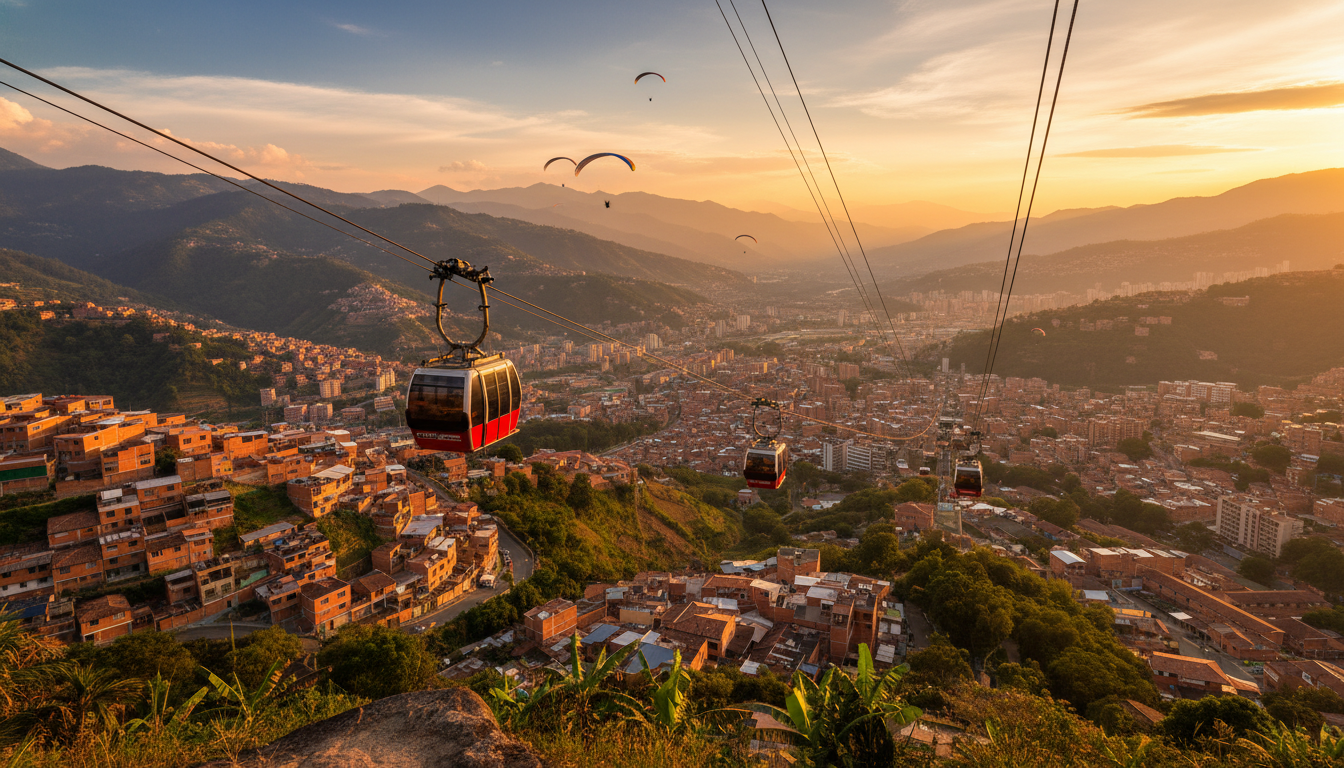 panoramic view of Medellns valley at golden hour, with the Metro cable cars crossing above brick-red
Here's what I learned: the best things to do in Medellín aren't on most tourist lists. They're the morning routines, the neighborhood rhythms, the places locals actually go on Sunday afternoons. When you're home swapping, you get access to all of it.
Why Home Exchange Changes What You Do in Medellín
Let me be honest about something. When I first researched what to do in Medellín, I found the same recycled list everywhere: Comuna 13, Guatapé, the Botero sculptures. All worth doing—I'm not dismissing them. But those lists miss the texture of daily life here.
Staying in someone's actual apartment in Laureles meant I had a kitchen to make breakfast. Sounds small, right? But that kitchen led me to the Minorista market at 6 AM, where I bought the ripest mangoes I've ever tasted for about $0.50 each. It led me to conversations with fruit vendors who taught me which guanábana to pick (slightly soft, fragrant, no brown spots). It led me to a morning routine that felt genuinely Colombian.
The credit system on SwappaHome made this possible without the financial stress. I'd hosted a lovely couple from Bogotá in my San Francisco place the month before, earned credits, and used them for three weeks in a Laureles apartment with a balcony overlooking Parque Segundo. One credit per night, regardless of the neighborhood—so I could afford to stay long enough to actually settle in.
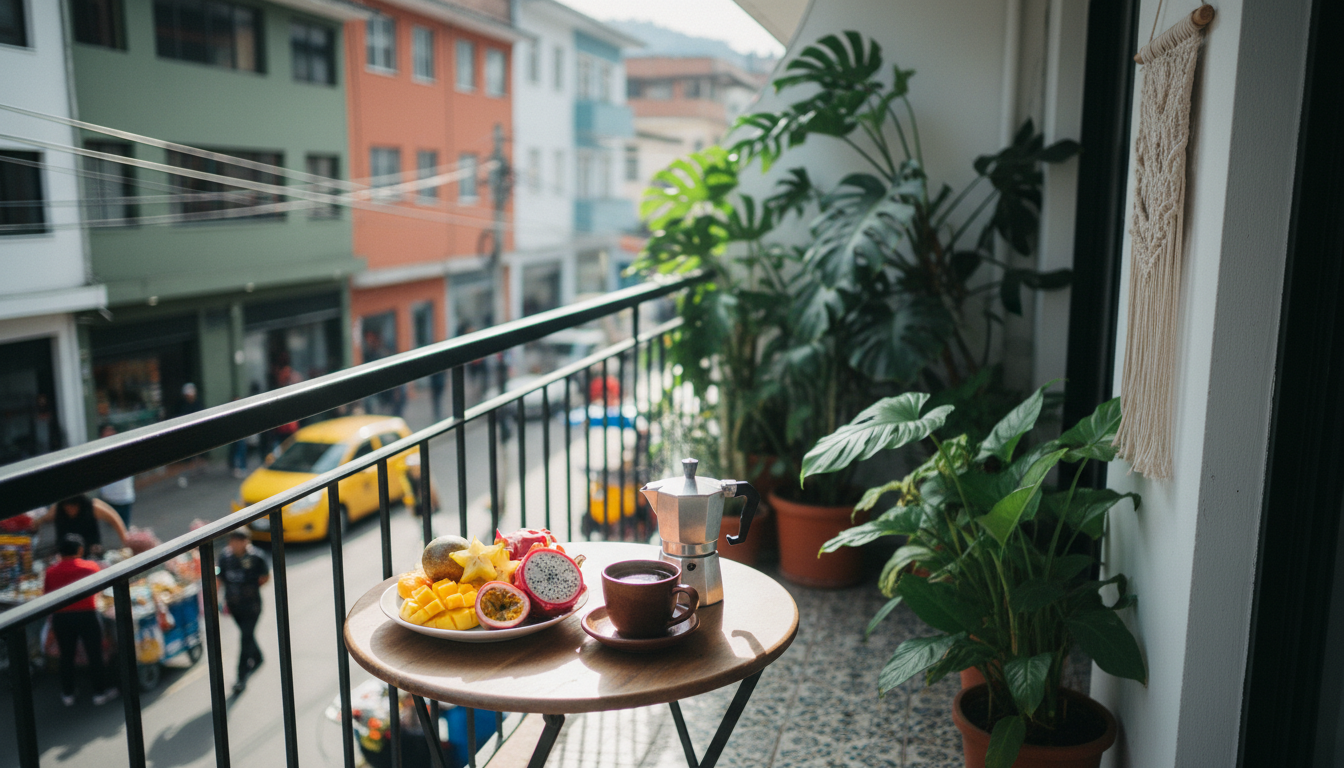 cozy apartment balcony in Laureles with a small breakfast table, fresh tropical fruits, coffee in a
The Best Neighborhoods for Home Exchange Activities in Medellín
Where you stay fundamentally shapes what you'll do here. Each neighborhood has its own personality, its own rhythm, its own secrets.
Laureles: For the Everyday Explorer
This is where I stayed, and I'm biased, but Laureles feels like the sweet spot. Residential enough that you'll see the same faces at the bakery. Lively enough that you'll never run out of things to do.
The Estadio Metro station puts you 15 minutes from downtown. The 70th Street corridor (Carrera 70) comes alive at night with salsa bars, craft beer spots, and restaurants where you'll be the only tourist. I spent an embarrassing number of evenings at Son Havana, a no-frills salsa club where the dancing starts around 10 PM and the cover is about $3.
Practical tip: apartments in Laureles often come with building amenities—pools, gyms, rooftop terraces. When you're home swapping, you get access to all of it. My host's building had a small gym that saved me from the guilt of eating my weight in empanadas.
El Poblado: For First-Timers Who Want Safety Nets
El Poblado is the most touristed neighborhood, and honestly? It's fine. The Provenza area has genuinely good restaurants and bars. Parque Lleras is... an experience (loud, grindy, very much a scene). But the real draw is the sense of safety and walkability for newcomers.
If you're nervous about your first trip to Medellín, El Poblado home exchanges offer a gentler introduction. You'll pay the same one credit per night as anywhere else in the city, but you'll find more English speakers, more familiar comforts, more cushioning.
Just know that El Poblado isn't really Medellín. It's a version of it, curated for visitors. Stay there if you need to, but venture out.
Envigado: For the Long-Stay Home Exchanger
Technically a separate municipality, Envigado has become my go-to recommendation for anyone doing an extended home exchange. It's quieter, more affordable (even for restaurants and groceries), and has this small-town-within-a-city vibe that I find addictive.
The Parque Principal is where older men play chess all afternoon. The nearby streets have some of the best traditional food in the metro area—try the bandeja paisa at any of the family-run spots near the park (around $5-7 for a plate that could feed two).
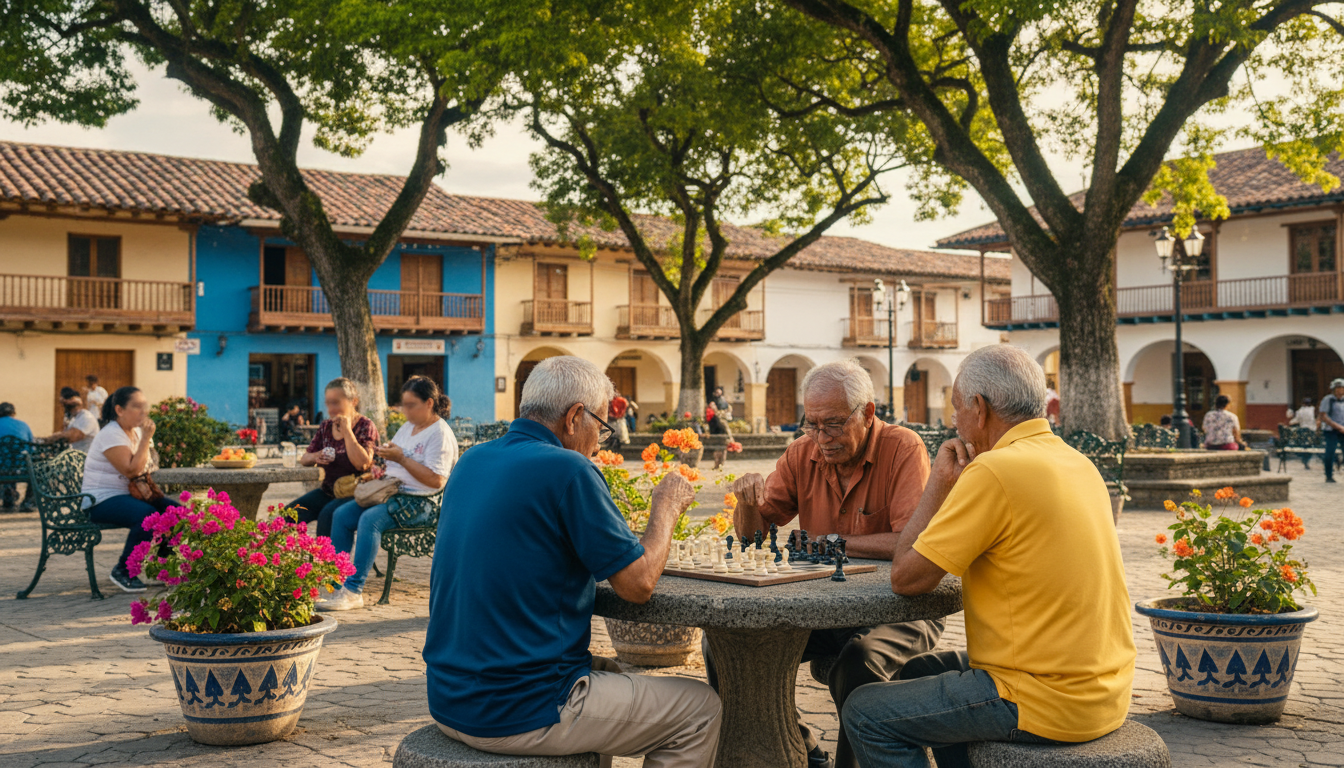 elderly men playing chess in a leafy plaza in Envigado, afternoon light, casual atmosphere with loca
What to Do in Medellín: Activities for Home Exchangers
Alright, let's get into the actual activities. I'm organizing these by the kind of experience rather than the typical "top 10" format—I think that's more useful when you're actually living somewhere.
Morning Rituals Worth Adopting
Medellín mornings are magic. The temperature is perfect—usually mid-60s°F before the afternoon heat kicks in. This is when the city moves.
The Market Circuit: Start at Plaza Minorista if you want the full sensory overload—it's one of the largest markets in Latin America, and it's chaotic and wonderful. Get there before 8 AM. Buy tropical fruits you've never heard of (try mamoncillo, chontaduro, or lulo). Have breakfast at one of the stalls—a calentado (reheated rice and beans with egg) runs about $2.
If Minorista feels too intense, the smaller neighborhood markets are equally rewarding. In Laureles, the Saturday organic market at Parque Segundo has local coffee, fresh bread, and a more curated vibe.
Morning Hikes: Cerro El Volador is my favorite. It's a hill right in the middle of the city, about a 30-minute climb to the top, with 360-degree views of the valley. Locals jog here starting around 5:30 AM. I'd go around 7 AM, bring a thermos of coffee from my apartment, and watch the city wake up. Free, no entrance fee, and you'll barely see another tourist.
Afternoon Adventures Beyond the Guidebooks
The thing about afternoons in Medellín is that the city slows down. It's hot. People retreat indoors or to shaded cafés. Lean into it.
Coffee Shop Working Sessions: If you're a remote worker (and many home exchangers are), Medellín's café scene is exceptional. Pergamino in El Poblado is the famous one—great coffee, reliable WiFi, but crowded. I preferred Al Alma Café in Laureles, where the cold brew is perfect and you can actually get a seat. Budget about $3-5 for a coffee and pastry.
The Free Walking Tours: I know, I know—walking tours sound so touristy. But the ones in Comuna 13 are genuinely worth it. They're led by locals who lived through the neighborhood's transformation, and the stories are powerful. The street art is incredible, yes, but it's the context that makes it meaningful. Tips are expected (around $10-15 is appropriate for a 2-3 hour tour).
Botanical Garden and Explora Park: These are adjacent to each other near the Universidad Metro station. The Jardín Botánico is free and genuinely beautiful—orchid gardens, a butterfly house, and the kind of green space that reminds you why Medellín is called the City of Eternal Spring. Explora is a science museum that's surprisingly good for adults, about $8 entrance.
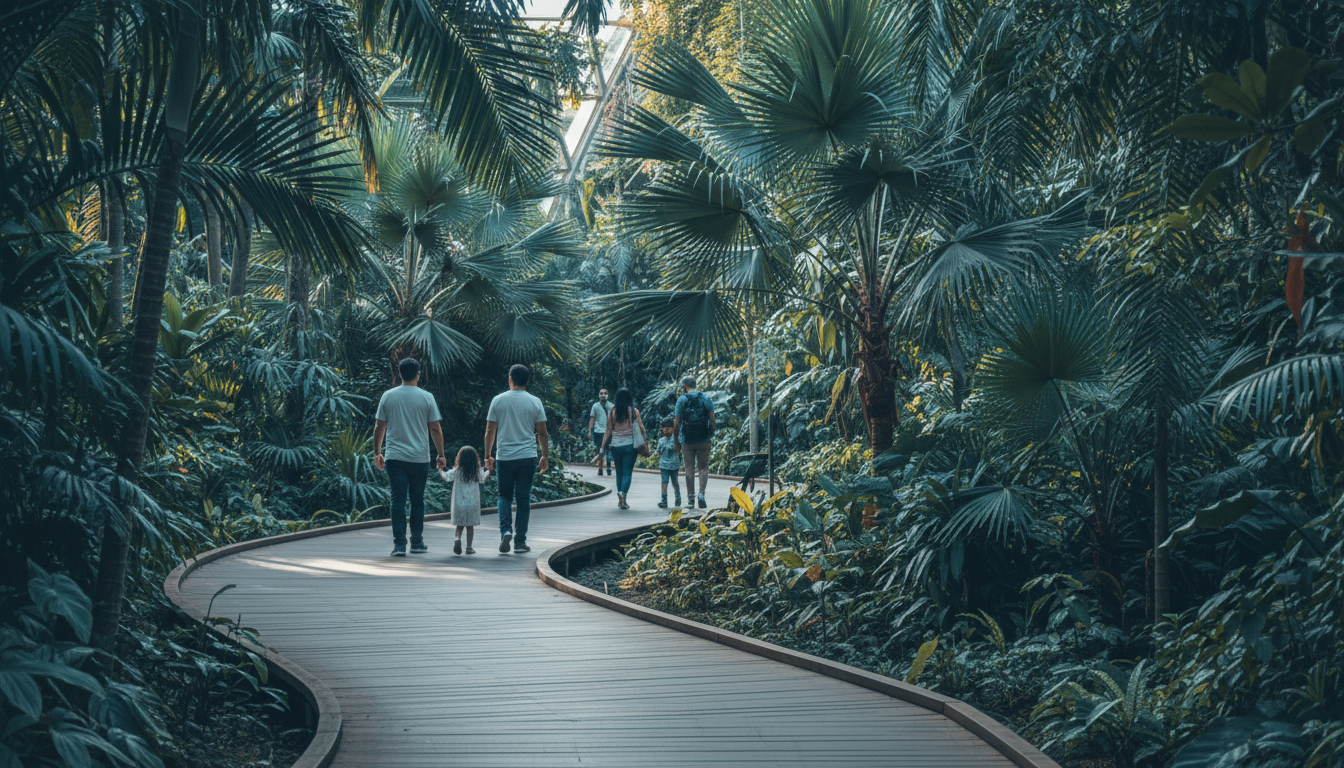 inside Medellns Jardn Botnico, lush tropical plants surrounding a modern wooden walkway, families an
Evening Experiences That Feel Local
This is where home exchange really shines. When you have a home base, you can stay out late without worrying about getting back to a hotel in an unfamiliar area. You know your neighborhood. You know which streets feel comfortable at night.
Salsa Dancing: I can't stress this enough—take a salsa class. Not a tourist one in El Poblado, but a real one at a local academy. I went to Academia de Baile Ritmo y Sabor in Laureles (about $8 per class), and it was humbling and joyful in equal measure. After a few classes, you'll have the confidence to actually dance at the clubs.
The Tejo Experience: Tejo is Colombia's national sport, and it's basically throwing metal discs at gunpowder packets to make them explode. Yes, really. It's traditionally played while drinking beer, and it's absurdly fun. Tejo La 70 in Laureles is beginner-friendly—about $5 per person for a lane, and beers run $1-2 each.
Dinner in Local Spots: Skip the fancy restaurants (or save them for special occasions). The best meals I had were at corrientazos—local lunch spots that serve set meals for $3-5. For dinner, the parrilla restaurants in Envigado serve massive portions of grilled meat, chorizo, and arepa for under $10.
Day Trips and Weekend Excursions from Your Medellín Home Base
One of the best things about home exchange is having a base to return to. You can do day trips without lugging your bags around, leave your laptop safely at home, and come back to a familiar space.
Guatapé: Yes, It's Worth the Hype
I was skeptical about Guatapé because it's on every single "what to do in Medellín" list. But honestly? It earned its spot. The 740 steps up El Peñón are a workout, but the view from the top—that impossible blue water studded with green islands—is genuinely stunning.
The trick is going early. Like, 6 AM bus early. The buses leave from Terminal del Norte (about $4 each way, 2 hours), and if you're on the first one, you'll reach the rock before the tour groups. Climb it, take your photos, then wander the town's colorful zócalos (the painted panels at the base of each building) before the crowds arrive.
Budget: $4 bus each way, $5 entrance to El Peñón, $10-15 for lunch and snacks. You can do Guatapé for under $30.
Santa Fe de Antioquia: The Colonial Escape
About 90 minutes north of Medellín, Santa Fe de Antioquia is a colonial town that feels frozen in time. White-washed buildings, cobblestone streets, a central plaza where time moves slowly. It's noticeably hotter than Medellín (it's in a valley), so bring water and sunscreen.
The Puente de Occidente—a 19th-century suspension bridge—is the main attraction, but I preferred just wandering. The tamarind candies sold by street vendors are addictive. The churches are beautiful. It's the kind of place where you sit in the plaza, drink a cold beer, and watch life happen.
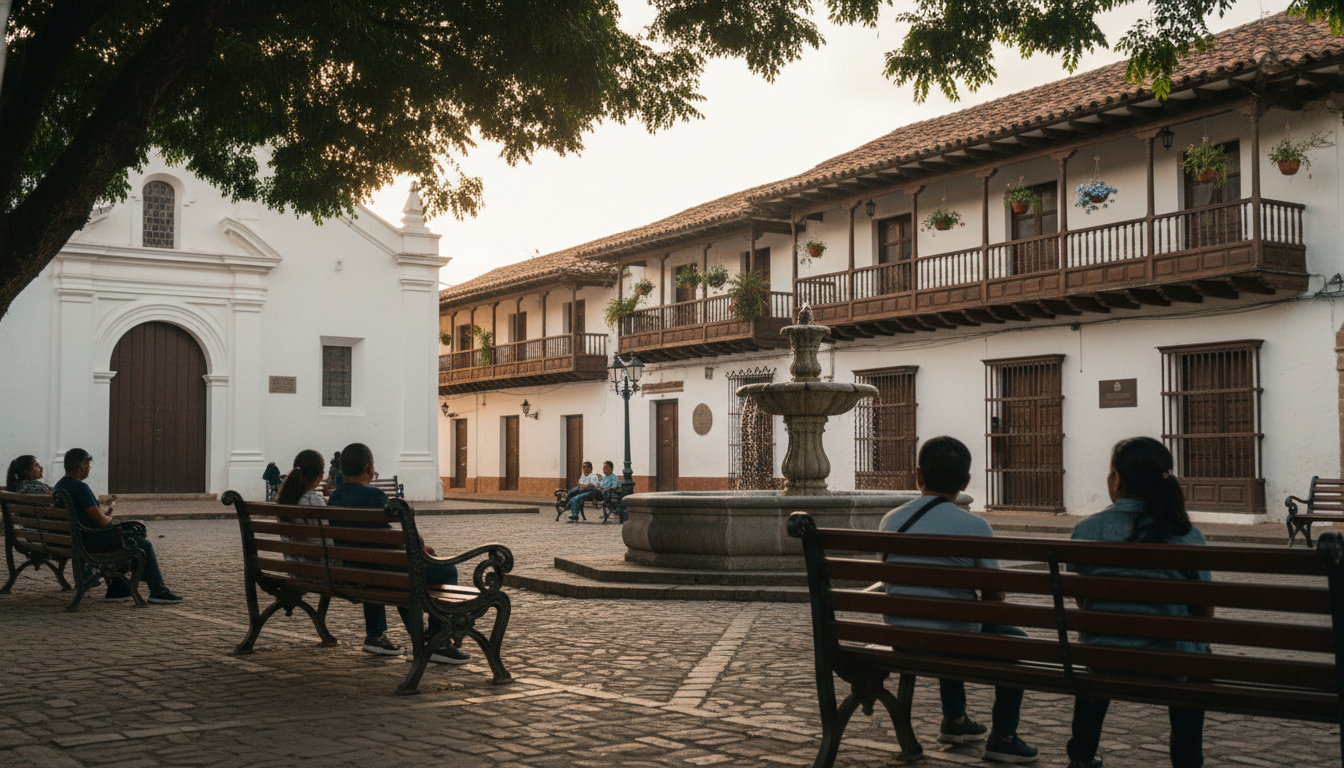 the colonial architecture of Santa Fe de Antioquias main plaza at late afternoon, white buildings wi
Jardín: For the Adventurous Home Exchanger
This one requires more commitment—it's about 4 hours south of Medellín—but Jardín is my favorite small town in Colombia. The coffee farms here offer tours where you can see the entire process from plant to cup. The main plaza is one of the most photogenic in the country. And the trout fishing? Surprisingly excellent.
I'd recommend an overnight if you can, but it's doable as a very long day trip. Buses from Terminal del Sur run about $8 each way.
Practical Tips for Home Exchange Activities in Medellín
After three separate home exchanges in Medellín (I keep going back), here's what I've learned:
Transportation That Actually Works
The Metro is your best friend. It's clean, safe, efficient, and costs about $0.75 per ride. Get a Cívica card (rechargeable transit card) at any station—it works on Metro, MetroCable, and buses. The MetroCable lines that climb into the hillside barrios are attractions in themselves, with incredible views.
For areas the Metro doesn't reach, use InDriver or DiDi apps (like Uber but more common here). A ride across the city rarely exceeds $5. Regular taxis are fine too—just make sure they use the meter.
Money Matters
Cash is still king in many local spots. ATMs are everywhere, but they charge fees ($3-5 per withdrawal). I found the best rates at Bancolombia ATMs. Many restaurants and shops now take cards, but always have some pesos on hand for markets, street food, and smaller establishments.
As of late 2024, the exchange rate hovers around 4,000 Colombian pesos to $1 USD. This makes Medellín incredibly affordable—you can live well on $50-70 per day including activities, food, and transportation.
Safety Realities
I won't pretend Medellín doesn't have safety concerns—it does. But they're manageable with common sense. Don't flash expensive phones or jewelry. Be aware of your surroundings, especially at night. Stick to well-lit, populated areas. Trust your instincts.
The neighborhoods I've mentioned (Laureles, El Poblado, Envigado) are generally safe for walking day and night. The areas around Metro stations are well-patrolled. I never felt unsafe during my stays, but I was also sensible.
Making the Most of Your Home Exchange Experience
Here's my real advice for what to do in Medellín as a home exchanger: slow down. You have a home. Use it.
Cook breakfast on your balcony. Read a book in the afternoon heat. Learn your barista's name at the corner café. Say yes when your host's neighbor invites you to a family asado.
The verification system on SwappaHome means you're connecting with real people who want to share their city with you. My Laureles host left me a notebook full of recommendations—her favorite bakery, the best sunset spot, which tinto vendor made the strongest coffee. That notebook was worth more than any guidebook.
And when you get back home, you'll have the chance to return the favor. That's the magic of this whole thing—it's reciprocal. You're not just taking from a place; you're part of a community that gives back.
I'm planning my fourth Medellín home exchange for next spring. There's an apartment in Envigado I've had my eye on, with a rooftop terrace and a host who apparently makes incredible arepas. Carlos from that first trip was right—Medellín isn't a city you visit. And with home exchange, you don't have to.
Frequently Asked Questions
What are the best things to do in Medellín for first-time visitors?
For first-timers, focus on Comuna 13's street art and transformation story, the Botero sculptures in Plaza Botero, and the Jardín Botánico. Add a day trip to Guatapé and spend evenings exploring the restaurant scene in Laureles or El Poblado. These give you a well-rounded introduction to the city's culture, history, and natural beauty.
Is Medellín safe for home exchange travelers?
Medellín has improved dramatically in safety over the past two decades. Neighborhoods like Laureles, El Poblado, and Envigado are generally safe for tourists. Use common sense—avoid displaying expensive items, stay aware of your surroundings at night, and stick to well-populated areas. Home exchangers benefit from local host knowledge about which specific streets and times are safest.
How much does a week in Medellín cost with home exchange?
With home exchange eliminating accommodation costs, expect to spend $350-500 for a week in Medellín. This covers food ($15-25/day), transportation ($5-10/day), activities ($10-20/day), and day trips ($30-50 each). The city is remarkably affordable—a full meal at a local restaurant costs $3-7, and Metro rides are under $1.
What is the best neighborhood to stay in Medellín?
Laureles offers the best balance of local authenticity, safety, and access to activities. It's residential enough to feel like you're living in the city, with excellent restaurants, salsa clubs, and easy Metro access. El Poblado suits those wanting more tourist infrastructure, while Envigado is ideal for longer stays and quieter atmospheres.
When is the best time to visit Medellín for home exchange?
Medellín enjoys spring-like weather year-round (hence "City of Eternal Spring"), with temperatures averaging 70-80°F. December through February offers the driest weather and coincides with holiday festivities. August hosts the famous Feria de las Flores. Avoid Easter week and mid-December to mid-January if you want to find more home exchange availability, as these are peak Colombian vacation times.
40+
Swaps
25
Countries
7
Years
About Maya Chen
Travel Writer & Home Exchange Expert
Maya is a travel writer with over 7 years of experience in the home swapping world. Originally from Vancouver and now based in San Francisco, she has completed more than 40 home exchanges across 25 countries. Her passion for "slow" and authentic travel led her to discover that true luxury lies in living like a local, not a tourist.
Ready to try home swapping?
Join SwappaHome and start traveling by exchanging homes. Get 10 free credits when you sign up!
Related articles
Lyon Home Exchange: Your Complete Guide to France's Hidden Gem for Home Swapping
Discover why Lyon home exchange is booming among savvy travelers. From Croix-Rousse to Presqu'île, find the best neighborhoods and insider tips for your swap.

Zurich Bucket List: 47 Unforgettable Experiences to Enjoy During Your Home Swap
Discover the ultimate Zurich bucket list for home swappers—from secret swimming spots to fondue rituals locals actually do. Save thousands while living like a true Zürcher.
Dublin Home Exchange Utilities Guide: WiFi, Heating & Everything Your Guests Need
Master Dublin home exchange utilities—from dodgy WiFi fixes to heating quirks. Practical tips from 7 years of swapping homes across Ireland.