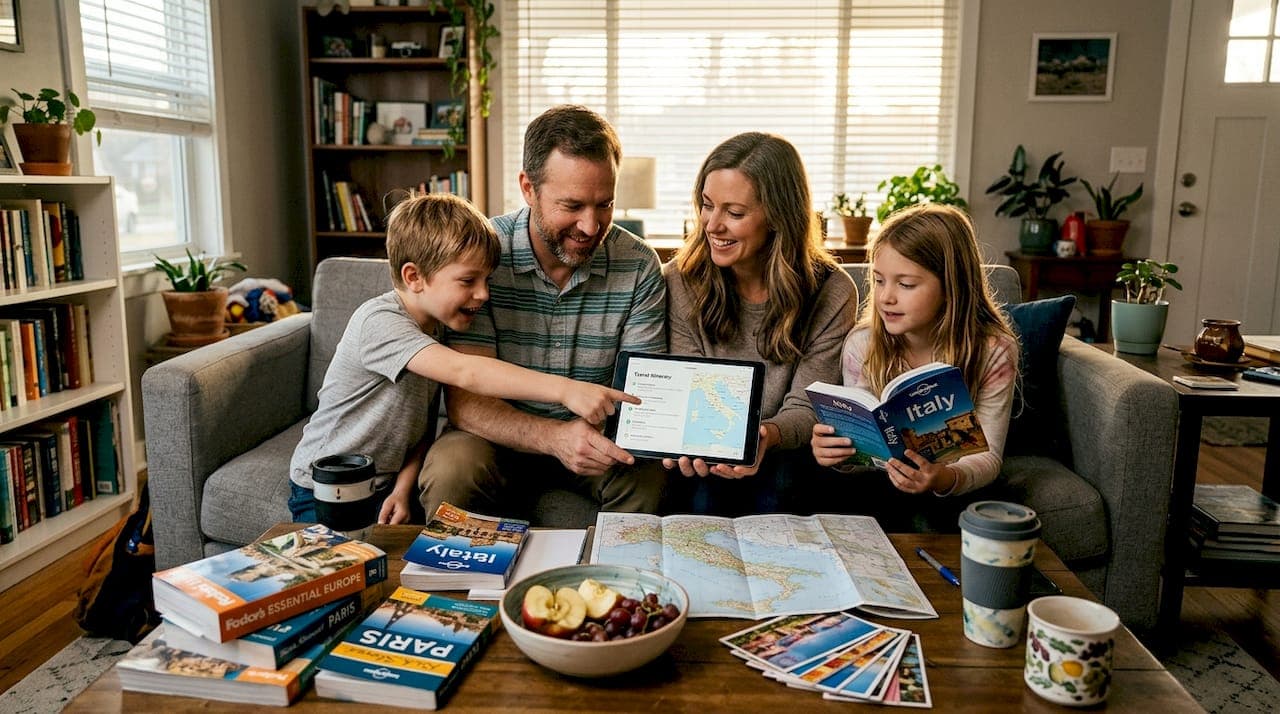
Why home exchange facilitates global travel: Save $40K

SwappaHome Editorial Team
Home Exchange & Slow Travel Editorial
Why home exchange facilitates global travel: Save $40K !Family planning travel in home living room > TL;DR: > > - Home exchange saves travelers...
Why home exchange facilitates global travel: Save $40K
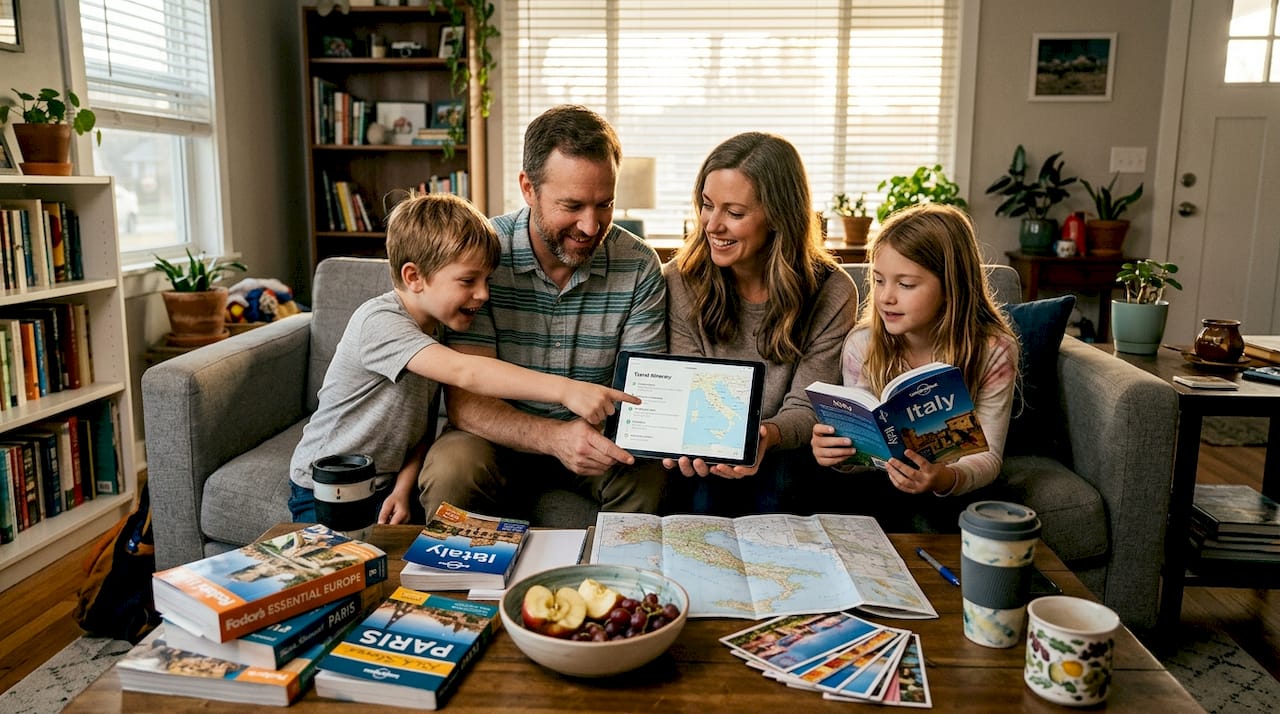 Family planning travel in home living room
TL;DR:
- Home exchange saves travelers $10,000 to $40,000 annually and offers authentic local experiences.
- Verified platforms ensure trust through ID checks, reviews, and credit systems, minimizing risks.
- This travel model promotes cultural exchange, sustainability, and broadens access beyond traditional tourism.
Imagine cutting your annual travel costs by tens of thousands of dollars while actually living inside the culture you came to explore. That is not a fantasy. Homeowners who swap homes instead of booking hotels can save $10,000–$40,000 per year, and the experience they get in return goes far beyond anything a hotel lobby can offer. This guide breaks down how home exchange works, why it outperforms every traditional travel option, what risks you should know about, and how you can start facilitating your own global travel through a verified community platform.
Table of Contents
- The new era of global travel: Why facilitating exchanges matters
- How home exchange platforms facilitate global travel: Mechanics and models
- Why home exchange beats hotels, rentals, and Airbnb for global travel
- Risks, realities, and what most people miss about facilitating global travel
- The real reason facilitating global travel changes everything
- Ready to facilitate your global travel?
- Frequently asked questions
Key Takeaways
| Point | Details |
|---|---|
| Major cost savings | Home exchange can save you thousands annually compared to hotels or rentals. |
| Authentic cultural immersion | You experience destinations like a local, not a tourist, through trusted exchanges. |
| Flexible, secure travel | Verified platforms offer flexible booking and high safety standards with low risks. |
| Community-driven adventures | Global travel becomes accessible to more people via peer-to-peer, people-first swaps. |
The new era of global travel: Why facilitating exchanges matters
Travel used to mean choosing between expensive hotels and cramped vacation rentals. Home exchange flips that model entirely. Instead of paying for a room that a corporation profits from, you open your home to a fellow traveler and stay in theirs. The result is affordable global travel that feels nothing like tourism.
The numbers behind this shift are striking. Home exchange platforms enable millions of affordable, authentic trips for homeowners each year, and home swapping trends show the practice has grown 67% in the past year alone. Families who commit to exchanging over three years routinely save between $34,000 and $44,000 compared to traditional hotel stays. Those are real numbers, not marketing estimates.
Beyond the savings, the experience itself is categorically different:
- You live like a local. You shop at the neighborhood market, cook in a real kitchen, and walk streets that tourists rarely find.
- You build genuine friendships. Many exchangers stay in contact with their hosts for years.
- You discover hidden gems. Your host often leaves local tips no travel blog covers.
- You contribute to sustainability. Using an existing home instead of a hotel room reduces the sustainable travel impact of vacant properties sitting idle while new construction expands.
"Home exchange is not just a cheaper way to travel. It is a fundamentally different relationship with the places you visit."
This model suits families, frequent travelers, remote workers, and anyone tired of feeling like a customer rather than a guest. The community is global, the savings are real, and the cultural depth is something no hotel star rating can measure.
Now that you see the potential, let us dig into how these home exchange platforms actually work.
How home exchange platforms facilitate global travel: Mechanics and models
The mechanics behind home exchange are simpler than most people expect, but the systems that make them trustworthy are genuinely sophisticated.
There are two core exchange models. Reciprocal swaps happen when two homeowners agree to stay in each other's homes, either at the same time or at different times. Credit-based systems are more flexible: you host a guest, earn credits, and spend those credits to stay anywhere in the network whenever you want. No direct match needed. This is what makes platforms accessible to people with busy or unpredictable schedules.
Verified ID checks, reviews, and advanced credit systems are the backbone of trust on these platforms. Members go through identity verification before they can list or book, and every stay generates a review that future hosts and guests can read.
Here is a snapshot of what the global home exchange ecosystem looks like right now:
| Platform metric | Current data |
|---|---|
| Annual swaps facilitated | 580,000+ |
| Active listings | 360,000+ |
| Countries represented | 150+ |
| Average savings per trip | $1,500–$3,000 |
| Typical membership fee | $150–$200/year |
The process for a new member generally follows these steps:
- Create a verified profile with photos and a home description.
- Pass the platform's ID verification process.
- List your home and set your availability.
- Host a guest and earn travel credits.
- Use those credits to book a stay through free accommodation advantages anywhere in the network.
- Leave and receive reviews after each stay.
Pro Tip: If you are new to home exchange, request stays with members who have at least five completed exchanges and strong reviews. Their experience means they know how to be great guests, and their track record gives you confidence going in.
The platform handles the logistics. You handle the hospitality. Understanding how these platforms function sets the stage for comparing home exchange to traditional travel options.
Why home exchange beats hotels, rentals, and Airbnb for global travel
Let us put the options side by side. A mid-range hotel in a major city runs $180 to $400 per night. A week-long stay costs between $1,260 and $2,800, before you add meals, parking, and resort fees. Airbnb can be cheaper, but prices in popular destinations have climbed sharply, and you still pay per night.
Home exchange costs you a membership fee, typically under $200 per year. After that, nights are free.
 Woman joining home exchange on kitchen table
| Option | Nightly cost | Annual potential savings | Local immersion | Family-friendly |
|---|---|---|---|---|
| Hotel | $180–$400 | None | Low | Limited |
| Airbnb | $100–$300 | None | Medium | Varies |
| Vacation rental | $120–$350 | None | Medium | Often yes |
| Home exchange | $0 (membership only) | $10,000–$40,000 | Very high | Excellent |
Families can save $3,000+ per trip and enjoy more space, freedom, and authentic experiences than any hotel room provides. A family of four in a home has a kitchen, multiple bedrooms, a yard sometimes, and a neighborhood to explore. Compare that to two hotel rooms and a vending machine.
Key advantages that set home exchange apart:
- More space for the same or lower cost than home swaps vs rentals
- No nightly fees that compound over a two-week trip
- Homey environment that reduces travel fatigue, especially for children
- Environmental benefit from using homes that would otherwise sit empty
"When you stay in someone's home, you are not a tourist. You are a temporary neighbor. That changes everything about how you experience a place."
The home swap vs Airbnb comparison is especially revealing. Airbnb hosts are running a business. Home exchangers are building relationships. That difference shows up in how spaces are prepared, how tips are shared, and how welcome you actually feel. After seeing how home exchange outperforms traditional stays, it is worth exploring both the practical benefits and the few risks involved.
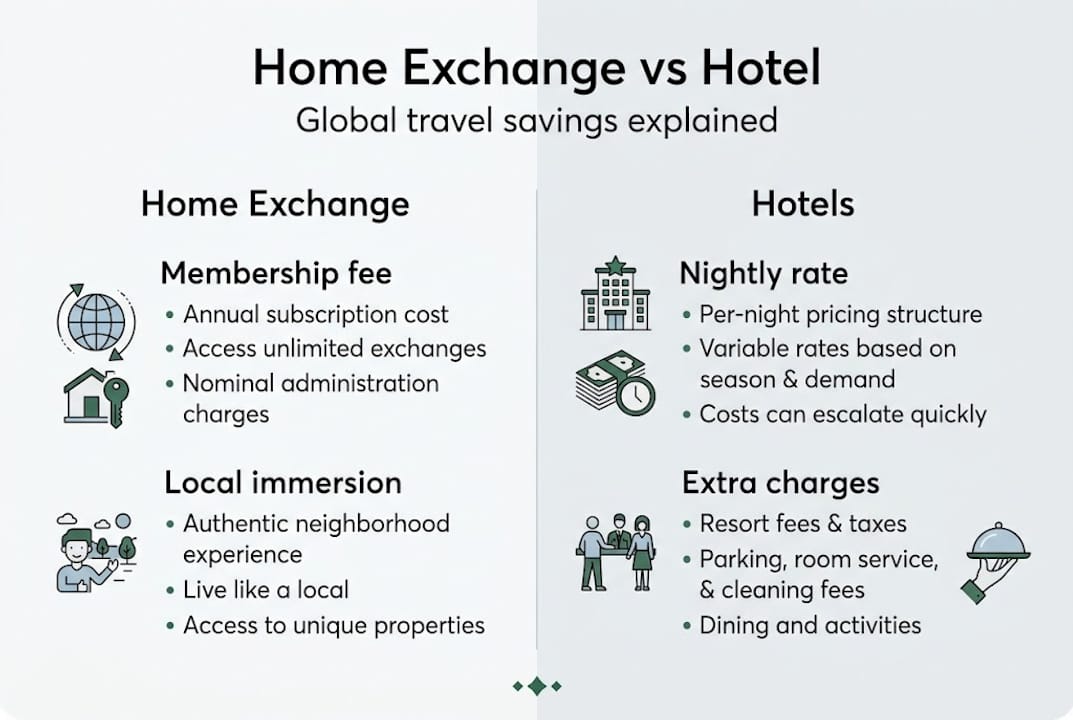 Infographic comparing home exchange and hotels travel
Risks, realities, and what most people miss about facilitating global travel
No travel model is without risk, and home exchange is no different. But the actual rate of serious problems is far lower than most newcomers fear.
Verified platforms have fraud rates well below 1%, and the mutual incentive structure means guests treat homes with more care than typical short-term renters. When both parties are homeowners, there is an unspoken understanding: I would want my home treated this way, so I will treat yours the same.
That said, here are the real risks to know before you start:
- Property damage: Rare, but possible. Secure valuables, document your home before each stay, and check whether your homeowner's insurance covers exchange guests.
- Local regulations: Some cities restrict short-term stays even for exchanges. Check your local rules before listing.
- Scams: These happen almost exclusively outside verified platforms. Never communicate or pay outside the system.
- Renter situations: If you rent rather than own, you need written landlord approval before listing your space. Check your lease carefully.
Pro Tip: Always read a potential guest's reviews before accepting a request. Look for patterns, not just star ratings. A guest with ten five-star reviews from experienced hosts is a green flag. Always keep all communication and transactions inside the platform.
What most newcomers miss is actually the upside hiding inside the risk conversation. Because both parties are homeowners with skin in the game, true cost savings come with a level of mutual respect that short-term rental platforms rarely achieve. Guests leave homes cleaner, report issues honestly, and follow house rules more reliably than anonymous renters.
For anyone worried about fraud advice, the data is reassuring. The community model, combined with ID verification and review systems, creates accountability that hotels and rental platforms simply cannot replicate.
Gaining this unfiltered understanding prepares you for a realistic and rewarding start. Now, let us get candid about what actually drives success.
The real reason facilitating global travel changes everything
Most travel content focuses on deals, destinations, and discount codes. Home exchange rarely gets the attention it deserves, because it does not fit the advertising model that funds most travel media. There is no hotel chain paying for placement.
But here is what we have seen: home exchange does not just change how you travel. It changes who gets to travel meaningfully. When the barrier is not money but willingness to trust and connect, the door opens for a much wider group of people.
Homeowners who open their spaces are not just saving money. They are shifting the power dynamic of global travel from corporations back to communities. Every exchange is a real person welcoming another real person into their life, their neighborhood, their routines. That is not a transaction. That is cultural exchange in the truest sense.
The sustainable home exchange model also quietly challenges the assumption that more travel requires more infrastructure. It does not. It requires more trust. And trust, it turns out, scales beautifully when the right systems support it. What future travelers will expect from travel, we believe, will look a lot more like this.
Ready to facilitate your global travel?
If you have made it this far, you already understand why home exchange is worth taking seriously. The savings are real, the experiences are richer, and the community is built on verified trust rather than anonymous transactions.
 https://swappahome.com
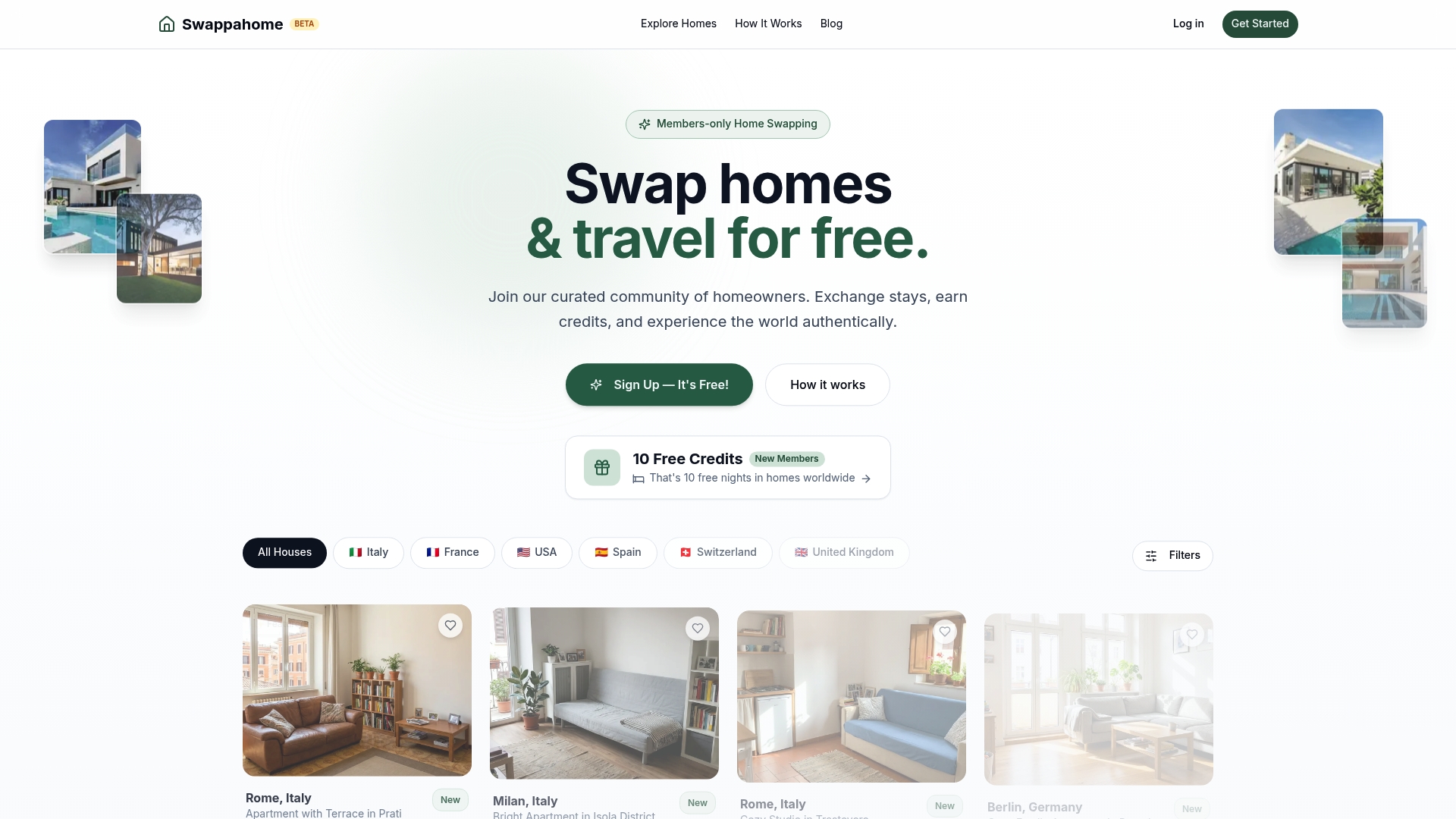
Swappahome makes it straightforward to start swapping homes with verified members across 150+ countries. New members receive free starter credits, so you can book your first stay before you have even hosted anyone. No massive hotel bills. No impersonal check-ins. Just genuine travel, facilitated by people who own homes just like yours. Browse available listings today and see exactly where your home could take you next.
Frequently asked questions
How much can I really save by exchanging homes instead of booking hotels?
Homeowners often save $10,000–$40,000 per year through home exchange, with families saving $3,000 or more per individual trip compared to hotel stays.
Are home exchanges safe?
Issues are rare. Verified platforms keep fraud below 1% through ID checks, member reviews, and mutual accountability between homeowners who both have something to protect.
Do I need to swap at the same time as the other party?
No. Credit-based systems let you host at one time and travel at a completely different time, with no need to match dates with a specific person.
What if I rent, not own, my home?
You can still participate, but you need written landlord approval first. Always review your lease terms and check local regulations before listing a rented property on any exchange platform.
Recommended
- Cost-Effective Travel Explained: Real Savings Globally | SwappaHome Blog
- How to Travel for Free with Home Exchange | Complete 2024 Guide
- Unlock free accommodation advantages in 2026 | SwappaHome Blog
- Global Home Exchange: Transforming Affordable Travel | SwappaHome Blog
- Mastering Expat Financial Planning: Your Guide to Smart Money Moves Abroad

Published by
SwappaHome
SwappaHome Editorial Team
Home Exchange & Slow Travel Editorial
The SwappaHome Editorial Team brings together travel research, home-exchange community insights, and platform data to produce practical guides for first-time and experienced home swappers. Every article cites real platforms, current market rates, and verifiable city-level facts so readers can make informed decisions without guessing.
Ready to try home swapping?
Join SwappaHome and start traveling by exchanging homes. Get 7 free credits when you sign up!