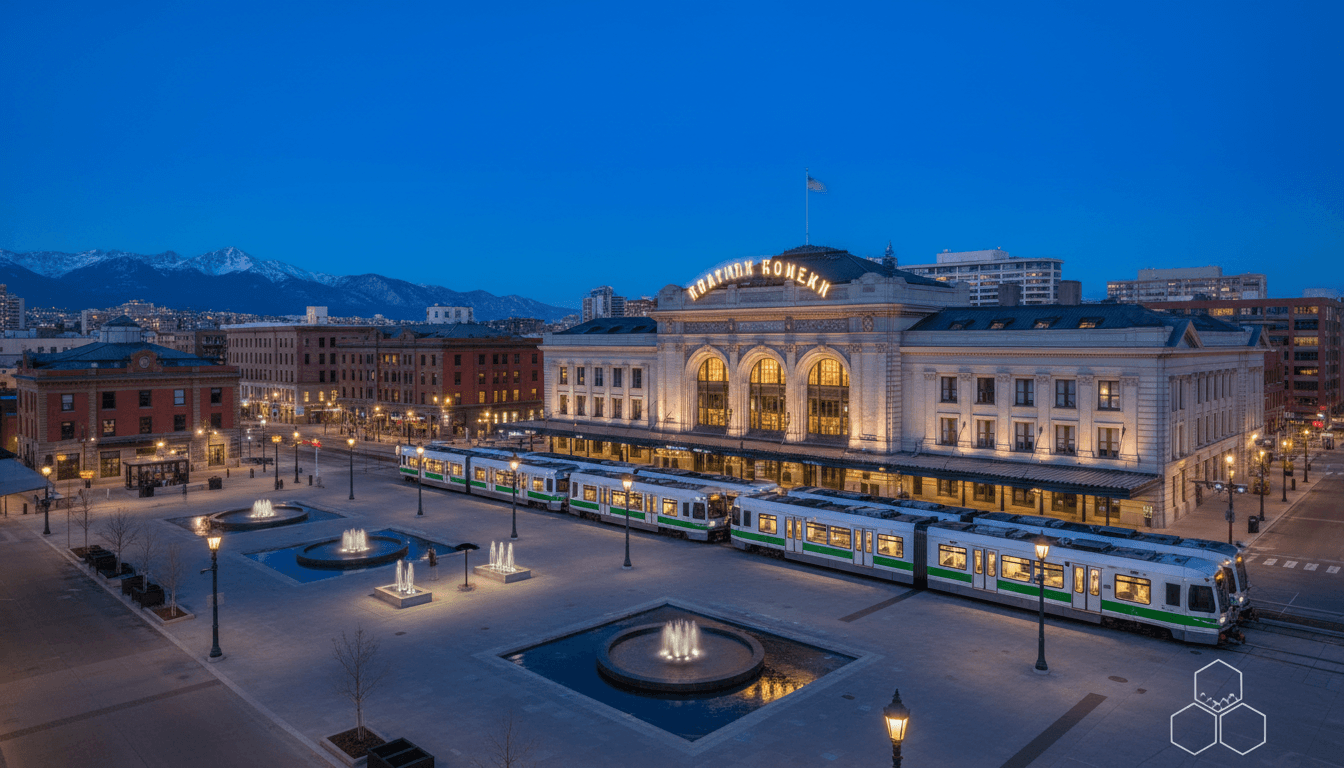
Work from Denver: The Ultimate Home Swapping Guide for Digital Nomads
Maya Chen
Travel Writer & Home Exchange Expert
Discover how digital nomads can work from Denver through home swapping—free accommodation, mountain views, and the perfect remote work setup awaits.
I wasn't planning to fall in love with Denver. I'd booked a three-week home swap there mostly because I needed reliable WiFi and a change of scenery from my San Francisco apartment. But somewhere between my first morning run along Cherry Creek Trail and discovering that my swap home had a dedicated office with mountain views, I realized I'd stumbled onto something special.
 Morning light streaming through floor-to-ceiling windows of a modern Denver apartment, laptop open o
Here's what nobody tells you about Denver: it's quietly become one of the most digital nomad-friendly cities in the United States. Three hundred days of sunshine. A thriving tech scene. Neighborhoods that actually feel like neighborhoods—not just tourist traps dressed up for Instagram. And when you add home swapping into the equation? You're looking at free accommodation in a city where hotel rooms average $180-250 per night.
Why Digital Nomads Are Choosing Denver
I've worked remotely from 25 countries over the past seven years, and I keep coming back here. That might sound strange—why would someone who could be anywhere choose a landlocked American city over Lisbon or Bali?
The answer is infrastructure. Real, boring, glorious infrastructure.
Denver's internet speeds consistently rank among the fastest in the country. During my last swap in the Highlands neighborhood, I was pulling 400 Mbps down—faster than most coworking spaces I've used in Europe. The city has invested heavily in fiber optic networks, and most residential areas have multiple high-speed providers competing for business. For video calls, large file uploads, or anyone working in tech, this matters more than a beach view. Trust me on that one.
Then there's the timezone advantage. Mountain Time puts you in a sweet spot: you can take morning calls with European colleagues and still wrap up by the time West Coast clients are finishing their day. I've managed teams across three continents from a Denver living room without anyone feeling like they got the short end of the scheduling stick.
The cost of living, while not cheap, is significantly lower than San Francisco, New York, or LA. When you're home swapping and eliminating accommodation costs entirely, your money stretches even further. I calculated that my three-week Denver stay—including food, a coworking day pass, and weekend adventures—cost me roughly $1,400. A comparable hotel stay alone would have been over $4,000.
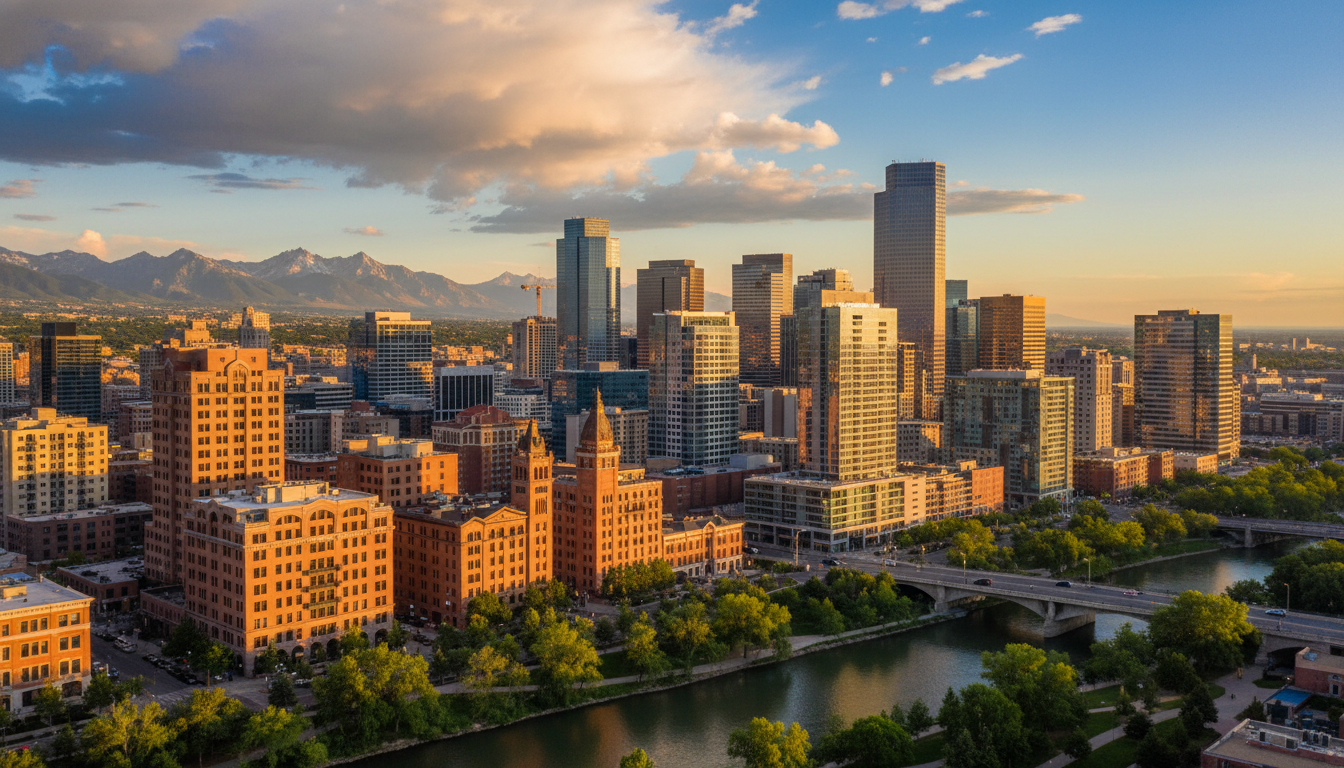 Aerial view of downtown Denvers skyline at golden hour with the Rocky Mountains as backdrop, showing
How Home Swapping Actually Works for Remote Workers
If you're new to home exchange, here's the quick version: you list your home on a platform like SwappaHome, earn credits when you host travelers, and spend those credits to stay in other members' homes anywhere in the world. One credit equals one night, regardless of whether you're staying in a studio apartment or a four-bedroom house.
For digital nomads, this system is particularly powerful. You're not tied to the traditional "I stay at your place while you stay at mine" model. Host a family from Denver for a week at your place, bank 7 credits, then use those credits whenever you want to work from Denver—even if that Denver family is traveling somewhere else entirely.
The key difference between home swapping and other accommodation options comes down to space and setup. Hotels give you a bed and maybe a desk. Airbnbs vary wildly. But a home swap? You're getting someone's actual living space, which almost always includes a proper workspace, a full kitchen, reliable WiFi they use daily, and often the kind of comfortable office chair that hotels never provide.
During my Denver swaps, I've had access to standing desks, dual monitors, ergonomic setups that would cost thousands to replicate. One host even left me their spare keyboard and mouse because they knew I was coming to work. That's the home swap community—people who understand what you need because they need the same things.
Best Denver Neighborhoods for Digital Nomad Home Swaps
Not all Denver neighborhoods are created equal for remote work. After multiple extended stays, I've developed strong opinions about where you should—and shouldn't—base yourself.
RiNo (River North Art District)
RiNo is Denver's answer to Brooklyn's Williamsburg, but with more sunshine and better parking. The neighborhood is packed with converted warehouses, street art, and the kind of coffee shops where everyone seems to be working on a screenplay or a startup.
Home swaps here tend to be loft-style apartments and renovated industrial spaces. Exposed brick. High ceilings. Natural light that makes video calls look professionally lit. I did a two-week swap in a converted textile factory—the WiFi was excellent, the neighborhood walkable, and I could grab lunch at Dio Mio (handmade pasta, around $16-18 for a bowl that'll ruin you for Italian food elsewhere) without breaking my workflow.
The downside? Street noise can be an issue, especially on weekends when the breweries get busy. If you're sensitive to sound during calls, ask your swap host about noise levels before booking.
 Colorful street art mural on a brick warehouse wall in RiNo, with a person walking past carrying a l
Highlands/LoHi
The Highlands neighborhood (and its trendier subset, Lower Highlands or LoHi) strikes the perfect balance between residential calm and urban convenience. Tree-lined streets, Victorian homes mixed with modern townhouses, and a restaurant scene that punches way above its weight.
This is where I've had my most productive Denver swaps. The homes here tend to be actual houses rather than apartments, which means dedicated office spaces, backyards for afternoon breaks, and the kind of quiet that lets you actually focus. My favorite swap was a 1920s bungalow with a sunroom converted into an office—I'd work with the windows open, listening to birds instead of traffic.
LoHi's main drag along 32nd Avenue has everything you need within walking distance: coffee at Little Owl (order the cortado), lunch at Linger (a converted mortuary, which sounds weird but trust me), and a Whole Foods for groceries.
Capitol Hill
Cap Hill is Denver's most eclectic neighborhood—a mix of historic mansions converted to apartments, dive bars, LGBTQ+ nightlife, and some of the city's best cheap eats. It's also where you'll find the most affordable home swap options.
The trade-off is space. Apartments here tend to be smaller, and you might be working from a living room rather than a dedicated office. But if you're the type who does best in coffee shops anyway, Cap Hill puts you within walking distance of more cafes per square block than anywhere else in Denver. I'm partial to Thump Coffee on Broadway—good beans, fast WiFi, and they don't glare at you for staying four hours.
Cherry Creek
If you're doing important client work and absolutely cannot risk any hiccups, Cherry Creek is your neighborhood. This is Denver's upscale shopping and dining district, and the homes here reflect that—modern builds, smart home features, and the kind of reliable infrastructure that comes with higher property values.
Home swaps in Cherry Creek tend to be condos or townhouses in newer developments. You'll pay in credits the same as anywhere else (remember, it's always 1 credit per night regardless of property value), but you'll likely find faster internet, better climate control, and more professional setups. The vibe is more corporate than creative, which might or might not suit you. I use Cherry Creek swaps when I have big presentations or launches—the reliability factor is worth the slightly sterile atmosphere.
Setting Up Your Swap for Remote Work Success
Here's where I get tactical. A successful work-from-Denver home swap requires some upfront communication that leisure travelers don't need to worry about.
The Pre-Swap Conversation
Before confirming any booking, I always message the host with specific questions. This isn't being high-maintenance—it's being professional about your needs.
Ask about internet speed (request a speed test screenshot if they're willing), the workspace setup (desk, chair, lighting), noise levels during work hours, and any scheduled maintenance or construction nearby. I once arrived at a swap to discover the building was doing roof repairs—jackhammering started at 8 AM daily. A quick message beforehand would have saved me a lot of headache.
Also ask about power backup. Denver doesn't get many outages, but summer thunderstorms can knock out electricity briefly. If your host has a UPS for their computer setup, that's a bonus.
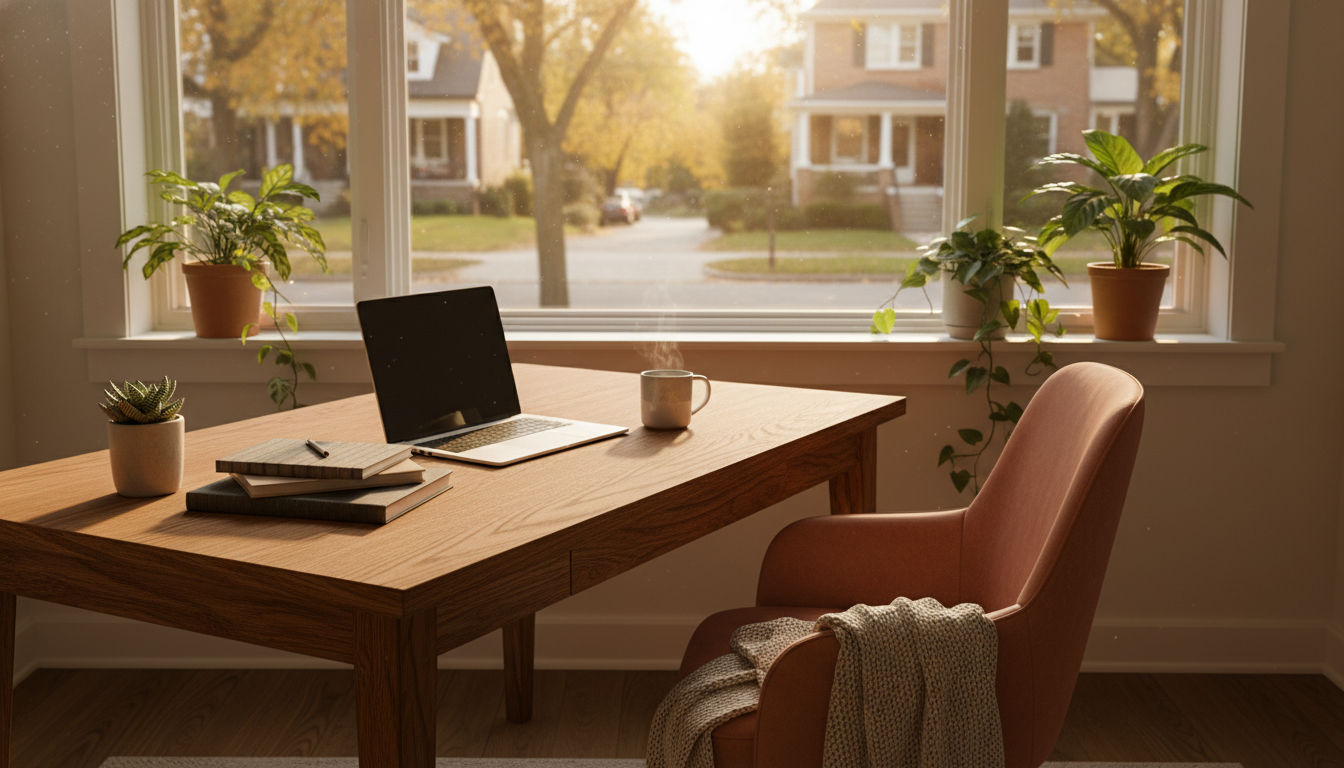 Cozy home office setup in a Denver home with a large wooden desk, ergonomic chair, plants on the win
What to Bring (And What to Leave Behind)
I've refined my digital nomad packing list specifically for home swaps, and it's probably shorter than you'd expect.
Bring your laptop, obviously, plus a portable monitor if you're used to dual screens—they weigh almost nothing now and make a huge difference. Bring your own mouse and keyboard if you're particular about ergonomics. A travel power strip is essential; older Denver homes sometimes have limited outlets in inconvenient places.
Leave behind your external hard drives full of movies and your bulky headphones. Your swap home will have a TV, probably with streaming services still logged in (ask permission before using them), and decent speakers. I bring lightweight earbuds for calls and rely on the home's setup for everything else.
One thing I always pack: a small Ethernet cable. WiFi is great, but a direct connection is better for important video calls.
Creating Your Routine
Denver's altitude (5,280 feet, hence the "Mile High City" nickname) affects people differently. I always plan a lighter work schedule for my first two days while my body adjusts. Drink more water than you think you need—the dry air and elevation combine to dehydrate you faster than you'd expect.
The city's outdoor access is a genuine productivity advantage. I've found that a morning hike before work—even just a 30-minute walk at Red Rocks or along the Platte River Trail—clears my head better than any meditation app. Most swap homes are within 20 minutes of legitimate nature, which is rare for a major city.
For afternoon breaks, Denver's brewery scene is unmatched. I'm not suggesting day drinking (okay, maybe a little), but places like Ratio Beerworks or Our Mutual Friend have excellent outdoor patios where you can decompress without feeling like you've fully left work mode.
Coworking Options to Supplement Your Home Swap
Sometimes you need to get out of the house. Maybe you have a day of back-to-back calls and don't want to disturb your swap home's neighbors. Maybe you just need human interaction. Denver's coworking scene has you covered.
WeWork has multiple Denver locations, and their day passes run around $29-45 depending on the space. Industry RiNo is my favorite local option—it's in a converted warehouse with incredible natural light, and day passes are $35. Gather in the Highlands offers a more intimate vibe at $25/day.
For free options, Denver Public Library's central branch downtown has solid WiFi and plenty of seating. The unspoken rule is that the third floor is for quiet work. Just don't expect to take calls there.
 Interior of a bright, industrial-style coworking space in Denver with exposed ductwork, large window
The Financial Case for Home Swapping
Let me break down the actual numbers, because this is where home swapping gets exciting.
A month-long stay in Denver, comparing options:
Hotel (mid-range): $200/night average = $6,000/month
Airbnb (1-bedroom): $120/night average = $3,600/month
Furnished apartment rental: $2,500-3,500/month (plus deposits, utilities)
Home swap: 30 credits (which you earned by hosting) = $0 accommodation cost
Even if you factor in the membership cost of a platform like SwappaHome, you're looking at savings of thousands of dollars per month. Over a year of nomadic living, that's the difference between scraping by and actually building savings while you travel.
The hidden savings matter too. A full kitchen means you're not eating every meal out. A washer/dryer means no laundromat runs. A comfortable living room means you're not spending money at coffee shops just to have somewhere pleasant to exist.
I tracked my expenses during my last three-week Denver swap: $890 total for food, transportation, activities, and incidentals. That's roughly $42/day for everything except flights.
Seasonal Considerations
Denver's climate affects both availability and experience, so timing matters.
Winter (December-February): Ski season means Denver becomes a hub for mountain-bound travelers. Swap availability can be tighter, but if you're offering a home in a warm climate, you'll have no trouble finding hosts eager to escape the cold. The city itself rarely gets paralyzed by snow—they're prepared for it—but expect some gray days.
Spring (March-May): My favorite time for Denver swaps. The snow is melting in the mountains (great for dramatic views), the city is coming alive with outdoor events, and swap availability is excellent. March can be unpredictable weather-wise—I've experienced 70°F sunshine and snowstorms in the same week.
Summer (June-August): Peak season for everything. Swap homes get booked quickly, so plan ahead. Temperatures reach the 90s but the low humidity makes it bearable. Afternoon thunderstorms are common but brief—schedule important calls for mornings.
Fall (September-November): The secret best time. Crowds thin, aspens turn gold, and the weather is consistently perfect. September especially offers warm days, cool nights, and wide-open swap availability.
Building Your Denver Digital Nomad Network
One thing I didn't expect from my Denver swaps: the community. The city has a thriving remote work scene, and people are genuinely welcoming to newcomers.
Meetup.com has active groups for Denver digital nomads, remote workers, and tech professionals. I've attended "Remote Work & Hike" events that combine networking with trail time—very Denver. The Denver Startup Week event each September is worth planning a swap around if you're in tech.
Coffee shops double as informal coworking spaces. At places like Huckleberry Roasters or Sweet Bloom, you'll find yourself chatting with other laptop workers. I've made genuine professional connections over shared outlets and WiFi passwords.
Your swap hosts can be resources too. Many SwappaHome members are remote workers themselves—it's part of what makes them open to hosting. I've gotten neighborhood recommendations, client referrals, and even a job lead from hosts I've stayed with.
What to Do When You're Not Working
The whole point of being a digital nomad is that you're not just working—you're living. Denver delivers on the "living" part.
The mountains are the obvious draw. Rocky Mountain National Park is 90 minutes away. World-class ski resorts (Breckenridge, Keystone, Vail) are 2 hours. But you don't need to make a whole day of it—Red Rocks Park is 20 minutes from downtown and offers hiking trails with views that'll make your Instagram followers jealous.
The food scene has evolved dramatically in the past decade. Tavernetta does Italian that rivals anything I've had in actual Italy. Hop Alley serves Chinese-American food that's playful and delicious. For a quick lunch near most neighborhoods, Illegal Pete's (local burrito chain) hits the spot for around $12.
Beer is practically a civic institution here. Denver has more breweries per capita than almost any American city. My recommendations: TRVE Brewing for metal vibes and sour beers, Cerebral Brewing for hazy IPAs, Bierstadt Lagerhaus for German-style precision.
Making Your Home Swap-Worthy
Home swapping is reciprocal. To attract great Denver hosts, you need to make your own home appealing to travelers.
For digital nomads, this means emphasizing your workspace in your listing. Take photos of your desk setup, mention your internet speed, note if you have a dedicated office or quiet work area. Denver travelers booking your place might be remote workers themselves—speak to their needs.
Stock your home with the basics they'll want: good coffee, quality towels, a guide to your neighborhood. The golden rule of home swapping is to leave your home as you'd want to find it—and to prepare it as you'd want someone to prepare theirs for you.
I've found that being specific in my listing attracts better matches. Instead of "great for remote work," I write "dedicated office with standing desk, 350 Mbps fiber internet, and a neighborhood coffee shop 2 blocks away." Specificity builds trust.
Getting Started with Your First Denver Home Swap
If you're new to home swapping, Denver is an excellent place to start. The city has an active community of swap-friendly homeowners, many of whom are experienced hosts.
Sign up for SwappaHome and create a detailed profile. Upload quality photos of your space, especially your workspace if you have one. New members start with 10 free credits—enough for a 10-night Denver stay to test the waters.
Browse Denver listings and reach out to hosts whose spaces match your needs. Be upfront about being a remote worker and ask the questions I mentioned earlier about internet and workspace setup. Most hosts appreciate the direct communication.
Plan your first swap for a shoulder season (spring or fall) when availability is good and you won't be competing with peak-season travelers. Give yourself at least a two-week stay—anything shorter and you'll spend too much time settling in to really experience the city.
And here's my final piece of advice: treat your first swap as an experiment, not a commitment. If it works (and it probably will), you'll have unlocked a way to work from cities around the world without the accommodation costs that usually make extended travel unsustainable.
Denver was my gateway drug to home swapping. Seven years later, I've worked from converted barns in Tuscany, beachfront apartments in Portugal, and chalets in the Swiss Alps—all through exchanges that cost me nothing but the credits I earned hosting travelers in my own home.
The Mile High City might just be the start of something bigger.
Frequently Asked Questions
Is home swapping in Denver safe for digital nomads?
Home swapping in Denver is generally very safe. SwappaHome's verification system and review ratings help you choose trustworthy hosts. The community aspect creates mutual accountability—hosts protect their reputation by providing accurate listings and maintaining their homes well. For extra peace of mind, consider getting your own travel insurance that covers personal belongings.
How much can I save by home swapping in Denver versus hotels?
Digital nomads typically save $3,000-6,000 per month by home swapping in Denver instead of booking hotels. Mid-range Denver hotels average $180-250 per night ($5,400-7,500 monthly), while home swapping costs only the credits you've earned by hosting—essentially free accommodation. Even compared to Airbnb ($3,600/month average), the savings are substantial.
What internet speeds can I expect in Denver home swaps?
Most Denver home swaps offer excellent internet speeds, typically 100-400 Mbps. The city has strong fiber optic infrastructure, especially in neighborhoods like RiNo, Highlands, and Cherry Creek. Always ask hosts for a speed test screenshot before confirming your booking to ensure the connection meets your remote work requirements.
How far in advance should I book a Denver home swap?
For optimal selection, book your Denver home swap 4-8 weeks in advance. During peak seasons (ski season December-March and summer June-August), aim for 8-12 weeks ahead. Shoulder seasons like spring and fall offer more flexibility, with good options available even 2-3 weeks out. Popular neighborhoods like RiNo and Highlands book faster than others.
Can I work from Denver on Mountain Time while managing international clients?
Mountain Time (GMT-7) is ideal for managing international clients. You can start your day with European colleagues (8 AM Denver = 3 PM London) and still be available for West Coast clients through normal business hours. Many digital nomads specifically choose Denver for this timezone flexibility, which allows reasonable overlap with both European and Asia-Pacific business hours.
40+
Swaps
25
Countries
7
Years
About Maya Chen
Travel Writer & Home Exchange Expert
Maya is a travel writer with over 7 years of experience in the home swapping world. Originally from Vancouver and now based in San Francisco, she has completed more than 40 home exchanges across 25 countries. Her passion for "slow" and authentic travel led her to discover that true luxury lies in living like a local, not a tourist.
Ready to try home swapping?
Join SwappaHome and start traveling by exchanging homes. Get 10 free credits when you sign up!
Related articles

Lyon Home Exchange: Your Complete Guide to France's Hidden Gem for Home Swapping
Discover why Lyon home exchange is booming among savvy travelers. From Croix-Rousse to Presqu'île, find the best neighborhoods and insider tips for your swap.

Zurich Bucket List: 47 Unforgettable Experiences to Enjoy During Your Home Swap
Discover the ultimate Zurich bucket list for home swappers—from secret swimming spots to fondue rituals locals actually do. Save thousands while living like a true Zürcher.
Dublin Home Exchange Utilities Guide: WiFi, Heating & Everything Your Guests Need
Master Dublin home exchange utilities—from dodgy WiFi fixes to heating quirks. Practical tips from 7 years of swapping homes across Ireland.