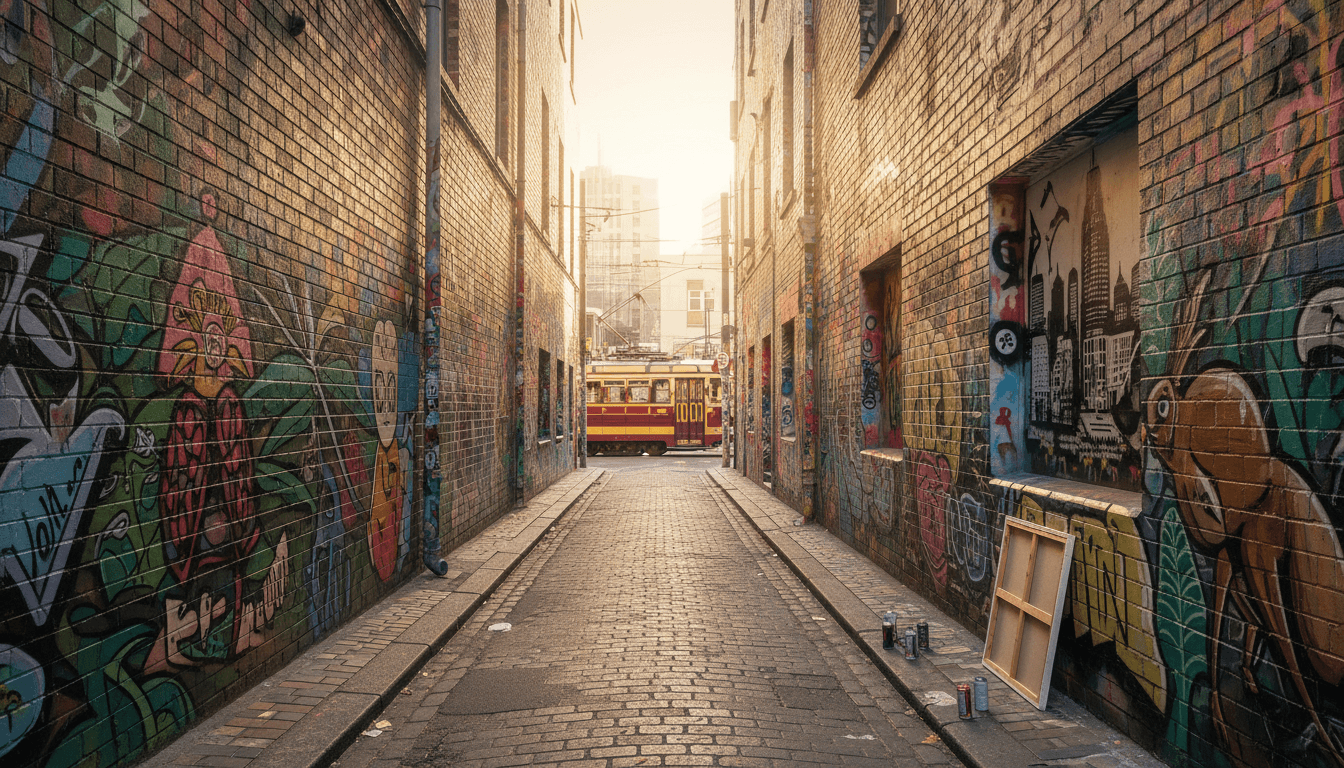
Work from Melbourne: The Complete Home Swapping Guide for Digital Nomads
Maya Chen
Travel Writer & Home Exchange Expert
Discover how to work from Melbourne through home swapping. This guide covers WiFi-ready neighborhoods, coworking spots, and how to live like a local for free.
I was three espressos deep at a laneway café in Fitzroy when I realized I'd made a terrible mistake.
Not the coffee—Melbourne's coffee is legitimately life-changing. The mistake was booking a hotel for my first week in Australia. Sterile room, zero kitchen, and $280 AUD ($180 USD) per night disappearing from my bank account while I tried to focus on client calls with a view of... an air conditioning unit.
That's when I discovered home swapping in Melbourne. And honestly? It completely changed how I work from this city as a digital nomad. Three visits and 47 days later, I've stayed in a converted warehouse in Collingwood, a Victorian terrace in Carlton, and a light-filled apartment in St Kilda—all through home exchange. Total accommodation cost: zero dollars.
This guide is everything I wish someone had told me before that first expensive, soulless hotel week.
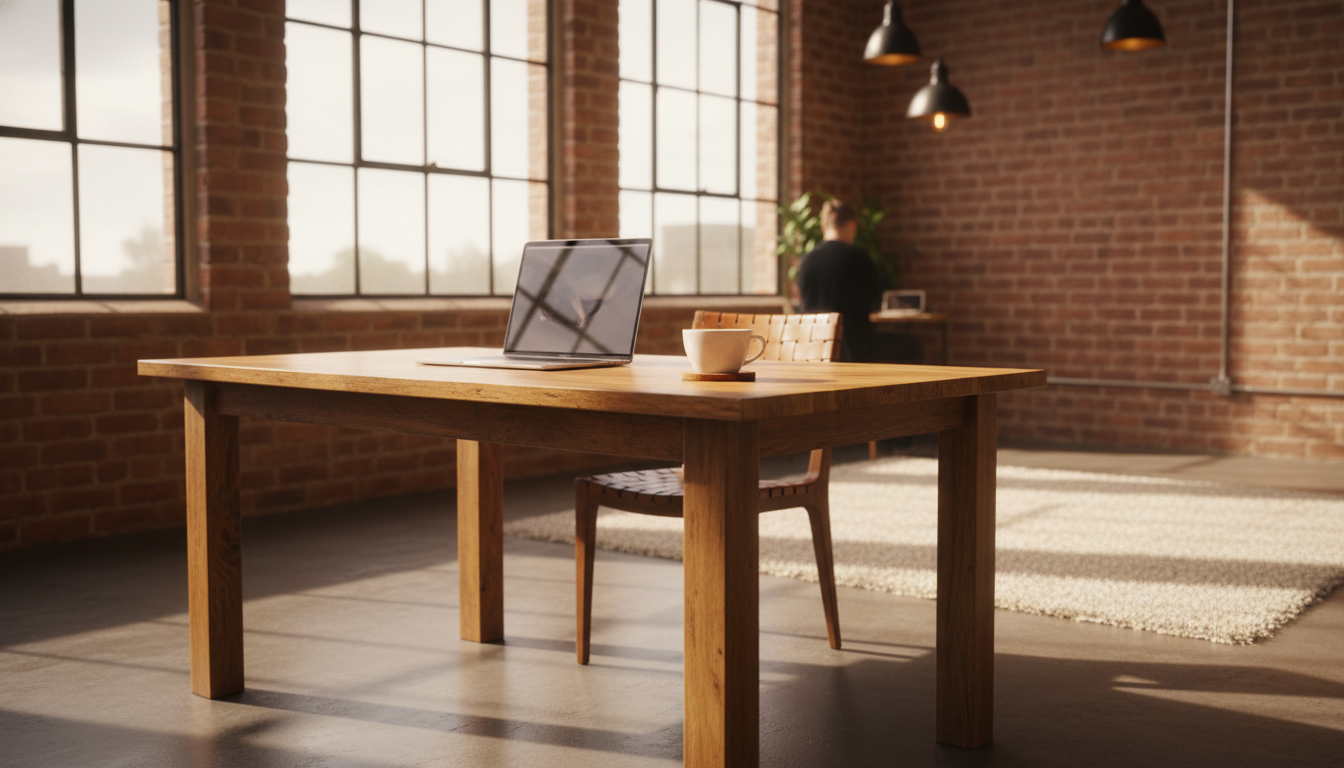 Morning light streaming through floor-to-ceiling windows of a Melbourne warehouse conversion apartme
Why Melbourne Is Perfect for Digital Nomad Home Swapping
Here's something most travel guides won't tell you: Melbourne isn't a city you can properly experience from a hotel.
The magic happens in the neighborhoods—the local coffee roaster who remembers your order, the hidden bar behind a bookshelf door that only regulars know about, the morning market runs for fresh produce. Home swapping gives you access to all of this. You're not a tourist staying in the CBD; you're living in Northcote or Brunswick or Prahran, working from a real home with a real kitchen and (this is crucial) reliable WiFi that someone actually uses daily for their own remote work.
Melbourne also has something most cities don't: a massive population of remote workers and creative professionals who travel frequently. These are exactly the people listing their homes on platforms like SwappaHome—they understand what digital nomads need because they ARE digital nomads. Their homes come equipped with proper desks, fast internet, and often a second monitor you can use.
The timezone advantage is real too. Melbourne's AEST/AEDT puts you in a sweet spot for working with Asian clients during your morning, European clients in your early evening, and US clients if you're willing to do some late nights. I've found that 7am-3pm Melbourne time lets me overlap with most of my international clients without destroying my sleep schedule.
Best Melbourne Neighborhoods for Digital Nomad Home Swaps
Not all Melbourne neighborhoods are created equal for remote work. After testing several, here's my honest breakdown.
Fitzroy and Collingwood: The Creative Corridor
This is where I'd point any digital nomad who asks. Brunswick Street and Smith Street run parallel through these neighborhoods, lined with independent cafés where nobody blinks if you work for four hours on a single flat white. The converted warehouses here often have incredible natural light and that industrial aesthetic that makes video calls look effortlessly cool.
Expect home swap listings here to feature exposed brick, high ceilings, and fiber internet. Many homeowners in this area work in tech, design, or media—they've already optimized their spaces for remote work.
Coffee recommendation: Industry Beans on Rose Street. Massive communal tables, power outlets everywhere, and they don't rush you.
Average Airbnb comparison: $150-200 AUD ($95-130 USD) per night for a one-bedroom. Through home swapping? One credit per night on SwappaHome, regardless of how stunning the space is.
Carlton: Academic Vibes and Reliable Infrastructure
Carlton sits next to the University of Melbourne, which means two things: excellent public infrastructure and an abundance of quiet cafés designed for studying (read: working). Lygon Street has its touristy Italian restaurants, but duck into the side streets and you'll find serious coffee spots where academics and writers have been working for decades.
The Victorian terraces here are gorgeous—high ceilings, ornate fireplaces, and surprisingly good insulation. Many have been updated with modern internet while keeping their character.
I stayed in a Carlton terrace last autumn and got more work done in two weeks than I had in the previous month. Something about those tall windows and the quiet street noise just worked.
St Kilda: Beach Breaks Between Calls
If you need ocean to stay sane (I get it), St Kilda offers beach access without sacrificing connectivity. The Esplanade is a 15-minute walk from most residential streets, perfect for a midday brain reset.
Fair warning: St Kilda is more touristy than the inner-north neighborhoods. But the home swap listings here tend to be apartments with balconies, and there's something to be said for taking calls while watching the sunset over Port Phillip Bay. The WiFi situation is solid—lots of young professionals live here, so the infrastructure keeps up.
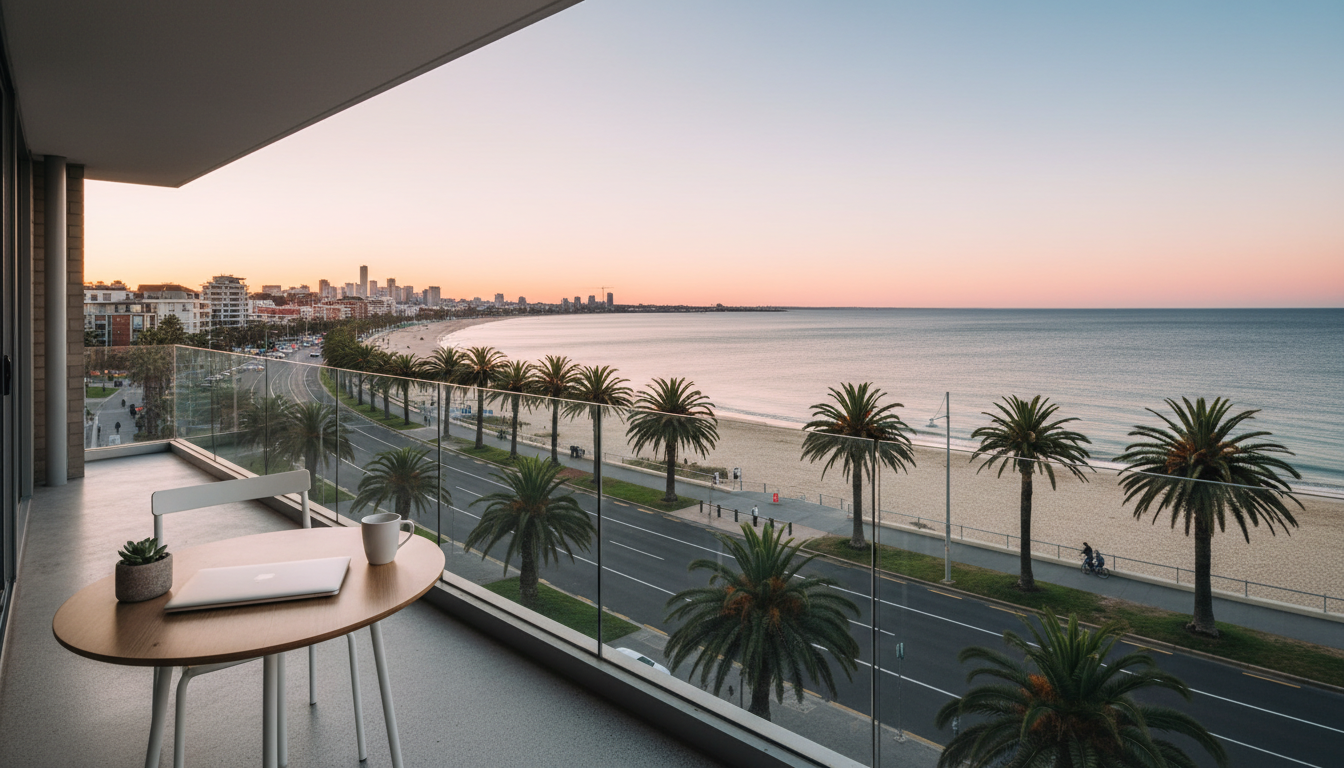 View from a St Kilda apartment balcony at golden hour, laptop closed on a small outdoor table, the E
Brunswick and Northcote: Budget-Friendly and Authentic
These northern suburbs are where Melbourne's creative class actually lives (Fitzroy has gotten expensive). Sydney Road in Brunswick is chaotic, multicultural, and full of cheap eats. Northcote's High Street has a more curated feel—vintage shops, natural wine bars, specialty bookstores.
Home swaps here often come with backyards—rare in inner Melbourne. If you've been living out of coworking spaces and need some outdoor space to decompress, this is your zone. Tram access is excellent. The 19 tram runs down Sydney Road and connects to the CBD in about 25 minutes.
South Yarra and Prahran: Polished Professional
This is Melbourne's more upscale inner-south. Chapel Street has high-end shopping, but the residential streets are lined with beautiful apartments and townhouses. If you have video calls with corporate clients and need a backdrop that says "I have my life together," South Yarra delivers.
The Prahran Market is one of Melbourne's best—fresh produce, specialty foods, and a great spot for a working lunch. Internet speeds here are consistently excellent.
How to Find WiFi-Ready Home Swaps in Melbourne
This is the question I get most often, and honestly, it's simpler than you'd think.
When browsing home swap listings on SwappaHome, I look for specific signals that tell me the homeowner is also a remote worker. Mentions of a "home office" or "dedicated workspace" in the listing description are obvious green flags. Photos showing a desk setup, external monitor, or ergonomic chair tell me they take working from home seriously.
But here's my real trick: I message potential swap partners directly and ask three questions. What's your typical internet speed? (I need minimum 50 Mbps for video calls; most Melbourne homes have 100+ Mbps on NBN.) Is there a quiet space for video calls during business hours? And—this one's key—do you work remotely yourself?
If they work remotely, they've already solved the problems you're worried about. Their home is set up for exactly what you need.
I've never had a Melbourne homeowner be weird about these questions. They get it. They're often asking me the same things about my San Francisco apartment.
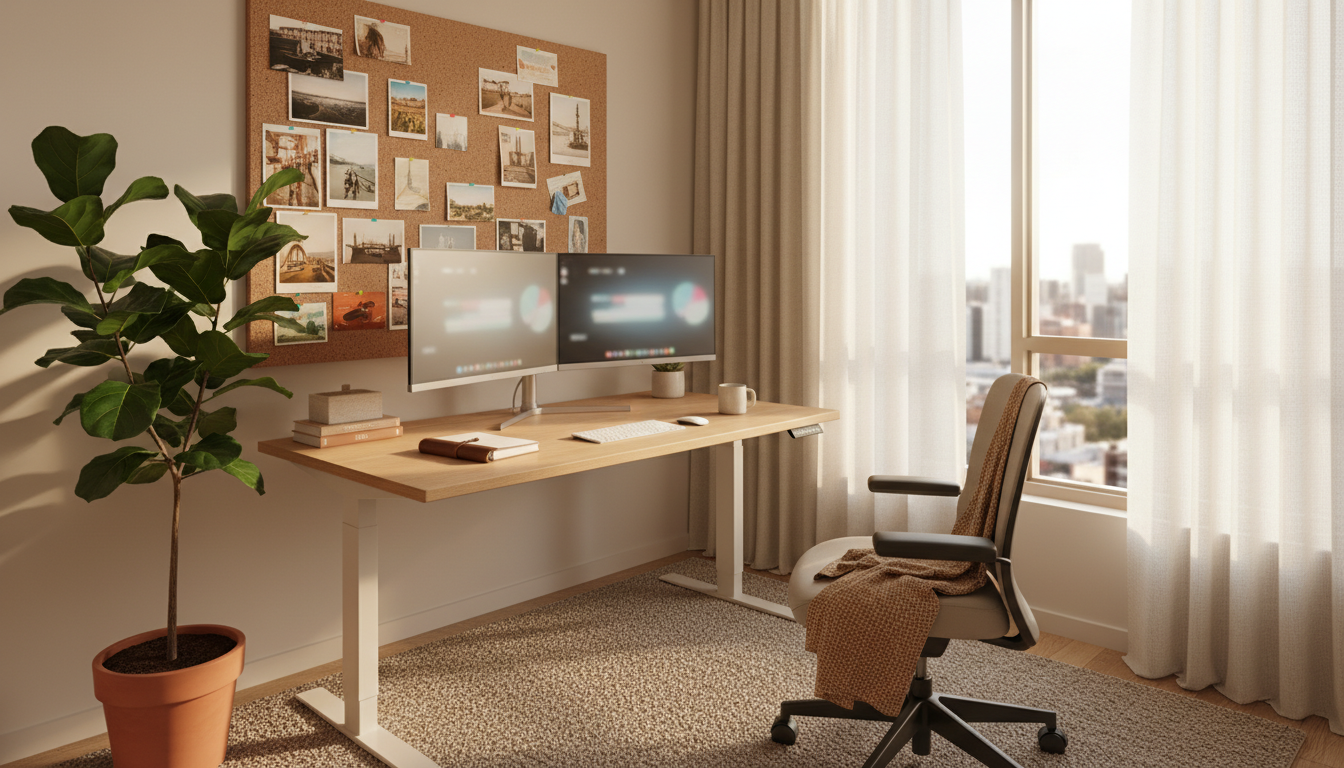 Cozy home office corner in a Melbourne apartment, standing desk with dual monitors, fiddle leaf fig
Melbourne's Coworking Scene: Your Backup Plan
Even with the best home swap setup, sometimes you need a change of scenery. Or your swap home has a housemate who works night shifts and sleeps during your call hours. Here's where Melbourne's coworking spaces become essential.
Inspire9 (Richmond) is my personal favorite. The community here is genuinely welcoming to travelers, not just locals. Day passes run about $45 AUD ($29 USD), but they often have weekly rates for digital nomads. The rooftop is spectacular.
Collective Campus (South Melbourne) has a more corporate feel, but the facilities are excellent—good for days when you need to impress on video calls. Around $55 AUD ($35 USD) for a day pass.
The Commons (Collingwood) is your spot if you're staying in Fitzroy or Collingwood. Casual vibe, great coffee included, and a strong community of freelancers. $40 AUD ($26 USD) daily.
State Library of Victoria (CBD) is free. Completely free. The reading rooms are stunning, WiFi is decent, and it's a Melbourne institution. Gets busy, so arrive early for a good spot. No talking allowed in the main rooms, so save calls for elsewhere.
I usually budget for 2-3 coworking days per week, even when my home swap has a great setup. The social aspect matters when you're traveling solo, and Melbourne's coworking community is genuinely friendly to nomads.
Setting Up Your Melbourne Home Swap for Maximum Productivity
Okay, you've found a great swap and you're about to arrive. Here's my first-48-hours protocol for work-from-Melbourne success.
Day One: The Tech Audit. Before I unpack anything, I test the WiFi in every room. Not just speed—I check for dead zones, especially in older Victorian buildings with thick walls. I identify my primary work spot and my backup spot (usually the kitchen table). I test a video call with a friend to check lighting and background. I also locate the router. If something goes wrong, I want to know where to restart it at 2am before an important call.
Day Two: The Neighborhood Recon. I walk the neighborhood and identify my emergency café (for when WiFi fails or I need to escape), the closest supermarket (Woolworths and Coles are everywhere), and the best route to public transport. Melbourne's tram system is excellent—I download the PTV app and load up a myki card. I also introduce myself to at least one neighbor if possible. This isn't just friendliness—if something goes wrong at the house, having a local contact is invaluable.
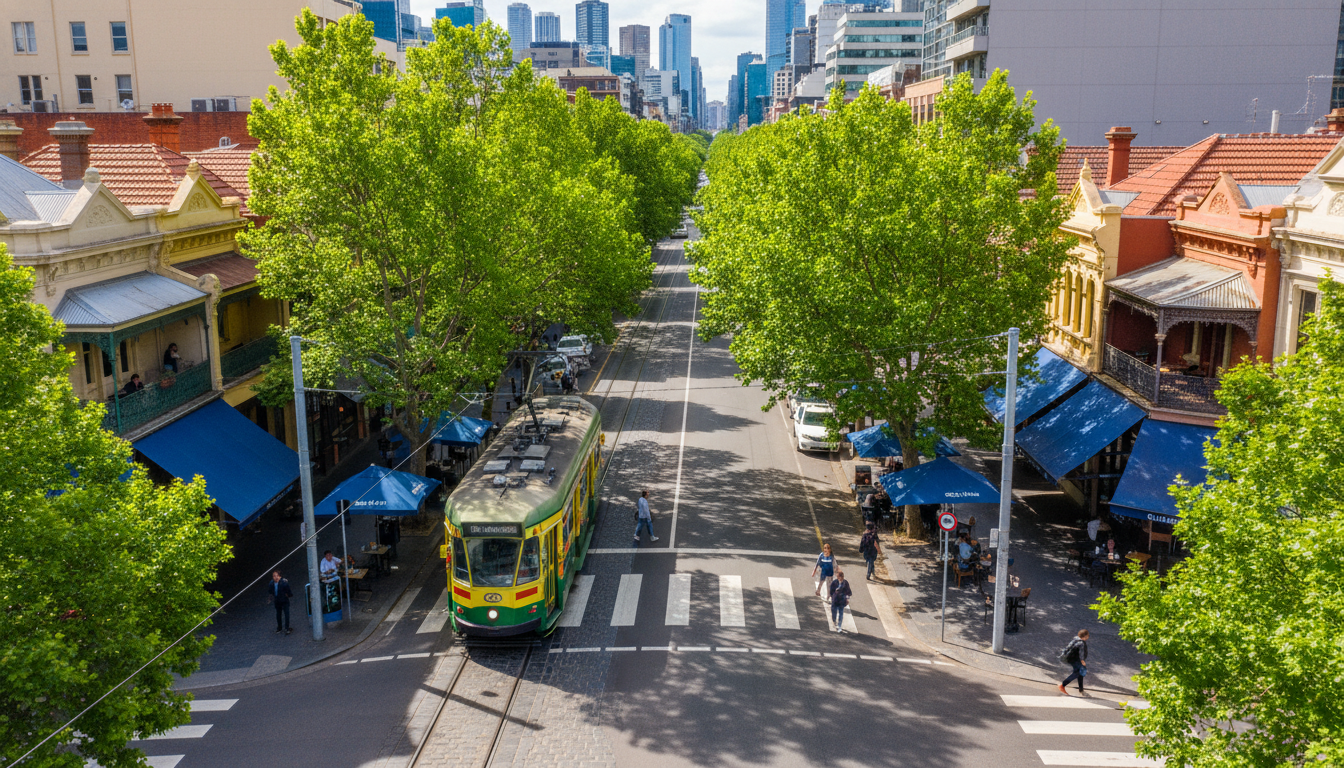 Aerial view of Melbournes iconic tram network, a green and yellow tram passing through a tree-lined
The Real Cost Breakdown: Home Swapping vs. Traditional Stays
Let me show you actual numbers from my last Melbourne trip—three weeks in a Collingwood warehouse apartment.
If I'd booked an Airbnb, the nightly rate for a comparable space would have been $175 AUD ($113 USD). Multiply that by 21 nights and you're at $3,675 AUD ($2,373 USD). Add cleaning fees and service charges—roughly $250 AUD ($161 USD)—and the total hits $3,925 AUD ($2,534 USD).
A hotel with workspace? Even worse. Serviced apartments run about $220 AUD ($142 USD) per night, which means 21 nights costs $4,620 AUD ($2,982 USD).
What I actually spent through home swapping: 21 SwappaHome credits (earned by hosting in SF). Actual money spent on accommodation: zero. That's nearly $3,000 USD saved on a three-week trip. Over a year of nomadic travel, this adds up to the difference between sustainable long-term travel and burning through savings.
The credit system on SwappaHome is beautifully simple—one credit equals one night, regardless of location or property value. I earned those 21 credits by hosting guests in my San Francisco apartment while I was traveling elsewhere. The guest from Tokyo who stayed at my place? Her credits came from hosting someone in Kyoto. It's a circular economy that actually works.
Navigating Melbourne's Seasons as a Digital Nomad
Melbourne's weather is famously unpredictable—"four seasons in one day" is a cliché because it's true. Here's how this affects your planning.
Summer (December-February) brings hot days (sometimes 40°C+), long evenings, and everyone outdoors. Air conditioning becomes essential—confirm your home swap has it. The upside: daylight until 9pm means you can work standard hours and still enjoy beach time after.
Autumn (March-May) is my favorite time. Mild temperatures, stunning foliage in the parks, and fewer tourists. The Melbourne International Comedy Festival happens in March/April—great for evening entertainment after work.
Winter (June-August) is cold and wet, but Melbourne does cozy extremely well. This is peak café season. Home swaps with heating and good natural light become more valuable. Shorter days mean you might find yourself working more—which isn't necessarily bad if you're trying to bank some savings.
Spring (September-November) is unpredictable but gorgeous. Melbourne Cup happens in November if you want to experience a uniquely Australian event (the whole city basically shuts down for a horse race).
For digital nomads, I actually recommend shoulder seasons—autumn and spring. The weather is manageable, the city isn't overcrowded, and you'll find more home swap availability as locals take their own trips.
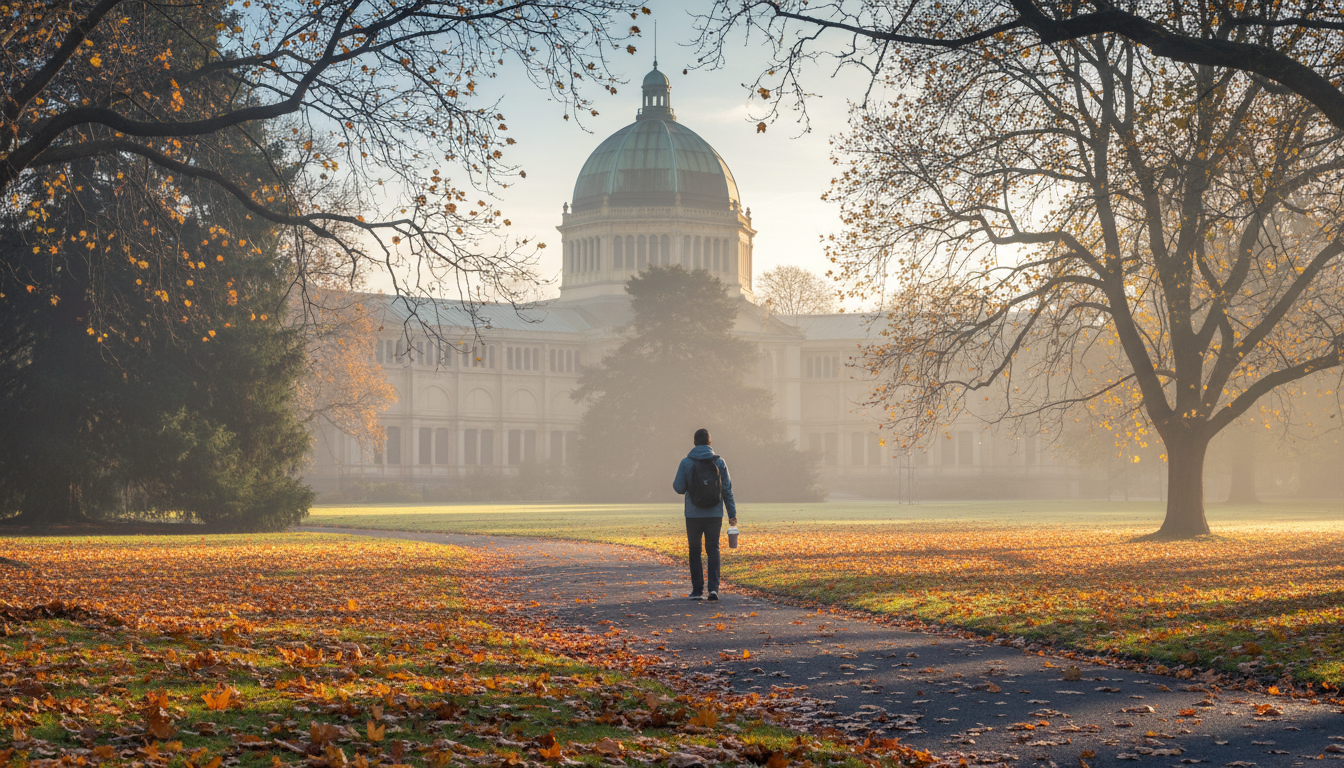 Autumn morning in Carlton Gardens, golden leaves covering the ground, Royal Exhibition Building dome
Building Community While Working from Melbourne
One thing that surprised me about Melbourne: how easy it is to build a social circle as a nomad. This isn't a transient backpacker city—people here are genuinely interested in connecting.
Nomad Coffee Club Melbourne meets weekly at rotating cafés. It's informal, no sign-up required, and you'll meet other remote workers within your first week.
Meetup.com is actually well-used here, unlike some cities where it's dead. Search for tech meetups, creative industry events, or general expat/nomad gatherings.
The home swap community itself is a resource. I've had coffee with three different SwappaHome members who live in Melbourne while I was staying in someone else's apartment. The platform's messaging system makes it easy to reach out, and Melbourne members tend to be enthusiastic about showing off their city.
Don't underestimate the power of becoming a regular somewhere. Pick one café near your home swap and go every morning. By day five, the barista knows your order. By day ten, you're chatting with the other regulars. This is how Melbourne works—it rewards consistency.
Practical Tips I Learned the Hard Way
Bring a power adapter. Australia uses Type I plugs—those angled three-prong ones. Your US or European plugs won't work. I now travel with a universal adapter that has USB-C ports built in.
Get a local SIM immediately. Telstra has the best coverage, but Optus and Vodafone are cheaper and fine for urban areas. A prepaid SIM with 30GB data runs about $30-40 AUD ($19-26 USD) for 28 days. This is your backup internet if WiFi fails.
Understand the coffee culture. Don't ask for a "regular coffee"—you'll get a confused look. Learn the lingo: flat white (espresso with microfoam), long black (espresso with hot water), and latte. Drip coffee basically doesn't exist here.
The tram system is free in the CBD. The Free Tram Zone covers the central city. Outside this zone, you need a myki card (like an Oyster or Metro card). Register your myki online so you can recover it if lost.
Sunscreen is not optional. Australia's UV index is no joke. Even on cloudy days, you can burn. If you're working from a café with outdoor seating, wear SPF 50.
Making Your Melbourne Home Swap Work Long-Term
If you're planning an extended stay—say, two to three months—here's how to structure it.
Book multiple shorter swaps instead of one long one. Most homeowners travel for 2-4 weeks at a time. I typically line up three consecutive swaps for a longer Melbourne stay, moving between neighborhoods. This also gives you variety and backup options if one swap doesn't work out.
Be an excellent guest. This matters more than you think. The review system on SwappaHome means your reputation follows you. Leave homes cleaner than you found them. Replace anything you use up. Write thoughtful reviews. I've had homeowners reach out to offer me their place again because I was easy to host.
Communicate proactively. If something breaks or goes wrong, message your host immediately. Don't try to hide it. I once accidentally cracked a plant pot—messaged the owner right away, offered to replace it, and she was completely fine. These are real people's homes; they appreciate honesty.
Consider the reciprocal relationship. Even though SwappaHome's credit system means you don't need to host your specific swap partner, think about what you're offering. Keep your own listing updated, respond to requests promptly, and be the kind of host you'd want to stay with.
The Visa Situation for Digital Nomads in Australia
I need to mention this because it's important: Australia doesn't have a dedicated digital nomad visa. Most people work remotely on a tourist visa (subclass 600), which allows stays up to 3, 6, or 12 months depending on the stream.
Technically, you're allowed to work remotely for a non-Australian employer while on a tourist visa—you're not taking Australian jobs. But this is a gray area, and I'm not a lawyer. Do your own research and consider consulting an immigration specialist if you're planning a long stay.
Working Holiday Visas (subclass 417 or 462) are available for citizens of certain countries if you're under 31 (or 35 for some nationalities). These let you work legally in Australia, including remote work.
The key point: don't overstay your visa, and don't work for Australian clients without proper authorization.
Why Home Swapping Changes How You Experience Melbourne
The first time I stayed in a Melbourne home swap—that Collingwood warehouse—I found a handwritten note from the owner. She'd left recommendations for her favorite coffee spots, the best time to visit the Queen Victoria Market, and a warning about the possum that sometimes appears on the back fence at dusk.
That possum became a highlight of my trip. I'd take my evening tea onto the small balcony and wait for it to appear, shuffling along the fence line with its weird little hands. It was such a small thing, but it made me feel like I was actually living somewhere, not just passing through.
Hotels can't give you that. Airbnbs sometimes try, but there's a transactional feeling that's hard to shake. Home swapping is different because it's built on trust and reciprocity. You're staying in someone's actual life, and they're staying in yours.
For digital nomads especially, this matters. We spend so much time in transit, in temporary spaces, in places designed for efficiency rather than belonging. Melbourne is a city that rewards depth over breadth—the fourth visit to your local café matters more than hitting every tourist attraction. Home swapping lets you access that depth immediately. You arrive with a neighborhood, a community, a context. You're not starting from zero.
If you're considering Melbourne as your next digital nomad chapter, I genuinely think home swapping is the way to do it. The cost savings are significant, yes. But more than that—it's a different way of traveling. A slower, richer, more connected way.
SwappaHome has a solid community of Melbourne-based members, many of them remote workers themselves. Start browsing listings, reach out to a few homeowners, and see what's possible. You might find yourself, like me, three espressos deep in a Fitzroy laneway, except this time you're not paying $280 a night for the privilege.
You're home.
Frequently Asked Questions
Is home swapping in Melbourne safe for digital nomads?
Home swapping in Melbourne is generally very safe, especially through platforms like SwappaHome that offer member verification and review systems. The community is built on mutual trust—members review each other, creating accountability. I recommend reading reviews carefully, messaging potential swap partners before committing, and considering personal travel insurance for extra peace of mind. Melbourne itself is one of the safest major cities globally.
How much can I save by home swapping in Melbourne instead of hotels?
Digital nomads can save $2,000-4,000 USD per month by home swapping instead of booking hotels or Airbnbs in Melbourne. A typical one-bedroom in desirable neighborhoods like Fitzroy or St Kilda costs $150-200 AUD ($95-130 USD) per night on Airbnb. Through SwappaHome's credit system, you spend one credit per night regardless of property value—credits you earn by hosting guests in your own home.
What internet speed do I need for remote work in Melbourne?
For reliable video conferencing and remote work, aim for minimum 50 Mbps download speed. Most Melbourne homes on the NBN (National Broadband Network) offer 100+ Mbps, which is more than sufficient. Always ask potential home swap partners about their internet speed before confirming. Having a backup plan—like a local SIM with data or a nearby coworking space—is smart for important calls.
Which Melbourne neighborhoods are best for digital nomads?
Fitzroy and Collingwood are ideal for digital nomads, offering abundant cafés with good WiFi, creative communities, and many home swaps with dedicated workspaces. Carlton suits those who prefer a quieter academic atmosphere. St Kilda works if you need beach access for mental health. Brunswick and Northcote offer more affordable options with excellent tram connections to the CBD.
Do I need a special visa to work remotely in Melbourne?
Australia doesn't have a dedicated digital nomad visa. Most remote workers use a tourist visa (subclass 600), which technically permits working for non-Australian employers. Working Holiday Visas are available for eligible nationalities under 31-35. Always verify current visa requirements with official Australian immigration sources, as rules can change. Don't work for Australian clients without proper work authorization.
40+
Swaps
25
Countries
7
Years
About Maya Chen
Travel Writer & Home Exchange Expert
Maya is a travel writer with over 7 years of experience in the home swapping world. Originally from Vancouver and now based in San Francisco, she has completed more than 40 home exchanges across 25 countries. Her passion for "slow" and authentic travel led her to discover that true luxury lies in living like a local, not a tourist.
Ready to try home swapping?
Join SwappaHome and start traveling by exchanging homes. Get 10 free credits when you sign up!
Related articles
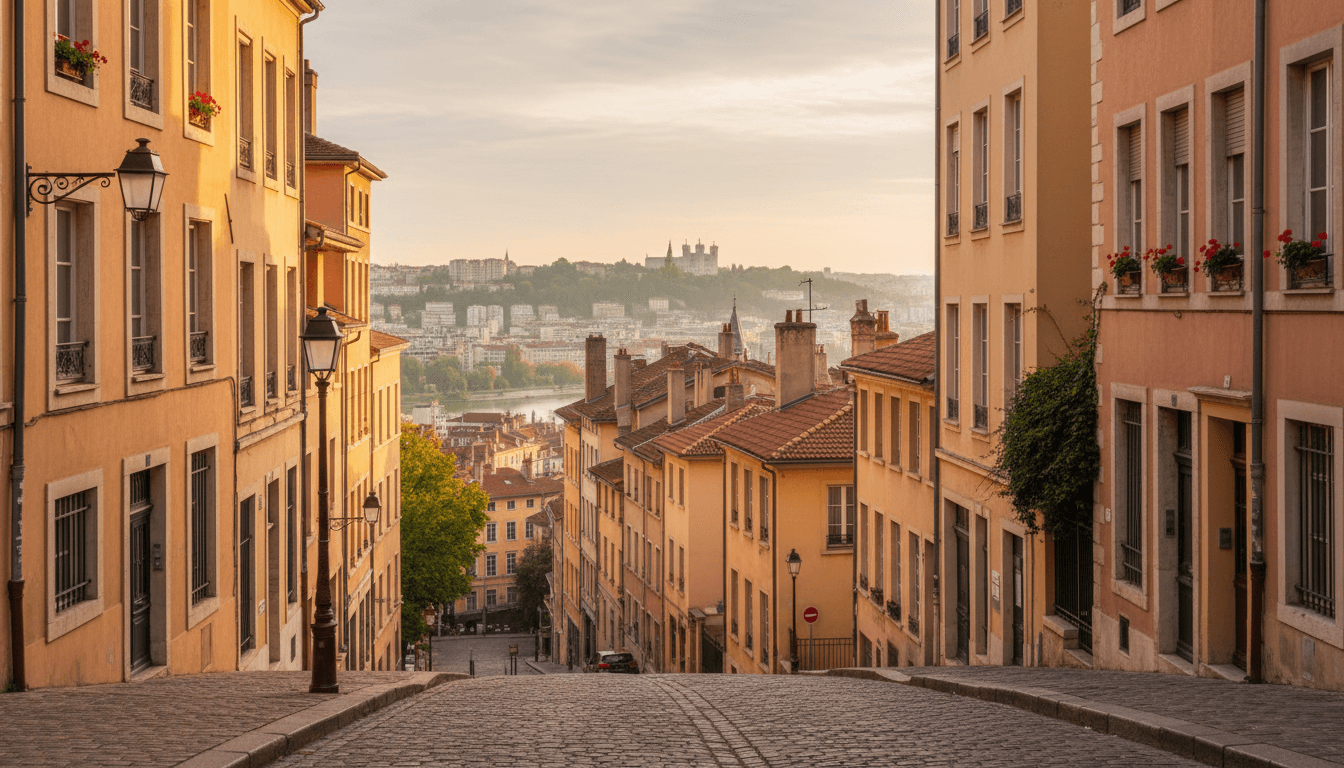
Lyon Home Exchange: Your Complete Guide to France's Hidden Gem for Home Swapping
Discover why Lyon home exchange is booming among savvy travelers. From Croix-Rousse to Presqu'île, find the best neighborhoods and insider tips for your swap.
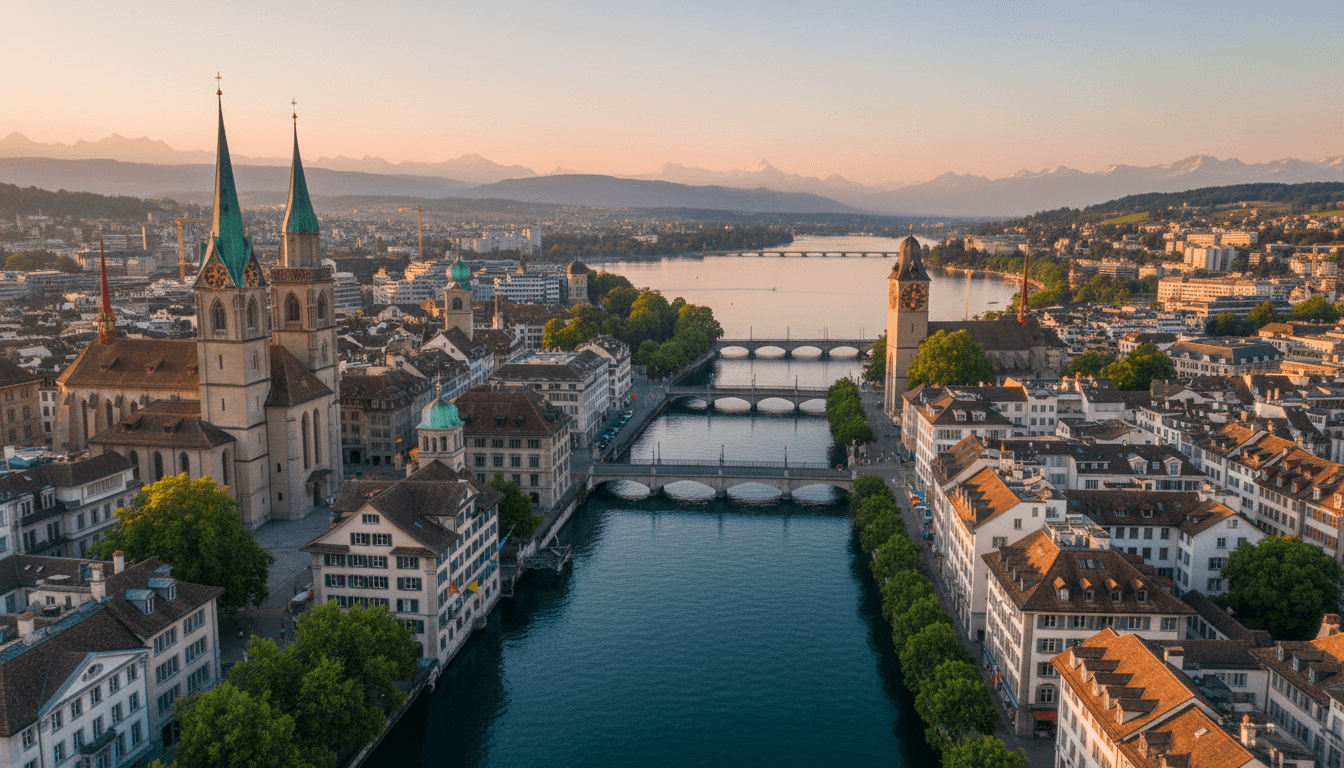
Zurich Bucket List: 47 Unforgettable Experiences to Enjoy During Your Home Swap
Discover the ultimate Zurich bucket list for home swappers—from secret swimming spots to fondue rituals locals actually do. Save thousands while living like a true Zürcher.
Dublin Home Exchange Utilities Guide: WiFi, Heating & Everything Your Guests Need
Master Dublin home exchange utilities—from dodgy WiFi fixes to heating quirks. Practical tips from 7 years of swapping homes across Ireland.